
-
Our new ticketing site is now live! Using either this or the original site (both powered by TrainSplit) helps support the running of the forum with every ticket purchase! Find out more and ask any questions/give us feedback in this thread!
You are using an out of date browser. It may not display this or other websites correctly.
You should upgrade or use an alternative browser.
You should upgrade or use an alternative browser.
Neurodiversity & working on the railway
- Thread starter michael74
- Start date
- Status
- Not open for further replies.
Sponsor Post - registered members do not see these adverts; click here to register, or click here to log in
R
RailUK Forums

If you go for it with your current TOC then fail/don't like it they will give you your guard job back in most cases (even though they don't tell you this)
Confirmed - I can think of a few people who failed the driver training course who went back to being guards.

nolypops83
Member
Since my diagnosis I have read 2 books: Unmasking Autism: The Power of Embracing Our Hidden Neurodiversity by Dr Devon Price and Unmasked by Elle Middleton.
Unmasked is a must read for newly diagnosed.
I'll have to give it a read. Well, I'll probably order it and then it'll sit in a pile gathering dust for weeks.


I_am_Nobody
Member
I have Unmasking Autism: The Power of Embracing our Hidden Neurodiversity by Dr. Devon Price as an audiobook, fully intending to listen to it knowing I'd never do so as an actual book... but of course, now it's gathering digital dust rather than actual physical dust. Hahaha... one day I'll get around to it, but the point of this post is, have you tried audiobooks? I tend to fare better with them!I'll have to give it a read. Well, I'll probably order it and then it'll sit in a pile gathering dust for weeks.
Sorry to hear that. I don't know where you've read this; hopefully not here.....As a side note to anyone reading this, while I appreciate all forms of positive input, what I don't need is comments like "you've picked the wrong job" or "your just going to need to deal with it" etc... I have no intention of responding to that...
But, for future reference, if you - or anyone - encounters a post of that nature on this forum, it's really important to use the report button, to alert the moderation team (we have a dedicated team of rail professionals who look after this section of the forum, but if it's not reported, they likely won't be aware of it), and please make no reference to the content on any forum post.
Doing this will enable us to deal with the matter effectively, and would be greatly appreciated!
Last edited:
I enjoy reading (only 2 or 3 particular authors).... Tried an audio book last year, didn't enjoy it as much as a physical bookI have Unmasking Autism: The Power of Embracing our Hidden Neurodiversity by Dr. Devon Price as an audiobook, fully intending to listen to it knowing I'd never do so as an actual book... but of course, now it's gathering digital dust rather than actual physical dust. Hahaha... one day I'll get around to it, but the point of this post is, have you tried audiobooks? I tend to fare better with them!
== Doublepost prevention - post automatically merged: ==
Thanks @yorkie, no, nothing like that on this thread but as you know it does happen here and the internet generally isn't always the kindest place, but absolutely I have used the report function before and it's been delt with swiftly and professionally.Sorry to hear that. I don't know where you've read this; hopefully not here.
But, for future reference, if you - or anyone - encounters a post of that nature on this forum, it's really important to use the report button, to alert the moderation team (we have a dedicated team of rail professionals who look after this section of the forum, but if it's not reported, they likely won't be aware of it), and please make no reference to the content on any forum post.
Doing this will enable us to deal with the matter effectively, and would be greatly appreciated!
Last edited:
BeijingDave
Member
- Joined
- 26 Jul 2019
- Messages
- 804
Different profession but as someone in education, some of the best teachers I have met have been Aspergers/autistic. They have exceptional command of their subject and are great at prepping students for exams. Where they have fallen down is interpersonal skills or classroom management (discipline), as they tend to get overwhelmed by a rowdy class or toxic colleagues.
Don't let that detract from my main point, which is that autistic people have incredible strengths that we as a society can utilise very effectively.
Also, I don't mean to slip into stereotypes or familiar tropes with this post. More just saying that if you have an understanding boss you can thrive in any profession.
Don't let that detract from my main point, which is that autistic people have incredible strengths that we as a society can utilise very effectively.
Also, I don't mean to slip into stereotypes or familiar tropes with this post. More just saying that if you have an understanding boss you can thrive in any profession.

As a side note to anyone reading this, while I appreciate all forms of positive input, what I don't need is comments like "you've picked the wrong job" or "your just going to need to deal with it" etc... I have no intention of responding to that and I have decades of dealing with anti social behaviours in previous jobs and careers, the issue is having a diagnosis makes me more aware of this and I don't want my autism to define everything that I am.
It's worth remembering that, whilst unwelcome, many of these types of comments will be from people who themselves live with a mental health condition such as ASD/ADHD etc, which they have left unattended, and adopted an attitude of, "I have to live with it, so you do as well."
Absolutely and not restricted to neurodiverseity, 15 years as a nurse it never ceased to amaze me how people became a hostage to their own beliefs.It's worth remembering that, whilst unwelcome, many of these types of comments will be from people who themselves live with a mental health condition such as ASD/ADHD etc, which they have left unattended, and adopted an attitude of, "I have to live with it, so you do as well."
Absolutely and not restricted to neurodiverseity, 15 years as a nurse it never ceased to amaze me how people became a hostage to their own beliefs.
It's an incredibly childish response - blame somebody else instead of addressing one's own difficulties. I can somewhat understand it in a medical context. Afterall, in hospital we often feel as vulnerable as the day we were born!
nolypops83
Member
Would people be interested in a general "neurodiversity on the railways" thread. Perhaps share experiences and resources you find helpful? Or just general life hacks
I was researching Northern for my interview and came across a few articles that are interesting.
 media.northernrailway.co.uk
 media.northernrailway.co.uk
I could ask them what accommodations are available if that might be helpful? I haven't asked for any previously, and probably won't this time but it might be useful to know for future applicants.
Just a thought!
I was researching Northern for my interview and came across a few articles that are interesting.
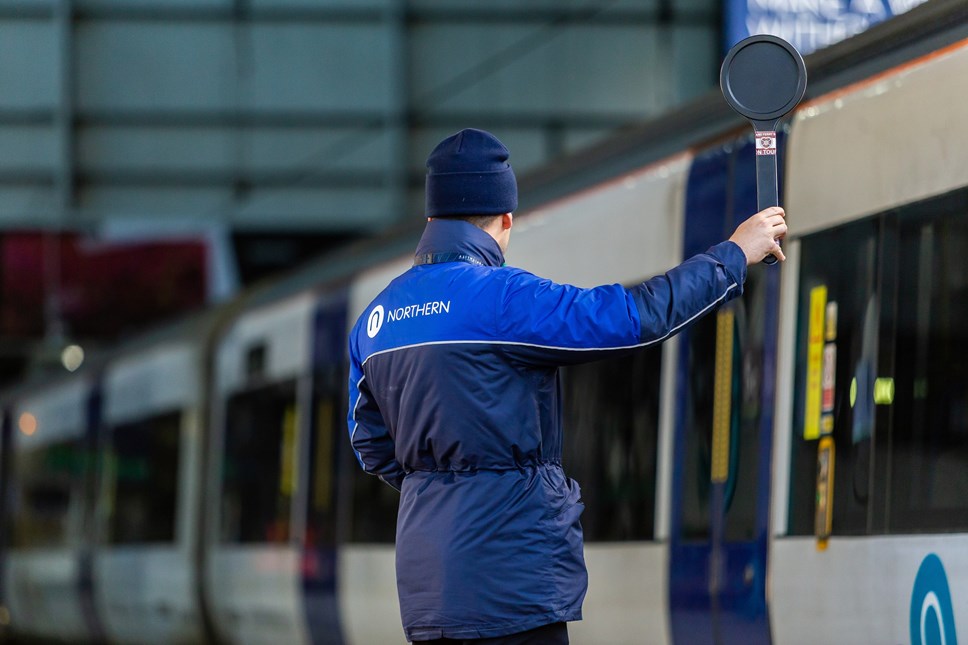
Taking a different track: New panel to help Northern support staff who ‘think differently’ | Northern News
Northern is working with more than 40 of its staff to come up with the best way to support the train operator’s neurodiverse employees.
media.northernrailway.co.uk
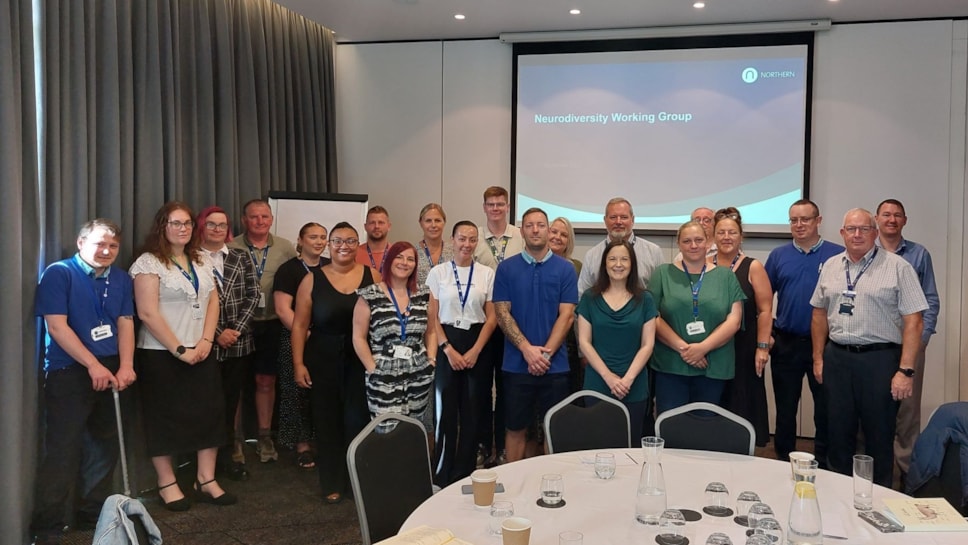
Train operator reviews recruitment process to better support candidates with ADHD | Northern News
Northern has completed a review of its recruitment process to ensure applicants with neurodivergent conditions are better supported.
media.northernrailway.co.uk
I could ask them what accommodations are available if that might be helpful? I haven't asked for any previously, and probably won't this time but it might be useful to know for future applicants.
Just a thought!
I think this is a good idea, plenty of regular questions in the forum, happy to rename this thread.Would people be interested in a general "neurodiversity on the railways" thread. Perhaps share experiences and resources you find helpful? Or just general life hacks
nolypops83
Member
Sure, but I don't want to take over your thread. If you don't mind then go ahead.I think this is a good idea, plenty of regular questions in the forum, happy to rename this thread.
redkiterail
Member
To all who do safety critical roles on the railway whilst being neurodiverse, congratulations as one who has dyslexia dyspraxia ADHD and now barred from any role that safety critical elements you have my respect.
I have to reconcile being the lowest on the totem board and not having much of a railway career since I have 0 experience in management and engineering. Only five years as L1 tda Clark apprenticeship I have always been classed as unsuitable.
I leave following recommendations if you trying to get a operational role on the railway chose to disclose or not I have been coach to not be so honest about my neurodiversity which to me is unsafe.
Get you needs adjustment assessment done in probation and at the end of all your training get the fact that your management are happy for you to do a safety critical role in writing.
I have to reconcile being the lowest on the totem board and not having much of a railway career since I have 0 experience in management and engineering. Only five years as L1 tda Clark apprenticeship I have always been classed as unsuitable.
I leave following recommendations if you trying to get a operational role on the railway chose to disclose or not I have been coach to not be so honest about my neurodiversity which to me is unsafe.
Get you needs adjustment assessment done in probation and at the end of all your training get the fact that your management are happy for you to do a safety critical role in writing.
To all who do safety critical roles on the railway whilst being neurodiverse, congratulations as one who has dyslexia dyspraxia ADHD and now barred from any role that safety critical elements you have my respect.
I have to reconcile being the lowest on the totem board and not having much of a railway career since I have 0 experience in management and engineering. Only five years as L1 tda Clark apprenticeship I have always been classed as unsuitable.
I leave following recommendations if you trying to get a operational role on the railway chose to disclose or not I have been coach to not be so honest about my neurodiversity which to me is unsafe.
Get you needs adjustment assessment done in probation and at the end of all your training get the fact that your management are happy for you to do a safety critical role in writing.
Sorry to hear. Are you able to give any more detail?
redkiterail
Member
Had a needs adjustment assessment report that states even with 1 on 1 coaching the risks will not be fully mitigate and in my expert opinion he can not perform any role that has safety critical elements

PupCuff
Member
I would challenge that on the grounds that the "expert" is clearly overreaching their remit.Had a needs adjustment assessment report that states even with 1 on 1 coaching the risks will not be fully mitigate and in my expert opinion he can not perform any role that has safety critical elements
Any assessment should be against the requirements for a specific role, how can you possibly with any degree of accuracy say an individual, even with adjustments, could not perform any role which has safety critical elements? That could cover a multitude of jobs with a wide range of environments, responsibilities and skillsets.

Had a needs adjustment assessment report that states even with 1 on 1 coaching the risks will not be fully mitigate and in my expert opinion he can not perform any role that has safety critical elements
Are you talking about yourself here? I presume you are but I just wanted to check.
There are very few areas that are just a catch-all "cannot perform safety critical duties" which are normally all physical limitations, some of which may only be temporary. Sounds like something to raise with your union if you are in one.
redkiterail
Member
it states my current role but knowing politics and management styles on the railway it will be quite encompassing
it states my current role but knowing politics and management styles on the railway it will be quite encompassing
A medical assessment for your specific role should have no bearing on any other role, as I am sure those who are neurodiverse may attest too and have shifted roles with success. "Politics" doesn't come into it, but that is a separate discussion as to whether you feel the environment you are in is one you want to stay in.
Tevion539
Member
I received an ASD diagnosis right after my initial rules, whilst I was route learning. I would say it’s helped me understand why I am the way I am. It certainly hasn’t changed me in any aspect
I’m very straight when it comes to rules. It’s black and white, and it does mean it’s sometimes difficult to “Look the other way” when passengers are, let’s say, disruptive to the comfort of others. However, I can still see the need to look past certain issues and just get on with it.
As for not being able to do the role? I don’t see why autism in itself is and issue. I mean, it affects everyone differently. Are you able to concentrate and keep your composure when it matters is the only time it should come to question in my opinion.
I’m very straight when it comes to rules. It’s black and white, and it does mean it’s sometimes difficult to “Look the other way” when passengers are, let’s say, disruptive to the comfort of others. However, I can still see the need to look past certain issues and just get on with it.
As for not being able to do the role? I don’t see why autism in itself is and issue. I mean, it affects everyone differently. Are you able to concentrate and keep your composure when it matters is the only time it should come to question in my opinion.
As for not being able to do the role? I don’t see why autism in itself is and issue. I mean, it affects everyone differently. Are you able to concentrate and keep your composure when it matters is the only time it should come to question in my opinion.
Also autism is - as you rightly said - defined as Autism Spectrum Disorder (ASD). By its very nature it is a spectrum meaning there is a range and therefore it will be on an individual basis as to your suitability for certain roles.
nolypops83
Member
So I've been applying for trainee driver roles for 2 years now. I'm based in the Manchester area and so far AWC have advertised once (I'm still in the running apparently but recruitment has paused) TPE advertised once but it closed in the less than 24 hrs and I missed it, and XC I haven't seen advertise but I could have missed it. I have signed up for vacancy alerts so will keep looking. Northern I have applied for and made it through to face to face interview for the second time and am waiting to on a date. Thinking of doing my psychometric tests privately while I wait as the ones that I passed in 2023 are nearly 2 years old so I don't want to wait too much longer to get the full set. Anyway, I digress...
It's a hugely competitive process and if I don't pass the tests this time around then that's me out of the race. It got me thinking about other roles that might be suitable to someone with ADHD/ASD. I realise were all different but just generally speaking. I don't fancy anything in customer service, whilst I don't mind dealing with other people occasionally, the idea of being alone in a cab for hours on end suits me just fine. I don't know if I'd enjoy being a conductor because of the customer service aspect, also there's always the threat of that job being cut, but I don't know enough about the industry to know if that's likely to happen sooner rather than later.
I've read up a little on roles in control. That seems rather interesting. Not sure how often they recruit for the manchester area?
Any suggestions? Or would I be better just getting any job on the railways and having a look around to see what might be suitable.
It's a hugely competitive process and if I don't pass the tests this time around then that's me out of the race. It got me thinking about other roles that might be suitable to someone with ADHD/ASD. I realise were all different but just generally speaking. I don't fancy anything in customer service, whilst I don't mind dealing with other people occasionally, the idea of being alone in a cab for hours on end suits me just fine. I don't know if I'd enjoy being a conductor because of the customer service aspect, also there's always the threat of that job being cut, but I don't know enough about the industry to know if that's likely to happen sooner rather than later.
I've read up a little on roles in control. That seems rather interesting. Not sure how often they recruit for the manchester area?
Any suggestions? Or would I be better just getting any job on the railways and having a look around to see what might be suitable.
I've read up a little on roles in control. That seems rather interesting. Not sure how often they recruit for the manchester area?
Any suggestions? Or would I be better just getting any job on the railways and having a look around to see what might be suitable.
Northern's control is based in Manchester and they have on occasion posted up roles. However control roles are often filled with people who a) have some sort of operational experience already or b) control room experience in similar industries (e.g. airlines / emergency services). It's also a rather different skillset to driving, even if there are some similarities. You are also regularly communicating with people not just within your control room but also on the phone to stations / train crew / signallers / other controllers so bare that in mind.
Many people would suggest getting your "foot in the door" and then moving up as you gain experience, but that is of course only a call you can make.
nolypops83
Member
The application process is really winding me up today. Job went live for Lumo (trainee driver) on Monday and I started my application yesterday. I checked and couldn't see an email for the recruitment team on the website. I spent last night checking my CV and writing a cover letter. I eventually found an email for their HR team today and realised the application had already closed. I've emailed them anyway, but they don't make it easy for you to contact them if you require any additional assistance with the application process. Their website says:
"If you require additional support to complete your application due to a disability or neurodivergent condition, please follow the links below. We encourage you to share any additional needs you may require so we can provide a fair and equal process for all who apply.
https://exceptionalindividuals.com/neurodiversity/
https://www.healthassured.org/blog/neurodiversity/
We reserve the right to close this vacancy early if we receive a high volume of applications."
What if the additional support I require is more time to complete the application? Surely their email should be on the page?
Anyone had any luck asking for extra time at the application stage for any TOC's?
"If you require additional support to complete your application due to a disability or neurodivergent condition, please follow the links below. We encourage you to share any additional needs you may require so we can provide a fair and equal process for all who apply.
https://exceptionalindividuals.com/neurodiversity/
https://www.healthassured.org/blog/neurodiversity/
We reserve the right to close this vacancy early if we receive a high volume of applications."
What if the additional support I require is more time to complete the application? Surely their email should be on the page?
Anyone had any luck asking for extra time at the application stage for any TOC's?
I have autism and when I was applying to trainee train driver roles I always had a CV and cover letter ready to submit. It's true that you'll possibly need a little bit of time to tailor the cover letter and answer any competency-based questions that form part of the application but it's rare for any of them to be particularly onerous.
When I was applying for vacancies (both as a trainee and as a qualified driver before the move to my current TOC) the only times I mentioned autism were before the MMI during the former (body language might appear slightly different) and during my medicals.
I never asked for 'reasonable adjustments" because from experience in a previous career the only thing which matters when you get to the management interview is the impression the people interviewing you get. Most of the adjustments involve asking to see things like questions in advance and if I were interviewing someone who had that advantage I'd have mentally discounted them from the process before even seeing them.
Train driving involves dealing with the unexpected, people who can't deal with that aren't suitable for the job.
When I was applying for vacancies (both as a trainee and as a qualified driver before the move to my current TOC) the only times I mentioned autism were before the MMI during the former (body language might appear slightly different) and during my medicals.
I never asked for 'reasonable adjustments" because from experience in a previous career the only thing which matters when you get to the management interview is the impression the people interviewing you get. Most of the adjustments involve asking to see things like questions in advance and if I were interviewing someone who had that advantage I'd have mentally discounted them from the process before even seeing them.
Train driving involves dealing with the unexpected, people who can't deal with that aren't suitable for the job.
computerSaysNo
Established Member
- Joined
- 14 Dec 2018
- Messages
- 1,668
These two things are not equivalent though. In the train driver role the driver is, I assume, trained on what to do for every circumstance. Even if the specifics of an incident are unknown, the procedure to deal with it will have been studied and trained for. It is also unlikely to involve talking to unknown people about personal things, so less likely to bring up feelings of social anxiety.Most of the adjustments involve asking to see things like questions in advance and if I were interviewing someone who had that advantage I'd have mentally discounted them from the process before even seeing them.
Train driving involves dealing with the unexpected, people who can't deal with that aren't suitable for the job.
Compare this with a job interview where you may be asked to talk about things which have happened in your personal life, which you may not have thought about for several years (e.g. since your last job interview). You're in a room with people you don't know and you're going to be asked questions you don't know in advance - both of these can contribute to anxiety which may not be present once someone has completed training and is used to doing their job.
These are just some brief examples off the top of my head and do not represent every reason why someone might benefit from e.g. seeing the interview questions in advance.
These two things are not equivalent though. In the train driver role the driver is, I assume, trained on what to do for every circumstance. Even if the specifics of an incident are unknown, the procedure to deal with it will have been studied and trained for. It is also unlikely to involve talking to unknown people about personal things, so less likely to bring up feelings of social anxiety.
Compare this with a job interview where you may be asked to talk about things which have happened in your personal life, which you may not have thought about for several years (e.g. since your last job interview). You're in a room with people you don't know and you're going to be asked questions you don't know in advance - both of these can contribute to anxiety which may not be present once someone has completed training and is used to doing their job.
These are just some brief examples off the top of my head and do not represent every reason why someone might benefit from e.g. seeing the interview questions in advance.
There are quite a few things I've encountered for which there is no rule book provision for. Had a situation a few months back where I almost ran over someone who was most likely either drunk/on drugs about a mile from a station because he'd decided seemingly to walk home rather than wait for the train. He asked to be allowed on-board but the only way in was through the driving cab. There's no rule book scenario for that and you have to pick the least worst option.
I had another situation recently where I had an onboard fire alarm at night shortly before a tunnel, had a couple of seconds to decide whether to immediately stop or continue through.
Speaking of social anxiety, as a train driver you still have to deal with the public. I was recently onboard a train which was cancelled due to a body on the track, the line was blocked, I had no idea when it would re-open and there was hundreds of passengers asking what was now the best way to their destination. You're the face of the company in that situation, you can't run off and hide somewhere.
The training isn't exhaustive and even if it was, you can go decades without a particular training scenario happening for real before it suddenly occurs whilst your in the driving seat.
I think train driving is a good job for some people with autism but it's certainly not a job for someone who isn't resilient.
nolypops83
Member
I have autism and when I was applying to trainee train driver roles I always had a CV and cover letter ready to submit. It's true that you'll possibly need a little bit of time to tailor the cover letter and answer any competency-based questions that form part of the application but it's rare for any of them to be particularly onerous.
When I was applying for vacancies (both as a trainee and as a qualified driver before the move to my current TOC) the only times I mentioned autism were before the MMI during the former (body language might appear slightly different) and during my medicals.
I never asked for 'reasonable adjustments" because from experience in a previous career the only thing which matters when you get to the management interview is the impression the people interviewing you get. Most of the adjustments involve asking to see things like questions in advance and if I were interviewing someone who had that advantage I'd have mentally discounted them from the process before even seeing them.
Train driving involves dealing with the unexpected, people who can't deal with that aren't suitable for the job.
Well for a recent application to Northern I had to answer 3 questions (word count between 500 and 1000) and for Avanti West Coast it was more of the same but different questions, so I've not been able to prepare for either in advance. The Lumo job required a new cover letter (cv was fine) and having more than 48 hours to read through the company info, digest it and then write my letter would have been nice.
As a previous poster said I don't think it's got anything to do with dealing with unexpected situations. I presume I'm not going to be asked to write 3000 words at short notice in the job. However, if an emergency situation developed then I'm sure we'd receive enough training to know how to comfortably deal with the situation. When someone crashed their car into me I didn't freak out (I ended up consoling them!
), when I had to deal with a medical emergency in a pub beer garden I didn't panic, but ask me to fill in a job application at short notice and I'm stressed to the hilt.Serious emergency - Cool as a cucumber. Low miff
Job application form - Mad as a lorry

JasonL
Member
Hello, can anyone give me some advice here? I have been diagnosed with Autism and ADHD when I was 3 years old and I have always been very fixated on trains and the railway industry. I've sort of rediscovered my passion for trains as I am in my mid 20s. I have had jobs in logistics and in security but I have been out of work for a year after the company I worked for had it's contract terminated at the venue I worked at and I been applying for all kinds of jobs that I can realistically do but struggle to get anywhere. What sort of role would best suit me to start off with? Northern Trains is the local operator for me.
- Status
- Not open for further replies.