I would like some help here for my daughter. She is 20 years old and she was a student at the time and was on a train from Guildford to Woking on the 17th March, 2024. She had both railway cards, 16-17 and 16-25. When buying a ticket, the railway card 16-17 on her app was already selected and she used the wrong card to buy a ticket. In the past, she used 16-25 on the same trip and that is visible to the train company. Later, she was contacted by email to supply them with the picture of both Rail cards which she did. She called the train company multiple times after that but she did not hear anything from them. She moved the address and she informed them about the address change. She has never received any written letter about it or any further email correspondence. The court case was at the Wimbledon courts and it was withdrawn, we do not know why it was withdrawn or anything about it. We called the court and this is what they said. Now she received a letter from a solicitor company representing the train company asking for £1850 and threatening with a court case and criminal record. Is there anybody with a similar experience? She has never tried to escape her fine but she was not presented with one in the first place. Any advice?

-
Our new ticketing site is now live! Using either this or the original site (both powered by TrainSplit) helps support the running of the forum with every ticket purchase! Find out more and ask any questions/give us feedback in this thread!
You are using an out of date browser. It may not display this or other websites correctly.
You should upgrade or use an alternative browser.
You should upgrade or use an alternative browser.
South Western Railway fine
- Thread starter Gordan
- Start date
- Status
- Not open for further replies.
Sponsor Post - registered members do not see these adverts; click here to register, or click here to log in
R
RailUK Forums

Fawkes Cat
Established Member
- Joined
- 8 May 2017
- Messages
- 5,304
Welcome to the forum! This all sounds very odd, so it would be helpful if you could show us the letter from the solicitors (anonymised so as not to tell us and the whole internet who your daughter is).I would like some help here for my daughter. She is 20 years old and she was a student at the time and was on a train from Guildford to Woking on the 17th March, 2024. She had both railway cards, 16-17 and 16-25. When buying a ticket, the railway card 16-17 on her app was already selected and she used the wrong card to buy a ticket. In the past, she used 16-25 on the same trip and that is visible to the train company. Later, she was contacted by email to supply them with the picture of both Rail cards which she did. She called the train company multiple times after that but she did not hear anything from them. She moved the address and she informed them about the address change. She has never received any written letter about it or any further email correspondence. The court case was at the Wimbledon courts and it was withdrawn, we do not know why it was withdrawn or anything about it. We called the court and this is what they said. Now she received a letter from a solicitor company representing the train company asking for £1850 and threatening with a court case and criminal record. Is there anybody with a similar experience? She has never tried to escape her fine but she was not presented with one in the first place. Any advice?
Thank you for taking time to reply. I have attached two pages of the letter sent 2 days ago. My daughter's email was available all the time and is only used now by solicitors. Every letter went to an old house she was renting whilst being a student. At least, that is what we think it happened. As I mentioned they were informed of the change of the address.
Attachments
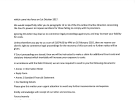
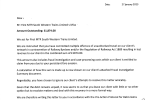
The letter from the solicitors doesn't really help us give this advice.
Does the attachment they refer to give the full details?
If not I think the first stage is to write to the solicitors and ask them for full details of what the issue(s) is (are) and how that amount has been calculated.
I would make clear that you have very limited knowledge of this other than a court case being withdrawn but the circumstances of this are unknown to you.
I think you also need to make clear that it is not a case of ignoring communications from their client but that you have not received those communications.
You may need to make clear you are acting on behalf of your daughter and have written authorisation from her to do so (and enclose it).
Does the attachment they refer to give the full details?
If not I think the first stage is to write to the solicitors and ask them for full details of what the issue(s) is (are) and how that amount has been calculated.
I would make clear that you have very limited knowledge of this other than a court case being withdrawn but the circumstances of this are unknown to you.
I think you also need to make clear that it is not a case of ignoring communications from their client but that you have not received those communications.
You may need to make clear you are acting on behalf of your daughter and have written authorisation from her to do so (and enclose it).
Gloster
Veteran Member
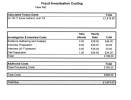
sorry, I have just realised that there was another page in the pdf which explains the fine.
A thought on this: could the Investigation & Interview Costs be the solicitors’ fees, while the Additional Costs are the standard SWR investigation ones. It still isn’t very informative.
Note that this is a civil claim, not a criminal case. Most of it is the amount relating to the ticketing side, £1600, and if there isn't an attachment with those fares listed then that's the starting point here. The other components are open to challenge in court, but this is heading to a negotiation, given the way it is written. The first thing to do is to work out the correct fare amounts, and since it is a civil case I would advocate taking the paid fares into account - for criminal cases the rail companies tend to ignore paid fares if the railcard was invalid, which should be challenged, but you are in a position to argue more forcefully here since it's a debt recovery.
Fawkes Cat
Established Member
- Joined
- 8 May 2017
- Messages
- 5,304
Indeed - this isn't threatening your daughter with criminal action: instead it's threatening civil action to recover the money.Note that this is a civil claim, not a criminal case. Most of it is the amount relating to the ticketing side, £1600, and if there isn't an attachment with those fares listed then that's the starting point here. The other components are open to challenge in court, but this is heading to a negotiation, given the way it is written. The first thing to do is to work out the correct fare amounts, and since it is a civil case I would advocate taking the paid fares into account - for criminal cases the rail companies tend to ignore paid fares if the railcard was invalid, which should be challenged, but you are in a position to argue more forcefully here since it's a debt recovery.
This isn't something we see very frequently here so I don't think that we have the depth of experience that we can normally call on, but my tentative thoughts are that despite the threatening wording, this is essentially an invitation to negotiate. Failure to do so will mean that your daughter faces a
The immediate problem to solve is that the railway and their solicitors think that your daughter has been ignoring their letters. So it's important in short order to get them to understand that this wasn't deliberate, and restart the discussion. Once that's underway I would think there will be a chance to negotiate the amount that's being asked for down a bit.
(Edited to remove reference to CCJ)
Last edited:

WesternLancer
Veteran Member
- Joined
- 12 Apr 2019
- Messages
- 15,232
Unusual one. Other forum experts with court experience may be able to help here.
OP may find it helpful to post drafts of their potential reply to this here to get informed views on how to make a reply as good or as effective as it can be.
I suggest op waits a day or two to see who pitches in on this thread with further advice on next steps to benefit from the variety of wisdom on this forum.
OP may find it helpful to post drafts of their potential reply to this here to get informed views on how to make a reply as good or as effective as it can be.
I suggest op waits a day or two to see who pitches in on this thread with further advice on next steps to benefit from the variety of wisdom on this forum.
Yes, so my thoughts are
- the basis of the letter is flawed because the pre-action conduct requirements have not been fulfilled.
- in particular SWR were informed of the address change but have not responded to that
- there has been no attempt at understanding the debt and the amount
- any attempt to avoid proceedings is flawed by not engaging with the traveller
- there has been no attempt at using Alternative Dispute Resolution here
- therefore Paragraph 3 of the Practice Directions has not been fulfilled
Obviously it will help the above if the traveller has retained evidence of contacting SWR.
The rail fare listed has not been broken down and needs to be to gain understanding of the debt
The other charges as listed are disproportionate, given the above, and the claimant will be put to strict proof as to whether this was necessary or not, and whether they could have been avoided had they read the address change letter.
You should consider asking specifically for an arbitrator or ADR entity to reach a mutually satisfactory conclusion, and to avoid proceedings. If you make that offer and SWR rejects it, then they start with a minor black mark on their copy book.
You could consider (in addition to the above) to meet the solicitors or their client to resolve the debt amount and means to payment - I presume ypur daughter has limited income. Again that will work in your favour if you offer this with sincerity.
You could also make payment of the amount of fares that are definitely due without further discussion, and say this is your attempt at goodwill.
Note that ending up with an adverse result from the Small Claims channel of the civil courts will not result in a CCJ - if you pay it swiftly after the court hearing then it clears the matter. It's not a criminal conviction. If you turn up at court, and explain what's happened and why, then the District Judge will reach a conclusion based on the balance of probabilities, and usually is sympathetic to people who turn up and make an effort to reach a settlement. Claimant solicitors less so, since it's more work for them.
A lot of the threats in that email will come to nothing since (a) their legal costs are deeply restricted in Small Claims and won't cover a 2 hour hearing and (b) the debt recovery process revolves around the claimant recovering non-arguable amounts. A court can and will put a red line through "extras" if they aren't necessary or porportionate.
The reason I suggest the above is whether there is an element of "low hanging fruit" from SWR and the solicitor. If you indicate that you will engage fully, but at some effort on their part, this may change their approach. They may be less willing to get involved in a full dialogue on this.
- the basis of the letter is flawed because the pre-action conduct requirements have not been fulfilled.
- in particular SWR were informed of the address change but have not responded to that
- there has been no attempt at understanding the debt and the amount
- any attempt to avoid proceedings is flawed by not engaging with the traveller
- there has been no attempt at using Alternative Dispute Resolution here
- therefore Paragraph 3 of the Practice Directions has not been fulfilled
Obviously it will help the above if the traveller has retained evidence of contacting SWR.
The rail fare listed has not been broken down and needs to be to gain understanding of the debt
The other charges as listed are disproportionate, given the above, and the claimant will be put to strict proof as to whether this was necessary or not, and whether they could have been avoided had they read the address change letter.
You should consider asking specifically for an arbitrator or ADR entity to reach a mutually satisfactory conclusion, and to avoid proceedings. If you make that offer and SWR rejects it, then they start with a minor black mark on their copy book.
You could consider (in addition to the above) to meet the solicitors or their client to resolve the debt amount and means to payment - I presume ypur daughter has limited income. Again that will work in your favour if you offer this with sincerity.
You could also make payment of the amount of fares that are definitely due without further discussion, and say this is your attempt at goodwill.
Note that ending up with an adverse result from the Small Claims channel of the civil courts will not result in a CCJ - if you pay it swiftly after the court hearing then it clears the matter. It's not a criminal conviction. If you turn up at court, and explain what's happened and why, then the District Judge will reach a conclusion based on the balance of probabilities, and usually is sympathetic to people who turn up and make an effort to reach a settlement. Claimant solicitors less so, since it's more work for them.
A lot of the threats in that email will come to nothing since (a) their legal costs are deeply restricted in Small Claims and won't cover a 2 hour hearing and (b) the debt recovery process revolves around the claimant recovering non-arguable amounts. A court can and will put a red line through "extras" if they aren't necessary or porportionate.
The reason I suggest the above is whether there is an element of "low hanging fruit" from SWR and the solicitor. If you indicate that you will engage fully, but at some effort on their part, this may change their approach. They may be less willing to get involved in a full dialogue on this.

Fawkes Cat
Established Member
- Joined
- 8 May 2017
- Messages
- 5,304
Looks as if I have been wrong talking about CCJs. Sorry for being unhelpful and thanks for the correction.Note that ending up with an adverse result from the Small Claims channel of the civil courts will not result in a CCJ -
Gloster
Veteran Member
I don’t think anybody else has mentioned it, but in the original post it says that the incident occurred on 17 March last year. Therefore SWR is out of time to lay charges unless they use the Fraud Act, which I don’t think that they would dare to use in such a case. Could they have cacked it up and are trying to rescue something by using solicitors, rather than dropping the matter, which seems to be the norm?
Secondly, it would seem to me that they can only legitimately claim for journeys made with the 16-17 Railcard when she was past her 18th birthday. Any made with the 16-25 Railcard are, subject to time restrictions and the like, fully in order.
I am NOT an expert.
Secondly, it would seem to me that they can only legitimately claim for journeys made with the 16-17 Railcard when she was past her 18th birthday. Any made with the 16-25 Railcard are, subject to time restrictions and the like, fully in order.
I am NOT an expert.
Well you're not that wrong - most small claim court cases do result in CCJs. Every day vast lists of debts go through courts and end up as CCJs.Looks as if I have been wrong talking about CCJs. Sorry for being unhelpful and thanks for the correction.
But let me explain this a bit more since the key factor in those cases is someone with a debt who doesn't respond to letters, nor to the Small Claims process, nor to the judgement. So this is things like Council Tax and HP schemes, where the reality is that Small Claims is just a washing endeavour to get the debt to a debt recovery company and/or bailiffs, since that's when at least a proportion of hard-to-recover debts finally do get paid, and with massive uplifts on the original debt.
If you go to court, you can defend your position and each line of the charge. If the DJ decides on the balance of probabilities (so not beyond reasonable doubt) that nevertheless a debt of £x is outstanding, the court usually gives 14 days to pay (and sometimes take a few days to send that out, so 3 weeks in practice). If you pay that judgement within the time frame, or even a little after, then there is no CCJ. Furthermore the DJ can also accept a case for staged payment plan over time, longer than for criminal cases, and that too avoids a CCJ even though it may stretch for 2 or 3 years.
If someone actually engages in the process, it makes it quite difficult for large entities to manage this cost effectively - legal fees cannot be recovered except to a small amount. There is also a new requirement for mediation in contested cases, which may work well for the OP but large outfits absolutely hate it. So frankly many companies in this position scare their customers but heavy language and random threats in order to dissuade them from engaging, in the hope the big bill will somehow go away. Typically it won't but then the debt recovery agencies are often effective.
On the other hand it seems from post 1 that perhaps only one fare is wrongly charged, maybe a few more, but the OP did have the railcards for the other fares. But we need to have more information from the OP about exactly what happened here and previously. But if it's just that one fare that is missing, presumably a few pounds, then they should pay that in using the bank details provided in the solicitor's letter. If there are other fares that SWR has come up with, well that needs to be proved, but I bet they also missed the railcard letter too, so they just did a data dump of all railcard tickets on SWR and assumed there is no railcard, that amounts to £1600.
Debts can be recovered for 6 years in England, the Magistrates requirement for 6 months hearings on summary cases is not relevant or connected here, but notice how the solicitor carefully worded this to look like a threat but actually was not a threat.
It would not surprise me if the solicitors have agreed to take on this case on a "profit share" basis. If they realise there is only £10 in it, their interest may wane.
Fawkes Cat
Established Member
- Joined
- 8 May 2017
- Messages
- 5,304
This is more or less it: the OP's daughter isn't being prosecuted in the criminal courts and so won't end up with a criminal record: instead they're being warned that they could be sued for the money in the civil courts.I don’t think anybody else has mentioned it, but in the original post it says that the incident occurred on 17 March last year. Therefore SWR is out of time to lay charges unless they use the Fraud Act, which I don’t think that they would dare to use in such a case. Could they have cacked it up and are trying to rescue something by using solicitors, rather than dropping the matter, which seems to be the norm?
As above, I have already demonstrated that I don't fully understand the process, but in practical terms I think that what we are looking at is a 'Solicitor's Letter' which is meant to frighten the recipient into cooperation. It certainly does seem to have frightened them, and given that it seems to be common ground that there are some unpaid fares out there, my advice is to cooperate - not necessarily by paying the amount demanded, but by negotiating to make sure that the railway are compensated for their real loss I.e.the difference between what was paid using the wrong railcard and what should have been paid using the right railcard.
If you go to court, you can defend your position and each line of the charge. If the DJ decides on the balance of probabilities (so not beyond reasonable doubt) that nevertheless a debt of £x is outstanding, the court usually gives 14 days to pay (and sometimes take a few days to send that out, so 3 weeks in practice). If you pay that judgement within the time frame, or even a little after, then there is no CCJ. Furthermore the DJ can also accept a case for staged payment plan over time, longer than for criminal cases, and that too avoids a CCJ even though it may stretch for 2 or 3 years.
The period is fixed as one calendar month after a judgement is issued. In practice, the judgement (CCJ) is made immediately and added to the register shortly afterwards. Providing the judgement is paid in full within 30 days, it will be removed - you may need to apply to the court for this with evidence of payment.
This is because you may have a legitimate dispute which you need the courts to intervene on and losing just means you owe the money. A CCJ is only added onto your credit file if it remains unpaid after the one month period (I believe it's possible they may show sooner but it will completely disappear if paid in this time as above).
A Tomlin order can be agreed with the other party prior to a court hearing (they could also discontinue the process but if they've started it then often the view is it makes sense to see it through).
This is essentially a consent order which means that the issue won't be heard in court as long as both parties meet their agreed obligations, and if they don't the case will return to court even if the limitations period has expired.
Please correct me if I'm wrong but I am not aware of any mechanism for a judgement (rather than a settlement/tomlin order pre judgement) to be in instalments without it being added to an individual's credit file. Even if a payment plan is in place, if the judgement is not satisfied by the one calendar month period, it will be added to a credit file.
This case is very interesting - I believe, other than a case a few weeks ago which was also SWR, we have not seen the TOCs using the civil courts. They will need to engage with the process more and if it does end up with an actual hearing, they will need to prove their full losses, it's not a strict liability situation as with prosecutions under the bylaws.
I don't think you would normally get a judgement with a settlement plan in it (though I've seen one relating to Council Tax which is normally paid monthly), they normally just say "payment of £x due within 14 days", but the DJ can give a green light to a settlement, Tomlin or document exchange to give an agreed payment plan, and will normally OK this if the the defendant puts up a sensible case for this. Also the compulsory Mediation can give an outcome which the courts will encourage. These two options would not lead to a CCJ if the plan was followed.Please correct me if I'm wrong but I am not aware of any mechanism for a judgement (rather than a settlement/tomlin order pre judgement) to be in instalments without it being added to an individual's credit file. Even if a payment plan is in place, if the judgement is not satisfied by the one calendar month period, it will be added to a credit file.
This case is very interesting - I believe, other than a case a few weeks ago which was also SWR, we have not seen the TOCs using the civil courts. They will need to engage with the process more and if it does end up with an actual hearing, they will need to prove their full losses, it's not a strict liability situation as with prosecutions under the bylaws.
It's hopefully an irrelevant point here, since I am hoping the OP can confirm the missed fares are a lot less than £1600.
Also I'm almost certain a Small Claims court would not be happy with a TOC saying "they paid £4 with the wrong railcard, it should have been £6 with the other railcard, but we want to charge an Anytime Single of £10". I'd be almost certain than an engaged defender would be allowed to pay £2 not £10, the direct overall loss to the TOC. That said, I bet SWR has just handed the problem over to solicitors and they will have a keen eye on billable hours, and will thus reach a settlement which maximises return.
Last edited:
I think this is probably going off topic now but council tax is handled differently - if you fail to pay your council tax and it goes through court, the council will obtain a liability order. These are distinct from CCJs and council tax debts do not appear on credit files or the register of judgements.I don't think you would normally get a judgement with a settlement plan in it (though I've seen one relating to Council Tax which is normally paid monthly), they normally just say "payment of £x due within 14 days", but the DJ can give a green light to a settlement, Tomlin or document exchange to give an agreed payment plan, and will normally OK this if the the defendant puts up a sensible case for this. Also the compulsory Mediation can give an outcome which the courts will encourage. These two options would not lead to a CCJ if the plan was followed.
It's hopefully an irrelevant point here, since I am hoping the OP can confirm the missed fares are a lot less than £1600.
Also I'm almost certain a Small Claims court would not be happy with a TOC saying "they paid £4 with the wrong railcard, it should have been £6 with the other railcard, but we want to charge an Anytime Single of £10". I'd be almost certain than an engaged defender would be allowed to pay £2 not £10, the direct overall loss to the TOC. That said, I bet SWR has just handed the problem over to solicitors and they will have a keen eye on billable hours, and will thus reach a settlement which maximises return. Different to a cl
I agree with the rest though, they are going to need to demonstrate actual damages here.
This is an interesting and, in many respects, a concerning case.
I can't remember seeing a case involving the civil courts before. I'm wondering why SWR have decided to do this. it could be:
1. They are out of time to prosecute in the Magistrates Court
2. They would've prosecuted in the past but such a prosecution might have been incorrect (i.e. like the 76,000 cases that are in the process of being nullified)
3. They stand to gain more money via the civil courts than if they went via the Magistrates Court
Whatever the reason, many people want to see rail fare evasion made a civil matter but I've long had reservations about this. Also, while they probably don't have to do so, I can't see any reference to the use of civil courts in SWR's Revenue Protection Policy. There are references to Magistrates Courts....
I can't remember seeing a case involving the civil courts before. I'm wondering why SWR have decided to do this. it could be:
1. They are out of time to prosecute in the Magistrates Court
2. They would've prosecuted in the past but such a prosecution might have been incorrect (i.e. like the 76,000 cases that are in the process of being nullified)
3. They stand to gain more money via the civil courts than if they went via the Magistrates Court
Whatever the reason, many people want to see rail fare evasion made a civil matter but I've long had reservations about this. Also, while they probably don't have to do so, I can't see any reference to the use of civil courts in SWR's Revenue Protection Policy. There are references to Magistrates Courts....
In this case, there may only be one fare involved and it seems more of a communications mix-up - a not exactly unusual occurrence - than malevolence by SWR or the OP.1. They are out of time to prosecute in the Magistrates Court
2. They would've prosecuted in the past but such a prosecution might have been incorrect (i.e. like the 76,000 cases that are in the process of being nullified)
3. They stand to gain more money via the civil courts than if they went via the Magistrates Court
For the 3rd point - I'm less sure. The claim can only be for provable loss, so charging standard single fares won't wash, in my view. If the gap between the 16-17 fare and the 16-25 fare was £2, that is what SWR can reasonably claim, not a brand new single fare of say £10. Secondly all the charges have to be provable and proportionate, and that you can see in the breakdown, noting the zero balance lines. The zero balance lines for interview costs indicates there is a new sausage machine in operation here, the OP won't be alone in getting an email like this. If I were defending this, I would challenge each line of this, and put against it my own costs of notifying SWR of the address change and the two railcard submissions, at the same rates in a counter-claim. None of this is possible in a criminal case.
For the second point, well SWR can / could prosecute, they just need to work within the law, not according to what is expedient to SWR. The strict liability components and blind acceptance of TOC costs, blind acceptance of TOC arguments means that the criminal system is biased against the passenger. It is entirely wrong that a single £2 fare gap should result in a criminal conviction, entirely correct that SWR should recover their £2. They are only out of time due to excessive workload on the SWR staff, TfL shows how to drag 100 people per working day through the courts, and within weeks.
On the other hand the small claim courts are participatory, with a new mandatory arbitration stage, a bias towards ADR. Small claims are usually held in chambers, around the DJ's long desk, everyone sat down with papers and cups of drink in front of them, rather than a scary court room. There's a sense of getting to proportionate and sensible solutions, and DJs are usually open to creative solutions in addition to Tomlins.
If the OP's point is that only one or a few fares were involved, there is a real chance of making that point and getting that as settlement - and a long list of steps before it gets to court before worrying about judgement. It is highly noticeable that the solicitor's email here tried to bounce the OP into payment, rather than opening up the OP into the various potential options and rounds of dialogue that should be involved here.
Fawkes Cat
Established Member
- Joined
- 8 May 2017
- Messages
- 5,304
As various people have said, this threat to use the civil courts is new to most of us. For our benefit (and quite possibly the OP) please could you expand on shorthand like 'Tomlin' until we're up to speed?Tomlins
A Tomlin Order is a court-approved settlement agreement that stays further legal proceedings (e.g., preventing a CCJ from being issued). If the terms are breached, the claimant (in this case, SWR) can apply to the court to enforce the agreement. Tomlin Orders are commonly used to formalise payment plans and other settlement terms when mutually agreed before a hearing. A payment plan can also be agreed after a judgment is issued, but the judgment will remain on the defendant’s credit record for six years unless paid within a calendar month.As various people have said, this threat to use the civil courts is new to most of us. For our benefit (and quite possibly the OP) please could you expand on shorthand like 'Tomlin' until we're up to speed?
Fawkes Cat
Established Member
- Joined
- 8 May 2017
- Messages
- 5,304
ThanksA Tomlin Order is a court-approved settlement agreement that stays further legal proceedings (e.g., preventing a CCJ from being issued). If the terms are breached, the claimant (in this case, SWR) can apply to the court to enforce the agreement. Tomlin Orders are commonly used to formalise payment plans and other settlement terms when mutually agreed before a hearing. A payment plan can also be agreed after a judgment is issued, but the judgment will remain on the defendant’s credit record for six years unless paid within a calendar month.
Just to add to that a little. Generally a Tomlin Order is for complicated or larger amounts, relative to the defendant's ability to pay, so if the £1600 was in contention here and the OP's daughter could not easily afford it. Hopefully not here. It's a form of Consent Order, but it is confidential and so if stuck to, and agreed before judgement stage, then there is no CCJ. Indeed many Tomlin Orders start off with words to the effect that proceedings are suspended, a payment plan can be put in place, or payment deferred for pretty much any suitable length; however any breach of the agreement allows the train company to apply for enforcement without needing a new claim. So it heads off a judgement with a formal pause, and thus prevents a CCJ. If enforcement is subsequently successfully deployed, then the defender can still pay within the timetable of the new enforced judgement and not get a CCJ.
For small sums this isn't appropriate, so if the OP here establishes the sums involved are say £100, plus any quibbles on the costs and fees (I see one element is defined as Case Processing Costs, what's that?!) then a Tomlin Order is definitely not the way to go. Not least because there can be a £119 charge for them, though a suspension of enforcement fee is only £15. As with criminal cases the passenger can reach a deal with the solicitor / barrister for the train company just before the hearing starts and then the case is withdrawn. I know of one case where the DJ realised this was the way to go, hinted this strongly, adjourned proceedings for 15 minutes, went for a coffee and was pleased to see it all sorted out by his return.
After judgement then there can be an agreement between parties regarding payment, but that's after the judgement and so if still outstanding after 14 days / 30 days then the CCJ is recorded. There are also other ways to head off a CCJ, it's a more flexible process than the criminal track and deliberately so. There is also the Mediation stage before all of this. If you take away the criminalisation factor and see this as a more technical settling off a disagreement then it strikes me as a more civilised approach to cases for some of the grey area cases we see here.
For small sums this isn't appropriate, so if the OP here establishes the sums involved are say £100, plus any quibbles on the costs and fees (I see one element is defined as Case Processing Costs, what's that?!) then a Tomlin Order is definitely not the way to go. Not least because there can be a £119 charge for them, though a suspension of enforcement fee is only £15. As with criminal cases the passenger can reach a deal with the solicitor / barrister for the train company just before the hearing starts and then the case is withdrawn. I know of one case where the DJ realised this was the way to go, hinted this strongly, adjourned proceedings for 15 minutes, went for a coffee and was pleased to see it all sorted out by his return.
After judgement then there can be an agreement between parties regarding payment, but that's after the judgement and so if still outstanding after 14 days / 30 days then the CCJ is recorded. There are also other ways to head off a CCJ, it's a more flexible process than the criminal track and deliberately so. There is also the Mediation stage before all of this. If you take away the criminalisation factor and see this as a more technical settling off a disagreement then it strikes me as a more civilised approach to cases for some of the grey area cases we see here.
When a train company prosecutes they typically can only do so for the single offence where the person ws caught and they will normally pay compensation for this single fare avoided, fine, surcharge and a contribution towards costs which is norally around £175.For the 3rd point - I'm less sure. The claim can only be for provable loss, so charging standard single fares won't wash, in my view. If the gap between the 16-17 fare and the 16-25 fare was £2, that is what SWR can reasonably claim, not a brand new single fare of say £10. Secondly all the charges have to be provable and proportionate, and that you can see in the breakdown, noting the zero balance lines. The zero balance lines for interview costs indicates there is a new sausage machine in operation here, the OP won't be alone in getting an email like this. If I were defending this, I would challenge each line of this, and put against it my own costs of notifying SWR of the address change and the two railcard submissions, at the same rates in a counter-claim. None of this is possible in a criminal case.
As we all know TOCs like out of court settlements because they receive all the money. They will typically factor in what they believe are all the fares avoided at a punitive Anytime rate plus an admin fee. The TOC gets more money than they would have done had the matter gone to court, the cost to the passenger os probably similar than if they had gone to court but cruicially they avoid a conviction. The loser is The Treasury because the fine imposed by a court goes to them.
With this case going to the civil court it looks like they are claiming for all the costs they believe the passenger has avoided, as they would in an out of court settlement. Costs seem to be inflated based on what we'd normally see for an out of court settlement or a Magistrates Court case. While there isn't a criminal convictio I am concerned about the impact of civil court proceedings, especially where people don't engage with the process which, let's face it, happens frequently in cases of rail fare evasion.
Keeping low level rail fare offences out of the criminal court system and letting them become a civil matter is mentioned regularly and on the surface is an attractive proposition. However I do have concerns...For the second point, well SWR can / could prosecute, they just need to work wimthin the law, not according to what is expedient to SWR. The strict liability components and blind acceptance of TOC costs, blind acceptance of TOC arguments means that the criminal system is biased against the passenger. It is entirely wrong that a single £2 fare gap should result in a criminal conviction, entirely correct that SWR should recover their £2. They are only out of time due to excessive workload on the SWR staff, TfL shows how to drag 100 people per working day through the courts, and within weeks.
A Railway Byelaw conviction in the Magistrates Court results in a fine and is spent after a year. It almost always won't appear on a DBS check.
A County Court judgement that isn't settled can have long lasting effects, including obtaining credit. Is this really justified for minor railway ticketing matters.
I do believe the whole legal framework around railway ticketing offences needs urgent reform, I'm just not 100% convinced that making them a civil matter is the way to go.

Egg Centric
Established Member
"Kindly acknowledge safe receipt of our letter and enclosures" suggests they couldn't even spring to recorded delivery. The more cynical of us may conclude something about the sincerity of this action from that...
Just because we haven't seen this before doesn't mean it hasn't been happening at all. @RPI has been telling us for a while that GWR do civil recovery in certain circumstances. Wonder if it looks liek this.
Just because we haven't seen this before doesn't mean it hasn't been happening at all. @RPI has been telling us for a while that GWR do civil recovery in certain circumstances. Wonder if it looks liek this.

Haywain
Veteran Member
- Joined
- 3 Feb 2013
- Messages
- 24,734
I disagree - TOC revenue goes to the Treasury, so they are a winner. Another winner is the taxpayer who doesn't have to provide court services.The loser is The Treasury because the fine imposed by a court goes to them.
Thanks to everybody who participated.
We have now replied to the solicitor asking for the breakdown of £1600 and said that my daughter has never ignored SWT and simply has never received anything from them.
As I mentioned, there was a court case at Wimbledon Courts, which was withdrawn. My daughter has never been informed about any court case against her. They could not comment on this as they were not involved. This is their reply:
__________________________________________
I am happy to correspond with you moving forward. I am duly instructed by SWR in connection with the recovery of your daughter’s avoided fares whilst travelling on my client’s network.
I understand that your daughter had applied a 16-17 Saver Railcard discount when purchasing her tickets through the Trainline App. At the material time, she was over 18 & therefore not entitled to do so. Regrettably, this occurred over a period, hence the level of debt I’m now being asked to chase.
My client holds a Data Sharing Agreement with Trainline & I will now ask them to produce a log of your daughter’s avoided fares for your perusal.
Please be advised that I am not instructed in relation to any proceedings which may or may not have been brought in the magistrates Court so am unable to comment.
I will be in touch.
We have now replied to the solicitor asking for the breakdown of £1600 and said that my daughter has never ignored SWT and simply has never received anything from them.
As I mentioned, there was a court case at Wimbledon Courts, which was withdrawn. My daughter has never been informed about any court case against her. They could not comment on this as they were not involved. This is their reply:
__________________________________________
I am happy to correspond with you moving forward. I am duly instructed by SWR in connection with the recovery of your daughter’s avoided fares whilst travelling on my client’s network.
I understand that your daughter had applied a 16-17 Saver Railcard discount when purchasing her tickets through the Trainline App. At the material time, she was over 18 & therefore not entitled to do so. Regrettably, this occurred over a period, hence the level of debt I’m now being asked to chase.
My client holds a Data Sharing Agreement with Trainline & I will now ask them to produce a log of your daughter’s avoided fares for your perusal.
Please be advised that I am not instructed in relation to any proceedings which may or may not have been brought in the magistrates Court so am unable to comment.
I will be in touch.
Fawkes Cat
Established Member
- Joined
- 8 May 2017
- Messages
- 5,304
OK. The ball is in their court. In general, wait for them to come back with their figures - but make a note in your diary to chase them up if you haven't heard from them in maybe a month or six weeks. My feeling is that much of the problem so far is because communications haven't worked, so I would suggest it's worth going the extra mile to make sure that communications don't break down again.Thanks to everybody who participated.
We have now replied to the solicitor asking for the breakdown of £1600 and said that my daughter has never ignored SWT and simply has never received anything from them.
As I mentioned, there was a court case at Wimbledon Courts, which was withdrawn. My daughter has never been informed about any court case against her. They could not comment on this as they were not involved. This is their reply:
__________________________________________
I am happy to correspond with you moving forward. I am duly instructed by SWR in connection with the recovery of your daughter’s avoided fares whilst travelling on my client’s network.
I understand that your daughter had applied a 16-17 Saver Railcard discount when purchasing her tickets through the Trainline App. At the material time, she was over 18 & therefore not entitled to do so. Regrettably, this occurred over a period, hence the level of debt I’m now being asked to chase.
My client holds a Data Sharing Agreement with Trainline & I will now ask them to produce a log of your daughter’s avoided fares for your perusal.
Please be advised that I am not instructed in relation to any proceedings which may or may not have been brought in the magistrates Court so am unable to comment.
I will be in touch.
- Status
- Not open for further replies.