• Our new ticketing site is now live! Using either this or the original site (both powered by TrainSplit) helps support the running of the forum with every ticket purchase! Find out more and ask any questions/give us feedback in this thread!

West Lothian Council becomes co-promoter of new railway station for Winchburgh

Status
Not open for further replies.

och aye

Member
Joined
21 Jan 2012
Messages
1,018
Some news regarding the continuing saga of the proposed Winchburgh railway station.

West Lothian Council becomes co-promoter of new railway station for Winchburgh
West Lothian Council has become a co-promoter of a new railway station for Winchburgh.

The agreement to act along with Winchburgh Developments Ltd aims to push the project towards a start date more than a decade after it was first promised.

The aim now is for the council to take a bid for funding forward to kick start a development which will hopefully be backed by Network Rail and Transport Scotland.

Any significant public infrastructure project in Scotland requires a promoter. The council’s main role will be to oversee a funding application to the City Region Deal - an alliance of neighbouring local authorities which could benefit from major infrastructure such railway stations- or to any other public funding source.

Network Rail is currently costing the multi-million pound project and costs and final designs are still to be confirmed. A business case also needs to be finalised by Transport Scotland before a submission for funding can be made.

It is hoped that once those milestones are complete that a submission for funding could be submitted before the summer.

The council is not in a position to seek funding from developers to pay for a railway station and it is expected that the bulk of costs would come from the public purse either directly from the Scottish Government, or through national agencies such as Transport Scotland.

Recent station developments such as East Linton in East Lothian came in at around £18 million. Winchburgh Developments Ltd as the lead promoter has promised to support the project potentially by giving over land creating infrastructure such as park and ride facilities.
 
Sponsor Post - registered members do not see these adverts; click here to register, or click here to log in
R

RailUK Forums

waverley47

Member
Joined
17 Apr 2015
Messages
852
Winchburgh station is a done deal, the mechanisms for funding are in place and there is an outline business case and outline design already in place. It was one of the final projects I signed off on before I retired.

The problem has always been that delivery hasn't been championed by anyone in particular. The development authority doesn't want to ring fence the money until ScotGov agrees to match the funding, and ScotGov doesn't want to spend the money unless the local authority isn't on board, and the local authority didn't want to get on board until the development company had built enough houses to justify the station.

Hopefully we've reached the point of no return, and momentum will now mean that construction will begin shortly.

Edit: just also to add that prior to the pandemic, there was a reluctance to allow Winchburgh station to be built with the expected timetable, which saw 4tph fast Edinburgh - Glasgow Queen Street as well as 2tph each of Edinburgh - Dunblane and Queen Street via Falkirk Grahamston services, and extras to Inverness via Stirling. The thinking was that without an infrastructure intervention, namely either the Almond Chord or grade separation of Newbridge Junction, the capacity wasn't there to run a reliable service with 4tph each way stopping at Winchburgh.

In the end, the expected timetable materialised and was cut back post-pandemic, and the performance of the 385s is significantly better than was initially expected, so now Winchburgh can go ahead without additional unlocking infrastructure.
 
Last edited:

och aye

Member
Joined
21 Jan 2012
Messages
1,018
That's good to hear.

As a matter of interest (and hopefully not veering too off-topic), do you foresee some of the de-scoped elements from the original EGIP project i.e. The Abbeyhill turnback being needed/built in the next 10-15 years?
 

waverley47

Member
Joined
17 Apr 2015
Messages
852
That's good to hear.

As a matter of interest (and hopefully not veering too off-topic), do you foresee some of the de-scoped elements from the original EGIP project i.e. The Abbeyhill turnback being needed/built in the next 10-15 years?

No the Abbeyhill turnback is dead and buried, along with the turnback at Lenzie, which I never really understood the need for anyway. The Winchburgh station and Almond Chord plan foresaw the need for 6tph of 6 coach trains doing the EDB-GLQ shuttle.

Descoping to 4tph of 8 coaches removed the need for turnbacks, but didn't remove pathing constraints that made Winchburgh incredibly difficult. Subsequent removal of the 2tph via Falkirk Grahamston allows for extra padding in the timetables to serve Winchburgh, even with the 4tph shuttles coming back all day in the near future.


One of the difficulties we found with building Winchburgh is that the site is actually quite contained, and it was thought that 6x23m platforms is about as long as you can build before you run into more significant civils works at the planned location (between the new overbridge (Duntarvie Castle Road linking with the M9) and the old overbridge (the footpath connecting with the Swin Burn, first overbridge south of Winchburgh Junction)).

The new station will need 8x23m platforms simply to accommodate half the planned stopping service, and extending platforms northwards runs into issues with signal overlaps at Winchburgh junction, extending them southwards runs into drainage issues with the big pond in Clye Hole Quarry.

In the end it was deemed possible by moving the station southwards, extending right up to the new overbridge, but the station still requires a decent degree of intervention, being built in a cutting with known drainage issues, and will probably require overnight closures of the E&G.
 

EMU303

Member
Joined
24 Aug 2016
Messages
296
No the Abbeyhill turnback is dead and buried, along with the turnback at Lenzie, which I never really understood the need for anyway. The Winchburgh station and Almond Chord plan foresaw the need for 6tph of 6 coach trains doing the EDB-GLQ shuttle.
Wasn’t the turnback planned for Croy and not Lenzie? Academic now of course.
 

waverley47

Member
Joined
17 Apr 2015
Messages
852
Wasn’t the turnback planned for Croy and not Lenzie? Academic now of course.

Yes of course, my mistake. You'd think I'd remember but then again it was over two decades ago that we started the project
 

EMU303

Member
Joined
24 Aug 2016
Messages
296
Yes of course, my mistake. You'd think I'd remember but then again it was over two decades ago that we started the project
It’s not often I remember correctly!

Given your experience do you have any thoughts about future infrastructure improvements across the Scotrail network? I appreciate this is straying off this thread and should really be posed on the Scotrail Decarbonisation thread, but I don’t know how to ask you there…
 

waverley47

Member
Joined
17 Apr 2015
Messages
852
It’s not often I remember correctly!

Given your experience do you have any thoughts about future infrastructure improvements across the Scotrail network? I appreciate this is straying off this thread and should really be posed on the Scotrail Decarbonisation thread, but I don’t know how to ask you there…

Definitely drifting off topic, but you can always start a new threat, or add a post to an existing thread and tag a particular member...
 

och aye

Member
Joined
21 Jan 2012
Messages
1,018
No the Abbeyhill turnback is dead and buried, along with the turnback at Lenzie, which I never really understood the need for anyway. The Winchburgh station and Almond Chord plan foresaw the need for 6tph of 6 coach trains doing the EDB-GLQ shuttle.

Descoping to 4tph of 8 coaches removed the need for turnbacks, but didn't remove pathing constraints that made Winchburgh incredibly difficult. Subsequent removal of the 2tph via Falkirk Grahamston allows for extra padding in the timetables to serve Winchburgh, even with the 4tph shuttles coming back all day in the near future.


One of the difficulties we found with building Winchburgh is that the site is actually quite contained, and it was thought that 6x23m platforms is about as long as you can build before you run into more significant civils works at the planned location (between the new overbridge (Duntarvie Castle Road linking with the M9) and the old overbridge (the footpath connecting with the Swin Burn, first overbridge south of Winchburgh Junction)).

The new station will need 8x23m platforms simply to accommodate half the planned stopping service, and extending platforms northwards runs into issues with signal overlaps at Winchburgh junction, extending them southwards runs into drainage issues with the big pond in Clye Hole Quarry.

In the end it was deemed possible by moving the station southwards, extending right up to the new overbridge, but the station still requires a decent degree of intervention, being built in a cutting with known drainage issues, and will probably require overnight closures of the E&G.
That's really interesting. Thanks for sharing.
 

numtot12345

Member
Joined
23 Feb 2021
Messages
122
Location
Glasgow
Notwithstanding budget pressures, electrification of the existing network, Is there still an aspiration for the almond chord to be built?
 

och aye

Member
Joined
21 Jan 2012
Messages
1,018
Notwithstanding budget pressures, electrification of the existing network, Is there still an aspiration for the almond chord to be built?
Things may have changed, but I think that it is still an "aspirational" project. But it has been booted into the long grass, due to lack of funding.
 

waverley47

Member
Joined
17 Apr 2015
Messages
852
Notwithstanding budget pressures, electrification of the existing network, Is there still an aspiration for the almond chord to be built?

It depends. The Almond Chord was a very specific solution to a very specific problem; inability to timetable paths efficiently through platforms 3&4 at Haymarket.

There are four recurring paths in each hour from the Slateford direction, and ten recurring paths in each hour from Newbridge Junction, plus extras.* The combination of flat junctions at Haymarket West, Newbridge and Polmont junctions means that the south lines have become very difficult to timetable, and the timetable is different in each hour, which is a symptom of these inefficiencies.

*note that, even though 4tph on the Falkirk High and Bathgate routes isn't in place all day, the paths are still there and the desire to reinstate these is strong. Future projected service increases from the WCML, post HS2, also have to be taken into account.

Also note that there are services with paths threaded around other services, like the LNER Inverness services and the EDB-GLC via Carstairs services, which makes it even more complicated.


Platforms 8-14 at Waverley, and the south lines to Haymarket are stressed and congested, and the timetable prior to the post-Covid reductions was very tenuous.

The Almond Chord was planned in the original iteration of the EGIP, where we aspired for 6tph through Falkirk High doing the shuttles. We needed to balance the load between the north and south lines at Haymarket, and the Almond Chord was out way of doing that. It had beneficial side effects of allowing space in the timetable for calls at Winchburgh station, and allowing trains from the west to serve Edinburgh Gateway.

With post-Covid service level reductions, also in particular due to staff shortages, the imminent need for the Almond Chord has subsided. If and when there are 4tph on both the Falkirk High and Bathgate lines, then the plan will need to be looked at again.

It's likely that the plan will be resurrected at some point, but not for a while. I think the most telling thing is that we never even got to the point of approving a final design, but we did safeguard the alignment, so it's still there on a shelf ready to be dusted off.
 

numtot12345

Member
Joined
23 Feb 2021
Messages
122
Location
Glasgow
Thank you for the detailed reply, there are few points I had forgotten about, shows how much things have changed since Covid!
 

Transilien

Member
Joined
10 Mar 2024
Messages
750
Location
Ayrshire
It depends. The Almond Chord was a very specific solution to a very specific problem; inability to timetable paths efficiently through platforms 3&4 at Haymarket.

There are four recurring paths in each hour from the Slateford direction, and ten recurring paths in each hour from Newbridge Junction, plus extras.* The combination of flat junctions at Haymarket West, Newbridge and Polmont junctions means that the south lines have become very difficult to timetable, and the timetable is different in each hour, which is a symptom of these inefficiencies.

*note that, even though 4tph on the Falkirk High and Bathgate routes isn't in place all day, the paths are still there and the desire to reinstate these is strong. Future projected service increases from the WCML, post HS2, also have to be taken into account.

Also note that there are services with paths threaded around other services, like the LNER Inverness services and the EDB-GLC via Carstairs services, which makes it even more complicated.


Platforms 8-14 at Waverley, and the south lines to Haymarket are stressed and congested, and the timetable prior to the post-Covid reductions was very tenuous.

The Almond Chord was planned in the original iteration of the EGIP, where we aspired for 6tph through Falkirk High doing the shuttles. We needed to balance the load between the north and south lines at Haymarket, and the Almond Chord was out way of doing that. It had beneficial side effects of allowing space in the timetable for calls at Winchburgh station, and allowing trains from the west to serve Edinburgh Gateway.

With post-Covid service level reductions, also in particular due to staff shortages, the imminent need for the Almond Chord has subsided. If and when there are 4tph on both the Falkirk High and Bathgate lines, then the plan will need to be looked at again.

It's likely that the plan will be resurrected at some point, but not for a while. I think the most telling thing is that we never even got to the point of approving a final design, but we did safeguard the alignment, so it's still there on a shelf ready to be dusted off.
What was the proposed termini of services using the Almond cord?
 

waverley47

Member
Joined
17 Apr 2015
Messages
852
What was the proposed termini of services using the Almond cord?

Edinburgh. In the western direction, it would be used for any and all services coming from Linlithgow (except those scheduled to call at Edinburgh Park or Winchburgh) where it was easier to path through the north lines at Haymarket.

It's for flexibility, rather than any specific service pattern
 

Transilien

Member
Joined
10 Mar 2024
Messages
750
Location
Ayrshire
Edinburgh. In the western direction, it would be used for any and all services coming from Linlithgow (except those scheduled to call at Edinburgh Park or Winchburgh) where it was easier to path through the north lines at Haymarket.

It's for flexibility, rather than any specific service pattern
Makes sense now that I have looked at a map.
 

och aye

Member
Joined
21 Jan 2012
Messages
1,018
It looks like things are moving in a positive direction.


Plans on track for new station on Edinburgh-Glasgow rail line

Proposals for a new railway station on the Edinburgh-Glasgow rail line have taken a major step forward.

Network Rail has submitted a full planning application to West Lothian Council for the new station in the village of Winchburgh on joint behalf of Winchburgh Developments Ltd (WDL) and Network Rail.

The council has indicated that the application will be determined within a target of eight weeks of submission.

In parallel, WDL’s transport consultants have prepared a draft outline business case, which is due to be submitted to Transport Scotland for review in the near future.

Lawrence Fitzpatrick, Leader of West Lothian Council, said: “It’s extremely encouraging to see this project continuing to move forward at pace. With the planning application submitted and business case prepared, we’re entering an important phase, which reflects the positive collaboration between all parties. The station will bring lasting benefits to Winchburgh and surrounding communities - increasing sustainable travel options, supporting the local economy and connecting people to opportunities.”

John Hamilton, Chief Executive of Winchburgh Developments Ltd, added: “We are pleased to see momentum building behind this vital infrastructure. The work carried out to date reflects a strong and effective partnership across the Steering Group. This station will be a key piece of infrastructure, improving daily journeys and unlocking economic opportunities for Winchburgh and the wider Edinburgh/Southeast Scotland City Region. We are committed to continuing to work together to deliver a station that not only connects people but also supports jobs, investment, and the long-term growth of the community.’
 

och aye

Member
Joined
21 Jan 2012
Messages
1,018
Hopefully there aren't any more spanners that get thrown in and the station gets built now.
 

waverley47

Member
Joined
17 Apr 2015
Messages
852
I'm told that spades are in the ground doing site investigations and preparations as of Friday 13th June 2025. Nothing being built yet but NR/contractors are out and about putting sticks in places
 

och aye

Member
Joined
21 Jan 2012
Messages
1,018
I'm told that spades are in the ground doing site investigations and preparations as of Friday 13th June 2025. Nothing being built yet but NR/contractors are out and about putting sticks in places
Excellent news!
 

och aye

Member
Joined
21 Jan 2012
Messages
1,018
Good news for the residents of Winchburgh. Hopefully the funding can be put in place and work can begin on the new station in the not too distant future.


Planning permission for a long-delayed railway station in a West Lothian town has been granted by the local council.

West Lothian Council has this week issued planning consent for the new railway station at Winchburgh.

Granting of planning consent follows a period of focused work by partners including Winchburgh Developments Ltd, Transport Scotland, Network Rail, SEStran and West Lothian Council to progress the detailed business case for the station.

The outline business case, which is currently being reviewed by Transport Scotland, shows that the station will have very positive benefits in terms of carbon reduction through a significant reduction in car based journeys.
 

waverley47

Member
Joined
17 Apr 2015
Messages
852
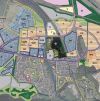
So this is a screenshot from the West Lothian Winchburgh New Town Master plan document.

The existing housing, as of about five years ago, before construction started in earnest, can be seen at the bottom centre of the image.

The new housing, most of which has already been built, can be seen in boxes with a blue shading, namely boxes AA, K, M, N and O to O3.

The new civic centre of the town, which includes shops, amenities and high density housing, can be seen in the big square in the middle, with orange striped shading.

The E&G line can be traced in a reverse curve from top left to bottom right of the picture. The red dot in the middle of the town is the site for the station, with a car park going in the yellow box next to it, marked 'T' and a new central bus hub on Duntarvie Castle Road.

The full document, courtesy of Winchburgh Developments, can be found here.

== Doublepost prevention - post automatically merged: ==

Also, just a note for the mods, it might be useful to merge this thread with the existing Winchburgh station thread, found here.
 

Attachments

  • Screenshot_20251029-142002.png
    Screenshot_20251029-142002.png
    1.8 MB · Views: 165

EMU303

Member
Joined
24 Aug 2016
Messages
296
So this is a screenshot from the West Lothian Winchburgh New Town Master plan document.

The existing housing, as of about five years ago, before construction started in earnest, can be seen at the bottom centre of the image.

The new housing, most of which has already been built, can be seen in boxes with a blue shading, namely boxes AA, K, M, N and O to O3.

The new civic centre of the town, which includes shops, amenities and high density housing, can be seen in the big square in the middle, with orange striped shading.

The E&G line can be traced in a reverse curve from top left to bottom right of the picture. The red dot in the middle of the town is the site for the station, with a car park going in the yellow box next to it, marked 'T' and a new central bus hub on Duntarvie Castle Road.

The full document, courtesy of Winchburgh Developments, can be found here.

== Doublepost prevention - post automatically merged: ==

Also, just a note for the mods, it might be useful to merge this thread with the existing Winchburgh station thread, found here.
Given the station proximity to the new junction on the M9, could this not be a major park and ride opportunity for commuters into Edinburgh?

Travelling across central Scotland it strikes me how full every station car park is. My nearby station at Croy has a car park with almost 1,000 spaces and it is overflowing Mon to Thu. This indicates pent up demand for rail travel and perhaps some empty seats could be filled before trains themselves get overloaded.
 

waverley47

Member
Joined
17 Apr 2015
Messages
852
Given the station proximity to the new junction on the M9, could this not be a major park and ride opportunity for commuters into Edinburgh?

Travelling across central Scotland it strikes me how full every station car park is. My nearby station at Croy has a car park with almost 1,000 spaces and it is overflowing Mon to Thu. This indicates pent up demand for rail travel and perhaps some empty seats could be filled before trains themselves get overloaded.

It's a bit more complex, but yes, there is that risk.

The modelled demand for services in and out of Edinburgh is mad. Prior to COVID, we were modelling Waverley at reaching 42m pax per annum by about 2040. Obviously, that number has changed a little, but in some ways it's worse: numbers are expected to peak more significantly in May through August, and in December, and it's expected that a resumption of 4tph on the E&G fasts will be needed by 2030.

Edinburgh is growing phenomenally fast, and it's not unlikely that expanding park and ride facilities will be needed at several stations around the city in coming years, notably Uphall, Wallyford and Eskbank, in the style of the multistorey car parks of the southern WCML.

The problem with such projects, including building an enormous new car park at Winchburgh, is induced demand, and demand shifting.

If we build enormous car parks at stations along the lines into Edinburgh, we build them next to motorways, for easy access. It's likely therefore that some people who would previously have driven to their closest station, will now drive a bit further to one of these new car parks, because the longer distance will be balanced by what feels like a faster journey along a motorway rather than local roads, and the shorter journey time into the city on the train. People from Bo'ness who had previously driven to Linlithgow, now drive to Winchburgh, and so on.

That's actually a bad thing for the line, because it bunches up demand onto very short sections of line that quickly become overcrowded. It's bad for the local users, because those car parks and stations become exponentially busier. It's bad for longer distance drivers, because motorways and junctions become much busier at certain times of day. Finally, it's very bad for Transport Scotland, because you've resulted in a net increase in road miles, mostly in single occupant vehicles, and a net decrease in rail revenue, because people are taking, on average, shorter journeys.

Building park and ride facilities is a very complicated issue, and it needs to be done right. We can model new demand very well, but we can't actually model shifting demand all that well at all, because it depends mostly on psychology of the individual commuters, and what they feel is the best journey for them.

It's why there's been such a shift towards bike storage at new stations; yes it's cheaper to build, and it's better for the planet and for local communities if people cycle, but also if you can embed cycling locally, you can encourage people to use their local station, and therefore, you can model and spread out demand much more easily.
 

och aye

Member
Joined
21 Jan 2012
Messages
1,018
It's a bit more complex, but yes, there is that risk.

The modelled demand for services in and out of Edinburgh is mad. Prior to COVID, we were modelling Waverley at reaching 42m pax per annum by about 2040. Obviously, that number has changed a little, but in some ways it's worse: numbers are expected to peak more significantly in May through August, and in December, and it's expected that a resumption of 4tph on the E&G fasts will be needed by 2030.

Edinburgh is growing phenomenally fast, and it's not unlikely that expanding park and ride facilities will be needed at several stations around the city in coming years, notably Uphall, Wallyford and Eskbank, in the style of the multistorey car parks of the southern WCML.

The problem with such projects, including building an enormous new car park at Winchburgh, is induced demand, and demand shifting.

If we build enormous car parks at stations along the lines into Edinburgh, we build them next to motorways, for easy access. It's likely therefore that some people who would previously have driven to their closest station, will now drive a bit further to one of these new car parks, because the longer distance will be balanced by what feels like a faster journey along a motorway rather than local roads, and the shorter journey time into the city on the train. People from Bo'ness who had previously driven to Linlithgow, now drive to Winchburgh, and so on.

That's actually a bad thing for the line, because it bunches up demand onto very short sections of line that quickly become overcrowded. It's bad for the local users, because those car parks and stations become exponentially busier. It's bad for longer distance drivers, because motorways and junctions become much busier at certain times of day. Finally, it's very bad for Transport Scotland, because you've resulted in a net increase in road miles, mostly in single occupant vehicles, and a net decrease in rail revenue, because people are taking, on average, shorter journeys.

Building park and ride facilities is a very complicated issue, and it needs to be done right. We can model new demand very well, but we can't actually model shifting demand all that well at all, because it depends mostly on psychology of the individual commuters, and what they feel is the best journey for them.

It's why there's been such a shift towards bike storage at new stations; yes it's cheaper to build, and it's better for the planet and for local communities if people cycle, but also if you can embed cycling locally, you can encourage people to use their local station, and therefore, you can model and spread out demand much more easily.
While I can understand Park & Rides at stations such as Newcraighall, this does seem like the wrong place to put one. The location in the middle of the town would be ideally used for more housing alongside retail/F&B such as a convenience store, coffee shop, hairdresser, pub etc. next to the station, rather than a large car park. But then I'm not an urban planner, so perhaps the developers know what they're doing. :s
 

John R

Established Member
Joined
1 Jul 2013
Messages
6,124
If we build enormous car parks at stations along the lines into Edinburgh, we build them next to motorways, for easy access. It's likely therefore that some people who would previously have driven to their closest station, will now drive a bit further to one of these new car parks, because the longer distance will be balanced by what feels like a faster journey along a motorway rather than local roads, and the shorter journey time into the city on the train. People from Bo'ness who had previously driven to Linlithgow, now drive to Winchburgh, and so on.
That's really interesting and thank you for explaining it.

Could you combat that by offering discounted parking rates for those living locally and penal ones for those that don't to discourage use? It shouldn't be that difficult to have a registration scheme, using proof of address, after which you get the discounted rate.

As an aside, We've had a not dissimilar issue at Nailsea and Backwell recently, whereby an unofficial airport parking service was using the station car park to store vehicles, filling up a third of it and meaning rail users were finding it full. They suddenly disappeared overnight at the same time as the parking rates board had the weekly option blanked out, with a sign that if you want more than two days you have to call the council (who own the park) to get a pass. Coincidence? I don't think so.
 
Status
Not open for further replies.

Top