Our new ticketing site is now live! Using either this or the original site (both powered by TrainSplit) helps support the running of the forum with every ticket purchase! Find out more and ask any questions/give us feedback in this thread!
The line between Birmingham and Lichfield Trent Valley was blocked on Tuesday after a lorry crashed into the bridge on Summer Road, Erdington, shortly after 10:00 GMT.
The scene was cleared at about 11:30 GMT but West Midlands Railway said the same bridge was hit by another lorry shortly before 12:30 GMT, blocking the line again.
It's the Summer Road bridge in Erdington, hit on Friday and then twice in a day yesterday. Yes, the lorry drivers should know how tall their lorry is and be able to stop in time, but with that many in quick succession there has to be more to it than that?
Yes, the lorry drivers should know how tall their lorry is and be able to stop in time, but with that many in quick succession there has to be more to it than that?
The ‘normal’ bridge height is over 16’ 6” or about 5.03m. Only bridges below 16’ 6” get signed as low bridges. I believe from looking into this previously that the majority of trucks and high trailers are less than the theoretical max, at around 14’ 9” or 4.5m.
A trailer or load in excess of 16’ 6” would normally be on a properly planned and researched abnormal load route involving specialist contractors and police escort.
Seeing as it appears that you're local, can you recall when it was struck previously? Is it a rare occurrence or something which happens once in a while?
es, the lorry drivers should know how tall their lorry is and be able to stop in time, but with that many in quick succession there has to be more to it than that?
Perhaps a standard colour of the most extreme hi-vis/fluorescent paint for every bridge with a history of bridge strikes even if it means affixing enormous panels/boards to the structures painted in the standard extreme colour. A huge publicity campaign throughout the haulage/bus industries to the effect that if a driver is approaching a bridge bedecked in this extreme colour they need to check that their vehicle can safely pass below it before proceeding.
Perhaps a standard colour of the most extreme hi-vis/fluorescent paint for every bridge with a history of bridge strikes even if it means affixing enormous panels/boards to the structures painted in the standard extreme colour. A huge publicity campaign throughout the haulage/bus industries to the effect that if a driver is approaching a bridge bedecked in this extreme colour they need to check that their vehicle can safely pass below it before proceeding.
I doubt any of that would make much difference. A bit like SPADs and other operational incidents on the railway, bridge bashes will always occur while ever human beings are involved.
Just to ask a question, when they resurface the road under a low railway bridge, usually by simply spreading another layer of tarmac, do they adjust the clearance height to a lower figure?
Seeing as it appears that you're local, can you recall when it was struck previously? Is it a rare occurrence or something which happens once in a while?
Just to ask a question, when they resurface the road under a low railway bridge, usually by simply spreading another layer of tarmac, do they adjust the clearance height to a lower figure?
HGVs/trailers heights are all different. The is a legal requirement to have a height indicator set to the correct height of the HGV displayed in the cab. There should be a 3 inch safety tolerance added to the height indicator.
There should be a minimum 6 Month driving ban for any driver that it's a bridge. There is NO Excuse for it
HGVs/trailers heights are all different. The is a legal requirement to have a height indicator set to the correct height of the HGV displayed in the cab. There should be a 3 inch safety tolerance added to the height indicator.
If it happens consistently they might point to an issue with suitability for the job, but it’s known that punishing people for human error won’t generally make any difference (see “just culture” etc.).
If a train driver has a SPAD they certainly won’t be banned for six months, they’ll be put onto a development plan addressing why it happened (if they do it more than once, and in a short space of time, they may still find themselves out of a job, of course).
Presumably one source of error is a tractor unit pulling several different trailer heights in a day and someone forgetting to change the display.
If it happens consistently they might point to an issue with suitability for the job, but it’s known that punishing people for human error won’t generally make any difference (see “just culture” etc.).
If a train driver has a SPAD they certainly won’t be banned for six months.
Perhaps a standard colour of the most extreme hi-vis/fluorescent paint for every bridge with a history of bridge strikes even if it means affixing enormous panels/boards to the structures painted in the standard extreme colour. A huge publicity campaign throughout the haulage/bus industries to the effect that if a driver is approaching a bridge bedecked in this extreme colour they need to check that their vehicle can safely pass below it before proceeding.
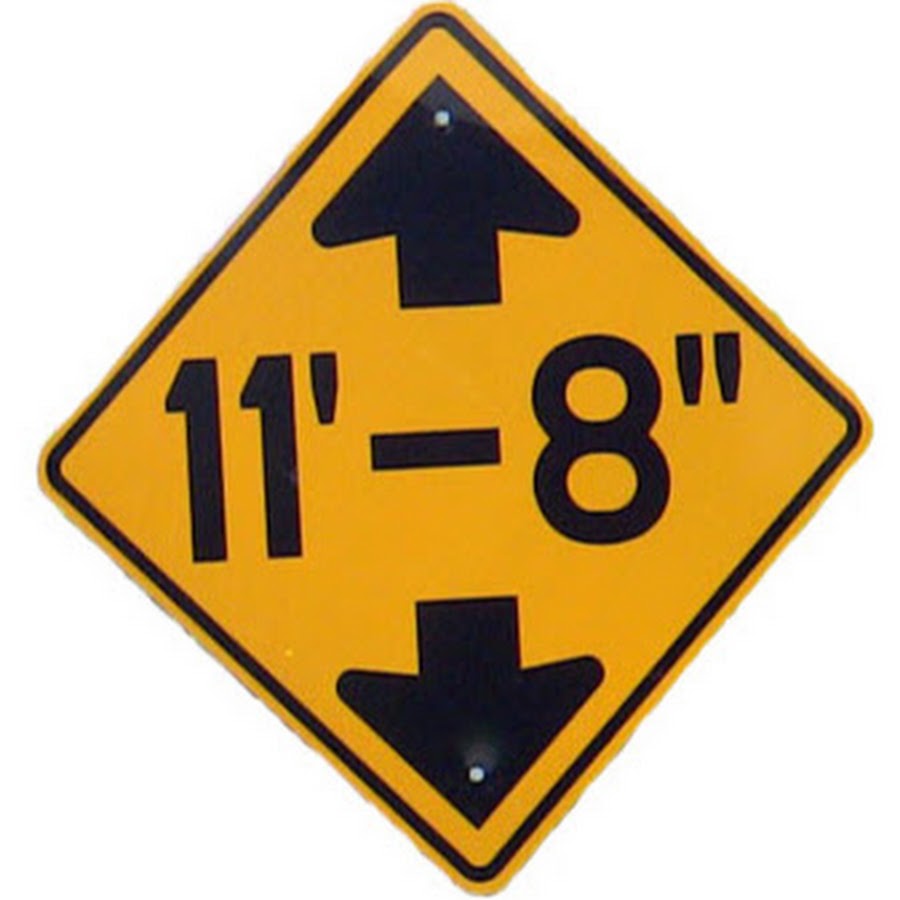
A quick perusal of the 11 Foot 8 channel on YouTube will show that no amount of paint or warning signs will deter truck drivers from ploughing on through:
The 11foo8 bridge is a railroad trestle over Gregson St in Durham, North Carolina and it has earned a reputation for for its rigorous enforcement of the laws of physics. No truck taller than 11 feet and 8 inches will pass under this stubborn piece of infrastructure. Period. On this channel we...
Seeing as it appears that you're local, can you recall when it was struck previously? Is it a rare occurrence or something which happens once in a while?
Only moved to the area just before Christmas, but walked under the bridge for the first time shortly afterwards and saw the battered remains of a cab roof wind deflector discarded on the pavement, so presumably a shortish time before that?
Just to ask a question, when they resurface the road under a low railway bridge, usually by simply spreading another layer of tarmac, do they adjust the clearance height to a lower figure?
They are supposed to check, and amend the signage if appropriate, but will a driver notice the sign has changed if he drives under the bridge regularly?
There was a bad accident in Lincoln some years ago when a German tourist coach hit a bridge that it had safely passed under the previous year (same coach, same driver). Unbeknown to him, the dip in the road had been removed since the first visit.
Three incidents close together might be random, but there might be a common factor. Were all of the offenders making the same journey or from the same company?
I onve had a girlfriend who lived almost next to that bridge (talking over 30 years ago, we’re still friends somehow…) I never heard of it being bashed back then. However it did have overheight detectors and special signs that lit up when an overheight vehicle was on approach. Not sure if they are still there; I think that was partly because there were double decker buses on the road, that were specifically routed around it, but sometimes drivers would forget. Not sure if this bus route still exists or has double deckers.
The bridge in Ely has high viz, warning signs, signs that flash up to turn back when an overheight vehicle is detected. From observation, the majority of the vehicles that hit the bridge are rental/hire vans with the protruding fibreglass (?} roof that is only a little higher than the clearance.
Presumably the combination of lack of familiarity of driving the vehicle with it looking like the van might just get under is what leads the driver to proceed.
E.g. https://www.elystandard.co.uk/news/23889564.ely-railway-bridge-struck-today-enterprise-van/
I doubt any of that would make much difference. A bit like SPADs and other operational incidents on the railway, bridge bashes will always occur while ever human beings are involved.
It's not going to happen, but I think this is a case where draconian measures would actually reduce the incidence by a massive amount.
For example, measures including but not necessarily limited to
Legal powers to seize and sell the vehicle and its contents
Automatic disqualification of two years for the driver
Ability to recover, as a punitive measure, twice the total costs of all damage, road delays and rail disruption with the company and driver being jointly liable
The only excuses acceptable for the driver would be an incorrect vehicle height plate or bridge height plate
The only excuse acceptable for the company would be an incorrect bridge height plate
This would initially probably result in quite a bit of disruption and haulage company bankruptcies; however their assets and drivers would probably be snapped up by other companies, and after a while all companies would tend to have the very best HGV satnavs and the drivers would be constantly aware that their livelihood was on the line. Surviving companies with a bad record would be probably only be insurable with massive excesses which would only fall if they kept their noses clean.
Anyhow, this is all just fantasy, but I am sure that *some* much more punitive measures would have a noticeable effect.
Just to ask a question, when they resurface the road under a low railway bridge, usually by simply spreading another layer of tarmac, do they adjust the clearance height to a lower figure?
Normally (in urban areas at least) the old surfacing is planed out before the new material is laid, otherwise all the kerbs, gullies, chamber access covers, etc. have to have their levels raised as well. Planing saves that cost, and much of the planed material can be recovered and recycled into new blacktop.
Ability to recover, as a punitive measure, twice the total costs of all damage, road delays and rail disruption with the company and driver being jointly liable
Companies would simply involve their insurer. Even individual drivers might via the legal cover in some home insurance policies, or their driving insurance. So the outcome of this would be higher premiums for all.
If you make a cock up in your line of work that costs money, are you expected to pay it back personally? The answer almost certainly being no, a driver should be afforded the same protection of their company/organisation/whatever.
(Notwithstanding my view that professional drivers of all types should absolutely be held to a higher standard than a private car driver)
I'd be rather miffed if a parcel I ordered got requisitioned by the railway and sold to recover costs incurred by a driver hitting a bridge. And how much value will there be in a heavily dented/somewhat squashed lorry cab, or a double decker that's forcibly had it's roof removed?
This suggestion is at a similar level of calling for snipers to guard the bridges.
Ability to recover, as a punitive measure, twice the total costs of all damage, road delays and rail disruption with the company and driver being jointly liable
Are you suggesting the railway should recover costs for the rail delays, or that the driver and company would be subject to multiple individual lawsuits for each individual's lost value of time?
Companies would simply involve their insurer. Even individual drivers might via the legal cover in some home insurance policies, or their driving insurance. So the outcome of this would be higher premiums for all.
If you make a cock up in your line of work that costs money, are you expected to pay it back personally? The answer almost certainly being no, a driver should be afforded the same protection of their company/organisation/whatever.
(Notwithstanding my view that professional drivers of all types should absolutely be held to a higher standard than a private car driver)
Ultimately a haulage company that has a lot of accidents will see its premiums rising, just as happens to ordinary drivers. This provides some level of incentive for companies to minimise accidents, which might include firing drivers who have too many of them. Drivers are also personally subject to prosecution for driving offences so may end up fined, losing licences or even imprisoned.
I think that was partly because there were double decker buses on the road, that were specifically routed around it, but sometimes drivers would forget. Not sure if this bus route still exists or has double deckers.
Although I'm not au fait with the area, I did check earlier today what bus routes passed under this bridge in case it could be a factor of double decker buses being observed passing beneath. However it appears that the two routes (28 & 96) which pass under the bridge both use single deckers, while other routes in that area which do use double deckers are routed around it.
I do wonder if vegetation management may be worth investigating as there are mature trees in this image on street view? Image of Northbound approach to railway bridge on Summer Road.
The bridge in Ely has high viz, warning signs, signs that flash up to turn back when an overheight vehicle is detected. From observation, the majority of the vehicles that hit the bridge are rental/hire vans with the protruding fibreglass (?} roof that is only a little higher than the clearance.
Presumably the combination of lack of familiarity of driving the vehicle with it looking like the van might just get under is what leads the driver to proceed.
E.g. https://www.elystandard.co.uk/news/23889564.ely-railway-bridge-struck-today-enterprise-van/
I am not sure this would work terribly well, currently the ownner/operator does incur the costs of repairing their road vehicle.
When I lived in Medway nearly forty years ago there was a van hire firm that went to great efforts to tell their customers that they were not INSURED if they hit the railway bridge at the junction at the end of their road.
It's not going to happen, but I think this is a case where draconian measures would actually reduce the incidence by a massive amount.
For example, measures including but not necessarily limited to
Legal powers to seize and sell the vehicle and its contents
Automatic disqualification of two years for the driver
Ability to recover, as a punitive measure, twice the total costs of all damage, road delays and rail disruption with the company and driver being jointly liable
The only excuses acceptable for the driver would be an incorrect vehicle height plate or bridge height plate
The only excuse acceptable for the company would be an incorrect bridge height plate
This would initially probably result in quite a bit of disruption and haulage company bankruptcies; however their assets and drivers would probably be snapped up by other companies, and after a while all companies would tend to have the very best HGV satnavs and the drivers would be constantly aware that their livelihood was on the line. Surviving companies with a bad record would be probably only be insurable with massive excesses which would only fall if they kept their noses clean.
Anyhow, this is all just fantasy, but I am sure that *some* much more punitive measures would have a noticeable effect.
Well - I confess - I am a careful person BUT :-
I am 6ft 2in tall. In my house was a doorway that was about an inch too low.
I hit that door frame with my head quite a few times, sometimes hearing a crack.
I figured I would learn.
Eventually after about a year I gave in - I rolled up newspaper and hung it over the edge of the door frame to lessen the inevitable blow.
Irony is I then NEVER hit my head on the door frame again for another fifteen odd years presumably because it did not look like a normal door frame any more.
I then got the door frame RAISED.
My point is that if I could incur personal pain more than once and still not learn to be careful then what chance is there of zero bridge bashes just because of punishment. Granted the yellow paint etc and signs might help (just like the rolled up newspaper worked) but I would argue it is not necessarily punishment that will prevent it. How many drivers are repeat offenders. How many drivers are on an unfamiliar route ?.
I think us humans are not great at looking upwards and checking things.
My shorter friends used to bang their head on entering the "Little Gem" - a long gone real ale pub in Aylesford near Maidstone. I never banged my head because I was taller and it was obvious enough to me - as in literally in my face !. So I am no more stupid than others.
So I think we need to understand the human weakness to be able to address the problem.
Granted there will be repeat offenders and those that can be seen to slow down and then try to risk it.
But in most cases I assume more damage is done to the road vehicle than to the bridge ?. Or at least significant enough damage that there is a cost of repairs to the road vehicle. So there is already some incentive to get it right.
Ultimately a haulage company that has a lot of accidents will see its premiums rising, just as happens to ordinary drivers. This provides some level of incentive for companies to minimise accidents, which might include firing drivers who have too many of them. Drivers are also personally subject to prosecution for driving offences so may end up fined, losing licences or even imprisoned.
As per my comment at the start of this post. When I lived in Medway nearly forty years ago there was a van hire firm that went to great efforts to tell their customers that they were not INSURED if they hit the railway bridge at the junction at the end of their road. So yes insurance does already run away from likely risks !.
== Doublepost prevention - post automatically merged: ==
Although I'm not au fait with the area, I did check earlier today what bus routes passed under this bridge in case it could be a factor of double decker buses being observed passing beneath. However it appears that the two routes (28 & 96) which pass under the bridge both use single deckers, while other routes in that area which do use double deckers are routed around it.
I do wonder if vegetation management may be worth investigating as there are mature trees in this image on street view? View attachment 172435Image of Northbound approach to railway bridge on Summer Road.
If bridge bashes are becoming a frequent occurrence at this location, surely there must be a case for erecting steel 'crash gantries' across the road either side of the bridge....so that the vehicle will be damaged but not the bridge and train services will be able to continue running normally. The use of such devices is much more widespread on the continent than it is here.
We are aware of an issue with emails from the Forum to Microsoft-based email accounts (hotmail/outlook/live.com email addresses). This is being looked into currently, thanks for your patience meanwhile.