• Our new ticketing site is now live! Using either this or the original site (both powered by TrainSplit) helps support the running of the forum with every ticket purchase! Find out more and ask any questions/give us feedback in this thread!

Passenger trapped in Elizabeth line door

Status
Not open for further replies.

eoff

Member
Joined
15 Aug 2020
Messages
697
Location
East Lothian
Report from BBC of a pasenger's hand getting trapped in a train door and then being pulled along by a train when it departed. The train was brought to a halt before it had gone far (reportedly around 17m). The RAIB are aware of the incident.
The article mentions previous similar incidents.
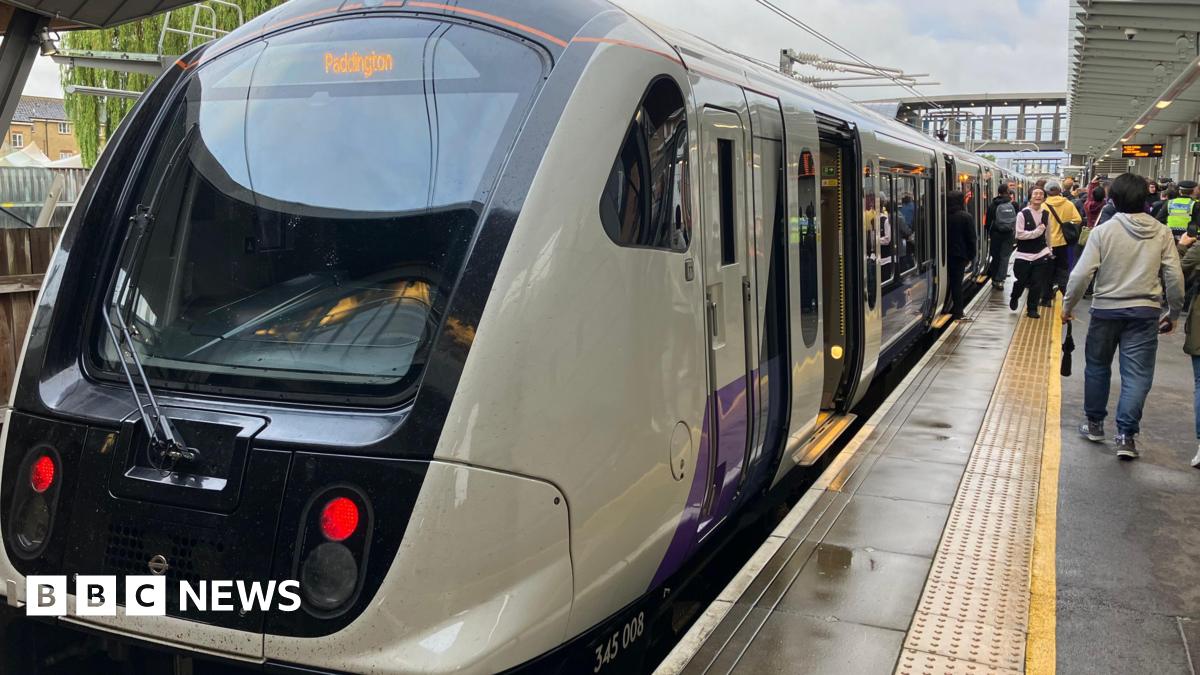
An investigation has been launched after a passenger's hand became trapped in the closing doors of an Elizabeth line train as it was leaving London's Ealing Broadway station.

The incident on 24 November saw the passenger having to run alongside the train before they were freed by a member of staff who was working on the platform.

The driver was alerted to what was happening by other rail users, and the train stopped after moving approximately 17m (56 ft). The passenger reportedly suffered minor injuries.
 
Last edited by a moderator:
Sponsor Post - registered members do not see these adverts; click here to register, or click here to log in
R

RailUK Forums

Vexed

Member
Joined
12 Jan 2020
Messages
637
Location
Herts / Hants
Here is RAIB's press release.

Trap and drag accident at Ealing Broadway
Investigation into a trap and drag accident at Ealing Broadway on the Elizabeth line, 24 November 2024.

s300_Ealing_Broadway2.jpg

The platform involved during the daytime (courtesy of MTR Elizabeth line).

At around 00:07 on 24 November 2024, a passenger’s hand became trapped in the closing doors of a train at Ealing Broadway station on the Elizabeth line. The train subsequently departed from the platform with the passenger’s hand still trapped in the doors. The passenger, who had been attempting to board the train, was forced to run alongside it for several metres before being pulled away by a member of railway staff who was working on the platform.
The driver was alerted to what was happening by nearby passengers, and the train stopped after moving approximately 17 metres. The passenger is reported to have sustained minor injuries because of the accident.
Our investigation will seek to identify the sequence of events that led to the accident. It will also consider:
  • the actions of those involved and anything which may have influenced them
  • the arrangements in place to manage and control the risks associated with passengers boarding and alighting from trains on the Elizabeth line
  • post-incident management of platform-train interface accidents
  • any underlying management factors.
 

Deepgreen

Established Member
Joined
12 Jun 2013
Messages
7,457
Location
Gomshall, Surrey
Indeed, and it's a shame they couldn't actually use a picture of Ealing Broadway when the caption implies that. There is much talk of the PTI issue but that surely has little to do with a door trap?
 

Nym

Established Member
Joined
2 Mar 2007
Messages
9,778
Location
Somewhere, not in London
Isn't this the 3rd such incident at Ealing Broadway in recent times, and the design of the Aventura post-dates the latest set of RIAB recommendations being made?
 

Nottingham59

Established Member
Joined
10 Dec 2019
Messages
3,326
Location
Nottingham
There is much talk of the PTI issue but that surely has little to do with a door trap?
It could have a lot to do with it, if the step up to the train was difficult and slowed the passenger down, or made it impossible for them to step back when the doors started to close.

EDIT: the step up at Ealing Broadway is shown in this BBC article:
 
Last edited:

Bigfoot

Established Member
Joined
2 Dec 2013
Messages
1,415
Indeed, and it's a shame they couldn't actually use a picture of Ealing Broadway when the caption implies that. There is much talk of the PTI issue but that surely has little to do with a door trap?
The platform-train interface (PTI) is the boundary between the platform and the train, or the track if no train is present.

Someone being trapped in the doors and the train moving is a PTI incident.
 

Vexed

Member
Joined
12 Jan 2020
Messages
637
Location
Herts / Hants
Like after every trap and drag, I am surprised/shocked that a sensitive edge (similar to modern London Underground stock) still hasn't been mandated for new trains. In this case a LU-style system would have automatically stopped the train sooner or even (as a hand is reasonably large) not let it start at all.

I dread to think of the outcome if there wasn't a staff member close by on the platform or no passengers inside the train to alert the driver. In this case a sensitive edge is the only thing that would stop the train.
 

LowLevel

Established Member
Joined
26 Oct 2013
Messages
8,884
Like after every trap and drag, I am surprised/shocked that a sensitive edge (similar to modern London Underground stock) still hasn't been mandated for new trains. In this case a LU-style system would have automatically stopped the train sooner or even (as a hand is reasonably large) not let it start at all.

I dread to think of the outcome if there wasn't a staff member close by on the platform or no passengers inside the train to alert the driver. In this case a sensitive edge is the only thing that would stop the train.
The class 345 will definitely have a sensitive edge but they're far from foolproof.
 

Deepgreen

Established Member
Joined
12 Jun 2013
Messages
7,457
Location
Gomshall, Surrey
The platform-train interface (PTI) is the boundary between the platform and the train, or the track if no train is present.

Someone being trapped in the doors and the train moving is a PTI incident.
Yes, apologies - I meant the physical interface/relationship between train and platform.

== Doublepost prevention - post automatically merged: ==

It could have a lot to do with it, if the step up to the train was difficult and slowed the passenger down, or made it impossible for them to step back when the doors started to close.

EDIT: the step up at Ealing Broadway is shown in this BBC article:
Possibly - it does sound, however, that the passenger was fairly able-bodied as they were able to run along with the train rather than being dragged over. Anyway, I am conscious I'm entering speculation territory here, so...
 

357

Established Member
Joined
12 Nov 2018
Messages
2,282
Like after every trap and drag, I am surprised/shocked that a sensitive edge (similar to modern London Underground stock) still hasn't been mandated for new trains. In this case a LU-style system would have automatically stopped the train sooner or even (as a hand is reasonably large) not let it start at all.

I dread to think of the outcome if there wasn't a staff member close by on the platform or no passengers inside the train to alert the driver. In this case a sensitive edge is the only thing that would stop the train.
345's do have sensitive edge. It is almost exactly the same to the one found on "modern London Underground stock".
 

Purple Train

Established Member
Joined
16 Jul 2022
Messages
2,444
Location
Despond
I'll be interested to see what actually happened, as my experience is that the 345 sensitive edge is extremely sensitive - someone running through the doors just as the hustle alarm sounds will, more likely than not, reset the whole cycle, even if they don't seem to touch the doors. That being said, I have noticed a bit of variation in how sensitive they seem to be. How much industry research has there been into how reliable these safety systems are, especially in the light of all the LU trap and drags in the last few years?
 

357

Established Member
Joined
12 Nov 2018
Messages
2,282
I'll be interested to see what actually happened, as my experience is that the 345 sensitive edge is extremely sensitive - someone running through the doors just as the hustle alarm sounds will, more likely than not, reset the whole cycle, even if they don't seem to touch the doors. That being said, I have noticed a bit of variation in how sensitive they seem to be. How much industry research has there been into how reliable these safety systems are, especially in the light of all the LU trap and drags in the last few years?
When I worked on 345s it was made very clear that the sensitive edge and body side indicator lights are not to be used as an indication the doors are closed and it is safe to move.
 

Purple Train

Established Member
Joined
16 Jul 2022
Messages
2,444
Location
Despond
When I worked on 345s it was made very clear that the sensitive edge and body side indicator lights are not to be used as an indication the doors are closed and it is safe to move.
As is indeed right, as numerous trap and drags have shown. I'm just interested, from a passenger's perspective, as to how this can have happened, given you only need to breathe next to a closing door and the vast majority of the time it will reopen! Although, thinking about it further, I wonder if there's a difference between when the door closes automatically and when the driver commands it to?
 

Adrian1980uk

Member
Joined
24 May 2016
Messages
839
This might be a strange question but why did the passenger have their hand in the door in the first place, very odd to me with no sense of self preservation. I wonder sometimes if the sensitive edge causes as many safety issues as it solves, if the expectation was that the door closes then passenger would probably be more inclined to stand back and not try to block it
 

bahnause

Member
Joined
30 Dec 2016
Messages
1,010
Location
bülach (switzerland)
As is indeed right, as numerous trap and drags have shown. I'm just interested, from a passenger's perspective, as to how this can have happened, given you only need to breathe next to a closing door and the vast majority of the time it will reopen! Although, thinking about it further, I wonder if there's a difference between when the door closes automatically and when the driver commands it to?
I assume the answer, as always, is: “It depends”. The specifications are identical for new vehicles, the implementation varies. New vehicles in Switzerland, for example, have several levels of door monitoring. This is often a light barrier/light grid, motor current monitoring of the door drive and an anti-trap protection in the door seal. All three systems are active when the doors are released. The door therefore does not close automatically if one of these systems is triggered. When a closing command is given by the driver or the guard, usually only the anti-trap protection remains active. Some newer designs have an additional safety mechanism. Some newer vehicles have an additional safety mechanism which responds to objects which cannot be detected when the vehicle is stationary, but trigger a reaction when pressure is exerted on the edge of the door when departing.
 

Bikeman78

Established Member
Joined
26 Apr 2018
Messages
6,169
As is indeed right, as numerous trap and drags have shown. I'm just interested, from a passenger's perspective, as to how this can have happened, given you only need to breathe next to a closing door and the vast majority of the time it will reopen! Although, thinking about it further, I wonder if there's a difference between when the door closes automatically and when the driver commands it to?
I'm no expert on class 345s, but in my experience of train doors in general, they don't reopen if they are closing prior to departure. They will reopen if they are auto closing, as most doors do after a few seconds. The problem is that the hustle alarm sounds the same in both situations and some passengers won't appreciate the different scenarios. Speaking for myself, I don't grab the edge of any door. I always use the handle, e.g on spring loaded doors in offices or shops. I don't fancy getting my fingers trapped.
 

Nottingham59

Established Member
Joined
10 Dec 2019
Messages
3,326
Location
Nottingham
This might be a strange question but why did the passenger have their hand in the door in the first place, very odd to me with no sense of self preservation. I wonder sometimes if the sensitive edge causes as many safety issues as it solves, if the expectation was that the door closes then passenger would probably be more inclined to stand back and not try to block it
Have a look at the second picture in the BBC story linked in post #5. To my eye, it looks entirely natural that the lady trying to negotiate the large step up from the platform would place her hand on the door like that to steady herself.
 

Gostav

Member
Joined
14 May 2016
Messages
541
This might be a strange question but why did the passenger have their hand in the door in the first place, very odd to me with no sense of self preservation. I wonder sometimes if the sensitive edge causes as many safety issues as it solves, if the expectation was that the door closes then passenger would probably be more inclined to stand back and not try to block it
I believe that many people, including me, will subconsciously block the door with their hands when the door is closed. It's a conditioned reflex.
 

172007

Member
Joined
2 Jan 2021
Messages
1,132
Location
West Mids
Isn't it a long established theory of not faxt that the vast majority of people when asked about train doors believe, incorrectly, that they behave the same as lift/elevator doors and spring back open when closing is resistance is detected?
 

357

Established Member
Joined
12 Nov 2018
Messages
2,282
I'm no expert on class 345s, but in my experience of train doors in general, they don't reopen if they are closing prior to departure. They will reopen if they are auto closing, as most doors do after a few seconds. The problem is that the hustle alarm sounds the same in both situations and some passengers won't appreciate the different scenarios. Speaking for myself, I don't grab the edge of any door. I always use the handle, e.g on spring loaded doors in offices or shops. I don't fancy getting my fingers trapped.
Incorrect. The auto close is stopped by a light beam being broken or sensitive edge.

When the doors are actually closing the sensitive edge is active, it's a safety feature
 
Joined
1 Nov 2021
Messages
305
Location
Berwick
The person must have put their hand in a closing door therefore that person is at fault. It is time people took responsibility for their own safety
 

ModernRailways

Established Member
Joined
21 Apr 2011
Messages
2,180
The person must have put their hand in a closing door therefore that person is at fault. It is time people took responsibility for their own safety
Likewise trains shouldn’t be dispatched when someone is trapped. You have no idea why they were there and considering the time of the incident there could be other factors at play, was this the last train and the person didn’t want to miss their stop (maybe they’re less mobile and so needed to wait till the train stopped before getting up), was the person held up in leaving the train by other passengers. Since the person is in the PTI the train shouldn’t have moved at all, I do hope that this isn’t London Undergrounds attitude of close the doors and pray, transferring across to the Elizabeth Line.
 

Bikeman78

Established Member
Joined
26 Apr 2018
Messages
6,169
Incorrect. The auto close is stopped by a light beam being broken or sensitive edge.

When the doors are actually closing the sensitive edge is active, it's a safety feature
I'm confused. What is incorrect? Can you clarify?
 

NSEWonderer

Established Member
Joined
5 Dec 2020
Messages
2,899
Location
London
The class 345 will definitely have a sensitive edge but they're far from foolproof.
This, Sometimes the sensitive edge wouldn't be very sensitive and you can have a decent chunk of bag strap or even two hands placed (palm to palm) and the door would still gain interlock and not trip the edge, until this recent incident, I only ever knew part of a bag getting trapped at a core station which ended up with the train departing to the next station where it was released.

Before the core opened I do remember a trap and drag of a station staff member at Stratford in which they were stuck due to the ring on their finger being caught between the doors of which they eventually and painfully managed to free themselves from after running along with the train, but memory fails me as to if it was a 345s or the older legacy tfl rail stock.
 

357

Established Member
Joined
12 Nov 2018
Messages
2,282
They re-open a small bit, wait a second, then attempt to close again
They try three times and then reopen fully. Or at least did when introduced.

315s had a similar system but once reopened needed to be pulled shut manually, 345s needed the external egress handle to be operated and then pushed closed, however I seem to recall this was changed via a software update a few months after introduction.
 

RailExplorer

Member
Joined
14 Aug 2018
Messages
216
There's a video of a hockey stick or similar sticking out a 345 door. And I've personally had someone wedge a walking stick (or similar) in the door and I got interlock. Thankfully I noticed this before departing. Both scenarios were people messing around.
 

Bikeman78

Established Member
Joined
26 Apr 2018
Messages
6,169
"they don't reopen if they are closing prior to departure. They will reopen if they are auto closing"
From my observations, the doors will try to close unless physically blocked or forced apart. That is rather different to what happens if a passenger boards during the auto close process. As I mentioned above, an approaching passenger has no way of knowing which process is happening. They look and sound exactly the same. Perhaps different hustle alarms would help.
 
Status
Not open for further replies.

Top