Mk1dreamer
Member
When was the first diesel in service on the great eastern main line, what livery and stock formation ? Did that formation stay like that ? Thank you so much for the help 


They'd already started using electric units between Shenfield and Liverpool Street by this point - I think a bit further on too.When was the first diesel in service on the great eastern main line, what livery and stock formation ? Did that formation stay like that ? Thank you so much for the help
D200 was the first Type 4 on the Great Eastern, on 18/4/58, although several Type 1 and Type 2 designs had been allocated to Startford before that.Not sure about any prototype diesels but Class 40s in BR green started operating previously steam-hauled services out of Liverpool Street in April 1958.
Chelmsford and Southend early on, still on DC. Conversion to AC and further extensions to Southend, Enfield and Chingford were under way by 1958.They'd already started using electric units between Shenfield and Liverpool Street by this point - I think a bit further on too.
10800 had a spell next door on the LTS in 1955 including workings on passenger stock as photos have shown.The prototype designs (10000, 10001, 10100, 10201, 10202, 10203) operated on the LMR and, in the cases of the 102xx trio, the Southern.
I'm modeling The Great Eastern Main Line in oo and trying to do it on a budgetThis first train had a prominent special headboard "First 2000hp diesel London to Norwich, Progress by Great Eastern", arranged by manager Gerry Fiennes when he was in charge of the GE. There are a range of photographs of it, here's one:D200 was the first Type 4 on the Great Eastern, on 18/4/58, although several Type 1 and Type 2 designs had been allocated to Stratford before that.

Were they operating many services between 1958 and 61 after the D200s came on stream on the GE mainline?Interestingly it wasn’t until the start of the September 1961 winter timetable that the Britannias were finally transferred away from the Great Eastern mainline, to March and Immingham.
Yes they had GE mainline diagrams on some Norwich-Liverpool St workings until the end of the 1961 summer timetable. The RO reported that on the last day 70006 failed on the 06:45 ex-Norwich at Diss, and so was unable to work the 11:30 back from London, and the final 15:45 Norwich-Liverpool Street leg of the diagram. The 15:45 had been publicised as the last steam working from Norwich to London!Were they operating many services between 1958 and 61 after the D200s came on stream on the GE mainline?
Thanks. Interesting details.Yes they had GE mainline diagrams on some Norwich-Liverpool St workings until the end of the 1961 summer timetable. The RO reported that on the last day 70006 failed on the 06:45 ex-Norwich at Diss, and so was unable to work the 11:30 back from London, and the final 15:45 Norwich-Liverpool Street leg of the diagram. The 15:45 had been publicised as the last steam working from Norwich to London!
Interesting to read to get a sense of things at the time. ThanksUntil summer 1961 the Great Eastern only had 5 EE Type 4s D200 and D202-205. That was just about enough to cover about half of the Liverpool Street-Norwich service and not much else. The other half were still worked by Britannias. The few locos released by the Type 4s moved onto other prime services such as the boat trains to and from Harwich. Somehow the Essex Coast Express to Clacton also got included.
In summer 1961 ex GN locos D201/06/07 arrived, these were effectively replaced by Deltics on the ECML. But the key arrivals to replace the Britannias were the EE Type 3s D6700-29. These should have been delivered in 1960, but they were late and their introduction was further delayed by the same bogie problems that affected the Deltics, hence the Britannias lasting until the end of summer 1961.
Summer 1960 was a staging post in the steam to diesel transition and it is the only summer where BR Type 2s were plentiful on the Clacton trains. By summer 1961 most of the BR Type 2s had gone from East Anglia, replaced by Brush Type 2s. The Clacton service has a complicated and fast moving history during the transition period, but the simple summary is that the Clacton trains were worked by Brush type 2s from summer 1959, except for those that weren't.
As Liverpool Street station pilot and on van workings. The Richard Hardy articles I mentioned above explain why they never saw planned passenger use at the London end.I have also seen a picture in a book of a BTH loco (class 15 ?) which seemed to have been used for empty coach workings in Stratford area

The articles can be found here.Richard Hardy’s ‘Human Revolution’ articles on the Locomotive and Carriage Institution website are well worth a read, giving the insiders view of the GE’s motive power struggles in the steam to diesel transition.
At 'modernisation' coaching stock [generally grubby!] would be a hotchpotch of Gresley [inc. buffet cars] and Thompson types along with Mk1s. Livery would be similarly mixed between 'Blood & Custard' and BR Maroon.When was the first diesel in service on the great eastern main line, what livery and stock formation ? Did that formation stay like that ? Thank you so much for the help

An excellent read! Many thanks.Richard Hardy’s ‘Human Revolution’ articles on the Locomotive and Carriage Institution website are well worth a read, giving the insiders view of the GE’s motive power struggles in the steam to diesel transition.
I'm hoping that you can help me with my research here!I was in Ipswich in my schoolboy years and a mere observer of the changes so rapidly unfolding.
After November 1959, what was the traction on the local branch line trains such as Felixstowe, Aldeburgh, Framlingham and Hadleigh?'Formally' Ipswich shed was closed to steam November 1959, although a line of steam locos awaiting transfer or withdrawal remained at the shed into 1960.
Do you recall how the splitting and joining was done at Beccles? Was the loco working through from/to Ipswich always the Yarmouth portion? What worked the portion that wasn't the through loco?For a few years after 1959 [to 1962] through services to Yarmouth/Lowestoft continued to operate. The need to divide trains at Beccles was made unecessary from late 1959 following closure of the direct route to Yarmouth South Town.
The photography and publications of Dr Ian C Allen are priceless for this. ‘First Generation Diesels In East Anglia’ by Alan C Butcher also has some including:After November 1959, what was the traction on the local branch line trains such as Felixstowe, Aldeburgh, Framlingham and Hadleigh?
As at 1959 [and indeed some time before] all Felixstowe/Aldeburgh branch passenger trains were Railcars. Derby Lightweight firstly, followed by Metro-Cammell units.I'm hoping that you can help me with my research here!
After November 1959, what was the traction on the local branch line trains such as Felixstowe, Aldeburgh, Framlingham and Hadleigh?
For a brief period in 1959 and 1960 Ipswich had some NBL Type 2s: what did they do?
Do you recall how the splitting and joining was done at Beccles? Was the loco working through from/to Ipswich always the Yarmouth portion? What worked the portion that wasn't the through loco?
 framlinghamarchive.org.uk


That's not quite entirely correct.As at 1959 [and indeed some time before] all Felixstowe/Aldeburgh branch passenger trains were Railcars.
Thanks for this, very helpful.In steam days the Liverpool Street to Yarmouth/Lowestoft expresses divided at Beccles. The train loco, generally a Britannia, B17 or B1, and front portion [including refreshment car] would proceed to South Town. The Lowestoft portion was typically in the charge of a Lowestoft L1 or N7.
Stratford had a batch of the MetCam yellow diamond twins.Diesel multiple units took over East Anglia branch and stopping services at an early stage. A large fleet of the original "Yellow Diamond" cars, both the Derby and the Met-Cam types, were delivered there in 1955-56, and took over the bulk of these services, including lines which were later closed. They gravitated as far down as the GE London branches from this time.
Dr Allen was a prolific photographer but he wasn't equally prolific at record keeping. Most of his pictures are undated and there are quite a few branch line out in a field pick up freight pictures with unidentified locations.The photography and publications of Dr Ian C Allen are priceless for this.
Some of those static Stratford photos help with contested disposal histories.If only early diesels had been so well documented at work at the London end instead of thousands of static SF depot phots!
Even on the boat trains?I don't recall any smart single type rakes/liveries at that time. No doubt pictures will prove my recollections to be incomplete!
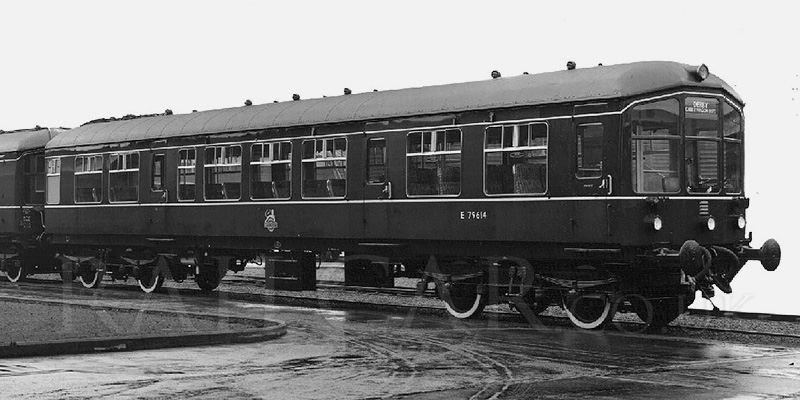
Wouldn't have been a Class 100 in East Anglia in 1956. The Class 100s started their working lives in 1957, and were imitially allocated to Scotland and NW England. They did not move to east Anglia until 1969, to replace the non-standard early "Yellow Diamond" units based there.The photography and publications of Dr Ian C Allen are priceless for this. ‘First Generation Diesels In East Anglia’ by Alan C Butcher also has some including:
Page 52 A lightweight (class 100??) DMU at Leiston. Caption says ‘DMU services commenced in June 1956.’
If only early diesels had been so well documented at work at the London end instead of thousands of static SF depot phots!
Thank you for the detailed information. Services at holiday periods were exceptionally well used at that time and the strengthened trains would have been necessary. The Felixstowe platform at Derby Road would be heaving [have seen a picture but can't find it now].That's not quite entirely correct.
The Felixstowe branch was loco hauled at Whitsun and August Bank Holiday weekends until 1960. From 1961 Lea Valley Rolls Royce DMUs were brought down instead.
Both Felixstowe and Framlingham had Hogwarts style school trains for the boarding schools at start and end of term at least until 1961, but I've never found any pictures.
At the time the Parkeston Quay - London trains were outside my experience, but yes you would generally be right for those.Even on the boat trains?
Thanks for this. There were still a few seaside specials to Felixstowe in the early 1960s, but definitely not a plethora.On Summer Saturdays in the mid-1950's there was a plethora of steam specials to Felixstowe. The stock would stretch along the Dock Branch beyond Beach Station awaiting return workings. Many were hauled by K3s.
Yes they had through carriages to both Felixstowe and Framlingham until the early 1960s. There was also traffic to Halesworth for St Felix near Southwold.For Framlingham College, I was aware of the 'School Term' specials from London. I had not realised that they were still operating beyond dieselisation, bearing in mind that passenger services ceased in 1952, did they actually go onto the branch in the latter days or were they terminated at Woodbridge or Campsea Ashe?
For Felixstowe School For Girls I was totally unaware of the specials.
The boat trains were still using Gresley and Thompson buffet cars in the 1970s.At the time the Parkeston Quay - London trains were outside my experience, but yes you would generally be right for those.
When I first made it south of Ipswich to London [age 12 - please don't tell mum!] I never loitered on Liverpool Street, it was off to Kings Cross for the day.
I did travel on the North Country Continental - probably the worst travel experiences in my entire life. Filthy, smoke-logged and rammed compartments using the hotchpotch of stock I refer to above. Fortunately my trips were limited to Ipswich-Bury St Edmunds and return!
No romance there!
Most of the pictures that I've seen of the Aldeburgh branch are yellow diamond MetCams. The key difference was the control system: yellow diamond control cables were mounted on the bodywork, just below the windscreens, but blue square control cables were on the sole bar.Wouldn't have been a Class 100 in East Anglia in 1956. The Class 100s started their working lives in 1957, and were imitially allocated to Scotland and NW England. They did not move to east Anglia until 1969, to replace the non-standard early "Yellow Diamond" units based there.
In 1956 it was probably a Metro Cammell unit (looked similar to a 101, but mechanically very different) or a Derby Lightweight with the earlier design of cab
Thank you.Yes they had through carriages to both Felixstowe and Framlingham until the early 1960s. There was also traffic to Halesworth for St Felix near Southwold.
At start of term it was usually portions detached from the 1530 Norwich or 1538 Yarmouth at Ipswich. The Felixstowe usually went forward in the path of the DMU that was the booked connection. If more than one school wanted a portion on the same day then they got a special train!
Most of the pictures that I've seen of the Aldeburgh branch are yellow diamond MetCams. The key difference was the control system: yellow diamond control cables were mounted on the bodywork, just below the windscreens, but blue square control cables were on the sole bar.

If you haven't seen the four books by D.Brennand, I would highly recommend them;If only early diesels had been so well documented at work at the London end instead of thousands of static SF depot phots!