• Our new ticketing site is now live! Using either this or the original site (both powered by TrainSplit) helps support the running of the forum with every ticket purchase! Find out more and ask any questions/give us feedback in this thread!

Thoughts/advice on buying electric vehicles.

Status
Not open for further replies.

Buzby

Established Member
Joined
14 Apr 2023
Messages
1,679
Location
Glasgow, Scotland
assuming you mean the battery experience? It had FULL battery conditioning process and cooling (with plenary fans). The provided warranty was useless because (a) the dealer I purchased it from closed down after my first year of ownership and (b) the bike manufacturer - US firm Vectrix which manufactured these bikes in Worclaw, Poland went bust in year three. Battery manufacturer LG expressed an interest in taking it over for the advanced battery management patents but would not rescue owners. I still have it in my garage as a reminder, it managed 7,238 miles - it cost me £1 for every mile I rode.

i gather there will shortly be 3 or 4 new Chinese manufacturers selling EVs in the UK. Will you be prepared to make the same ‘leap of faith’ I did? It’s quite a gamble if it is your money at stake. Lastly, if you charge at home, the electricity you purchase has 5% VAT. Do it at a chargepoin and the tax quadruples to 20%, and that’s before you get to Kw cost. With no home charger, I would not contemplate any EV as you’ll never be on top of knowing what your charging costs will be unless you pay extra for memberships.
 
Sponsor Post - registered members do not see these adverts; click here to register, or click here to log in
R

RailUK Forums

trebor79

Established Member
Joined
8 Mar 2018
Messages
4,910
assuming you mean the battery experience? It had FULL battery conditioning process and cooling (with plenary fans). The provided warranty was useless because (a) the dealer I purchased it from closed down after my first year of ownership and (b) the bike manufacturer - US firm Vectrix which manufactured these bikes in Worclaw, Poland went bust in year three. Battery manufacturer LG expressed an interest in taking it over for the advanced battery management patents but would not rescue owners. I still have it in my garage as a reminder, it managed 7,238 miles - it cost me £1 for every mile I rode.

i gather there will shortly be 3 or 4 new Chinese manufacturers selling EVs in the UK. Will you be prepared to make the same ‘leap of faith’ I did? It’s quite a gamble if it is your money at stake. Lastly, if you charge at home, the electricity you purchase has 5% VAT. Do it at a chargepoin and the tax quadruples to 20%, and that’s before you get to Kw cost. With no home charger, I would not contemplate any EV as you’ll never be on top of knowing what your charging costs will be unless you pay extra for memberships.
Well perhaps there's a reason the bike manufacturer went bust if there's a big issue with their battery management.

The evidence is there from Tesla, MG and others that liquid cooled EV batteries are good for hundreds of thousands of miles.
My own Tesla has done 65,000 miles in 3 years. The battery is at 93% state of health and has been flat for over a year - exactly as expected - most degradation happens in the first year or so and then flatlines..it does not "crater" unless its a Leaf with no active cooling.
I suspect your bike didn't have a liquid cooled battery, that and the inevitable compromises to fit it and the air blowing system into the frame will have made it sub optimal.
 

Sun Chariot

Established Member
Joined
16 Mar 2009
Messages
6,676
Location
2 miles and 50 years away from the Longmoor Milita
Does any reader here have insight of owning (not leasing) an EV that's now 7 to 8 years old; and doing circa 12k-15k miles per year in it?
How does its annual running cost compare to "as new"?

My D segment diesel (7 years old) has done 80k miles; all but 2.6k by me. My only outlays = fuel, tyres, MOTs and services.
 
Last edited:

Ken X

Member
Joined
29 Nov 2021
Messages
343
Location
Horsham
I am following this thread with interest and many thanks to Sun Chariot for starting it. I hope you do not mind me hitching a ride, so to speak.

I am in the position of owning a five year old diesel car which my company passed on to me when I retired four years ago. It is currently on circa 27k miles, a fair chunk of which was done in my final year, and some weeks never moves. We only undertake three or so long journeys a year. I have plenty of off road parking with power and have looked at the electric car market with interest.
It still seems better for me to run the diesel until the car gives me financial concerns as the majority of the depreciation has happened and the regular costs of running and servicing currently pale into significance compared with shelling out £lots for a nearly new EV and it's associated infrastructure ie. charger etc. We do not travel many regular miles by car and I take friends to hospital etc voluntarily just to get it hot and bothered.

I can forsee the running costs of an EV rising as the government find new and innovative ways to tax said vehicles which again causes me to pause and watch with interest rather than plunge into the market.

Am I missing a trick or is it indeed better to run my diesel until it gives my wallet a spanking, which I am guessing will be a few years down the line? Does the collective think there be a scrappage scheme at some future point? I am conscious of the ethics of EV ownership but the car already exists and my annual mileage sits at circa 2k which is minimal.
 

Sun Chariot

Established Member
Joined
16 Mar 2009
Messages
6,676
Location
2 miles and 50 years away from the Longmoor Milita
Welcome @Ken X and many thanks for joining what I hope will continue an informative thread. :)

I'm in the same mindset as you (and Buzby has reaffirmed my and my wife's viewpoint).
I'll contine to run my diesel (which owes me nothing now) until it poses a real risk to my wallet. I get upper 50s mpg, which isn't bad for a 7 year old D segment saloon.

In terms of "ethics" of EV ownership: I'd dearly like to see real data (volumes & costs) for all the mining, refining and global distribution, of rare-earth materials used within batteries and other EV-specific components.
 

Harpers Tate

Established Member
Joined
10 May 2013
Messages
2,051
@Ken X It's impossible to predict with any certainty what the government will do as regards raising (more) revenue from EV users, although it does seem quite probable that something will be done, with that likelihood increasing as the % of vehicles that are electric increases.

Things like per-mile road charging will, I suspect, involve some infrastructure (like the Congestion cameras in London) or some other non-trivial intervention before it can happen, and I equally suspect that, when it does, it will apply to all vehicles.

In the meantime, there is no realistic way for them to distinguish and thereby add a premium to, domestic power used for vehicles vs. the rest. Which leaves, as the only easy way, addition of a further premium (beyond the 15% extra VAT) to remote charging.

So for the moment, all we can do is judge things as they are at present.

During the last 12 months, I have covered 9253 miles in my EV. In that time, we have remote charged on 16 occasions, all of them at "premium" prices (by which I mean, well in excess of flat daytime domestic rates - the "cap" - after adjusting for the increased VAT). These were all necessary charges.

I have a split tariff at home so all of my domestic charging is done at low rates (currently 0.69p/unit). For a period of just over a month, after switching providers, I was on a flat rate all day.

Those 9253 miles have cost in total £353.61. That's ~3.8p/mile.

Every car is different in economy; every user's pattern is different. So, quite literally, YMMV (your mileage may vary). But just by way of example....
 

Noddy

Established Member
Joined
11 Oct 2014
Messages
1,653
Location
UK
In terms of "ethics" of EV ownership: I'd dearly like to see real data (volumes & costs) for all the mining, refining and global distribution, of rare-earth materials used within batteries and other EV-specific components.

Global crude oil production was 4.6 billion metric tonnes, with the US overtaking Saudi Arabia.


By contrast global production of Lithium batteries was around 180000 metric tonnes in 2023, with Australia being by far the largest producer.


That’s about 0.004% of global crude oil.

Given that you can re-use, over and over again, the battery, and then once it is dead, recycle it into a new batttery I know which I’m more concerned about from an environmental perspective.
 

Noddy

Established Member
Joined
11 Oct 2014
Messages
1,653
Location
UK
Thanks @Noddy. Yes, I'd seen those total figures; but I've not found a source that shows for motor industry manufacturing.

You also need to bear in mind that some ‘rare’ earth minerals are used in processing oil, for example cobalt to remove sulphur:


Noddy

Established Member
Joined
11 Oct 2014
Messages
1,653
Location
UK
Exactly. I'd dearly like to see stats for motor manufacturing's consumption for all variants of vehicle-propulsion.
I suspect I'd need deity-like clearance, before getting access to that type of data... :D

There are numerous studies out there.


LYradial

Member
Joined
8 Jun 2024
Messages
332
Location
welsh marches
Sticking my neck out here but I think the way forward should be with hybrid cars, burn the fuel to produce electricity at the point of consumption has to be better than than burning it miles way and transmitting it along wires, via substations and charging points.

until such time as all our electricity can be produced from other sources than burning things this seems to be the most efficient way forward.

since the thread is is about pros and cons of electric cars I can say I have a hybrid and am delighted with it’s performance and economy
 

Sun Chariot

Established Member
Joined
16 Mar 2009
Messages
6,676
Location
2 miles and 50 years away from the Longmoor Milita
Thanks @LYradial and welcome to the thread :)

I think self-charging hybrid, is the route that my wife and I will likely take, once our two diesel cars need replacing.
That being said, the majority of our weekly driving distances, are dual carriageways & motorways - so we'd be using fossil fuel whilst lugging a barely-used battery and motors about.

20+ years ago, my younger self believed hydrogen propulsion would be "the way". I recall seeing BMW's Hydrogen 7 saloon and thinking: "oh, that's a big storage cylinder in the boot".
At that time, I hadn't appreciated that a) an acceptable drive-range requires high-pressure storage; and b) hydrogen fuel is made from nonrenewable natural gas through a process that creates enormous CO2 emissions.
 
Last edited:

Bletchleyite

Veteran Member
Joined
20 Oct 2014
Messages
113,567
Location
"Marston Vale mafia"
Sticking my neck out here but I think the way forward should be with hybrid cars, burn the fuel to produce electricity at the point of consumption has to be better than than burning it miles way and transmitting it along wires, via substations and charging points.

until such time as all our electricity can be produced from other sources than burning things this seems to be the most efficient way forward.

In short, it isn't, largely because power stations have all manner of emissions control features that it's impractical to fit to a passenger car. And because a lot of electricity is now generated using nuclear or renewables, it isn't all Drax and its associated muck.

Series hybrids do have the benefit of moving burning stuff away from the most harmful places (e.g. if you can geofence them not to use ICE in a city) but they aren't as good as pure EV.
 

Ken X

Member
Joined
29 Nov 2021
Messages
343
Location
Horsham
Lots of interesting stuff to digest and I look forward to reading further.

I quess my dilemma is do I get rid of a perfectly good vehicle merely because of its power source, or do I run it until its uneconomical then dispose of it and renew with an EV?

My feeling is to dispose of it would not be sensible as it is a perfectly good vehicle, well maintained, and has a good few years of life in it. I've had it from new and it does me fine. If, and when, it fails I suspect a new EV will be a no-brainer.

By then the industry will have matured further, as would the tax regime and things will be clearer. 'Course if the govt wants to offer me money to change I'm all ears but I suspect this is unlikely to happen. The other factor is the relatively high initial cost of an equivalent EV. This is going to have to seriously come down to encourage me to jump earlier. The signs are positive but traction is currently lacking.
 

thejuggler

Established Member
Joined
8 Jan 2016
Messages
1,648
Does any reader here have insight of owning (not leasing) an EV that's now 7 to 8 years old; and doing circa 12k-15k miles per year in it?
How does its annual running cost compare to "as new"?

My D segment diesel (7 years old) has done 80k miles; all but 2.6k by me. My only outlays = fuel, tyres, MOTs and services.
Probably not because the availability of EVs 8 years ago was severely limited and tech has improved vastly since then.

It probably needs another 5 years before longevity can be measured properly.
 

Sun Chariot

Established Member
Joined
16 Mar 2009
Messages
6,676
Location
2 miles and 50 years away from the Longmoor Milita
Thanks @thejuggler and, yes, I posed that question with half a mind if many would actually say "aye".
A former workmate admitted his Tesla S, circa 7 years old at the time, was showing its age in terms of range degradation and niggling faults of varying cost. He'd bought it at 2 years old and he was doing 20k miles per year in it.

It will be interesting to see what this all looks like in 5-6 years' time.
 
Last edited:

Buzby

Established Member
Joined
14 Apr 2023
Messages
1,679
Location
Glasgow, Scotland
Probably not because the availability of EVs 8 years ago
This would be 2016? I was on my third EV and from memory I had a choice of 20 models - hardly severely limiting and I thought I was spoilt for choice even then. In 2010 I’d agree choice was limited - there were no Rapid Charging models available (Fast only) and public chargepoints were usually single phase or 3-pin sockets. My Twizy took the 3 pin, and Fluence (Fast).

The jury’s still out on whether Rapid Charging craters battery packs faster, but I did limit their use to when I needed it.
 

Noddy

Established Member
Joined
11 Oct 2014
Messages
1,653
Location
UK
This would be 2016? I was on my third EV and from memory I had a choice of 20 models - hardly severely limiting and I thought I was spoilt for choice even then. In 2010 I’d agree choice was limited - there were no Rapid Charging models available (Fast only) and public chargepoints were usually single phase or 3-pin sockets. My Twizy took the 3 pin, and Fluence (Fast).

The jury’s still out on whether Rapid Charging craters battery packs faster, but I did limit their use to when I needed it.

The Renault Fluence wasn’t ever available in the UK and the Twizy isn’t even a car! So your 20 models are down to 18 already! Apart from Tesla’s, Leaf’s and Zoe’s virtually all the other Ev cars available at this time were built on ICE platforms, with batteries bolted into gaps, and thus they were heavily compromised and range limited.
 
Last edited:

Harpers Tate

Established Member
Joined
10 May 2013
Messages
2,051
Did you purchase your EV outright at the start?
Mine, all mine. For cash.
Sticking my neck out here but I think the way forward should be with hybrid cars, burn the fuel to produce electricity at the point of consumption has to be better than than burning it miles way and transmitting it along wires, via substations and charging points.

until such time as all our electricity can be produced from other sources than burning things this seems to be the most efficient way forward.

since the thread is is about pros and cons of electric cars I can say I have a hybrid and am delighted with it’s performance and economy
To me, 100% reliance on burning fossil fuel at around 40% efficiency (1) is not better than 58.2% reliance (2) on burning fossil fuel at 38 - 58% efficiency (3) ?

You say "all our electricity". Anything that is less than "all produced by fossils" is surely better than "all produced by fossils" (which is where we are in an ICE, and that includes non plugin hybrids).

=======
(1) Supposedly the efficiency of an ICE
(2) Supposedly the annual proportion of electricity generated from non-renewables
(3) Supposedly the efficiency of a fossil powered power station: 38% for coal; 58% for gas)
 

Sun Chariot

Established Member
Joined
16 Mar 2009
Messages
6,676
Location
2 miles and 50 years away from the Longmoor Milita
Mine, all mine. For cash.
It's the only way I go. :)
Post #49: a former work colleague of mine bought outright his 2 year-old Tesla S.

Going off topic (what - on my own thread?) :D another former workmate (previous company to that) took a new Model 3 on a Tesla finance package.
He proudly showed it to me and invited me to sit at its wheel. I rapidly discovered I couldn't actually fit my 6' 6" frame in it.
Mind you, I've had the same problem when I tried to get into a Jaguar XJ L, all Subarus, a BMW 5 series...
 

LYradial

Member
Joined
8 Jun 2024
Messages
332
Location
welsh marches
Mine, all mine. For cash.

To me, 100% reliance on burning fossil fuel at around 40% efficiency (1) is not better than 58.2% reliance (2) on burning fossil fuel at 38 - 58% efficiency (3) ?

You say "all our electricity". Anything that is less than "all produced by fossils" is surely better than "all produced by fossils" (which is where we are in an ICE, and that includes non plugin hybrids).

=======
(1) Supposedly the efficiency of an ICE
(2) Supposedly the annual proportion of electricity generated from non-renewables
(3) Supposedly the efficiency of a fossil powered power station: 38% for coal; 58% for gas)
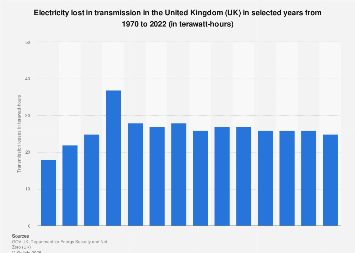
Transmission losses are 8 percent


Sun Chariot

Established Member
Joined
16 Mar 2009
Messages
6,676
Location
2 miles and 50 years away from the Longmoor Milita
@Noddy I've just seen your post #3468 on this other thread.

Oh, that Lucid is a thing of beauty and a technical marvel. I am looking at what I'll sell out of the house, before my wife calls a Solicitor... ;)
 

Noddy

Established Member
Joined
11 Oct 2014
Messages
1,653
Location
UK
@Noddy I've just seen your post #3468 on this other thread.

Oh, that Lucid is a thing of beauty and a technical marvel. I am looking at what I'll sell out of the house, before my wife calls a Solicitor... ;)

Yep obviously I haven’t seen one in the flesh but all the reviews and videos sound amazing. AIUI they should be coming to the UK market next year. Most importantly while Lucid are only planning remain in the mid-high end market themselves to achieve greater profitability they are aiming to licence much of their advanced technology to other manufacturers so it should make its way into cheaper cars as well.
 

Chester1

Established Member
Joined
25 Aug 2014
Messages
4,442
I think self-charging hybrid, is the route that my wife and I will likely take, once our two diesel cars need replacing.
That being said, the majority of our weekly driving distances, are dual carriageways & motorways - so we'd be using fossil fuel whilst lugging a barely-used battery and motors about.

I think diesel market share for new car sales in UK is now down to about 4%. Hybrids are a good fit for people who are replacing diesel cars. The batteries for self charging hybrids are much smaller and lighter than for EV and plug in Hybrids.
 

trebor79

Established Member
Joined
8 Mar 2018
Messages
4,910
Sticking my neck out here but I think the way forward should be with hybrid cars, burn the fuel to produce electricity at the point of consumption has to be better than than burning it miles way and transmitting it along wires, via substations and charging points.

until such time as all our electricity can be produced from other sources than burning things this seems to be the most efficient way forward.

since the thread is is about pros and cons of electric cars I can say I have a hybrid and am delighted with it’s performance and economy
That's what the Nissan e-power vehicles do and they are no more efficient than normal ICE.
Combined cycle gas turbine power station is about 80% efficient. ICE about 35%. Plus most electricity is made from renewables and nuclear now anyway.
 

Bletchleyite

Veteran Member
Joined
20 Oct 2014
Messages
113,567
Location
"Marston Vale mafia"
I think diesel market share for new car sales in UK is now down to about 4%. Hybrids are a good fit for people who are replacing diesel cars. The batteries for self charging hybrids are much smaller and lighter than for EV and plug in Hybrids.

Mild hybrids only make sense if you drive in a hilly area so have plenty of opportunity to use regen. Otherwise you gain very little over simple petrol.
 

Sun Chariot

Established Member
Joined
16 Mar 2009
Messages
6,676
Location
2 miles and 50 years away from the Longmoor Milita
Lucid are ... aiming to licence much of their advanced technology to other manufacturers so it should make its way into cheaper cars as well.
This is promising - and I'll watch with much interest, over the next few years.
Lucid's Air Grand Touring has a range (510 miles) I seek; but a price tag (£117k) I cannot afford.
 
Last edited:
Status
Not open for further replies.

Top