
• Our new ticketing site is now live! Using either this or the original site (both powered by TrainSplit) helps support the running of the forum with every ticket purchase! Find out more and ask any questions/give us feedback in this thread!

BR Boundary Changes

Status
Not open for further replies.

Holmesfeldian

New Member
Joined
25 Jul 2024
Messages
2
Location
Holmesfield
I'm interested in the thinking and practice of boundary changes on BR since 1948.
Some made perfect sense such as the former LMS London Tilbury and Southend line moving to Eastern Region but my local line (Chesterfield to Sheffield) moved from London Midland control to Easter Region in 1958 and I was intrigued why it was deemed necessary to move this slither of line (actually from Hasland to be pedantic!) from one region to another. I'm guessing it was something to do with a reorganisation of the Sheffield District latterly based at Sheaf House but this is conjecture on my part.
I'm also interested in any potential changes to the station signage.
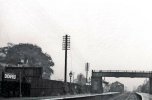
Henry Cssserley took a photo of Dronfield dated as 1956 (i.e. before the changes) with totems - were these originally maroon ? All the images I've seen of Dronfield totems are standard E.R. blue.
 

Attachments

  • Dronfield station 1956 - Henry Casserley.jpg
    Dronfield station 1956 - Henry Casserley.jpg
    169.3 KB · Views: 59
Sponsor Post - registered members do not see these adverts; click here to register, or click here to log in
R

RailUK Forums

LNW-GW Joint

Veteran Member
Joined
22 Feb 2011
Messages
21,915
Location
Mold, Clwyd
The initial BR nationalisation in 1948 converted the Big 4 rail companies into the Big 6 Regions.
The Scottish Region was created by lopping off the LMS/LNER lines at the border, and the North Eastern Region was formed from the LNER lines north of Doncaster (Shaftholme Jn on the ECML), the rest to the south, including Sheffield becoming the Eastern Region.
The LMS lines in England and Wales became the London Midland Region.
That still left the LMS with its full ex-Midland line-of-route network running from St Pancras/Bristol-Birmingham-Derby-Sheffield-Leeds-Carlisle, and also the Standedge, Calder Valley and Hope Valley routes across the south Pennines.
The ER had the Woodhead route and also the route south into Marylebone (both ex-GC).

By 1958, BR had dual management in the areas of overlap, and decided to "simplify" the organisation into geographic areas.
So the ex-Midland and ex-GC lines were butchered with LMS lines east of the Pennines going to the NER or ER, and the few LNER lines west of the Pennines going to the LMR.
Further south the ex-GC route to Marylebone was transferred to LMR management.
At the same time the Western Region (WR) took over the ex-MR section south of Blackwell (top of the Lickey) to Bristol from the LMR.

The last major regional BR change was in 1963 when the LMR took over the ex-GW lines in the West Midlands (Heyford-Birmingham-Shrewsbury-Chester, including the Cambrian), while the WR took over the ex-SR network west of Salisbury.
The North Eastern Region was absorbed into the Eastern Region in 1967, losing its distinctive tangerine station branding to ER blue.
Some of the boundaries these changes created are still relevant today in Network Rail's organisation, which is often fixed by the control area of the major signalling centres (York, Manchester, Didcot, Rugby, Saltley etc).

Under Network Rail, there have been repeated changes in their area management.
The Midland Main Line (St Pancras-Skipton, and east of Nuneaton/Tamworth) is now part of NR's Eastern Region.
Much of the Midland route in Worcestershire is now back with Birmingham management (North West & Central Region).
But nearly all of Wales is now in the Western Region, including to the outskirts of Crewe!
We don't know where HS2 will fit into the regional structure, as cutbacks means it won't have any impact on the MML/ECML as originally envisaged.

You can feel the dilemma over regional or line-of-route organisation in the uncertainty over how Great British Railways is being set up.
Either way there will be awkward boundaries and some people will feel "left out" or that it goes against historical operation.

Welcome to the forum by the way!
 

Siemens Staines

Established Member
Joined
30 Jul 2015
Messages
1,505
I think that there were some further boundary changes under BR in the late 1980s. Off the top of my head, Banbury moved back under Western region control which I think was to harmonise the Marylebone & Paddington Thames & Chiltern NSE area. The Anglia area was split off from the Eastern to become its own region with its own regional destination code "L". There was also something around Kensington Olympia with regard to the boundary between Midland and Southern? There may well have been others. I do not recall now whether these changes all occurred simultaneously, or were staggered over time.
 

Magdalia

Established Member
Joined
1 Jan 2022
Messages
7,386
Location
The Fens
By 1958, BR had dual management in the areas of overlap, and decided to "simplify" the organisation into geographic areas.

Implementation of the Modernisation Plan was done via area schemes.

The British Transport Commission and British Railways had a name for the overlaps, they were called penetrating lines.

my local line (Chesterfield to Sheffield) moved from London Midland control to Easter Region in 1958
The new ER/LMR boundaries on the ex Midland route in the Sheffield area were at Horns Bridge and Cudworth.
The new ER/LMR boundaries on the ex Great Central route in the Sheffield area were at Pilsley and Dunford Bridge.

The Sheffield area was the third big Eastern Region area modernisation, after East Anglia and the south end of the East Coast Main Line. That wasn't just about traction, it also included the development of Tinsley Yard, and centralising the administration at Sheaf House. Both opened in 1965.
 

Whisky Papa

Member
Joined
8 Aug 2019
Messages
727
The initial BR nationalisation in 1948 converted the Big 4 rail companies into the Big 6 Regions.
The Scottish Region was created by lopping off the LMS/LNER lines at the border, and the North Eastern Region was formed from the LNER lines north of Doncaster (Shaftholme Jn on the ECML), the rest to the south, including Sheffield becoming the Eastern Region.
The LMS lines in England and Wales became the London Midland Region.
That still left the LMS with its full ex-Midland line-of-route network running from St Pancras/Bristol-Birmingham-Derby-Sheffield-Leeds-Carlisle, and also the Standedge, Calder Valley and Hope Valley routes across the south Pennines.
The ER had the Woodhead route and also the route south into Marylebone (both ex-GC).

By 1958, BR had dual management in the areas of overlap, and decided to "simplify" the organisation into geographic areas.
So the ex-Midland and ex-GC lines were butchered with LMS lines east of the Pennines going to the NER or ER, and the few LNER lines west of the Pennines going to the LMR.
Further south the ex-GC route to Marylebone was transferred to LMR management.
At the same time the Western Region (WR) took over the ex-MR section south of Blackwell (top of the Lickey) to Bristol from the LMR.
I recall seeing as a teenager in the first edition of Rail Atlas of Great Britain and Ireland that the London Midland / Eastern boundary was marked at Hall Royd Junction on the Calder Valley. I hadn't realised until now this had not been the case right since nationalisation, though.

I never thought I would move to the area and eventually (post-privatisation) work as relief staff based at Hebden Bridge but actually rostered to cover Todmorden slightly more often. Their respective National Location Codes, 8524 and 2677 reflect their Eastern and London Midland regional heritages. At the risk of going off topic, I did wonder whether there were any other ticket office roles that straddled such a boundary?

Earlier, I had worked at several ex Great Central stations in the Greater Manchester / Derbyshire area, which of course had been allocated London Midland series NLCs (eg Dinting with 2893 or Hadfield 2896) after their transfer.
 

LNW-GW Joint

Veteran Member
Joined
22 Feb 2011
Messages
21,915
Location
Mold, Clwyd
I think that there were some further boundary changes under BR in the late 1980s. Off the top of my head, Banbury moved back under Western region control which I think was to harmonise the Marylebone & Paddington Thames & Chiltern NSE area. The Anglia area was split off from the Eastern to become its own region with its own regional destination code "L". There was also something around Kensington Olympia with regard to the boundary between Midland and Southern? There may well have been others. I do not recall now whether these changes all occurred simultaneously, or were staggered over time.
Yes, I forgot to say that BR's sectors eventually led to the abolition of the geographic Regions, but that lasted precisely one year (1993) after which the privatisation machine lumbered into action, creating Railtrack and the present TOCs (or similar).
Without being entirely sure, I think for that year Chesterfield-Sheffield became an InterCity sector route, with the branches becoming part of Regional Railways.

The change on the West London Line, I think, was due to the 3rd rail electrification up to North Pole depot with signalling from Victoria, hence becoming a Southern line.
That was all part of the Channel Tunnel route upgrade, to get Eurostars from Waterloo to the depot at North Pole, around 1990.
 

Sir Felix Pole

Established Member
Joined
21 Oct 2012
Messages
2,169
Location
Wilmslow
I think that there were some further boundary changes under BR in the late 1980s. Off the top of my head, Banbury moved back under Western region control which I think was to harmonise the Marylebone & Paddington Thames & Chiltern NSE area. The Anglia area was split off from the Eastern to become its own region with its own regional destination code "L". There was also something around Kensington Olympia with regard to the boundary between Midland and Southern? There may well have been others. I do not recall now whether these changes all occurred simultaneously, or were staggered over time.
The boundary between the SR / WR on the Salisbury - Exeter line changed from Wilton South to Sherborne sometime in the '80s - can't remember exactly when - as the London commuter market developed.
 

30907

Veteran Member
Joined
30 Sep 2012
Messages
21,950
Location
Airedale
The boundary between the SR / WR on the Salisbury - Exeter line.
Just to mention that there were 3 previous changes in that part of the world.
The 1963 takeover and Westernisation of LSW lines by the WR was preceded by:
1950 - WR (at least the S&T side) took over West of Cowley Bridge Jn, but operationally it remained SR.
1958 - the SR regained these (despite the penetration) and gained Castle Cary to Weymouth and branches but lost the northern half of the S and D.
Again the traffic side remained essentially WR even if Weymouth shed became 71G, but SR green paint and upper quadrant signals appeared in places (I have a feeling the reverse happened with the 1950 move)!
 

MadMac

Established Member
Joined
13 Jun 2008
Messages
1,495
Location
Moorpark, CA
Annan was a bit of a bizarre one: very much in ScR with blue station signage but the signal box went back and forward between ScR and LMR. I think it initially went to LMR when Carlisle box opened and transferred a few times subsequently.
 

Sir Felix Pole

Established Member
Joined
21 Oct 2012
Messages
2,169
Location
Wilmslow
Just to mention that there were 3 previous changes in that part of the world.
The 1963 takeover and Westernisation of LSW lines by the WR was preceded by:
1950 - WR (at least the S&T side) took over West of Cowley Bridge Jn, but operationally it remained SR.
1958 - the SR regained these (despite the penetration) and gained Castle Cary to Weymouth and branches but lost the northern half of the S and D.
Again the traffic side remained essentially WR even if Weymouth shed became 71G, but SR green paint and upper quadrant signals appeared in places (I have a feeling the reverse happened with the 1950 move)!
Yes, the 'Withered Arm' remained SR operationally, but commercial matters came under the WR in the period 1950-58. Some stations were disguised in WR chocolate and cream - and remained so until closure - which confused me as a youngster.

It is interesting to speculate what might have happened had the SR retained control in 1963. It had quite advanced plans for DEMU operation - new improved 'Hastings' units - and proposed to retain through services to Barnstaple and Okehampton. The Exmouth branch would have been DEMU too. We might have been spared the Gerry Fiennes wrecking ball and retained double track too!
 

6Gman

Established Member
Joined
1 May 2012
Messages
9,200
One of the standard interview questions for promotion at Crewe was "name all the region's boundary points". There were a lot! And the London ones were tricky.
 

Harvester

Established Member
Joined
9 Nov 2020
Messages
1,759
Location
Notts
It is interesting to speculate what might have happened had the SR retained control in 1963. It had quite advanced plans for DEMU operation - new improved 'Hastings' units - and proposed to retain through services to Barnstaple and Okehampton. The Exmouth branch would have been DEMU too.
Proposals to cut some Waterloo-Exeter Central schedules in the 1963 summer timetable to around 2 hrs 50 mins, using MN Pacifics, were under consideration in 1962. This was swept into oblivion, when the transfer of control to the WR beyond Wilton was announced in September 1962!
 
Last edited:

Gloster

Veteran Member
Joined
4 Sep 2020
Messages
12,977
Location
Up the creek
The boundary between the SR / WR on the Salisbury - Exeter line changed from Wilton South to Sherborne sometime in the '80s - can't remember exactly when - as the London commuter market developed.

It would have been 1984, or possibly 1983. I enquired about going to Templecombe on redundancy, even though it would have meant losing my seniority (again) due to changing regions, but someone from Brighton had already put in for it. Probably for the best as I would not have enjoyed selling tickets, answering questions or anything to do with the b****y passengers.
 

etr221

Established Member
Joined
10 Mar 2018
Messages
1,595
By 1958, BR had dual management in the areas of overlap, and decided to "simplify" the organisation into geographic areas.
So the ex-Midland and ex-GC lines were butchered with LMS lines east of the Pennines going to the NER or ER, and the few LNER lines west of the Pennines going to the LMR.
Further south the ex-GC route to Marylebone was transferred to LMR management.
At the same time the Western Region (WR) took over the ex-MR section south of Blackwell (top of the Lickey) to Bristol from the LMR.
At one stage Marylebone came under the Western Region.
The last major regional BR change was in 1963 when the LMR took over the ex-GW lines in the West Midlands (Heyford-Birmingham-Shrewsbury-Chester, including the Cambrian), while the WR took over the ex-SR network west of Salisbury.
What was to become the Chiltern line - the GW&GC Joint, and the GWR line on towards Birmingham - was transferred from WR to LMR around 1970, following completion of the LM Western Lines electrification, and concentration of Inter-City London-Birmingham services 'under the wires'.

Going back to OP's original question, this all boiled down to questions of how you divide up, managerially, a large, complex system, with varied origins - and changing views on how this should be done, and the differing priorities to be given to engineering, commercial, operational and 'locality/regionality' perspectives, and how these could/should be balanced.
 

Rescars

Established Member
Joined
25 May 2021
Messages
2,544
Location
Surrey
I wonder to what extent the various BTC / BR boundary changes came about due to anomalies in the Big Four amalgamation. Would things have worked out differently perhaps if the inherited arrangements had followed the original post WW1 proposals for five grouped companies in England and Wales with separate arrangements for London, Scotland and Ireland?
 

30907

Veteran Member
Joined
30 Sep 2012
Messages
21,950
Location
Airedale
Proposals to cut some Waterloo-Exeter Central schedules in the 1963 summer timetable to around 2 hrs 50 mins, using MN Pacifics, were under consideration in 1962.
Though the ACE did run to those times for a couple of years.
 

etr221

Established Member
Joined
10 Mar 2018
Messages
1,595
I wonder to what extent the various BTC / BR boundary changes came about due to anomalies in the Big Four amalgamation. Would things have worked out differently perhaps if the inherited arrangements had followed the original post WW1 proposals for five grouped companies in England and Wales with separate arrangements for London, Scotland and Ireland?
A different grouping arrangement in 1922-23 (in place of the big 4), would have meant that (assuming nationalisation still happened in 1948) BR would have started in a different place, but I'm sure whatever structure was adopted then would have gone through similar changes...

Possibly more interesting is what would have happened had nationalisation happened in the 1919-23 period (it was certainly considered), or had it come about in the previous century (again, there were proposals at various times)
 

Chrius56000

Member
Joined
18 Aug 2010
Messages
262
Location
Walsall
Was any Tangerine N.E. Region Station Signage known to have been repainted/replaced in E.R. Dark Blue/Ultramarine Blue following the amalgamation of the E.R. and N.E.R. in 1967 or did N.E. Regional Signage go over directly to Corporate Era White–On–Black, assuming closure didn't supervene first?
 

Ashley Hill

Established Member
Joined
8 Dec 2019
Messages
5,604
Location
The West Country
Was any Tangerine N.E. Region Station Signage known to have been repainted/replaced in E.R. Dark Blue/Ultramarine Blue following the amalgamation of the E.R. and N.E.R. in 1967
None that I’m aware of on the NER. By 1967 a start had already been made replacing totems in some areas,if tangerine signs needed replacing they would probably be in the new corporate signage by then.
 

Efini92

Established Member
Joined
14 Dec 2016
Messages
2,137
I recall seeing as a teenager in the first edition of Rail Atlas of Great Britain and Ireland that the London Midland / Eastern boundary was marked at Hall Royd Junction on the Calder Valley. I hadn't realised until now this had not been the case right since nationalisation, though.

I never thought I would move to the area and eventually (post-privatisation) work as relief staff based at Hebden Bridge but actually rostered to cover Todmorden slightly more often. Their respective National Location Codes, 8524 and 2677 reflect their Eastern and London Midland regional heritages. At the risk of going off topic, I did wonder whether there were any other ticket office roles that straddled such a boundary?

Earlier, I had worked at several ex Great Central stations in the Greater Manchester / Derbyshire area, which of course had been allocated London Midland series NLCs (eg Dinting with 2893 or Hadfield 2896) after their transfer.
I always thought the boundary was where the 60 started just after Charlestown curve.
 

Andy R. A.

Member
Joined
25 Aug 2019
Messages
221
Location
Hastings, East Sussex.
In my local area in 1958 there was a change in the boundary on the old Edgware GN Branch in North London. The line was not physically connected to the London Midland Region at all, but the part of the line from just west of Mill Hill East station through to Edgware was transferred from the Eastern Region to the London Midland, who took over all responsibilities for that section including the Permanent Way maintenance. However, not surprisingly without a connection to the LMR, the remaining freight services still continued to be operated by Eastern Region crews and Locos. The small Goods Yard at Mill Hill the Hale was then administered from the Parcels Office at Mill Hill Broadway station. (Not sure about the facilities at Edgware ? The entrance to the Mill Hill the Hale Goods Yard in Flower Lane gained a maroon/white painted sign on the gate (don't know if it had a Blue/White sign before then, can't remember that far back. However there was a Blue/White Goods Yard sign at Mill Hill East that was still there nearly ten years after the Goods Yard closed). The Maroon/white sign at Mill Hill the Hale survived a few years after closure, and just survived being burnt along with the old gates when the M1 Motorway was constructed over part of the former yard.
Signs 13.JPG
 

Taunton

Veteran Member
Joined
1 Aug 2013
Messages
12,270
1958 - the SR regained these (despite the penetration) and gained Castle Cary to Weymouth and branches but lost the northern half of the S and D.
Again the traffic side remained essentially WR even if Weymouth shed became 71G, but SR green paint and upper quadrant signals appeared in places (I have a feeling the reverse happened with the 1950 move)!
The Cary to Weymouth line really went back and forth between Western and Southern, although the former seemed to provide the rolling stock throughout, aided by the Southern not really having any appropriate diesels. Maiden Newton got a classic Southern concrete footbridge from the Exmouth Junction works, which is still there.

It was a considerable outlier. For the Maiden Newton to Bridport branch the nearest Western train crew depot was at Westbury, whose crews spent half their shift getting to and from Maiden Newton 'on the cushions'. Weymouth would have been far closer, but wrong region.

The S&D, not far away, was a curious mixture, with mainly LMR locomotives, Southern green carriages, and Western Region commercial staff.
 

Grumpy

Established Member
Joined
8 Nov 2010
Messages
1,317
At one stage Marylebone came under the Western Region.

What was to become the Chiltern line - the GW&GC Joint, and the GWR line on towards Birmingham - was transferred from WR to LMR around 1970, following completion of the LM Western Lines electrification, and concentration of Inter-City London-Birmingham services 'under the wires'.
My recollection of this is that following the EBML electrification there continued to be a Paddington to Birmingham loco-hauled semi-fast service via Bicester for several years. Eventually BR twigged that there was more money to be made by enhancing the service from the Thames Valley to Birmingham and gradually most of the loco-hauled trains were diverted to run via Reading and Oxford being replaced on the joint line by some WR DMU worked trains. At this time the WR was responsible for the joint line including operating the stations. However most of the trains on the joint line were LM suburban DMU's to Marylebone-these also working the Aylesbury trains.
BR strategy at that time was to close Marylebone, transfer all the joint line services to Paddington, and the Aylesbury line trains to run out of Baker Street. However approx 1972/73 LT suddenly decreed that there was no capacity at Baker St. I never really understood why the sudden change of mind-there were to very important people commuting into Marylebone who didn't fancy using Paddington.
Following this reverse, the WR and LM Divisional Managers got their heads together and wrote a joint letter to their Regional General Managers to the effect that operational savings could be made by bringing the Joint line stations and services under one management with the LM DMU's running Marylebone to Banbury. This was agreed and the remaining Paddington-Bicester-Birmingham up and down train(usually class 52 hauled) withdrawn
 

Gloster

Veteran Member
Joined
4 Sep 2020
Messages
12,977
Location
Up the creek
My recollection of this is that following the EBML electrification there continued to be a Paddington to Birmingham loco-hauled semi-fast service via Bicester for several years. Eventually BR twigged that there was more money to be made by enhancing the service from the Thames Valley to Birmingham and gradually most of the loco-hauled trains were diverted to run via Reading and Oxford being replaced on the joint line by some WR DMU worked trains. At this time the WR was responsible for the joint line including operating the stations. However most of the trains on the joint line were LM suburban DMU's to Marylebone-these also working the Aylesbury trains.
BR strategy at that time was to close Marylebone, transfer all the joint line services to Paddington, and the Aylesbury line trains to run out of Baker Street. However approx 1972/73 LT suddenly decreed that there was no capacity at Baker St. I never really understood why the sudden change of mind-there were to very important people commuting into Marylebone who didn't fancy using Paddington.
Following this reverse, the WR and LM Divisional Managers got their heads together and wrote a joint letter to their Regional General Managers to the effect that operational savings could be made by bringing the Joint line stations and services under one management with the LM DMU's running Marylebone to Banbury. This was agreed and the remaining Paddington-Bicester-Birmingham up and down train(usually class 52 hauled) withdrawn

Wasn’t there a problem with some of the well-heeled commuters from places like Great Missenden and Wendover who did not want to lose their First Class? These were people who knew whose arm to twist.
 

Magdalia

Established Member
Joined
1 Jan 2022
Messages
7,386
Location
The Fens
Following this reverse, the WR and LM Divisional Managers got their heads together and wrote a joint letter to their Regional General Managers to the effect that operational savings could be made by bringing the Joint line stations and services under one management with the LM DMU's running Marylebone to Banbury. This was agreed and the remaining Paddington-Bicester-Birmingham up and down train(usually class 52 hauled) withdrawn
The 07xx from Birmingham and 17xx return from Paddington ran via High Wycombe until May 1986.

Westerns only worked this route for a short period when they were new, replacing the Kings. By the time that electrification was completed on the Rugby route they were dominated by Brush Type 4s. Westerns made a partial recovery in the 1970s after the trains has been diverted to run via Reading.
 

Taunton

Veteran Member
Joined
1 Aug 2013
Messages
12,270
The line from Northolt Junction to Banbury was managed by the Western Region, and initially handled their Birmingham expresses, although the local service was all from Marylebone, with London Midland dmus. The line was fitted with GWR ATC (AWS), fine for those expresses, but the LMR dmus were not fitted with this - in fact they had no AWS at all, as there was none on the other shorter sections they ran on.
 

Grumpy

Established Member
Joined
8 Nov 2010
Messages
1,317
The 07xx from Birmingham and 17xx return from Paddington ran via High Wycombe until May 1986.

Westerns only worked this route for a short period when they were new, replacing the Kings. By the time that electrification was completed on the Rugby route they were dominated by Brush Type 4s. Westerns made a partial recovery in the 1970s after the trains has been diverted to run via Reading.
I must admit I had forgotten that the through trains ran till 86.
As I said above, at the time of the boundary switch the 1740-ish down train was mostly a 52- I used to walk to Paddington every evening with a work colleague who commuted to High Wycombe on this train and it we used to discuss.

== Doublepost prevention - post automatically merged: ==

The line from Northolt Junction to Banbury was managed by the Western Region,
I cant remember where the boundary was.
Aynho?
Heyford and Tackley were WR managed but I believe Kings Sutton was LM
 

Gloster

Veteran Member
Joined
4 Sep 2020
Messages
12,977
Location
Up the creek
My 1978 Baker shows the boundary as just south of Aynho Junction. My recollection is that it was just outside Aynho’s Down Distant.
 

Kingston Dan

Member
Joined
19 Apr 2020
Messages
347
Location
N Yorks
The initial BR nationalisation in 1948 converted the Big 4 rail companies into the Big 6 Regions.
The Scottish Region was created by lopping off the LMS/LNER lines at the border, and the North Eastern Region was formed from the LNER lines north of Doncaster (Shaftholme Jn on the ECML), the rest to the south, including Sheffield becoming the Eastern Region.
The LMS lines in England and Wales became the London Midland Region.
That still left the LMS with its full ex-Midland line-of-route network running from St Pancras/Bristol-Birmingham-Derby-Sheffield-Leeds-Carlisle, and also the Standedge, Calder Valley and Hope Valley routes across the south Pennines.
The ER had the Woodhead route and also the route south into Marylebone (both ex-GC).
Never quite understood why they created the NE region given the LMS was the largest of the Big Four - but yet they split the second largest constituent part up rather than the largest. Does anyone know why?
 
Status
Not open for further replies.

Top