Our new ticketing site is now live! Using either this or the original site (both powered by TrainSplit) helps support the running of the forum with every ticket purchase! Find out more and ask any questions/give us feedback in this thread!
It is really noticable how long non DOO services take to allow passengers to open the doors at stations when compared to most electric services around Glasgow
Yes, it's amazing to watch how slow it is on conductor services where they have to open the local door, have a look down the platform (to check it's still there) before they open the rest of the doors.
Yes, it's amazing to watch how slow it is on conductor services where they have to open the local door, have a look down the platform (to check it's still there) before they open the rest of the doors.
It’s a significant enough risk that guards are required to check their train is correctly platformed before releasing the doors. They don’t undertake local door procedures for the entertainment value.
SPADs are proportionally rare but drivers are still required to use a DRA (Driver’s Reminder Appliance) to mitigate. The railway tends to prefer to be proactive in order to reduce risk before the incident happens.
And what happens on, for example, Edinburgh to Helensburgh services where the TE does not usually travel the full route but is replaced en route. His/her replacement is perhaps not there due to a late running service. The driver may not be aware that TE1 has left the train but has not been replaced by TE2. If the driver is aware, does he/she instruct everyone to leave with the train running forward ECS. That could be a fairly regular occurrence.
It is really noticable how long non DOO services take to allow passengers to open the doors at stations when compared to most electric services around Glasgow
and comes at a direct financial cost to the TOC. DOO with “probably someone else on board” offers no such guarantee, and no such financial incentive to resource that second person
Overshooting is quite likely if adhesion is worse than expected. Stopping short means that the driver has forgotten the length of the train which is unacceptable in a professional grade. I'm sure many drivers write down the number of coaches in case they forget.
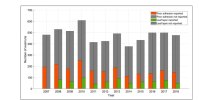
Managed to find some figures on over runs, about 5 years old in a study by Sheffield University, they are actually higher than I thought looks like average of 450-500 per year
So much for going to Scotland to avoid strikes! Though looks like my trip next month will be before the RMT can walk out, given their ballot doesn't close until April 11th.
This leaves, what? Just Wales, and half of Merseyside, where you can reliably plan anything by train more than 2 weeks in advance?
There are trackside signs (designed to only be visible.to drivers) on the approach to certain stations which are mainly called at by DOO/DCO stations (such as Partick) which remind drivers that it matters whether they are 3-car or 6-car. I assume these signs are designed to inform the driver to stop at the correct position?
Are these signs never ignored or forgotten?
If they are, then what you say isn't true.
If they are not, then why can't similar signs be fitted at stations where DOO/DCO isn't the current mode of operation?
I see the RMT have withdrawn balloting with regards to DOO after assurances that guards would remain on the train and the train won't run without a guard present.
I see the RMT have withdrawn balloting with regards to DOO after assurances that guards would remain on the train and the train won't run without a guard present.
As far as how DOO is perceived around Glasgow by the public, most of the time it's fine, but the exception is when you most need a second member of staff - late evenings. There's a lot more TE absence (or the appearance of absence) when trains are assumed to be (and often are) rowdier.
As far as how DOO is perceived around Glasgow by the public, most of the time it's fine, but the exception is when you most need a second member of staff - late evenings. There's a lot more TE absence (or the appearance of absence) when trains are assumed to be (and often are) rowdier.
SPADs are proportionally rare but drivers are still required to use a DRA (Driver’s Reminder Appliance) to mitigate. The railway tends to prefer to be proactive in order to reduce risk before the incident happens.
In general there's a rule book requirement for use of the DRA. In general there's no requirement for the guard to step onto the platform before they release the doors, that's a matter of company policy. The only rule book requirement is that the guard is assured the doors which are supposed to be on the platform are on the platform. Stepping down to it first is just one of many ways to achieve this.
In general there's a rule book requirement for use of the DRA. In general there's no requirement for the guard to step onto the platform before they release the doors, that's a matter of company policy. The only rule book requirement is that the guard is assured the doors which are supposed to be on the platform are on the platform. Stepping down to it first is just one of many ways to achieve this.
Well yes, but given the variety of stock across the network and the decreasing use of fully opening or droplight windows, there aren’t all that many ways to simply and universally achieve it really. The answer of course is technology, which will eventually remove the need to check the driver’s work!
Well yes, but given the variety of stock across the network and the decreasing use of fully opening or droplight windows, there aren’t all that many ways to simply and universally achieve it really. The answer of course is technology, which will eventually remove the need to check the driver’s work!
It's pretty simply and universally achieved by simply having a policy that allows the guard to decide for themselves if they are certain the doors that are supposed to be on the platform actually are. Most cases the guard is perfectly aware in their mind which specific platform they're at, what formation of train they're working, and what door on the train they're working from. In rare cases if they're not they still have the option to step down first. That's an approach that's perfectly acceptable risk-wise, and is commonplace. Yet a small number of managers have decided that only stepping off the train will do, that's the point that was being challenged, I believe.
As for technology that's also pretty advanced already. London Overground have that down to a T, for example. Not a meaningful difference in operations complexity between London Overground and Strathclyde (though that's not to say customer care isn't rather better in the Glasgow area than on London Overground).
It's pretty simply and universally achieved by simply having a policy that allows the guard to decide for themselves if they are certain the doors that are supposed to be on the platform actually are. Most cases the guard is perfectly aware in their mind which specific platform they're at, what formation of train they're working, and what door on the train they're working from. In rare cases if they're not they still have the option to step down first. That's an approach that's perfectly acceptable risk-wise, and is commonplace. Yet a small number of managers have decided that only stepping off the train will do, that's the point that was being challenged, I believe.
As for technology that's also pretty advanced already. London Overground have that down to a T, for example. Not a meaningful difference in operations complexity between London Overground and Strathclyde (though that's not to say customer care isn't rather better in the Glasgow area than on London Overground).
Hmm, maybe. Depends very much on the length of the train I’d suggest? Guard with a two car DMU, unlikely to get that wrong. 8/10/12 car suburban whatever, working from a random location within the train because they’re actually out & about as per their job; not so much!
Hmm, maybe. Depends very much on the length of the train I’d suggest? Guard with a two car DMU, unlikely to get that wrong. 8/10/12 car suburban whatever, working from a random location within the train because they’re actually out & about as per their job; not so much!
I think in the event that the train was formed of an unusually long formation the guard would obviously engage that somehow in their mind, otherwise a safety incident would be likely even if they did step onto the platform. But importantly the point was more that the guard can choose to step off the train and then return to the panel if they wish to on a case-by-case basis. Indeed most guards who have to release doors already do so, except where the company policy is that they mustn't.
As far as how DOO is perceived around Glasgow by the public, most of the time it's fine, but the exception is when you most need a second member of staff - late evenings. There's a lot more TE absence (or the appearance of absence) when trains are assumed to be (and often are) rowdier.
That may be true but it is also true that guards are also posted missing on those types of services. The key here is BTP enforcement, not TE or guard enforcement
As far as how DOO is perceived around Glasgow by the public, most of the time it's fine, but the exception is when you most need a second member of staff - late evenings. There's a lot more TE absence (or the appearance of absence) when trains are assumed to be (and often are) rowdier.
The same happens on guarded trains, where some guards become invisible in the eyes of the passengers as they 'hiding' in the back cab only doing the doors and not entering the passenger area due to the trains being a bit rowdier
I think in the event that the train was formed of an unusually long formation the guard would obviously engage that somehow in their mind, otherwise a safety incident would be likely even if they did step onto the platform. But importantly the point was more that the guard can choose to step off the train and then return to the panel if they wish to on a case-by-case basis. Indeed most guards who have to release doors already do so, except where the company policy is that they mustn't.
Plenty of guards releasing doors on long trains in the southeast, nothing particularly unusual about that.
The problem, from a safety management point of view, with a policy of “if you think you need to” is that eventually, inevitably, it WILL be the cause of people not checking - because they know they don’t have to, and because in general humans are lazy. This is why the railway, and other safety critical industries, by and large operate with policies based on doing things routinely and on a mandatory basis rather than letting people make their own decisions about how many layers of safety are required. It makes a lot of sense, and it’s a better way of doing things.
== Doublepost prevention - post automatically merged: ==
That may be true but it is also true that guards are also posted missing on those types of services. The key here is BTP enforcement, not TE or guard enforcement
Very true. However, as much as it isn’t ideal, a mandatory second member of crew will at least still be there, somewhere, and will be able to liaise with the required agencies in the event of something kicking off. A missing, optional TE etc is of little help if they’re not even on board.
We are aware of an issue with emails from the Forum to Microsoft-based email accounts (hotmail/outlook/live.com email addresses). This is being looked into currently, thanks for your patience meanwhile.