Topological
Established Member
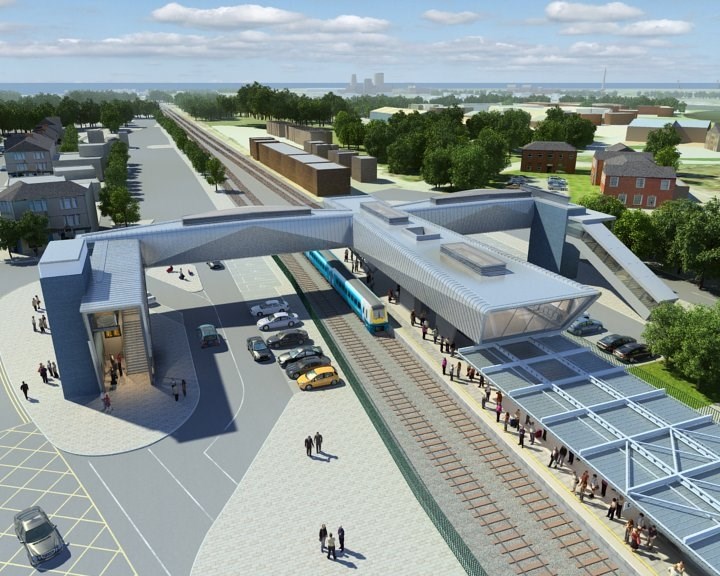
Should major interchanges be designed with larger footbridge areas that enable passengers to wait before going to the platform? A partial example here is Reading, whilst Birmingham New Street is along the wide bridge lines if we ignore the gatelines and weird split in half at the A end.
The advantages here being:
(Bridge can be replaced by subway in cases where the platforms are on viaducts above the ground)
The advantages here being:
- Any last-minute alterations are much more easily accommodated when people do not have to get back to the narrow bridge and then cross.
- Enlarged bridges also provide a space to put more concessions, toilets, etc., so that there is no need to clutter each island platform.
- Enlarged bridges should be warmer than waiting on platforms
(Bridge can be replaced by subway in cases where the platforms are on viaducts above the ground)