Tony2
Member
- Joined
- 7 Apr 2019
- Messages
- 576



Exactly, and that's what you'll get from a new train, even if the tube enthusiasts are smitten with the fact it was a D Stock.I guess what’s important to a discerning enthusiast may be different to Joe Public. I suspect for the latter the main perception is based on how clean and new the interior looks in general. And ultimately, that’s the perception that counts.
You can get a new interior from an existing shell too, at lower cost. I’m not a tube enthusiast, but I am an enthusiast of sensible solutions that create a perfectly adequate passenger environment that 99% of passengers will perceive to be as good as new.Exactly, and that's what you'll get from a new train, even if the tube enthusiasts are smitten with the fact it was a D Stock.
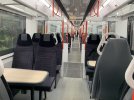
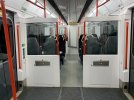
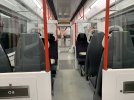
Okay. I personally am of the opinion that it doesn't feel like a new train on-board, but a refurbished old train. If you think differently, that's fine!You can get a new interior from an existing shell too, at lower cost. I’m not a tube enthusiast, but I am an enthusiast of sensible solutions that create a perfectly adequate passenger environment that 99% of passengers will perceive to be as good as new.


Exeter area wouldn't be possible with 60mph max speed, Barnstaple and Okehampton both 75mph in places, same with Exeter to Paignton. Though if a faster version was produced then fast charging equipment could be installed at Exmouth Junction where Okehampton and Barnstaple trains both layover.GWR has the ambition of using 230s for branch line work in the Thames Valley and Cornwall. With the level of performance being demonstrated use on Okehampton, Barnstaple, and Exmouth-Paignton seems possible
From my videos I time the doors closing on a TfW class 230 at 3 seconds. Didn’t catch a video of opening doors but from memory the timing seems similar.Will the door problems on the Class 230 units ever receive a full and final problem solving?
Fully agree. I’m not a tube enthusiast either, never bothered about them in the past, except from getting from A-B.You can get a new interior from an existing shell too, at lower cost. I’m not a tube enthusiast, but I am an enthusiast of sensible solutions that create a perfectly adequate passenger environment that 99% of passengers will perceive to be as good as new.
If the improved acceleration from the battery compensated for the reduced top speed, (which translates to 12 seconds per mile), would the 60 maximum still be a problem?Exeter area wouldn't be possible with 60mph max speed, Barnstaple and Okehampton both 75mph in places, same with Exeter to Paignton. Though if a faster version was produced then fast charging equipment could be installed at Exmouth Junction where Okehampton and Barnstaple trains both layover.
But does it have to be a new train, it will not be new forever. Is a refurbished old train such a bad thing. Try a 150 instead. The Pacers were new once....Okay. I personally am of the opinion that it doesn't feel like a new train on-board, but a refurbished old train. If you think differently, that's fine!
+Exeter area wouldn't be possible with 60mph max speed, Barnstaple and Okehampton both 75mph in places, same with Exeter to Paignton. Though if a faster version was produced then fast charging equipment could be installed at Exmouth Junction where Okehampton and Barnstaple trains both layover.
Indeed it has been pointed out before that good acceleration of the 230s trumps the 60mph speed limit if the distance between stops means the trains hardly ever reach 75mph.If the improved acceleration from the battery compensated for the reduced top speed, (which translates to 12 seconds per mile), would the 60 maximum still be a problem?

But is there any certainty that the Churchward proposal will actually result in new trains across the whole of GWR's branch network? I wouldn't be at all surprised if some or all it ultimately turned into a cascade from other operators, or even a further rebuilding of the Turbos to get another decade out of them.You may say sadly, but it would have come at the expense of brand new trains ordered with Churchward. Everywhere else would have got shiny new modern stock, and those branches would have been stuck for decades with 70s tube stock conversions. Now, these lines can be included in the Churchward order.

I wonder how Dawlish-proof the 230s would beExeter area wouldn't be possible with 60mph max speed, Barnstaple and Okehampton both 75mph in places, same with Exeter to Paignton. Though if a faster version was produced then fast charging equipment could be installed at Exmouth Junction where Okehampton and Barnstaple trains both layover.
Okehampton has a long section of 75mph, just past coleford Junction virtually all the way to Sampford Courtenay, Marsh Barton to near Starcross is 100, though local trains are timed for 75, 60 along there could cause issues for patching I reckon.But does it have to be a new train, it will not be new forever. Is a refurbished old train such a bad thing. Try a 150 instead. The Pacers were new once....
I don't have a particular fondness for the D78s. However I do like the idea of re-use as much as reasonably possible. We need to make efforts to save the planet unless someone can provide us with a shiny new planet.
+
Indeed it has been pointed out before that good acceleration of the 230s trumps the 60mph speed limit if the distance between stops means the trains hardly ever reach 75mph.
That sounds an excuse for not letting any British branch line have new state of the art rolling stock. The Class 230 were intended as a temporary stop gap until completely new rolling stock became available, so I have read.But does it have to be a new train, it will not be new forever. Is a refurbished old train such a bad thing. Try a 150 instead. The Pacers were new once....
I think some lines somewhere are inevitably going to get hand me downs.That sounds an excuse for not letting any British branch line have new state of the art rolling stock. The Class 230 were intended as a temporary stop gap until completely new rolling stock became available, so I have read.
Your mention of "The Pacers" brings to mind the expected life-period of those units and what actually transpired time-wise. The Class 142 were the worst of that particular bunch, as anyone who actually travelled on them in their later years will so attest.
There's also a question about disruption recovery,
Just because something was poor before, doesn't mean it should be again.I think some lines somewhere are inevitably going to get hand me downs.
I try not to think how long the Pacers persisted. How many multiples of their intended lifespan !. The very existence of them on the British Rail network speaks volumes about how seriously we take rail in the UK. Where else in the world went for such a long wheelbase passenger vehicle without bogies in the post war 20th century.

What is ”poor” about the battery variants?Just because something was poor before, doesn't mean it should be again.
The contributor was referring to the Pacers when the word "poor" appeared, which to the best of my knowledge were never battery-powered.What is ”poor” about the battery variants?
Given the longest Devon Metro route is likely to be Barnstaple to Paignton, which is around 65 miles, you’d imagine that a unit leaving on full charge would comfortably get to the other end, so the risk of needing a charge mid journey would be minimal.This, in my view, is the major stumbling block for static charging. It can get away with it on short, self contained branches such as the Greenford branch, but what happens on longer branches in disruption given there will only be finite locations to charge? Also on lines that share tracks, very careful management will be required to ensure battery-charge related perturbation doesn't spread to the other lines.
Doesn't the same issue affects any power plant that doesn't get its power continuously, on the fly. There are only a few diesel refuelling points.This, in my view, is the major stumbling block for static charging. It can get away with it on short, self contained branches such as the Greenford branch, but what happens on longer branches in disruption given there will only be finite locations to charge?
To be fair, diesel units usually have enough range to get them through a complete diagram, rather than needing topping up several times during the day, so range does need to be considered more carefully for battery units.Doesn't the same issue affects any power plant that doesn't get its power continuously, on the fly. There are only a few diesel refuelling points.
There are only a few diesel refuelling points.

And yet the ride quality of the brand spanking new CAF units is truly awful. Pacers bounced but at least it felt like a springy bounce, whereas CAFs simply feel like when you drive into a particularly nasty pothole in a car - more of a thud than a bounce! So the thing that was "poor before" is even worse now - that's British progress for you!Just because something was poor before, doesn't mean it should be again.
Any future GWR 230s would almost certainly have a) A more up-to-date PIS system than the one that 230001 has got at the moment, b) The walk-through gangways as per 230001 and the TfW fleet.But from travelling on both 230s and 484s plenty of times, they don’t feel like they have a brand new interiorA refurbished one perhaps, but you can tell it’s not brand new if you’ve got any sense. Especially not with the flickery TrainFX PIS, desperately slow doors, and don’t even get me started on the ridiculous temporary-looking gangways on the LNR and SWR examples
The Fast Charge system is expressly designed to avoid the battery train(s) having to dwell for longer than diesel trains would normally do at stations, just to charge the batteries. Fast Charge at intermediate stations would also be possible on a longer route. The Fast Charge locations on any given route would be sited carefully, considering all significant factors such as installed battery capacity (i.e. reserve capacity) on the train, number of trains using the Fast Charger per hour, availability and size of local grid connection, topography of the route, likely impact of service delays, likely impact of equipment failure, etc. Think of it like the old water trough system for steam locomotives, except replace water with electrons!Exaactly - a diesel train on a branch doesn't need time at one end or the other to refuel through the day.
This specific requirement of location makes me wonder if TfW adopted the FastCharge technology where would it be ideal for the stations to go since there aren't really many locations on the borderlands line that have such excess power other than Bidston because of the Merseyrail network.The Fast Charge system is expressly designed to avoid the battery train(s) having to dwell for longer than diesel trains would normally do at stations, just to charge the batteries. Fast Charge at intermediate stations would also be possible on a longer route. The Fast Charge locations on any given route would be sited carefully, considering all significant factors such as installed battery capacity (i.e. reserve capacity) on the train, number of trains using the Fast Charger per hour, availability and size of local grid connection, topography of the route, likely impact of service delays, likely impact of equipment failure, etc. Think of it like the old water trough system for steam locomotives, except replace water with electrons!
The Fast Charge system is expressly designed to avoid the battery train(s) having to dwell for longer than diesel trains would normally do at stations, just to charge the batteries.
For a branch the length of Greenford it can, for anything else that is what the trial is about, seeing in an actual representative environment how far it can go on how much charge, and how quickly it can be recharged.Maybe I've lost track but I thought we were talking about the impact of disruption when, say, a timetabled 10 minute dwell time might come down to a minute or so.
If the system can charge a train in the time it takes the crew to change ends and set up the cab for the next journey then there shouldn't be an issue. But I assumed that wasn't the case.
For a branch the length of Greenford it can, for anything else that is what the trial is about, seeing in an actual representative environment how far it can go on how much charge, and how quickly it can be recharged.
Don't forget we're not talking about traction current here: the battery banks are trickle charged so don't need a huge power supply (which is the beauty of it). The battery banks at West Ealing are on a 3-phase/415V 63A supply, fed from the same secondary substation that also supplies the single phase 230V supply to all the local houses.This specific requirement of location makes me wonder if TfW adopted the FastCharge technology where would it be ideal for the stations to go since there aren't really many locations on the borderlands line that have such excess power other than Bidston because of the Merseyrail network.
This is why I am strongly convinced that Scotrail should be trialing a 25kV + battery train on the Glasgow Queen St - Anniesland shuttle. Apart from releasing 90mph 158s for more suitable work it provides a nice short but varied testbed. The unit departs Glasgow Queen st up the steep Cowlairs incline, then switches to batteries for the 4 or so miles round to Anniesland. I am going to assume the shuttle uses the bay platform which probably isn't wired, but the unit changes ends and runs back to Cowlairs on batteries, then pan up on the main for the descent into Queen St with regen braking pumping back into the batteries.For a branch the length of Greenford it can, for anything else that is what the trial is about, seeing in an actual representative environment how far it can go on how much charge, and how quickly it can be recharged.