
• Our new ticketing site is now live! Using either this or the original site (both powered by TrainSplit) helps support the running of the forum with every ticket purchase! Find out more and ask any questions/give us feedback in this thread!

Radio 2 spin-off among four new stations planned by BBC

Status
Not open for further replies.

Darandio

Established Member
Joined
24 Feb 2007
Messages
11,143
Location
Redcar
Not sure it warrants a new thread given much of the recent discussion about the musical selection on Radio 2 becoming more modern is related to this announcement today......
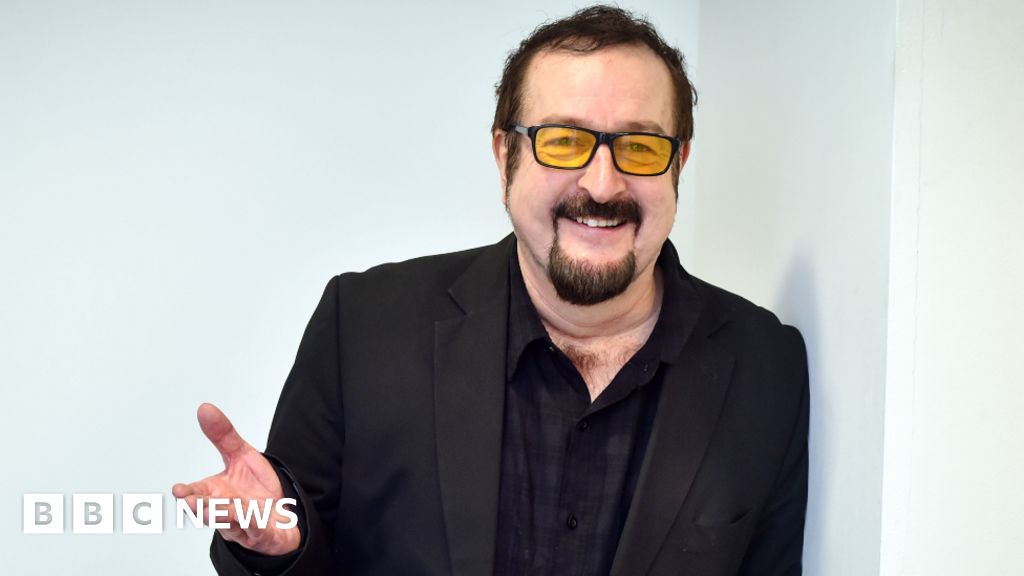

Radio 2 spin-off among four new stations planned by BBC​

The BBC has announced plans to launch a new Radio 2 spin-off station focusing on music from the 1950s, 60s and 70s.
It is one of four new radio stations the corporation intends to launch on DAB and online via BBC Sounds in an effort to attract new audiences.
Radio 1 will get a new sister station targeted at young listeners, which will play music from the last two decades.
The BBC said the stations would give people "more choice and value from the licence fee".
They will "delve deeper into specific genres and periods of music with context, curation and storytelling done in a way only the BBC can do", it added.
The stations have not yet been given names. They will be the first full BBC stations to be launched on the digital DAB network since 1Xtra, 6Music and the Asian Network in 2002.
The move risks angering commercial rivals such as Absolute, Smooth, Virgin and Heart, which already have spin-off stations focusing on specific genres or decades.
The popularity of those commercial stations in recent years reflects the splintering of the public's media habits, and listeners' desire to find a station more suited to their musical tastes.
The BBC said the cost of launching the stations would be relatively low, partly because schedules would include "existing content from BBC Sounds and our archives".

What are the new stations?​

The Radio 1 spin-off will focus on music from the 2000s and 2010s, catering to the appetite from young audiences for recent nostalgia.
The station will feature "lesser heard gems" from high-profile artists alongside their more well-known tracks, and will also be used to develop new on-air and production talent, the corporation said.
The Radio 2 spin-off will provide "a distinctive take on pop nostalgia" from the 50s, 60s and 70s, the BBC said, and will feature "some of the people who shaped the cultural landscape at the time" as well as some of the station's current presenters.
It will "bring heritage artist catalogues and stories to life in a much deeper and more richly textured manner than the main mixed-genre Radio 2 schedule can allow", the corporation said.
Bosses will hope it will entice some of Radio 2's former listeners back.
Ken Bruce, Graham Norton, Chris Evans and Simon Mayo are among the presenters who have left the station in recent years, as DJs such as Vernon Kay, Scott Mills and Zoe Ball have joined.
In 2021, a new station targeted at the baby boomer generation, Boom Radio, was set up to cater to older audiences who felt increasingly turned off by the newer music and DJs.
Radio 3 will also get a new station to focus on calming classical music, aimed at helping listeners "unwind, de-stress and escape the pressures of daily life".
It will feature newly-released pieces and new compositions alongside performances of classic works. The BBC said the station would champion music by living composers including a new generation of artist-composers who receive a limited amount of airplay on other UK stations.
It will support the BBC Proms and feature content from the BBC orchestras and choirs as well as BBC Introducing acts.
Finally, the existing Radio 1 Dance station, currently available as a stream on BBC Sounds, will launch on DAB with new and enhanced content.
The expanded station will include new commissions including programmes that develop young talent, alongside existing content.
The BBC has been sharing its plans with the audio sector and will soon open a public consultation as part of the regulatory process.
The plans will be subject to regulatory approvals, including a Public Interest Test (PIT) for the proposal to launch the DAB+ stations, a process which the BBC said it would start in the coming weeks
Lorna Clarke, director of BBC Music, said: "Our stations have captured the history of music in the UK during the past six decades for our audiences, and we now want to give them more choice from the BBC as listening habits are changing.
"Our extensions for Radio 1, Radio 2 and Radio 3 will allow listeners to deep-dive into more pop and classical genres and periods of music they love the most, uniquely created by the BBC."
Separately, the BBC also said it would ask for regulatory approval to tweak BBC Radio 5 Live Sports Extra to allow existing sports content from the BBC to be played on the station during times when there is no live sport being broadcast, instead of a short marketing trail on loop as is currently the case.
 
Sponsor Post - registered members do not see these adverts; click here to register, or click here to log in
R

RailUK Forums

Blindtraveler

Established Member
Joined
28 Feb 2011
Messages
10,544
This is simply the BBC getting extremely jealous because the commercial sector has got there before it and is already doing it far better than they are going to by the sound of things. The radio 3 relax type station could be good but have a feeling that it might be considered too alternative by listeners wishing simple relaxing classical music.
 

lachlan

Member
Joined
11 Aug 2019
Messages
1,171
This is simply the BBC getting extremely jealous because the commercial sector has got there before it and is already doing it far better than they are going to by the sound of things. The radio 3 relax type station could be good but have a feeling that it might be considered too alternative by listeners wishing simple relaxing classical music.
I don't see how introducing new stations in response to changes in the market is the BBC being "jealous"

The BBC will do it better by default thanks to there being no ad breaks. I'm just disappointed there doesn't appear to be 80s or 90s stations.
 

dangie

On Moderation
Joined
4 May 2011
Messages
2,353
Location
Rugeley Staffordshire
It's not just the music, it's the presenters (Disc Jockey's) who can make or break the programme.
Maybe if the BBC can persuade Tony Blackburn to do a Mon-Fri daytime slot they'll have a chance of wooing listeners from commercial stations. However I'm sure that at his age he's happy just doing his Saturday morning & Sunday evening stints.
 

lachlan

Member
Joined
11 Aug 2019
Messages
1,171
It's not just the music, it's the presenters (Disc Jockey's) who can make or break the programme.
Maybe if the BBC can persuade Tony Blackburn to do a Mon-Fri daytime slot they'll have a chance of wooing listeners from commercial stations. However I'm sure that at his age he's happy just doing his Saturday morning & Sunday evening stints.
For me it's a shame the 00s station will be Radio 1 branded as Scott Mills would be perfect for that. I couldn't see him doing 50s, 60s, or 70s!
 

Blindtraveler

Established Member
Joined
28 Feb 2011
Messages
10,544
I suspect that most or all of these will launch and fail to gain sufficient audience and therefore be pulled as being a bad use of licence money. The difference with the commercial stations that are doing this not just for the regular specific decade or genre stations that the likes of global already offer but the specialist networks like Christmas and country also offered is that they have enough major national advertisers with sufficient brass in their pocket to keep them going even if the audience reach isn't enormous, the other thing with many of these services already in existence is that a part from breakfast and sometimes drive time plus news and travel inserts at various points they are presenter free which appeals to listeners at work for example who just want background music without the distraction of speech content. I'm fully aware that as someone who used to work in radio and would love to do so again that I'm talking myself out of a future job with this posting but having worked in an office with an avid radio 2 listener for several years I cannot begin to describe how distracting this kind of content is when your literally just wanting to get on and work.
 

nw1

Established Member
Joined
9 Aug 2013
Messages
9,430
My preference would be something a little more recent than the Radio 2 spinoff being proposed, but a little older than R2 itself, namely (approximately) the final third of the 20th century, and including a wide range of genres from classic rock to dance. Everything from the Beatles to the Prodigy.

Radio 2 did closely match this around 10 years ago, now it's somewhat newer than that, though it's still my favoured BBC station. A lot of commercial stations seem to go for that kind of timespan, but the BBC currently doesn't.

Can't get my head round nostalgia for the 2010s, given it was basically yesterday (and isn't the 2010s R1's department anyway - does it need a spinoff?), but I guess it takes all sorts! ;)
 
Last edited:

nw1

Established Member
Joined
9 Aug 2013
Messages
9,430
If you read the press release that's exactly what's happening!

I realise that, but just questioning whether there is a lot of need for a station focusing partly on 2010s, given that R1 probably (don't know - last listened to it in the 90s) already plays plenty of 2010s music anyway! In fact, so does R2, for that matter.
 

lachlan

Member
Joined
11 Aug 2019
Messages
1,171
I realise that, but just questioning whether there is a lot of need for a station focusing partly on 2010s, given that R1 probably (don't know - last listened to it in the 90s) already plays plenty of 2010s music anyway! In fact, so does R2, for that matter.
Radio 1 is mostly new stuff (within the past year or two) but with some 10s, 00s and the odd 90s song thrown in.
 

nw1

Established Member
Joined
9 Aug 2013
Messages
9,430
Radio 1 is mostly new stuff (within the past year or two) but with some 10s, 00s and the odd 90s song thrown in.

Ah, that new. I'd have guessed it would be a mix of current stuff and stuff from the past 15 years or so.
 

Jamiescott1

Member
Joined
22 Feb 2019
Messages
1,116
I suspect that most or all of these will launch and fail to gain sufficient audience and therefore be pulled as being a bad use of licence money.

They will launch on bbc sounds (radio 1 dance launched a few years ago), wether they launch on dab+ is debatable, I would think Bauer, global and Boom will kick up a fuss about them launching on DAB+.

The cost is minimal, they will be taking programs that probably play out overnight on the main stations (like radio 1 dance does) or just be voice tracked music. There is no cost for the multiplex as bbc already has the space

== Doublepost prevention - post automatically merged: ==

Ah, that new. I'd have guessed it would be a mix of current stuff and stuff from the past 15 years or so.

Radio 1 in the mod 90s onwards (once the dinosaurs had gone) would never play music from previous decades (except occasionally on the wonder years). Radio 1 currently plays some 90s music, that's like chris moyles or dave Pearce playing tracks from the 60s in the 90s
 

nw1

Established Member
Joined
9 Aug 2013
Messages
9,430
Radio 1 in the mod 90s onwards (once the dinosaurs had gone) would never play music from previous decades (except occasionally on the wonder years). Radio 1 currently plays some 90s music, that's like chris moyles or dave Pearce playing tracks from the 60s in the 90s

Arguably though the difference between the 2010s and 2020s musically isn't that great (to my ears) while the 60s, 70s, 80s and 90s were each very distinct from each other. And most of the current artists (or the ones I've heard of, at any rate) were well-known in the mid- and late-2010s.

To put it starkly, the difference between 2010 and 2024 music seems infinitely less than the difference between 1980 and 1994 music, or between 1970 and 1984 music.

Perhaps that's just me getting old, but objectively, now that pop music is older than it was, it is perhaps evolving at a far slower rate than was the case in the late 20th century.
 
Last edited:

Jamiescott1

Member
Joined
22 Feb 2019
Messages
1,116
Arguably though the difference between the 2010s and 2020s musically isn't that great (to my ears) while the 60s, 70s, 80s and 90s were each very distinct from each other. And most of the current artists (or the ones I've heard of, at any rate) were well-known in the mid- and late-2010s.

To put it starkly, the difference between 2010 and 2024 music seems infinitely less than the difference between 1980 and 1994 music, or between 1970 and 1984 music.

Perhaps that's just me getting old, but objectively, now that pop music is older than it was, it is perhaps evolving at a far slower rate than was the case in the late 20th century.

Agreed. Early 2000's music does not feel out of place alongside current music.
Lots of rappers mumbling
 

Bevan Price

Established Member
Joined
22 Apr 2010
Messages
8,341
Do we REALLY need three channels of fairly similar "dance-ish" music? (R1, R1x, R1Dance?)
At the same time "peanuts" or nothing for more specialist types of music (maybe an hour a week if you are lucky for blues, country, folk, classic rock, etc. ) The BBC seems over obsessed at pandering to teens, sub-teens and early twenties at the expense of the rest of the population.
 

Blindtraveler

Established Member
Joined
28 Feb 2011
Messages
10,544
Trying to suck them in so that once they pass their age where they have their own home or a student shared property or whatever that they can get them paying a license fee and doing it for as long as possible so that all the managing directors and endless layers of others can sit in their ivory tower for many more years to come. As a strategy I'd say it's pretty poor as it's not worked like that for a while and I know quite a few folk in their 20s and early 30s who have never paid a TV license because what the BBC can offer them on TV doesn't justify it
 

Jamiescott1

Member
Joined
22 Feb 2019
Messages
1,116
Do we REALLY need three channels of fairly similar "dance-ish" music? (R1, R1x, R1Dance?)
At the same time "peanuts" or nothing for more specialist types of music (maybe an hour a week if you are lucky for blues, country, folk, classic rock, etc. ) The BBC seems over obsessed at pandering to teens, sub-teens and early twenties at the expense of the rest of the population.
1xtra and radio 1 dance are nothing alike.
 
Status
Not open for further replies.

Top