• Our new ticketing site is now live! Using either this or the original site (both powered by TrainSplit) helps support the running of the forum with every ticket purchase! Find out more and ask any questions/give us feedback in this thread!

how would you build a modern steam/non-electric train?

Status
Not open for further replies.

popeter45

Established Member
Joined
7 Dec 2019
Messages
1,495
Location
london
so watching this video that covers mainland europes Strategic steam train reserves
essentally if you wanted a train for rebuilding the country post nuclear war and EMP blast not much better than a steam train as no pantograph or fuseplug/glowplugs aka no electrics

lets say the army wanted a steam train for a modern Strategic Reserve for some reason, what would be diffrent if a steam train was designed from scratch today?
 
Sponsor Post - registered members do not see these adverts; click here to register, or click here to log in
R

RailUK Forums

Sun Chariot

Established Member
Joined
16 Mar 2009
Messages
6,697
Location
2 miles and 50 years away from the Longmoor Milita
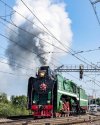
I'd start with rugged, simple designs, like Russia's P36 4-8-4 and China's QJ 2-10-2.
I'd use self steering front bogie, all wheels on roller bearings. Mechanical and electrical insight drawn from the A1 Steam Trust's experience with "Tornado".
And I'd run it on biofuels, or on hydrogen.
 

Attachments

  • 9snlxlxz10751.jpg
    9snlxlxz10751.jpg
    2.1 MB · Views: 26
  • Dsc00563_800.jpg
    Dsc00563_800.jpg
    1.8 MB · Views: 28
Last edited:

43096

On Moderation
Joined
23 Nov 2015
Messages
18,854
so watching this video that covers mainland europes Strategic steam train reserves
essentally if you wanted a train for rebuilding the country post nuclear war and EMP blast not much better than a steam train as no pantograph or fuseplug/glowplugs aka no electrics

lets say the army wanted a steam train for a modern Strategic Reserve for some reason, what would be diffrent if a steam train was designed from scratch today?
How are you running it if there’s no electricity and therefore no signalling?
 

Krokodil

Established Member
Joined
23 Jan 2023
Messages
6,597
Location
Wales
How are you running it if there’s no electricity and therefore no signalling?
It's a crisis and you're trying to keep essential supplies moving. You're likely to end up with some kind of time interval working, those points you actually need having to be wound by hand.
 

43096

On Moderation
Joined
23 Nov 2015
Messages
18,854
It's a crisis and you're trying to keep essential supplies moving. You're likely to end up with some kind of time interval working, those points you actually need having to be wound by hand.
Yeah right. You think Britain’s railway could cope with that these days? Not a chance. Besides, where are you getting the coal (or indeed any other fuel) from?
 

bluenoxid

Established Member
Joined
9 Feb 2008
Messages
2,662
How unresilient is modern technology? I assume the impact of EMP would be only whilst a nuclear strike took place and dissipate from ground zero.
 

Irascible

Established Member
Joined
21 Apr 2020
Messages
2,233
Location
Dyfneint
How unresilient is modern technology? I assume the impact of EMP would be only whilst a nuclear strike took place and dissipate from ground zero.

T'internet was -originally!- literally designed to deal with this sort of thing. Not by the hardware being especially resilient ( modern non-critical stuff is just shielded rather than hardened ) but by being able to handle holes in it's network. Between ground networks & satellite comms the issue would be finding anything left inside that could talk to the outside.

If everything's failed to the point we're relying on steam power, then whatever is simplest & needs the barest level of maintenance wins. If you've got diesel fuel then something with mechanical fuel injection & simple electricals also works.
 

randyrippley

Established Member
Joined
21 Feb 2016
Messages
5,382
I don't think steam would be the answer: there aren't enough remaining engineering sites with the foundry and boilermaking skills to build more than a handful of locomotives per year.
Any emergency recovery build of locomotives would have to be something that could be built easily and maintained easily. That means something like a modern equivalent of a class 20, using simple sole-bar construction design with an old, simple engine design that has analog electrical controls, not electronic.
 

JKF

Established Member
Joined
29 May 2019
Messages
1,317
Stick a pantograph on top and boil the water with electricity, not coal.
 

Irascible

Established Member
Joined
21 Apr 2020
Messages
2,233
Location
Dyfneint
It's quite possible it'd be easier to find some industrial electrical machinery to adapt than build a boiler in that case, too.
 

HSTEd

Veteran Member
Joined
14 Jul 2011
Messages
20,348
An early design style internal combustion locomotive is likely to be far easier to operate than a steamer in that environment.

You certainly wouldn't have the manpower for steam operation.
If no liquid fuels are available, use an onboard wood gas style gasifier and a gas engine with a magneto spark
 

sprunt

Established Member
Joined
22 Jul 2017
Messages
1,642
It's a crisis and you're trying to keep essential supplies moving.
Given that, wouldn't road transport be much more likely to be used than rail transport? Presumably whatever has caused the crisis would have destroyed rail infrastructure to the same extent that it's destroyed road infrastructure.
 

Bletchleyite

Veteran Member
Joined
20 Oct 2014
Messages
113,705
Location
"Marston Vale mafia"
How unresilient is modern technology? I assume the impact of EMP would be only whilst a nuclear strike took place and dissipate from ground zero.

EMP would destroy existing electronics but not prevent the making of new ones. The skills to do so are in enough human brains that they would not be lost.

Similarly power grids may be damaged but can be rebuilt.
 

RT4038

Established Member
Joined
22 Feb 2014
Messages
5,459
I think the answer would be that you would use a steam locomotive if there was one to hand, but not actually build anything new. Surely the effort to do that would be better used rebuilding and restoring power/road networks etc?
 

Krokodil

Established Member
Joined
23 Jan 2023
Messages
6,597
Location
Wales
Given that, wouldn't road transport be much more likely to be used than rail transport? Presumably whatever has caused the crisis would have destroyed rail infrastructure to the same extent that it's destroyed road infrastructure.
Good luck starting a modern car in this situation. The thing about steam locomotives is that they're very simple.

I think the answer would be that you would use a steam locomotive if there was one to hand, but not actually build anything new. Surely the effort to do that would be better used rebuilding and restoring power/road networks etc?
Yes, strategic reserves have invariably involved mothballing locomotives that had been withdrawn from service (but still in a condition where reactivation would be straightforward). If BR had one it would have consisted of standards and WD austerities (0-6-0s, 2-8-0s or 2-10-0s), on the basis that they were low mileage when they were withdrawn and designed to be easier to maintain.

Definitely not Granges.
 

RT4038

Established Member
Joined
22 Feb 2014
Messages
5,459
Yes, strategic reserves have invariably involved mothballing locomotives that had been withdrawn from service (but still in a condition where reactivation would be straightforward). If BR had one it would have consisted of standards and WD austerities (0-6-0s, 2-8-0s or 2-10-0s), on the basis that they were low mileage when they were withdrawn and designed to be easier to maintain.

Definitely not Granges.
All of which would have required overhaul to put them in such a condition, which would have cost money. As history has shown us, they would not have been used for their intended purpose.....
 

Krokodil

Established Member
Joined
23 Jan 2023
Messages
6,597
Location
Wales
All of which would have required overhaul to put them in such a condition, which would have cost money. As history has shown us, they would not have been used for their intended purpose.....
They wouldn't have needed overhauling, some 9Fs were withdrawn after only a few years of use. If a strategic reserve was considered an important asset (like the control trains were) then mothballing them somewhere undercover with bags of silica gel to keep the boilers dry would have been done. The UK retained no strategic reserve (despite rumours of Granges in Box Tunnel) and of course the Cold War never got hot so the question of whether that would have been a bad decision in the event was never answered.

It was thanks to the Swedish strategic reserve that a WD 2-8-0 entered preservation. Bosnia continues the use of a handful of steam locomotives (pirated USA tanks and Kriegslok 2-10-0s) in order to safeguard the continued operation of their coal mines and power stations even if oil supplies were to be cut off.
 

HSTEd

Veteran Member
Joined
14 Jul 2011
Messages
20,348
In the aftermath of a nuclear attack you are unlikely to be able to spare the manpower to operate all these steamers.
If total collapse of electrical systems and destruction of electronics by EMP has occurred, there won't really be anything to move since the only coal available will be stuff already piled above ground in coal dumps.

The concentration of casualties in urban areas also significantly reduces the amount of food that has to be moved long distances, and it is probably easier to move survivors from badly damaged urban areas into whatever shelter is available in the countryside so they are closer to remaining food supplies.

In that environment, operating a fleet of steam locomotives is unlikely to be a priority.
 

stuu

Established Member
Joined
2 Sep 2011
Messages
3,771
Basic diesels is the most likely. No need for coal, or clean water, or much in the way of maintenance. Or gangs of slaves as in The Road
 

Backroom_boy

Member
Joined
28 Dec 2019
Messages
591
Location
London
Many electronics are specced to NATO standards which are somewhat shielded againest EMPs. Also if the electronics aren't powered on I don't think EMPs have an effect at all.
 

Deepgreen

Established Member
Joined
12 Jun 2013
Messages
7,481
Location
Gomshall, Surrey
I'd start with rugged, simple designs, like Russia's P36 4-8-4 and China's QJ 2-10-2.
I'd use self steering front bogie, all wheels on roller bearings. Mechanical and electrical insight drawn from the A1 Steam Trust's experience with "Tornado".
And I'd run it on biofuels, or on hydrogen.
Good luck making those fuels in a post-nuclear environment!
 

MarkyT

Established Member
Joined
20 May 2012
Messages
7,588
Location
Torbay
Yes, strategic reserves have invariably involved mothballing locomotives that had been withdrawn from service (but still in a condition where reactivation would be straightforward). If BR had one it would have consisted of standards and WD austerities (0-6-0s, 2-8-0s or 2-10-0s), on the basis that they were low mileage when they were withdrawn and designed to be easier to maintain.
When known strategic steam reserves were established in other countries at the end of regular steam there was still at least some repair and overhaul capability remaining so the locos selected could be put through shops before being mothballed. Definitely the case in Sweden where some locos were released from covered storage to preservation in near-perfect condition when the concept was abandoned.
 

Irascible

Established Member
Joined
21 Apr 2020
Messages
2,233
Location
Dyfneint
Good luck starting a modern car in this situation. The thing about steam locomotives is that they're very simple.

Good luck finding people who know much about locomotive boiler maintenance though, it's not really the same as a central heating boiler!. You can find IC mechanics anywhere.

I don't think EMP would knock out electricals ( fuses perhaps ), electronic control mechanisms perhaps. I'm not sure how much a nuclear EMP pulse would really do ( there is a lot of misinformation about! ) - I remember it's mostly cabling acting as antennae that "capture" it, so if things have short wires & some sort of cage ( like a car ) they might be far less affected. Rails, er, might be a problem.
 

RT4038

Established Member
Joined
22 Feb 2014
Messages
5,459
They wouldn't have needed overhauling, some 9Fs were withdrawn after only a few years of use. If a strategic reserve was considered an important asset (like the control trains were) then mothballing them somewhere undercover with bags of silica gel to keep the boilers dry would have been done.
I don't think those 9Fs had been very well maintained, and were probably withdrawn when they were because work was needed on them (bearing in mind that steam locomotives require some level of overhaul every few years)
 

CBlue

Member
Joined
30 Mar 2020
Messages
859
Location
East Angular
There are plenty of boilersmiths in the UK.
Maybe I'm interpreting you wrongly here, but that reads to me like saying a rail service carries "reasonable" passenger numbers - could mean anything.


They're definitely outnumbered by anyone with the skills to work on internal combustion engines.
 
Status
Not open for further replies.

Top