• Our new ticketing site is now live! Using either this or the original site (both powered by TrainSplit) helps support the running of the forum with every ticket purchase! Find out more and ask any questions/give us feedback in this thread!

The future of flying - Electric planes or bans on flying?

Status
Not open for further replies.

Chester1

Established Member
Joined
25 Aug 2014
Messages
4,445
Labour lost Uxbridge by 300 votes. 900 people voted for the Green Party. It’s not quite the anti-ULEZ protest vote that the Telegraph would have you believe.

It’s also funny how TfL were forced to implement it as part of the terms of the government funding they received after Covid.


== Doublepost prevention - post automatically merged: ==


Not really, it’s indicative that pollution is far more pervasive than just what comes out of the exhaust.

The Tory candidate stood mostly on platform of being anti ULEZ. The previous MP was the disgraced former Prime Minister and Tories lost the two other "safe" Tory seats that night. 900 votes for Greens still indicates a substantial tactical vote for Labour. The Tory win was not entirely caused by ULEZ but its very safe to say that without it the headlines would have been about three Tory losses, all by decent majorities. If the Labour candidate had been able to say all effected car owners would be eligible for scrappage scheme it may have saved Labour several hundred votes. I am not against ULEZ in principle, my objection to it was to it being imposed without reasonable compensation for drivers of moderately old diesel cars by people who will own much higher value cars and who can easily afford to virtue signal. The money to extend scrappage scheme to all pre 2016 diesel cars has now been miraculously found by TfL! I will probably vote Labour at next election but if I lived in Uxbridge I would have probably voted Tory in the byelection.

Of course pollution is about more than exhaust but we have to draw the line somewhere. If cars used a new tyre material would that be enough? Would EV battery production and disposal become the next pollution problem to justify drastically reducing private vehicle ownership? I draw the line at EVs. If phasing out ICEs isn't enough to improve air quality to desired levels then tough.

We have to improve things as best as we can without climate change and the environment becoming a substitute religion and allow ourselves to do stuff that makes our lives meaningful. For people with family outside the UK that will ussually include international travel.
 
Sponsor Post - registered members do not see these adverts; click here to register, or click here to log in
R

RailUK Forums

Skymonster

Established Member
Joined
7 Feb 2012
Messages
2,070
I'm sure people dying of starvation will be happy to learn that their deaths are part of "the natural evolution of the planet"! Also "find something that hasn’t happened before and hasn’t been happening for eons" - what do you expect climate change to do? Turn the sky green?
My point is that trying to halt climate change is a waste of time, resources and money - the planet has been warming up since the ice age and will continue to do so. We can’t stop it, so the best thing is to use precious resources and funding on mitigation measures, rather than spending on wasteful vanity projects and virtue signalling while also applying punitive taxes that merely punish people for doing what they’ve done For ages and have a right to expect to be able to do in the future.
 

PGAT

Established Member
Joined
13 Apr 2022
Messages
2,136
Location
Selhurst
My point is that trying to halt climate change is a waste of time, resources and money - the planet has been warming up since the ice age and will continue to do so. We can’t stop it, so the best thing is to use precious resources and funding on mitigation measures, rather than spending on wasteful vanity projects and virtue signalling while also applying punitive taxes that merely punish people for doing what they’ve done For ages and have a right to expect to be able to do in the future.
I don’t think you quite understand the severe implications of climate change
 

Rhydgaled

Established Member
Joined
25 Nov 2010
Messages
4,868
Would you ban all shipping that cannot be done with zero in voyage emissions?
Only if I thought it necessary to do so, in which case I would probably also be banning all forms of transport, other than walking, altogether. I have singled out aviation because that emissions at altitude have a higher global warming potential(and the fact that this means even water vapour emissions are a problem). Shipping emissions are not at altitude and therefore simply need to be sufficently low to permit net-negative GHG emmissions.

A cruise ship carrying a couple of thousand people across the Atlantic causes far more emissions than a few A350s carrying the same number of passengers….
Maybe, but how many crusie ships are there doing that? I'm guessing not many, but maybe that is a naive assumption.

Synthetic liquid fuels (aka SAF, sustainable aviation fuels) are the only real solution due to their energy density, but these can be made via carbon neutral routes
They may be 'carbon neutral', but if this so-called 'sustainable aviation fuel' is some form of synthetic kerosene, or even hydrogen, then burning them in an aircraft is still going to result in greenhouse gas emissions (GHG) at altitude. As such, SAFs are an incomplete solution at best.

In fact flights are probably the most worthy recipient of both fossil and synthetic fuels - everything on the ground can be run with clean electricity.
Really? What about steel making (and other manufacturing processes), agriculture and the various losses incurred when one form of energy is converted to another? Remember; we need to build the generating plant (eg. wind turbines or solar panels), the trains, the buses, the houses, the cars, the batteries etc.; there will be losses when the batteries are charged and again when the charge in those batteries is used (for example) to move a bus along. And we have to do all of that, and breathe, plus probably more things I've forgotten, while emitting less greenhouse gas each year than is removed from the atmosphere. Even if there is some of that limited 'quota' of negative emissions left over for aviation - how much of that will military aviation swallow up?

Just because something runs on clean electricity it doesn't mean it has zero GHG emissions. To take another example, which is a more-worthy recipient of our limited 'negative emissions' budget: international aviation or home central heating? That isn't just a random example - apparently a UK ban on new oil fired boilers is planned for the next few years, and yet aviation (despite the higher global warming potential from altitude) somehow gets a free pass.

More philosophically, what a backward step for humanity it would be to wind back such massive steps forward in personal mobility and horizons.
Yes, a massive step - but isn't that the point? We have extended our reach too far and it is having consequences on the living world.

The global aviation impact is about 2%.
Which I understand is still more than all UK domestic emissions combined (which I think is about 1%).

21% of car trips are under 1 mile. All but the most infirm should easily be able to do those on foot. And short journeys on cold engines are the most environmentally inefficient.
All of this needs looking at and dealing with, it doesn't change the fact we need to be tackling flights too.

Getting rid of ICEs won't be good enough, the goal was always to drastically reduce car usage. I am all in favour of transitioning to EVs but I don’t think for a second that will satisify the hardcore of environmentalists.
Maybe not just hardcore environmentalists - simply replacing every ICE car out there with an electric one is not good enough - where are you going to generate all the electricity needed for a start? Methinks you'll have a good amount of NIMBY opposition to all the necessary power stations and grid infrustructure to back up the envrionmentalists. And, although I would certainly admit to being an environmentalist, I'm not sure if I consider myself hardcore. Also, my mother and grandmother both comment from time to time that a scene (town/village/landscape etc.) they are looking at is ruined by all these ugly cars - maybe they are hardcore environmentalists? There's plenty of good reasons to drastically reduce car usage (and ownership).
 

Skymonster

Established Member
Joined
7 Feb 2012
Messages
2,070
I don’t think you quite understand the severe implications of climate change
I do - but there’s nothing we can do about it. You’ve been brainwashed into believing that if the human race regresses rather than progresses, it can be fixed. It can’t.
 

Bletchleyite

Veteran Member
Joined
20 Oct 2014
Messages
113,845
Location
"Marston Vale mafia"
I do - but there’s nothing we can do about it. You’ve been brainwashed into believing that if the human race regresses rather than progresses, it can be fixed. It can’t.

It can if we act quickly enough, or at least its effects mitigated. You're not one of those "it's happening naturally" deniers, are you?
 

Royston Vasey

Established Member
Joined
14 May 2008
Messages
3,002
Location
Cambridge
Only if I thought it necessary to do so, in which case I would probably also be banning all forms of transport, other than walking, altogether. I have singled out aviation because that emissions at altitude have a higher global warming potential(and the fact that this means even water vapour emissions are a problem). Shipping emissions are not at altitude and therefore simply need to be sufficently low to permit net-negative GHG emmissions.


Maybe, but how many crusie ships are there doing that? I'm guessing not many, but maybe that is a naive assumption.


They may be 'carbon neutral', but if this so-called 'sustainable aviation fuel' is some form of synthetic kerosene, or even hydrogen, then burning them in an aircraft is still going to result in greenhouse gas emissions (GHG) at altitude. As such, SAFs are an incomplete solution at best.


Really? What about steel making (and other manufacturing processes), agriculture and the various losses incurred when one form of energy is converted to another? Remember; we need to build the generating plant (eg. wind turbines or solar panels), the trains, the buses, the houses, the cars, the batteries etc.; there will be losses when the batteries are charged and again when the charge in those batteries is used (for example) to move a bus along. And we have to do all of that, and breathe, plus probably more things I've forgotten, while emitting less greenhouse gas each year than is removed from the atmosphere. Even if there is some of that limited 'quota' of negative emissions left over for aviation - how much of that will military aviation swallow up?

Just because something runs on clean electricity it doesn't mean it has zero GHG emissions. To take another example, which is a more-worthy recipient of our limited 'negative emissions' budget: international aviation or home central heating? That isn't just a random example - apparently a UK ban on new oil fired boilers is planned for the next few years, and yet aviation (despite the higher global warming potential from altitude) somehow gets a free pass.


Yes, a massive step - but isn't that the point? We have extended our reach too far and it is having consequences on the living world.
).
SAFs are carbon neutral because the carbon came from biomass, it doesnt make any difference if CO2 is emitted in the lower atmosphere (40000 ft) or at ground level - dont confuse it with ozone depletors.

As for steel, I work with the steel industry now, thanks for bringing that up. Coke is the reducing agent for the blast furnace reaction and steelmakers are moving towards electric arc furnaces, increased recycling and where they absolutely have to reduce iron ore, they're trialling hydrogen and direct reduction, plenty of carbon free steel programmes in almost every major Western and Japanese steelmaker and plenty of the Chinese ones. Its a hard to abate industry though and they're just getting started. It has the benefit of being on the ground and not having to carry its fuel at altitude.
 

Enthusiast

Established Member
Joined
18 Mar 2019
Messages
1,226
For example, rather than flying for two weekends over the course of two months it may be that the individual stays overseas for a week by working remotely.

Those doing lots of city breaks could either do something similar (giving them much more time in one location), or could fly to one city, work remotely during the week but using one of the evenings to move to another city by train to then have another city break the following weekend.
All fine and dandy. Except that probably less than half of the working population are able to work remotely. There seems to be this general acceptance that remote working is the future, nobody will need to travel anywhere to work. It may be if you work in an office or a call centre, but not if you're a delivery person (delivering the stuff that those working remotely can't be bothered to fetch for themselves), a builder or perhaps a train driver.
It’s also funny how TfL were forced to implement it as part of the terms of the government funding they received after Covid.

As I have pointed out on here in the past, that is incorrect. While a funding agreement between the government and Transport for London in 2020 did state that proposals to expand ULEZ should be brought forward, the Department for Transport says this referred to existing plans to extend the boundary as far as the North and South Circular Roads, not the expansion across all of Greater London. The Department for Transport has said that it did not impose the expansion of ULEZ to cover all of Greater London on the Mayor, and that the funding agreement set out in the May 2020 letter has nothing to do with Mr Khan’s decision to proceed with it. In fact, in a letter published in June 2021 setting out the terms of the third TfL funding agreement, the government stated that “Should the Mayor choose to amend his existing plans to extend the ULEZ boundary from 25 October 2021 these will have to be paid for without recourse to Government funding”, suggesting that extending ULEZ beyond the North and South Circular Roads was not a condition for government funding.

If that isn't convincing enough, here is a record of a question raised by Neil Garratt, GL Assembly member, of Mayor Khan: in the summer of 2022:


Question​

ULEZ Expansion​

Neil Garratt AM: Thank you, Chair. For the proposal to expand the ULEZ to the whole of London, who is the decision maker to do that or not do that?

Answer​

Sadiq Khan (Mayor of London): Me.
Neil Garratt AM: It is your decision whether that proceeds or not?
Sadiq Khan (Mayor of London): Yes.

The decision to expand ULEZ to encompass the whole of the Greater London Area was Mayor Khan's and his alone.
 

Tetchytyke

Veteran Member
Joined
12 Sep 2013
Messages
17,669
Location
Isle of Man
The previous MP was the disgraced former Prime Minister and Tories lost the two other "safe" Tory seats that night. 900 votes for Greens

My point is simple. If the (presumably pro-ULEZ) Green voters had voted the other way, Labour would have won handsomely and we wouldn’t be having this conversation. The vote wasn’t the anti-ULEZ protest vote people like to claim it is.
My point is that trying to halt climate change is a waste of time, resources and money - the planet has been warming up since the ice age and will continue to do so. We can’t stop it, so the best thing is to use precious resources and funding on mitigation measures

The best “mitigation measure” we have is to stop pumping ever-increasing amounts of crap into the atmosphere. The earth hasn’t been warming up since the Ice Age, certainly not at this rate, and the extreme weather we are seeing is unheard of.

Unless you can invent a way of stopping wildfires?

You sound suspiciously like one of those “it’s always been like this” deniers. It hasn’t always been like this. This is new.

the Department for Transport says this referred to existing plans to extend the boundary as far as the North and South Circular Roads, not the expansion across all of Greater London
Thank you. Extending to the North/South Circular was still the biggest element of the change, however, and it’s a bit rich for Grant Shapps to argue against it now.
 

Chester1

Established Member
Joined
25 Aug 2014
Messages
4,445
My point is simple. If the (presumably pro-ULEZ) Green voters had voted the other way, Labour would have won handsomely and we wouldn’t be having this conversation. The vote wasn’t the anti-ULEZ protest vote people like to claim it is.

The Green vote was 893 but 714 people voted for Reform's Lawrence Fox, who was anti ULEZ (amongst many other things...). There was a large number of candidates who got tiny numbers of votes and I am not sure what the final balance would be on ULEZ between all of them. Two safe Tory seats fell by thousands of votes on the same night. It was only competive because of ULEZ. Take ULEZ away to galvanise the Tory base and attract some swing votes and the rest would have been the same as the other two seats regardless of whether the Greens, Lib Dems, Reform, etc stood.

Both major parties are recalibrating their polcies and the Khan has had to extend the scrappage scheme. Yes the Conservatives are exaggerating the importance of ULEZ but the by election has had a noticeable impact because both parties have realised that in the current economic situation even people in favour of Green policies in principal are very sensitive to price.

There is a wider lesson on air travel. The average person doesn't want their material standard of living to drop on the altar of climate change, support for green policy is somewhat conditional.
 

Rhydgaled

Established Member
Joined
25 Nov 2010
Messages
4,868
For example, rather than flying for two weekends over the course of two months it may be that the individual stays overseas for a week by working remotely. In doing so they have the two weekends, however they also have a series of evenings as well - thus increasing their ability to spend quality time with loved ones.

They would reduce the number of flights that take, bit could still have reasonable relationships with others.

Those doing lots of city breaks could either do something similar (giving them much more time in one location), or could fly to one city, work remotely during the week but using one of the evenings to move to another city by train to then have another city break the following weekend.
Those doing city breaks (perhaps depending on what they look for in a break) could also do what I've been doing for most of my holidays since I took my last flight and choose destinations closer to home (in my case all right here in GB). I've done trips to Newcastle, Edinburgh, Inverness, Glasgow, Leeds, Sheffield, Nottingham etc. and there are still places in GB I've not really explored.

to get to net 20% of global GHG emissions would be a monumental achievement and almost certainly "good enough"
What do you mean by 'net 20%'? Reducing total human GHG emissions to 20% of a specified former level is a concept I can understand (eg. if my emissions yesterday were 50,000kg* CO2e and I set myself a target of reducing those to 20% by the end of the year then I would have to reduce them to 10,000kg CO2e).

However, I haven't the slightest idea whether that would be 'good enough' because, unless I'm missing something, it is ultimately net emissions that matter. But does 'net 20%' mean that 20% more greenhouse gas is being removed from the atmosphere than is being added to the atmosphere? Or does it just mean the GHG concentrations in the atmosphere would still be increasing but at a slower rate? If the latter, it is most-certainly NOT 'good enough'

* I've no idea what my emissions actually are/were

Using the same logic, the private car needs to be banned as public transport (buses and trains) can do the job and the only reason people use cars is ego.
Not quite - there are other reasons for car use besides ego. Transporting stuff that is too big and/or heavy to be carried on a bus or train for example, or to get to/from the nearest public transport node from a rural dwelling far from anyone else (so, if you were to ban private cars, a bus would have to take a long detour just to serve one household).

the railway industry shot itself in the foot when it insisted HS2 should not go via Heathrow (and what use is a high-speed line to Birmingham anyway when it comes to travel to Scotland?). Don’t get me wrong, I’m all for continuing to improve the efficiency of aviation, but to make it cheaper rather than cut its emissions.
If flying (excluding electric aircraft) was banned there would be much less demand for travel to/from Heathrow. The lack of a through station in Manchester (to allow part of the HS2 instructure to be shared by Northern Powerhouse Rail) and design of Birmingham Curzon Street (lacking passive provision for extension towards Bristol once the East Midlands arm of HS2 is built, which along with electrification would mean some XC services could move to HS2) are far bigger issues.

My point is that trying to halt climate change is a waste of time, resources and money - the planet has been warming up since the ice age and will continue to do so. We can’t stop it, so the best thing is to use precious resources and funding on mitigation measures, rather than spending on wasteful vanity projects and virtue signalling while also applying punitive taxes that merely punish people for doing what they’ve done For ages and have a right to expect to be able to do in the future.
I don’t think you quite understand the severe implications of climate change
I don't think anyone understands the implications of the climate change we are currently seeing. The climate has changed before (well beyond human timescales), sometimes only slightly with only minor effects on the living world and sometimes with mass extinctions. Nobody knows how severe it's going to be this time.

At the very least we will see the range of various species shift - some, like the bee-eaters in Norfolk, will be welcomed by many humans. Others, such as tropical diseases, not so much (please, don't let us have to start using mosquito netting in the UK). Polar species may find their habitat range reduces to zero, leaving them extinct.

The longer it takes to reverse the current climate trends the greater the likelyhood of the more-severe implications.

 

PGAT

Established Member
Joined
13 Apr 2022
Messages
2,136
Location
Selhurst
At the very least we will see the range of various species shift - some, like the bee-eaters in Norfolk, will be welcomed by many humans. Others, such as tropical diseases, not so much (please, don't let us have to start using mosquito netting in the UK). Polar species may find their habitat range reduces to zero, leaving them extinct.
We may not have any wildlife to enjoy as potential rise in sea levels would flood London and the Southeast, discussion for another time though
 

Rhydgaled

Established Member
Joined
25 Nov 2010
Messages
4,868
Ok this thread has predictably turned into a zealots' echo chamber. I'm out.
That's a shame because you seem to have some good points to raise. For example:

SAFs are carbon neutral because the carbon came from biomass, it doesnt make any difference if CO2 is emitted in the lower atmosphere (40000 ft) or at ground level
I 'asked Google' about the radiative forcing / global warming potential of emissions at altitude in the hope of finding one or more sources to use in a rebuttal of your claim. However, to my surprise I was unable to find anything which disproves your point and now think that in the past I may have misunderstood some of what I had read on the topic. Based on what I have read tonight. the impact of CO2 emissions specifically could indeed be broadly the same regardless of altitude, as you state.

Non-CO2 emissions however, such as water vapour, are believed to be far more dangerous at altitude. As I understand it, SAFs don't help there.
 

Skymonster

Established Member
Joined
7 Feb 2012
Messages
2,070
Those doing city breaks (perhaps depending on what they look for in a break) could also do what I've been doing for most of my holidays since I took my last flight and choose destinations closer to home (in my case all right here in GB). I've done trips to Newcastle, Edinburgh, Inverness, Glasgow, Leeds, Sheffield, Nottingham etc. and there are still places in GB I've not really explored.
The logical extension to the argument to ban flying on environmental grounds is to ban all gratuitous, unnecessary journeys until we reach a point when zero emissions transportation is available. Because ultimately, if you swallow the argument that transport is polluting and more demand ultimately creates more pollution, any unnecessary (i.e. leisure) journeys need to be cut out. Advocating for a ban on one form of polluting transport while using other forms of polluting transport (even trains) is simply hypocritical.

== Doublepost prevention - post automatically merged: ==

Not quite - there are other reasons for car use besides ego. Transporting stuff that is too big and/or heavy to be carried on a bus or train for example, or to get to/from the nearest public transport node from a rural dwelling far from anyone else
Aha, so people who choose to live some distance from a public transport node can have a [poluting] car then. Presumably those who live near public transport shouldn’t use one. you can’t have one rule for some and another rule for others depending on where they choose to love. This all boils down to the usual skewed argument, the hackneyed socialism-rooted levelling up thing that guides Many people‘s thoughts when it comes to restrictions on what we should and should not be allowed to do. And to move heavy stuff there should perhaps be a pool of hireable vehicles that can be used for short periods, as private car ownership encourages the vehicles being used for other more gratuitous purposes - no?

Banning or restricting the use any form of transport, such s flying or private cars, is regressive as far as development and freedom of the human race is concerned. By all means we should be researching and developing more efficient, cleaner forms of transport. But bans and restrictions need to be resisted at all costs.
 
Last edited:

The Ham

Veteran Member
Joined
6 Jul 2012
Messages
12,056
I also explained in detail that there's an easy, technologically mature drop in replacement that can make it net zero.

That said, to get to net 20% of global GHG emissions would be a monumental achievement and almost certainly "good enough"

Either way (net zero or net 20%) would require us to do a bit of everything and not let a sector off just because it's emissions are only x% of the total.

For example if we let aviation (2% of current global emissions) off and we get to net 20% then it becomes 10% of those emissions (even if there was zero growth in aviation emissions). 10% of all emissions are a big chunk and so should have action taken in them.

Also as you point out it's going to be monumental to get to net 20%, therefore would likely require some action in aviation.

High speed rail is costing billions? And it won't get you to all four corners of the country either. These new aircraft could get you from, say, Manchester to Southampton/Bournemouth or even London City a lot faster than trains, even after HS2 is eventually built. And a lot more comfortable than Cross-Country!! Key is, how close to the city centres can they get to if take-off/landing is much shorter than conventional aircraft? Could be a huge boost for those struggling regional airports like Blackpool (now devoid of passengers) and might even be able to use the likes of Eccles if the infrastructure could be built - although need to know take-off/landing lengths as alluded to.

I suppose someone once looked at the very first aircraft ever built and said "that'll never take off, now where's me horse and cart??"!!!

130kph speeds means the 300km distance between Southampton and Manchester would take 2 hours 20 minutes of flying time. You then have to add to that time to get through security and getting out again at the other end.

Whilst going via HS2 (change at Old Oak Common) would take longer than that by about an hour the frequency would be much higher and if you suffer a small delay you'll get some of your money back.

Therefore I'm not sure that they'd be all that useful on the Manchester/Southampton corridor.

All fine and dandy. Except that probably less than half of the working population are able to work remotely. There seems to be this general acceptance that remote working is the future, nobody will need to travel anywhere to work. It may be if you work in an office or a call centre, but not if you're a delivery person (delivering the stuff that those working remotely can't be bothered to fetch for themselves), a builder or perhaps a train driver.

It was given at an example, even if it reduces the number of flights needed by (say) 5% it's still a step towards fewer flights.

I could have given the example of someone working shifts swapping as many shifts as possible to maximise their time away without needing to use as much leave (again I know that's not going to be viable for all shift workers, but it's just another example of what could be done).

The point was to highlight that there's could be other ways of doing things other than what's is currently done. Often people do what they do because they can (for example if you know shop a has what you want you may well go past 3 other shops if you don't know if they have it if it's only an extra 100m to walk) if that's made harder then they look again at what they do and adjust accordingly (for example shop a closes down, they then look in the other three shops to see if they stock it).
 

philosopher

Established Member
Joined
23 Sep 2015
Messages
1,513
Either way (net zero or net 20%) would require us to do a bit of everything and not let a sector off just because it's emissions are only x% of the total.

For example if we let aviation (2% of current global emissions) off and we get to net 20% then it becomes 10% of those emissions (even if there was zero growth in aviation emissions). 10% of all emissions are a big chunk and so should have action taken in them.

Also as you point out it's going to be monumental to get to net 20%, therefore would likely require some action in aviation.
A few things that the aviation industry could do to reduce it’s climate impact, which could all occur within the next few decades that do not involve the use of alternative fuels:
  • Use of propfan engines, which have the performance of turbofan engines (all modern airliner jet engines) with the fuel economy of turboprops (which are used on propeller airliners).
  • Redesign of aircraft, such as much longer and lighter wings which reduce drag.
  • Routing that minimises the formation of contrails. AI could be used here to determine the best routing.
 

AlterEgo

Verified Rep - Wingin' It! Paul Lucas
Joined
30 Dec 2008
Messages
29,685
Location
LBK
I still can’t believe there are posters framing the debate around a total ban on all flying. Surely this is not a serious proposal?
 

Chester1

Established Member
Joined
25 Aug 2014
Messages
4,445
I still can’t believe there are posters framing the debate around a total ban on all flying. Surely this is not a serious proposal?

The people advocating it are entirely serious. I stated in post 3 of this thread I had previously been told on this forum that I should be unable to see my brother and my girlfriend unable to see her family because of the damage that flying does to the environment. As I have said previously its laughable to think we are going to get from the point that flying has only been limited slightly for internal flights within one large European country (France) to a total ban on flying world wide.

There was an Irish news article a few weeks ago were the writer (a sociologist) talked about his guilt as a child when he sinned. He then said everytime he uses fossil fuels he think about how he is contributing to the world burning. He was pointing out that "saving the planet" has elements of a secular version of salvation. Once you decide that the worse end of scientific models are accurate you can basically justify any forced changes to lifestyle and restrictions on personal freedoms. Probably the most disturbing view for me is people who say they haven't had kids because of climate change and the extra carbon emissions a new life would cause. I really hope they just say that as a socially acceptable reason, not because it is the real one.
 

eldomtom2

On Moderation
Joined
6 Oct 2018
Messages
2,400
I stated in post 3 of this thread I had previously been told on this forum that I should be unable to see my brother and my girlfriend unable to see her family because of the damage that flying does to the environment.
I do hope you realise why people who believe flying has a severe impact on the environment would not consider people being unable to see their families in person as worse than the deaths of people from starvation or natural disasters.
 

The Ham

Veteran Member
Joined
6 Jul 2012
Messages
12,056
A few things that the aviation industry could do to reduce it’s climate impact, which could all occur within the next few decades that do not involve the use of alternative fuels:
  • Use of propfan engines, which have the performance of turbofan engines (all modern airliner jet engines) with the fuel economy of turboprops (which are used on propeller airliners).
  • Redesign of aircraft, such as much longer and lighter wings which reduce drag.
  • Routing that minimises the formation of contrails. AI could be used here to determine the best routing.

Indeed, however it's possible that even that wouldn't actually reduce total aviation emissions if the numbers of flights being taken carry on rising (which is possible).

Obviously an outright ban isn't viable, however they're would be a need to have some limits on flights to at the very least reduce the increase so the suggested measures does reduce the total emissions.

They may involve some level of bans, however only even in limited circumstances - for example between 2 domestic cities where the train takes under (say) 4 hours. However certainly not where there's not a viable alternative.

That said, the use of other aviation technologies may result in longer journey times (for example needing to do a double hop on an electric aircraft rather than direct) or additional costs (for example higher APD) if traditional aircraft are used.

People will adjust their lifestyles, which may include some traveling to see family less often, or may result in them meeting half way, or some other option which isn't obvious at this time but could be viable with future travel options.
 

Enthusiast

Established Member
Joined
18 Mar 2019
Messages
1,226
I do hope you realise why people who believe flying has a severe impact on the environment would not consider people being unable to see their families in person as worse than the deaths of people from starvation or natural disasters.
Yes, I realise that. Do they realise that there may be people who consider that being unable to see their families in person to be worse than the deaths of people from starvation or natural disasters (which might have any one of a number of causes). Or doesn't it work that way round?

== Doublepost prevention - post automatically merged: ==

People will adjust their lifestyles, which may include some traveling to see family less often, or may result in them meeting half way,...
How does two families travelling 1,000 miles each better one family travelling 2,000 miles? Especially if you are considering travel by air. The first scenario will involve four take offs and landings (particularly fuel-hungry parts of any flight) whereas the second, only two.
 
Last edited:

Bantamzen

Established Member
Joined
4 Dec 2013
Messages
10,510
Location
Cheshire
I do hope you realise why people who believe flying has a severe impact on the environment would not consider people being unable to see their families in person as worse than the deaths of people from starvation or natural disasters.
I wonder if the same people realise that an outright ban on civilian air travel would result in the collapse of many economies around the world, not to mention risking the isolation of more and more nations. Both of these could well lead to more global unrest, which in turn could lead to more conflicts as nations struggle on vastly reduced economic flows. Travel has a lot of benefits that may well need to be considered, unless of course we (as in the richer nations) are comfortable telling those nations we are proposing to cut off from travel and the money it brings that its just tough luck?

Of course there are much bigger fish to fry, and lots of ways of reducing our impact on the environment with less detrimental effects on economies, albeit they may not attract the same level of virtue credits that some people seem eager to chase.
 

Chester1

Established Member
Joined
25 Aug 2014
Messages
4,445
I do hope you realise why people who believe flying has a severe impact on the environment would not consider people being unable to see their families in person as worse than the deaths of people from starvation or natural disasters.

I understand why they think that but much what is necessary to make the modern world function will require burning fossil fuels for some time yet. Trying to end the modern world, which is heavily reliant on aviation and even more so on container shipping will make a large chunk of peoples lives worse and more so in poorer countries were have less money to adapt. If you take your argument to its logical conclusion the solution is for people to stop having kids or even to commit suicide. Any life is going to generate a substantial amount of carbon emissions for the next 30-50 years. The rest of my life is much less carbon intensive than average so I see my family with a clear conscience.
 
Last edited:

eldomtom2

On Moderation
Joined
6 Oct 2018
Messages
2,400
I wonder if the same people realise that an outright ban on civilian air travel would result in the collapse of many economies around the world, not to mention risking the isolation of more and more nations. Both of these could well lead to more global unrest, which in turn could lead to more conflicts as nations struggle on vastly reduced economic flows. Travel has a lot of benefits that may well need to be considered, unless of course we (as in the richer nations) are comfortable telling those nations we are proposing to cut off from travel and the money it brings that its just tough luck?
I understand why they think that but much what is necessary to make the modern world function will require burning fossil fuels for some time yet. Trying to end the modern world, which is heavily reliant on aviation and even more so on container shipping will make a large chunk of peoples lives worse and more so in poorer countries were have less money to adapt. If you take your argument to its logical conclusion the solution is for people to stop having kids or even to commit suicide. Any life is going to generate a substantial amount of carbon emissions for the next 30-50 years. The rest of my life is much less carbon intensive than average so I see my family with a clear conscience.
The argument is that these arguments just throw into relief how important it is to use our "carbon budget" wisely. Jetting off for a holiday every three months is a poor use of carbon compared to vital activities like container shipping.

They would also point to all the hardships and unrest climate change will cause...
 

Bletchleyite

Veteran Member
Joined
20 Oct 2014
Messages
113,845
Location
"Marston Vale mafia"
The argument is that these arguments just throw into relief how important it is to use our "carbon budget" wisely. Jetting off for a holiday every three months is a poor use of carbon compared to vital activities like container shipping.

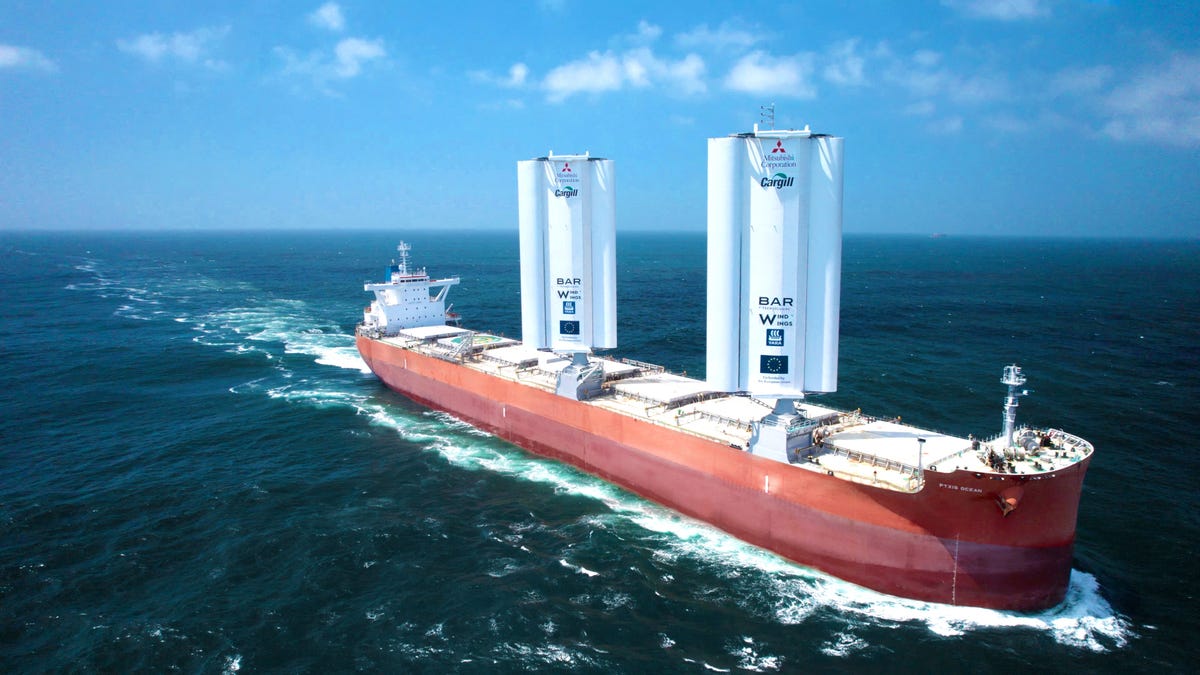
Container shipping is a poor use of our carbon budget. There needs to be more investigation of the use of sail, as well as reducing the shipping of physical objects all around the world when they can be manufactured more locally using more local resources, and a move towards eating and drinking local seasonal produce over shipping it around the world.

One of the biggest "environmental" jokes going is shipping wood pellets from Canada to burn in Drax. They'd be better burning British coal.
 

The Ham

Veteran Member
Joined
6 Jul 2012
Messages
12,056
Container shipping is a poor use of our carbon budget. There needs to be more investigation of the use of sail, as well as reducing the shipping of physical objects all around the world when they can be manufactured more locally using more local resources, and a move towards eating and drinking local seasonal produce over shipping it around the world.

One of the biggest "environmental" jokes going is shipping wood pellets from Canada to burn in Drax. They'd be better burning British coal.

Indeed, however there are things happening already with that regard. For example a recent trail of a retrofitted wind catching capacity to an existing ship:


There's overlap with aviation with the talk of synthetic fuels as well.

Although you are also right, that the easiest way for shopping to reduce its emissions is for there to be less shipping (again it "could" be that limited scope bans could be useful - for example between two locations with suitable electric rail capacity, as rail can produce 60% more carbon per tonne per km) with the easiest way to achieve this to reduce our purchase of stuff.
 

Bantamzen

Established Member
Joined
4 Dec 2013
Messages
10,510
Location
Cheshire
The argument is that these arguments just throw into relief how important it is to use our "carbon budget" wisely. Jetting off for a holiday every three months is a poor use of carbon compared to vital activities like container shipping.

They would also point to all the hardships and unrest climate change will cause...
Not half as much unrest as would be caused when the countries whose economies we shut down find out that killing civilian air travel barely scratched the surface of the problem. Even worse when they find out we did it purely out of not wanting to feel guilty...
 

eldomtom2

On Moderation
Joined
6 Oct 2018
Messages
2,400
Not half as much unrest as would be caused when the countries whose economies we shut down find out that killing civilian air travel barely scratched the surface of the problem.
How you have worked this out? Why do you think people who want a reduction in civilian air travel do not want to reduce emissions from other sectors as well?
Even worse when they find out we did it purely out of not wanting to feel guilty...
What the hell is the basis for this claim?
 
Status
Not open for further replies.

Top