Yes, but those higher interest rates will bring down inflation. Oh, wait....As interest rates rise, got to pay lots more to service this, rumoured they can't afford it unless put up water rates by hefty amount.

-
Our new ticketing site is now live! Using either this or the original site (both powered by TrainSplit) helps support the running of the forum with every ticket purchase! Find out more and ask any questions/give us feedback in this thread!
You are using an out of date browser. It may not display this or other websites correctly.
You should upgrade or use an alternative browser.
You should upgrade or use an alternative browser.
Companies That You Expect to Disappear Soon
- Thread starter whhistle
- Start date
Sponsor Post - registered members do not see these adverts; click here to register, or click here to log in
R
RailUK Forums
ChiefPlanner
Established Member
Many years ago - the 19thC actually - the City of Birmingham had an inspirational policy known as "Gas and Water socialism" - under one Chamberlain as Mayor. Other relatives achieved high positions later.
So the city provided clean drinking water , waste water removal and affordable lighting for municipal and domestic etc use.
A fast growing city services these needs by massive investment in Welsh dams and lengthy pipelines , and also built affordable public tramway systems.
Fair prices were charges , fair wages paid and the surpus did not go to grasping offshore financiers who pay no or little tax , but funded swimming pools , parks , art galleries and all sort of "pro-bono publico" benefits.
Cannot help thinking the "entrepreneurial" , "Free Trade" Victorians had some good ideas there.
So the city provided clean drinking water , waste water removal and affordable lighting for municipal and domestic etc use.
A fast growing city services these needs by massive investment in Welsh dams and lengthy pipelines , and also built affordable public tramway systems.
Fair prices were charges , fair wages paid and the surpus did not go to grasping offshore financiers who pay no or little tax , but funded swimming pools , parks , art galleries and all sort of "pro-bono publico" benefits.
Cannot help thinking the "entrepreneurial" , "Free Trade" Victorians had some good ideas there.
Many years ago - the 19thC actually - the City of Birmingham had an inspirational policy known as "Gas and Water socialism" - under one Chamberlain as Mayor. Other relatives achieved high positions later.
So the city provided clean drinking water , waste water removal and affordable lighting for municipal and domestic etc use.
A fast growing city services these needs by massive investment in Welsh dams and lengthy pipelines , and also built affordable public tramway systems.
Fair prices were charges , fair wages paid and the surpus did not go to grasping offshore financiers who pay no or little tax , but funded swimming pools , parks , art galleries and all sort of "pro-bono publico" benefits.
Cannot help thinking the "entrepreneurial" , "Free Trade" Victorians had some good ideas there.
Yes, if only the Labour controlled Birmingham City Council could be in such a good financial position today, and not have to go cap in hand to the government for a bailout.
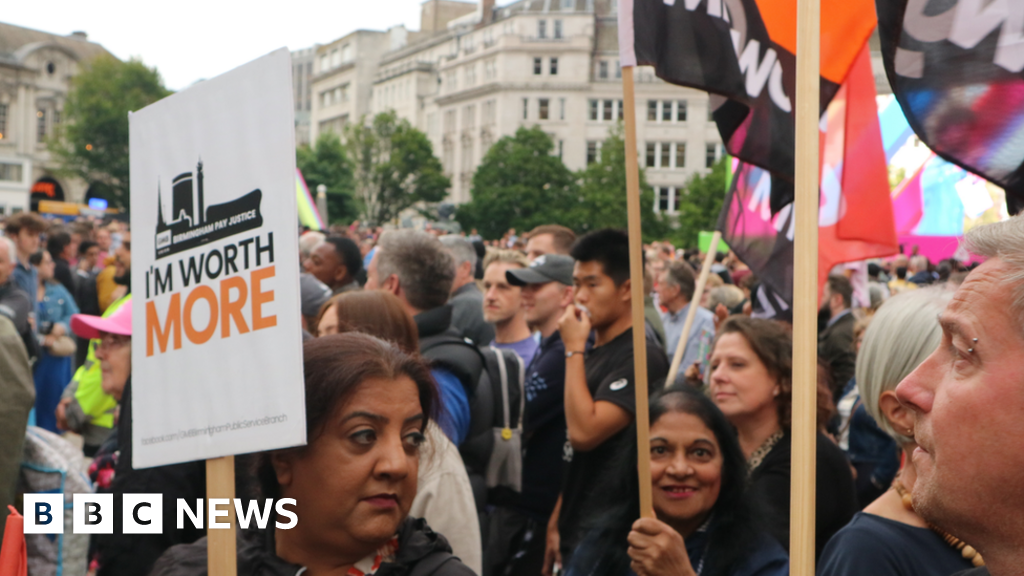
Birmingham City Council facing £760m equal pay bill
The council says it is in talks with the government as its bill grows by up to £14m each month.
www.bbc.co.uk
Birmingham City Council facing £760m equal pay bill
Birmingham City Council has said it is in talks with the government after revealing it has to pay up to £760m to settle equal pay claims.
The bill is equivalent to its entire annual spending on services and is growing by up to £14m each month.
As a result, the local authority said it would have fewer resources in the future and would have to reprioritise where it spends taxpayers' money.
It also apologised for failing to get the situation under control.
The Labour-run council, the largest local authority in Europe, has already paid out £1.1bn to settle claims after a ruling at the Supreme Court over pay in 2012.
However, following the implementation of a new IT system, Oracle, analysis revealed the significant additional costs the council will need to pay.
"Given the huge sums involved the council cannot afford to pay this from existing resources, including reserves," the council said.
As of March, the council's current equal pay liability was estimated to be between £650m and £760m.
The 2012 settlement followed a landmark court ruling which found hundreds of mostly female employees working in roles such as teaching assistants, cleaners and catering staff missed out on bonuses which were given to staff in traditionally male-dominated roles such as refuse collectors and street cleaners.
Michelle McCrossen from the GMB Union, which represents thousands of council workers, said the announcement was "shocking" and revealed the extent of pay discrimination at the council.
"GMB members in Birmingham City Council have been campaigning for equal pay for years, because we believed that the council's pay scheme discriminates against its women workers," she said.
"The extent of the discrimination is far worse than anyone could have imagined, and it's clear the council has learned nothing from their shameful history of undervaluing women's work."
In November 2021, the GMB union warned there could be a wave of fresh claims after new information emerged about how the council evaluated roles.
Ms McCrossen said the job evaluation system still had not been fixed and the council had "replicated the same mistakes" from the 2012 dispute.
"All they've done is kick the can down the road," she said. "Until the job evaluation system is fixed, equal pay liability will never be fixed."
'Financial black hole'
BBC Birmingham's political reporter Rob Mayor said it was another brutal financial blow for the council, just weeks after it was forced to admit the botched Oracle IT project could cost £100m, five times the original budget.
He added the local authority was clear that residents in Birmingham would feel the impact.
"On top of £1.1bn already spent, the outstanding bill for equal pay claims may now stand as high as £760m, more than the council spends in a year on services, and the bill is growing by as much as £14m a month.
"It's an ever deepening financial black hole and it's likely that government intervention will be needed to fix it."
Birmingham's Conservative Group hit out at the Labour administration's "failure to take action over the last decade".
Councillor Alex Yip described it as "financial chaos" and said the council was "unable to be trusted with the city's finances".
Meanwhile the city's Liberal Democrats said the announcement was "devastating news, especially for those most reliant on the services the council delivers".
Birmingham City Council said it was already taking action and was in discussion with the government and external auditors.
"These discussions remain ongoing as the council looks to explore a number of possible solutions," a spokesperson said.
Labour MP for Birmingham Selly Oak, Steve McCabe, said the council would likely be asking the government for financial support.
"The equal pay issues have clearly got to be settled," he said. "But what we don't want to end up with is a situation where a council that's already strapped for cash is forced to make even more cuts to services that people depend on."
The BBC has contacted the Department for Housing, Levelling Up and Communities for comment.

It won’t. The last two increases haven’t worked.Yes, but those higher interest rates will bring down inflation. Oh, wait....
My theory is Those of us who are spending the most money aren’t impacted by the interest rates.
The bank of mum and dad generation.
The 20s are staying at home with parents longer, whilst earning the best ever incomes for their age bracket. These are the same bracket that are spending money like it’s going out of fashion.
Nicholas Lewis
Established Member
They never were going to work most mortgages are fixed rate and until they need remortgaging homeowners aren't going to be exposed to the impact of higher rates. BoE finally acknowledged that their forecasting tools aren't upto scratch and seem to have reverted to seat of pants approach.It won’t. The last two increases haven’t worked.
or the beneficiariesMy theory is Those of us who are spending the most money aren’t impacted by the interest rates.
The bank of mum and dad generation.
Indeed which is why Treasury need supply side interventions. A good start would be putting at least the 6p they knocked off fueld duty back on.The 20s are staying at home with parents longer, whilst earning the best ever incomes for their age bracket. These are the same bracket that are spending money like it’s going out of fashion.

Mcr Warrior
Veteran Member
- Joined
- 8 Jan 2009
- Messages
- 17,229
So what's gone wrong at Thames Water? Poor senior management? Excessive historic dividends taken out by previous owners, financed wholly or partly by increased borrowings? And have the debt financiers now got cold feet (increasing cost of borrowings meaning a likely breach of financial and/or other covenants) and are now wanting to call in their money?Thames Water has borrowings of £14bn
As interest rates rise, got to pay lots more to service this, rumoured they can't afford it unless put up water rates by hefty amount. I suspect interest bill is close to triple what it was 2 years ago when base rates nearer 2%
Nicholas Lewis
Established Member
They have invested hugely by raising debt over the last 30 years (yes i know a load has gone dividends as well) and for the last decade have been able to roll that over at ever lower rates. That world has come to an abrupt end with higher rates and investors want nigh on double now even for a govt backed company like this. TW are working out that the income allowed by regulator isn't going to be enough to cover higher finance charges and investors have also worked this out and the interest rate needed to refinance as probably gone another 1 or 2 percent just exacerbating the problem.So what's gone wrong at Thames Water? Poor senior management? Excessive historic dividends taken out by previous owners, financed wholly or partly by increased borrowings? And have the debt financiers now got cold feet (increasing cost of borrowings meaning a likely breach of financial and/or other covenants) and are now wanting to call in their money?
There are numerous companies facing this scenario but majority have some level of pricing or cost control not available to TW being its regulated.
Peter Sarf
Established Member
I remember that when the Margaret Thatcher era Tory party were flogging of things that did not belong to them Birmingham city council (or West Midlands) considered taking the government to court over the sale (theft ?) of the water industry but they backed down. I gather at the time it was believed the Tories could bully them into submission.Many years ago - the 19thC actually - the City of Birmingham had an inspirational policy known as "Gas and Water socialism" - under one Chamberlain as Mayor. Other relatives achieved high positions later.
So the city provided clean drinking water , waste water removal and affordable lighting for municipal and domestic etc use.
A fast growing city services these needs by massive investment in Welsh dams and lengthy pipelines , and also built affordable public tramway systems.
Fair prices were charges , fair wages paid and the surpus did not go to grasping offshore financiers who pay no or little tax , but funded swimming pools , parks , art galleries and all sort of "pro-bono publico" benefits.
Cannot help thinking the "entrepreneurial" , "Free Trade" Victorians had some good ideas there.
I hope they give West Midlands water back to Birmingham.
The irresponsible thing is that when interest rates became so low the government should have dictated a minimum mortgage interest rate. This would have suppressed demand in an already overheated housing market where supply does not meet demand. Instead they came out with the help to buy scheme. Totally irrelevant to solving the housing shortage as help to buy was never going to increase the supply of housing.It won’t. The last two increases haven’t worked.
My theory is Those of us who are spending the most money aren’t impacted by the interest rates.
The bank of mum and dad generation.
The 20s are staying at home with parents longer, whilst earning the best ever incomes for their age bracket. These are the same bracket that are spending money like it’s going out of fashion.
Jamiescott1
Member
- Joined
- 22 Feb 2019
- Messages
- 1,112
It won’t. The last two increases haven’t worked.
My theory is Those of us who are spending the most money aren’t impacted by the interest rates.
The bank of mum and dad generation.
The 20s are staying at home with parents longer, whilst earning the best ever incomes for their age bracket. These are the same bracket that are spending money like it’s going out of fashion.
I'm in my 40s but have over 8 years remaining on a fixed rate mortgage at 2.1% so haven't really noticed the interest rate rise.
I've actually increased my spending as inflation means savings worth less
Dai Corner
Established Member
- Joined
- 20 Jul 2015
- Messages
- 6,990
Your debt is actually decreasing in real terms.I'm in my 40s but have over 8 years remaining on a fixed rate mortgage at 2.1% so haven't really noticed the interest rate rise.
I've actually increased my spending as inflation means savings worth less
No mortgage here, and retired with savings and (smallish) index-linked pension.
The difference between inflation and interest rates mean the value of my savings has been decreasing by more than my pension. In effect I have a negative income and am living off my savings. My wealth is being transferred to debtors like you (nothing personal in that, it's just how it is at the moment).
Higher interest rates and higher inflation work in opposite directions.
Higher interest rates transfer money from borrowers, who pay more interest on their debt, to savers, who get more interest on their savings.
But inflation benefits people in debt, because the real value of their debt is being reduced, and penalises savers, because the real value of their savings are eroded.
At a macro level we are still in the position where the inflation effect is bigger than the interest rate effect: inflation is 8.7% but interest rates only 5%.
Interest rate changes have been liked to trying to move a brick with a piece of elastic: at the beginning there's lots of pulling but no movement, but when the elastic gets taut suddenly the brick moves, and quickly.
Higher interest rates transfer money from borrowers, who pay more interest on their debt, to savers, who get more interest on their savings.
But inflation benefits people in debt, because the real value of their debt is being reduced, and penalises savers, because the real value of their savings are eroded.
At a macro level we are still in the position where the inflation effect is bigger than the interest rate effect: inflation is 8.7% but interest rates only 5%.
Actually, yes, you do have to wait. The impact of higher interest rates does take time to work through into the real economy. In the days when I was a work that was reckoned to be 1-2 years. That lag is probably longer now because of changes in the housing market with fewer people on mortgages and many more of them on fixed rate deals.Yes, but those higher interest rates will bring down inflation. Oh, wait....
No forecasting models are ever up to scratch in a time of rapid economic change, because they rely on modelling causes and effects from the past and assuming that they will be repeated in the future.BoE finally acknowledged that their forecasting tools aren't upto scratch
I wouldn't put it like that, but it is better that policymakers also look at other evidence of what is happening in the real economy. My favourite story on this is the construction statistics in the late 1980s with the boom in construction of London office space after Big Bang. The Chief Statistician of the team producing the construction statistics used to do a cross check of the numbers every month by counting the number of cranes that they could see from their office window.seem to have reverted to seat of pants approach.
Interest rate changes have been liked to trying to move a brick with a piece of elastic: at the beginning there's lots of pulling but no movement, but when the elastic gets taut suddenly the brick moves, and quickly.
To come back to this question, like the Treasury and Bank of England, they issued too much index linked debt, because they underestimated the risk of a supply side shock leading to a resurgence of inflation.So what's gone wrong at Thames Water?

It's hard to suppress demand for essentials such as houses... This state is not a fluke, we have not been building enough houses, since the state stopped building them. House building companies (and all publicly listed companies) are there to act in the best interests of their shareholders, not the public good; and low house prices are not in their shareholders interests.The irresponsible thing is that when interest rates became so low the government should have dictated a minimum mortgage interest rate. This would have suppressed demand in an already overheated housing market where supply does not meet demand.

61653 HTAFC
Veteran Member
Which is why "just build more houses" isn't a solution to homes being unaffordable. If the going rate for a three bedroom semi is (figures as examples only) £300k, then a developer building 24 of these three-bed semis on a brownfield site will expect each one to sell for that going rate- and prices will only come down if they fail to sell (which of course they won't).It's hard to suppress demand for essentials such as houses... This state is not a fluke, we have not been building enough houses, since the state stopped building them. House building companies (and all publicly listed companies) are there to act in the best interests of their shareholders, not the public good; and low house prices are not in their shareholders interests.
I'd say it makes the case of exactly the opposite, we need the state to step in where the market forces don't align with the needs of the public.Which is why "just build more houses" isn't a solution to homes being unaffordable. If the going rate for a three bedroom semi is (figures as examples only) £300k, then a developer building 24 of these three-bed semis on a brownfield site will expect each one to sell for that going rate- and prices will only come down if they fail to sell (which of course they won't).
SuspectUsual
Established Member
- Joined
- 11 Jul 2018
- Messages
- 6,746
But inflation benefits people in debt, because the real value of their debt is being reduced, and penalises savers, because the real value of their savings are eroded.
Sorry if im being thick, but surely this depends on the nature of the debt? If the debt isn’t at a fixed rate (eg fixed rate mortgage) then the cost of servicing the debt increases which is hardly a benefit
Yes if the debt is at variable rate then if interest rates rise then the interest payments go up.Sorry if im being thick, but surely this depends on the nature of the debt? If the debt isn’t at a fixed rate (eg fixed rate mortgage) then the cost of servicing the debt increases which is hardly a benefit
But that's only part of the story.
If inflation is going up, and wages are going up, then repayments on the principal (the amount owed) are reducing in real terms.
The interest rate will eventually come down again, but inflation is unlikely to go negative, so, although there may be a short term disadvantage, in the longer term the debtor is gaining because the principal is shrinking in real terms.
Mcr Warrior
Veteran Member
- Joined
- 8 Jan 2009
- Messages
- 17,229
Seems slightly surprising that a major company wouldnt have some sort of interest rate hedging in place, on all or part of its variable rate borrowings.
Nicholas Lewis
Established Member
True but the BoE knows full well that mortgages had moved to fixed rates over variable duration because they produce the data. The BoE also know they stoked the economy fully of cash during covid, maybe wrongly, but that was an unknown quantity at the time so im not critical of that action but they knew the likely consequences that doesn't need any modelling. Thus they should have bumped rates aggressively last year with some shock&awe rises. Its obvious that interest rates alone are not going to provide a quick crushing of inflation that can only be done with supply side action ie bump up VAT restore the duty on fuel thats been cut plus a bit more and pull the energy subsidies. Also get a benefit that public borrowing will be reduced as well or just accept recent events are outliers and accept there will be a longer tail.No forecasting models are ever up to scratch in a time of rapid economic change, because they rely on modelling causes and effects from the past and assuming that they will be repeated in the future.
and therein lies the risk with them now rubbishing their own forecasting model which has inflation undershooting on a 2yr horizon pre last months rise let alone adding another 0.5% to base rate. They really need to call a halt for at least 3 and more like 6mths to get a true assessment of what the current rates impacts are having.Interest rate changes have been liked to trying to move a brick with a piece of elastic: at the beginning there's lots of pulling but no movement, but when the elastic gets taut suddenly the brick moves, and quickly.
I'm confident that the Bank didn't miss that.True but the BoE knows full well that mortgages had moved to fixed rates over variable duration because they produce the data.
I'm less confident that they recognised how quickly private sector wages would respond to supply side shock inflation in a tight labour market.
But they can't, because, since Truss/Kwarteng, it is the bond market that's calling the shots.They really need to call a halt for at least 3 and more like 6mths to get a true assessment of what the current rates impacts are having.
Peter Sarf
Established Member
I should have said the demand would not stand the higher prices if higher interest rates made the mortgage less affordable. It would have kept prices lower for the same amount of supply.It's hard to suppress demand for essentials such as houses... This state is not a fluke, we have not been building enough houses, since the state stopped building them. House building companies (and all publicly listed companies) are there to act in the best interests of their shareholders, not the public good; and low house prices are not in their shareholders interests.
I occasionally been reminded that the main cost of a house in London is not what the builder gets paid and the cost of materials - the main cost is the value of the land with planning permission. Even back in 1988 my house insurance for the cost of demolition (following a fire or such trauma) and re-building was less than I paid for the house and the land it sits on !. So the cost of a house is rather beyond a builders control. And i was told by a builder that finding houses on a corner meant wedging a house in on the side road (so at the end of the garden) was very profitable as the land came free.Which is why "just build more houses" isn't a solution to homes being unaffordable. If the going rate for a three bedroom semi is (figures as examples only) £300k, then a developer building 24 of these three-bed semis on a brownfield site will expect each one to sell for that going rate- and prices will only come down if they fail to sell (which of course they won't).
61653 HTAFC
Veteran Member
I don't think anyone would think that there's any significant link between the cost of building a house, and the price that completed house sells for. A new build will sell for the maximum price that the developer thinks they'll get for it, and an existing home will sell for the maximum that the seller (or their estate agent) can get someone else to pay for it.I occasionally been reminded that the main cost of a house in London is not what the builder gets paid and the cost of materials - the main cost is the value of the land with planning permission. Even back in 1988 my house insurance for the cost of demolition (following a fire or such trauma) and re-building was less than I paid for the house and the land it sits on !. So the cost of a house is rather beyond a builders control. And i was told by a builder that finding houses on a corner meant wedging a house in on the side road (so at the end of the garden) was very profitable as the land came free.
The only way building loads of houses will bring prices down is if so many are built that the market is flooded. Even then, prices will only come down significantly in the event of some major economic downturn... possibly one caused by major housebuilding firms overstretching themselves, and by lenders taking on high-risk borrowers to pay for said houses... and thus, the cycle continues ad infinitum!
Peter Sarf
Established Member
I still think cost of land is an inhibitor to housing development. It is quite likely why such tall blocks of flats are back in fashion.I don't think anyone would think that there's any significant link between the cost of building a house, and the price that completed house sells for. A new build will sell for the maximum price that the developer thinks they'll get for it, and an existing home will sell for the maximum that the seller (or their estate agent) can get someone else to pay for it.
The only way building loads of houses will bring prices down is if so many are built that the market is flooded. Even then, prices will only come down significantly in the event of some major economic downturn... possibly one caused by major housebuilding firms overstretching themselves, and by lenders taking on high-risk borrowers to pay for said houses... and thus, the cycle continues ad infinitum!
Mcr Warrior
Veteran Member
- Joined
- 8 Jan 2009
- Messages
- 17,229
On Freeview, it's just saying "Ideal World has temporarily suspended broadcasting. We apologise for any inconvenience caused" (See below). Doesn't look too good for the future of the business. Believe it was put up for sale quite recently. Perhaps no-one was interested.Ideal World seems to have hit the wall. Their website is down, and all of their TV shopping channels on Sky are off air.


PG
Established Member
I'm sure some smart alec will now be able to point to this and say that its proof (as if any were needed!!) that we don't live in an ideal worldOn Freeview, it's just saying "Ideal World has temporarily suspended broadcasting.


Ideal World seems to have hit the wall. Their website is down, and all of their TV shopping channels on Sky are off air.
Didn't realize they were still around!
I assumed Ideal World had been killed off years ago.
Mcr Warrior
Veteran Member
- Joined
- 8 Jan 2009
- Messages
- 17,229
Amazingly, they were.Didn't realize they were still around!
No, still trading until a day or so ago. But probably now come to the end of the road.I assumed Ideal World had been killed off years ago.
C J Snarzell
Established Member
- Joined
- 11 Apr 2019
- Messages
- 1,517
Empire Cinema’s went into administration earlier today. I believe staff at the Robin Park cinema in Wigan arrived for work this morning to be told they were now unemployed and the site has been closed down with immediate effect. I’m wondering if the impact of the Covid restrictions to the hospitality industry has played a part in Empire’s demise.
CJ
CJ
Mcr Warrior
Veteran Member
- Joined
- 8 Jan 2009
- Messages
- 17,229
Reportedly placed into administration, yesterday, (Thursday 6th July 2023) and seems that most, if not all of the staff will be out of a job.I assumed Ideal World had been killed off years ago.

Administrators begin task of winding down operations of iconic Peterborough employer
Work starts to wind down iconic employer
 www.peterboroughtoday.co.uk
Extract:
Iconic Peterborough company Ideal World TV has collapsed into administration with the loss of 275 jobs.
Joint administrators for the TV and online shopping service channel, which has operated from the city for 23 years, were named today (July 6) shortly after the workforce had been told that all their jobs were to go.
Empire Cinema’s went into administration earlier today. I believe staff at the Robin Park cinema in Wigan arrived for work this morning to be told they were now unemployed and the site has been closed down with immediate effect. I’m wondering if the impact of the Covid restrictions to the hospitality industry has played a part in Empire’s demise.
CJ
The problems start in Hollywood to be honest, you might be lucky to see a couple of big blockbusters per year these days that you think 'that is worth going to the cinema for', the rest you'll just think I might as well wait for those on DVD/streaming services and watch in peace on your 75" TV at home
When purse strings are as tight as they are for a lot of households at the moment the cinema is also probably quite far down the list of places to visit
A shame for the staff but I can see Cineworld heading in the exact same direction soon too