
• Our new ticketing site is now live! Using either this or the original site (both powered by TrainSplit) helps support the running of the forum with every ticket purchase! Find out more and ask any questions/give us feedback in this thread!

Is the UK economy "two speed"

Status
Not open for further replies.

railfan99

Established Member
Joined
14 Jun 2020
Messages
1,961
Location
Victoria, Australia
I am a long way away, geographically, so on short visits in 2022 and planned this year I can't get the whole picture of what you're going through in the four nations (not a "Federation", as someone else reminded me).

Your government says the UK economy is starting to grow marginally again (in real terms?)

We know through this excellent forum of three successful recent preserved railway Galas (SVR, WSR and one other) plus possibly a fourth (NNR).

This is only a microcosm of the economy but is it plausible that in England for instance, it's 'two speed' re the economy.

What I mean is those who own a home and are fully self funded if retired, or a couple on reasonable salaries/wages (both working) if younger, are fairly to very financially comfortable. Rising energy and supermarket prices aren't ideal, and can be a big irritant, but these groups can cope despite their grumbles.

At the other end is a substantial group reliant on welfare who aren't coping at all well: energy price rises are a financial 'killer', their children (and perhaps the adults) eat poor quality meals as they can't afford anything better, and opportunities for paid lesiure activities are rare or don't exist as they are too expensive.

There's simplification in the suggestion, and I've omitted a possible third group in the middle, but could it be that the first group is helping your preserved railways to survive and perhaps even more than cover costs, or am I being too optimistic?
 
Sponsor Post - registered members do not see these adverts; click here to register, or click here to log in
R

RailUK Forums

Magdalia

Established Member
Joined
1 Jan 2022
Messages
7,394
Location
The Fens
This is only a microcosm of the economy but is it plausible that in England for instance, it's 'two speed' re the economy.
I worked in economics for most of my career and my answer is an emphatic yes.

In the UK population there is what I call the green team and the red team. The green team are able to live in the style to which they have become accustomed. That's because they have some or all of a decent salary, a decent pension, own their own home, have savings, or decent access to credit. The red team do not have these things, and live from day to day under constant financial pressure.

You are right that, for the green team, rising energy prices and food prices (and interest rates) are an irritant but they don't result in a change in financial behaviour. Furthermore, there is an element of "catch up" still going on because green team expenditure was constrained during the Covid 19 pandemic, and there is a "wall of money" that the green team are keen to spend.

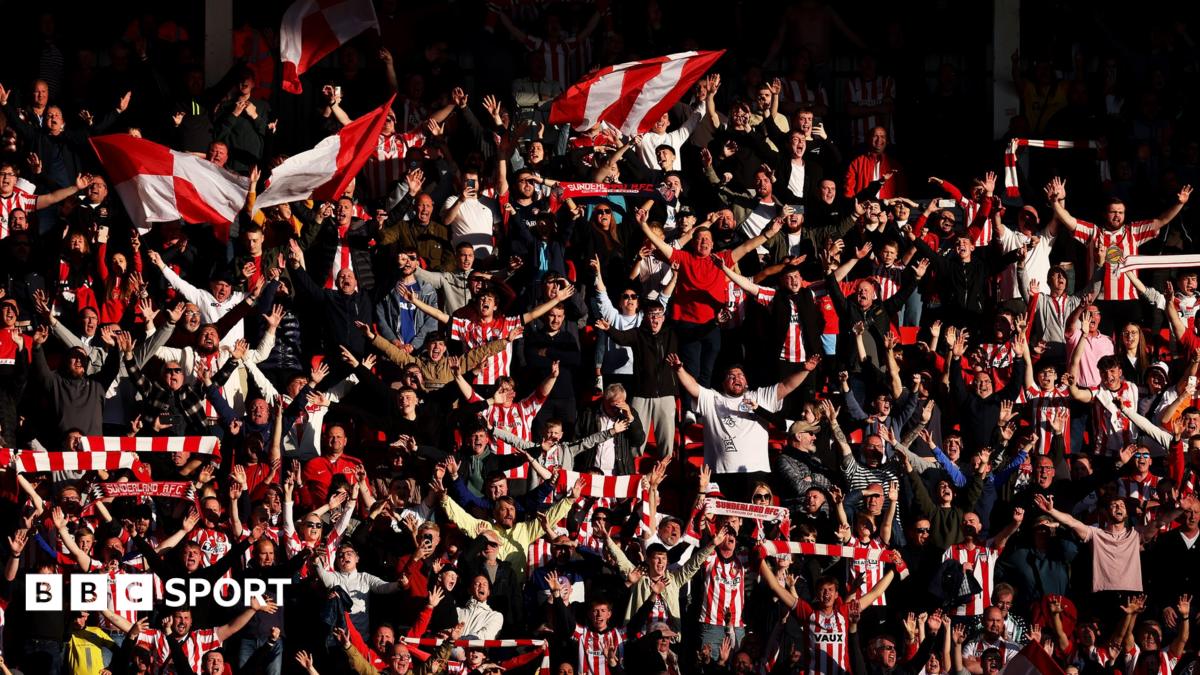
Lots of rail enthusiasts are in the green team, especially retired railway employees with generous BR final salary pensions. I'm not at all surprised by the recent successful events on the major preserved railways. The same phenomenon can be seen elsewhere in the UK economy, notably attendance at sporting and cultural events. For example here is a recent BBC report on attendance figures at EFL football in 2022/23 season:

The English Football League has recorded its highest aggregate attendance for nearly 70 years.

It racked up a total attendance of 19.8m in the 2022-23 season, the biggest since the 1953-54 season.
All three divisions figured in the top 20 best-attended European leagues, while the play-offs also had record figures.

The Championship total of 10,391,945 fans is the first time for four years the number has broken eight figures.

That made the Championship the fifth-best supported division in Europe, behind the Premier League, Bundesliga, La Liga and Serie A.


I lead a very sheltered life and I'm intrigued to know whether you see the same phenomenon at home in Australia?
 

RT4038

Established Member
Joined
22 Feb 2014
Messages
5,457
I worked in economics for most of my career and my answer is an emphatic yes.

In the UK population there is what I call the green team and the red team. The green team are able to live in the style to which they have become accustomed. That's because they have some or all of a decent salary, a decent pension, own their own home, have savings, or decent access to credit. The red team do not have these things, and live from day to day under constant financial pressure.

You are right that, for the green team, rising energy prices and food prices (and interest rates) are an irritant but they don't result in a change in financial behaviour. Furthermore, there is an element of "catch up" still going on because green team expenditure was constrained during the Covid 19 pandemic, and there is a "wall of money" that the green team are keen to spend.

Lots of rail enthusiasts are in the green team, especially retired railway employees with generous BR final salary pensions. I'm not at all surprised by the recent successful events on the major preserved railways. The same phenomenon can be seen elsewhere in the UK economy, notably attendance at sporting and cultural events. For example here is a recent BBC report on attendance figures at EFL football in 2022/23 season:


I lead a very sheltered life and I'm intrigued to know whether you see the same phenomenon at home in Australia?
I would suggest that many, many countries are like this - it is just the relative size of the green and red teams may differ.
 

Wynd

Member
Joined
20 Oct 2020
Messages
741
Location
Aberdeenshire
What's made the recent Cost of Living crisis different to previous instances, is that the Green team as it were have been affected. Not all of them, admittedly, but some.

Any level of poverty being tolerated in a developed economy is bad policy, as it harms the economy. To think that successive administrations have sought to grow the share of those living hand to mouth is difficult to explain to outsiders.

Then again, the administrations of the UK economy over the last 40 years leaves a lot to be desired.

The current PM index linked large chunks of the national debt whilst chancellor, condemning the UK to massive debt interest payments for at least the next 20 years. Any protest or calls to remove him?

TLDR, yes, very much a two speed economy and that's how the ruling classes in the Uk seem to want it.
 
Last edited:

Magdalia

Established Member
Joined
1 Jan 2022
Messages
7,394
Location
The Fens
What's made the recent Cost of Living crisis different to previous instances, is that the Green team as it were have been affected. Not all of them, admittedly, but some.
Who is in the green team and who is in the red team is dynamic not static. People who used to be able to live in the style to which they had become accustomed, but can no longer do so, are suffering financial relegation from the green team to the red team.

More of this will happen when fixed term mortgages at low interest rates end and have to be rolled over at much higher interest rates.
 

AlterEgo

Verified Rep - Wingin' It! Paul Lucas
Joined
30 Dec 2008
Messages
29,512
Location
LBK
Lots of rail enthusiasts are in the green team, especially retired railway employees with generous BR final salary pensions. I'm not at all surprised by the recent successful events on the major preserved railways. The same phenomenon can be seen elsewhere in the UK economy, notably attendance at sporting and cultural events. For example here is a recent BBC report on attendance figures at EFL football in 2022/23 season:
There is a good mix of "greens and reds" at EFL football. The main drivers of matchday attendance over the last couple of years as far as I can tell are:

- Covid bounce ("look what we missed for a whole season!")
- Improved matchday experience for fans
- Social media bounce ("limbs", reaction videos, online banter, high quality podcasts from amateur pundits)
- Slowly increasing quality of football and entertainment at this level
 

RT4038

Established Member
Joined
22 Feb 2014
Messages
5,457
Any level of poverty being tolerated in a developed economy is bad policy, as it harms the economy. To think that successive administrations have sought to grow the share of those living hand to mouth is difficult to explain to outsiders.
Surely the size of affluence of the green team is related to the price of goods and services produced by the red team?

It may be difficult to explain to some outsiders, but plenty would understand very well from the economic structure of their own countries.
 

railfan99

Established Member
Joined
14 Jun 2020
Messages
1,961
Location
Victoria, Australia
I lead a very sheltered life and I'm intrigued to know whether you see the same phenomenon at home in Australia?

What a great way for rail enthusiasts to call them 'green' and 'red'. (Have to be careful: in the state of Victoria, 'green over red' means 'clear normal speed' for drivers). We now just have colour light signals but used to have these wonderful creations:


Australians used to pretend we are a classless society. No longer true!

I would humbly suggest living standards here are perhaps better than in the UK (don't want to be trite, but millions have emigrated here in 'search of a better life', and they're not all convicts from 1789. But (of course) it's not Nirvana here.

Some income discrepancy is explained by our mineral and agricultural wealth. (Disclosure: I have shares in thermal coal - apologies to struggling heritage railways - and various agricultural listed companies).

I suspect Australia's almost cradle-to-grave social welfare ("Centrelink") is more generous than for some in the UK. We have 'franking credits' whereby self funded retirees can receive a refund for tax paid by listed companies, though the one year old Labor government doesn't like it even though introduced by a former Labor government. (The Liberal-Nationals Opposition supports franking credits). These are similar to a fiscal measure the UK once had until about 1990 IIRC.

There's certainly 'green' and 'red' teams here, with most of the attributes you state for the UK present. Home ownership here has dropped to about 67pc of households: the Liberal Party (equivalent to your Conservatives) has always promoted this, but until a recent pullback, house prices rose hugely in real terms. They are stagnant or dropping now, but interest rate rises are crimping the ability of many to repay or to be granted a mortgage. (Our borrowers, I think unique to the West, are largely on variable, not fixed rate, mortgages).

Unemployment here is very low "but" one hour a week in paid employment sees the Oz Bureau of Stats. count one as "employed", so the true figure has to be somewhat higher.

Costs here are significant but our minimum wage (applicable to c. a quarter of the workforce) has just risen by almost six per cent, and is much higher than UK even I suspect adjusting for PPP.

The notable trend is starting to be lower spending at restaurants and trading down to private label goods at supermarkets, not branded products (a trend probably seen in UK as well) but continuing high levels of spending on travel. The A$ might be starting to rise: it has been very low. 1984: A$1.00 bought US$1.15; today c.A$1.00 buys US$0.675 if you're lucky. I haven't looked but probably over time we've also lost against the pound and Euro.

There is a danger of a wage-price spiral. Like the Bank of Canada, the Australian Reserve Bank will have to continue raising interest rates, I assume multiple times.
 
Last edited:

Magdalia

Established Member
Joined
1 Jan 2022
Messages
7,394
Location
The Fens
Surely the size of affluence of the green team is related to the price of goods and services produced by the red team?
Only partially, and the economic activity of the working members of the green team is much more significant.

Also, there are more than 2.5 million of working age who are not working due to sickness. Many of them are in the red team. Ill health is one of the main triggers of relegation from the green team to the red team.

It may be difficult to explain to some outsiders, but plenty would understand very well from the economic structure of their own countries.
The experience in other countries would be useful to know. Which factors are generic to all mature "western" economies and which are peculiar to the UK?
 

railfan99

Established Member
Joined
14 Jun 2020
Messages
1,961
Location
Victoria, Australia
There is a good mix of "greens and reds" at EFL football.

How do you perceive the cost of going to a soccer match for say a dad and two lads compares to taking them to a typical heritage railway for the day?

(I am excluding the costs of travel to each).

== Doublepost prevention - post automatically merged: ==

... I'm not at all surprised by the recent successful events on the major preserved railways...

Magdalia, there'll be other factors such as whether a heritage railway is considered 'a good day out' but given your summation of the 'green team', are you optimistic for the future patronage (and revenue!) of preserved railways or do you have (bad pun) reservations? I'm talking general attractiveness to "normal" (hehe) individuals not us.
 
Last edited:

AlterEgo

Verified Rep - Wingin' It! Paul Lucas
Joined
30 Dec 2008
Messages
29,512
Location
LBK
How do you perceive the cost of going to a soccer match for say a dad and two lads compares to taking them to a typical heritage railway for the day?

(I am excluding the costs of travel to each).
The heritage railway will in almost all cases be cheaper but it is a comparatively niche pursuit. About 22 million people went to an EFL game last year. That excludes the Premier League (the top tier) and only accounts for the second, third and fourth tiers of professional football. It is a massive, massive thing here.

When heritage railways can bring in 15,000 people on a single Saturday afternoon they can charge more, I guess!
 

Wynd

Member
Joined
20 Oct 2020
Messages
741
Location
Aberdeenshire
Who is in the green team and who is in the red team is dynamic not static. People who used to be able to live in the style to which they had become accustomed, but can no longer do so, are suffering financial relegation from the green team to the red team.

More of this will happen when fixed term mortgages at low interest rates end and have to be rolled over at much higher interest rates.
Agreed. BOE rate expectations now at 5.75% as of this morning. 2 Year Swap market sentiment.

Re-mortgaging from 3.xx% to 6.xx% is going to bring significant pain to the economy. People will tighten their belts to keep roof over head. The only place left to cut from is discretionary spending.

Surely the size of affluence of the green team is related to the price of goods and services produced by the red team?

It may be difficult to explain to some outsiders, but plenty would understand very well from the economic structure of their own countries.
Not necessarily. A proportion of green team wealth is related to capital held, earnings on investments, which may be held outside the Uk, or pension income, which may also be in foreign assets.

This is one of the things that delineates the teams. A number of people who live in the Uk do not have a direct tie to Uk economic performance per-se.

It is true to say that the spoils of red team effort do go in to the green team however.

There are those who own capital and those who rent it. Id argue that's the dividing line, and the steeper the rent, the worse the social position.
 

DarloRich

Veteran Member
Joined
12 Oct 2010
Messages
32,931
Location
Fenny Stratford
Yes - we have an at least 2 stage economy in the UK and I suspect always have done. The problem is that over the period of Tory rule the gap between the two "camps" has widened quite noticeably. The issue at present is that those in the green team ( or at least those who THINK they are in the green team) are starting to be impacted by the cost of living - especially in relation food, fuel and power

However, mortgage rates will be the killer. Whilst they are still, historically, very low they are very high for the last 10/15 years and my rate went from c.2.5% to nearly 5% resulting in a doubling of my monthly payment. Current mortgage rates are closer to 6% and rising. My mortgage is for a small house and in the grand scheme of things modest but many will really struggle as the fixed rates they currently hold come to an end. Add that to unsecured debt on cards and PCP car finance on that fancy motor and suddenly things start to look worrying!

As for the red team: there for the grace of god. We are going to find out quite soon how little there is keeping you from moving from green to red. Once you join the red team I don't know how you get out.

PS I have been in the red team and survived on benefits, just. It will be even harder now with the cost of living being so high. They are all scroungers of course.......................
 

brad465

Veteran Member
Joined
11 Aug 2010
Messages
11,503
Location
Taunton or Kent
Personally I think the two speed nature of the economy and a lot of other issues with are down to our focus on GDP growth, which encourages short termism and fails to capture underlying issues. We need to look at expanding how we measure wellbeing and success to other metrics that can capture the picture better. Genuine Progress indicator (GPI), Human Development Index (HDI), Gross National Happiness (GNH), among others, do this already somewhat, but don't get much focus. Perhaps it's time they do.
 

railfan99

Established Member
Joined
14 Jun 2020
Messages
1,961
Location
Victoria, Australia
However, mortgage rates will be the killer. Whilst they are still, historically, very low they are very high for the last 10/15 years and my rate went from c.2.5% to nearly 5% resulting in a doubling of my monthly payment. Current mortgage rates are closer to 6% and rising. My mortgage is for a small house and in the grand scheme of things modest but many will really struggle as the fixed rates they currently hold come to an end.

Are most UK mortgages principal and interest (P&I) as in my distant continent, or typically interest only?

Unless I am having a brain fade, if they were P&I, your monthly repayment ought not have doubled if your interest rate went from 2.5pc to almost 5pc.
 
Last edited:

JamesT

Established Member
Joined
25 Feb 2015
Messages
4,887
Are most UK mortgages principal and interest (P&I) as in my distant continent, or typically interest only?

Unless I am having a brain fade, if they were P&I, your monthly repaymet ought not have doubled if your interest rate went from 2.5pc to almost 5pc.
We call them repayment mortgages, but yes, most are both principal and interest.
 

DarloRich

Veteran Member
Joined
12 Oct 2010
Messages
32,931
Location
Fenny Stratford
Are most UK mortgages principal and interest (P&I) as in my distant continent, or typically interest only?

Unless I am having a brain fade, if they were P&I, your monthly repaymet ought not have doubled if your interest rate went from 2.5pc to almost 5pc.
It is a repayment mortgage which I think is the same as P&I. I should have said nearly doubled. It is also on a different term which was all that was available at a sensible price! ( I think I was on 35 years before and have moved to 25 years)

My general point was that if my quite modest ( in the grand scheme of things & v UK property prices) has gone up so much how much has the payment of those borrowing 3/4/500+k gone up? Some of the green team is starting to feel the pain and that must be a worry for economic performance.
 
Last edited:

Bletchleyite

Veteran Member
Joined
20 Oct 2014
Messages
113,568
Location
"Marston Vale mafia"
It is a repayment mortgage which I think is the same as P&I. I should have said nearly doubled. It is also on a different term which was all that was available at a sensible price! ( I think I was on 35 years before and have moved to 25 years)

My general point was that if my quite modest ( in the grand scheme of things & v UK property prices) has gone up so much how much has the payment of those borrowing 3/4/500+k gone up? Some of the green team is starting to feel the pain and that must be a worry for economic performance.

I've increased the term of my mortgage (I had reduced it when rates were very low) so as to keep the payment roughly the same while everything is expensive. I bet lots of people don't even know they can do that (though there are limits) - I hope mortgage companies are helpful in advising on it.

While I doubt rates will go down very much (5-6% bank rate is about normal for the UK long term) I hope to reduce the term partly back again in the longer term, it was just a fairly quick (few clicks) way of dealing with the immediate cost of living issue.
 

DarloRich

Veteran Member
Joined
12 Oct 2010
Messages
32,931
Location
Fenny Stratford
There is a good mix of "greens and reds" at EFL football.

How do you perceive the cost of going to a soccer match for say a dad and two lads compares to taking them to a typical heritage railway for the day?
I think football is a difficult one to make comparisons with. People will give up all sorts to keep going to the match. I think perhaps a comparison with the cinema or the theatre might be better.

Sure, if times are hard people might cut down on away games or maybe avoid a pre match beer/pie/replica shirt but they will not give up match tickets until such time as it is absolutely impossible for them to carry on going.
 

RT4038

Established Member
Joined
22 Feb 2014
Messages
5,457
Agreed. BOE rate expectations now at 5.75% as of this morning. 2 Year Swap market sentiment.

Re-mortgaging from 3.xx% to 6.xx% is going to bring significant pain to the economy. People will tighten their belts to keep roof over head. The only place left to cut from is discretionary spending.
Yes - but surely that happens with every price/cost change down the years, whether it be interest rate/food prices/energy costs/ extra child in family etc etc. None of these things haven't happened before. You are quite right, discretionary spending gets pulled or reduced - holidays canned or reduced in length/luxuriousness, car kept longer , trips reduced or cheaper, less eating out, a spouse works more hours. Of course those people who have locked in discretionary spending with time shares/car leases etc and/or are overextended on mortgages are going to hurt, as not so discretionary spending has to get pulled. Those green team members who have always kept discretionary spending under control, and saved for a rainy day in one way or another will be less affected.

There are those who own capital and those who rent it. Id argue that's the dividing line, and the steeper the rent, the worse the social position.
And those who inherit a property or part thereof at some point in their lives will have the opportunity of moving from red to green. I don't think it is quite as simple as 'the steeper the rent, the worse the social position' - some pay steep rents with high salaries.

Is it really as simple as red and green? Obviously there are different shades of red (from crimson to pink), as there are of green (lime to emerald) , but quite possibly a yellow intermediate state too, of people moving up or down, or are in just in the intermediate position. What a person has done with their discretionary spending, and their earning hours, at the various times of life can have a great bearing on what colour and shade one finds oneself in now.
 

MikeWM

Established Member
Joined
26 Mar 2010
Messages
4,960
Location
Ely
I think football is a difficult one to make comparisons with. People will give up all sorts to keep going to the match. I think perhaps a comparison with the cinema or the theatre might be better.

UK cinema admissions in 2022 were at about 65% of those in 2019, but it is hard to deduce too much from that because (a) there were still covid restrictions in place at the start of the year, (b) there were large chunks of last year where there were (historically speaking) an abnormally low number of films on release, mostly due to backlogs in post-production due to covid restrictions, and (c) distribution has changed, with some films primarily or solely being released on streaming services, which just didn't happen to any meaningful degree in 2019 or before.

2023's figures will be a lot more useful to gauge trends, as (a) and (b) have gone away and the impact of (c) has lessened considerably - after a number of flops, studios have found that they still need cinema releases for the most part.

(figures from https://www.cinemauk.org.uk/the-ind...-admissions-and-box-office/annual-admissions/).
 

Magdalia

Established Member
Joined
1 Jan 2022
Messages
7,394
Location
The Fens
Is it really as simple as red and green? Obviously there are different shades of red (from crimson to pink), as there are of green (lime to emerald) , but quite possibly a yellow intermediate state too, of people moving up or down, or are in just in the intermediate position. What a person has done with their discretionary spending, and their earning hours, at the various times of life can have a great bearing on what colour and shade one finds oneself in now.
Green and red are indeed a simplification. But it can sometimes be helpful to simplify in order to see things a different way.

When I first studied economics, nearly 50 years ago, the green and red teams existed but they were the tails or a bell curve distribution and most people were in what you have called the "yellow" intermediate state. Economic policy worked at the margin on those people through tightening or loosening of monetary (interest rates) policy and fiscal (tax rates) policy, with the welfare state mitigating the impact on the small red team.

What's changed is the shape of the distribution, with much bigger green and red teams and far fewer people in the yellow intermediate state. One key factor in that has been financial deregulation, particularly the availability of credit and the advent of digital money. Others are the housing market and the impact of austerity. One factor that I think is very poorly recognised is the tax shelters such as TESSAs, PEPs and ISAs that, along with house price inflation, have expanded the size of the green team.
 

railfan99

Established Member
Joined
14 Jun 2020
Messages
1,961
Location
Victoria, Australia
What's changed is the shape of the distribution, with much bigger green and red teams and far fewer people in the yellow intermediate state.

Fairly confident this is true throughout much of the English-speaking (as #1 language) Western world. The decline of the middle class: still significant, but percentage numbers in 'red team' have definitely risen in my faraway nation.
 

Wynd

Member
Joined
20 Oct 2020
Messages
741
Location
Aberdeenshire
Yes - but surely that happens with every price/cost change down the years, whether it be interest rate/food prices/energy costs/ extra child in family etc etc. None of these things haven't happened before. You are quite right, discretionary spending gets pulled or reduced - holidays canned or reduced in length/luxuriousness, car kept longer , trips reduced or cheaper, less eating out, a spouse works more hours. Of course those people who have locked in discretionary spending with time shares/car leases etc and/or are overextended on mortgages are going to hurt, as not so discretionary spending has to get pulled. Those green team members who have always kept discretionary spending under control, and saved for a rainy day in one way or another will be less affected.


And those who inherit a property or part thereof at some point in their lives will have the opportunity of moving from red to green. I don't think it is quite as simple as 'the steeper the rent, the worse the social position' - some pay steep rents with high salaries.

It is not new as you say, but what is new-ish is the UK having a near 100% debt to GDP ratio and huge parts of the economy being dependent on discretionary spending.

Economic performance is reflected in national finances, debt prices/yields, and feeds in to the rates you and I may pay on mortgages.

Its not pretty when economic performance goes down, rates go up, which reduces discretionary, which takes the economy further down, which means rates go higher.... you get the picture.

Just since yesterday rate expectations are now approaching 6%, which makes 7% retail market mortgage's a distinct possibility.
 

RT4038

Established Member
Joined
22 Feb 2014
Messages
5,457
It is not new as you say, but what is new-ish is the UK having a near 100% debt to GDP ratio and huge parts of the economy being dependent on discretionary spending.
UK discretionary spending is substantial parts of some other countries' economies too!

Economic performance is reflected in national finances, debt prices/yields, and feeds in to the rates you and I may pay on mortgages.

Its not pretty when economic performance goes down, rates go up, which reduces discretionary, which takes the economy further down, which means rates go higher.... you get the picture.

Just since yesterday rate expectations are now approaching 6%, which makes 7% retail market mortgage's a distinct possibility.
Not disagreeing with you, but we have had much higher interest rates in the past, and the economy will adapt. (Not necessarily without some pain, of course)
 

Wynd

Member
Joined
20 Oct 2020
Messages
741
Location
Aberdeenshire
Not disagreeing with you, but we have had much higher interest rates in the past, and the economy will adapt. (Not necessarily without some pain, of course)

The issue of course is that in the past we didn't have people at their limit on borrowing on two incomes, as in the 70s a single income household the norm.

And cars were not as expensive, with finance now being the norm.

And just about anything else you can think of now on finance.

I think you see where I'm going. The primary point is that the economy is now far more sensitive to interest rate moves.

It will adjust, as you say, with some pain, but that pain will only increase the issues around investment and economic growth, which are deeply unwelcome when you view the UK state finances at a distance.
 

Broucek

Member
Joined
13 Aug 2020
Messages
947
Location
UK
One of the problems we have as a society is that there is less social interraction between green and red. I'm "team green" and I meet "team red" people at church but most of the people I work with do not meet anyone "red" except in a transactional way

And most people in politics/media/business (including on the left of politics/media) are "team green" with no understanding of what being "red" means and this often leads to policies (political or employer-specific) that are bad for "team red". For example, I know of a company that tried to move from weekly to monthly pay for its hourly ("red") staff..... (Also, without wanting to derrail the conversation, this lack of influential "red" people is perhaps one of the reasons that the political/media class was so surprised by Brexit.)
 

Simon11

Established Member
Joined
7 Nov 2010
Messages
1,389
For a family to move from a red to a green status, it is likely going to take several generations plus lots of hard and more importantly smart long term decisions. Wealth is like a snowball going down a mountain.

Sometimes I do feel that the red team should try to make better decisions and to put together a long term plan. These are assumptions but for example:
* I would assume that red families in the UK are more likely to have more children? As someone in the green team, I am very much aware of how much they cost and time, so I do hold back. However I know so many red families who dont think it through and it really impacts their future life?
* Red families are less likely to look outside the box with career opportunities and focus more on simple, easier to understand and maybe more fun roles which are likely to have a poor salary. Great example is watching on TV a single mum struggling doing a course on hair or beauty- unfortunately that type of role is never going to bring in enough money.
* Red families are more likely to have broken families and wonder if giving more support to find the right partner (or provide better training or guidance) would lead to better families?

Potentially ‘out there’ thoughts not backed up by evidence but how can families really move into the green?

Too much of the news around the credit crunch focuses on Government failings (easy to lay the blame) and ignoring completely the whole topic around how families can lift themselves out of the red team. The minimum wage is just that and people should maybe try a bit harder to move out from that wage to get a living wage? A topic that media never want to touch!
 
Last edited:

Sm5

Member
Joined
21 Oct 2016
Messages
1,013
Personally I think a dotcom style crash is coming.

1. We are on the edge of technology change, and a bunch of previously skilled jobs are going to be reprioritised and a new economy built. Large corp is scaling around that whilst managing long term investment costs that may not meet projections.

My suspicion is some sharp shocks are coming over the summer and will ripple down the tech economy, which will effect service, legal and finance.

2. That will trickle down, just as interests go higher.
Coupled with this we are approaching the 20-25 year mark for thousands who did interest only mortgages back in 98-2005 which lead housing market growth, and unless people have a back up way to fund they are going to hit a bump.

3. Inorder to not move from Green to red, many are going to sell.

when 1 person cannot sell its the buyers problem. When thousands cannot sell, its the banks problem.

The international markets are already looking at the UK as risk, all the rating agencies are trending the UK negative.
The pound isnt going up with interest rates either, as would be expected, and gilts are looking amongst the worst in Europe.

i’d argue the UK isnt red or green, but by its tax bands.

Lower rate are hurting (but they always are).
40%’s A lot are feeling it, the rest are going to really feel it soon, once their spare funds are depricated.
Those on higher rate… those are the true greens.

its not the higher rates this country thrives off, there not many of them overall, its the 40%’ers… they squeal the country has real pain. The populace likes to rant at the ultra wealthy, but when the government responds, its to the middle that it affects…because theres more of them to take from.

Put differently, with high prices, higher property values, near max employment, and a strong economy everything should be green light all the way… yet much of the populace is really struggling and inflation is beyond the government or even the UK economies own control, making interest rate rises really a window dressing of building some head room when the crash comes.
 
Last edited:
Status
Not open for further replies.

Top