zwk500. I see your point, but a joined up railway would have found a way. I also probably should have made it clear that those who control permission to do stuff have to be seen as part of the railway. Their decisions or, more likely lack of them, will probably have contributed to all this.
But as I've pointed out, this is a legacy of decisions some 15 or 20 years ago, when it was decided to build platforms less than 46m long. The person who made that decision may very well have moved on or out or up and the people now with the power to do something are left with what we have.
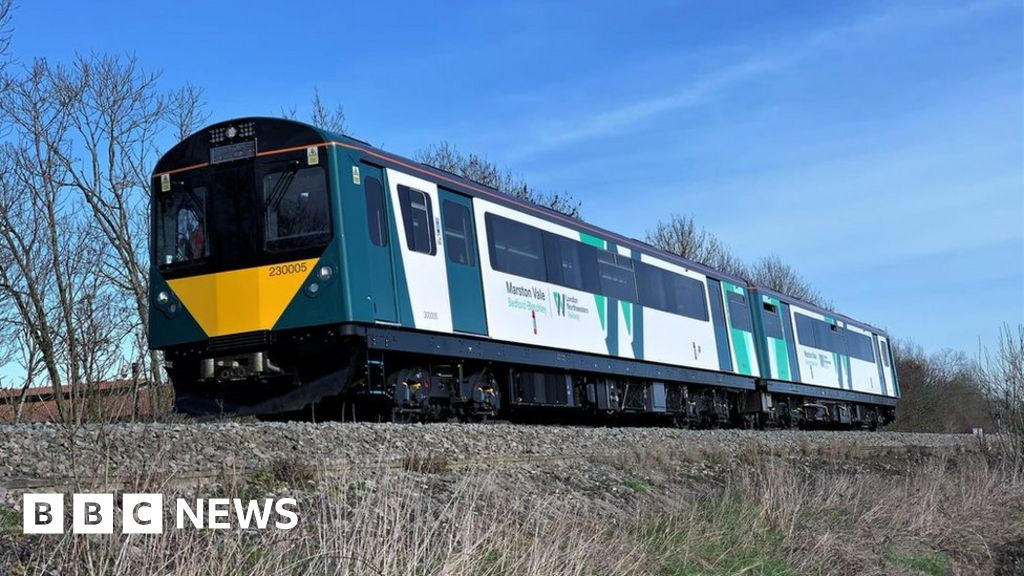
Had the line been built with 50m platforms, then in all likelihood the Class 230 programme wouldn't have included the Marston Vale, with instead any standard 2-car DMU from the LNR/WMT fleet being used with the Class 196s being the eventual goal.
However, because only 40m platforms were built (even if it's only 1 or 2) we are left in the position where rolling stock has to be chosen carefully, and as it's a non-standard length (now, 1-car trains were more common 20 years ago) there aren't many units available. Extending platforms will cost a fortune because there's signals and level crossings to consider (even just checking they're not a problem will cost something), so it's back to what trains are there that can fit. It turns out (not surprisingly) that the only units that are in a condition to run on the line are already in passenger service, so replacement units for *them* must be found because it's not a passenger-friendly railway to tell people in Wales to get stuffed because the people in Bucks/Beds have it harder.
The Marston Vale has also suffered from a series of infrastructure failures that took a long time to repair because the Level crossings used old/non-standard equipment that was difficult to procure. Again, that is a decision that was made by 'the railway' but by a person who is possibly no longer with the company.
While I object to the 'can't do, won't do' label I will acknowledge that this shows the railway as very inflexible and rigid, that it has institutional problems with sensible investment and cost management, and that it is struggling to keep going on less-critical parts of the network in the face of serious financial and organisational pressures. None of which are a 'good look' for passengers.