• Our new ticketing site is now live! Using either this or the original site (both powered by TrainSplit) helps support the running of the forum with every ticket purchase! Find out more and ask any questions/give us feedback in this thread!

UK switching to electric vehicles discussion

StKeverne1497

Member
Joined
9 Oct 2019
Messages
140
Location
Caerphilly
If the battery is going to be of a similar size to the car, it's going to cost circa £10k - a lot of cash for something that will be used very occassionally. And it'll spend the majority of it's life idle,
It looks to me as if the cheapest new caravans are around the £20,000 mark with some models reaching £50,000 or more. You could offer several battery options but I'm sure adding £5,000 - £10,000 for the sorts of benefits you could get would be worth it to some people.

As for the "sitting idle" thing, I already suggested that the obvious solution there is to use it as a house battery, or "vehicle to grid". In fact, even if you don't keep your caravan at home, if you store it at a place which can provide a suitable charging socket you could still use it in V2G mode, with the benefit of being able to keep ventilators running (do caravans have such things?) to prevent damp and mould and suchlike over the winter when you're not using it.

Personally I think the biggest issue will be the weight - not so much for the vehicle itself, which I'm sure wouldn't take a lot of thought to strengthen sufficiently - but how difficult it is to keep the total trailer weight under 3,500kg, which I think is the current limit for people with a "normal" driving licence. Then again, I've just looked at the Elddis and Swift websites and their biggest caravans seem to come in at around 2,000kg, so even packed up for a family holiday it looks to me as if there's quite a bit of leeway. Ifor Williams horseboxes and catering units also seem to come in at around this weight, though adding a couple of horses is going to be quite a bit heavier than a few suitcases, pots and pans.
 
Sponsor Post - registered members do not see these adverts; click here to register, or click here to log in
R

RailUK Forums

AM9

Veteran Member
Joined
13 May 2014
Messages
16,019
Location
St Albans
I think you'd certainly get better health-related quick wins by doing that than trying to go straight to EVs when there are a lot of societal challenges still to work out. The ship may now have sailed because the transition to BEV has already started, but a strong move towards hybrids with battery running below 35mph significantly reducing particulate pollution in urban areas could have happened 10 years ago or even more.

If it'd been done 10 years ago, well over 50% of cars on the road would be zero-emission in urban areas and charging infrastructure would by now be better developed. That would have saved at least tens of thousands of lives and improved quality of life for a load more people in urban areas.

The abused loophole you mention should simply never have existed and should have been closed more quickly.
My point was that your proposal to encourage drivers of hybrids to optionally increase carbon generation whilst running outside city centres on the justification that they could run on battery in a city centre would be ripe for abuse in much the same way as happened with all those taxi drivers running around London on petrol because their battery was at end of life. That's why virtually all hybrids are now charged the full IC vehicle rates.
In addition to that, the concept of a 'not quite as bad IC vehicle' just waters down the message. If such a thing was implemented (which sounds like it could be a low cost soft/firmware mod), the global car manufacturers would have offered it, so I would imagine that they got a significant 'no!' from administrations around the world.
 

jon0844

Veteran Member
Joined
1 Feb 2009
Messages
30,844
Location
UK
Interesting, thanks. I wonder why that concept didn't really take off? It would seem ideal to reduce pollution at the point of use in urban areas which is the priority for now until the grid is more "greened". It needn't even have the GPS part if it just used electricity only when driving up to say 35mph unless the battery was low.

I can get why one car doesn't suit everyone (a lot of people wouldn't buy a Prius just because they wouldn't buy a black cab - they're more associated with taxis than family cars, a bit like it took Tesla rather than the Nissan Leaf to make BEVs take off) but the concept seems solid in terms of being able to roll out ULEZs and ZEZs a lot quicker, and Priuses have been around for ages now.

I always thought the Leaf and Prius (the common ones we see most of - as both have been redesigned) were hideous, and always wanted cars to look normal - not futuristic spaceships.

Now we've got cars looking identical to their ICE counterparts, although Hyundai and Kia have still managed to keep experimenting (and sadly I'm not so much a fan of the newest stuff).

Obviously the styling is subjective and the Prius proved itself for its market, mostly being used as taxis. Can't fault them for that, even if I believe there was a bit of a scandal of imported models with non functioning batteries (having failed the Japanese MOT), such that they were driving on petrol all the time. No idea how big a deal that really was. [Edit: I see that was discussed above]

The thing with hybrids though is that you will actually not save anything on the maintenance of those mechanical parts - and indeed will likely pay more as things will be more tightly squeezed in. And then there's the extra weight which impacts the fuel economy on petrol and battery (a reason why all these electric SUVs are not really that sensible - and why the Citreon e-C3 seems to be so good on range with a comparatively small battery).

== Doublepost prevention - post automatically merged: ==

It looks to me as if the cheapest new caravans are around the £20,000 mark with some models reaching £50,000 or more. You could offer several battery options but I'm sure adding £5,000 - £10,000 for the sorts of benefits you could get would be worth it to some people.

As an aside, portable batteries offering 0.3-2kWh are all the rage now, some coming with fold out solar panels, for camping - and I wouldn't be surprised if there aren't already caravans and RVs that integrate batteries to provide lighting, some heat/cooking, and charging facilities. Of course your EV could do that too, but I can see people might want a caravan with integrated battery - and if you made it larger, it could somehow assist the car, even if simply providing a source of power to the car to extend the range.
 
Last edited:

trebor79

Established Member
Joined
8 Mar 2018
Messages
4,892
That's 20-30 minutes additional on my return journey, though, and that assumes I can get a charger and it's working. I'd normally stop in the middle of a journey, not at the start, and a long journey like that will leave me near empty on arrival and parking in a location (e.g. a rural walkers' car park or a campsite) where there will likely never be chargers and thus basically having to stop at Forton or Burton for a charge before even being able to head back south from the Lakes (say).
Are you seriously suggesting you drive from the lakes to your part of the country in a oner? Why wouldn't you want a 20 minute pit stop, at least?
I've only had to queue for chargers twice, both for no more than about 15 minutes. And the secret is to avoid MSAs at busy times, there are a number of hubs (with toilets and food outlets) a mile of so from motorway junctions)
 

Bletchleyite

Veteran Member
Joined
20 Oct 2014
Messages
113,026
Location
"Marston Vale mafia"
Are you seriously suggesting you drive from the lakes to your part of the country in a oner? Why wouldn't you want a 20 minute pit stop, at least?

No, I usually stop twice, typically once at Lymm, Keele or Sandbach (I really quite like Lymm, proper Maccies without the prices inflated and everything, plus a proper pub/restaurant thing if you want an actual meal and a decent sized M&S) and once at Norton Canes.

What I don't want to have to do is stop a short distance into the journey due to being close to zero on range by then, as that would become a third stop and thus wasted time.
 

bspahh

Established Member
Joined
5 Jan 2017
Messages
2,416
It looks to me as if the cheapest new caravans are around the £20,000 mark with some models reaching £50,000 or more. You could offer several battery options but I'm sure adding £5,000 - £10,000 for the sorts of benefits you could get would be worth it to some people.
If detachable battery packs were a thing, then you could just rent one for the times when you were using your caravan, and then only have to worry about the expensive battery getting nicked whilst you are actually planning to use it.
 

MotCO

Established Member
Joined
25 Aug 2014
Messages
6,085
That aside, one thing I'm surprised we haven't seen* is plug-in series hybrids that can run the engine faster when running at constant speed e.g. on a motorway and put some charge in that way.
I think that the Nissan Qasquai may be as you describe - the engine charges the batteries rather than powers the motor, so the propulsion is provided purely by the battery powering the motors.
 

reddragon

Established Member
Joined
24 Mar 2016
Messages
3,271
Location
Churn (closed)
The number of EVs on the road seems to disagree.

They won't suit everyone yet (I've already said I don't think I'm ready for one yet*) but in due course they will.

* The main issue for me is the number of long distance journeys I do for outdoor activities, camping and similar, to the Lakes, North Wales and the Peak, where charging facilities at the destination are very unlikely to be provided any time soon, which means I'd need to sit around on the return journey for a full charge rather than a top-up, lengthening my journey back by an hour or more when it's potentially already getting late. If I normally stayed in hotels on long distance trips where charging provision is more likely nearby this would be less of an issue. A PHEV might suit me well as I could run electric locally and petrol for these longer trips, but there are few on the market and they're expensive.
I drove to Portugal via France & Andorra then Spain, 3500 miles over a few weeks. One day I did 625 miles from France to Portugal. An ICE would have been no quicker, but a lot more expensive.

== Doublepost prevention - post automatically merged: ==

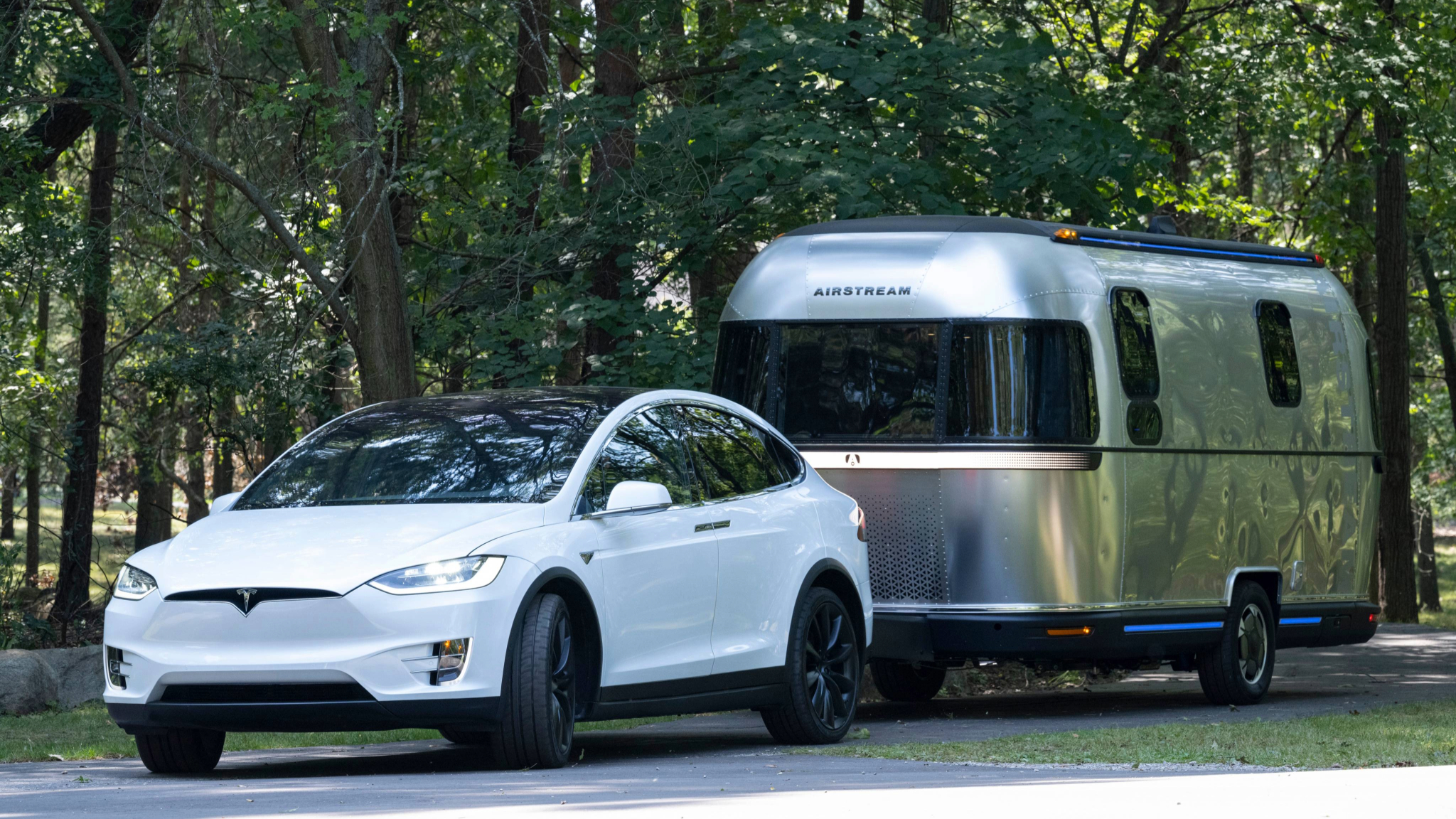
I had this fantastic idea a while back when the only EV which was actually rated for towing was one of the Teslas (all the others on the market at the time said "Towing capacity: 0kg"). Surprised no-one's tried it already, though there are "issues". However, here's the big idea...

...why not put a battery in the caravan too?

Admission - I have never owned nor towed a caravan. It isn't really my ideal kind of holiday, particularly with the up-front expense and having it sitting unused on your driveway for most of the time. That aside:
  • When you are towing, the battery in the caravan extends your range so the car which does 300 miles on its own can still do 300 miles when towing. Let's face it, going on holiday and having to stop every 100 miles to charge up is going to be tedious
  • When you are not towing, you don't have to lug around the extra weight of the battery
  • A battery in the caravan might contribute to its stability by lowering the centre of gravity
  • When not in use you can plug the caravan battery into your house to use as a house battery (assuming you keep your caravan at home)
  • When camping you can use the caravan battery to provide more than just some low power convenience 230V outlets - it would quite easily run a kettle or an oven, making gas-free caravanning a real possibility
On the downside
  • It's extra weight in the caravan so there's a little efficiency trade-off, and there may be issues with licencing the driver
  • How the heck do you charge at a typical campsite which struggles to provide 16A hookups at the moment? Are we going to expect campsites to upgrade their incoming supplies?
  • You would have to get car manufacturers to agree a connection standard so that you can just plug the battery in to the back of the car in exactly the same way you do with the lights
  • There might be some conversion required as I know different cars use different voltages for their battery packs, though this one is not insurmountable with modern electronic converters
In fact you could (with a lot more thinking) go one stage further and put an electric motor in the caravan as well as the battery. Turn the pair into a kind of Electric Multiple Unit!
  • A motor in the caravan could provide a little extra help meaning less effect on the car's performance
  • It could also help with regeneration
  • Once at the campsite there's the possibility that you could unhitch the caravan and drive it using a pendant - much easier to get it in the right place if it's something you don't do regularly (I note that it's already possible to get caravan motors which run off the leisure battery and either just drive the jockey wheel or actually drive the main wheels)
The big downside of that, of course is
  • Now you not only need a connection standard for the battery to the car, but you also need a control standard so that the car's electronics can drive the motors safely. It'd be utterly frustrating to end up with a mish-mash of standards (as with trains!) where Teslas can only tow Elddis caravans while Volkswagens can only tow Swift!
But an upside of requiring the control standard might be
  • The car can accurately operate the caravan's brakes, rather than relying on the towbar system I believe is still common. This could help avoid common accidents when towing such as snaking and jacknifing

You can of course extend the idea to larger trailers, horseboxes, hot dog stands etc. etc.

Go on then, what's wrong with my idea?

It's been done, but just an expensive prototype / high end model so far.
 

Bletchleyite

Veteran Member
Joined
20 Oct 2014
Messages
113,026
Location
"Marston Vale mafia"
I drove to Portugal via France & Andorra then Spain, 3500 miles over a few weeks. One day I did 625 miles from France to Portugal. An ICE would have been no quicker, but a lot more expensive.

Certainly EVs are at the moment cheaper to run but taxation will catch up (it can't not do, as nobody would accept the lost income going on income tax, you'd end up with something like a 30% base rate).

It'll obviously work better if where you stay over is likely to have chargers.
 

trebor79

Established Member
Joined
8 Mar 2018
Messages
4,892
No, I usually stop twice, typically once at Lymm, Keele or Sandbach (I really quite like Lymm, proper Maccies without the prices inflated and everything, plus a proper pub/restaurant thing if you want an actual meal and a decent sized M&S) and once at Norton Canes.

What I don't want to have to do is stop a short distance into the journey due to being close to zero on range by then, as that would become a third stop and thus wasted time.
Assuming you stop once or twice on the way up, you wouldn't be in that position.
Even now, in cold winter weather my Kia Niro (not the longest range vehicle in the world by any means) will get me from home to Stratford Westfield and back without charging - 190 miles round trip. That's driving completely normally at motorway speeds with the heating on etc. If it's looking a bit tight to get back I can do a quick pit stop (literally 5 minutes) at Barton Mills to top up another 20-30 miles of range but I've only had to do that once or twice.
The reality is if you charge on your way up, you'll probably arrive with about 50% battery and that's going to be enough to get you to your first stop on the wat home.
 

JamesT

Established Member
Joined
25 Feb 2015
Messages
4,833
In fact you could (with a lot more thinking) go one stage further and put an electric motor in the caravan as well as the battery. Turn the pair into a kind of Electric Multiple Unit!
  • A motor in the caravan could provide a little extra help meaning less effect on the car's performance
  • It could also help with regeneration
  • Once at the campsite there's the possibility that you could unhitch the caravan and drive it using a pendant - much easier to get it in the right place if it's something you don't do regularly (I note that it's already possible to get caravan motors which run off the leisure battery and either just drive the jockey wheel or actually drive the main wheels)
The big downside of that, of course is
  • Now you not only need a connection standard for the battery to the car, but you also need a control standard so that the car's electronics can drive the motors safely. It'd be utterly frustrating to end up with a mish-mash of standards (as with trains!) where Teslas can only tow Elddis caravans while Volkswagens can only tow Swift!
But an upside of requiring the control standard might be
  • The car can accurately operate the caravan's brakes, rather than relying on the towbar system I believe is still common. This could help avoid common accidents when towing such as snaking and jacknifing

You can of course extend the idea to larger trailers, horseboxes, hot dog stands etc. etc.

Go on then, what's wrong with my idea?
I suspect that the towbar arrangement commonly found with caravans would be inadequate when it came to handling the forces with the rear providing propulsive force. It's going to need something that looks rather more like the coupler that you get on trains, which would require significant modifications to cars and caravans to be fitted with.
 

Bletchleyite

Veteran Member
Joined
20 Oct 2014
Messages
113,026
Location
"Marston Vale mafia"
I suspect that the towbar arrangement commonly found with caravans would be inadequate when it came to handling the forces with the rear providing propulsive force. It's going to need something that looks rather more like the coupler that you get on trains, which would require significant modifications to cars and caravans to be fitted with.

Why would it need to provide force (though it might want to have a small low speed motor to allow it to be used to put the caravan on the pitch accurately once unhitched, as some caravans already have)? Just connect to the car with a cable and the car's motors would run off both batteries.

I realise you were replying to one about having a motor but I see no real need.
 

reddragon

Established Member
Joined
24 Mar 2016
Messages
3,271
Location
Churn (closed)
Assuming you stop once or twice on the way up, you wouldn't be in that position.
Even now, in cold winter weather my Kia Niro (not the longest range vehicle in the world by any means) will get me from home to Stratford Westfield and back without charging - 190 miles round trip. That's driving completely normally at motorway speeds with the heating on etc. If it's looking a bit tight to get back I can do a quick pit stop (literally 5 minutes) at Barton Mills to top up another 20-30 miles of range but I've only had to do that once or twice.
The reality is if you charge on your way up, you'll probably arrive with about 50% battery and that's going to be enough to get you to your first stop on the wat home.
I drove home to Reading from Wigan on 85% starting and got home with 8%, 190 miles non stop.
 

AM9

Veteran Member
Joined
13 May 2014
Messages
16,019
Location
St Albans
I suspect that the towbar arrangement commonly found with caravans would be inadequate when it came to handling the forces with the rear providing propulsive force. It's going to need something that looks rather more like the coupler that you get on trains, which would require significant modifications to cars and caravans to be fitted with.
I think there comes a time where a particular habit/hobby/activity is overtaken by events making it less or completely inviable. For towed caravans, impending climate change and the associalted measures required to deal with it might be that event.
Why would it need to provide force (though it might want to have a small low speed motor to allow it to be used to put the caravan on the pitch accurately once unhitched, as some caravans already have)? Just connect to the car with a cable and the car's motors would run off both batteries.

I realise you were replying to one about having a motor but I see no real need.
It it becomes a regular thing, and electric car with enough weight to tow a given size of caravan would have more torque available than an equivalent IC car.
 

StKeverne1497

Member
Joined
9 Oct 2019
Messages
140
Location
Caerphilly
I suspect that the towbar arrangement commonly found with caravans would be inadequate when it came to handling the forces with the rear providing propulsive force. It's going to need something that looks rather more like the coupler that you get on trains, which would require significant modifications to cars and caravans to be fitted with.
No, you absolutely wouldn't want the caravan to propel the car - that way lies all sorts of problems. I suggested a motor might be fitted to the caravan - apart from the on-site independent movements - which could just "lighten the load" and also be used when braking. Might even be limited to starting and stopping and low-speed acceleration or going up steep hills, turning off or to "idle" when at a steady speed. The big idea is - of course - the additional battery for additional range.
 

trebor79

Established Member
Joined
8 Mar 2018
Messages
4,892
I think 8% would give me range anxiety. I start looking to fuel my car when it gets to 25%.
You quickly adjust. If I'm using public chargers, I will deliberately try to stop the charge at a point where I will arrive home with 5% battery. To my mind, it's a waste of money arriving home with loads of power bought at around 70p/kWh when I can charge at home for 7.5p/kWh at night, or 40p/kWh during the day if I really need to.
If I get home with 25% or whatever I kick myself for wasting a few quid.

== Doublepost prevention - post automatically merged: ==

No, you absolutely wouldn't want the caravan to propel the car - that way lies all sorts of problems. I suggested a motor might be fitted to the caravan - apart from the on-site independent movements - which could just "lighten the load" and also be used when braking. Might even be limited to starting and stopping and low-speed acceleration or going up steep hills, turning off or to "idle" when at a steady speed. The big idea is - of course - the additional battery for additional range.
It's a ridiculous idea. For that huge capital cost you could just rent a suitable car once or twice a year. Or even better, not holiday in a horrible caravan that gets hot in the day and ball freezing at night!
 

Bald Rick

Veteran Member
Joined
28 Sep 2010
Messages
35,636
I think 8% would give me range anxiety. I start looking to fuel my car when it gets to 25%.

Good grief! I don’t look for petrol till I’m on 10 miles range or less (Unless on a motorway. I’m not paying those prices). Life’s too short to be at petrol stations unnecessarily!

Having watched a few videos on the subject, it seems that most EVs have quite a lot of range left after they reach zero miles indicated.

== Doublepost prevention - post automatically merged: ==

It's a ridiculous idea. For that huge capital cost you could just rent a suitable car once or twice a year. Or even better, not holiday in a horrible caravan that gets hot in the day and ball freezing at night!

Indeed - if EVs lead to a reduction in towed caravans on the road then that’s yet another benefit!
 

Ediswan

Established Member
Joined
15 Nov 2012
Messages
3,416
Location
Stevenage
Good grief! I don’t look for petrol till I’m on 10 miles range or less (Unless on a motorway. I’m not paying those prices). Life’s too short to be at petrol stations unnecessarily!

Having watched a few videos on the subject, it seems that most EVs have quite a lot of range left after they reach zero miles indicated.
Anybody want to sponsor a thread on "How low on fuel/charge do you let your car get ?".

In theory mine could do Stevenage to Aviemore (via A82/A86) on one tank, but I have never risked it. Filling up at Fort William avoids the risk of being wrong, and is cheaper.
 

Bletchleyite

Veteran Member
Joined
20 Oct 2014
Messages
113,026
Location
"Marston Vale mafia"
Anybody want to sponsor a thread on "How low on fuel/charge do you let your car get ?".

In theory mine could do Stevenage to Aviemore (via A82/A86) on one tank, but I have never risked it. Filling up at Fort William avoids the risk of being wrong, and is cheaper.

Early in my driving career I was driving to North Wales late at night via the A5, and went from 1/4 to fumes before I found a petrol station that was open (the one in Betws I think). Since then that's been my approach. It's vindicated itself several times, both in that case and during shortages etc.

Here you go: https://www.railforums.co.uk/thread...ou-let-your-car-get-before-refuelling.244130/
 

Bald Rick

Veteran Member
Joined
28 Sep 2010
Messages
35,636
Anybody want to sponsor a thread on "How low on fuel/charge do you let your car get ?".

In theory mine could do Stevenage to Aviemore (via A82/A86) on one tank, but I have never risked it. Filling up at Fort William avoids the risk of being wrong, and is cheaper.

I have once or twice done St Albans to Balloch on a tank - of petrol, in a car that does 35mpg at best! Nevertheless I tend to use Tesco at Carlisle as that seems to be the cheapest petrol very near to the M6.
 

MotCO

Established Member
Joined
25 Aug 2014
Messages
6,085
Can anyone dispel (or confirm) these EV myths:
  • insurance for EV cars is higher than ICE cars since the risk of the expense of repairing an EV has not yet been fully evaluated (e.g. if batteries are damaged in a crash), and when the cost of the risk is unknown, the premiums rise to cover it.
  • an EV car cannot be towed in the event of a breakdown - they have to be carried on a flatbed
 

reddragon

Established Member
Joined
24 Mar 2016
Messages
3,271
Location
Churn (closed)
Anybody want to sponsor a thread on "How low on fuel/charge do you let your car get ?".

In theory mine could do Stevenage to Aviemore (via A82/A86) on one tank, but I have never risked it. Filling up at Fort William avoids the risk of being wrong, and is cheaper.
Haha, I've made zero %, zero miles and turtle on my early LEAF

== Doublepost prevention - post automatically merged: ==

Can anyone dispel (or confirm) these EV myths:
  • insurance for EV cars is higher than ICE cars since the risk of the expense of repairing an EV has not yet been fully evaluated (e.g. if batteries are damaged in a crash), and when the cost of the risk is unknown, the premiums rise to cover it.
  • an EV car cannot be towed in the event of a breakdown - they have to be carried on a flatbed
Insurance was initially high on new models but now they've settled down to around the same. EV safety features actually push prices down. Tesla's are very expensive to insure!

EV towing is a mixed bag. My 1st 2 could be towed in neutral (subject to enough 12V power) but many now have to be lifted to tow. Crazy, I know!
 

Domh245

Established Member
Joined
6 Apr 2013
Messages
8,426
Location
nowhere
Early in my driving career I was driving to North Wales late at night via the A5, and went from 1/4 to fumes before I found a petrol station that was open (the one in Betws I think). Since then that's been my approach. It's vindicated itself several times, both in that case and during shortages etc.

There is quite a difference however between a simple fluid level sensor in an oddly shaped tank (which best case is compensated for to give a decent approximation of remaining volume, but if older and/or cheaper definitely won't be) and modern battery monitoring systems. The relatively common "300 miles on 3/4 a tank, and 30 miles on the last 1/4" phenomenon isn't a thing with EVs and there's no reason to (or risk in) running it down to single digit %ages when you arrive at somewhere with a charger (ideally your house, I think you'd be brave or very confident in availability to run it all the way down planning to recharge at a public/short term charger). As with some elements of EV driving, it's just a question of adapting to a different style
 

dgl

Established Member
Joined
5 Oct 2014
Messages
3,039
If detachable battery packs were a thing, then you could just rent one for the times when you were using your caravan, and then only have to worry about the expensive battery getting nicked whilst you are actually planning to use it.
Of course the reason why detachable battery packs have not taken off is mainly down to range, if you can fill as much available space in the car with batteries you get more range, with a removeable battery pack you would have to account for a larger battery pack for a given capacity to make it removable and would not be able to distribute the batteries around the car as much, further reducing capacity.

And if it's a hybrid you are after all Suzuki's are now hybrid as standard, though that does include their less useful mild hybrid system.
 

DelW

Established Member
Joined
15 Jan 2015
Messages
5,949
The thing with hybrids though is that you will actually not save anything on the maintenance of those mechanical parts - and indeed will likely pay more as things will be more tightly squeezed in. And then there's the extra weight which impacts the fuel economy on petrol and battery (a reason why all these electric SUVs are not really that sensible - and why the Citreon e-C3 seems to be so good on range with a comparatively small battery).
Only time will tell, but for me, one of the advantages of having a PHEV is that generally the petrol engine is only run for long journeys, spending most of its running time fully warmed up and at cruising speeds. The slow local trips that I make are done on the electric motor without starting the engine at all. That ought to extend things like oil life, although whether that's taken into account in the service schedule is another question. Certainly the regen braking ought to extend brake pad and disc life significantly. The engine bay is no more congested than its ICE brethren, as the electric bits are at the other end of the car (though they do reduce boot space a bit).
 

trebor79

Established Member
Joined
8 Mar 2018
Messages
4,892
Can anyone dispel (or confirm) these EV myths:
  • insurance for EV cars is higher than ICE cars since the risk of the expense of repairing an EV has not yet been fully evaluated (e.g. if batteries are damaged in a crash), and when the cost of the risk is unknown, the premiums rise to cover it.
  • an EV car cannot be towed in the event of a breakdown - they have to be carried on a flatbed
On the first. It depends.
Our Niro EV cost no more to insure than the 12 year old Renault Scenic it replaced.
Tesla's are expensive to insure because they are group 50, and the way they are built means even relatively minor damage can be uneconomic to repair. So Tesla's are expensive to insure but that doesn't hold for all EVs.

On the second. It depends.
Some can be towed, some can't. RTFM but either way breakdown companies are suitably equipped.
That said, an EV is much less likely to break down in the first place, as there is so much less to go wrong that would result in it being undriveable.
 

Top