Our new ticketing site is now live! Using either this or the original site (both powered by TrainSplit) helps support the running of the forum with every ticket purchase! Find out more and ask any questions/give us feedback in this thread!
9 people to run a single train up and down a branch line seems a lot in the long term. I wonder if gwr plan on rolling this out to their other unelectrified branch lines if successfull in Greenford
Slough to Windsor is probably doable with these trains
9 people to run a single train up and down a branch line seems a lot in the long term. I wonder if gwr plan on rolling this out to their other unelectrified branch lines if successfull in Greenford
Slough to Windsor is probably doable with these trains
9 people to run a single train up and down a branch line seems a lot in the long term. I wonder if gwr plan on rolling this out to their other unelectrified branch lines if successfull in Greenford
Slough to Windsor is probably doable with these trains
The Abbey Line and Bromley North line really don't need battery trains as they're already electrified. Since GWR owns this maybe they might roll it out to the other Thames branches, like the Windsor, Marlow and Henley lines.
Battery is great for where it's not worth installing OHLE due to usage or too expensive due to the nature of the route. It would be a major backwards step to remove OHLE that is already installed to run battery stock instead.
Battery is great for where it's not worth installing OHLE due to usage or too expensive due to the nature of the route. It would be a major backwards step to remove OHLE that is already installed to run battery stock instead.
I agree that removing OHLE and replacing them with battery trains is a backwards step (unless battery technology improves in the future), but the Abbey Line could be an exception.
There is only 1 train every 45 minutes, so it is probably one of the least busy electrified lines in the country. Quite a lot of unelectrified lines have more intensive services, so I am not 100% convinced it should have been electrified in the first place.
I would not have suggested it if I thought that there would be a chance of direct Euston - St Albans Abbey services, but that is not likely to happen.
Buses!
probably should have a new thread for speculation of where else this technology could be used. I assume this one is for actual events at Greenford.
I assume the GWR/DfT plan is that a production version would have enough batteries to run to Reading for unit swaps etc, rather than the Vivarail multiple small depots concept??
Or is there a plan to test the integration of a pantograph (IIRC Vivarail we’re offering to develop that option) before adapting to a production (ie Aventra or similar) version?
9 people to run a single train up and down a branch line seems a lot in the long term. I wonder if gwr plan on rolling this out to their other unelectrified branch lines if successfull in Greenford
Slough to Windsor is probably doable with these trains
Whilst it is technically possible, I'm not convinced the 230s will work on the Windsor line.
They have half the capacity of a 165, and Windsor is the busiest of the Thames Valley branches
I cannot see any benefit to removing the existing electrification for either of these lines. There is no money to be saved by running with non electric trains and it would actually cost money to remove the electrification.
The Abbey Line and Bromley North line really don't need battery trains as they're already electrified. Since GWR owns this maybe they might roll it out to the other Thames branches, like the Windsor, Marlow and Henley lines.
True. I would expect a number of the Thames valley branches would be ideal for the 2 or 3 car 230s (battery or even diesel) where a longer train cannot fit - is it Bourne End which is 2x20m only ?.
I expect the London TOCs will never order 2-car EMUs again. Almost all 2-car EMUs were to add to pairs of 4-car EMUS to make 10-car trains (the current standard for suburban platforms). The newer 10-car trains are now achieved with pairs of 5-car units - namely classes 458 (temporarily), 717(iirc?), 707, 720 and 701. Battery 230s will be ideal for lines that cannot accommodate 4-5car x 20m units or 484s for 3rd rail land (maybe even on 25kVAC OHL) but why bother with batteries on existing electric lines.
I expect the London TOCs will never order 2-car EMUs again. Almost all 2-car EMUs were to add to pairs of 4-car EMUS to make 10-car trains (the current standard for suburban platforms). The newer 10-car trains are now achieved with pairs of 5-car units - namely classes 458 (temporarily), 717(iirc?), 707, 720 and 701. Battery 230s will be ideal for lines that cannot accommodate 4-5car x 20m units or 484s for 3rd rail land (maybe even on 25kVAC OHL) but why bother with batteries on existing electric lines.
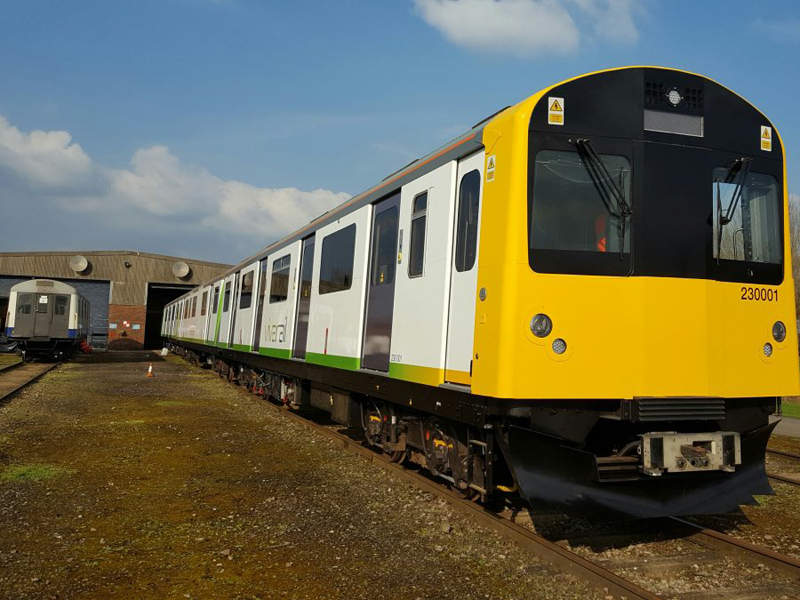
Currently only one battery 230 for Greenford (or anywhere in the UK ?). I can guess the only way a spare 230 will be procured is if other branches use the same 230s, fingers crossed. There has never irrc been a spare unit for Greenford sat around nearby. Might be nice if the frequency was doubled thus requiring two 230s and thus a bit of resilience.
Are GWR actually thinking of more battery 230s - I thought/assumed that it was just a test bed of the charging tech, and production versions would be licensed to be built into an Aventra or similar?
And that was my opinion even before Vivarail went bust. If more 230s were contemplated GWR/DfT would be snapping up unconverted ones from the liquidator before they get scrapped.
What about the Island Line? Transfer it to GWR and trail FastCharge with the five 484's which no doubt will be sat in Ryde St Johns depot rusting away since Vivarail collapsed which had lead to one operator to suspend usage.
Are GWR actually thinking of more battery 230s - I thought/assumed that it was just a test bed of the charging tech, and production versions would be licensed to be built into an Aventra or similar?
And that was my opinion even before Vivarail went bust. If more 230s were contemplated GWR/DfT would be snapping up unconverted ones from the liquidator before they get scrapped.
The Class 321 Renatus Fleet of electric trains could become a Battery Electric Multiple Unit (BEMU) thanks to a new deal between Eversholt Rail and Vivarail.
www.railadvent.co.uk
But using new trains, like Aventras, would be better long term?
I agree that removing OHLE and replacing them with battery trains is a backwards step (unless battery technology improves in the future), but the Abbey Line could be an exception.
There is only 1 train every 45 minutes, so it is probably one of the least busy electrified lines in the country. Quite a lot of unelectrified lines have more intensive services, so I am not 100% convinced it should have been electrified in the first place.
The turnrounds on the Abbey Line are quite short, it'd be difficult to maintain the charge without slackening the frequency, and the debate about whether or not it would be good to go to 1tph is for another thread. Unless the OLE is causing problems, removing it will be more expensive than leaving it in place.
Whilst it is technically possible, I'm not convinced the 230s will work on the Windsor line.
They have half the capacity of a 165, and Windsor is the busiest of the Thames Valley branches
Are GWR actually thinking of more battery 230s - I thought/assumed that it was just a test bed of the charging tech, and production versions would be licensed to be built into an Aventra or similar?
And that was my opinion even before Vivarail went bust. If more 230s were contemplated GWR/DfT would be snapping up unconverted ones from the liquidator before they get scrapped.
Given Vivarail have gone bust and there aren't many more D-stock trains left to convert, I suspect the technology not the train is what's being trialled here. Prove the concept and you can integrate it into a standard 4-car EMU quite happily for the Henley and Windsor branches, with the Bourne End/Marlow branch being a little harder as it needs a 2-car to make the reversal.
The turnrounds on the Abbey Line are quite short, it'd be difficult to maintain the charge without slackening the frequency, and the debate about whether or not it would be good to go to 1tph is for another thread. Unless the OLE is causing problems, removing it will be more expensive than leaving it in place.
Given Vivarail have gone bust and there aren't many more D-stock trains left to convert, I suspect the technology not the train is what's being trialled here. Prove the concept and you can integrate it into a standard 4-car EMU quite happily for the Henley and Windsor branches, with the Bourne End/Marlow branch being a little harder as it needs a 2-car to make the reversal.
Just fit the kit on to a tram-train or something similar. Stadler have a mini power-pack design that could probably do the job and their GTW 2/6 articulated railcar which uses it is 41 metres long, so would fit at Bourne End
Just fit the kit on to a tram-train or something similar. Stadler have a mini power-pack design that could probably do the job and their GTW 2/6 articulated railcar which uses it is 41 metres long, so would fit at Bourne End
Given Vivarail have gone bust and there aren't many more D-stock trains left to convert, I suspect the technology not the train is what's being trialled here. Prove the concept and you can integrate it into a standard 4-car EMU quite happily for the Henley and Windsor branches, with the Bourne End/Marlow branch being a little harder as it needs a 2-car to make the reversal.
Yes, that's exactly it, it's a trial of the fast charging equipment. The battery technology itself was proven while the unit was running around for COP26 but was reliant on being able to plug the train in overnight to recharge it, so the trial is aimed overcoming that hurdle. There are no plans at this moment in time to introduce 230s anywhere else on the GWR network, although the assets that GWR bought from Vivarail's administrators included a number of D78 vehicles, so you never know!
That looks like a very suitable option for a number of GWR branches, especially if the central power car is swappable for DMU/Battery/EMU configurations. Would need tweaking to fit in the UK loading gauge but nothing that hasn't been done before.
Yes, that's exactly it, it's a trial of the fast charging equipment. The battery technology itself was proven while the unit was running around for COP26 but was reliant on being able to plug the train in overnight to recharge it, so the trial is aimed overcoming that hurdle. There are no plans at this moment in time to introduce 230s anywhere else on the GWR network, although the assets that GWR bought from Vivarail's administrators included a number of D78 vehicles, so you never know!
If fully charged overnight can the 230 reach Reading depot from West Ealing for regular unit swaps? It would be inefficient but possibly still better than local maintenance if the trial becomes production and spreads to other routes (unless they are given pantographs).
Have they published a predicted range on full charge, and range per minute for the fast charger?
If fully charged overnight can the 230 reach Reading depot from West Ealing for regular unit swaps? It would be inefficient but possibly still better than local maintenance if the trial becomes production and spreads to other routes (unless they are given pantographs).
Have they published a predicted range on full charge, and range per minute for the fast charger?
Class 230 D-Train is being developed by Vivarail through the conversion of retired London Underground D78 Stock. The new trains…
www.railway-technology.com
40miles/64km on full charge, 8 minutes on the fast charger to refill (so 5miles/min, oversimplifying). It's 30 miles or so from West Ealing to Reading, so yes they can rotate although it'll need to charge at Reading.
Class 230 D-Train is being developed by Vivarail through the conversion of retired London Underground D78 Stock. The new trains…
www.railway-technology.com
40miles/64km on full charge, 8 minutes on the fast charger to refill (so 5miles/min, oversimplifying). It's 30 miles or so from West Ealing to Reading, so yes they can rotate although it'll need to charge at Reading.
Thanks. I await someone to do the maths then start a speculative thread on which other lines this would work on….but they will need to know turnaround times!
As there is a backup 165 I assume they are happy for other stock to go over the charger, despite it being a trial version? I will be interested in how reliable the interlocks will be; whether they would survive being on different lines’ through platforms regularly used by other services.
Thanks. I await someone to do the maths then start a speculative thread on which other lines this would work on….but they will need to know turnaround times!
As there is a backup 165 I assume they are happy for other stock to go over the charger, despite it being a trial version? I will be interested in how reliable the interlocks will be; whether they would survive being on different lines’ through platforms regularly used by other services.
I don't see why there'd be a problem with any other service - the big switch will presumably be magnet/induction based and use a specific setup so that it isn't live unless the right train is present. Even on 3rd rail areas it shouldn't present a massive problem as the central rail will be earthed until a batter unit comes to charge.
40miles/64km on full charge, 8 minutes on the fast charger to refill (so 5miles/min, oversimplifying). It's 30 miles or so from West Ealing to Reading, so yes they can rotate although it'll need to charge at Reading.
It's actually turning out to be potentially more than that - Bletchley to Bedford and return (about 35 miles) was using about 60% battery power if I remember correctly.
The mileage per se is not the only factor though: 40 miles non-stop with periods of coasting takes less battery power than 40 miles on a stop-start metro-style stopping pattern.
== Doublepost prevention - post automatically merged: ==
Optical sensors on the platform face reading markers on the bogies to check the train is lined up correctly, and a wifi handshake before the charging circuit switches on.
== Doublepost prevention - post automatically merged: ==
It's actually three rails in the 4ft, although each vehicle will only be in contact with two of them when charging. Two shoes on the train, one +ve, one -ve, with one mounted centrally and the other offset. Each driving motor has its own batteries and therefore its own charging shoes, but each DM vehicle faces the opposite way. So there are 3 rails: one centrally in the 4ft, then two more either side, with the 'offset' shoe on the train contacting with the left or right hand charging rail, depending on the orientation of the vehicle.
Sounds like something dirt will be an issue with?
Something I am not clear about re the future use case - is this fast charging tech quicker than via a pantograph? ie is it better than wiring the bay platform?
We are aware of an issue with emails from the Forum to Microsoft-based email accounts (hotmail/outlook/live.com email addresses). This is being looked into currently, thanks for your patience meanwhile.