
-
Our new ticketing site is now live! Using either this or the original site (both powered by TrainSplit) helps support the running of the forum with every ticket purchase! Find out more and ask any questions/give us feedback in this thread!
You are using an out of date browser. It may not display this or other websites correctly.
You should upgrade or use an alternative browser.
You should upgrade or use an alternative browser.
What Took Air Conditioning So Long?
- Thread starter Doomotron
- Start date
- Status
- Not open for further replies.

Sponsor Post - registered members do not see these adverts; click here to register, or click here to log in
R
RailUK Forums
158s, 159s, 166s and 442s were fitted with not entirely reliable air conditioning prior to privatisation.In the UK air conditioned trains have been around for decades, but only became common in non-InterCity stock after privatisation.
Cost is one reason more trains weren't so fitted, as is the power requirement, and the issues with opening doors.
I'd imagine it simply wasn't felt needed on trains with frequent stops.
It seems possible that had a derivative of the 170 been largely aimed at local services it may have had opening windows. 376s didn't get air conditioning because it was felt that it wouldn't work with the frequent door opening cycles. As we know, this was disproved with the 378s.
Trains making frequent station calls with associated doors opening and closing meant the benefit of air-con was quickly lost.
Arguably on outer-suburban trains opening windows are better than air-con. A ride at 100mph on the ECML in a much missed class 365 on a hot summers day with the windows open was rather good
Arguably on outer-suburban trains opening windows are better than air-con. A ride at 100mph on the ECML in a much missed class 365 on a hot summers day with the windows open was rather good

bramling
Veteran Member
Trains making frequent station calls with associated doors opening and closing meant the benefit of air-con was quickly lost.
Arguably on outer-suburban trains opening windows are better than air-con. A ride at 100mph on the ECML in a much missed class 365 on a hot summers day with the windows open was rather good
It’s curious the 365s didn’t get A/C from new considering stuff like the 158s and 166s did, though for that we should be thankful as most 1990s A/C proved very unreliable. One presumes the reason for this was simply that the 365s was a relatively rushed development of the 465s which presumably didn’t get it as they were a suburban train.
Personally I’m not fussed about having A/C, and I’m glad the 365s didn’t get it. Our climate is such that it’s only really valuable on a very small number of days per year, and I find this is outweighed by the number of days when air conditioned trains are either hot and stuffy, or when the A/C fails altogether.
I found the 365s perfect, though there were a number of nuances, not least the issue found on many types of train where the heating thermostats were influenced by windows being open. Again I found this worked to my advantage as I quite like having heating on and windows open, and experience showed the table bay at the trailing end of the driving car on the right-hand side facing direction of travel offered the best position for this, as there was a powerful fan heater directly facing this bay which could be made to come on by opening a specific window.
The 365 arrangements weren’t universally popular though, as I know there were a *lot* of complaints about excessive heating, though personally I didn’t find this a problem so long as windows were open. Indeed being someone who at one point often travelled very early in the morning I was very appreciative of good heating combined with the potential for fresh air.
Also worth noting the BREL Networkers, including the 365s, had the ball vents. Personally I found these more of an irritant, though observation showed people did use them. They were quite useful whilst waiting to depart from the somewhere like King’s Cross, though on the 365s many were broken and people often stuffed newspaper in them as a workaround. Again, presumably these combined with the opening windows were felt adequate.

Egg Centric
Established Member
I'm not so sure that the root answer to this question should focus on UK trains so much as UK attitude to A/C. Basically, every decade or so we become richer and our standards increase. The improvements to rail are just a foreshadowing.
In other words - you could ask the same about our houses, never mind trains. I think it's under 2% of housing in the UK that has air con. Speaking for my wife and I, we still have a couple of portable air conditioning units from when we lived in a 1 bed flat in the South East; once we were in a position to buy a house then had it had been down there then we'd undoubtedly have shelled out on a proper air con install. Up here it's not hot enough to need it when we have the units; during last summer's heat wave running them along with keeping curtains and windows shut was enough to keep a 3 bed pleasant.
But most people are unfortunate enough to live in the South East and with global warming and increased insulation efficiency, as well as increasing work from home and a fattening population I expect air conditioning to become much more popular residentially.
In other words - you could ask the same about our houses, never mind trains. I think it's under 2% of housing in the UK that has air con. Speaking for my wife and I, we still have a couple of portable air conditioning units from when we lived in a 1 bed flat in the South East; once we were in a position to buy a house then had it had been down there then we'd undoubtedly have shelled out on a proper air con install. Up here it's not hot enough to need it when we have the units; during last summer's heat wave running them along with keeping curtains and windows shut was enough to keep a 3 bed pleasant.
But most people are unfortunate enough to live in the South East and with global warming and increased insulation efficiency, as well as increasing work from home and a fattening population I expect air conditioning to become much more popular residentially.

TT-ONR-NRN
Veteran Member
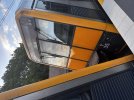
Roughly about the same time as BR were rolling out knackered old 455s relying on openable windows, NSW CityRail (now Sydney Trains) introduced these Tangaras, which have rather strong air-conditioning. Tbh, it’s needed far more over here than it was in England, but considering both are from the 80s these look and feel far more modern, especially externally.

Photo shows an 80s Sydney Trains T Set “Tangara” at Cronulla, in silver and yellow colours. The day is sunny with a few clouds and the platform is long and sloping.
Photo shows an 80s Sydney Trains T Set “Tangara” at Cronulla, in silver and yellow colours. The day is sunny with a few clouds and the platform is long and sloping.
Attachments
To be fair, it's not always the fault of the AC unit's reliability itself. Some of the older units were designed to run on now-banned CFCs, for which the replacement gases are more prone to leaking and often simply aren't as effective as refrigerants (but they also don't destroy the ozone layer, so the trade-off is definitely worth it!)It’s curious the 365s didn’t get A/C from new considering stuff like the 158s and 166s did, though for that we should be thankful as most 1990s A/C proved very unreliable.
I find the late 90s era units on the earliest electrostars/turbostars absolutely fine. Heck on Southern my complaint is often that they have it too cold, I shouldn't need to wear a jumper when it's nearly 30°C outside!
Bletchleyite
Veteran Member
I don't think introduction of air conditioning was particularly behind other countries on rail. On bus we are way behind, but that's because of the different commercial situation here - bus companies don't want to do anything that costs money, particularly things that cost a lot of money, as adding aircon and double glazing (both needed, really) to a double decker tends to increase weight to the point that a third axle is needed. Plus there's the maintenance issue, which tends to be cut to the bone - "if the wheels turn, it goes out" appears to be a common bus mantra here.
What I do find very much behind is the way trains use a "cook your ankles, freeze your head" approach using separate systems rather than heating and conditioning air to the correct temperature (perhaps using heat pump tech) and introducing that air throughout the coach. This is not only better in comfort terms, but avoids the need for the conduit at foot level which often takes half the aisle seat's foot space.
What I do find very much behind is the way trains use a "cook your ankles, freeze your head" approach using separate systems rather than heating and conditioning air to the correct temperature (perhaps using heat pump tech) and introducing that air throughout the coach. This is not only better in comfort terms, but avoids the need for the conduit at foot level which often takes half the aisle seat's foot space.
I don't think air conditioning is necessary on non-Intercity stock in this country, and especially not on commuter stock (for example, the 323 units in my area) and would personally prefer some kind of opening window system for these. Maybe I'm behind the times, but for sure being stuck on a train with non-functioning air conditioning and windows which don't open is the worst of all worlds, 158s for example. Yes, opening windows can cause problems of their own but in warmer weather they're effective in creating a flow of (warm) air which is usually tolerable on a stopping local service.
edwin_m
Veteran Member
Adtranz (as it then was) actually produced a prototype of something called the Turbostar Traveller, which was missing aircon and various other features such as overhead racks. It was exhibited at one of the trade shows in the NEC but eventually re-made and sold as one car of a standard 170.It seems possible that had a derivative of the 170 been largely aimed at local services it may have had opening windows. 376s didn't get air conditioning because it was felt that it wouldn't work with the frequent door opening cycles. As we know, this was disproved with the 378s.
A couple of factors I wonder about but these are only guesses:Trains making frequent station calls with associated doors opening and closing meant the benefit of air-con was quickly lost.
Arguably on outer-suburban trains opening windows are better than air-con. A ride at 100mph on the ECML in a much missed class 365 on a hot summers day with the windows open was rather good
- The traditional slider vents were pretty good at producing, as the labels on them said, "draught-free ventilation" when opened only between the lines. But from about 175 onwards new designs had hopper vents, presumably on safety grounds due to the risk of people leaning out (why couldn't they just keep the sliding vents but restrict their opening to the draught-free and safe limit?). Hopper vents were and are really bad at providing cooling for the person sitting next to them who has control over the opening and closing, but really excellent at producing draughts down the other end of the saloon.
- As mobile phones became more common, it may have been more important to provide a quiet interior. A train at speed with all the windows open can be incredibly noisy, especially with underfloor engines or corrugated rails and hopper windows.
- These were bad enough in a 156 at 75mph, but the 158 was a 90mph train intended for some quite long distance journeys.
There's also the issue that many crews aren't trained on how to shut them down properly, as discussed in various other topics. The Electrostar/Turbostar (and I think the Desiro too) units have all the mechanics within a single package that can be lifted out and replaced as a unit.To be fair, it's not always the fault of the AC unit's reliability itself. Some of the older units were designed to run on now-banned CFCs, for which the replacement gases are more prone to leaking and often simply aren't as effective as refrigerants (but they also don't destroy the ozone layer, so the trade-off is definitely worth it!)
I find the late 90s era units on the earliest electrostars/turbostars absolutely fine. Heck on Southern my complaint is often that they have it too cold, I shouldn't need to wear a jumper when it's nearly 30°C outside!
bramling
Veteran Member
I'm not so sure that the root answer to this question should focus on UK trains so much as UK attitude to A/C. Basically, every decade or so we become richer and our standards increase. The improvements to rail are just a foreshadowing.
This is an interesting take and may well be a good answer to the original question. However does it mean that, as we now seem to be getting poorer as a country in managed decline, that we might just see non air-conditioned trains again within a generation?!
Egg Centric
Established Member
This is an interesting take and may well be a good answer to the original question. However does it mean that, as we now seem to be getting poorer as a country in managed decline, that we might just see non air-conditioned trains again within a generation?!
I'm more optimistic about the long term prognosis than that (we don't really have any problems a bit of legalised euthanasia can't solve, particularly if made compulsory for anyone who objects to planning applications
 ) but I agree in a sense - is it too late to descope it from some of the New Tube for Londons for example? Probably not.
I travelled regularly on 313s and 455s this summer. If you think non-Intercity trains don't need AC you are sorely mistaken!I don't think air conditioning is necessary on non-Intercity stock in this country, and especially not on commuter stock (for example, the 323 units in my area) and would personally prefer some kind of opening window system for these. Maybe I'm behind the times, but for sure being stuck on a train with non-functioning air conditioning and windows which don't open is the worst of all worlds, 158s for example. Yes, opening windows can cause problems of their own but in warmer weather they're effective in creating a flow of (warm) air which is usually tolerable on a stopping local service.
Shaw S Hunter
Established Member
Not mentioned so far is the huge advantage of air-conditioning in winter. The "conditioning" factor is not just about temperature control but also about humidity. A/C in winter can significantly improve the travel environment by dehumidifying all that dampness brought onto trains by its passengers during wet weather. It also reduces damp related deterioration of seating and onboard equipment. Well worth it.
Bletchleyite
Veteran Member
Not mentioned so far is the huge advantage of air-conditioning in winter. The "conditioning" factor is not just about temperature control but also about humidity. A/C in winter can significantly improve the travel environment by dehumidifying all that dampness brought onto trains by its passengers during wet weather. It also reduces damp related deterioration of seating and onboard equipment. Well worth it.
Indeed so. People often say "buses smell of wee". They don't, but what they do smell of is damp and mould, because in winter they never really dry out properly. A combination of double glazing and aircon solves that completely.
Dr_Intoxicated
Member
- Joined
- 5 Jan 2014
- Messages
- 566
AbsolutelyI travelled regularly on 313s and 455s this summer. If you think non-Intercity trains don't need AC you are sorely mistaken!

Mikey C
Established Member
- Joined
- 11 Feb 2013
- Messages
- 8,259
I find the Networkers in winter have that sort of smell as well!Indeed so. People often say "buses smell of wee". They don't, but what they do smell of is damp and mould, because in winter they never really dry out properly. A combination of double glazing and aircon solves that completely.

gabrielhj07
Established Member
Not just in winter!I find the Networkers in winter have that sort of smell as well!
I'm not so sure that the root answer to this question should focus on UK trains so much as UK attitude to A/C. Basically, every decade or so we become richer and our standards increase. The improvements to rail are just a foreshadowing.
In other words - you could ask the same about our houses, never mind trains. I think it's under 2% of housing in the UK that has air con. Speaking for my wife and I, we still have a couple of portable air conditioning units from when we lived in a 1 bed flat in the South East; once we were in a position to buy a house then had it had been down there then we'd undoubtedly have shelled out on a proper air con install. Up here it's not hot enough to need it when we have the units; during last summer's heat wave running them along with keeping curtains and windows shut was enough to keep a 3 bed pleasant.
But most people are unfortunate enough to live in the South East and with global warming and increased insulation efficiency, as well as increasing work from home and a fattening population I expect air conditioning to become much more popular residentially.
Not wanting to go off topic too far, however the user of cooling in homes is likely to increase over time, although with most new builds looking like their going to have air source heat pumps as standard in the not too distant future I could imagine running them backwards to cool a house could become standard in time.
A full AC system in a home is often overkill for most given the limited use that it would otherwise have.
AC in cars is more useful than a home at they often get hot parked and the benefits of removing moisture also makes it useful for more of the time. Likewise with climate control seeing it to a temperature, it means that longer journeys are more pleasant and require a lot less adjustment to the fans hot/cold dials.
As for trains, BR would have had budget constraints and so would have been careful about what they spend whilst after privatisation there was a desire for improvements to rolling stock and so AC was an easy win.

Halish Railway
Established Member
Try travelling on an pre-Privatisation train fitted with air conditioning in 25 degree and more weather - It's not a nice experience due to their unreliability, ineffectiveness and lack of maintenance; I've been on many toasty MK3s and 158s.I travelled regularly on 313s and 455s this summer. If you think non-Intercity trains don't need AC you are sorely mistaken!
Roughly about the same time as BR were rolling out knackered old 455s relying on openable windows, NSW CityRail (now Sydney Trains) introduced these Tangaras, which have rather strong air-conditioning. Tbh, it’s needed far more over here than it was in England, but considering both are from the 80s these look and feel far more modern, especially externally.
View attachment 129277
Photo shows an 80s Sydney Trains T Set “Tangara” at Cronulla, in silver and yellow colours. The day is sunny with a few clouds and the platform is long and sloping.
Comeng trains were introduced in Melbourne in 1981 and were fitted with airconditioning. The picture below shows them in their current livery.

bramling
Veteran Member
Indeed so. People often say "buses smell of wee". They don't, but what they do smell of is damp and mould, because in winter they never really dry out properly. A combination of double glazing and aircon solves that completely.
A lot of this could be solved with the combination of heating and fresh air, though. Something like a 365 never had this issue as you’d have the heating running, including when stabled.
My older BMW gets the occasional musty smell when it sits still for a while now it doesn’t see as much use as in past times, however just starting it up and taking it for a relatively short drive with the heating running is more than enough to address the issue, so it’s only an issue when something arises which prevents the occasional outing. I’d presume the bigger issue with buses is that they sit cold all night.

Ashley Hill
Established Member
When 158s first entered service in the west of England we were trained how to reset the air conditioning should it fail. Later in their life the cupboard locks were changed and guards were told not to interfere with them no matter how hot/cold the unit was. The EBAC system is far better than the Temperature ones and were easier to reset.There's also the issue that many crews aren't trained on how to shut them down
Bletchleyite
Veteran Member
A lot of this could be solved with the combination of heating and fresh air, though. Something like a 365 never had this issue as you’d have the heating running, including when stabled.
My older BMW gets the occasional musty smell when it sits still for a while now it doesn’t see as much use as in past times, however just starting it up and taking it for a relatively short drive with the heating running is more than enough to address the issue, so it’s only an issue when something arises which prevents the occasional outing. I’d presume the bigger issue with buses is that they sit cold all night.
To be fair, the forced air ventilation required by TfL spec largely does solve it without aircon just by keeping the air moving.
Mikey C
Established Member
- Joined
- 11 Feb 2013
- Messages
- 8,259
Houses have walls mainly made of brick or concrete, and small windows that can be covered with curtains, so the direct rays can be blocked out. By contrast, cars have lots of glass which has to stay uncovered so that you can see out!Not wanting to go off topic too far, however the user of cooling in homes is likely to increase over time, although with most new builds looking like their going to have air source heat pumps as standard in the not too distant future I could imagine running them backwards to cool a house could become standard in time.
A full AC system in a home is often overkill for most given the limited use that it would otherwise have.
AC in cars is more useful than a home at they often get hot parked and the benefits of removing moisture also makes it useful for more of the time. Likewise with climate control seeing it to a temperature, it means that longer journeys are more pleasant and require a lot less adjustment to the fans hot/cold dials.
As for trains, BR would have had budget constraints and so would have been careful about what they spend whilst after privatisation there was a desire for improvements to rolling stock and so AC was an easy win.
Aircon technology has improved, and people's expectations have changed too. When an ordinary family car has had aircon for 20 years, and coaches have had aircon as the norm since the 70s, not having aircon on trains really stands out, and not in a good way. The TfL 378s, followed by the S stock were an admission that aircon is now not an optional extra, but the default, even on urban trains used for short journeys.

Adtranz (as it then was) actually produced a prototype of something called the Turbostar Traveller, which was missing aircon and various other features such as overhead racks. It was exhibited at one of the trade shows in the NEC but eventually re-made and sold as one car of a standard 170.
That's interesting, any information of photos available anywhere?
edwin_m
Veteran Member
Not that I'm aware - I saw it at said trade show. I think Modern Railways had a piece on it - would be 1996 or 1997 I think.That's interesting, any information of photos available anywhere?

Pakenhamtrain
Established Member
The original AC on a Comeng had a tendency to fail above 34 degrees. After the high profile failures during Feb 2009 they did replace them.Comeng trains were introduced in Melbourne in 1981 and were fitted with airconditioning. The picture below shows them in their current livery.
- Status
- Not open for further replies.