I though posing for photographs is all she's ever done, and certainly from what we've now seen is the only thing she's good at (although that's perhaps open to interpretation, because most photos are just her recreating a Margaret Thatcher photo).

-
Our new ticketing site is now live! Using either this or the original site (both powered by TrainSplit) helps support the running of the forum with every ticket purchase! Find out more and ask any questions/give us feedback in this thread!
You are using an out of date browser. It may not display this or other websites correctly.
You should upgrade or use an alternative browser.
You should upgrade or use an alternative browser.
Rishi Sunak and the Conservative Party.
- Thread starter Cowley
- Start date
- Status
- Not open for further replies.
Sponsor Post - registered members do not see these adverts; click here to register, or click here to log in
R
RailUK Forums

Wait, there is a left-wing economic establishment? Why haven't they been seizing the means of production for the benefit of the workers?Get the popcorn out:
View attachment 128289
Image of The Sunday Telegraph front page with the headline: "Truss: I was brought down by the left wing economic establishment".

johnnychips
Established Member
I was not aware that the financial markets were a ‘left-wing establishment’. Are you sure that paper isn’t a fake?
Edit: @Yew , I see we were thinking on the same lines!
Edit: @Yew , I see we were thinking on the same lines!

brad465
Veteran Member
Pity she didn't recreate the one photo of Thatcher she deserved to recreate, the one of Thatcher crying in the car out of Downing Street (obviously she left No.10, but avoided that particular manner).I though posing for photographs is all she's ever done, and certainly from what we've now seen is the only thing she's good at (although that's perhaps open to interpretation, because most photos are just her recreating a Margaret Thatcher photo).
Nicholas Lewis
Established Member
what utter tosh she was bought down by her own party but hey let her join Boris in the mix as hopefully the Tories will fracture as a result and we can be rid of them for a generationGet the popcorn out:
View attachment 128289
Image of The Sunday Telegraph front page with the headline: "Truss: I was brought down by the left wing economic establishment".
Wait, there is a left-wing economic establishment? Why haven't they been seizing the means of production for the benefit of the workers?
I was not aware that the financial markets were a ‘left-wing establishment’. Are you sure that paper isn’t a fake?
Edit: @Yew , I see we were thinking on the same lines!
I would screenshot it, but that could be argued that I'd also managed to find a fake BBC image, however the link below for to the BBC Papers article which has the same image on the front of the Telegraph (of course everyone knows the BBC is left wing so they've probably created the fake):

Newspaper headlines: Truss 'never given a chance' and 'zero chance' of meeting hospital pledge
Liz Truss's first account of her time as PM and questions over new hospitals being built lead the front pages.
 www.bbc.co.uk
Newspaper headlines: Truss 'never given a chance' and 'zero chance' of meeting hospital pledge
- Published
- 17 minutes ago

By BBC News
Staff

Image caption,
The Sunday Telegraph leads on an exclusive essay from former prime minister Liz Truss, who has made her first public remarks since she resigned as leader in September. Reflecting on her 49-day tenure - the shortest in UK history - Ms Truss wrote that she wasn't "blameless" for the economic chaos that ensued following the mini-budget, but she was never given "a realistic chance" to enact her policies.
Further on it goes on to say:
A photograph of Liz Truss appearing relaxed, sat on a desk, features on the front page of the Sunday Telegraph. She told the paper she was brought down as prime minister by the "left-wing economic establishment". She said successive Conservative governments didn't lay the groundwork for what she sought to do - because they failed to argue for a lower-tax, more deregulated economy. She criticised what she calls a "concerted effort by international actors" - including US President Joe Biden and the IMF - to challenge her plans for growth. Looking back on her time in office, Ms Truss says "soul-searching has not been easy".
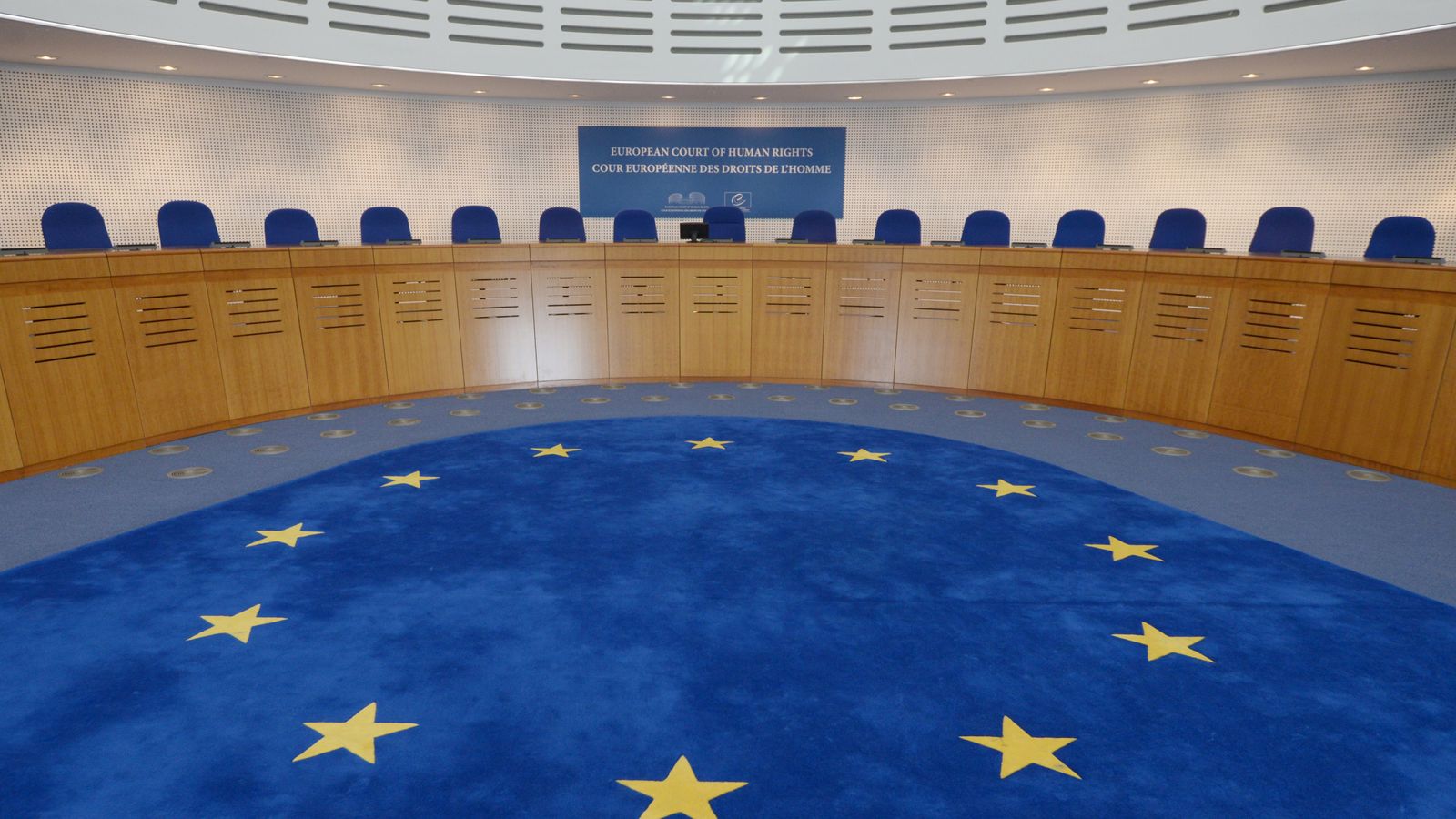
Also from that link the Times is reporting that the UK is looking to leave the European Court of Human Rights so that the issue of small boats can be dealt with:
The Sunday Times claims Rishi Sunak is prepared to pull the UK out of the European Convention on Human Rights - if judges in Strasbourg fail to back the government's changes to immigration laws. The newspaper said the Prime Minister was finalising plans that will "push the boundaries of what is legally possible". If the laws are blocked by the European Court of Human Rights, he's said to be willing to "deploy the nuclear option before the general election" - by putting withdrawing from the Convention at the heart of the Conservative manifesto.
It does of course make we wonder what had the ECHR had ever done for the UK:
(Link to a video which includes Patrick Stewart as PM with others giving details of what the UK has benefited from, he also suggests that they wouldn't like it if it was the UK setting the rules only to be told that it was pretty much the UK that set the rules in the first place).
Edit:
The left wing Sky News* has linked Churchill with the ECHR, in an article last year claiming:
What is the European Court of Human Rights and why does it trump British justice?
The prime minister has suggested domestic laws could be changed to keep the government's Rwanda plan alive - but it could still face challenges from the European Court of Human Rights. Sky News takes a look at what the court is as some Tories call on the UK to withdraw its membership.
Even before the war had ended, in 1943, Winston Churchill had proposed a Council of Europe to ensure that the continent would never again see the sort of injustices that allowed the Nazis to take over Germany and then impose fascism across the continent.
Maybe Johnson needs to get his Churchill book published to counter this sort of nonsense.
* If should be noted that in YouGov polling other right wingers she that Sky News favours the left:
https://yougov.co.uk/topics/politic...nservatives-the-right?crossBreak=conservative
(If you link through to the results which shows that there's a bias towards the left, please ignore the fact that even amongst Tory voters that 28% think that is neutral or the 48% who don't know but focus on the 9% who think it's Is generally much more favourable towards Labour and/or the left or the 9% who think it's generally little more favourable towards Labour and/or the left and definitely don't look at the overall picture)
Last edited:
I think that Sunak's desire to avoid mingling with people to whizz over their heads in private helicopters to get between London and his constituency home (Richmond) is going to hurt him. The Guardian reports that he's spent about £16,000 - of his own money, to be sure - in November and December (https://www.theguardian.com/politic...ousands-on-helicopter-trips-since-becoming-pm). Add to this his desire to fly around the UK at our expense on business trips.
Maybe people don't care - maybe they take the view that it's OK for him to spend his money this way if that's what he wants.
I just don't feel he's going to have any claim to "represent" people when it comes to the next election when he does this sort of thing - maybe he's read the tea leaves and given up any idea of winning it by now, but even if he doesn't expect to win he should be thinking of making the loss less bad than it otherwise would be.
== Doublepost prevention - post automatically merged: ==
Liz Truss this weekend has demonstrated her true colours and I think and hope this means that other politicians will be distancing themselves from her even more than they have been.
She is a hopeless politician who has never achieved anything significant other than her own self-promotion, and she's a dreadful person to work for.
But now she's invented a "mandate" for what she did as prime minister. No, she was led by silly outdated dogma because the only vote she won was from a totally unrepresentative tiny electorate. She also suddenly appears to dislike free markets, because apparently the failure of her policies was caused by a left-wing conspiracy which undermined them.
It's laughable if it weren't for the fact that she became prime minister on the back of this sort of nonsense once already. I hope this means she has diminished her chances (further) of ever becoming prime minister again.
Maybe people don't care - maybe they take the view that it's OK for him to spend his money this way if that's what he wants.
I just don't feel he's going to have any claim to "represent" people when it comes to the next election when he does this sort of thing - maybe he's read the tea leaves and given up any idea of winning it by now, but even if he doesn't expect to win he should be thinking of making the loss less bad than it otherwise would be.
Rishi Sunak
Sunak spends thousands on helicopter trips since becoming PM
Commutes from London to Richmond constituency by private helicopter would have taken about 2hr 15 by train
Jessica Elgot Deputy political editor
@jessicaelgot
Sun 5 Feb 2023 21.10 GMT
Rishi Sunak has taken private helicopter trips to his constituency in North Yorkshire costing thousands of pounds since he became prime minister, the Guardian understands.
The commute to Richmond from a London heliport is likely to raise further questions about the prime minister’s commitment to tackling the climate crisis.
Sunak is understood to have used private helicopters from London on dates in November and December, costing about £16,000. The trips were privately funded.
No 10 did not dispute the use of helicopters and said the prime minister paid for all his own travel that did not pertain to government business. A spokesperson said: “We don’t comment on the prime minister’s travel.”
Northallerton, a town near to Sunak’s constituency home, is on the mainline from London Kings Cross. There are usually more than 30 trains a day and the 200-mile journey takes about two hours and 15 minutes. Booked a day in advance, a single journey would cost about £87.
The prime minister has previously been criticised for his use of taxpayer-funded private jets to visit different parts of the country as prime minister, including three flights over the course of a 10-day period.
In January, the prime minister flew on a 14-seat aircraft to Scotland, then to an event in Leeds and then days later took the same jet to an event in Lancashire for a public Q&A after his levelling-up funding announcement.
Hiring the jet would cost more than £2,500 an hour on the commercial market, according to the aircraft
purchasing advisers Conklin and de Decker.
Downing Street has previously defended the prime minister’s travel arrangements as making the best use of his time, denying that rail reliability was a factor in his decisions.
The government has pledged to cut carbon emissions in its drive to reach net zero by 2050. Part of that includes reducing emissions from the domestic aviation market as part of a programme called “jet zero”, aimed at reducing the 7% of emissions that come from the aviation sector.
The suggestion that Sunak has taken private helicopters home to his constituency is also likely to add to the public perception that the prime minister’s net worth of £730m means he is out of touch with everyday concerns, though the majority of his wealth comes through his wife, Akshata Murty, a tech heiress.
In focus groups run by Labour over the last fortnight this has emerged as a key criticism of the prime minister, fuelled by a story last year that Murty had non-dom tax status.
Sunak has admitted using private healthcare, though says he is registered with an NHS GP. The Guardian revealed in November that he was registered with a private clinic in west London clinic that charges £250 for a consultation.
== Doublepost prevention - post automatically merged: ==
Liz Truss this weekend has demonstrated her true colours and I think and hope this means that other politicians will be distancing themselves from her even more than they have been.
She is a hopeless politician who has never achieved anything significant other than her own self-promotion, and she's a dreadful person to work for.
But now she's invented a "mandate" for what she did as prime minister. No, she was led by silly outdated dogma because the only vote she won was from a totally unrepresentative tiny electorate. She also suddenly appears to dislike free markets, because apparently the failure of her policies was caused by a left-wing conspiracy which undermined them.
It's laughable if it weren't for the fact that she became prime minister on the back of this sort of nonsense once already. I hope this means she has diminished her chances (further) of ever becoming prime minister again.
Last edited:
I was not aware that the financial markets were a ‘left-wing establishment’. Are you sure that paper isn’t a fake?
Edit: @Yew , I see we were thinking on the same lines!
No, I saw it for real yesterday, sadly.
I suppose giving her the coverage sums up exactly who the Telegraph see their readership as.
And as for the Sunday Times story about Sunak threatening to take the UK out of the European Court of Human Rights - well they're all as rotten as each other. It appears, in my view, that Sunak is attempting to divert people's anger towards immigrants in boats in an effort to cover up his own failings, something the Tories have a long track record of doing, of course.
Last edited:
And read by virtually nobody in the "No, I saw it for real yesterday, sadly.
I suppose giving her the coverage sums up the Telegraph's whole attitude: a supremely pretentious paper aimed at right-wing pseudo-intellectuals.
EDIT "former red wall" I should have said, it's good that others notice these things!
Last edited:
And read by virtually nobody in the "blue wall" constituencies, not that it would make a difference if it were.
"Red wall" surely, I'd imagine the Telegraph gets quite a few reads in the likes of Guildford and Esher!
But you're right in your general point - it will not attract Tory-Lib Dem swing voters in the south, nor Red Wall voters in the north.

The Times (https://www.thetimes.co.uk/article/delusional-liz-truss-could-cost-tories-next-election-g075k0xqx) has a long article. Those who don't support Liz Truss describe her as "delusional" and "The more we hear from her the harder it becomes to win the election." They generally go on to say that low taxes are desirable, but not in the way Liz Truss tried to implement them. A lack of self-awareness is also cited - "A self-aware politician might realise the only thing anyone wants to hear from her is prolonged silence. Self-awareness was not her forte.". I don't disagree with much of this.
I sense a general trend towards delusion and lack of self-awareness not just from her but from other (former) senior members of the government - Nadhim Zahawi for one recently, of course. They're collectively losing the plot and everyone knows it.
I sense a general trend towards delusion and lack of self-awareness not just from her but from other (former) senior members of the government - Nadhim Zahawi for one recently, of course. They're collectively losing the plot and everyone knows it.
POLITICS
‘Delusional Liz Truss could cost Tories next election’
Sunak allies hit out as former PM plots return
Matt Dathan
Home Affairs Editor
Monday February 06 2023, 12.01am, The Times
Allies of Rishi Sunak have branded Liz Truss “delusional” and warned that further interventions will cost the Tories the next election, after she launched a staunch defence of her tax-cutting agenda.
The former prime minister sparked a fresh Tory party civil war by claiming she was never given a “realistic chance” to implement her radical plans.
Breaking her silence on her disastrous 49 days in power with a 4,000-word article for The Telegraph, Truss blamed “a very powerful economic establishment” and implicitly criticised Sunak for increasing taxes as chancellor.
She wrote that his corporation tax increase from 19 to 25 per cent was “counterproductive” and had damaged investment in the UK and “people’s wages”.
No 10 has refused to comment in response, but there are concerns that her return to the political fray will embolden a growing chorus of Conservative MPs calling for Jeremy Hunt, the chancellor, to U-turn on his refusal to announce tax cuts at next month’s budget.
This week Truss will give her first media interview in a sit-down with the Spectator magazine and she will support upcoming interventions on lower tax from the Conservative Growth Group, set up last month, which already has 50 Tory MPs on board.
However, several Conservative MPs condemned Truss for reigniting Tory divisions after last year’s infighting.
One ally of the prime minister said: “The more we hear from her the harder it becomes to win the election.”
Richard Graham, a Conservative MP and one of the prime minister’s trade envoys, said her article was a “mistake” because it reminded voters of Tory incompetence.
He told Times Radio: “I think, for most people in the country, that was a period that they would rather not really remember too clearly. Let’s get on with sorting out the problems in people’s day-to-day lives.”
Another MP who supported Sunak’s leadership campaign said: “I think it’s fantasy world, delusional politics and economics to suggest that her agenda is in any way credible.
“I think Truss and [Kwasi] Kwarteng presided over a disastrous economic policy that cost millions of homeowners in terms of much higher mortgages and the article is a weak attempt to rewrite history.”
“I think all Tories want taxes to be lower but we’ve got to do that in a pragmatic way.”
Another senior Conservative MP and former minister urged her not to repeat her intervention, warning that it would damage the party’s prospects in May’s local elections, saying: “Up and down the country council candidates and MPs are still meeting folks dealing with the real-world consequences of Truss’s time in power, like increases in mortgage rates.
“They will be livid at her lack of self-awareness in reminding the electorate of that nightmare of incompetence literally three months before polling day. A self-aware politician might realise the only thing anyone wants to hear from her is prolonged silence. Self-awareness was not her forte.”
In her article, Truss said while her experience last autumn was “bruising”, she believed that over the medium term her policies would have increased growth and therefore brought down debt.
She also said she had not appreciated the strength of the resistance she would face to her plans — including plans to abolish the 45p top rate of income tax.
“I assumed upon entering Downing Street that my mandate would be respected and accepted. How wrong I was,” she wrote.
Grant Shapps, the business secretary, suggested that her analysis was detached from reality. Asked whether Truss pursued the right approach, he told BBC’s Sunday with Laura Kuenssberg show: “Clearly it wasn’t.”
He added: “I think she’s right about the need for a long term, lower tax. But I think it rubs up against the reality of two or three years of Covid and £400 billion cost of that, followed by a war and the enormous cost and pressures of energy and inflation.”
However, Sir Jake Berry, who served as Conservative party chairman under Truss, defended her right to champion her agenda. He told the BBC: “We are having an active debate about the future tax policy in this country.”
Berry said she was never given a “realistic chance” to put her plan into action and said she had offered the “diagnosis of the disease that is facing the country”, although conceded it “wasn’t delivered in the correct way”.
He said: “I think her point of ‘we need to lower taxes, we need to create a growing economy’ — that’s what people want.”
Simon Clarke, a Truss ally who served as her business secretary, said she had “thought long and hard” about how to make her first intervention. Writing on Twitter, he said that her article “poses important questions about the extent to which it is possible to deliver the benefits of tax cuts/supply side reform and/or spending reductions if it is very hard to score the resultant gains in our economic modelling.”
Kit Malthouse, the former education secretary, said she was right to question the Office for Budget Responsibility’s (OBR) power.
In her article Truss accuses the OBR, the government spending watchdog, of putting fiscal policy in a “straight jacket” because she disagreed with its assessment of her proposed tax cuts.
Truss is expected to make further interventions at a global conference in Japan next week.
John Redwood, another Truss supporter, also defended her and blamed the Bank of England for driving the hike in interest rates on the eve of her disastrous mini budget.
Does it matter what Truss says now?
On the surface, Liz Truss’s claims that a left-wing economic establishment crashed her radical tax-cutting agenda should not matter (Matt Dathan writes).
Her premiership was seen as an unmitigated disaster that plunged the markets into turmoil and destroyed her political credibility. Some even see Truss’s 49 days in power as a useful experiment to show that radical free-market economics do not work in Britain, similar to how Labour hopes that after Jeremy Corbyn it has extinguished any chance of a return by the party’s hard-left.
But in the context of Conservative Party politics, the reality is far more complicated. Her tax-cutting and supply-side reforms still resonate with a significant base.
The recently formed Conservative Growth Group already has 50 MPs signed up as members. There is no suggestion that this group is going to force Jeremy Hunt, the chancellor, to make any sort of about-turn and impose their radical tax-cutting agenda on the country.
But politically, it causes a problem for Sunak. Not because it is a former prime minister speaking out but because she is voicing the thoughts of a big flank of Tory MPs who share her views. It is likely to embolden the growing number of Tory MPs inside and outside of the government who want tax cuts to come sooner rather than later and who argue that Britain’s tax burden, the highest in 70 years, is stifling growth.
How he deals with that is difficult ahead of next month’s budget because Hunt has made clear that it will not include tax cuts. And when the chancellor defies their calls, the next flashpoint will be the local elections. The inevitable Tory losses in May’s poll is likely to trigger more calls for tax cuts.
What Truss has done is reopen the wounds of the party that Sunak had, until now, successfully kept under wraps. And what is clear from the fallout of Truss’s intervention is that those tensions had not gone away but were instead simmering below the surface.
Cross City
Member
Liz Truss piping up is the least of their worries at the moment. It won't make them anymore doomed at the next GE put it that way.
Lost property
On Moderation
- Joined
- 2 Jun 2016
- Messages
- 739
I think we may actually end up owing Truss a debt of gratitude.....for her contribution to, and hastening the demise of, this current Gov't with her return to proving she's totally incompetent along with blaming everybody else...except herself.
There was one report in which she said " regrettably, the Gov't was made a scapegoat "....no kidding !
There was one report in which she said " regrettably, the Gov't was made a scapegoat "....no kidding !
brad465
Veteran Member
Some of the current negative Tory polling will be a legacy of Truss, who essentially did a Black Wednesday 2 to both the country and the party's polling. Johnson never oversaw a 20+ point lead for Labour; Truss's actions saw several 30+ Labour leads, and even though Sunak is supposed to be more competent than both of them, he hasn't seen polling return to even that of Johnson's worst polling. Of course Sunak hasn't helped himself either, particularly with handling Zahawi.
edwin_m
Veteran Member
I'd say it's the cumulative effect of multiple blows to the party's reputation, each of which causes a few of the remaining supporters to defect.Some of the current negative Tory polling will be a legacy of Truss, who essentially did a Black Wednesday 2 to both the country and the party's polling. Johnson never oversaw a 20+ point lead for Labour; Truss's actions saw several 30+ Labour leads, and even though Sunak is supposed to be more competent than both of them, he hasn't seen polling return to even that of Johnson's worst polling. Of course Sunak hasn't helped himself either, particularly with handling Zahawi.
I think we may actually end up owing Truss a debt of gratitude.....for her contribution to, and hastening the demise of, this current Gov't with her return to proving she's totally incompetent along with blaming everybody else...except herself.
There was one report in which she said " regrettably, the Gov't was made a scapegoat "....no kidding !
In the wake of the mini-budget, she complained that the Government was made a 'scapegoat' for developments that had been brewing for some time.
In the article, she claimed her government was made a “scapegoat” for long-brewing instability with liability driven investments, a form of bond market derivatives in which pension funds are heavily invested,
I would be interested in who she believes should have been dealing with these 'developments', she has been round the cabinet table since Cameron's time, she was even Chief Secretary of the Treasury. If it was such an issue why was it not flagged up between the time she put herself forward and when she was elected? There were plenty of debates on finance. Why 'her government' would be made a scapegoat and not Johnson's I don't know unless it was because not even the markets could tolerate the policy that would lead to people earning £1 million being £55, 220 better off, while those earning £20, 000 would be £157 better off at a time of rising rents and mortgage rates as they probably realised it would lead to unrest, and that is before the increase in the country's debt and its impact on the next generation is considered.
She doesn't fully appear to understand the concept of 'scapegoat' - it is entirely innocent, but, by her own admission, she was not entirely blameless (she appointed Kwarteng, may not have discussed the general path of travel, and doesn't seem to disagree with the policy for a start). A more obvious example of a scapegoat would have been if Mark Drakeford had been sacked (I don't think Wales has tax raising powers - apologies if it does).
I'm not too sure I agree with owing her a debt of gratitude, I really don't want a massive Labour majority. The likes of Long-Bailey, Burgon, Butler have not gone away. And I would rather Truss drifted away, her ideas are too divisive - inevitably, the tide will turn and the Tories will come back in, hopefully with a truly one-nation leader, not one whose policies would lead to the heaviest burden being given to those least able to bear it.
First quote: https://www.dailymail.co.uk/news/ar...Truss-ex-PM-claims-not-given-chance-No10.html
Second quote: https://abcnews.go.com/International/wireStory/wasnt-uk-pm-truss-blames-system-failure-96902397
Metro rather amusingly has a cutting from Private Eye. Hislop clearly has some insight into Truss' soul https://www.msn.com/en-gb/news/wor...sedgntp&cvid=ce14c0217d7c43278752b850b0ccfd00
Gloster
Veteran Member
I commented in #643 that I could see her trying to make a comeback on a year or two: she hasn’t waited that long before starting. My suggestion in #1438 of the Liz Truss thread that she might be a left-wing plant just looks that little bit more plausible, even though it was the product of my overheated imagination.
Lost property
On Moderation
- Joined
- 2 Jun 2016
- Messages
- 739
If she was a plant, she'd have to be watered on the hour, every hour...I commented in #643 that I could see her trying to make a comeback on a year or two: she hasn’t waited that long before starting. My suggestion in #1438 of the Liz Truss thread that she might be a left-wing plant just looks that little bit more plausible, even though it was the product of my overheated imagination.

She also has a shorter shelf life than a lettuce!If she was a plant, she'd have to be watered on the hour, every hour...
Yes, Boris and Liz, you are both to blame for your mistakes (https://www.thetimes.co.uk/article/boris-johnson-and-liz-truss-should-fess-up-to-failure-v93w59779).
I knew William Hague at university in 1981, and of course he was going to be a politician, but then he also appeared to be a real human being as well.
He screwed up in 2001 as he says. I don't remember his "mea culpa" from the time, but he stepped down soon enough.
Both Boris Johnson and Liz Truss seem to believe they're not at fault. Well, they are. As he says, there's someone to blame - it's you. I believe that unless and until they do - that they or someone apologises for their errors - the Conservative party won't be in power again. Good, they don't deserve to be.
I knew William Hague at university in 1981, and of course he was going to be a politician, but then he also appeared to be a real human being as well.
He screwed up in 2001 as he says. I don't remember his "mea culpa" from the time, but he stepped down soon enough.
Both Boris Johnson and Liz Truss seem to believe they're not at fault. Well, they are. As he says, there's someone to blame - it's you. I believe that unless and until they do - that they or someone apologises for their errors - the Conservative party won't be in power again. Good, they don't deserve to be.
WILLIAM HAGUE
Boris Johnson and Liz Truss should fess up to failureWilliam Hague
Leaders who deny any culpability in their own downfall have a corrosive effect on their party and the wider electorate
Monday February 06 2023, 5.15pm, The Times
In the early hours of June 8, 2001, as the general election results showed a thumping Labour victory and I was drafting my resignation speech as Tory leader, Sebastian Coe, my chief of staff, gave me some very good advice. “This speech is more important than you might think,” he said. “It will define how people see you for years to come. There’s no point blaming anyone else. You’re not a victim — we knew what we were getting into. Now we take the blame and walk away with dignity.”
This was the advice you would expect from such a great sportsman, but it also made personal and political sense. It’s easier to start afresh in life if you have learnt from your setbacks, rather than live in denial of what caused them. If you are a resigning party leader, your party can move on more easily if you leave without recrimination. And the electorate have more faith in democracy if leaders take responsibility for their failings.
Accepting blame as a departing leader has the added merit of usually being a close fit with the truth. Politics is packed with difficult colleagues, obstructive opponents, unfortunate media coverage and a daily diet of being let down or betrayed, but it is futile to resent that. If you set out to conquer the jungle you cannot complain that the animals are aggressive. It is your job as leader to find the best path, pick the right fights and summon enough help, and if you can’t do that it is your own fault, not something to blame on your companions. While most prime ministers have not exactly been role models at shouldering blame, many have admitted to crucial errors that ruined their leadership. David Cameron has spoken of mistakes in the run-up to the EU referendum. Theresa May told her MPs after the disastrous 2017 election that she had got them into the mess they were in. Gordon Brown admitted to “a big mistake” over banking regulation before the global financial crisis.
Yet for the two prime ministers who have been forced from office during the current parliament, Boris Johnson and Liz Truss, even this level of candour is apparently too much. It is as if their ejection — at the hands of their own party — was due to events no one could have expected and forces that could not be controlled. They were confounded by a mysterious and powerful entity, perhaps a “Blob” or the dreaded Establishment, that jumped out and mugged them when they were innocently minding their own business as the most powerful person in the country. How could they do anything about that? They were shockingly let down by MPs who unexpectedly listened to the views of their constituents. What can a prime minister do with such people?
And there were always experts telling them there was no more money just when they needed some. How can anyone be expected to govern if they are so constrained by reality? Faced with such preposterous and unreasonable obstacles, why should they take the blame for completely screwing things up?
In his resignation speech, Boris Johnson showed no awareness of any personal failings that had led his party to turn on him. “When the herd moves, it moves,” he complained, without apparent thought as to what might have provoked the herd into stampeding. He later complained the rules had been changed halfway through the relay race that the premiership had become. There had indeed been no rule against No 10 parties, but by the time they happened in lockdown it was against the law. There was no rule that a PM must resign if more than 50 of their ministers quit, but since being able to form a government that commands a Commons majority is the basis for being in power it should hardly need saying that these are circumstances that make resignation inevitable. Boris tried to break rules that no one had previously thought it necessary to state.
In her long essay at the weekend, Liz Truss did not opt for the same blanket denial of any responsibility for her fall, but nevertheless came to the judgment that “fundamentally I was not given a realistic chance to enact my policies by a very powerful economic establishment, coupled with a lack of political support”. She also lamented that “I assumed upon entering Downing Street my mandate would be respected. How wrong I was.” Yet what actually happened was that the tax cuts and ballooning deficit announced in the infamous mini-budget of September exceeded her mandate, consequently shocked financial markets and gave the impression of going headlong for small-state taxation at the same time as big-state spending. The problem was not the power of a left-wing establishment but the force of good old right-wing arithmetic: there are limits on spending money you haven’t got.
As for the complaint of a lack of political support, could this be from the same prime minister who removed from the cabinet every individual who had backed her main opponent, even though they represented half her party? Or who sacked the top civil servant in the Treasury, who was highly respected in parliament? Or ordered her MPs to back fracking against their conscience or the views of the public, on pain of losing the whip? Might these actions have been in some way connected with a lack of political support? The most powerful prime ministers in history — Churchill, Gladstone or Thatcher at their height — could not have treated their party in such a fashion and got away with it. Liz Truss had no chance of doing so and should have known it.
It has become more common in recent years for political leaders to disclaim responsibility for their own actions. Jeremy Corbyn denied the extent of antisemitism under his leadership. Most glaringly, Donald Trump refused any blame for the Capitol riots, or even to accept his election defeat. These cases illustrate the corrosive effects of such denial, fuelling false narratives of conspiracies and misrepresenting failure as victimhood. When leaders blame others for their own mistakes, we should therefore not hesitate to point that out.
Those of us who have been in public life have all had the privilege of meeting extraordinary people — soldiers who kept fighting when injured, Paralympic athletes who triumphed, small businesses that learnt from failure to succeed — and have seen the power of moving on without rancour or self-pity. Political leaders would do well to aspire to those attributes and to shoulder their own share of responsibility. If you became prime minister, with a majority behind you and a decent term in front of you, but were overthrown amid chaos, there is indeed someone to blame. It’s you.
He campaigned on saving the pound when it wasn't threatened, adopted a right wing agenda (Europe. immigration, tax), appeared in the shadow of Thatcher, lost the election and tried being down with the kids by wearing a baseball cap.Yes, Boris and Liz, you are both to blame for your mistakes (https://www.thetimes.co.uk/article/boris-johnson-and-liz-truss-should-fess-up-to-failure-v93w59779).
I knew William Hague at university in 1981, and of course he was going to be a politician, but then he also appeared to be a real human being as well.
He screwed up in 2001 as he says. I don't remember his "mea culpa" from the time, but he stepped down soon enough.
(In my opinion) it was the wrong time for him, someone like Howard would have been better, someone with experience. Hague should have shadowed one of the great offices of state, maybe taken over in 2001 instead of Duncan-Smith.
brad465
Veteran Member
Reported Cabinet Reshuffle tomorrow:
BREAKING: Rishi Sunak to announce mini-reshuffle tomorrow and is considering up major changes to Whitehall departments He's replacing Nadhim Zahawi as Tory chair but some in govt think it's much more far-reaching He's looking at refocusing Whitehall to reflect his priorities
There are suggestions that Beis could be broken up to reflect Sunak's priorities During the leadership campaign he pledged to reinstate the department for energy He's also pushed for a greater focus on tech and innovation
Zahawi's replacement still unclear tonight - favourite is Greg Hands, trade minister, but several cabinet ministers have been mooted Changes to the structure of government could create new cabinet posts in government Also suggestions that there will be changes to DCMS.
Lord preserve us. It's already not an easy time trying to run a tech business. The last thing we need is Sunak concentrating on us
Minor reshuffle:
Source https://www.bbc.co.uk/news/live/uk-politics-64552137
- Grant Shapps - Secretary of State for Energy Security and Net Zero
- Kemi Badenoch - Secretary of State for Business and Trade
- Lucy Frazer - Secretary of State for Culture, Media, and Sport
- Michelle Donelan - Secretary of State for Science, Innovation and Technology
- Greg Hands - new Tory Party chairman
Source https://www.bbc.co.uk/news/live/uk-politics-64552137
SuspectUsual
Established Member
- Joined
- 11 Jul 2018
- Messages
- 6,860
Badenoch?! She’s a nutcase
The only minor news of interest from the reshuffle is that Michael Gove was asked to move to Science, and he refused, preferring to stay put at "Levelling Up". So Michelle Donelan got the job instead.
Frankly, he's one of the few competent ministers, like him or not, and he seems capable of actually getting some things done, so moving him out of the job half way through didn't appeal to him. It also says something about the actual power of Rishi Sunak.
Frankly, he's one of the few competent ministers, like him or not, and he seems capable of actually getting some things done, so moving him out of the job half way through didn't appeal to him. It also says something about the actual power of Rishi Sunak.
Making her different to the rest how, exactly?Badenoch?! She’s a nutcase

brad465
Veteran Member
Not moving/ditching Raab as well could come back to bite him. If the investigation into bullying allegations turns up evidence for dismissal (and the volume of allegations doesn't bode well for Raab so far), then Sunak could have dropped him now in the reshuffle and saved face when the investigation reported back. If Raab is guilty then Sunak will either have to go through the embarrassment of dismissing him, or defend him with all the associated consequences there.The only minor news of interest from the reshuffle is that Michael Gove was asked to move to Science, and he refused, preferring to stay put at "Levelling Up". So Michelle Donelan got the job instead.
Frankly, he's one of the few competent ministers, like him or not, and he seems capable of actually getting some things done, so moving him out of the job half way through didn't appeal to him. It also says something about the actual power of Rishi Sunak.
But a darling of the right wing of the party so he has no choice but to keep her around to avoid them trying to depose him. Which they'll probably do anyway at some point as they're never happy for long.Badenoch?! She’s a nutcase
- Status
- Not open for further replies.