As I understand it, the ’rare earths’ can be found in most parts of the world, it’s just whether it’s in a form that’s economical to extract the wanted parts. China has cheap labour and doesn’t seem to care much about ecological damage so we get our shiny devices cheaply and can concentrate on other things. If you’re willing to pay or if China decides it’s a sellers market and tries raising prices, people will open mines in other countries with more palatable human rights.4 jobs is probably about right given the highly automated nature of battery manufacture!
I was under the impression that raw materials is very much the sellers market - there's only so many countries producing the necessary metals, so whilst you can perhaps source them from terrible option B rather than A, if you want to do it at scale (as implied by the rest of the post) then isn't your hand rather forced?

-
Our new ticketing site is now live! Using either this or the original site (both powered by TrainSplit) helps support the running of the forum with every ticket purchase! Find out more and ask any questions/give us feedback in this thread!
You are using an out of date browser. It may not display this or other websites correctly.
You should upgrade or use an alternative browser.
You should upgrade or use an alternative browser.
UK switching to electric vehicles discussion
- Thread starter MattA7
- Start date
Sponsor Post - registered members do not see these adverts; click here to register, or click here to log in
R
RailUK Forums
4 jobs is probably about right given the highly automated nature of battery manufacture!
I was under the impression that raw materials is very much the sellers market - there's only so many countries producing the necessary metals, so whilst you can perhaps source them from terrible option B rather than A, if you want to do it at scale (as implied by the rest of the post) then isn't your hand rather forced?
The Tesla gigafactories employ thousands of people each onsite (either directly or indirectly through onsite subcontractors such as Panasonic).
As @JamesT notes the raw materials are found across the world. Eg https://www.nsenergybusiness.com/features/six-largest-lithium-reserves-world/
Once the extracted raw material is in the ‘circular’ economy having giga factories means you largely have end to end control. No giga factories=no control and likely no automotive industry.
Last edited:
I also thought that the batteries were the heaviest part of an EV, therefore it makes sense to assemble batteries close to the manufacture of electric cars. Blyth is close to Nissan at Sunderland.1) Jobs
2) Access to batteries. We know that Chinese auto manufacturers have greater access to batteries, whereas European manufacturers are struggling to source them. This is extremely ‘useful’ for the Chinese and partly why we’re seeing so many new Chinese car companies enter western markets.
3) Jobs.
4) Greater control/influence of where the raw materials are sourced from.
5) Jobs
6) In future the battery industry will be mostly circular through recycling. We can either be in this multi-billion (multi-trillion?) dollar industry or not.
7) Jobs
I also thought that the batteries were the heaviest part of an EV, therefore it makes sense to assemble batteries close to the manufacture of electric cars. Blyth is close to Nissan at Sunderland.
This is true. Although you could argue that it equally makes sense to make the batteries near to where the raw material is mined.
As anyone would expect Nissan are already building a battery factory next to their plant in Sunderland no requirement for BritishVolt
https://www.electrive.com/2021/07/01/nissan-confirms-sunderland-battery-plant-new-bev-model/
Nissan confirms Sunderland battery plant & new BEV model
Nissan has now officially confirmed that Envision AESC will build a battery factory at its plant in Sunderland, England. A new electric model will also be produced there in the future. Both announcements are part of a £1 billion initiative by Nissan and Envision AESC called EV36Zero.
https://www.electrive.com/2021/07/01/nissan-confirms-sunderland-battery-plant-new-bev-model/
One thing which the boys of Citroen thinks it's that there'll be a shift away from SUV type cars, as if you're not careful you end up with a vehicle in excess of 3.5t and so limit your market to those who passed their test prior to Jan 1997 (roughly those aged 43 and over).
That's not necessarily a bad thing, as whilst people feel safer in them, statistically there's little difference in the rate of accidents. For example due to their weight they take longer to stop and so ate involved in accidents at a higher speed, which in turn increases the severity of the accident.
That's not necessarily a bad thing, as whilst people feel safer in them, statistically there's little difference in the rate of accidents. For example due to their weight they take longer to stop and so ate involved in accidents at a higher speed, which in turn increases the severity of the accident.
I doubt people will stop wanting or buying SUVs anytime soon, but the extra size/weight leads to higher energy consumption and a higher vehicle cost. Arguably, tyres and other things will cost more too.
I am desperate for smaller EVs to come. Smaller EVs that can have smaller batteries, but will still be efficient, and still offer fast charging so on the few occasions I need to do a long journey, I can stump up the 'convenience fee' for rapid charging and get on my way again as quickly as possible.
These cars are starting to come, and when they do it will open up the car market to a whole new lot of customers who are currently only able to buy small hatchbacks with 1-1.2litre petrol engines, because most of the industry is already gearing up to switch - just some are ahead of the others (and that's mostly China right now).
I've seen leaked photos of a supposed Citroen C3 EV but rumours are it may be limited to specific markets, like India. Does the car industry really believe we only want SUVs?
Even Ford seems to think this and is dropping the likes of the Fiesta to concentrate on larger vehicles. I think this is a big mistake and they'll have to U-turn in a few years. Indeed, I can't see how they couldn't as small cars have always been popular in Europe compared to the US (and I guess here lies the problem, now Ford is a single entity rather than lots of divisions that focussed on local markets).
I am desperate for smaller EVs to come. Smaller EVs that can have smaller batteries, but will still be efficient, and still offer fast charging so on the few occasions I need to do a long journey, I can stump up the 'convenience fee' for rapid charging and get on my way again as quickly as possible.
These cars are starting to come, and when they do it will open up the car market to a whole new lot of customers who are currently only able to buy small hatchbacks with 1-1.2litre petrol engines, because most of the industry is already gearing up to switch - just some are ahead of the others (and that's mostly China right now).
I've seen leaked photos of a supposed Citroen C3 EV but rumours are it may be limited to specific markets, like India. Does the car industry really believe we only want SUVs?
Even Ford seems to think this and is dropping the likes of the Fiesta to concentrate on larger vehicles. I think this is a big mistake and they'll have to U-turn in a few years. Indeed, I can't see how they couldn't as small cars have always been popular in Europe compared to the US (and I guess here lies the problem, now Ford is a single entity rather than lots of divisions that focussed on local markets).
Aren't heavier cars equipped with more braking power, more tyre contact area and just as much grip owing to their greater mass?One thing which the boys of Citroen thinks it's that there'll be a shift away from SUV type cars, as if you're not careful you end up with a vehicle in excess of 3.5t and so limit your market to those who passed their test prior to Jan 1997 (roughly those aged 43 and over).
That's not necessarily a bad thing, as whilst people feel safer in them, statistically there's little difference in the rate of accidents. For example due to their weight they take longer to stop and so ate involved in accidents at a higher speed, which in turn increases the severity of the accident.
Aren't heavier cars equipped with more braking power, more tyre contact area and just as much grip owing to their greater mass?
As are lorries, however only up to a point, as most vehicles will end up skidding well before they max out their breaking capacity.
Lorries are different, their braking performance is engineered to reach the minimum standard on tyres that sacrifice grip for tyre longevity and fuel economy but still meet the stopping distances shown in the highway code. Heavy cars have similar braking performance to lighter ones which is generally quite a lot better than the minimum.As are lorries, however only up to a point, as most vehicles will end up skidding well before they max out their breaking capacity.
Is the issue that car manufacturers make more profit on larger cars? Given the R&D cost of developing EVs, doesn't it make sense for them to build and sell cars with the greatest profit?I've seen leaked photos of a supposed Citroen C3 EV but rumours are it may be limited to specific markets, like India. Does the car industry really believe we only want SUVs?
Maybe it is also because the car manufacturers are not sure of the size of the small car EV market. The current cost of EVs means that mostly only the richer or business users can afford EVs and may have the opportunity of home charging (i.e. they don't live in high rise flats or houses with no off-street parking). Yes, there are the cheaper MG cars, but they are still more expensive than ICEs. If the small car market is not sufficient to generate the sales and profit, then the small EV cars will not be built in large numbers. Also, European car manufacturers may not be able to build cars at the price the Chinese can, so maybe have given up on this market.
I'm not sure it's really all that significant. Plenty of entire cars and other vehicles are built on the other side of the world and shipped here. Vehicles are quite bulky and require specialist transporter ships. Battery modules are dense and can be stuffed into a standard shipping container and shipped very cheaply indeed.I also thought that the batteries were the heaviest part of an EV, therefore it makes sense to assemble batteries close to the manufacture of electric cars. Blyth is close to Nissan at Sunderland.
To achieve any significant transport cost reduction the batteries need to be made on the same site as the cars really. The moment you've put the batteries onto a lorry you're incurring big costs, and actually more than half the cost of shipping batteries from China or wherever. So all of a sudden your battery factory in Blyth in uncompetitive because you've got high labour costs, high transportation costs of raw materials, highish transport costs of finished product. So the Chinese factory with much cheaper labour, much cheaper access to raw materials and shipping costs that aren't that much higher than from Blyth wipes the floor with you.
Is the issue that car manufacturers make more profit on larger cars? Given the R&D cost of developing EVs, doesn't it make sense for them to build and sell cars with the greatest profit?
I am sure profit is indeed one of the factors - which is why most car makers are not only making large SUV vehicles at £30k+ retail prices, but loading the cars with tech that's relatively cheap but can justify a premium in terms of customer perception. In that regard, while EVs do cost a lot right now (although I read batteries are now falling in price quite markedly) let's not pretend that the high cost of cars is all down to those batteries. Profit is still high, especially with high demand and long waiting lists.
But you surely don't want to miss out on a market that clearly exists (i.e. the many small cars you see day to day, 99% being ICE vehicles with small frugal engines right now). The cost of a Mini EV or Renault Zoe is, frankly, way too much.
These smaller cars with less toys do exist in other markets. Maybe we're all too snobby to consider a Dacia EV that uses your own smartphone screen as the infotainment system and lacks many features like active cruise, lane keep assist etc. Things that someone doing 15 miles a day to work/school/gym may not feel they need or want to pay a premium for.
If Ford, Citroen etc don't make them, someone else will. And once you've built the EV platform (as many car makers now have), economy of scale will bring pricing down so you can't even say that this is holding back new car design.

reddragon
Established Member
The US manufacturers gave up on small cars when Japanese cars took over the US but Europe fought on with mainly UK manufacturing fading away.
Now China will mop up all small car manufacturing in Europe but we are fools to think that they will stop there. Whilst MG & BYD are hitting the cheap end, Nio & YPeng etc will go all in at the top end and I can tell you their cars make the German wagons look like overpriced junk already.
Now China will mop up all small car manufacturing in Europe but we are fools to think that they will stop there. Whilst MG & BYD are hitting the cheap end, Nio & YPeng etc will go all in at the top end and I can tell you their cars make the German wagons look like overpriced junk already.
... and does it matter anyway. Our motor manufacturing industry has been dying since the '50s when it was the second largest in the world, but it failed to invest in more efficient mass production, then with little automation on which to fall back, the unions decided to teach the industry a lesson for not paying them enough for not much work. After that, the UK industry has on the one hand, provided offshore manufacturing plants for European companies who have now found far cheaper countries in the EU for manufacturing, and more recently, the lack of investment in gigafactories* to enable the UK to manufacture EVs has virtually written any chance of a UK car industry forever.The US manufacturers gave up on small cars when Japanese cars took over the US but Europe fought on with mainly UK manufacturing fading away.
Now China will mop up all small car manufacturing in Europe but we are fools to think that they will stop there. Whilst MG & BYD are hitting the cheap end, Nio & YPeng etc will go all in at the top end and I can tell you their cars make the German wagons look like overpriced junk already.
* Britishvolt (a Government 'initiative') went into administration this week.

... and does it matter anyway. Our motor manufacturing industry has been dying since the '50s when it was the second largest in the world, but it failed to invest in more efficient mass production, then with little automation on which to fall back, the unions decided to teach the industry a lesson for not paying them enough for not much work. After that, the UK industry has on the one hand, provided offshore manufacturing plants for European companies who have now found far cheaper countries in the EU for manufacturing, and more recently, the lack of investment in gigafactories* to enable the UK to manufacture EVs has virtually written any chance of a UK car industry forever.
* Britishvolt (a Government 'initiative') went into administration this week.
OT but indeed. Certainly both the lack of investment and poor quailty build of outdated design components showed up in the 1970's when the Datsun 100 / Cherry & Toyota Starlet were imported in quantity - no ' Friday Afternoon ' cars, Fix Or Repair Daily etc. Much of the European build was not significantly more reliable then e.g. ( Fix It Again Tomorrow / Tony ) and rusted even faster but the difference is that they worked to catch up.
I'm too young to know about the real wages paid in the 1970's, just recall e.g. British DeLayland.
By 2006 again maybe the headlines but when Peugeot closed Ryton soon after the strikes I did not think the pay + package was poor. I often wonder how many ended up having to take a significantly lower paid job.
Back on topic I'm wary of Chinese & Korean cars due to also being reliant on them long term for the supply of parts. Not an issue if you can afford / justify the cost of a PCP but it is buying 3 years old and running until 10 years old even if only adding 5000 miles a year.
One thing which the boys of Citroen thinks it's that there'll be a shift away from SUV type cars, as if you're not careful you end up with a vehicle in excess of 3.5t and so limit your market to those who passed their test prior to Jan 1997 (roughly those aged 43 and over).
That's not necessarily a bad thing, as whilst people feel safer in them, statistically there's little difference in the rate of accidents. For example due to their weight they take longer to stop and so ate involved in accidents at a higher speed, which in turn increases the severity of the accident.
While some recovery with regeneration braking a vehicle of gross weight 3.5t must use more energy so to maintain the range need more battery capacity .... which adds more weight.
I can though see the typical floorpan being say 200mm higher so batteries can be fitted without reducing the interior volume and luggage capacity. Standard design battery modules of say 500 x 500 x 180mm ( 20mm for a protective cover ) is of course too much to hope for.
Overall I wonder the weight difference between a 1.2 litre engine, gearbox & drivetrain plus 50 litres of fuel and two electric motors plus batteries of 60kWh capacity.
johncrossley
Established Member
Back on topic I'm wary of Chinese & Korean cars due to also being reliant on them long term for the supply of parts.
Why Korean? "Korean" cars might not even be built in Korea! For example, Hyundai have factories in Turkey and the Czech Republic.
Overall I wonder the weight difference between a 1.2 litre engine, gearbox & drivetrain plus 50 litres of fuel and two electric motors plus batteries of 60kWh capacity.
+ cooling system, exhaust system, etc…
And they are some of the most well built/reliable vehicles in the business, though no one has toppled Lexus from the top spot yet!Why Korean? "Korean" cars might not even be built in Korea! For example, Hyundai have factories in Turkey and the Czech Republic.
Why Korean? "Korean" cars might not even be built in Korea! For example, Hyundai have factories in Turkey and the Czech Republic.
Very happy with my Kia Niro EV. Seems well put together and has a reassuringly Germanic thunk when you shut the doors.And they are some of the most well built/reliable vehicles in the business, though no one has toppled Lexus from the top spot yet!
Seriously considering replacing the remaining ICE car with a Genesis GV60. Seems like BMW/Mercedes plushness for about 60% of the price.
Step-mum's previous car was an Ioniq Hybrid and they think it was a better made than the id.3 than replaced it, my Dada certinaly doesn't rate the id.3's build quality all that much.Very happy with my Kia Niro EV. Seems well put together and has a reassuringly Germanic thunk when you shut the doors.
Seriously considering replacing the remaining ICE car with a Genesis GV60. Seems like BMW/Mercedes plushness for about 60% of the price.
That's VW hanging dining out on the Golf's reputation. They thought that Golf owners would flock to them.Step-mum's previous car was an Ioniq Hybrid and they think it was a better made than the id.3 than replaced it, my Dada certinaly doesn't rate the id.3's build quality all that much.

JohnMcL7
Member
- Joined
- 18 Apr 2018
- Messages
- 1,055
This is something Bentley have already flagged and are looking to get the rules changed:One thing which the boys of Citroen thinks it's that there'll be a shift away from SUV type cars, as if you're not careful you end up with a vehicle in excess of 3.5t and so limit your market to those who passed their test prior to Jan 1997 (roughly those aged 43 and over).
That's not necessarily a bad thing, as whilst people feel safer in them, statistically there's little difference in the rate of accidents. For example due to their weight they take longer to stop and so ate involved in accidents at a higher speed, which in turn increases the severity of the accident.
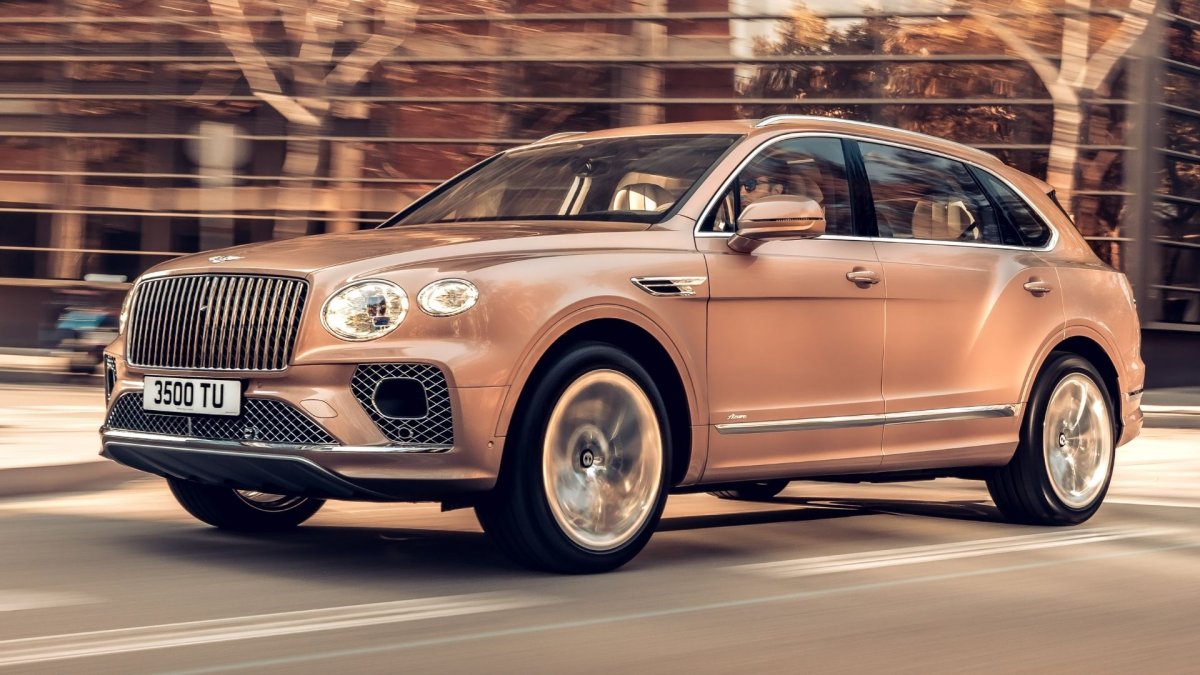
Bentley Wants Higher Weight Limits Because Its Cars Are Too Heavy
The British brand's Bentayga EWB tips the scales at 7,165 pounds when fully loaded.
 www.thedrive.com
That's at the top end of the market though and there's a number big battery SUVs that are well under that limit and given the amount of time SUVs have been popular, it doesn't show any signs of ending any time soon unless there's legislation brought in that penalises some of these vehicles. The end of popular family cars like the Mondeo suggests SUVs are here to stay and I've been a bit frustrated hoping for a new Mazda 6 as their current one is looking long in the tooth especially compared to their new CX-60 SUV but Mazda have said they think the future at the moment is SUVs and no plans for a new 6.
I test drove an id.3 and quite liked the interior. Perhaps a bit Spartan in places but I liked the screens and shock horror I liked the haptic controls too.Step-mum's previous car was an Ioniq Hybrid and they think it was a better made than the id.3 than replaced it, my Dada certinaly doesn't rate the id.3's build quality all that much.
But the Niro is more practical and the dual function media/HVAC knobs and "buttons" is very clever save means you hardly ever need to delve into touchscreen menus.
But id.5 Vs Genesis is no contest IMO. Even the id.4 I looked at is just to plain and cheap looking for the asking price.
The 'cheaper' interior on the id3 is part of its sales pitch the car is meant to be carbon neutral as part of that the interior plastics are from a higher proportion of recycled plastic, I believe the head lining is made from recycled plastic bottles. The reality of course is VW have been on a cost cutting spree not just brought on by desielgate but due to the lower margins made on cars built on their common MQB platform 2012 onwards which turned out more expensive to manufacture.

nlogax
Established Member
Saw a review of the Ioniq 6 last night and it looks hugely impressive. These really aren't the Hyundai tin boxes of our youth. I'd be sorely tempted if it wasn't for the absolute comedy that is our national charging infrastructure.
I'll give it a couple of years with my dinosaur juice-powered BMW and see where we are then.
I'll give it a couple of years with my dinosaur juice-powered BMW and see where we are then.
Bletchleyite
Veteran Member
Saw a review of the Ioniq 6 last night and it looks hugely impressive. These really aren't the Hyundai tin boxes of our youth. I'd be sorely tempted if it wasn't for the absolute comedy that is our national charging infrastructure.
I'll give it a couple of years with my dinosaur juice-powered BMW and see where we are then.
I'm thinking one more newish petrol then an EV as the charging infrastructure isn't quite there and I do a lot of long journeys at the moment due to the railway being awful. I'd be surprised if things weren't a lot better for charging within 5 years or so.
nlogax
Established Member
I'm thinking one more newish petrol then an EV as the charging infrastructure isn't quite there and I do a lot of long journeys at the moment due to the railway being awful. I'd be surprised if things weren't a lot better for charging within 5 years or so.
You're not alone in thinking along those lines, I know plenty of people in the same position who are considering the same as a stop-gap to be ULEZ compliant (not your specific reason of course) but where an EV just won't work because of charging limitations.
Driving down from Scotland after the new year I noticed queues at every EV charging space I saw on and off the motorways. Without massive investment that's only going to get worse.
I noticed the Tesla chargers being close to full at Oxford services on Tuesday morning.Driving down from Scotland after the new year I noticed queues at every EV charging space I saw on and off the motorways. Without massive investment that's only going to get worse.
With communal parking and no public charging in the village where I live and none at the two nearest supermarkets I need to squeeze a few more years out of my ICE vehicle.

kevin_roche
Member
- Joined
- 26 Feb 2019
- Messages
- 997
The last time I went to Oxford and used the Park and Ride the chargers were out of service. When I called the operator they told me they had been out of service for two months. I haven't been to Oxford since.