
-
Our new ticketing site is now live! Using either this or the original site (both powered by TrainSplit) helps support the running of the forum with every ticket purchase! Find out more and ask any questions/give us feedback in this thread!
You are using an out of date browser. It may not display this or other websites correctly.
You should upgrade or use an alternative browser.
You should upgrade or use an alternative browser.
Longest non-stop distance on former SR lines
- Thread starter GordonT
- Start date
- Status
- Not open for further replies.
Sponsor Post - registered members do not see these adverts; click here to register, or click here to log in
R
RailUK Forums
Snow1964
Established Member
From electrification trains used to operate non stop Waterloo-Southampton, then Bournemouth then portion all stations to Weymouth. It was hourly from about 1974 to late 1980s.
Now trains also call at Southampton airport (which was renamed with parkway added to name). Not sure if any still do Southampton Parkway as first stop.
Back in steam days there were some West Country expresses that ran Waterloo-Salisbury non stop. I believe some Summer Saturday trains ran non stop to Wilton for an engine change which was longest section (virtually nothing missed Salisbury as a result of the 1906 derailment of a Plymouth boat train on the curves). The Wilton stop was technical as there were no water troughs, but first timetabled stop was further (but can't remember where, might have been Axminster for Lyme Regis).
Now trains also call at Southampton airport (which was renamed with parkway added to name). Not sure if any still do Southampton Parkway as first stop.
Back in steam days there were some West Country expresses that ran Waterloo-Salisbury non stop. I believe some Summer Saturday trains ran non stop to Wilton for an engine change which was longest section (virtually nothing missed Salisbury as a result of the 1906 derailment of a Plymouth boat train on the curves). The Wilton stop was technical as there were no water troughs, but first timetabled stop was further (but can't remember where, might have been Axminster for Lyme Regis).
Last edited:
There aren't any that still do Winchester as a first stop, let alone Southampton Airport Parkway. The weekday 1705, 1735, 1805, 1835 to Weymouth are now first stop Basingstoke.Not sure if any still do Southampton Parkway as first stop.
This up service (1B94 0634 Bournemouth to London Waterloo) is fast from Winchester to Waterloo https://www.realtimetrains.co.uk/service/gb-nr:L21365/2023-01-19/detailed

Historically:
In SR days the 2-hour Bournemouth expresses were (AIUI) non-stop over 108 miles; in the 50s there was one such in the Up direction on summer Saturdays, and one from Bournemouth West (10.0 and 10.15am respectively), and a 2pm from New Milton (1.45pm off Central, 98.5m) but these were less of a challenge on one tenderful of water owing to slack timings.
In terms of regular services: the Devon Belle to Wilton (mentioned upthread) at 86miles was longest (first public stop was Sidmouth Junction, 159m or Axminster, 144m), followed by Salisbury at 83m (1tpd plus summer extras).
Otherwise there was little to choose between Southampton (79m) and Dover Marine (78m), Southampton having the better service with 7 up and 4 down nonstops in summer 1958.
There were also a couple of Waterloo East-Folkestone C (72m) in steam days (and Victoria-Folkestone Jn too, but those ran to the sidings).
Apart from the short sea boat trains, Southampton was the only one to survive into the REP+TC era, and for a couple of years had an hourly non-stop before the Airport stop was added.
In SR days the 2-hour Bournemouth expresses were (AIUI) non-stop over 108 miles; in the 50s there was one such in the Up direction on summer Saturdays, and one from Bournemouth West (10.0 and 10.15am respectively), and a 2pm from New Milton (1.45pm off Central, 98.5m) but these were less of a challenge on one tenderful of water owing to slack timings.
In terms of regular services: the Devon Belle to Wilton (mentioned upthread) at 86miles was longest (first public stop was Sidmouth Junction, 159m or Axminster, 144m), followed by Salisbury at 83m (1tpd plus summer extras).
Otherwise there was little to choose between Southampton (79m) and Dover Marine (78m), Southampton having the better service with 7 up and 4 down nonstops in summer 1958.
There were also a couple of Waterloo East-Folkestone C (72m) in steam days (and Victoria-Folkestone Jn too, but those ran to the sidings).
Apart from the short sea boat trains, Southampton was the only one to survive into the REP+TC era, and for a couple of years had an hourly non-stop before the Airport stop was added.
More than a couple of years, it was non-stop from 1974 until the late 1980s.Apart from the short sea boat trains, Southampton was the only one to survive into the REP+TC era, and for a couple of years had an hourly non-stop before the Airport stop was added.
I lived in Fareham around 1986 and would sometimes go Fareham-Southampton-London Waterloo with the second leg REP+TC non-stop.
The Southampton Airport stop was added once I had a car, so I would sometimes drive there along the M27, free parking at weekends, non-stop to London.
The Winchester stop was added when I'd moved to Clanfield, south of Petersfield, so I sometimes drove to Winchester (still free parking at weekends; I had to drive anyway and although it's a longer drive to Winchester it's a nice one past HMS Mercury, over Old Winchester Hill and through Warnford) for a change from the Portsmouth Direct and still a non-stop service to London.
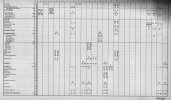
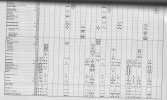
EDIT 1W06 (attached timetable) was non-stop 09b26 SO Southampton Parkway to Waterloo 18/5/88 to 14/5/89. It was several years until the regular Winchester stop was also added.
FURTHER EDIT 1W04 shows the Winchester call (09b32.5) from the Saturday morning up service 1/6/97 to 27/9/97. My guess is that this regular stop was introduced in around 1992 or 1993 simply because I moved away from the area in 1994 and I remember driving to Winchester for it at least once.
Attachments
Last edited:
dan4291
Member
What about the peak hour Southeastern services that run from Cannon Street? There's Ramsgate services that are non-stop from London Bridge to Sevenoaks and others that run non-stop London Bridge to Rochester. Don't know the distances involved here but they're the longest non-stop runs that I can think of on the former SR.
Rochester is 34 miles from London Bridge via Chislehurst. Sevenoaks is 24 miles from London Bridge.There's Ramsgate services that are non-stop from London Bridge to Sevenoaks and others that run non-stop London Bridge to Rochester.
Horsham to Barnham beats London Bridge to Sevenoaks. London Victoria to Gatwick Airport slightly exceeds Horsham to Barnham.
London Waterloo to Basingstoke is just under 48 miles.

bengley
Established Member
- Joined
- 18 May 2008
- Messages
- 1,987
Until a few years ago there was a summer Saturdays non stop Victoria to Eastbourne and return in the evening but that's only 80 miles or so.
*65 apparently by rail!
*65 apparently by rail!

brad465
Veteran Member
What about the peak hour Southeastern services that run from Cannon Street? There's Ramsgate services that are non-stop from London Bridge to Sevenoaks and others that run non-stop London Bridge to Rochester. Don't know the distances involved here but they're the longest non-stop runs that I can think of on the former SR.
It's a pity Southeastern have decided Chelsfield now belongs on the peak Hastings services that used to run non-stop London Bridge-High Brooms and vice-versa, as that would be a good contender on the Southeastern Network (they still skip Tonbridge, but Chelsfield is more or less slap bang in the middle distance-wise of the calls before and after). I imagine the LBG-RTR fasts in the peaks are the longest distance anyway for SE services.Rochester is 34 miles from London Bridge via Chislehurst. Sevenoaks is 24 miles from London Bridge.
Horsham to Barnham beats London Bridge to Sevenoaks. London Victoria to Gatwick Airport slightly exceeds Horsham to Barnham.
London Waterloo to Basingstoke is just under 48 miles.
Yes, nothing goes fast through Bromley South now.I imagine the LBG-RTR fasts in the peaks are the longest distance anyway for SE services.
Yes, before London Bridge remodelling there was many a story of people not used to the calling pattern of trains from Charing Cross or Cannon Street who had involuntary trips to High Brooms when they got on the wrong trains.It's a pity Southeastern have decided Chelsfield now belongs on the peak Hastings services that used to run non-stop London Bridge-High Brooms and vice-versa, as that would be a good contender on the Southeastern Network (they still skip Tonbridge, but Chelsfield is more or less slap bang in the middle distance-wise of the calls before and after).
brad465
Veteran Member
What was the distance of the former London Bridge-High Brooms non-stop run? I recall back in the early 00s not only could Bromley South be skipped, but also Rochester, so some peaks were first/last stop Chatham to/from Victoria.Yes, nothing goes fast through Bromley South now.
London Bridge to High Brooms and Victoria to Chatham both about 34.5 miles.What was the distance of the former London Bridge-High Brooms non-stop run? I recall back in the early 00s not only could Bromley South be skipped, but also Rochester, so some peaks were first/last stop Chatham to/from Victoria.
However, that I think leads us to the longest non-stop on the former SR, which was the Plymouth boat trains, running nonstop from Templecombe to Waterloo. This was a combination of the lack of water troughs, the desire to have only one stop (and change locos), and the fact that neither Plymouth to Salisbury, nor Exeter to London, would suit the loco water capacity, but by doing so at Templecombe, the overall halfway point, it was possible. The locos for the boat trains were run light from Salisbury shed to Templecombe, and locos were changed there, running nonstop through Salisbury ... until the fateful high speed derailment night.Back in steam days there were some West Country expresses that ran Waterloo-Salisbury non stop. I believe some Summer Saturday trains ran non stop to Wilton for an engine change which was longest section (virtually nothing missed Salisbury as a result of the 1906 derailment of a Plymouth boat train on the curves). The Wilton stop was technical as there were no water troughs, but first timetabled stop was further (but can't remember where, might have been Axminster for Lyme Regis).
And the longest nonstop run on the old Southern lines was not the 112 miles from Templecombe to Waterloo ... but the initial 117 miles from Devonport to Templecombe. The boat train was pulled in reverse up the branch from Stonehouse Quay to Devonport, where the junction faced the wrong way, and the main line loco then came on the other end for the initial long run.
There had already been official notices put out about excessive speed through Salisbury by the boat trains, the only ones to do so nonstop, they feature extensively in the accident report, and after the accident locos were changed as other services did, at both Exeter and Salisbury.
Last edited:
Peregrine 4903
Established Member
What about Stratford International to Ashford International? It is still technically Southern region.

frodshamfella
Established Member
What about the peak hour Southeastern services that run from Cannon Street? There's Ramsgate services that are non-stop from London Bridge to Sevenoaks and others that run non-stop London Bridge to Rochester. Don't know the distances involved here but they're the longest non-stop runs that I can think of on the former SR.
Going back to the 80s , I'm sure the fastest coast service from Charing Cross, was fast Waterloo East to Ashford ( Kent ).
ThisIsSurbiton
Member
- Joined
- 16 Aug 2017
- Messages
- 456
Yes, for years. Not even calling at London Bridge. After Ashford fast to Folkestone *Central* or (I imagine) Canterbury. About 75 minutes, comparing quite well with a train that's almost twice as fast now, although I'll take a 395 over slam doors without complaintGoing back to the 80s , I'm sure the fastest coast service from Charing Cross, was fast Waterloo East to Ashford ( Kent ).
swt_passenger
Veteran Member
- Joined
- 7 Apr 2010
- Messages
- 34,308
About 50 miles, but are there any services that don’t stop at Ebbsfleet?What about Stratford International to Ashford International? It is still technically Southern region.
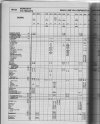
EG 1R12 attached.Yes, for years. Not even calling at London Bridge. After Ashford fast to Folkestone *Central* or (I imagine) Canterbury. About 75 minutes, comparing quite well with a train that's almost twice as fast now, although I'll take a 395 over slam doors without complaint
56 miles & 9 chains Charing Cross to Ashford
8/5/78 to 13/5/79 timetable in this case.
Attachments
Yes, two with peak flow in the morning and afternoon peak.About 50 miles, but are there any services that don’t stop at Ebbsfleet?
https://www.realtimetrains.co.uk/se.../0200-0159?stp=WVS&show=pass&order=wtt&toc=SE
1J11 0615 Margate to St Pancras International
1J15 0715 Margate to St Pancras International
1J92 1720 St Pancras International to Margate
1J94 1750 St Pancras International to Margate
I selected 1975 (not quite) at random from my timetable collection.
The longest non-stop peak hour trains out of Cannon Street were first stop Sittingbourne.
But do Victoria-Dover boat trains count?
From electrification trains used to operate non stop Waterloo-Southampton, then Bournemouth then portion all stations to Weymouth. It was hourly from about 1974 to late 1980s.
Both of these were hourly off peak in 1975. Victoria-Brighton was also hourly non-stop.Going back to the 80s , I'm sure the fastest coast service from Charing Cross, was fast Waterloo East to Ashford ( Kent ).
The longest non-stop peak hour trains out of Cannon Street were first stop Sittingbourne.
But do Victoria-Dover boat trains count?
First stop Sittingbourne misses a lot of population in the Medway towns. Were there non stop Chatham (or Rochester) services as well? How many rush hour services to the Faversham line ran from Cannon Street?The longest non-stop peak hour trains out of Cannon Street were first stop Sittingbourne.
The down services were all stations from Whitstable. Stops prior to Whitstable were:First stop Sittingbourne misses a lot of population in the Medway towns. Were there non stop Chatham (or Rochester) services as well? How many rush hour services to the Faversham line ran from Cannon Street?
1639 Chatham and Faversham
1700 Chatham
1714 Sittingbourne
1733 Chatham
1744 Chatham, Sittingbourne and Faversham
1814 Sittingbourne
The 1814 had a gin palace.
Going from Cannon Street towards Hastings the 1659 and 1804 both ran non-stop to Tunbridge Wells Central and divided there, with the front portions then running non-stop to Crowhurst.

eastwestdivide
Established Member
Depends how you define “timetabled”. They appeared in the continental supplement to the GB public timetable, but obvs only available to passengers with international tickets.But do Victoria-Dover boat trains count?
Thanks for posting. I guess the point was that in 1975 the pattern of commuting was different and the emphasis of what these trains were for was different.The down services were all stations from Whitstable. Stops prior to Whitstable were:
1639 Chatham and Faversham
1700 Chatham
1714 Sittingbourne
1733 Chatham
1744 Chatham, Sittingbourne and Faversham
1814 Sittingbourne
The 1814 had a gin palace.
Going from Cannon Street towards Hastings the 1659 and 1804 both ran non-stop to Tunbridge Wells Central and divided there, with the front portions then running non-stop to Crowhurst.
Whitstable is now 86 minutes from Cannon Street which is a long time on the train to do in both directions.
But do Victoria-Dover boat trains count?
Surely they do!
And I’m not sure you had to have an international ticket to use it.
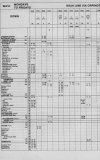
See 1V30 attached, for example, also taken from the 8/5/78 to 13/5/79 WA working timetable.But do Victoria-Dover boat trains count?
77m 78ch Victoria-Dover Marine
72m 0ch Victoria-Folkestone East (see 1R12 extract above for an example of 1V44 14:00 Victoria-Folkestone Harbour).
I've done Folkestone Harbour in the past, Dover Marine on the return from the ferry from Ostende (connection from Moscow) and also on a SEG 4-REP railtour.
== Doublepost prevention - post automatically merged: ==
I did Weymouth Quay without an international ticket but always had one for the Victoria boat trains although I agree that I don't remember whether or not it was actually necessary to have one.And I’m not sure you had to have an international ticket to use it.
Attachments
Until 1967 at least there were two evening non-stops to Whitstable (57 miles from CST) but they were immediately followed by trains serving Chatham and beyond.First stop Sittingbourne misses a lot of population in the Medway towns. Were there non stop Chatham (or Rochester) services as well? How many rush hour services to the Faversham line ran from Cannon Street?
There were 4 fast and 3 stopping trains altogether.
(Rainham was the first station to be added to the "fast" stops beyond Chatham, as the Medway Towns became commuterland.)
But of course Whitstable was well down the pecking order of Southern non-stop distances compared with those I mentioned in #4.
Thank you for the various responses to my original post. Happy for the former "boat trains" to count. A supplementary question which now occurs. Was their any latitude for any of these "non-stoppers" to be routed differently from their "classic route" to suit the exigencies of operations on the day?
I presume you mean a buffet car. I thought most fast Kent Coast trains had buffets at least on weekdays from the early days of the Kent electrification until the late 1970s but buffet cars had all gone from the South Eastern Division by the 1980s, much earlier than on the Central and South Western Divisions.The 1814 had a gin palace.
See also this thread on the withdrawal of SED buffet cars: https://www.railforums.co.uk/thread...ng-before-the-central-division-did-so.208322/
The boat trains to/from Dover and Folkestone were subject to all manner of diversions.Was their any latitude for any of these "non-stoppers" to be routed differently from their "classic route" to suit the exigencies of operations on the day?
- Status
- Not open for further replies.