• Our new ticketing site is now live! Using either this or the original site (both powered by TrainSplit) helps support the running of the forum with every ticket purchase! Find out more and ask any questions/give us feedback in this thread!

UK switching to electric vehicles discussion

Sponsor Post - registered members do not see these adverts; click here to register, or click here to log in
R

RailUK Forums

AM9

Veteran Member
Joined
13 May 2014
Messages
16,061
Location
St Albans
See https://www.railforums.co.uk/goto/post?id=5981183 as reference and you don't careen at low speed, do you?
'Careen' is a rather niche Americanism and not really appropriate in this part of the discussion about the safety sound mandated in EVs. The law requires EVs to make a sound at speeds below 20km/h (both when moving forward and reverse). That sound is pretty quiet and roughly equates to tyre noise at 20km/h. So unless the vehicle is running on a road covered with pistacchio shells, even in the quietest natural environment, I doubt it could be heard more than 50m away.
If somebody is hypersensitive to it then tough! - they need to taske their own precautions. The lack of IC pollutants and the reduction in CO2 trumps that.
 

bspahh

Established Member
Joined
5 Jan 2017
Messages
2,442
And you're right, people will seek to hack them, and then you'll have warranty issues - and possibly even insurance issues if the car detects any sort of hacking. No doubt that unofficial heated steering wheel activation will be used as an excuse as to why a safety system failed.

And for software updates, assuming the updates may stop after 10 years even if the car can go on for many more, perhaps there will be a market for third-party ROM updates, although - again - the car industry tries to lock down such software and may well sue anyone that attempts to offer unofficial upgrades.
Now that you get an MOT failure if there are warning lights turned on, I think more cars will get scrapped from random glitches from the electronics, sensors and wiring, than from a mechanical failure.
 

paul1609

Established Member
Joined
28 Jan 2006
Messages
7,992
Location
K
I think this will depend on the user. A good many older used cars are bought as "runarounds", a second vehicle that would do well under 50 miles a day and would rarely if ever be used for a long journey. With battery lives as new heading towards 200-250 miles fully charged, that means you've got a long way to go before the EV is useless as a runaround. Most likely they'll fall to bits from rust etc before that happens.
If they actually did 200 miles fully charged that would be true but next to nobody does a 200 mile journey in urban traffic at 20 mph.
Of the lower cost EVs the usable range of a brand new MG4 with the standard battery assuming you drive at 60-70 mph where its safe to do so is around 120 miles.
OK it will actually do 140 to 150 mile before it actually stops but who in their right mind is going to drive round the M25 with 1 or 2 % remaining?
The WTLP figures are incredibly misleading as to likely practical range. I think even the high speed range test only briefly touches 60 mph and the average speed is below 30 mph. I would suggest that's not how the majority of people on long journeys in the uk drive unless its a bank holiday on the M1.
When you talk about halving the original range that would make them unusable for most people who live outside cities.
 

Noddy

Established Member
Joined
11 Oct 2014
Messages
1,656
Location
UK
If they actually did 200 miles fully charged that would be true but next to nobody does a 200 mile journey in urban traffic at 20 mph.
Of the lower cost EVs the usable range of a brand new MG4 with the standard battery assuming you drive at 60-70 mph where its safe to do so is around 120 miles.
OK it will actually do 140 to 150 mile before it actually stops but who in their right mind is going to drive round the M25 with 1 or 2 % remaining?
The WTLP figures are incredibly misleading as to likely practical range. I think even the high speed range test only briefly touches 60 mph and the average speed is below 30 mph. I would suggest that's not how the majority of people on long journeys in the uk drive unless its a bank holiday on the M1.
When you talk about halving the original range that would make them unusable for most people who live outside cities.

Sorry this simply isn’t true. Below is a link to a motorway range test at 70mph conducted this November in a standard range MG4-the range is in excess of 150 miles (close to 160). The same chap also did mixed driving in October/November and got 180 miles range.


ashkeba

Established Member
Joined
13 May 2019
Messages
2,171
'Careen' is a rather niche Americanism and not really appropriate in this part of the discussion about the safety sound mandated in EVs. The law requires EVs to make a sound at speeds below 20km/h (both when moving forward and reverse).
I am adware of the current law. The quiet slow movement sound is OK. The post I was replying to was suggesting the current law is inadequate and EVs should make enough noise to be heard when "careening" around corners. I disagree. Do you?

Please complain to them about Americanism if you wish. It is probably one of the few mistakes in English that I do not make!
 

paul1609

Established Member
Joined
28 Jan 2006
Messages
7,992
Location
K
Sorry this simply isn’t true. Below is a link to a motorway range test at 70mph conducted this November in a standard range MG4-the range is in excess of 150 miles (close to 160). The same chap also did mixed driving in October/November and got 180 miles range.

Sorry but it's absolutely true. I don't dispute what your video shows but that is a straight run on a lightly trafficked West Country motorway.
50% power reduction occurred at 153 miles.
Most drivers wouldn't be driving with the heating off at 11 degrees and would be looking to charge before the 7% warning came on. Especially if they are looking to do a fast charge to continue their journey.
The distance between chargers and motorway junctions means that there are very few locations where you can actually exploit the 150 miles range.
 

reddragon

Established Member
Joined
24 Mar 2016
Messages
3,274
Location
Churn (closed)
Says who. Tesla?

Genuinely though, have you got a source for this?
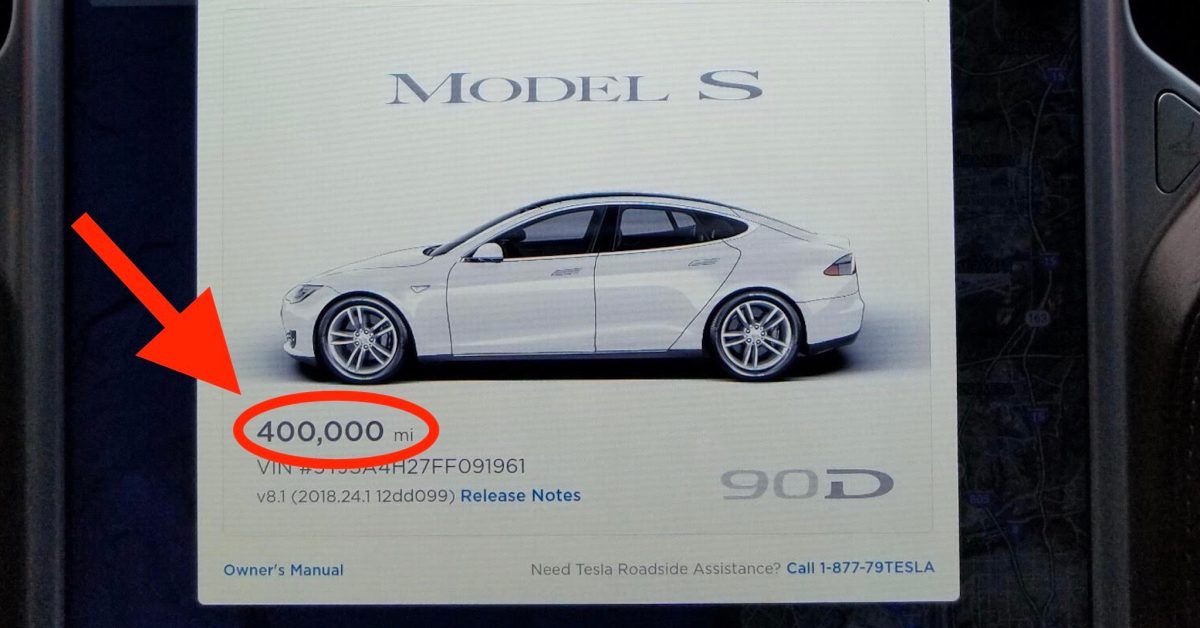
Updates from the worlds highest milage car driver in Germany


Reports & costs of very high miler US taxi


trebor79

Established Member
Joined
8 Mar 2018
Messages
4,911
Sorry but it's absolutely true. I don't dispute what your video shows but that is a straight run on a lightly trafficked West Country motorway.
50% power reduction occurred at 153 miles.
Most drivers wouldn't be driving with the heating off at 11 degrees and would be looking to charge before the 7% warning came on. Especially if they are looking to do a fast charge to continue their journey.
The distance between chargers and motorway junctions means that there are very few locations where you can actually exploit the 150 miles range.
You're talking nonsense. Arriving at a low state of charge means the car will charge more quickly. I aim to arrive at a rapid charger with less than 20% remaining, and I'll only charge enough to get home or to the next charge stop.
 

jon0844

Veteran Member
Joined
1 Feb 2009
Messages
30,940
Location
UK
Now that you get an MOT failure if there are warning lights turned on, I think more cars will get scrapped from random glitches from the electronics, sensors and wiring, than from a mechanical failure.

I wonder if the next scandal in the car industry will be finding that systems were purposely programmed to crash or fail at a time in the future (the whole planned obsolescence theory, often found to be true albeit in very limited circumstances) and thus make the owner scrap the car because after 10 years or so it will be extremely expensive to fix things or replace sensors, ECUs etc.

Without wishing to don my tinfoil hat, you do have to wonder what the industry will be thinking to cope with customers keeping a car for longer...
 

paul1609

Established Member
Joined
28 Jan 2006
Messages
7,992
Location
K
Sorry Youre wrong the MG4 driver is driving in to the 50% power restriction zone with the heating turned off to achieve 150 miles range, before that he has reduced speed to 60 mph for "safety reasons". Its you who quoted this video not me. I would suggest the normal driver will not be staying on the motorway past the 7% recharge warning.
 

jon0844

Veteran Member
Joined
1 Feb 2009
Messages
30,940
Location
UK
If they actually did 200 miles fully charged that would be true but next to nobody does a 200 mile journey in urban traffic at 20 mph.
Of the lower cost EVs the usable range of a brand new MG4 with the standard battery assuming you drive at 60-70 mph where its safe to do so is around 120 miles.
OK it will actually do 140 to 150 mile before it actually stops but who in their right mind is going to drive round the M25 with 1 or 2 % remaining?
The WTLP figures are incredibly misleading as to likely practical range. I think even the high speed range test only briefly touches 60 mph and the average speed is below 30 mph. I would suggest that's not how the majority of people on long journeys in the uk drive unless its a bank holiday on the M1.
When you talk about halving the original range that would make them unusable for most people who live outside cities.

The MG4 is the car of the moment and YouTube is absolutely swamped with videos from people who have reviewed, or actually purchased, the MG4 - in all variants (and remember, there's an extended range version coming in the new year). They have all done many tests, and in the last week there are a lot more tests that have been done when we had the cold spell (-5 or colder).

I think overall, the range has impressed. Most people still won't need to charge until they get home, and if they do then they don't have to do a full charge - and the MG4 is also very quick to recharge given its pricepoint.

Unsurprisingly, the mpg took a big hit in my car in the cold weather too. It's not like ICE cars aren't going to suffer also.

== Doublepost prevention - post automatically merged: ==

You're talking nonsense. Arriving at a low state of charge means the car will charge more quickly. I aim to arrive at a rapid charger with less than 20% remaining, and I'll only charge enough to get home or to the next charge stop.

Good point. The same applies to any other product with Lithium Ion batteries. Indeed, phones with 65, 100, 150 and soon 240W chargers (Realme should have a phone with 240W in the new year) only charge at that peak rate for a relatively short time when the battery is 0-20%. As it approaches 50% and beyond, it tails off quite significantly.

So a ten minute stop at a charging station, a stretch of the legs, trip to the toilet will probably get you quite a bit of range and more than enough for most people.
 

JohnMcL7

Member
Joined
18 Apr 2018
Messages
1,056
I wonder if the next scandal in the car industry will be finding that systems were purposely programmed to crash or fail at a time in the future (the whole planned obsolescence theory, often found to be true albeit in very limited circumstances) and thus make the owner scrap the car because after 10 years or so it will be extremely expensive to fix things or replace sensors, ECUs etc.

Without wishing to don my tinfoil hat, you do have to wonder what the industry will be thinking to cope with customers keeping a car for longer...
I doubt electric cars will last any longer as it's frequently not the engine that is the reason for the car being scrapped but other items shared with electric cars such as rust on the body or electric faults. My car is approaching its 12th birthday and the engine is still running perfectly as it always has but it does have corrosion which is what will put it to the scrapheap.

It's not limited to electric cars but it's one feature of newer cars I'm not a fan of which is the increasingly complex electronics even for just simple features like the dashboard which I doubt will be cheap to repair when they fail.
 

jon0844

Veteran Member
Joined
1 Feb 2009
Messages
30,940
Location
UK
Car makers have to produce parts for ten years after a car is discontinued (I think?) but after ten years, when they can presumably stop issuing software updates, new maps for embedded navigation systems* and so on on, they should be required to allow access to the systems for third-parties, who could likely maintain the computer systems, sensors etc for many more years.

Despite car makers giving ridiculous prices to a lot of electronic components, the actual cost of manufacturing and the components used are often pretty low. Most cars aren't using advanced SoCs, hence why so many user interfaces are laggy, and while there has been a chip shortage - we're slowly coming out of that crisis.

Plus you could build cars to be more modular, so you could in theory upgrade the car systems - giving the car makers a revenue stream that could compensate for people keeping their cars for longer. If a car has a 7 year warranty and covers the car for a decent number of miles, there's even less reason to change cars early - as I think many people do for fear of high bills even if they don't actually come.

* Most people can use Android Auto/Apple Car Play, but I am sure valuations of cars are knocked down by dealers because the car no longer gets map updates!
 

JohnMcL7

Member
Joined
18 Apr 2018
Messages
1,056
As I said already, people aren't going to be keeping cars longer as electric cars share most of the parts that will put a petrol or diesel car to the scrapheap. Many people will only keep a car for three or so years and even though there's nothing wrong with the car, get something newer because they want it.

It's not a case of the cost of the electronics themselves, it's the cost to get them from the manufacture *and* the cost to get them installed as increasingly companies are making the latter more difficult and more expensive forcing mechanics to take out software subscriptions just to be able to code the parts so the car will accept them.
 
Last edited:

jon0844

Veteran Member
Joined
1 Feb 2009
Messages
30,940
Location
UK
There's a strong right to repair movement around much of the world right now, and the car industry is actually better than most in allowing other people to work on cars without impacting on warranties etc, so I expect Governments will have to keep on top of this in the future to ensure cars don't get rendered obsolete unnecessarily. I think the bit that the car industry needs to 'fix' is locking out some parts of the car to third-parties, which is something that Apple has done very successfully with its products (much to the detriment of independent repairers and consumers alike).

Will people still change their car as often in the future? I am not sure people will feel so compelled to change if there's less chance of major bills to come as the car gets older. Some people think they best get rid of their car before it needs to be MOTd and that's quite mad, although of course I get that some people just like to have a new car (indeed, many people may feel it impossible to show an older car on their driveway).

You obviously have many people leasing, or getting a company car, where it's just the norm to change every 3 or 4 years (some leasing companies top out at 4 years I've noticed, with others offering 5 years upon application only).. and this may change too.

Or it may not. I don't really know and I am not sure anyone does just yet.

As long as people fear the batteries will just die, maybe they'll want rid ASAP, but I think evidence is clearly showing batteries don't just die, they degrade - and how fast they do that depends on how they're treated, or how well the battery management systems work.
 

Noddy

Established Member
Joined
11 Oct 2014
Messages
1,656
Location
UK
Sorry Youre wrong the MG4 driver is driving in to the 50% power restriction zone with the heating turned off to achieve 150 miles range, before that he has reduced speed to 60 mph for "safety reasons". It’s you who quoted this video not me. I would suggest the normal driver will not be staying on the motorway past the 7% recharge warning.

Let’s see what you said:

assuming you drive at 60-70 mph where its safe to do so is around 120 miles.

The video proves the range when driving at 60-70 miles is 150+ miles. Not 120 as you claim.

I don't dispute what your video shows but that is a straight run on a lightly trafficked West Country motorway.

Incidentally how do you propose doing a fair 60-70 mph range test if you don’t test when the motorways are fairly quiet? If the average speed drops the range is likely to increase, not decrease…

Sorry Youre wrong the MG4 driver is driving in to the 50% power restriction zone with the heating turned off to achieve 150 miles range, before that he has reduced speed to 60 mph for "safety reasons".

He only reduces his speed from 70 to 60mph after/at mile 152 (which is identified in the previous section). So he’d already passed a range of 150 miles at this point doing 70mph. The 50% power reduction comes even further after this at 154 miles. And still leaves the car with at least 84hp so it’s not exactly a ‘limp’ mode.
 
Last edited:

reddragon

Established Member
Joined
24 Mar 2016
Messages
3,274
Location
Churn (closed)
What is already happening is the most popular early EV, the Nissan LEAF has developed a huge aftermarket for swapping batteries, mods etc. There is also a classic car conversion market mostly using old Tesla parts. The world has changed, repairs will be electronic rather than mechanical and originate from China.

The MGs are proving to be real work hoorses attaining very high usage levels with minimal faults. Taxi drivers love the MG5

== Doublepost prevention - post automatically merged: ==

Sorry Youre wrong the MG4 driver is driving in to the 50% power restriction zone with the heating turned off to achieve 150 miles range, before that he has reduced speed to 60 mph for "safety reasons". Its you who quoted this video not me. I would suggest the normal driver will not be staying on the motorway past the 7% recharge warning.

I rarely exceed 50% power on my MG, when you do it's like a racing car! Even climbing mountain passes at speed fully loaded, 50% is only exceeded when starting from stopped. Try watching videos of James in his MG5 with Cleverly autos, he runs it down to 1% on the motorways fully loaded without any issues all year round!
 

bspahh

Established Member
Joined
5 Jan 2017
Messages
2,442
There's a strong right to repair movement around much of the world right now, and the car industry is actually better than most in allowing other people to work on cars without impacting on warranties etc, so I expect Governments will have to keep on top of this in the future to ensure cars don't get rendered obsolete unnecessarily. I think the bit that the car industry needs to 'fix' is locking out some parts of the car to third-parties, which is something that Apple has done very successfully with its products (much to the detriment of independent repairers and consumers alike).
When electric cars get old, it will become easier to replace the motors, electronics and battery with more modern equivalents. This is much easier for a electric car than it is to fit a different model of ICE engine.

This already happens on a small scale for people who want a classic Mini with the running gear from a Nissan Leaf or Toyota Celica GT-Four

Its more complicated if you also want systems like air bags, central locking, air conditioning to be updated. Given sufficient time, anything is possible, but the Project Binky Mini conversion has been going for 9 years now, and I don't think its a commercial proposition...
 

david1212

Established Member
Joined
9 Apr 2020
Messages
1,755
Location
Midlands

Several snaking queues have been spotted up and down the UK over the last few days.

Nearly two dozen cars were logjammed at a charging point in a Waitrose parking lot in the Hertfordshire village of South Mims on Christmas Day.

One TikTok user said the Tesla owners were waiting around one hour to charge their cars at the station. They said: ‘Here they all are queueing up, waiting for an hour or whatever it is for their charging. They’re everywhere.’
A Facebook user filmed countless Tesla vehicles clogging the Tebay Southbound supercharger in Cumbria by the M6 Junction yesterday. ‘All our electric Tesla friends queueing up to charge up at Tebay Services on the post Xmas trip south,’ they said, adding that it was a ‘struggle to park as very busy’.

This linked article from another thread highlights how much roadside charging infrastructure is needed right across the country yet as far as I know nothing is even planned.

While most manufacturers will offer longer range models this comes with cost, space and weight penalties. I think those who only occasionally make journeys that can not be completed on a single charge will just accept the time to stop and charge plus the cost surcharge over home charging. But they will expect chargers to be available without queuing.

Before I have referenced the Vauxhall E-Mokka solely because of the range simulator.

This gives 209 miles at 40mph, 186 miles at 50mph, 156 miles at 60 mph and 127 miles at 70mph.
These of course are the maximum. Allow 20 miles contingency plus fast charging to 80% then the latter two become 109 and 85 miles

If by 2030 the standard battery is 25% higher capacity then 142 and 111 miles.

Neither consider battery capacity reduction with ageing.

Motorways will need charging stations on each carriageway with 500+ 100kW chargers every 12 - 15 miles. For major roads e.g. A34 Winchester <> M40, A14 M1 <> Cambridge either 250+ chargers each carriageway or a single station with 500+ chargers.

Towns and cities will also need car parks where a significant number of bays have a charger of say 15kW. The proportion perhaps higher in a tourist destination e.g. Whitby.

To supply these chargers new feeds will be needed from the national grid.

In the estate where I live there are blocks of flats and some houses with no parking where they can charge fed from the flat / house. Hence shared use chargers are needed where cars can be left connected programmed to charge overnight at a tariff compatible to those who can have a charger connected to their home electricity supply.

So again to the thread title Do you think that the UK switching to electric vehicles is realistic? answer Yes but with 7 years until 2030 and manufacturers planning to end ICE car production around 2028 large scale action is needed starting now.

 

Bald Rick

Veteran Member
Joined
28 Sep 2010
Messages
35,920
This linked article from another thread highlights how much roadside charging infrastructure is needed right across the country yet as far as I know nothing is even planned.

ummm…


Introduction
In December 2021, over a quarter of all new cars sold in the UK were battery electric vehicles. The equivalent figure for 2019 was less than 2%. The decarbonisation of UK road transport is now accelerating at an astonishing pace and the UK is in the vanguard of this change. As the first G7 nation to announce phase out dates for new petrol and diesel cars, vans and trucks, we are determined to stay at the forefront of this transition. The UK recognises that a focus on vehicles is only half of the challenge. A world-class charging infrastructure is absolutely fundamental to delivering net zero road transport. This document sets out our strategic approach in delivering this charging infrastructure out to 2030.
 

MotCO

Established Member
Joined
25 Aug 2014
Messages
6,127

Having a quick scan through the document, there are lots of weasel words, consulatations, new workstreams, knowledge sharing, best practice sharing, research projects and support for planning, but few actual actions. One I did spot was "We will work with the private sector to ensure there are at least six high powered chargepoints at each motorway service area by the end of 2023." I'm not sure that will be enough to overcome the queues referred to earlier, nor is it clear what would happen if these are not delivered by the end of 2023. Indeed, only if the public sector built these would there be any certainty - unless there were a lot of financial incentives offered.

Further, a lot of the other actions were to have been concluded in 2022, so we should be seeing the benefit of most of them by now, and presumably without these actions, the queues would have been even longer :D
 

Noddy

Established Member
Joined
11 Oct 2014
Messages
1,656
Location
UK
This linked article from another thread highlights how much roadside charging infrastructure is needed right across the country yet as far as I know nothing is even planned.

While most manufacturers will offer longer range models this comes with cost, space and weight penalties. I think those who only occasionally make journeys that can not be completed on a single charge will just accept the time to stop and charge plus the cost surcharge over home charging. But they will expect chargers to be available without queuing.

Before I have referenced the Vauxhall E-Mokka solely because of the range simulator.

This gives 209 miles at 40mph, 186 miles at 50mph, 156 miles at 60 mph and 127 miles at 70mph.
These of course are the maximum. Allow 20 miles contingency plus fast charging to 80% then the latter two become 109 and 85 miles

If by 2030 the standard battery is 25% higher capacity then 142 and 111 miles.

Neither consider battery capacity reduction with ageing.

Motorways will need charging stations on each carriageway with 500+ 100kW chargers every 12 - 15 miles. For major roads e.g. A34 Winchester <> M40, A14 M1 <> Cambridge either 250+ chargers each carriageway or a single station with 500+ chargers.

Towns and cities will also need car parks where a significant number of bays have a charger of say 15kW. The proportion perhaps higher in a tourist destination e.g. Whitby.

To supply these chargers new feeds will be needed from the national grid.

In the estate where I live there are blocks of flats and some houses with no parking where they can charge fed from the flat / house. Hence shared use chargers are needed where cars can be left connected programmed to charge overnight at a tariff compatible to those who can have a charger connected to their home electricity supply.

So again to the thread title Do you think that the UK switching to electric vehicles is realistic? answer Yes but with 7 years until 2030 and manufacturers planning to end ICE car production around 2028 large scale action is needed starting now.


I’d point out that the queues were A) at a Tesla supercharger and B) Tebay services. I suspect the problem there was Tesla drivers wanting free or cheap electricity (rather than going on to the next next nearest services where they would have had to pay more), combined with Tesla drivers and Tebay services being a self selecting combination!

I would also point out there is massive investment going on now. Here is an example from just one company planning on building 5000 high power chargers by 2025:


Bald Rick

Veteran Member
Joined
28 Sep 2010
Messages
35,920
Having a quick scan through the document, there are lots of weasel words, consulatations, new workstreams, knowledge sharing, best practice sharing, research projects and support for planning, but few actual actions. One I did spot was "We will work with the private sector to ensure there are at least six high powered chargepoints at each motorway service area by the end of 2023." I'm not sure that will be enough to overcome the queues referred to earlier, nor is it clear what would happen if these are not delivered by the end of 2023. Indeed, only if the public sector built these would there be any certainty - unless there were a lot of financial incentives offered.

Further, a lot of the other actions were to have been concluded in 2022, so we should be seeing the benefit of most of them by now, and presumably without these actions, the queues would have been even longer :D

But evidence that there is rather more than ‘no plans’, no?
 

GLC

Member
Joined
21 Nov 2018
Messages
403
I’d point out that the queues were A) at a Tesla supercharger and B) Tebay services. I suspect the problem there was Tesla drivers wanting free or cheap electricity (rather than going on to the next next nearest services where they would have had to pay more), combined with Tesla drivers and Tebay services being a self selecting combination!
It wasn’t just Tebay. I stopped at Tebay and Abington during this time period and both locations were had atleast six cars waiting for a turn on the Gridserve chargers. At Tebay specifically, where Tesla chargers are on the southbound side, and Gridserve North bound, some Teslas had swapped over to use Gridserve to try beat the queue, much to the chagrin of me and other EV drivers, who can’t (yet) use Tesla chargers.

As much as I love my EV, I was very happy that I can put petrol on mine and keep going when I saw those queues!
 

reddragon

Established Member
Joined
24 Mar 2016
Messages
3,274
Location
Churn (closed)
The northern M6 is a bad area, the only area of the UK I've ever had to wait.

As a guide, a nearby town had 1 Lidl rapid & a broken twin 7kw in one car park, never used 2 years ago & were both free, even the rapid.

Today I visited & 2 car parks have 6 twin head rapids, plus the old Lidl rapid all chargeable. Lidle had a queue & 8/12 rapid charge points in the were in use with multiple charged EVs moved onto parking spaces.

This transition period will be bumpy for both EV & ICE owners for different reasons.
 

Energy

Established Member
Joined
29 Dec 2018
Messages
5,135
The northern M6 is a bad area, the only area of the UK I've ever had to wait.

As a guide, a nearby town had 1 Lidl rapid & a broken twin 7kw in one car park, never used 2 years ago & were both free, even the rapid.

Today I visited & 2 car parks have 6 twin head rapids, plus the old Lidl rapid all chargeable. Lidle had a queue & 8/12 rapid charge points in the were in use with multiple charged EVs moved onto parking spaces.

This transition period will be bumpy for both EV & ICE owners for different reasons.
I think there needs to be better education on charging, its not uncommon for a 150kw or 350kw charger to be taken up by a car which cant charge more than 50kw while a car which can use the full 150kw is forced to use a 50kw charger.
 

MotCO

Established Member
Joined
25 Aug 2014
Messages
6,127
But evidence that there is rather more than ‘no plans’, no?

You obviously have more faith in the Government to actually 'do' something than I have. Maybe I've been watching too much 'Yes, Prime Minister'.
 

jon0844

Veteran Member
Joined
1 Feb 2009
Messages
30,940
Location
UK
I think there needs to be better education on charging, its not uncommon for a 150kw or 350kw charger to be taken up by a car which cant charge more than 50kw while a car which can use the full 150kw is forced to use a 50kw charger.

I suppose you can understand why someone might use a faster charging point if that's the only one available at the time. A bit like those awkward times you enter a car park and badly parked motorists force you to enter a space at an angle or too far over, then when they leave you look like the inconsiderate one!
 

reddragon

Established Member
Joined
24 Mar 2016
Messages
3,274
Location
Churn (closed)
I suppose you can understand why someone might use a faster charging point if that's the only one available at the time. A bit like those awkward times you enter a car park and badly parked motorists force you to enter a space at an angle or too far over, then when they leave you look like the inconsiderate one!
I got some comments of "why are you using a ultra rapid car with your MG5" by some Audi/BMW types in France but when I was pulling over 90kw, much faster than them they sheepishly backed off :lol:
 

Top