
And so Russia has resorted to attacking civilians yet again, by killing at least 25 civilians on a train.
I wonder how the war would be going if they tried using their weapons on military targets.

And so Russia has resorted to attacking civilians yet again, by killing at least 25 civilians on a train.
I think it's the opposite. A way of bolstering the numbers without a general mobilisation, which would require him admitting that his "Special Military Operation" is in fact a war.Is this the next step towards a full mobilisation?
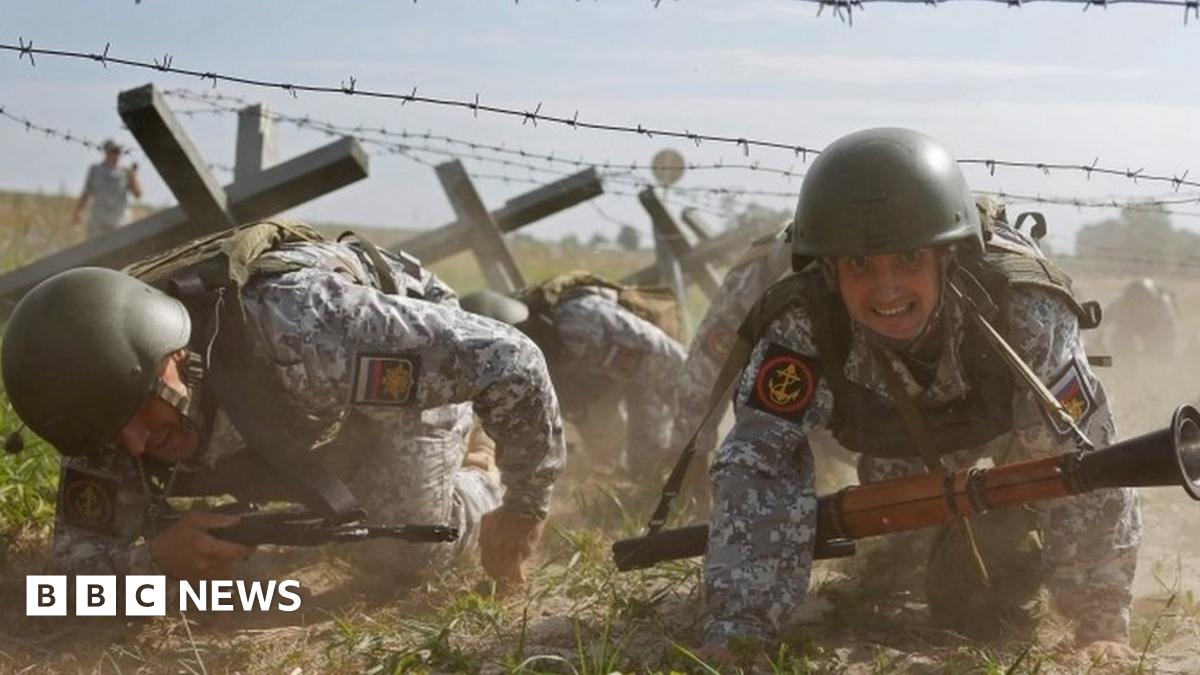
Putin orders 10% boost in Russian troop numbers
The Russian president signs a decree to add 137,000 service personnel to the million-strong army.www.bbc.co.uk


Not only a cash incentive offered, but your own personalised bodybag too.I think it's the opposite. A way of bolstering the numbers without a general mobilisation, which would require him admitting that his "Special Military Operation" is in fact a war.
As long as they get to study what they want, rather than having it dictated to them by the government.I read the other day, that in Russian military, if the soldier dies in battle, their children are enrolled for free university education.
Whatever you think of Russia, I find that quite admirable and would like to think if that happened to me, my child would still get a good chance in life without me.
I read the other day, that in Russian military, if the soldier dies in battle, their children are enrolled for free university education.
Whatever you think of Russia, I find that quite admirable and would like to think if that happened to me, my child would still get a good chance in life without me.
Not "had", but rather "has". Though there are those who question its overall effectiveness given the high cost of education in the States.The USA had a system where former soldiers had some contribution towards their tertiary education.
Not "had", but rather "has". Though there are those who question its overall effectiveness given the high cost of education in the States.
Those of us in England, dont have it so cheap either.Not "had", but rather "has". Though there are those who question its overall effectiveness given the high cost of education in the States.
Those of us in England, dont have it so cheap either.
True. But at least English fees are capped at c. £9,250pa - in the States a degree at a state college might be as high as $30,000pa and at a private collage they can exceed $100,000pa.Those of us in England, dont have it so cheap either.
True. But at least English fees are capped at c. £9,250pa
That's why they send young conscripts onto the front line. No dependents.I read the other day, that in Russian military, if the soldier dies in battle, their children are enrolled for free university education.

Short-term gain (if there even is any gain) for long term pain, they might avoid worrying about dependents initially, but these same young conscripts that die out there don't go onto work in the Russian economy and keep it going, which only accelerates the already worsening demographic time bomb Russia currently has.That's why they send young conscripts onto the front line. No dependents.
Gosh - what a strange turn this thread took!
Thank goodness the evil murderers show such compassion to the offspring of those sent to a pointless death!!! Yay!!!
Such a shame it's a damn poor substitite for basic human decency.
I don't recall how much it was discussed here before, but several outlets reported suggestions that Putin is trying to get about 100,000 North Korean soldiers involved in return for sending NK grain supplies, which certainly smacks of desperation and also highlights that Putin can only mobilise and sacrifice so many of his own population, so resorts to trying to do deals with other states' armies.
Though, that said, the least malnourished people in DPRK will be the army. Dictators know that they need to keep the people with the guns well fed.Truly bringing in the elite forces now. When your Siberian teenagers fail time to send in the malnourished North Koreans.
Though, that said, the least malnourished people in DPRK will be the army. Dictators know that they need to keep the people with the guns well fed.

Seems early to start if they don't have a lot of new heavy artillery supplies.Some reports today that the offensive to retake Kherson has begun.
Seems early to start if they don't have a lot of new heavy artillery supplies.
high quality intelligence
but several outlets reported suggestions that Putin is trying to get about 100,000 North Korean soldiers involved in return for sending NK grain supplies
The reports yesterday were that the first Russian defensive line has been breached. If they'll seek to breach the second and third remains to be seen.I'm not convinced that they're actually moving forwards, because it looks to me like they're simply launching an all-out blitz on Russian targets now that the bridges are almost certainly out of use.

I agree. The Russians have enough logistical problems without trying to ship 100,000 North Koreans across almost the whole of their territory to Ukraine. Not to mention the command problems of having lots of troops who don't speak or understand Russian, and whose first thought might be to desert and claim asylum somewhere, rather than fight...I wouldn't be shocked if it's true, but at the same time, I don't see North Korea getting involved. The Juche ideology preaches survival and independence, and there's absolutely no way they're going to risk themselves by getting involved in such a thing.
Oh, there would be no "might" about it. Just the same as when the regime used to send "guest workers" to other countries - for example, often young women were sent out to work in hospitality in China and remit almost all of their wages back to the government. Only those who had parents and siblings in DPRK were chosen, specifically so that they would have a very strong reason to come back.But then the North Koreans might only select those that have close relatives at home. Deviate from the wishes of Respected Comrade Kim Jong-un and they are mincemeat, slowly.
I agree. The Russians have enough logistical problems without trying to ship 100,000 North Koreans across almost the whole of their territory to Ukraine. Not to mention the command problems of having lots of troops who don't speak or understand Russian, and whose first thought might be to desert and claim asylum somewhere, rather than fight...
There is a rail crossing on the very short North Korea - Russia border, used by the twice monthly Pyongyang to Moscow service (10,267 km); and twice monthly Tumangang-Moscow service, train 651/652, which does just shy of 9,500km and takes a week. Its 2 carriages are attached at Ussuriysk to the Rpssiya Trans-Siberian service. But neither is exactly geared up to transporting 100,000 troops, particularly as the Russian gauge goes only as far as Tumangang.
...
Railroads and Russian Logistics Capabilities
Russian army logistics forces are not designed for a large-scale ground offensive far from their railroads. Inside maneuver units, Russian sustainment units are a size lower than their Western counterparts. Only brigades have an equivalent logistics capability, but it’s not an exact comparison. Russian formations have only three-quarters the number of combat vehicles as their U.S. counterparts but almost three times as much artillery. On paper (not all brigades have a full number of battalions), Russian brigades have two artillery battalions, a rocket battalion, and two air defense battalions per brigade as opposed to one artillery battalion and an attached air defense company per U.S. brigade. As a result of extra artillery and air defense battalions, the Russian logistics requirements are much larger than their U.S. counterparts.
Additionally, the Russian army doesn’t have sufficient sustainment brigades — or material-technical support brigades, as they call them — for each of their combined arms armies. A look into Military Balance, published by the International Institute for Strategic Studies, shows 10 material-technical support brigades supporting 11 combined arms armies, one tank army, and four army corps. Russia’s Western and Southern Commands each have three armies and three material-technical support brigades to support them. In defensive operations, a Russian brigade can pull directly from the railhead. A trump card the Russians have are their 10 railroad brigades, which have no Western equivalents. They specialize in railroad security, construction, and repair, while rolling stock is provided by civilian state companies.
The reason Russia is unique in having railroad brigades is that logistically, Russian forces are tied to railroad from factory to army depot and to combined arms army and, where possible, to the division/brigade level. No other European nation uses railroads to the extent that the Russian army does. Part of the reason is that Russia is so vast — over 6,000 miles from one end to the other.
...
Russia’s truck logistic support, which would be crucial in an invasion of Eastern Europe, is limited by the number of trucks and range of operations. It is possible to calculate how far trucks can operate using simple beer math. Assuming the existing road network can support 45 mph speeds, a single truck can make three trips a day at up to a 45-mile range: One hours to load, one hour to drive to the supported unit, one hours to unload, and another hour to return to base. Repeating this cycle three times equals 12 hours total. The rest of the day is dedicated to truck maintenance, meals, refueling, weapons cleaning, and sleeping. Increase the distance to 90 miles, and the truck can make two trips daily. At 180 miles, the same truck is down to one trip a day. These assumptions won’t work in rough terrain or where there is limited/damaged infrastructure. If an army has just enough trucks to sustain itself at a 45-mile distance, then at 90 miles, the throughput will be 33 percent lower. At 180 miles, it will be down by 66 percent. The further you push from supply dumps, the fewer supplies you can replace in a single day.
The Russian army does not have enough trucks to meet its logistic requirement more than 90 miles beyond supply dumps. To reach a 180-mile range, the Russian army would have to double truck allocation to 400 trucks for each of the material-technical support brigades.

 warontherocks.com

