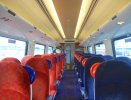
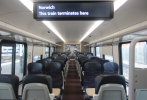
So much nicer! The internal ambiance in a flirt is just lovely - much more natural light and less cramped than a voyager due to the body profile.
Bi-mode as well....
But will never happen - too expensive for crosscountry.
The XC may be able to make the numbers stack up for to the extra capacity, it's if the Treasury will allow them to.
Even in the share of tickets between two places having more seats would increase their income.
For instance if there's 1,000 SWR seats between Southampton and Basingstoke and 250 on XC (with 1/5 of the income to XC) of XC increases that to 500 seats then they'll get 1/3 of the income. The problem is that the Treasury won't allow that as it'll mean that the other TOC would lose out. Even if actually the extra capacity meant that more passengers were travelling and offsetting most of the losses.
In the above example (using easy numbers to type and compare) if the income was £1,000 and SWR was getting £800, you'd only need the income to increase to £1,200 (+20%) for SWR to be no worse off. However the total number of seats had also increased by 20%, so overall the seat occupancy rate wouldn't need to change.
Yes it's likely that there'll be a greater number of long distance passengers, so XC would benefit more and SWR would lose income. However that could be offset, at least in part, by increased passengers on XC going to other SWR stations (such as to Fleet, Woking or Eastleigh).
However, as the Treasury cares about net costs, as long as XC can show that improves then it shouldn't matter that the costs increase. As the income would have also increased to cover that. For example if it costs more in fuel having passengers on trains the the Treasury would be stupid to argue that the trains would run with no passengers on board, as without them there would be no income.
Now with the potential for also having a lower fuel bill and lower track access charges (the 221's are quite costly in that regard) it shouldn't take too much for the overall numbers to stack up for new rolling stock. Especially if (due to longer length trains needing fewer staff than when they run in pairs) staff costs also could be reduced.