It's supply and demand, the Ford Focus and similar models have sold in vast quantities for years so there's a huge supply of used Focuses all looking for buyers, whereas Nissan Leaf sales are a small fraction of that quantity so the limited supply of used EVs supports higher used prices. That won't last forever though, as new EV sales grow, they filter through to the used market but it will take several years.

-
Our new ticketing site is now live! Using either this or the original site (both powered by TrainSplit) helps support the running of the forum with every ticket purchase! Find out more and ask any questions/give us feedback in this thread!
You are using an out of date browser. It may not display this or other websites correctly.
You should upgrade or use an alternative browser.
You should upgrade or use an alternative browser.
UK switching to electric vehicles discussion
- Thread starter MattA7
- Start date
Sponsor Post - registered members do not see these adverts; click here to register, or click here to log in
R
RailUK Forums
That's good news.Thank you AM9.
Hotel admitted liability initially with interim compensation payment but then went quiet.
Finally settled after legal intervention.
I’m wondering if the reason EVs tend to be smaller cars is because of the weight restriction EVs are heavier than ICE cars because of the battery and the law restricts cars to 3.5 tons any heavier requires a bigger license (unless you are old) if so that would be another problem for EVs as a large number of people want/need bigger cars.
No. The limit is 3.5 tons. Nothing that would be called a car comes remotely close. A Tesla model S, which is similar to a large BMW/Mercedes only weights 2.3 tonsI’m wondering if the reason EVs tend to be smaller cars is because of the weight restriction EVs are heavier than ICE cars because of the battery and the law restricts cars to 3.5 tons any heavier requires a bigger license (unless you are old) if so that would be another problem for EVs as a large number of people want/need bigger cars.
Actually, EVs so far have been larger vehicles because the current higher costs and weight of the battery and drive chain technology have minimised their additional cost over mini and city cars. The impact of weight on range however is less than would be the case for an ICV because of regen when descending inclines and recovery of kinetic energy when slowing down. Smaller models are on the way though, for example keep a watch on Hyundai and some of the other far-east manufacturers.I’m wondering if the reason EVs tend to be smaller cars is because of the weight restriction EVs are heavier than ICE cars because of the battery and the law restricts cars to 3.5 tons any heavier requires a bigger license (unless you are old) if so that would be another problem for EVs as a large number of people want/need bigger cars.
Eyersey468
Established Member
- Joined
- 14 Sep 2018
- Messages
- 2,610
I understand about supply and demand and agree the price of used EVs will eventually drop.It's supply and demand, the Ford Focus and similar models have sold in vast quantities for years so there's a huge supply of used Focuses all looking for buyers, whereas Nissan Leaf sales are a small fraction of that quantity so the limited supply of used EVs supports higher used prices. That won't last forever though, as new EV sales grow, they filter through to the used market but it will take several years.
Snow1964
Established Member
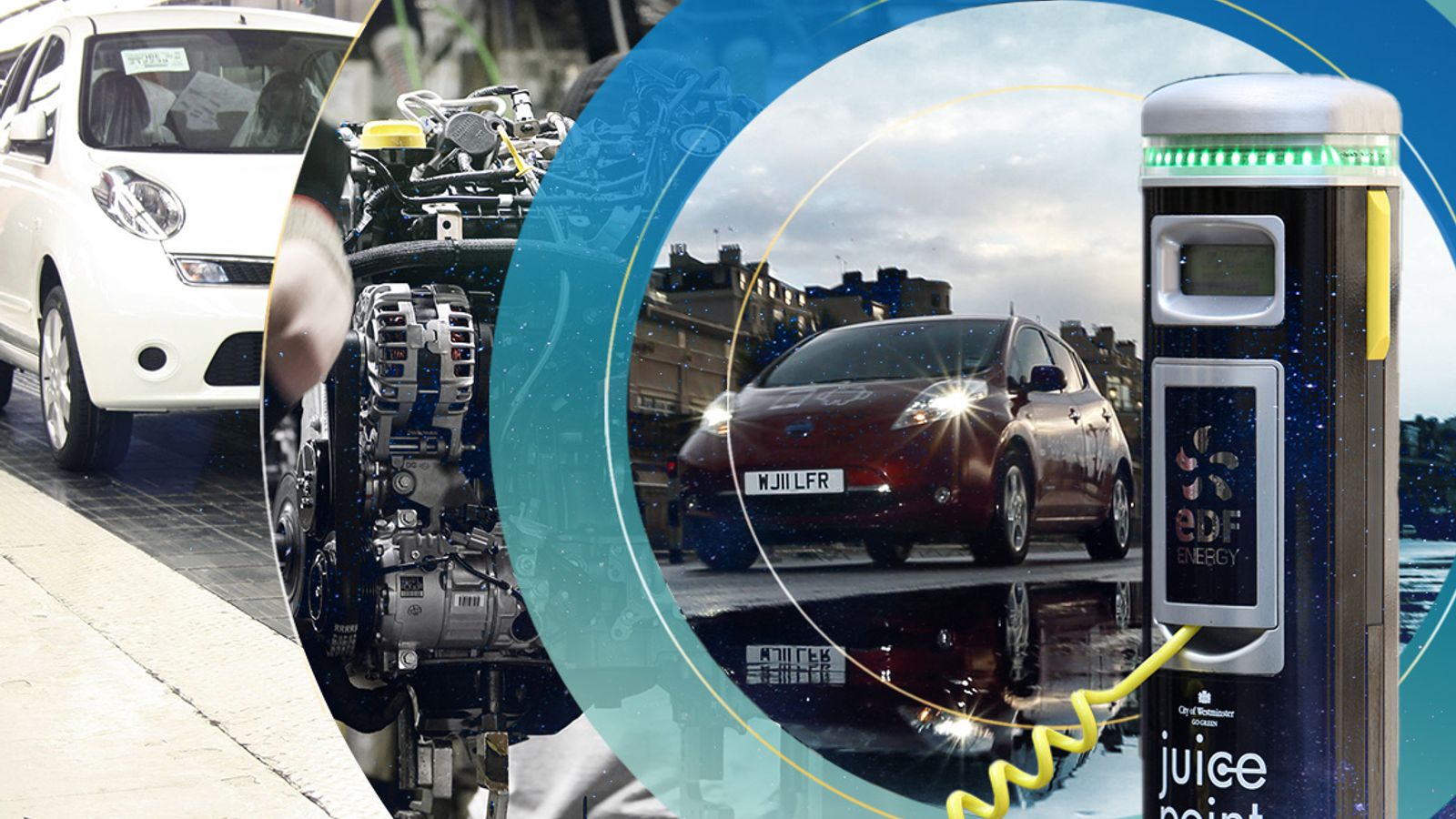
Shell has announced it will install another 50,000 chargers (in addition to the 50,000 previously announced by 2025), so will have 100,000 public chargers in UK by 2030
I guess this will help the roughly third of UK drivers that do not have off street parking, so looking more realistic to convert to EVs
 news.sky.com
On the subject of vehicles, it sounds like late 2024 or 2025 is when electric cars become mainstream with new smaller family and city cars entering the market big time. Apparently it will take that long to get the big battery factories built and in production. Companies like Volkswagen group (VW, Audi, Skoda, Seat), Renault (Renault, Nissan, Dacia), Steliantis (Peugeot, Citroen, Fiat, Vauxhall) etc have all announced battery production investment.
I guess this will help the roughly third of UK drivers that do not have off street parking, so looking more realistic to convert to EVs
Energy giant Shell to install 50,000 more electric vehicle charge points in UK by 2030
Government plans to boost EV charge points have been boosted by a promise from Shell to install an extra 50,000 charge points by 2030, following criticism of both for acting too slowly.
Energy giant Shell to install 50,000 more electric vehicle charge points in UK by 2030
Government plans to boost EV charge points have been boosted by a promise from Shell to install an extra 50,000 charge points by 2030, following criticism of both for acting too slowly.
On the subject of vehicles, it sounds like late 2024 or 2025 is when electric cars become mainstream with new smaller family and city cars entering the market big time. Apparently it will take that long to get the big battery factories built and in production. Companies like Volkswagen group (VW, Audi, Skoda, Seat), Renault (Renault, Nissan, Dacia), Steliantis (Peugeot, Citroen, Fiat, Vauxhall) etc have all announced battery production investment.

JohnMcL7
Member
- Joined
- 18 Apr 2018
- Messages
- 1,057
The current prices are really crazy though so you can't really go on current used prices. In February 2020 I was looking at buying an 18 plate petrol estate with 8,000 miles on the clock for £17,500 (around 18 months old) and at the time my 60 plate car was selling for very little, around £1500-2000. I decided against it but recently noticed the same garage selling almost exactly the same car aside from being a 68 plate and having done 25,000 miles but despite approaching four years old it was £23,000 while I've seen my old car now selling for between £6000 - £7000, I paid £11,000 for it nearly ten years ago.I had a look at Leafs on Autotrader earlier out of interest, the cheapest one within 60 miles of me was £5490 for a 12 reg one and it was a private sale. I know used car prices are high at the moment but over £5k for a 10 year old family car seems steep to me. I paid £7k for a 15 reg Focus diesel last August.
With regards to electric cars I think it's a valid point that there's still a good bit of time for improvements in charging infrastructure which seems the main weakness and improvements in the cars. Once used car prices are settled down I'll likely be buying another petrol which I'd hope is going to last another ten years then at that point I'll see what suits.
I have seen one vehicle designed around a removable battery. To mount the battery modules on a slide out tray meant a total reassessment of what a car should look like. I just wish I could remember the brand.I guess that you don't know exactly how batteries are fitted into electric cars. Each car body is designed around the maximum amount of batteries it can hold, and where they can be fitted to ensure even weight distribution.
Having a standard size battery pack that could be swapped out in that manner is just not possible.
I doubt there's a viable business in selling cars that take interchangeable batteries. Maybe it will be adopted for HGVs where on trunk routes, centres could be set up with heavy lifting gear to make a change whilst the driver takes a mandated break.I have seen one vehicle designed around a removable battery. To mount the battery modules on a slide out tray meant a total reassessment of what a car should look like. I just wish I could remember the brand.
It is becoming a feature of posts that argue against EVs to insist that there won't be a switch until either quick change batteries are available as often as filling stations are now or, that cars will run on hydrogen, which is dispensed just like current fuels are.
A couple of points not yet mentioned. Firstly there is an increasing trend of people living in cities than in the past, so the actual need for a car is dropping. Secondly, the number of young people gaing a driving licence is also going down year by year. So there's a growing demographic who have never had a car, and may never buy one.
The battery bed on the vehicle in question makes it suitable for pickups and camper vans. The bed holds six(I think) modules and can slide out. The basic vehicle comes with 2 which gives range for local driving. Additional modules can be added but it would be a minor workshop job on a par with a new set of brake pads.I doubt there's a viable business in selling cars that take interchangeable batteries. Maybe it will be adopted for HGVs where on trunk routes, centres could be set up with heavy lifting gear to make a change whilst the driver takes a mandated break.
It is becoming a feature of posts that argue against EVs to insist that there won't be a switch until either quick change batteries are available as often as filling stations are now or, that cars will run on hydrogen, which is dispensed just like current fuels are.

SargeNpton
Established Member
- Joined
- 19 Nov 2018
- Messages
- 1,755
Counter that with the increasing amount of edge of town new builds, with no public transport of any kind.A couple of points not yet mentioned. Firstly there is an increasing trend of people living in cities than in the past, so the actual need for a car is dropping. Secondly, the number of young people gaing a driving licence is also going down year by year. So there's a growing demographic who have never had a car, and may never buy one.
Some people may have to change their travel habits to accommodate the shift to electric
Before someone says you need to break the journey anyway, I agree, but I don't want to break my journey at grotty crowded and expensive-to-eat places that wayside recharging stations will be, together with all the "charger rage" which will become an increasing problem as EVs become more popular.
I've said before, it's likely that people will make a destination of their trip. What I mean by that is rather than leaving home at (say) 10 to get somewhere for (say) 5, it maybe that people opt to leave a bit earlier, go somewhere for a few hours and then arrive a bit later.
Whilst they are stopped they charge their car, but also do something rather than just writing the day off for traveling.
Try that in the country...
No whilst there's going to be some for whom it will be hard, the "rural" card is likely to be over started for most people.
By the government definition 15% of the population live in a rural location. However quite a lot of those will live somewhere where there is a population of between 5,000 and 10,000 people. Some such places will have a range of services, including pubs and supermarkets with charging points.
I read your post meaning that batteries could be rapidly swapped at a garage just like filling a fuel tank on an ICV. Having a mounting arrangement that allowed progressively populating a tray at manufacture to make vehicles with larger ranges is probably the way that some ranges of cars are being designed now. I doubt that any old workshop would be able to perform an upgrade in the field as there will be impacts on the rest of the vehicle, e.g. the weight distribution, suspension and braking settings, the (internal) charger electronics, etc.. All of those changes would require updating of the software and/or firmware, which would be by authorised dealerships and specialist outfits.The battery bed on the vehicle in question makes it suitable for pickups and camper vans. The bed holds six(I think) modules and can slide out. The basic vehicle comes with 2 which gives range for local driving. Additional modules can be added but it would be a minor workshop job on a par with a new set of brake pads.
I get what you are saying though a lot of people, myself included, simply can't afford the extra capital cost of an EV. There is also the question how long do the batteries last and how much do they cost to replace.
https://www.notebookcheck.net/Renau...Electric-UK-priority-list-opens.619226.0.html says:
Renault has shared a range of statistics for its Zoe E-Tech batteries. The company claims that more than 99% of batteries in vehicles sold since the car’s launch in 2013 are still fully functional. The devices also have at 70% of their original capacity.
Renault clarified that the data analysed was for five-door versions of the cars sold in Germany with a range of 22 to 52 kWh batteries. The Zoe E-Tech’s battery is sold with an eight-year or 160,000 km (~99,419 miles) warranty, with a guaranteed minimum capacity of 70%.
Eyersey468
Established Member
- Joined
- 14 Sep 2018
- Messages
- 2,610

RailWonderer
Established Member
No. A full battery replacement on an electric car is the equivalent to the cost of a full engine rebuild or replacement and most cars will not be worth enough to justify the cost of that, so the lifespan will be 10-15 years before scrappage or stripping for parts. Engines last longer than batteries. That will mean EV build quality will be inferior because manufacturers will design them for shorter lifespans.
Also listening to music, seat heating, wireless charging, drink heating/cooling etc will take range off the car though EVs could take care of that with a seperate battery disconnected to the main battery.
Also listening to music, seat heating, wireless charging, drink heating/cooling etc will take range off the car though EVs could take care of that with a seperate battery disconnected to the main battery.
So scrapping cars after 15 yrs. Thats green. We shoukd be looking to keep cars for longer. The first cost in €€€ and CO2 is a large part of their impact.No. A full battery replacement on an electric car is the equivalent to the cost of a full engine rebuild or replacement and most cars will not be worth enough to justify the cost of that, so the lifespan will be 10-15 years before scrappage or stripping for parts. Engines last longer than batteries. That will mean EV build quality will be inferior because manufacturers will design them for shorter lifespans.
Also listening to music, seat heating, wireless charging, drink heating/cooling etc will take range off the car though EVs could take care of that with a seperate battery disconnected to the main battery.
Snow1964
Established Member
That’s longer than the current averageSo scrapping cars after 15 yrs. Thats green. We shoukd be looking to keep cars for longer. The first cost in €€€ and CO2 is a large part of their impact.
Ignoring the last 25 months when covid and semiconductors shortage has cut new car supply, the UK has average age of nearer 12 years (32m cars, and for a 2014-2019 averaging around 2.9m new cars per year
Last edited:

miklcct
Established Member
If there is no public transport how can these estate be sold? People just can't get anywhere from there! (Unless they are luxury homes targeting those rich people who can afford cars anyway)Counter that with the increasing amount of edge of town new builds, with no public transport of any kind.
so maybe addressing that would be a better green policy than EV's? With proper maintenance a car should last over 200,000 miles. My last Pug diesel did 235,000. Would have lasted longer but the electronics got wet in a flood.That’s longer than the current average
Ignoring the last 25 months when covid and semiconductors shortage has cut new car supply, the UK has average age of nearer 12 years (32m cars, and for a 2014-2019 averaging around 2.9m cars per year
RailWonderer
Established Member
If a dealer makes more money for scrappage and parts he will send the car off and let the more expensive stuff sit on the forecourt. Economics really.So scrapping cars after 15 yrs. Thats green. We shoukd be looking to keep cars for longer. The first cost in €€€ and CO2 is a large part of their impact.
People don't want to keep cars too long because of cheap PCP leasing and financing, they want the technology, safety features and good fuel economy/range of newer cars and warranty.so maybe addressing that would be a better green policy than EV's? With proper maintenance a car should last over 200,000 miles. My last Pug diesel did 235,000. Would have lasted longer but the electronics got wet in a flood.
apk55
Member
As it stands there is no cheap electric cars on the market. The cheapest electric car on the market is well over £20K where as I can go to my local garage and get a perfectly serviceable and economical new petrol car like a Kia Picanto for £12K. The difference in price will pay for a lot of petrol - at todays prices this amounts to around 60K to 90K miles motoring - a good portion of the cars life.
Do not forget that cars bought on PCP leasing normally end being sold on the private market when the least period ends so that for most of there life they are privately owned. And it is often the smaller cheaper cars that last the longest as they are, simpler, easier to fix, more economical and cheap to insure.
Do not forget that cars bought on PCP leasing normally end being sold on the private market when the least period ends so that for most of there life they are privately owned. And it is often the smaller cheaper cars that last the longest as they are, simpler, easier to fix, more economical and cheap to insure.
StKeverne1497
Member
A move to one way systems with herringbone layout parking on one side of the road with charging posts will be necessary in terraced areas. I suspect there'll still be arguments about parking, though. It might in cheaper areas be worth buying and demolishing a few houses to provide more bays.
There's terraced housing... and terraced housing.
Around here (South Wales valleys) a lot of terraced housing sits in towns and villages with basically one narrow street. Parking is already restricted, either to just one side (where there's just about room for one car outside each house) or barred altogether. Very few of these places have the kinds of parallel roads which would allow one-way systems, and even parking end-on would struggle to provide the two cars per house-width needed for households on each side of the road to park-and-charge.
Then again, people cope at the moment without "enough" parking so maybe it isn't really a problem, and if public transport was improved (that's a whole other argument which is nevertheless part of the solution), maybe people would have fewer cars.
M.
== Doublepost prevention - post automatically merged: ==
That (and the linked German release, as much as I can understand it) is a very interesting spin on lifespan, but without seeing the actual numbers it doesn't actually say a lot, other than "batteries aren't awful".
70% is Renault's (and other manufacturer's) common figure for "this battery needs to be replaced". For the smaller batteries which had (say) 150 mile range when new, that brings them down to just about 100 miles under ideal circumstances, and it seems also to be true that there comes a point where capacity stops dropping smoothly and things such as cell failures become common.
So while 100 miles might be an acceptable range for many people, given that that batter might be 9 years old, will it still have 90 miles range next year? Or will it just cough and die?
I suppose what I'm wondering is, how many of those cars which have reached 70% actually need a new battery at this point to be useful beyond popping down to the supermarket?
I've had a quick look, but I suspect the figures haven't been released, what would make that report most useful would be the following statistics:
- capacity at survey point against age of car
- capacity at survey point against mileage of car (I suspect this is the best indicator)
- data on battery performance between (say) 70% and 50% capacity, particularly whether the deterioration accelerates, or batteries suffer "failures" (i.e. making them unusable) after 70%
M.
Last edited:
Adam Williams
Established Member
If there is no public transport how can these estate be sold? People just can't get anywhere from there! (Unless they are luxury homes targeting those rich people who can afford cars anyway)
They're generally deliberately designed to be car-centric estates (even ones I wouldn't necessarily describe as luxury, that happen to be in more rural areas), despite council planning regulations which in theory require the housing developer to contribute to public transport in the area; in my experience, it was very much a token effort that was made and the public transport available remained poor and unrealistic for long-term use. Ultimately the developers know 83% of homeowners have two cars and they're just targetting their audience. I suspect if you exclude the capital it's probably an even higher figure.
You last paragraph says what I was thinking reading the first, two cars per household (electric or IC) take up the same space, even if there is a charger connected. So if people are managing, they will still manage in the future.There's terraced housing... and terraced housing.
Around here (South Wales valleys) a lot of terraced housing sits in towns and villages with basically one narrow street. Parking is already restricted, either to just one side (where there's just about room for one car outside each house) or barred altogether. Very few of these places have the kinds of parallel roads which would allow one-way systems, and even parking end-on would struggle to provide the two cars per house-width needed for households on each side of the road to park-and-charge.
Then again, people cope at the moment without "enough" parking so maybe it isn't really a problem, and if public transport was improved (that's a whole other argument which is nevertheless part of the solution), maybe people would have fewer cars.
M.
Two main facts of private car use are:That (and the linked German release, as much as I can understand it) is a very interesting spin on lifespan, but without seeing the actual numbers it doesn't actually say a lot, other than "batteries aren't awful".
70% is Renault's (and other manufacturer's) common figure for "this battery needs to be replaced". For the smaller batteries which had (say) 150 mile range when new, that brings them down to just about 100 miles under ideal circumstances, and it seems also to be true that there comes a point where capacity stops dropping smoothly and things such as cell failures become common.
So while 100 miles might be an acceptable range for many people, given that that batter might be 9 years old, will it still have 90 miles range next year? Or will it just cough and die?
I suppose what I'm wondering is, how many of those cars which have reached 70% actually need a new battery at this point to be useful beyond popping down to the supermarket?
I've had a quick look, but I suspect the figures haven't been released, what would make that report most useful would be the following statistics:
100,000 miles isn't terribly far these days, and I'm doing that in about four or five years myself. I've always kept cars a lot longer than that!
- capacity at survey point against age of car
- capacity at survey point against mileage of car (I suspect this is the best indicator)
- data on battery performance between (say) 70% and 50% capacity, particularly whether the deterioration accelerates, or batteries suffer "failures" (i.e. making them unusable) after 70%
M.
1) The average daily distance of privately owned cars had dropped to about 20 in pre-COVID years. Even if it is only used for 5 (working) days per week, that's still only 28 miles per day.
2) Vehicles with IC engines are not ideally suited to short journeys, however EVs are a perfect match so it looks like they will continue the trend of shorter daily totals.
So based on your thumbnail assessment above, even those with degraded batteries will be good for three days sequential use without charging, which probably represents a significant proportion of prospective secondhand car buyers' needs.Bletchleyite
Veteran Member
Also listening to music, seat heating, wireless charging, drink heating/cooling etc will take range off the car though EVs could take care of that with a seperate battery disconnected to the main battery.
A good many EVs do have a separate 12V lead acid battery for "hotel power".

cactustwirly
Established Member
That’s longer than the current average
Ignoring the last 25 months when covid and semiconductors shortage has cut new car supply, the UK has average age of nearer 12 years (32m cars, and for a 2014-2019 averaging around 2.9m new cars per year
Volvo did some research into C02 emissions of one of their electric models compared with an identical ICE powereed one.
The ICE is greener for the first 10 years, because the large amount of C02 emissions produced in EV manufacture takes a very long time to offset
Volvo did some research into C02 emissions of one of their electric models compared with an identical ICE powereed one.
The ICE is greener for the first 10 years, because the large amount of C02 emissions produced in EV manufacture takes a very long time to offset
If it was the Volvo XC40 then it wasn't 10 years, they give a mileage value for the break-even point which depends on assumptions about the electricity used, for the EU28 average electricity CO2 it was ~52,000 miles to break-even, assuming renewable electricity it was 29,000 miles to break-even.
So someone with a company car driving 15,000+ miles each year on a 100% renewables tariff, break-even is under 2 years. Private motorist doing 6,000 miles per year on a standard tariff, around 8 years to break-even.
But one factor to consider is that electricity is getting steadily greener and cleaner, so the EV gets better over time.
Volvo XC40 report