• Our new ticketing site is now live! Using either this or the original site (both powered by TrainSplit) helps support the running of the forum with every ticket purchase! Find out more and ask any questions/give us feedback in this thread!

Could Route Knowledge be done away with?

Status
Not open for further replies.

Class800

Established Member
Joined
5 Feb 2020
Messages
2,112
Location
West Country
That's technically not a depot, it just happens to be under cover. The line you were on is the through northbound road. The two middle roads are reversing roads.

You were held either because an Overground had just gone through and was waiting for it to clear the section or waiting for one to pass in front.
OK, but there were trains parked up next to ours (we were going southbound) - if not 'depot' then maybe 'sidings' or 'trainshed' but it was under cover and there were trains parked up out of us
 
Sponsor Post - registered members do not see these adverts; click here to register, or click here to log in
R

RailUK Forums

Dai Corner

Established Member
Joined
20 Jul 2015
Messages
6,990
If the timetable and signalling system knew how fast the train was supposed to be going at any point and the traction and braking systems could be set to maintain that speed could we do away with the biological interface between them and just have the driver press the Go button when the train was ready to leave a station and the Stop button if he saw an obstruction on the track ahead?
 

The Planner

Veteran Member
Joined
15 Apr 2008
Messages
19,678
Re the discussion about Crewe up thread.
Some years ago they relaid/resignalled Crewe station. Trains didnt stop there at all, but were diverted vis the independent lines.
Anyone remember if there were problems with drivers not signing the independant lines back then?
And would suck a blockade and diversion be possible today without a massive route learning programme?

This was a different time pre-sectorisation. So I imagine an AC loco driver would drive freight and passenger trains, maybe in the same shift!
Some years ago was 1985. It will need to happen again for the Crewe Hub works, and it will need a massive route learning programme.
 

Dai Corner

Established Member
Joined
20 Jul 2015
Messages
6,990
Some years ago was 1985. It will need to happen again for the Crewe Hub works, and it will need a massive route learning programme.
What would be involved in a driver learning a short diversion like the Crewe Independent Lines? Watching a video? Riding over them in the cab once or many times? Driving over them while being observed by an instructor/manager and being passed as competent?
 

The Planner

Veteran Member
Joined
15 Apr 2008
Messages
19,678
What would be involved in a driver learning a short diversion like the Crewe Independent Lines? Watching a video? Riding over them in the cab once or many times? Driving over them while being observed by an instructor/manager and being passed as competent?
No idea, as they are being re-signalled anyway I would assume the FOCs will need some sort of route learning refresh as well. Some may accept a video, some may require actual travel over the route. It may be short at two or three miles but its fairly complex with all the junctions etc..
 

Lewlew

Member
Joined
15 Oct 2019
Messages
748
Location
London
OK, but there were trains parked up next to ours (we were going southbound) - if not 'depot' then maybe 'sidings' or 'trainshed' but it was under cover and there were trains parked up out of us
They come and go all day. They spend about 10 mins a time there and head back south. If you were held southbound then one probably came out in front of you.
 

Ken H

Established Member
Joined
11 Nov 2018
Messages
6,718
Location
N Yorks
They come and go all day. They spend about 10 mins a time there and head back south. If you were held southbound then one probably came out in front of you.
I would travel between Queens Park and Willesden Jct on the New lines all day. Its just total railway. Prob get out at Willesden Jct to watch the North London line trains for a bit maybe.
 

ComUtoR

Established Member
Joined
13 Dec 2013
Messages
9,562
Location
UK
But there are probably good reasons, just ones hard to understand for an outsider


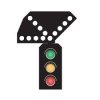
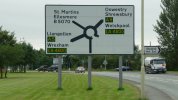
Consider both images. A Train Driver needs to understand their routing based on the position of the junction indicator and needs to instantly understand it at speed. A Bus/Coach Driver has the route clearly indicated. Even if the indications look directional, they aren't. This is because for the Train Driver the routes indications are not always for destinations. They may just be sets of points.

For the Position 3 image. It's very similar to the roundabout sign but where does the main aspect take you ?

Even then you still have to chuck in other factors like speeds across each of the individual set of points. Each of the exits from the roundabout will generally have the same speed based on the road type. Each of the signal routes could have 4 different speeds or even restricted traction types.

Hope that adds some further clarity for you.
 

Attachments

  • Gledrid_Roundabout_sign.JPG
    Gledrid_Roundabout_sign.JPG
    3.1 MB · Views: 15
  • Position 3.jpg
    Position 3.jpg
    4.4 KB · Views: 15
Last edited:

notadriver

Established Member
Joined
1 Oct 2010
Messages
3,737
It's difficult to get full insight into any job one doesn't do - and I am not a train driver. The perceived similarity is that both are driving roles, hence why I thought if a coach driver doesn't have to sign the M1 as opposed to the M6, why would a train driver have to sign the ECML as opposed to the WCML. But there are probably good reasons, just ones hard to understand for an outsider
A few weeks to become a qualified PCV driver? I have it on good authority that someone I know had his course paid for by the job centre, had just 2 days training and passed his test on day 3. Only the Cpc course drags this out but legally he can drive the vehicle anywhere after just 3 days.

As a casual coach driver I can vouch for the perceived similarity from a lay persons point of view where it is often believed trains are automatic and only a stop and go button needs to be pressed.
 

Tomnick

Established Member
Joined
10 Jun 2005
Messages
5,933
Yes I wondered that too re the loops point.

Re drivers not signing stations but signing avoiding lines - could this apply to open access operators who only have a set stopping pattern and never stop at certain stations on the routes they traverse? One example might be Lumo not signing Darlington, for example?

I’d have thought it would still make sense for them to sign as a way to get out of trouble, but of course there is a cost involved
My first thought in response to that is that the signaller would be perfectly entitled to run one through the station on an ad-hoc basis, if necessary to minimise delay during even slight disruption, e.g. to avoid a conflict with a late running Up train arriving at the station. For that reason alone, I think it'd be unwise for anyone to try that one.

Looking at it further, it appears that the majority of Lumo's Down train are actually booked to go through the station!
It was actually both ! The Driver would be offered the diversion route only to refuse it, but it was also known in Control that Drivers from certain Depots did not sign the diversion (although it was still worth asking).
How much of a deviation did it involve? I could understand it if it was something like, say, Redhill station vs the Quarry lines, but anything less than that seems a bit daft.

I've often thought, personally, that the limits of route knowledge are often poorly defined - e.g., if you sign the route you sign the sidings, but not these sidings which are an entity in their own right, but you wouldn't necessarily know that. I guess that's how this sort of discussion arises, because so much is left to interpretation and discretion at both an individual and a company level.
 

skyhigh

Established Member
Joined
14 Sep 2014
Messages
6,859
It's difficult to get full insight into any job one doesn't do - and I am not a train driver. The perceived similarity is that both are driving roles, hence why I thought if a coach driver doesn't have to sign the M1 as opposed to the M6, why would a train driver have to sign the ECML as opposed to the WCML. But there are probably good reasons, just ones hard to understand for an outsider
It's pretty simple - roads, you drive according to what you can see. Trains - you drive based on what you know is coming up and the signals displayed to you.

The route knowledge of a bus driver vs a train driver is completely incomparable in almost every single way. Would you expect a bus driver to know every single speed limit between York and Manchester, or know exactly where they brake for each bus stop (and how that differs when it's drizzling/autumn/sunny)?
 

Ken H

Established Member
Joined
11 Nov 2018
Messages
6,718
Location
N Yorks
It's pretty simple - roads, you drive according to what you can see. Trains - you drive based on what you know is coming up and the signals displayed to you.

The route knowledge of a bus driver vs a train driver is completely incomparable in almost every single way. Would you expect a bus driver to know every single speed limit between York and Manchester, or know exactly where they brake for each bus stop (and how that differs when it's drizzling/autumn/sunny)?
So we relay on Mk 1 human brain to remember where every public crossing, signal, station, speed limit point is over 100's of miles of railway, instead of giving the driver a simple aide memoir to tell him when each point of interest is coming up. If its 4 track it could tell him about both lines - they are probably very similar anyway. I am not talking 100% deskilling here. Just something to make life easier.
 

43066

Veteran Member
Joined
24 Nov 2019
Messages
12,089
Location
London
The perceived similarity is that both are driving roles, hence why I thought if a coach driver doesn't have to sign the M1 as opposed to the M6, why would a train driver have to sign the ECML as opposed to the WCML. But there are probably good reasons, just ones hard to understand for an outsider

The reason is primarily that driving a train is absolutely nothing like driving a road vehicle and trains aren’t driven on line of sight; so it’s an utterly irrelevant comparison. You might just as well compare it with airline pilots or ships’ captains which are also loosely “driving roles”. As noted initial training of a train driver takes about as long as an airline pilot (a year or so), a bus driver takes a few days, which should give some indication that the roles aren’t comparable.

That reality is ignored by certain resentful posters on here - usually the same ones -
who like to selectively equate train drivers with bus drivers, and other lower paying jobs, presumably because it feeds into their narrative of wanting drivers to be paid like bus drivers. We can only speculate as to what strange bitterness is motivating that!

So we relay on Mk 1 human brain to remember where every public crossing, signal, station, speed limit point is over 100's of miles of railway, instead of giving the driver a simple aide memoir to tell him when each point of interest is coming up. If its 4 track it could tell him about both lines - they are probably very similar anyway. I am not talking 100% deskilling here. Just something to make life easier.

It wouldn’t make life easier.

If that was thought useful or necessary, don’t you think it have been done already?
 
Joined
29 Oct 2021
Messages
180
Location
Newton Abbot
There is a stabling point at Queens Park and many Bakerloo trains are turned around there. Definitely one of the most characterful of the LU lines!


Buses and coaches are road vehicles, driven on line of sight, so their drivers don’t require route knowledge in the same way a train driver does. As a car license holder I could do a PCV license in a couple of weeks and effectively then drive a coach anywhere with a sat nav!

No disrespect to bus drivers but it’s a completely different job with completely different training requirements and it’s a mystery to me as to why these jobs are so often spoken about on here as if they’re somehow equivalent. In fact train drivers take about the same length of time to train up as airline pilots and the training also costs a similar amount, so comparisons with jobs you can learn to do with a few days’ training really are massively wide of the mark.

Trams are obviously also railed vehicles but are also driven on line of sight with lower training requirements than heavy rail (but a fair bit higher than buses and coaches).

== Doublepost prevention - post automatically merged: ==


Yes I wondered that too re the loops point.

Re drivers not signing stations but signing avoiding lines - could this apply to open access operators who only have a set stopping pattern and never stop at certain stations on the routes they traverse? One example might be Lumo not signing Darlington, for example?

I’d have thought it would still make sense for them to sign as a way to get out of trouble, but of course there is a cost involved.
Sat nav will not necessarily tell the coach driver, locations where coaches should not venture, I suspect route/ familiarity is desirable, not withstanding other tasks.

The role of airline pilots have some similarities, but also some fundamental differences, i.e. airline pilots work in 3 dimensions. Also if things go wrong for pilots the plane can drop out of the sky. The rail driver will have safety devices which bring the train to a stand if things go wrong; it is a different order of magnitude. Train drivers manage speed and braking, but steering is done, in effect by signallers.

The most challenging part of train driving is tedium.
 

skyhigh

Established Member
Joined
14 Sep 2014
Messages
6,859
That reality is ignored by certain resentful posters on here - usually the same ones -
Interestingly we had a previous thread where a similar poster was airing their views on traction knowledge and comparing bus drivers to train drivers:

Aircraft have type ratings. Coaches I believe don't - a coach driver can I believe drive the route if a Plaxton Elite is substituted by Caetano Boa Vista or a Scania K410.

And my driving licence isn't type rated to the brand of car I passed my test in, nor is the licence of a HGV driver restricted to the type of lorry they passed in, a bus driver isn't restricted to the brand of bus the test was in even though passengers are carried, etc etc.

Maybe this sort of issue as seen with a long distance train being operated by 153s should lead to drivers having to be more flexible.

It should be feasible, surely. At least maybe to classify them as loco, DMU or EMU drivers - or ideally just train drivers.
Suggesting the system needs to be more akin to coaches and buses rather than individual drivers being obstinate of course. As it works very well to have drivers on different 'classes' of bus and coach - so in theory it should work? It's a system issue
 

Class800

Established Member
Joined
5 Feb 2020
Messages
2,112
Location
West Country
That reality is ignored by certain resentful posters on here - usually the same ones -
who like to selectively equate train drivers with bus drivers, and other lower paying jobs, presumably because it feeds into their narrative of wanting drivers to be paid like bus drivers. We can only speculate as to what strange bitterness is motivating that!
Certainly not me - I didn't understand the magnitude of difference, and thanks for explaining it. Although I do retain my view that the concept of 'signing' is too restrictive.
 

skyhigh

Established Member
Joined
14 Sep 2014
Messages
6,859
So we relay on Mk 1 human brain to remember where every public crossing, signal, station, speed limit point is over 100's of miles of railway, instead of giving the driver a simple aide memoir to tell him when each point of interest is coming up. If its 4 track it could tell him about both lines - they are probably very similar anyway. I am not talking 100% deskilling here. Just something to make life easier.
If there was such a system that was genuinely an aide rather than hinderance, I would be all for it.
 

6Gman

Established Member
Joined
1 May 2012
Messages
9,200
So we relay on Mk 1 human brain to remember where every public crossing, signal, station, speed limit point is over 100's of miles of railway, instead of giving the driver a simple aide memoir to tell him when each point of interest is coming up. If its 4 track it could tell him about both lines - they are probably very similar anyway. I am not talking 100% deskilling here. Just something to make life easier.
Not really. Often different speed limits, crossovers, signalling etc etc

== Doublepost prevention - post automatically merged: ==

Certainly not me - I didn't understand the magnitude of difference, and thanks for explaining it. Although I do retain my view that the concept of 'signing' is too restrictive.
In what way? What knowledge would you seek to drop?
 

43066

Veteran Member
Joined
24 Nov 2019
Messages
12,089
Location
London
Certainly not me - I didn't understand the magnitude of difference, and thanks for explaining it. Although I do retain my view that the concept of 'signing' is too restrictive.

Yes. I should say I appreciate you aren’t one of them and I realise your questions are motivated by curiosity. :)
 

NoRoute

Member
Joined
25 Nov 2020
Messages
504
Location
Midlands
As noted initial training of a train driver takes about as long as an airline pilot (a year or so), a bus driver takes a few days, which should give some indication that the roles aren’t comparable.
An airline pilot isn't trained in a year, which sounded worryingly quick given the skill needed and the complexity, a quick check shows it takes at least 18 months to become a pilot, often longer.

Your example of a bus driver being trained in a few days isn't correct either because a large part of the skill necessary to drive a bus is first learning to drive a road vehicle and obtaining your driving license, I know people take accelerated driving training but nobody learns to drive a road vehicle and pass their test in a few days, it's typically at least many weeks or more, with additional experience and training then required to drive larger classes of vehicles like buses.

And to be fair to the poor old bus driver, not only do they have to drive the vehicle, they also have to know their routes, navigate through heavy traffic, collect the fares and deal with passengers and passenger safety. There's also more dependency on their driving to prevent accidents, as buses do not have the automated protection systems (AWS, TPWS) you have on the railways.
 

43066

Veteran Member
Joined
24 Nov 2019
Messages
12,089
Location
London
The role of airline pilots have some similarities, but also some fundamental differences, i.e. airline pilots work in 3 dimensions. Also if things go wrong for pilots the plane can drop out of the sky. The rail driver will have safety devices which bring the train to a stand if things go wrong; it is a different order of magnitude. Train drivers manage speed and braking, but steering is done, in effect by signallers.

There aren’t really any similarities at all apart from getting a tube of metal full of people from A to B, doing shift work and needing to manage fatigue! However my point wasn’t to compare the content of the jobs but merely to point out that it’s nonsensical for people compare train driving to bus driving, when the training is indeed more akin to the length (and cost) of pilot training.

Sat nav will not necessarily tell the coach driver, locations where coaches should not venture, I suspect route/ familiarity is desirable, not withstanding other tasks.

No - but that is once again several orders of magnitude different to the route knowledge a train driver requires. Didn’t you say you used to be a train driver? If so it’s odd that you don’t appear to realise that.

The most challenging part of train driving is tedium.

I wouldn’t say tedium due to the concentration involved, but managing periods of underload is certainly part of the job - especially with long distance work.

If you get too bored you can always solve physics problems between stations to pass the time… :D

The Germans disagree.


It has - the Buchfahrplan/elektronische Buchfahrplan.

Although as you’re very well aware the German railway system isn’t the British system and (I believe I’m right in saying) their signalling relies more heavily on speed indications than route indications, so it doesn’t necessarily follow that something implemented there would be beneficial here. At first blush that document lots rather like our sectional appendix (it’s difficult to find much information about it that isn’t in German!), I’d question how useful having that in front of me would be when driving.

DAS systems have been mentioned on here before as something which approximates an aide memoire, but certainly aren’t regarded as a substitute for route knowledge by those who use them.

An airline pilot isn't trained in a year, which sounded worryingly quick given the skill needed and the complexity, a quick check shows it takes at least 18 months to become a pilot, often longer.

Splitting hairs a tad; I said *about* a year for both - perhaps I should have said “year and a bit”.

Actually it took me 13 months to pass out as a driver. You can do a 0-FATPL in between a year and 18 months, MPLs can be completed in 14 months so, yes, the timescales are comparable, which was my original point.

Contrast that with bus driving: as @notadriver has pointed out, the course is a few days if you have a car license. A mate of mine (who ironically is an airline pilot!) did his LGV license just for fun last year. That was a five day course
with the test on the last day. He could have gone out the next day and started driving lorries for a living.

These are “professional driving” roles but are essentially casual jobs that almost anybody can do and people can be trained up for very quickly. You simply cannot compare those jobs with the skill and training required to drive trains, which gained over a far longer period, after a rigorous selection process.

Your example of a bus driver being trained in a few days isn't correct either because a large part of the skill necessary to drive a bus is first learning to drive a road vehicle and obtaining your driving license, I know people take accelerated driving training but nobody learns to drive a road vehicle and pass their test in a few days, it's typically at least many weeks or more, with additional experience and training then required to drive larger classes of vehicles like buses.

People take weeks to do a car license because your average 17yo does a lesson per week. It can be done in a matter of five days according to some driving schools on the internet. I appreciate very few would do an intensive car driving course and then go straight into bus driver training, but a high % of the adult population can already drive a car, so bus companies have a large pool from which to recruit from. That clearly isn’t the case with the railway, so not really comparing apples with apples.

To be clear I’m absolutely not trying to do bus driving down - merely pointing out why it’s not comparable to train driving in any meaningful way. Anyone who says otherwise is either delusional, or has an agenda...

And to be fair to the poor old bus driver, not only do they have to drive the vehicle, they also have to know their routes, navigate through heavy traffic, collect the fares and deal with passengers and passenger safety. There's also more dependency on their driving to prevent accidents, as buses do not have the automated protection systems (AWS, TPWS) you have on the railways.

Frankly it looks like a grim job and I’m not sure I’d be prepared to do it for what they get paid. Sadly that does seem to also result in it being a job which often isn’t carried out with much care or pride. I periodically use buses in London snd I’ve witnessed some truly horrendous driving.

TPWS and AWS aren’t infallible and TPWS isn’t present everywhere. It would be possible to SPAD and rear-end another train in many locations, for example. and you can absolutely cause a great deal of damage by making extremely minor mistakes as we saw in the Thameslink core very recently.

It’s also a common misconception that the presence of systems somehow makes the job easier; it does not! They are essentially passive systems which don’t intervene in everyday driving. Their presence makes a mistake much less likely to kill someone but if you regularly rely on safety systems you will be out of a job very quickly indeed.

 
Last edited:

notadriver

Established Member
Joined
1 Oct 2010
Messages
3,737
There aren’t really any similarities at all apart from getting a tube of metal full of people from A to B, doing shift work and needing to manage fatigue! However my point wasn’t to compare the content of the jobs but merely to point out that it’s nonsensical for people compare train driving to bus driving, when the training is indeed more akin to the length (and cost) of pilot training.


No - but that is once again several orders of magnitude different to the route knowledge a train driver requires. Didn’t you say you used to be a train driver? If so it’s odd that you don’t appear to realise that.


I wouldn’t say tedium due to the concentration involved, but managing periods of underload is certainly part of the job - especially with long distance work.

If you get too bored you can always solve physics problems between stations to pass the time… :D


Although as you’re very well aware the German railway system isn’t the British system and (I believe I’m right in saying) their signalling relies more heavily on speed indications than route indications, so it doesn’t necessarily follow that something implemented there would be beneficial here. At first blush that document lots rather like our sectional appendix (it’s difficult to find much information about it that isn’t in German!), I’d question how useful having that in front of me would be when driving.

DAS systems have been mentioned on here before as something which approximates an aide memoire, but certainly aren’t regarded as a substitute for route knowledge by those who use them.


Splitting hairs a tad; I said *about* a year for both - perhaps I should have said “year and a bit”.

Actually it took me 13 months to pass out as a driver. You can do a 0-FATPL in between a year and 18 months, MPLs can be completed in 14 months so, yes, the timescales are comparable, which was my original point.

Contrast that with bus driving: as @notadriver has pointed out, the course is a few days if you have a car license. A mate of mine (who ironically is an airline pilot!) did his LGV license just for fun last year. That was a five day course
with the test on the last day. He could have gone out the next day and started driving lorries for a living.

These are “professional driving” roles but are essentially casual jobs that almost anybody can do and people can be trained up for very quickly. You simply cannot compare those jobs with the skill and training required to drive trains, which gained over a far longer period, after a rigorous selection process.


People take weeks to do a car license because your average 17yo does a lesson per week. It can be done in a matter of five days according to some driving schools on the internet. I appreciate very few would do an intensive car driving course and then go straight into bus driver training, but a high % of the adult population can already drive a car, so bus companies have a large pool from which to recruit from. That clearly isn’t the case with the railway, so not really comparing apples with apples.

To be clear I’m absolutely not trying to do bus driving down - merely pointing out why it’s not comparable to train driving in any meaningful way. Anyone who says otherwise is either delusional, or has an agenda...


Frankly it looks like a grim job and I’m not sure I’d be prepared to do it for what they get paid. Sadly that does seem to also result in it being a job which often isn’t carried out with much care or pride. I periodically use buses in London snd I’ve witnessed some truly horrendous driving.

TPWS and AWS aren’t infallible and TPWS isn’t present everywhere. It would be possible to SPAD and rear-end another train in many locations, for example. and you can absolutely cause a great deal of damage by making extremely minor mistakes as we saw in the Thameslink core very recently.

It’s also a common misconception that the presence of systems somehow makes the job easier; it does not! They are essentially passive systems which don’t intervene in everyday driving. Their presence makes a mistake much less likely to kill someone but if you regularly rely on safety systems you will be out of a job very quickly indeed.

Fantastic post with excellent explanations @43066.
 
Joined
29 Oct 2021
Messages
180
Location
Newton Abbot
There aren’t really any similarities at all apart from getting a tube of metal full of people from A to B, doing shift work and needing to manage fatigue! However my point wasn’t to compare the content of the jobs but merely to point out that it’s nonsensical for people compare train driving to bus driving, when the training is indeed more akin to the length (and cost) of pilot training.


No - but that is once again several orders of magnitude different to the route knowledge a train driver requires. Didn’t you say you used to be a train driver? If so it’s odd that you don’t appear to realise that.


I wouldn’t say tedium due to the concentration involved, but managing periods of underload is certainly part of the job - especially with long distance work.

If you get too bored you can always solve physics problems between stations to pass the time… :D


Although as you’re very well aware the German railway system isn’t the British system and (I believe I’m right in saying) their signalling relies more heavily on speed indications than route indications, so it doesn’t necessarily follow that something implemented there would be beneficial here. At first blush that document lots rather like our sectional appendix (it’s difficult to find much information about it that isn’t in German!), I’d question how useful having that in front of me would be when driving.

DAS systems have been mentioned on here before as something which approximates an aide memoire, but certainly aren’t regarded as a substitute for route knowledge by those who use them.


Splitting hairs a tad; I said *about* a year for both - perhaps I should have said “year and a bit”.

Actually it took me 13 months to pass out as a driver. You can do a 0-FATPL in between a year and 18 months, MPLs can be completed in 14 months so, yes, the timescales are comparable, which was my original point.

Contrast that with bus driving: as @notadriver has pointed out, the course is a few days if you have a car license. A mate of mine (who ironically is an airline pilot!) did his LGV license just for fun last year. That was a five day course
with the test on the last day. He could have gone out the next day and started driving lorries for a living.

These are “professional driving” roles but are essentially casual jobs that almost anybody can do and people can be trained up for very quickly. You simply cannot compare those jobs with the skill and training required to drive trains, which gained over a far longer period, after a rigorous selection process.


People take weeks to do a car license because your average 17yo does a lesson per week. It can be done in a matter of five days according to some driving schools on the internet. I appreciate very few would do an intensive car driving course and then go straight into bus driver training, but a high % of the adult population can already drive a car, so bus companies have a large pool from which to recruit from. That clearly isn’t the case with the railway, so not really comparing apples with apples.

To be clear I’m absolutely not trying to do bus driving down - merely pointing out why it’s not comparable to train driving in any meaningful way. Anyone who says otherwise is either delusional, or has an agenda...


Frankly it looks like a grim job and I’m not sure I’d be prepared to do it for what they get paid. Sadly that does seem to also result in it being a job which often isn’t carried out with much care or pride. I periodically use buses in London snd I’ve witnessed some truly horrendous driving.

TPWS and AWS aren’t infallible and TPWS isn’t present everywhere. It would be possible to SPAD and rear-end another train in many locations, for example. and you can absolutely cause a great deal of damage by making extremely minor mistakes as we saw in the Thameslink core very recently.

It’s also a common misconception that the presence of systems somehow makes the job easier; it does not! They are essentially passive systems which don’t intervene in everyday driving. Their presence makes a mistake much less likely to kill someone but if you regularly rely on safety systems you will be out of a job very quickly indeed.
No need for physics problem solving in the cab, just understand the principles and have parameters. The recent example being, 29 seconds to slow by 11 mph, with a substantive brake application.

The majority of driver training is time spent "sitting with Nellie" The issue being one Nellie has different parameters to the next Nellie.
 

baz962

Established Member
Joined
8 Jun 2017
Messages
3,664
There aren’t really any similarities at all apart from getting a tube of metal full of people from A to B, doing shift work and needing to manage fatigue! However my point wasn’t to compare the content of the jobs but merely to point out that it’s nonsensical for people compare train driving to bus driving, when the training is indeed more akin to the length (and cost) of pilot training.


No - but that is once again several orders of magnitude different to the route knowledge a train driver requires. Didn’t you say you used to be a train driver? If so it’s odd that you don’t appear to realise that.


I wouldn’t say tedium due to the concentration involved, but managing periods of underload is certainly part of the job - especially with long distance work.

If you get too bored you can always solve physics problems between stations to pass the time… :D


Although as you’re very well aware the German railway system isn’t the British system and (I believe I’m right in saying) their signalling relies more heavily on speed indications than route indications, so it doesn’t necessarily follow that something implemented there would be beneficial here. At first blush that document lots rather like our sectional appendix (it’s difficult to find much information about it that isn’t in German!), I’d question how useful having that in front of me would be when driving.

DAS systems have been mentioned on here before as something which approximates an aide memoire, but certainly aren’t regarded as a substitute for route knowledge by those who use them.


Splitting hairs a tad; I said *about* a year for both - perhaps I should have said “year and a bit”.

Actually it took me 13 months to pass out as a driver. You can do a 0-FATPL in between a year and 18 months, MPLs can be completed in 14 months so, yes, the timescales are comparable, which was my original point.

Contrast that with bus driving: as @notadriver has pointed out, the course is a few days if you have a car license. A mate of mine (who ironically is an airline pilot!) did his LGV license just for fun last year. That was a five day course
with the test on the last day. He could have gone out the next day and started driving lorries for a living.

These are “professional driving” roles but are essentially casual jobs that almost anybody can do and people can be trained up for very quickly. You simply cannot compare those jobs with the skill and training required to drive trains, which gained over a far longer period, after a rigorous selection process.


People take weeks to do a car license because your average 17yo does a lesson per week. It can be done in a matter of five days according to some driving schools on the internet. I appreciate very few would do an intensive car driving course and then go straight into bus driver training, but a high % of the adult population can already drive a car, so bus companies have a large pool from which to recruit from. That clearly isn’t the case with the railway, so not really comparing apples with apples.

To be clear I’m absolutely not trying to do bus driving down - merely pointing out why it’s not comparable to train driving in any meaningful way. Anyone who says otherwise is either delusional, or has an agenda...


Frankly it looks like a grim job and I’m not sure I’d be prepared to do it for what they get paid. Sadly that does seem to also result in it being a job which often isn’t carried out with much care or pride. I periodically use buses in London snd I’ve witnessed some truly horrendous driving.

TPWS and AWS aren’t infallible and TPWS isn’t present everywhere. It would be possible to SPAD and rear-end another train in many locations, for example. and you can absolutely cause a great deal of damage by making extremely minor mistakes as we saw in the Thameslink core very recently.

It’s also a common misconception that the presence of systems somehow makes the job easier; it does not! They are essentially passive systems which don’t intervene in everyday driving. Their presence makes a mistake much less likely to kill someone but if you regularly rely on safety systems you will be out of a job very quickly indeed.
Couple of other points. A company requiring a HGV driver , could have an agency worker straight in. As a qualified train driver that happens to have recently changed jobs from high intensity metro to intercity , I could not have driven by myself on day one ( at least a few months ) . And on the point of safety systems , they can be as much a hindrance than a help. Not knowing the speed that triggers tpws and possibly being 1 mph over the trigger speed , but slow enough to stop for the signal or speed restriction is horrid. Either that or you sometimes approach them nervously. Not always roses.
 

Dai Corner

Established Member
Joined
20 Jul 2015
Messages
6,990
Couple of other points. A company requiring a HGV driver , could have an agency worker straight in. As a qualified train driver that happens to have recently changed jobs from high intensity metro to intercity , I could not have driven by myself on day one ( at least a few months ) . And on the point of safety systems , they can be as much a hindrance than a help. Not knowing the speed that triggers tpws and possibly being 1 mph over the trigger speed , but slow enough to stop for the signal or speed restriction is horrid. Either that or you sometimes approach them nervously. Not always roses.
I guess having a Buchfahrplan/elektronische Buchfahrplan in front of you showing the tpws trigger speeds would help?
 
Joined
29 Oct 2021
Messages
180
Location
Newton Abbot
Couple of other points. A company requiring a HGV driver , could have an agency worker straight in. As a qualified train driver that happens to have recently changed jobs from high intensity metro to intercity , I could not have driven by myself on day one ( at least a few months ) . And on the point of safety systems , they can be as much a hindrance than a help. Not knowing the speed that triggers tpws and possibly being 1 mph over the trigger speed , but slow enough to stop for the signal or speed restriction is horrid. Either that or you sometimes approach them nervously. Not always roses.
A driver that brakes using 6 percent g will not set off the TPWS.
 

baz962

Established Member
Joined
8 Jun 2017
Messages
3,664
I guess having a Buchfahrplan/elektronische Buchfahrplan in front of you showing the tpws trigger speeds would help?
To be fair though , we could be told them. It seems that the powers that be don't want us knowing them.
 
Joined
29 Oct 2021
Messages
180
Location
Newton Abbot
To be fair though , we could be told them. It seems that the powers that be don't want us knowing them.
The psychologists deduce; drivers that know the trip speed, will drive to just below the said speed, and risk incident. The truth is all drivers are treated by the actions of the lowest common denominator.
 
Status
Not open for further replies.

Top