• Our new ticketing site is now live! Using either this or the original site (both powered by TrainSplit) helps support the running of the forum with every ticket purchase! Find out more and ask any questions/give us feedback in this thread!

Carmont (near Stonehaven) derailment - 12 August 2020

Status
Not open for further replies.

GC class B1

Member
Joined
19 Jun 2021
Messages
460
Location
East midlands
In terms of risk per passenger mile, hauling around wooden framed coaches from the 20s would be safer than by car because collisions are so rare. But if there were to be a crash everyone would be killed.

That's bad logic.
However 1920s vehicles are not still in service but HSTs are and there isnt a ready replacement. My point is running. HSTs is safer than not running trains at all and forcing people to use cars.
 
Sponsor Post - registered members do not see these adverts; click here to register, or click here to log in
R

RailUK Forums

Nicholas Lewis

Established Member
Joined
9 Aug 2019
Messages
8,014
Location
Surrey
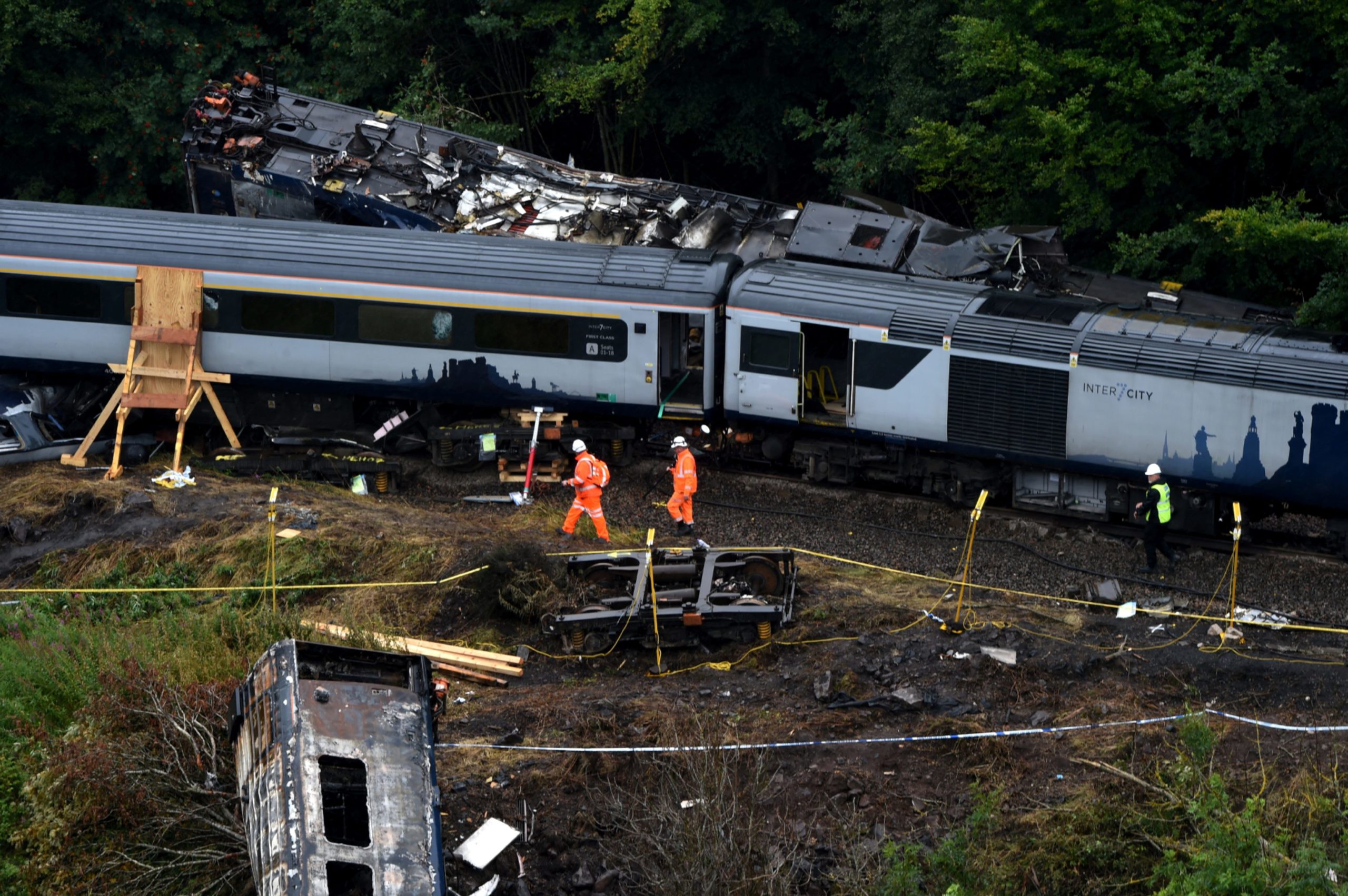
That's a considerable misrepresentation. At Southall, as the HST progressively struck the stone train at a combined closing speed of near 100mph, each wagon as pushed over progressively presented the next one more and more head on. Look at your picture. The drivers' windscreen is not even broken.

And if you want to comment on Ladbroke Grove as well and the HST driver's cab being "severely compromised", maybe we can carry on to the, new and modern at the time, front car of the colliding Class 165, which was completely shredded for its whole length down to the underframe. In such an incident, I think "severely compromised" would be pretty good.
Not sure what ive misrepresented ive just shone a light on previous accidents which exposed the weakness of the HST cab and the lack of a response by the industry. Reality is to improve driver protection the cabs would have needed to be completely rebuilt, if that was even possible with the space available, and even then achieving modern standards wouldn't have been possible.
I do feel that, for Carmont, issues in the report about the train have given Network Rail a "Get Out Of Jail" card, to (once again, unfortunately) stick it as much as possible on the train operator. For their own complete failings. There, that's been said. But it needed saying.
There is no get of jail card for NR the first ten of the twenty recommendations are directed to NR and are clearly in running order of how much they would contribute to avoiding a repeat accident. Furthermore the train operator is not even in receipt of any recommendations.

Anyhow what continues to trouble me with every RAIB report is how they cite previous reports and recommendations that have been made which had they been acted upon by owners would have made a material difference to the outcome. Its about time ORR stepped upto the plate and levied some enforcement action against entities that don't implement recommendations in a timely manner.
 
Joined
31 Jan 2020
Messages
395
Location
Inverness
However 1920s vehicles are not still in service but HSTs are and there isnt a ready replacement. My point is running. HSTs is safer than not running trains at all and forcing people to use cars.
Not a ready replacement? At Scotrail the HSTs replaced more modern trains!

== Doublepost prevention - post automatically merged: ==

The fire in coach D was caused by the batteries and likely as a result of electrical problems caused by the damage to the train. As the fire started some time after the accident occurred it is likely there wouldn’t have been anyone still inside the carriage once the fire started taking hold in the saloon or may have been dealt with much sooner. still, as you say the scene is no less devastating and there would have been some significant injuries in this carriage. it was by virtue of the lack of passengers as a result of the covid pandemic that there weren’t more injuries or deaths.
Coach D didn't catch fire.
 

Watershed

Veteran Member
Associate Staff
Senior Fares Advisor
Joined
26 Sep 2020
Messages
16,744
Location
UK
In terms of risk per passenger mile, hauling around wooden framed coaches from the 20s would be safer than by car because collisions are so rare. But if there were to be a crash everyone would be killed.

That's bad logic.
It's not bad logic at all. Risks should be mitigated based on the overall risk to society; purely looking at the risk to rail passengers is to ignore the fact that 90% can and will drive if there isn't a convenient train service.

After 9/11 there was a marked increase in car accidents and fatalities, as people shunned flying - far more than the number that died in the tragic events of that day. So that (over)reaction cost many lives.

Similarly, Network Rail and Chiltern recently applied for permission to allow them to discontinue the use of ATP on the Chiltern Main Line, owing to equipment becoming outdated and difficult to repair.

One of the central planks of their argument was that refusing permission would cause many trains to be cancelled as they would be unable to enter service with defective ATP. In turn that would lead to more people taking the car, and hence more accidents and fatalities than any increase in risk that might be caused by the loss of ATP. The ORR concurred and granted permission.

Now, I don't totally agree with that decision - it was really a matter of cost-cutting, as there wasn't even a commitment to introduce ETCS to mitigate the risk caused by the removal of ATP. But clearly the holistic approach to risk is acceptable to the regulator.
 

O L Leigh

Established Member
Joined
20 Jan 2006
Messages
5,609
Location
In the cab with the paper
I don't disagree that a more modern train would have been more survivable, but I do disagree that Grayrigg provides evidence of this.

Well the RAIB seem to think it an appropriate parallel for the reasons they state, and I’m not qualified to gainsay them.

However 1920s vehicles are not still in service but HSTs are and there isnt a ready replacement. My point is running. HSTs is safer than not running trains at all and forcing people to use cars.

This is equally bad logic because it assumes a total withdrawal of rail services. I’ve no doubt that those operators still using them might struggle to completely fill the gaps and the service may require thinning, but in most cases a total withdrawal would not suddenly isolate communities. It also ignores other choices available for passengers. Not all journeys are vital so passengers may simply decide not to travel.

There’s also the risk that this line of argument could be used to justify the continuation of an unsafe practice. Safety decisions cannot be made simply on a “least worst” basis.

HSTs will continue to be run, but not because of any risk of modal shift. Rather it will be because they are not considered “unsafe”. However, we may see their demise brought forward.
 

InOban

On Moderation
Joined
12 Mar 2017
Messages
4,537
Apologies that I haven't had time to read every post, let alone the actual report. I assume that the bulkhead behind the driver is Structural, and if the driver had been provided with, and was wearing, a seat belt attached to this, he would not have been killed by being thrown around the cab? He might still have been killed by something penetrating from outside, of course.
 

Taunton

Veteran Member
Joined
1 Aug 2013
Messages
12,297
Anyhow what continues to trouble me with every RAIB report is how they cite previous reports and recommendations that have been made which had they been acted upon by owners would have made a material difference to the outcome. Its about time ORR stepped upto the plate and levied some enforcement action against entities that don't implement recommendations in a timely manner.
Well, whatever bureaucratic and operational approaches may be implemented to appease the regulators and their recommendations, there's still the issue that they are not followed on the ground. As here. So Network Rail have all the hoopla of ISO 9000 certification (nowadays ISO 27000), which is a very formal approach to documenting everything that a business organisation does, and generally regarded as the "top standard" for major organisations. NR will have spent a great deal getting this all done for their operations.

So what happened when all the documentation for the installation, checking, and signing off of the works done by Carillion here 10 years previously needed to be all got out? Nowhere to be found ...
 

GC class B1

Member
Joined
19 Jun 2021
Messages
460
Location
East midlands
Well the RAIB seem to think it an appropriate parallel for the reasons they state, and I’m not qualified to gainsay them.


This is equally bad logic because it assumes a total withdrawal of rail services. I’ve no doubt that those operators still using them might struggle to completely fill the gaps and the service may require thinning, but in most cases a total withdrawal would not suddenly isolate communities. It also ignores other choices available for passengers. Not all journeys are vital so passengers may simply decide not to travel.

There’s also the risk that this line of argument could be used to justify the continuation of an unsafe practice. Safety decisions cannot be made simply on a “least worst” basis.

HSTs will continue to be run, but not because of any risk of modal shift. Rather it will be because they are not considered “unsafe”. However, we may see their demise brought forward.
I am obviously not suggesting removal of HSTs would mean total withdrawal of the service. I understand that without HSTs the service would be less frequent and therefore people would be resorting to cars to fill the gap. The holistic approach is required as there is a balance to be struck. I don’t know the details but I am sure the HSTs are needed to fulfil the service requirements. I assumed that the more modern stock they replaced wasn’t compliant so couldn’t continue to be operated. HST withdrawal would result in more car usage.

I think however that not having a whole railway approach has meant that some more modern stock has been withdrawn and replaced with new rolling stock. if the more compliant vehicles has been retained the limited number of new trains that can be made available e.g class 196 and 197 could have replaced the HSTs. It may have meant retaining non PRM compliant Class 153 and Pacers.
 
Last edited:

XAM2175

Established Member
Joined
8 Jun 2016
Messages
3,471
Location
Glasgow
I don’t know the details but I am sure the HSTs are needed to fulfil the service requirements. I assumed that the more modern stock they replaced wasn’t compliant so couldn’t continue to be operated. HST withdrawal would result in more car usage.
The Scotrail HSTs were introduced for capacity increase and as an improvement in passenger environment over 158s and 170s, not for any compliance issue.
 
Joined
31 Jan 2020
Messages
395
Location
Inverness
This is equally bad logic because it assumes a total withdrawal of rail services. I’ve no doubt that those operators still using them might struggle to completely fill the gaps and the service may require thinning, but in most cases a total withdrawal would not suddenly isolate communities. It also ignores other choices available for passengers. Not all journeys are vital so passengers may simply decide not to travel.

There’s also the risk that this line of argument could be used to justify the continuation of an unsafe practice. Safety decisions cannot be made simply on a “least worst” basis.

HSTs will continue to be run, but not because of any risk of modal shift. Rather it will be because they are not considered “unsafe”. However, we may see their demise brought forward.
Exactly.

HSTs were brought in because ScotGov wanted to improve the onboard experience for passengers. Not because there was no other option. It was never a choice between HSTs and no trains.
 

Bikeman78

Established Member
Joined
26 Apr 2018
Messages
6,185
The fire in coach D was caused by the batteries and likely as a result of electrical problems caused by the damage to the train. As the fire started some time after the accident occurred it is likely there wouldn’t have been anyone still inside the carriage once the fire started taking hold in the saloon or may have been dealt with much sooner. still, as you say the scene is no less devastating and there would have been some significant injuries in this carriage. it was by virtue of the lack of passengers as a result of the covid pandemic that there weren’t more injuries or deaths.
It was coach B that caught fire. I'm not really bothered by that. As you say it was long after the accident and any survivors would have got out by then. I was referring to the crumpled state of the leading vehicle. I'm surprised that anyone in that coach survived. But as I said in my previous post, it won't put me off. If anything, talk of early withdrawal, will encourage me to ride on them more than I would have in the coming year.

== Doublepost prevention - post automatically merged: ==

After 9/11 there was a marked increase in car accidents and fatalities, as people shunned flying - far more than the number that died in the tragic events of that day. So that (over)reaction cost many lives.
Similarly, people chose to avoid the underground after 7/7 in favour of bus/walking/cycling instead. In the long term, people choosing to walk/cycle might be better off because they will be fitter. I'm pretty sure the road death statistics went up the following year though. Will try and look it up when I have time.
 

Falcon1200

Established Member
Joined
14 Jun 2021
Messages
6,573
Location
Neilston, East Renfrewshire
There are also other factors, such as the speed not being reduced by control

As an ex-Controller I will refrain from commenting on the above statement, other than to say that I was surprised, no utterly shocked, by the way a local newspaper, the Press and Journal, chose to report on the RAIB's findings;

The paper's headline:

Stonehaven rail crash: Staff failed to impose speed limit despite knowing of hazards on network ​


And the first paragraph of their article:
Rail control room staff failed to limit the speed of a train that then crashed – despite knowing about hazards nearby, a new report has said.

Additional comment:
They concluded there were multiple concerns, including a failure of Glasgow control room staff to impose a speed limit due to four obstacles within 11 miles of the crash scene.

Somehow this has become the lead feature of their coverage of the RAIB report, rather than the extreme weather and defective drainage resulting in the landslip.
However, further down the article goes on to say;

The RAIB report said: “Although aware of multiple safety-related events caused by heavy rain, route control staff were not required to, and did not, restrict the speed of the train.” (my highlighting).


43096

On Moderation
Joined
23 Nov 2015
Messages
18,846
No idea, but something safer for the Drivers to work in than the HST does at present.
Given that the fatal injuries to the driver were caused by head impact with the windscreen and/or cab interior, that would likely have happened regardless of vehicle type. Throwing any rail vehicle with people on off a bridge at around 70mph is going to involve fatalities.
 

Taunton

Veteran Member
Joined
1 Aug 2013
Messages
12,297
As an ex-Controller I will refrain from commenting on the above statement, other than to say that I was surprised, no utterly shocked, by the way a local newspaper, the Press and Journal, chose to report on the RAIB's findings;

The paper's headline:

Stonehaven rail crash: Staff failed to impose speed limit despite knowing of hazards on network ​


And the first paragraph of their article:
Rail control room staff failed to limit the speed of a train that then crashed – despite knowing about hazards nearby, a new report has said.

Additional comment:
They concluded there were multiple concerns, including a failure of Glasgow control room staff to impose a speed limit due to four obstacles within 11 miles of the crash scene.

Somehow this has become the lead feature of their coverage of the RAIB report, rather than the extreme weather and defective drainage resulting in the landslip.
However, further down the article goes on to say;

The RAIB report said: “Although aware of multiple safety-related events caused by heavy rain, route control staff were not required to, and did not, restrict the speed of the train.” (my highlighting).
It is actually quite a reasonable comment. Just because something is not in the "required" instruction set does not mean staff should not apply common sense.

The MOM took some two hours to get by road from Aberdeen to the Carmont box to apply the point clips, wholly because of the conditions. This is despite the fact that there is no greater legal requirement on road users to drive sensibly and in accordance with the conditions than there is on rail drivers. The fact is that after multiple washouts nearby which had blocked the line, the HST could have been asked to run at caution to examine the line. It was not.

The Glanrhyd bridge collapse accident, a very comparable sort of incident which somehow so far appears to have escaped comparison, after intense rain and nearby flooding reports, did actually have the train involved running at caution to examine the line, as advised by control. They were unable to pull up in time, given that it was dark, but were running far more cautiously than normal. This instruction was not given in comparable circumstances at Carmont, so I find the journalists' comments appropriate.
 

43096

On Moderation
Joined
23 Nov 2015
Messages
18,846
Of course the prospects for the driver in any cab during a crash like that are incredibly bleak, but with a modern cab would they likely would ‘only’ be severely injured as happened at Grayrigg, as opposed to dead.
I would suggest that if you’re thrown out of your seat in a cab at around 70mph having come off a bridge and hit your head on the windscreen or cab interior then it will be fatal regardless of train type. To suggest otherwise has no logic.
 

Nicholas Lewis

Established Member
Joined
9 Aug 2019
Messages
8,014
Location
Surrey
It is actually quite a reasonable comment. Just because something is not in the "required" instruction set does not mean staff should not apply common sense.

The MOM took some two hours to get by road from Aberdeen to the Carmont box to apply the point clips, wholly because of the conditions. This is despite the fact that there is no greater legal requirement on road users to drive sensibly and in accordance with the conditions than there is on rail drivers. The fact is that after multiple washouts nearby which had blocked the line, the HST could have been asked to run at caution to examine the line. It was not.

The Glanrhyd bridge collapse accident, a very comparable sort of incident which somehow so far appears to have escaped comparison, after intense rain and nearby flooding reports, did actually have the train involved running at caution to examine the line, as advised by control. They were unable to pull up in time, given that it was dark, but were running far more cautiously than normal. This instruction was not given in comparable circumstances at Carmont, so I find the journalists' comments appropriate.
The railway is run via rules, standards and procedures not people acting on common sense or making it up as they go along. Also the weather situation by the time 1T08 set off was completely different to that which had caused the washout. Hindsight is a wonderful thing of course but the media shouldn't glibly attack people who are trying to discharge their jobs in way they have been trained. As ive said in my posts above one of the deeper issues here is failure of industry entities, largely NR in this case as it often is, is to implement recommendations that have been made previously. This is where the media could be more helpful.
 

BayPaul

Established Member
Joined
11 Jul 2019
Messages
1,517
It is actually quite a reasonable comment. Just because something is not in the "required" instruction set does not mean staff should not apply common sense.

The MOM took some two hours to get by road from Aberdeen to the Carmont box to apply the point clips, wholly because of the conditions. This is despite the fact that there is no greater legal requirement on road users to drive sensibly and in accordance with the conditions than there is on rail drivers. The fact is that after multiple washouts nearby which had blocked the line, the HST could have been asked to run at caution to examine the line. It was not.

The Glanrhyd bridge collapse accident, a very comparable sort of incident which somehow so far appears to have escaped comparison, after intense rain and nearby flooding reports, did actually have the train involved running at caution to examine the line, as advised by control. They were unable to pull up in time, given that it was dark, but were running far more cautiously than normal. This instruction was not given in comparable circumstances at Carmont, so I find the journalists' comments appropriate.
And indeed, the RAIB also needs to report where rules themselves (or lack thereof) contributed to the accident. In this case, staff were not required to implement a speed restriction, and so, following the rules, did not do so. It could be argued that the rules were flawed, and a rule should have been in place that, for example, on a line where there has already been a landslide, the entire line that passes through similar terrain and that has been subject to similar weather conditions should be operated at (say) a 50% speed limit reduction until it has been proved clear.
 

Horizon22

Established Member
Associate Staff
Jobs & Careers
Joined
8 Sep 2019
Messages
11,005
Location
London
I do feel that, for Carmont, issues in the report about the train have given Network Rail a "Get Out Of Jail" card, to (once again, unfortunately) stick it as much as possible on the train operator. For their own complete failings. There, that's been said. But it needed saying.
I don’t think so - discussion of the HST circumstances in detail doesn’t come until way down the report after very lengthy sections on the failure of the drainage works to spec, the associated monitoring of those works and how Network Rail handles train running in forecasted poor weather weather. There’s pretty much no recommendations for the operator.

There’s lots of discussion about HSTs as that is what people know and some of the imagery is truly shocking, and yes, the withdrawal should be accelerated but in reality a lot of the report doesn’t talk about it in detail, except listing the outcome of all coaches (as would happen in any major crash)
 

Merle Haggard

Established Member
Joined
20 Oct 2019
Messages
3,947
Location
Northampton
It’s staggering that the coaches aren’t retained to the bogies in the vertical direction. This is a big factor in the post impact dynamics. Are the coaches just resting on some form of lug or locating pin then?
I'm surprised that no-one has explained the reason that it was considered desirable NOT to retain the bogies. Bogie coach designs over many years - possibly always - were like that.

In many collisions in the past, coaches rolled onto their side or roof. In both cases, when the coach body separates from the bogies, the kinetic energy of the coach body (in which, of course, are the passengers) is reduced by their removal. In the latter case, the roof and structure will not have the weight of the bogies to support. Both seemed to be significant advantages.

Many design features intended to increase safety in some circumstances may have the opposite effect in others - it's not uncommon. We can all think of examples...
 

LOL The Irony

Established Member
Joined
29 Jul 2017
Messages
5,335
Location
Chinatown, New York
As an ex-Controller I will refrain from commenting on the above statement, other than to say that I was surprised, no utterly shocked, by the way a local newspaper, the Press and Journal, chose to report on the RAIB's findings;
I'm just going to clarify that I do know they were under no obligation to lower the speed limit. As you see, I left it out of the main paragraph as I felt it was a smaller issue.
 

yorkie

Forum Staff
Staff Member
Administrator
Joined
6 Jun 2005
Messages
78,390
Location
Yorkshire
Is that just an opinion or are you basing the statement on some greater knowledge?
Do you think everything they say is always accurate?
Ah, so now we get to it. It's a binary thing whereby anything that might draw a criticism is seen as inherently threatening, so it must be rubbished before it has a chance to destroy that which we hold most dear.
Word it how you want but the post deserved to be challenged
The RAIB haven't said that the HST is "unsafe" or that "they should be withdrawn", and neither have I. What they have said is that it is their professional opinion that a more modern train would likely have performed better, and that is what I've been trying to get across in this discussion. In other words, a more modern train would have been safer which, for the avoidance of doubt, is not the same thing as saying that the older train is "unsafe".
I'm glad you agree HSTs are not unsafe and that there is no need for them to be withdrawn.

You're just overreacting and need to calm down. It's OK to acknowledge that the age of the HST design and it's continued use will mean that it works less well than newer designs in certain areas, and that the longer they stick around in service the more stark these comparisons are likely to become. No matter how fond we are of them we're going to have to start facing up to the fact that they are becoming anachronistic and look towards the future and what might be done to replace them.
The lease arrangement was for 12 years; we are a few years into that. If anyone has any proposals to bring this forward they are welcome to do so in the Speculative Discussion forum.
 

TheEdge

Established Member
Joined
29 Nov 2012
Messages
4,498
Location
Norwich
It is actually quite a reasonable comment. Just because something is not in the "required" instruction set does not mean staff should not apply common sense.

Yes, control room staff did that for the wind storms a few weeks ago and the railway got called out for being overly cautious...
 

DelW

Established Member
Joined
15 Jan 2015
Messages
6,012
As an ex-Controller I will refrain from commenting on the above statement, other than to say that I was surprised, no utterly shocked, by the way a local newspaper, the Press and Journal, chose to report on the RAIB's findings;

The paper's headline:

Stonehaven rail crash: Staff failed to impose speed limit despite knowing of hazards on network ​

(....)
I haven't seen this commented on, but if I've understood the sequence of events, the driver involved in the crash had himself driven through the area (on the opposite track) only an hour or two previously. Had he seen, or even suspected, something seriously wrong, he would presumably have made his own decision to drive back northwards at reduced speed. The fact that he did not, suggests that there was little or no prior sign of anything amiss.

It seems harsh to blame distant controllers for not being aware of a hazard that wasn't even evident to an experienced driver actually in the locality.
 

fgwrich

Established Member
Joined
15 Apr 2009
Messages
10,640
Location
Hampshire
I would suggest that if you’re thrown out of your seat in a cab at around 70mph having come off a bridge and hit your head on the windscreen or cab interior then it will be fatal regardless of train type. To suggest otherwise has no logic.

Now this I completely agree. Grayrigg keeps getting brought up a lot here, and yes, modern designs of rolling stock will to an extent be more safer - there's little doubt about that. But, A Pendolino is not entirely comparable in this situation - if it wasn't a HST involved then likely it would have either been a 158 or a 170. And 170's certainly don't seem to fare particularly great in accidents of late either, the Ally body opening up like a can or the fibreglass cabs getting crunched at a Bird or Vegetation strike. Thankfully, we haven't had anything as serious to compare to and frankly I hope we don't.
 

Davester50

Member
Joined
22 Feb 2021
Messages
1,067
Location
UK
HSTs were brought in because ScotGov wanted to improve the onboard experience for passengers. Not because there was no other option. It was never a choice between HSTs and no trains.
There was an element of look at us, we're an intercity franchise because we've got 125s.
Said plenty times the removal of more modern trains with these ones was a bad decision a retrograde step for boarding the trains, but now as has been shown it's ability to stand up to accidents.
But hey, being a wee bit draughty on the Highland Line in winter trumped everything. :rolleyes:

These things are well past the use by date for passenger experience, and the outcome of this report should be focussing minds at Transport Scotland when specifying rolling stock, and not just playing trains.
 

Bletchleyite

Veteran Member
Joined
20 Oct 2014
Messages
113,557
Location
"Marston Vale mafia"
These things are well past the use by date for passenger experience

I am sorry, that is just not true. The interiors are comfortable and of high quality, the ride is good and they are quiet.

They are past the use by date for safety and emissions, but not for passenger experience. I would hope that any replacement would come with an equally high quality interior with door vestibules for cold days (I care not about the position of the doors, but they do need vestibule partitions and doors) and so would match this quality experience.

The "boarding experience" is basically exactly the same as an 80x.
 

Taunton

Veteran Member
Joined
1 Aug 2013
Messages
12,297
I'm surprised that no-one has explained the reason that it was considered desirable NOT to retain the bogies. Bogie coach designs over many years - possibly always - were like that.

In many collisions in the past, coaches rolled onto their side or roof. In both cases, when the coach body separates from the bogies, the kinetic energy of the coach body (in which, of course, are the passengers) is reduced by their removal. In the latter case, the roof and structure will not have the weight of the bogies to support. Both seemed to be significant advantages.

Many design features intended to increase safety in some circumstances may have the opposite effect in others - it's not uncommon. We can all think of examples...
We can also add that bogie retention at Grayrigg is not something from the whim of the designer, but because being tilting stock it is inevitable that the bogies are attached to the body - by the powered tilting mechanism.
 

Swanny200

Member
Joined
18 Sep 2010
Messages
680
I spoke to someone the other day about this, him having zero knowledge of the railways, his response about the driver hitting his head was, "do they not have seatbelts?" to which I flippantly replied, "no, they don't have airbags either!", I doubt even with that, the poor guy would have survived the impact, also neither would travelling in a Pendo or many other stock, the other people you could argue, may have survived.

In terms of the controllers, what do they have to go on? how would they know how bad it was at the crash site other than what they have been told by other drivers, they knew the landslip at Laurencekirk was bad but as stated previously, other trains had gone past the crash site with no issue, the affected service had been through some time before and had the driver seen something, would have obviously reported it, I haven't had time to properly look but how long before the HST was turned back was it that another service had gone along that same bit of track?

 
Status
Not open for further replies.

Top