
-
Our new ticketing site is now live! Using either this or the original site (both powered by TrainSplit) helps support the running of the forum with every ticket purchase! Find out more and ask any questions/give us feedback in this thread!
You are using an out of date browser. It may not display this or other websites correctly.
You should upgrade or use an alternative browser.
You should upgrade or use an alternative browser.
East Kilbride/Barrhead electrification updates
- Thread starter route101
- Start date
- Status
- Not open for further replies.
Sponsor Post - registered members do not see these adverts; click here to register, or click here to log in
R
RailUK Forums
is this something else that may have succumbed to the descoping? I hope not!Has the planning application for the building of the relocated Hairmyres Station been submitted /approved?
Southsider
Member
- Joined
- 10 Aug 2015
- Messages
- 937
A qu
A quick look on the East Renfrewshire and South Lanarkshire council websites suggests no applications relating to this project have been submitted. There are a few in Glasgow such as portal supports on the Cart Viaduct at Pollokshaws West.Has the planning application for the building of the relocated Hairmyres Station been submitted /approved?
Class 170101
On Moderation
- Joined
- 1 Mar 2014
- Messages
- 8,661
Just make sure that how the line is electrified doesn't prevent re-doubling in future. By that I mean look at Ely to Kings Lynn and how that was done.I think it's more important for now for Scotland to get on with its electrification programme and show up the UK government. They can come back and double the end of the branch later if needed.
Just make sure that how the line is electrified doesn't prevent re-doubling in future. By that I mean look at Ely to Kings Lynn and how that was done.
but there is no realistic prospect of Ely - KL needing to be doubled.
Class 170101
On Moderation
- Joined
- 1 Mar 2014
- Messages
- 8,661
and no prospect of it happening because BR stuck the masts in the track bed which should be avoided for East Kilbride as it becomes more expensive if you do and then want to double the line later.but there is no realistic prospect of Ely - KL needing to be doubled.
and no prospect of it happening because BR stuck the masts in the track bed
That’s not the reason there is no prospect of it happening!
Nicholas Lewis
Established Member
Why spend 30-40m to double track it when the line can support a half hourly service with slow accelerating diesels when electric trains will improve sectional running times and help with service perturbation. Also will add a couple of years onto the project.
Southsider
Member
- Joined
- 10 Aug 2015
- Messages
- 937
I confess that I know nothing about the detail of these things but if the line can support three or four trains per hour in the peak why can’t it do it throughout the day?Why spend 30-40m to double track it when the line can support a half hourly service with slow accelerating diesels when electric trains will improve sectional running times and help with service perturbation. Also will add a couple of years onto the project.
MadMac
Established Member
I confess that I know nothing about the detail of these things but if the line can support three or four trains per hour in the peak why can’t it do it throughout the day?
The way it used to be worked back in the days of first-gen DMUs was that they ended up with five three car sets at EK in the morning peak (two in the platform and three in the siding at the station) - those five ran to Glasgow over a 45 minute period. Likewise, several units went to EK in the evening peak and a couple were shunted inside before running back to Corkerhill. This all pre-dated the Hairmyres loop.
== Doublepost prevention - post automatically merged: ==
If you’re not wiring it or doubling it, the case for relocating goes away.A quick look on the East Renfrewshire and South Lanarkshire council websites suggests no applications relating to this project have been submitted. There are a few in Glasgow such as portal supports on the Cart Viaduct at Pollokshaws West.
(This referred to Hairmyres Station)If you’re not wiring it or doubling it, the case for relocating goes away.
But the most recent reliable info is the December FoI response in #652, which said the wiring and relocation were going ahead.

GRALISTAIR
Established Member
In short summary, station relocation and full electrification but no doubling.
Falcon1200
Established Member
Just make sure that how the line is electrified doesn't prevent re-doubling in future.
Busby-East Kilbride was only ever single track so while masts could possibly obstruct a future doubling, they will not be on a disused trackbed !
Why spend 30-40m to double track it when the line can support a half hourly service with slow accelerating diesels when electric trains will improve sectional running times and help with service perturbation.
I have to agree. While double track throughout would be nice it is not needed for a half-hourly service, which is surely adequate for present and anticipated future needs. Apart from anything else, how would increasing the frequency affect capacity at Glasgow Central, also at Busby Jc and between Muirhouse and Central ?
Southsider
Member
- Joined
- 10 Aug 2015
- Messages
- 937
That’s about it and probably enough. After a burst of activity last year (using up surplus budget?) little is happening on the ground at the moment. I’ve seen March mentioned as the formal start date for the project.In short summary, station relocation and full electrification but no doubling.
The press release linked in #650 (and earlier) says April.. I’ve seen March mentioned as the formal start date for the project.
Southsider
Member
- Joined
- 10 Aug 2015
- Messages
- 937
Apologies, I meant April which I assume is the start of the new financial year.The press release linked in #650 (and earlier) says April.
== Doublepost prevention - post automatically merged: ==
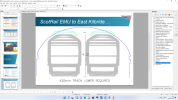
Here’s the bridge in question, this to the north of the station, the one to the south is the same as are a few others on the route. My understanding is that the height in the centre of the span gives sufficient clearance for wires but the lower parts of the arches would foul the pantograph. It would make sense to build a new bridge towards the camera and tie it into the road at the same time improving the alignment without raising the height significantly.The issue with Clarkston is improving the bridge whilst tying the levels in to the surrounding. Not impossible but expensive.


== Doublepost prevention - post automatically merged: ==
I assume the 4.03 measurement is the minimum height for live wires?Apologies, I meant April which I assume is the start of the new financial year.
== Doublepost prevention - post automatically merged: ==
Here’s the bridge in question, this to the north of the station, the one to the south is the same as are a few others on the route. My understanding is that the height in the centre of the span gives sufficient clearance for wires but the lower parts of the arches would foul the pantograph. It would make sense to build a new bridge towards the camera and tie it into the road at the same time improving the alignment without raising the height significantly.
Attachments
Last edited:

Would think the cost of a new bridge would be well into 7 figures. So probably cheaper with a track lower if it can be done.I wonder which would cost less - a 420mm track lowering or a new bridge? I'm 99.9% sure that a new bridge would be faster and less disruptive.
Another option could be to raise the existing bridge to get the clearance. By removing the deck and inserting extensions on the piers. The road level on the bridge would need to be lifted too. So very much what solution is followed.
The East Kilbride branch electrification wad always going to need a number of structures improved for clearance. Which probably is why the Kilmarnock branch was tackled First.
Southsider
Member
- Joined
- 10 Aug 2015
- Messages
- 937
Also, if yo
I wonder which would cost less - a 420mm track lowering or a new bridge? I'm 99.9% sure that a new bridge would be faster and less disruptive
The problem with track lowering here is that Clarkston station is in between two such bridges and in close proximity. The whole station may need to be lowered. Also, the bridges are 150 years old so perhaps due for replacement.Would think the cost of a new bridge would be well into 7 figures. So probably cheaper with a track lower if it can be done.
Another option could be to raise the existing bridge to get the clearance. By removing the deck and inserting extensions on the piers. The road level on the bridge would need to be lifted too. So very much what solution is followed.
The East Kilbride branch electrification wad always going to need a number of structures improved for clearance. Which probably is why the Kilmarnock branch was tackled First.
GRALISTAIR
Established Member
The problem with track lowering here is that Clarkston station is in between two such bridges and in close proximity. The whole station may need to be lowered. Also, the bridges are 150 years old so perhaps due for replacement.
I am following this thread with interest. If the bridge is not loaded with utilities, sewer pipes etc then surely the best option. Easy for me as an armchair engineer who has not made a site visit of course. (the US expression is Monday morning quarterback or armchair quarterback)

GLC
Member
- Joined
- 21 Nov 2018
- Messages
- 397
I’m sure it is completely unrealistic, but I would love if Network Rail and the council came to a “you scratch my back” deal, and the council offered to raise (and straighten) the bridge near Clarkston station, in return for NR widening the bridge under Busby station to help the road there too
YorkshireBear
Established Member
- Joined
- 23 Jul 2010
- Messages
- 9,666
Generally track lowers are cheaper and are seen as the short term cheap get out clause. However, often long term drainage problems ensue which then mean in the long term you were better off raising the old bridge.
Nicholas Lewis
Established Member
Probably wouldn't have sewer as its above surrounding land but will have power, gas, water and telecom utilities but wouldn't be too much drama however it has some houses in very close proximity with the road all already well above house level. So a track lower would be better and there is c140m to run out 420mm off the platform end or c 1 in 300 so doable. Biggest issue with a lower of this amount is where and how deep the abutment footings are which may prevent sleepers being installed or undermining them. Anyhow if the development of the scheme has been any good then they should know the answer to this its Grip 4 stuff.I am following this thread with interest. If the bridge is not loaded with utilities, sewer pipes etc then surely the best option. Easy for me as an armchair engineer who has not made a site visit of course. (the US expression is Monday morning quarterback or armchair quarterback)
Sounds like a reasonable deal to me. East Renfrewshire is one of the better heeled local councils. At the moment they are just playing silly. Wanting all the benefits for free. Yes the bridges are probably past their best, but not impossible to lift.I’m sure it is completely unrealistic, but I would love if Network Rail and the council came to a “you scratch my back” deal, and the council offered to raise (and straighten) the bridge near Clarkston station, in return for NR widening the bridge under Busby station to help the road there too
I’m sure it is completely unrealistic, but I would love if Network Rail and the council came to a “you scratch my back” deal, and the council offered to raise (and straighten) the bridge near Clarkston station, in return for NR widening the bridge under Busby station to help the road there too
doesn’t sound like such a good deal for NR though. Widening an underbridge ususlly costs a lot more than replacing an overbridge.
Southsider
Member
- Joined
- 10 Aug 2015
- Messages
- 937
As I mentioned above, I don’t think they need lifted, just replaced by a deck without an arch. No change in the road level should keep the cost down.Sounds like a reasonable deal to me. East Renfrewshire is one of the better heeled local councils. At the moment they are just playing silly. Wanting all the benefits for free. Yes the bridges are probably past their best, but not impossible to lift.

CEN60
Member
- Joined
- 17 Dec 2018
- Messages
- 299
Generally track lowers are cheaper and are seen as the short term cheap get out clause. However, often long term drainage problems ensue which then mean in the long term you were better off raising the old br
As I mentioned above, I don’t think they need lifted, just replaced by a deck without an arch. No change in the road level should keep the cost down.
You cannot "lift" an existing arch - there are "standard" type solution for replacing arches with what are referred to as "con arch" units (concrete arch - but with a very different profile) - however road levels and modern construction depths tend to be a problem - sometime a reconstruction and a slight track lower might be the best solution (as was done at the bridge next Bargeddie Station when the R&C was electrified. Also as mentioned above, the close proximity to a station could also come into play - in terms of wire heights required at a platform.)
Yes the concrete arch solution has been in use for many years.You cannot "lift" an existing arch - there are "standard" type solution for replacing arches with what are referred to as "con arch" units (concrete arch - but with a very different profile) - however road levels and modern construction depths tend to be a problem - sometime a reconstruction and a slight track lower might be the best solution (as was done at the bridge next Bargeddie Station when the R&C was electrified. Also as mentioned above, the close proximity to a station could also come into play - in terms of wire heights required at a platform.)
Believe electrification in the South is using a newer technique to lift any bridge for clearance.
Yet to be used in Scotland but the technique has been used in the South on other schemes.

themiller
Established Member
It was going to be demonstrated on the Windermere line just before the electrification was cancelled. If I read the article correctly, the bridge is sawn at both sides at about 45 degrees and some sort of insert applied to fill the gap when the road section is raised. It was supposed to be cheaper than a new bridge but I wondered at the time whether it’d be cost effective when taken as a whole life cost.You cannot "lift" an existing arch - there are "standard" type solution for replacing arches with what are referred to as "con arch" units (concrete arch - but with a very different profile) - however road levels and modern construction depths tend to be a problem - sometime a reconstruction and a slight track lower might be the best solution (as was done at the bridge next Bargeddie Station when the R&C was electrified. Also as mentioned above, the close proximity to a station could also come into play - in terms of wire heights required at a platform.)
CEN60
Member
- Joined
- 17 Dec 2018
- Messages
- 299
Mmmmm - can't see the NR Asset Managers rushing to get on board with this!!!! You end up with a pile of constituent parts that make up an arch in the middle of the 4 foot!!!It was going to be demonstrated on the Windermere line just before the electrification was cancelled. If I read the article correctly, the bridge is sawn at both sides at about 45 degrees and some sort of insert applied to fill the gap when the road section is raised. It was supposed to be cheaper than a new bridge but I wondered at the time whether it’d be cost effective when taken as a whole life cost.
- Status
- Not open for further replies.