
• Our new ticketing site is now live! Using either this or the original site (both powered by TrainSplit) helps support the running of the forum with every ticket purchase! Find out more and ask any questions/give us feedback in this thread!

Why aren't 'Placement'/'Dead Mileage' trips more common

Status
Not open for further replies.

markymark2000

On Moderation
Joined
11 May 2015
Messages
5,101
Location
Great Britain
Reaching out a little bit more to some of the industry management whom are on the forum here but why aren't placement trips more common?

For many schools, colleges, contracts and even service, dead mileage trips provide an almost zero cost way to significantly improve the local bus network. One of the people that I speak to in the industry does some dead mileage/placement trips because it helps Bus Service Operator Grant/fuel rebate and so it actually makes money to do such a thing. Cost nil but getting money back. IF anyone was random enough to jump on, it's money in the bank.

There are so many potential options for placement/dead mileage trips, it'd take too long to list them all but whether it is as simple as 'the direction the bus would go anyway', this then cost nothing additional and any passengers is simply a bonus, or whether it is holding the bus back slightly and deviating to make a 'shopper bus' back into the nearby town where the bus then sits all day. or whether it is using an existing route and putting more services on it in the early morning/late evening to facilitate buses to/from the depot. So many options yet seemingly the creation of such routes isn't very common anymore.

I have a number of operators near me who could use existing core busy routes to enhance their offering including earlier buses than are currently available, yet instead, the bus goes past or goes nearby, out of service, providing absolutely no level of service.

Here are some great examples of where placement/dead mileage trips should exist but simply don't.
Arriva Winsford runs around 6 buses dead to Crewe each day from Winsford depot (31 route near enough) and around 5 buses to Northwich (31/37 route)
Stagecoach Liverpool runs plenty of buses dead into Liverpool City Centre each day, easy over 10 buses. Yet they have the X3 and 19 frequent corridors on the doorstep which, if the placement/dead mileage trips ran in service early morning/late evening, you would keep the higher frequency heading out of town for longer. Sundays would have earlier buses too.
Stagecoach Chester has plenty of buses running up and down Christleton Road in the morning. None of them stop except the normal local service but there could be buses upto 40 minutes earlier and upto 90 minutes later on weekdays. That is without the shuttle bus which I believe runs earlier but no public information on this.

There are colleges up and down the country and operators travel miles to some of their routes and even run back to the depot between trips. Again, why aren't these opportunities being taken advantage of? Are the operators and passengers worried about the 'college day only' side of things and to provide a regular service, they would have to incure more dead mileage?


It does seem slightly more common for these to exist at the start/end of a day with some operators such as Transdev and McGills but nothing really for schools/colleges and no placement trips which would end up being a shopper bus (a recent exception being Firsts new 35 bus from Debden to Chelmsford)

So many questions about why these aren't looked into more and if any industry professionals can expand on some of the reasons, it would be interesting as it's such an easy way to provide a significantly better service at no-minimal cost to you.
 
Sponsor Post - registered members do not see these adverts; click here to register, or click here to log in
R

RailUK Forums

ACBest

Member
Joined
30 Aug 2011
Messages
348
Location
Lincoln
There’s no real incentive to do it - in most circumstances, BSOG is paid on dead mileage anyway. There are a very limited number of circumstances where it isn’t, most of which relate to private contracts, and in those circumstances, the lack of it is usually priced into the contract anyway.

Another reason is that dead runs can provide flexibility - let’s say something has done a morning school run on route 1, and is now scheduled to head back dead to the depot for a while. There’s an issue on route 2, the bus has broken down - so you can send the bus off route 1 to either cover for the route 2 bus, or can send it to wherever the breakdown has happened to take over from there. If you didn’t have a dead run, and instead registered it as a ‘positioning move’, you’d now need to make a decision about which service to cancel. And if that positioning move forms a once a day shopper service as you suggest above… I’ll let you work the rest out!
 

A0

On Moderation
Joined
19 Jan 2008
Messages
7,751
Reaching out a little bit more to some of the industry management whom are on the forum here but why aren't placement trips more common?

For many schools, colleges, contracts and even service, dead mileage trips provide an almost zero cost way to significantly improve the local bus network. One of the people that I speak to in the industry does some dead mileage/placement trips because it helps Bus Service Operator Grant/fuel rebate and so it actually makes money to do such a thing. Cost nil but getting money back. IF anyone was random enough to jump on, it's money in the bank.

There are so many potential options for placement/dead mileage trips, it'd take too long to list them all but whether it is as simple as 'the direction the bus would go anyway', this then cost nothing additional and any passengers is simply a bonus, or whether it is holding the bus back slightly and deviating to make a 'shopper bus' back into the nearby town where the bus then sits all day. or whether it is using an existing route and putting more services on it in the early morning/late evening to facilitate buses to/from the depot. So many options yet seemingly the creation of such routes isn't very common anymore.

I have a number of operators near me who could use existing core busy routes to enhance their offering including earlier buses than are currently available, yet instead, the bus goes past or goes nearby, out of service, providing absolutely no level of service.

Here are some great examples of where placement/dead mileage trips should exist but simply don't.
Arriva Winsford runs around 6 buses dead to Crewe each day from Winsford depot (31 route near enough) and around 5 buses to Northwich (31/37 route)
Stagecoach Liverpool runs plenty of buses dead into Liverpool City Centre each day, easy over 10 buses. Yet they have the X3 and 19 frequent corridors on the doorstep which, if the placement/dead mileage trips ran in service early morning/late evening, you would keep the higher frequency heading out of town for longer. Sundays would have earlier buses too.
Stagecoach Chester has plenty of buses running up and down Christleton Road in the morning. None of them stop except the normal local service but there could be buses upto 40 minutes earlier and upto 90 minutes later on weekdays. That is without the shuttle bus which I believe runs earlier but no public information on this.

There are colleges up and down the country and operators travel miles to some of their routes and even run back to the depot between trips. Again, why aren't these opportunities being taken advantage of? Are the operators and passengers worried about the 'college day only' side of things and to provide a regular service, they would have to incure more dead mileage?


It does seem slightly more common for these to exist at the start/end of a day with some operators such as Transdev and McGills but nothing really for schools/colleges and no placement trips which would end up being a shopper bus (a recent exception being Firsts new 35 bus from Debden to Chelmsford)

So many questions about why these aren't looked into more and if any industry professionals can expand on some of the reasons, it would be interesting as it's such an easy way to provide a significantly better service at no-minimal cost to you.

One of the problems is they would only be providing 'random' journeys at obscure times.

If you take school / college services you'd be looking at a route from School / College 'x' to Town 'y' at between 8.30 and 9am in the morning with the return being anything from 3pm - 5pm. Unless it was running along a corridor which the company already used (in which case it could dovetail in with other regular services), it's all too random for most users. Yes, I know many villages often get one bus a day / week at fixed times, but they are usually to a destination that the users need i.e. the local market town etc.
 

MotCO

Established Member
Joined
25 Aug 2014
Messages
6,112
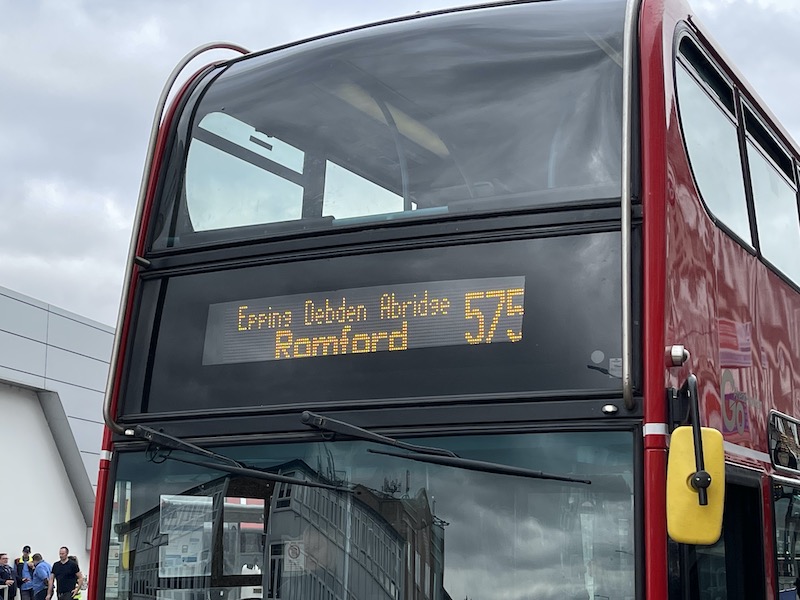
A good example of a school journey with 'livened up' journeys is London General's 575, now withdrawn following the loss of the school contract. It ran one journey from Romford to Harlow.

I'm also surprised that, with seemingly fewer depots and presumably longer garage runs, some positioning journeys aren't 'livened up'. For example, Metrobus of Orpington used to run many routes starting from Bromley North, and you often used to see a string of buses going down the A21 to Bromley. It would have been great if some of those could have been an 'express route' from Green Street Green to Bromley to support the 358 or old 402.
 

asb

Member
Joined
17 Jan 2011
Messages
108
Another reason, if the new trip is starting at a Bus Station then a departure charge would be payable (assuming it is Local Authority owned). Although quite cheap, it would mount up over an accounting period.
 

TheGrandWazoo

Veteran Member
Joined
18 Feb 2013
Messages
22,928
Location
Somerset with international travel (e.g. across th
Reaching out a little bit more to some of the industry management whom are on the forum here but why aren't placement trips more common?

For many schools, colleges, contracts and even service, dead mileage trips provide an almost zero cost way to significantly improve the local bus network. One of the people that I speak to in the industry does some dead mileage/placement trips because it helps Bus Service Operator Grant/fuel rebate and so it actually makes money to do such a thing. Cost nil but getting money back. IF anyone was random enough to jump on, it's money in the bank.

There are so many potential options for placement/dead mileage trips, it'd take too long to list them all but whether it is as simple as 'the direction the bus would go anyway', this then cost nothing additional and any passengers is simply a bonus, or whether it is holding the bus back slightly and deviating to make a 'shopper bus' back into the nearby town where the bus then sits all day. or whether it is using an existing route and putting more services on it in the early morning/late evening to facilitate buses to/from the depot. So many options yet seemingly the creation of such routes isn't very common anymore.

I have a number of operators near me who could use existing core busy routes to enhance their offering including earlier buses than are currently available, yet instead, the bus goes past or goes nearby, out of service, providing absolutely no level of service.

Here are some great examples of where placement/dead mileage trips should exist but simply don't.
Arriva Winsford runs around 6 buses dead to Crewe each day from Winsford depot (31 route near enough) and around 5 buses to Northwich (31/37 route)
Stagecoach Liverpool runs plenty of buses dead into Liverpool City Centre each day, easy over 10 buses. Yet they have the X3 and 19 frequent corridors on the doorstep which, if the placement/dead mileage trips ran in service early morning/late evening, you would keep the higher frequency heading out of town for longer. Sundays would have earlier buses too.
Stagecoach Chester has plenty of buses running up and down Christleton Road in the morning. None of them stop except the normal local service but there could be buses upto 40 minutes earlier and upto 90 minutes later on weekdays. That is without the shuttle bus which I believe runs earlier but no public information on this.

There are colleges up and down the country and operators travel miles to some of their routes and even run back to the depot between trips. Again, why aren't these opportunities being taken advantage of? Are the operators and passengers worried about the 'college day only' side of things and to provide a regular service, they would have to incure more dead mileage?


It does seem slightly more common for these to exist at the start/end of a day with some operators such as Transdev and McGills but nothing really for schools/colleges and no placement trips which would end up being a shopper bus (a recent exception being Firsts new 35 bus from Debden to Chelmsford)

So many questions about why these aren't looked into more and if any industry professionals can expand on some of the reasons, it would be interesting as it's such an easy way to provide a significantly better service at no-minimal cost to you.
As others have said, there's no real incentive. Back in the day, Fuel Duty Rebate or Bus Service Operators Grant was payable only on registered mileage so you did a financial benefit from registering them. That's not the case now.

Also, depots are often in peripheral locations like industrial estates. Using your example of Winsford, buses run empty from the industrial estate to Crewe down the A530. To make it useful would you then have to run them through the town centre and via Church Minshull? And it isn't as if there aren't early morning journeys anyway? I mean, you could register some 31X type service from Winsford IE to Crewe down the A530 but why bother? If you did, then surely there would be a time penalty for stopping, or an expectation that you'd divert into Leighton Hospital?

There's an example of the X26/27 in Darlington with a few journeys that do run in service from Faverdale depot into the town centre and then onward to Richmond and Catterick - just an extension of the regular route. However, other vehicles run out of service direct to Catterick Garrison and I doubt it's worth the hassle of an 0530 fast bus from a Darlington industrial estate to Catterick.

So there's a faff factor, possible on costs, and for very little actual benefit.
 

markymark2000

On Moderation
Joined
11 May 2015
Messages
5,101
Location
Great Britain
Another reason, if the new trip is starting at a Bus Station then a departure charge would be payable (assuming it is Local Authority owned). Although quite cheap, it would mount up over an accounting period.
Hence why many of these trips start outside of the bus station. Warringtons Own buses have a placement trip on route 49 (just kept it from when Fairbrothers ran the route) and that starts at Warrington Central Station. Around the corner from the bus station. That said, the dead mileage of the 49 follows route 22 to Newton Station so they could in theory replace it with the 22 and then if something goes wrong on the 22, they have a backup.

As others have said, there's no real incentive. Back in the day, Fuel Duty Rebate or Bus Service Operators Grant was payable only on registered mileage so you did a financial benefit from registering them. That's not the case now.
So because the grants have changed from 'registered mileage', now the trips aren't needed for the grants so it's not worth the time as there is zero financial reward for doing so. The only financial reward is if it happens to pick up people. Is that basically the whole reason for it. A change in the rules means it's no longer better to run dead mileage trips and instead run miles and miles, on a core route, running it not in serv

Also, depots are often in peripheral locations like industrial estates. Using your example of Winsford, buses run empty from the industrial estate to Crewe down the A530. To make it useful would you then have to run them through the town centre and via Church Minshull? And it isn't as if there aren't early morning journeys anyway? I mean, you could register some 31X type service from Winsford IE to Crewe down the A530 but why bother? If you did, then surely there would be a time penalty for stopping, or an expectation that you'd divert into Leighton Hospital?
Dead mileage trips don't have to be overly useful, just 'there'. Even from Leighton Hospital into Crewe, there will be staff who finish early or start later than the current bus network permits. Even ignoring Leighton Hospital as a demand point, when people are weighing up which mode to make a journey, they will look at the frequency of the bus and the operational hours. As we all know, the higher the frequency, the more likely people are to get on and this is surely the best way to do that? Minimal cost, likely gains. Say someone works midday-8pm. Midday they can get to work fine as the buses are very regular. At 8pm, they finish work and the bus leaves at 8.05 so they can't get there, next one is 9.05. If a bus happened to be slotted in at 8.35pm, the person would use the bus because they can get there and won't be sat around for an hour. Purely hypothetical times and of course buses need to get back to the depot quickly else the trip costs money. Without this additional bus, the passenger wouldn't use the buses. Many, many people could get a bus one way but it would be too inconvenient to use the bus both ways due to lack of service. If a bus is going that way anyway, you've just gained £5 per day that this person goes to work, say they travel multiple times per week, that's £15-£20 weekly ticket. On the basis that during the day, the buses run anyway, use that £20 revenue to put solely onto the 'dead mileage' bus, There you go, paid to run dead mileage. That passenger has friends on similar shift patterns and advises them of the new bus, theres a few more people. Admittedly that is just the theory but it can happen and dead mileage trips become busy.

Made worse when the buses run dead on key/core corridors where the enhancement would gain a good chunk more passengers but this is bypassed and as has been said for the Potters Bar to New Barnet bus, plenty of buses running dead each day along a route but no one can use them. If the buses were in service, you end up earning revenue off a driver shuttle. Isn't that just the best thing? Being paid extra for work that you are already doing and would have to do for free?

There's an example of the X26/27 in Darlington with a few journeys that do run in service from Faverdale depot into the town centre and then onward to Richmond and Catterick - just an extension of the regular route. However, other vehicles run out of service direct to Catterick Garrison and I doubt it's worth the hassle of an 0530 fast bus from a Darlington industrial estate to Catterick.
Is this for industrial estate demand though perhaps and so if the depot wasn't there, these trips would remain anyway, it's just coincidence that the depot is there too?
In that example as well for express buses Catterick, it would be almost all motorway and so the useful mileage would be very low.

The examples that I have provides are useful services which would build upon existing demand or in the case of the First Essex 35 to Chelmsford and London General services, they have good potential to be shopper buses.
 

miklcct

Established Member
Joined
2 May 2021
Messages
5,017
Location
Cricklewood
The most extreme example I've seen is dead running on the exact same route as revenue operation from one terminus to the other end. The reason is that the demand is so high that every minute saved in dwell time means another minute to clear the passengers in the peak direction.

In fact, dead running from one end to the other in the reverse commute direction is a great way to cut the peak vehicle requirement of a route.
 

TheGrandWazoo

Veteran Member
Joined
18 Feb 2013
Messages
22,928
Location
Somerset with international travel (e.g. across th
Hence why many of these trips start outside of the bus station. Warringtons Own buses have a placement trip on route 49 (just kept it from when Fairbrothers ran the route) and that starts at Warrington Central Station. Around the corner from the bus station. That said, the dead mileage of the 49 follows route 22 to Newton Station so they could in theory replace it with the 22 and then if something goes wrong on the 22, they have a backup.


So because the grants have changed from 'registered mileage', now the trips aren't needed for the grants so it's not worth the time as there is zero financial reward for doing so. The only financial reward is if it happens to pick up people. Is that basically the whole reason for it. A change in the rules means it's no longer better to run dead mileage trips and instead run miles and miles, on a core route, running it not in serv


Dead mileage trips don't have to be overly useful, just 'there'. Even from Leighton Hospital into Crewe, there will be staff who finish early or start later than the current bus network permits. Even ignoring Leighton Hospital as a demand point, when people are weighing up which mode to make a journey, they will look at the frequency of the bus and the operational hours. As we all know, the higher the frequency, the more likely people are to get on and this is surely the best way to do that? Minimal cost, likely gains. Say someone works midday-8pm. Midday they can get to work fine as the buses are very regular. At 8pm, they finish work and the bus leaves at 8.05 so they can't get there, next one is 9.05. If a bus happened to be slotted in at 8.35pm, the person would use the bus because they can get there and won't be sat around for an hour. Purely hypothetical times and of course buses need to get back to the depot quickly else the trip costs money. Without this additional bus, the passenger wouldn't use the buses. Many, many people could get a bus one way but it would be too inconvenient to use the bus both ways due to lack of service. If a bus is going that way anyway, you've just gained £5 per day that this person goes to work, say they travel multiple times per week, that's £15-£20 weekly ticket. On the basis that during the day, the buses run anyway, use that £20 revenue to put solely onto the 'dead mileage' bus, There you go, paid to run dead mileage. That passenger has friends on similar shift patterns and advises them of the new bus, theres a few more people. Admittedly that is just the theory but it can happen and dead mileage trips become busy.

Made worse when the buses run dead on key/core corridors where the enhancement would gain a good chunk more passengers but this is bypassed and as has been said for the Potters Bar to New Barnet bus, plenty of buses running dead each day along a route but no one can use them. If the buses were in service, you end up earning revenue off a driver shuttle. Isn't that just the best thing? Being paid extra for work that you are already doing and would have to do for free?


Is this for industrial estate demand though perhaps and so if the depot wasn't there, these trips would remain anyway, it's just coincidence that the depot is there too?
In that example as well for express buses Catterick, it would be almost all motorway and so the useful mileage would be very low.

The examples that I have provides are useful services which would build upon existing demand or in the case of the First Essex 35 to Chelmsford and London General services, they have good potential to be shopper buses.


Quite simply, operators take the view that slipping in of a couple of extra journeys at some ungodly hour as being more costly than the benefit that will be derived. Having a couple of extra runs at some ungodly hour isn't perceived as having much benefit. Sorry if that doesn't fit with your view.

The example of Darlington buses is that they start from Faverdale but do provide an extra bus via West Auckland Road into the town centre and so it costs absolutely nothing extra to run on that corridor, in much the way you suggest whilst running fast ones to Catterick would yield little or no benefit; it's a judgement call. Running empty from Winsford to Crewe would either a) necessitate extra mileage and cost to serve Winsford town centre and Leighton Hospital with the extra cost unlikely to be recouped or b) if you don't decide to serve them, then running from Winsford industrial estate to Crewe is unlikely to harvest many if any passengers, so why bother?

As for the 35 in Chelmsford, that is clearly to avoid the situation to have a driver sat in Debden all day being unproductive so it makes sense to run a shoppers service to get the driver back. Years ago, there used to be an express from Northallerton to Middlesbrough but only on Tues/Fri.... it gave the driver something to do when not operating a Thirsk (Mon), Northallerton (Wed) or Ripon (Thu) market day service so it's nothing new.
 

Stan Drews

Established Member
Joined
5 Jun 2013
Messages
2,151
It should be noted that in Scotland both BSOG, and the upcoming NSG (Network Support Grant) is only paid on ’live’ kilometres, so any journeys that aren’t registered do not attract the payment. Therefore, north of the border there is still some incentive to register the ‘dead’ trips.
 

175mph

On Moderation
Joined
25 Jan 2016
Messages
715
An example I can think of in my neck of the woods is the 355 service from Wren Kitchens in Barton Upon Humber to Scunthorpe, then back again, the service is operated by the Stagecoach Hull depot, but both starting in Barton and finishing in Barton, it's a dead run between Barton and Hull and considering that some later on in the morning 350 journeys between Scunthorpe and Hull divert into Wren Kitchens anyway, it's a shame that instead of running what's effectively a truncated 350, the 355, the whole thing can't just simply be run as a through 350 service rather than having dead milage between Barton and Hull both ends if the journey.
 

jcrwey

Member
Joined
27 Jun 2016
Messages
30
The X51/53 in Dorset can be a frustrating one with long out of service runs in the morning and evening from Weymouth all the way to Lyme Regis, mostly along the normal core trunk route itself. A distance of over 30 miles as well. Them journeys are already there and would help to enhance the timetable.
 

miklcct

Established Member
Joined
2 May 2021
Messages
5,017
Location
Cricklewood
Another valid concern is that, it may be difficult to cancel a service when people start using it. For example, if a certain school contract is lost, but the now-public placement trip is used regularly, that trip may not be easily cancelled if there aren't suitable alternative routes serving similar places.
 

Eyersey468

Established Member
Joined
14 Sep 2018
Messages
2,597
Another thing is dead mileage is quicker than service running stopping at every stop.
 

MotCO

Established Member
Joined
25 Aug 2014
Messages
6,112
Are there any difficulties relating to drivers' hours? Do dead runs count towards drivers' hours; if they don't, then that might be a reason for not running some journeys in service if a driver is near the upper limit of his/her hours.
 

markymark2000

On Moderation
Joined
11 May 2015
Messages
5,101
Location
Great Britain
The most extreme example I've seen is dead running on the exact same route as revenue operation from one terminus to the other end. The reason is that the demand is so high that every minute saved in dwell time means another minute to clear the passengers in the peak direction.

In fact, dead running from one end to the other in the reverse commute direction is a great way to cut the peak vehicle requirement of a route.
Wow, that is quite an extreme example. I know that happens quite a bit in Manchester and it's bonkers.

Quite simply, operators take the view that slipping in of a couple of extra journeys at some ungodly hour as being more costly than the benefit that will be derived. Having a couple of extra runs at some ungodly hour isn't perceived as having much benefit. Sorry if that doesn't fit with your view.
I'm not nesecarilly speaking about 'some ungodly hour', I am speaking about normal times of day in most cases. The only 'ungodly hour' services are those where it would provide a boost to an existing significant corridor.

As for the 35 in Chelmsford, that is clearly to avoid the situation to have a driver sat in Debden all day being unproductive so it makes sense to run a shoppers service to get the driver back. Years ago, there used to be an express from Northallerton to Middlesbrough but only on Tues/Fri.... it gave the driver something to do when not operating a Thirsk (Mon), Northallerton (Wed) or Ripon (Thu) market day service so it's nothing new.
Ok so the bus no longer sits around in Debden all day. The other way of looking at it is that the bus would likely, at least one day per week, return to the depot and so they might as well capitalise on the dead mileage. Fits exactly what I am on about. Never said it was anything new, I am asking why they aren't more common and the First example is a recent one where they have introduced it.

Another thing is dead mileage is quicker than service running stopping at every stop.
How often do buses stop at 'every stop'. Like... Seriously. That doesn't happen.

Are there any difficulties relating to drivers' hours? Do dead runs count towards drivers' hours; if they don't, then that might be a reason for not running some journeys in service if a driver is near the upper limit of his/her hours.
Yes, they do count towards drivers hours. The only
 

Eyersey468

Established Member
Joined
14 Sep 2018
Messages
2,597
How often do buses stop at 'every stop'. Like... Seriously. That doesn't happen.
There have been a number of times over the years where I have stopped at pretty much every stop on a road to pick up or set down, usually seems to happen more when the bus is running late for some reason.
 

miklcct

Established Member
Joined
2 May 2021
Messages
5,017
Location
Cricklewood
How often do buses stop at 'every stop'. Like... Seriously. That doesn't happen.
It is very normal on urban routes, and increasingly common on rural routes as well unless in late night. For example, a rural route with 50 stops can stop at more than 40 of them, to pick up / set down 1 or 2 passengers.
 

GusB

Established Member
Joined
9 Jul 2016
Messages
8,137
Location
Elginshire
It is very normal on urban routes, and increasingly common on rural routes as well unless in late night. For example, a rural route with 50 stops can stop at more than 40 of them, to pick up / set down 1 or 2 passengers.
One assumes that you have spend a considerable amount of time collating these figures?
 

markymark2000

On Moderation
Joined
11 May 2015
Messages
5,101
Location
Great Britain
There have been a number of times over the years where I have stopped at pretty much every stop on a road to pick up or set down, usually seems to happen more when the bus is running late for some reason.
It is very normal on urban routes, and increasingly common on rural routes as well unless in late night. For example, a rural route with 50 stops can stop at more than 40 of them, to pick up / set down 1 or 2 passengers.
While it is certainly possible for a pick up/drop off at every stop, it is extremely rare to do so. Even on big, bus rapid transit schemes, they don't stop at every stop and I include multiple busways in that. The only instances where you pick up at almost every bus stop is on very rural routes where there is one stop per village. The other exception is routes where there are only a few stops (I have to put this as an exemption because it seems common on this forum that if you don't specify every eventuality, someone will pick up on it, find the most extreme example and then use it against you)

I think people need to be realistic about what I am saying here.
 

On the Buses

Member
Joined
14 Aug 2019
Messages
562
Location
UK
1. It does cost hard cash. Off service running is quicker than in service. There are few bus routes that take the fastest point to point route between two places. It all adds up across a year. What’s more, that extra time can be the difference between busting a shift and costing proportionately more.
2. Circumstances change. Sometimes relatively short term. I have two operations where for staffing and efficiency reasons we like to be able to vary the operational depot - especially seasonally. We want the flexibility to run from whatever depot is most efficient, at short notice and at will.
3. With school amd college contracts it’s often around on 175 days a year when you can provide. It’s inconsistent in that commuters travel all year
So has limited generation. What’s more, try explaining what is and isn’t a school day to customers - You’ll get a continual stream of school holiday complaints that the bus didn’t turn up.
 

markymark2000

On Moderation
Joined
11 May 2015
Messages
5,101
Location
Great Britain
1. It does cost hard cash. Off service running is quicker than in service. There are few bus routes that take the fastest point to point route between two places. It all adds up across a year. What’s more, that extra time can be the difference between busting a shift and costing proportionately more.
You would have to build on an existing demand corridor wouldn't you really or for a new route, you would want some guaranteed revenue. You couldn't link up completely random places at 6am and expect it to work. It would have to be based somewhere on existing demand somewhere unless it was a daytime trip and then it would have to have a purpose like a shopper bus.

2. Circumstances change. Sometimes relatively short term. I have two operations where for staffing and efficiency reasons we like to be able to vary the operational depot - especially seasonally. We want the flexibility to run from whatever depot is most efficient, at short notice and at will.
Understandable. You'd have to be 100% sure that you are running a bus from a certain depot for it to work.
3. With school amd college contracts it’s often around on 175 days a year when you can provide. It’s inconsistent in that commuters travel all year
So has limited generation. What’s more, try explaining what is and isn’t a school day to customers - You’ll get a continual stream of school holiday complaints that the bus didn’t turn up.
That is a fair point but does seem to have been combatted by some of the other operators.
 

TheGrandWazoo

Veteran Member
Joined
18 Feb 2013
Messages
22,928
Location
Somerset with international travel (e.g. across th
I'm not nesecarilly speaking about 'some ungodly hour', I am speaking about normal times of day in most cases. The only 'ungodly hour' services are those where it would provide a boost to an existing significant corridor.
Well, taking your Winsford example, I assume that two of the vehicles running light are ones that pick up the 0545 and 0630 Macclesfield runs? So you're talking about running vehicles in service from Winsford before 0600. Demand will be pretty light and if you're talking about an extra 15 mins pay for a driver, that's probably a cost that you're not going to recoup.


Ok so the bus no longer sits around in Debden all day. The other way of looking at it is that the bus would likely, at least one day per week, return to the depot and so they might as well capitalise on the dead mileage. Fits exactly what I am on about. Never said it was anything new, I am asking why they aren't more common and the First example is a recent one where they have introduced it.
Most of the examples are to get a bus from the depot to/from the starting point so usually before the morning peak or post the evening peak.

@On the Buses has explained that it's simply not worth a lot of the hassle and additional cost for limited, if any, benefit to operators or indeed to customers. That's the truth of it, I'm afraid
 

markymark2000

On Moderation
Joined
11 May 2015
Messages
5,101
Location
Great Britain
Well, taking your Winsford example, I assume that two of the vehicles running light are ones that pick up the 0545 and 0630 Macclesfield runs? So you're talking about running vehicles in service from Winsford before 0600. Demand will be pretty light and if you're talking about an extra 15 mins pay for a driver, that's probably a cost that you're not going to recoup.
That is just 2 of the potential runs. Here are the dead runs for the 84. There are another 2 potentials for the 6 (1 Leighton, 1 Crewe)
05:43 to Chester
06:38 to Chester
06:53 to Nantwich
07:08 to Chester
07:23 to Nantwich

Running, in service, as a 31 all the way from Winsford Library to Crewe can be done in around 30 minutes for the earlier trips (the trips are scheduled for 35 minutes but often spend time at Leighton Hosp and sometimes get in early to Crewe as well so on balance 30-35 mins) so yes, perhaps slightly longer. Depends on the not in service route though as that could only be a short amount of time in it.


Most of the examples are to get a bus from the depot to/from the starting point so usually before the morning peak or post the evening peak.

@On the Buses has explained that it's simply not worth a lot of the hassle and additional cost for limited, if any, benefit to operators or indeed to customers. That's the truth of it, I'm afraid
Some are pre morning peak/post evening peak. Doesn't mean that there is no demand though. If we base it off your logic, there should be no passengers pre 7am or post 6pm anywhere on the network. Clearly that isn't the case, evening runs exist and where they can be sustained, why not enhance them at very low-nil cost (depending on the situation).

It's certainly interesting that you pick up specifically on Winsford and ignore the other two. Funnily enough, the other two are the ones which don't fit your points being made as well... Hmmm....
 

miklcct

Established Member
Joined
2 May 2021
Messages
5,017
Location
Cricklewood
While it is certainly possible for a pick up/drop off at every stop, it is extremely rare to do so. Even on big, bus rapid transit schemes, they don't stop at every stop and I include multiple busways in that. The only instances where you pick up at almost every bus stop is on very rural routes where there is one stop per village. The other exception is routes where there are only a few stops (I have to put this as an exemption because it seems common on this forum that if you don't specify every eventuality, someone will pick up on it, find the most extreme example and then use it against you)
Go to central London and travel on any of the routes.
One assumes that you have spend a considerable amount of time collating these figures?
I travelled on a rural route a lot in the past, between two towns where there isn't a direct railway / motorway connection. An "circuitous" express route running on a much longer motorway only takes 1/3 of the time needed by the direct route. The dwell time has grew so much in recent years, due to increasing passenger usage and also the new safety features on modern buses, that frequency has to be cut or vehicle requirement has to be increased. This is still a minority among rural routes though so I use the word "increasingly common", instead of urban routes which stopping at every stop are "taken for granted".
 

Eyersey468

Established Member
Joined
14 Sep 2018
Messages
2,597
The other thing is some dead mileage is unavoidable, for example in the event of a breakdown at an outer depot and needing to take a bus from the main depot to cover.
Regarding stopping at every stop or most stops, it happens a lot in Hull during the day, it's rare to drive down one of the main corridors (Anlaby Road, Beverley Road, Holderness Road etc) and not stop at most stops.
 

TheGrandWazoo

Veteran Member
Joined
18 Feb 2013
Messages
22,928
Location
Somerset with international travel (e.g. across th
That is just 2 of the potential runs. Here are the dead runs for the 84. There are another 2 potentials for the 6 (1 Leighton, 1 Crewe)
05:43 to Chester
06:38 to Chester
06:53 to Nantwich
07:08 to Chester
07:23 to Nantwich

Running, in service, as a 31 all the way from Winsford Library to Crewe can be done in around 30 minutes for the earlier trips (the trips are scheduled for 35 minutes but often spend time at Leighton Hosp and sometimes get in early to Crewe as well so on balance 30-35 mins) so yes, perhaps slightly longer. Depends on the not in service route though as that could only be a short amount of time in it.
As I said, I assumed that two of them were those were 38s. Arriva have decided that they can either run in service and incur an extra cost of c.15 mins and an extra four miles. You can work out the likely cost of that; whether any revenue will be gained is a moot point and they probably believe that whatever patronage may simply be abstracted from the existing 31/31W that already runs every half hour.

Or they can run them direct down the A530. I'm sure that they have looked at this and that's why they've made the decision that they did.

Some are pre morning peak/post evening peak. Doesn't mean that there is no demand though. If we base it off your logic, there should be no passengers pre 7am or post 6pm anywhere on the network. Clearly that isn't the case, evening runs exist and where they can be sustained, why not enhance them at very low-nil cost (depending on the situation).
Most are. They have taken the view that whatever demand is coped for with the existing service provision and that adding in additional journeys will add cost that won't be recouped.
It's certainly interesting that you pick up specifically on Winsford and ignore the other two. Funnily enough, the other two are the ones which don't fit your points being made as well... Hmmm....
I was keeping things simple and dealing with Winsford as I used to live locally; leave off the conspiracy theories? I dealt with the Debden one - did you forget that?

Sorry, but you asked for the reasons why placement journeys aren't more common. It's been explained and you're unhappy with answers.... I don't know what else you want.

EDIT: I did have a look at the others that you felt I'd ignored.

Waverton to Chester - given that the regular bus service is the 41 operated by Aintree, Stagecoach perhaps feel that putting on some early morning or late evening services when they don't run the main bus service would be a bit pointless.

As for Gillmoss to Liverpool, don't know
 
Last edited:

RustySpoons

Member
Joined
5 Apr 2019
Messages
868
You would have to build on an existing demand corridor wouldn't you really or for a new route, you would want some guaranteed revenue. You couldn't link up completely random places at 6am and expect it to work. It would have to be based somewhere on existing demand somewhere unless it was a daytime trip and then it would have to have a purpose like a shopper bus.
Would there be any point in building on existing demand on an already suitably bussed corridor for what will be an irregular service?

Plus the longer you've got a driver running a registered service that was a dead run the less driving hours he's got. The economics mean in most cases it's just not worth it.
 

Contains Nuts

Member
Joined
16 Jul 2019
Messages
125
As well as the increase in day-to-day operating costs there is also the issue of providing publicity for the additional journeys. In many cities this is done by the local authority or Passenger Transport Executive (as in Manchester and the West Midlands) and they charge operators for doing the work. These charges are compulsory and include fees for changing roadside displays, service numbers on bus stop flags, printed leaflets and updating maps and posters.

In many other areas it is the responsibility of the bus operator to provide their own publicity (online, printed and at the roadside) which comes at considerable cost. A route of 30 minutes in duration could potentially cost over £1,000 just to replace the roadside publicity, and printed leaflets could run to another £1,000.

There is also the additional administrative burden of providing data for the route to the Bus Open Data Service which is a further cost, as well as recording the relevant information for the route for Bus Service Operator’s Grant and concessionary fare returns.

And also note that at many depots the trade union agreement is for all drivers to be taken out to be shown new routes. In a depot with 100 employees at around £15 per hour (which is the wages with employer’s contributions) to do route training for three hours would cost £4,500.

There is also the £60 charge for actually registering a positioning service, which may not seem much but would need paying each time a trip needed retiming. Plus the cost of the scheduler making the necessary changes.

Overall it’s entirely feasible that to create a new service to replace dead journeys could end up with a bill of upwards of £10,000 before a single passenger is even picked up.
 

Andyh82

Established Member
Joined
19 May 2014
Messages
4,575
I remember Halifax Joint Committee (the 90s/00s operator) used to like a live positioning run, I’m guessing there was a financial benefit at that time.

So as well as numerous runs to/from their depot at the start/end of service, there was a 392 (like First’s 592) that ran Halifax to Todmorden at 7am and returned at about 5pm linked to a school service and most oddly they at one point picked up some schools work in Queensbury so ran 3 376s (like a 576) from Halifax to Queensbury at about 1430, 1435 & 1440 with no other trips for hours either side.

I say these services ran, when I went to catch one of those 392s, hoping for a rare ride on a MCW Metrobus, the bus just flew past still blinded for the school run, so they clearly never actually expected to pick anyone up.
 
Status
Not open for further replies.

Top