Our new ticketing site is now live! Using either this or the original site (both powered by TrainSplit) helps support the running of the forum with every ticket purchase! Find out more and ask any questions/give us feedback in this thread!
Because although its severity appears to be greatly moderated, (and we had little certainty about this with regard to Omicron until pretty recently) there are still sufficiently large numbers of ill people to cause a problem for the health service. Once this phase passes, and it looks like it is going to pass pretty soon, then most people seem agreed that things can go back to something fairly "normal". And in any case we are no longer under any especially restrictive measures, even though wearing a face mask on the bus for a couple more weeks seems to amount to a big deal to some people. For the record, I would not have any objection to the work-from-home guidance being dropped now.
Because although its severity appears to be greatly moderated, (and we had little certainty about this with regard to Omicron until pretty recently) there are still sufficiently large numbers of ill people to cause a problem for the health service. Once this phase passes, and it looks like it is going to pass pretty soon, then most people seem agreed that things can go back to something fairly "normal". And in any case we are no longer under any especially restrictive measures, even though wearing a face mask on the bus for a couple more weeks seems to amount to a big deal to some people. For the record, I would not have any objection to the work-from-home guidance being dropped now.
The work-from-home guidance, as distorting as it is to the economy, is the one thing that we're doing that is likely to have some meaningful effect on limiting the spread of a respiratory virus. (The other is closing schools, but fortunately that isn't considered acceptable anymore - of course it never should have been in the first place).
Reading the article, it seems that this is aimed at self-isolation due to contact tracing, rather than if positive. Whilst maybe not ideal, I know of companies who wouldn't pay company sick to those contact traced (attracting SSP only, be it with no waiting days) since before vaccinations came about (company sick still paid where testing positive)
The work-from-home guidance, as distorting as it is to the economy, is the one thing that we're doing that is likely to have some meaningful effect on limiting the spread of a respiratory virus. (The other is closing schools, but fortunately that isn't considered acceptable anymore - of course it never should have been in the first place).
In principle it can, but in practice not enough people are actually subject to it to make a lot of difference. It's particularly pointless once you're looking at something as infectious as Omicron.
In principle it can, but in practice not enough people are actually subject to it to make a lot of difference. It's particularly pointless once you're looking at something as infectious as Omicron.
The work-from-home guidance, as distorting as it is to the economy, is the one thing that we're doing that is likely to have some meaningful effect on limiting the spread of a respiratory virus. (The other is closing schools, but fortunately that isn't considered acceptable anymore - of course it never should have been in the first place).
No one advocating anything to reduce the spread has really explained it this is desirable to slow the development of heard immunity, thus making it take even longer to reach endemic equilibrium. There is no point discussing how to reduce the spread if you haven't first established what you are trying to achieve.
No one advocating anything to reduce the spread has really explained it this is desirable to slow the development of heard immunity, thus making it take even longer to reach endemic equilibrium. There is no point discussing how to reduce the spread if you haven't first established what you are trying to achieve.
Oh, of course I agree entirely. 'Slowing the spread' has become a religious mantra, an objective to be pursued for its own sake, irrespective of what that is supposed to actually achieve.
I don't believe we should be trying to do anything to 'slow the spread' whatsoever at this point - we should be taking advantage of the very mild Omicron to give us all decent immunity going forward.
(Indeed, I don't think we should have done anything to 'slow the spread' - except among the elderly and vulnerable - *at any point*. Hence my support for the GBD, for example).
However, if for some reason you are still trying to do it, 'work from home' is probably the one measure that makes some, if minor, difference.
No one advocating anything to reduce the spread has really explained it this is desirable to slow the development of heard immunity, thus making it take even longer to reach endemic equilibrium. There is no point discussing how to reduce the spread if you haven't first established what you are trying to achieve.
That rather presumes that herd immunity is achievable, or if it is achievable that achieving it through infection of the unvaccinated represents a risk appropriate to the benefit given the relative risks of the two methods of acquiring a level of immunity. I am also far from convinced that this new disease will stabilise into endemic equilibrium as smoothly as you appear to assume - nice though that might be.
That rather presumes that herd immunity is achievable, or if it is achievable that achieving it through infection of the unvaccinated represents a risk appropriate to the benefit given the relative risks of the two methods of acquiring a level of immunity. I am also far from convinced that this new disease will stabilise into endemic equilibrium as smoothly as you appear to assume - nice though that might be.
Given that everyone who wants to be vaccinated already is, how do you propose to create enough heard immunity to reach endemic equilibrium other than by the vaccination that has already been done plus natural immunity from infection? Talking about "appropriate risk" is irrelevant if there is no choice because no other option exists. I also don't recognise this concept of heard immunity being "achievable". It is a natural process arising from immunity being developed in the population, not something to be "achieved",
Where did I say anything about assuming how smoothly it would stabilise to endemic equilibrium? The point is that endemic equilibrium is the only possible end point, and no one advocating delaying it has successfully explained why it is desirable for it to take even longer to reach.
You said Sweden had done "a little worse" than its neighbours but "not significantly so". In fact, (per head of population) it's had 5 times the number of deaths that Norway and Sweden have, and it's had more than twice the number of deaths that Denmark has.
That rather presumes that herd immunity is achievable, or if it is achievable that achieving it through infection of the unvaccinated represents a risk appropriate to the benefit given the relative risks of the two methods of acquiring a level of immunity. I am also far from convinced that this new disease will stabilise into endemic equilibrium as smoothly as you appear to assume - nice though that might be.
The unvaccinated? We've had vaccines for over a year, if they wished to be vaccinated (and they should, it's easy and the side effects are minimal, especially for the protection they provide) they have had ample opportunity.
Interesting how you omit the neighbours across the Baltic, Germany and Poland...
== Doublepost prevention - post automatically merged: ==
The unvaccinated? We've had vaccines for over a year, if they wished to be vaccinated (and they should, it's easy and the side effects are minimal, especially for the protection they provide) they have had ample opportunity.
Quite, there’s the vaccines, people have either got them or not, and it’s difficult to get too bothered if those who have not were at a roughly 0% chance of death anyway.
I have to say I find the rationale for any restrictions has basically collapsed in on itself and struggle to have any interest in it any longer. The same seems to be the case with colleagues, even those who were more pro-restriction previously. I think the contractions in ‘the science’ have been exposed to such a ridiculous degree that it is pretty much over. What happened to doubling every 2.5 days? So much for that. Why is the situation simultaneously terrible, yet nobody at all, not even the zero-covid lot is calling for a lockdown, even with 100,000 cases + per day? How can masks and being asked to work at home be all that’s being called for by the pro-restriction lot, yet previously we had park benches taped off? Frankly omricon is about the best thing that could have happened to end this - lessened severity, spreads so much that restrictions would have such marginal impact relative to the cost of imposition… That and whoever wants to be the next Prime Minister knows that full well, so the direction of travel is clear. Not a betting person but I’d say come the 26th it’s back to post-July ‘normal’ and unless there’s a variant which spreads even more than this one, and somehow becomes many times more deadly, we are moving to the next phase of life no matter what. That’s my 2p anyway.
This doesn't really change the "with" versus "of" debate much; all it means it that roughly 23,000 people were over the 28 day mark. It's also not a myth, it's a distinction that does exist and until it is properly clarified how many are in which group, we cannot hope to properly judge the impact of the disease.
Just because something is recorded on the death certificate does not mean it is the primary cause of death, only that it was present at or shortly before the time of death.
No it doesn't, death certificates only include the causal chain of death and other significant conditions contributing to the death. At the time the 28-day rule was introduced 1,692 death certificates didn't include covid in England, these are only included in within 28 days and not the "involving". The "involving" as well as after 28 day mark will include those where no positive test was received (and quite possibly deaths caused after reinfections though not 100% on this).
The primary/underlying cause of death is recorded and published regularly. In England the within 28 days was 126,506 at 31st Nov 2021 and deaths registered up to end Nov underlying cause U07.1 Covid lab confirmed 126,275. The figures will never precisely match, but they are roughly the same which is the whole point - it's a more timely measure before deaths are fully registered. Too often the focus is on the set of people rather than whether it's a useful measure. The people involved in the stats are aware of the need to monitor its suitability and do review that.
No one advocating anything to reduce the spread has really explained it this is desirable to slow the development of heard immunity, thus making it take even longer to reach endemic equilibrium. There is no point discussing how to reduce the spread if you haven't first established what you are trying to achieve.
Not advocating an approach, but reducing spread can have advantages. There are bounds to healthcare capacity and infection fatality rates (even age adjusted) often increase with pressure on health systems. Actions that temporarily reduce transmission rates reduce both the magnitude of peaks and bed days over that period which reduces the impact on healthcare. Depending on the actions they can also shift infection dynamics into populations with less severe consequences.
Endemic equilibirums can be asymptotically unstable causing periodic waves of infection rather than immediately settling into a steady state, approaching nearer the steady state will typically reduce the oscillation and reach it quicker. If stable larger peaks shift the infections towards the near future rather than spreading more evenly which as above isn't ideal.
Not advocating an approach, but reducing spread can have advantages. There are bounds to healthcare capacity and infection fatality rates (even age adjusted) often increase with pressure on health systems. Actions that temporarily reduce transmission rates reduce both the magnitude of peaks and bed days over that period which reduces the impact on healthcare. Depending on the actions they can also shift infection dynamics into populations with less severe consequences.
Having been through the same dreadful experience with my maternal grandmother, I wholeheartedly agree. Personally I’d far rather die before I ever reach that stage. Sadly as a society we seem to value quantity of life over quality at all costs.
Completely agree. I saw my granny a few times in her last few weeks. She'd always been super active doing lengthy cycle trips around the UK and walking up mountains until her mid 80s. By the end she just sat in the chair almost motionless, half deaf and barely able to see. It was heartbreaking, no doubt much worse for her because her brain still worked fine even when her body had largely given up. I never want to get to that stage. When I can't walk, run or cycle any more then I have no wish to be alive.
Completely agree. I saw my granny a few times in her last few weeks. She'd always been super active doing lengthy cycle trips around the UK and walking up mountains until her mid 80s. By the end she just sat in the chair almost motionless, half deaf and barely able to see. It was heartbreaking, no doubt much worse for her because her brain still worked fine even when her body had largely given up. I never want to get to that stage. When I can't walk, run or cycle any more then I have no wish to be alive.
I don't think anyone can know how they will feel about continuing to live when their faculties are failing. I agree with the legalisation of a form of Assisted Dying, using the Canadian model as a template. At my time of life and an underlying medical condition that is progressively disabling physically, it is more than a theoretical exercise for me, but I feel this should be subject of a separate, non-Covid thread, not that I'm in the mood to contribute any more to it at present.
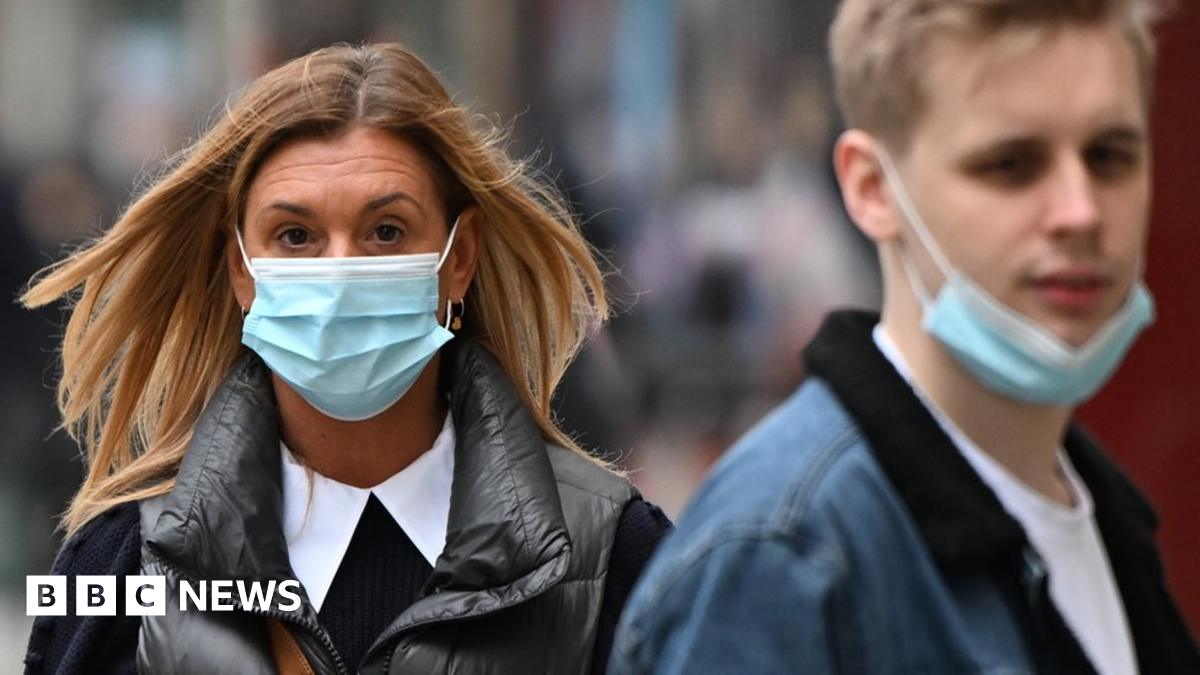
How much of an imposition are masks in reality, do they really restrict your life so much?
== Doublepost prevention - post automatically merged: ==
Yes they do but they are at far less risk of having to do so, the unvaccinated have to isolate if they are close contact with someone who tests positive whilst the vaccinated don’t.
It’s also not discriminatory as it’s a choice people make, whereas things like gender, race, sexual preference are not a choice they are things that you are
Personally I find them disgusting, especially when used repeatedly, which in many cases isn’t supposed to happen but most of the time does. They also act as a constant reminder of Covid - I know people who have suffered bereavements who find that the constant bombardment, masks being one element but the constant rolling obsessive media coverage another, is making it very difficult for them to attempt to draw a line and move on. A bereavement is bad enough any time, without the constant reminders.
But there’s other issues too. A lot of people have become very confrontational over the last two years, the zombie lifestyle we’ve all been encouraged to live is probably a factor, but suppression of non-verbal communication won’t be helping either. Facial expressions can inflame or diffuse an interaction. Then there’s issues with detection of crime - for some people masks must be superb, it’s now possible to walk around with one’s face covered almost to the extent of that achieved by a balaclava, and no one bats an eyelid.
Personally I find them disgusting, especially when used repeatedly, which in many cases isn’t supposed to happen but most of the time does. They also act as a constant reminder of Covid - I know people who have suffered bereavements who find that the constant bombardment, masks being one element but the constant rolling obsessive media coverage another, is making it very difficult for them to attempt to draw a line and move on. A bereavement is bad enough any time, without the constant reminders.
But there’s other issues too. A lot of people have become very confrontational over the last two years, the zombie lifestyle we’ve all been encouraged to live is probably a factor, but suppression of non-verbal communication won’t be helping either. Facial expressions can inflame or diffuse an interaction. Then there’s issues with detection of crime - for some people masks must be superb, it’s now possible to walk around with one’s face covered almost to the extent of that achieved by a balaclava, and no one bats an eyelid.
I agree completely. Personally I'd be quite happy if the damn things disappeared tomorrow and were never mentioned again, though I know it won't happen
Personally I find them disgusting, especially when used repeatedly, which in many cases isn’t supposed to happen but most of the time does. They also act as a constant reminder of Covid - I know people who have suffered bereavements who find that the constant bombardment, masks being one element but the constant rolling obsessive media coverage another, is making it very difficult for them to attempt to draw a line and move on. A bereavement is bad enough any time, without the constant reminders.
But there’s other issues too. A lot of people have become very confrontational over the last two years, the zombie lifestyle we’ve all been encouraged to live is probably a factor, but suppression of non-verbal communication won’t be helping either. Facial expressions can inflame or diffuse an interaction. Then there’s issues with detection of crime - for some people masks must be superb, it’s now possible to walk around with one’s face covered almost to the extent of that achieved by a balaclava, and no one bats an eyelid.
I can relate to all of this. I find them incredibly dystopian, they symbolise an utterly miserable period in our history and serve as a constant reminder of the “threat” we face (so you could say they’re working exactly as intended!). There are of course practical issues too as you’ve identified, to which I’d add the appalling lack of mask hygiene demonstrated by many people.
Although I don’t wear one myself I absolutely cannot wait for the day they’re consigned to the bin (which should be a clinical waste bin of course!) permanently.
This has to happen as part of the transition to living with COVID.
There is not much point in face nappies no longer being mandatory if they are "expected" or "recommended" in certain settings.
And as you say, no setting should be able to make the wearing of a face nappy a condition of entry or service.
In particular, public transport operators should not be allowed to make announcements along the lines of "...please show respect for others by wearing a face nappy whilst using our services...", and all signage to this effect should be removed by a specified date, or the operator should be subject to a fine.
I can relate to all of this. I find them incredibly dystopian, they symbolise an utterly miserable period in our history and serve as a constant reminder of the “threat” we face (so you could say they’re working exactly as intended!). There are of course practical issues too as you’ve identified, to which I’d add the appalling lack of mask hygiene demonstrated by many people.
Although I don’t wear one myself I absolutely cannot wait for the day they’re consigned to the bin (which should be a clinical waste bin of course!) permanently.
Yes I totally agree. And for sure - any pathogen so bad that the population is mandated to wear a mask to avoid it should mean they aren't disposed of in a normal bin!
On that note, the environmental side is one thing that disgusts me most about it. Good job we banned plastic straws eh...
I'm not sure how recent you have in mind but I refer you to previous posts; experts in South Africa have been assuring us it's milder for many weeks; Whitty and co refused to believe them for no obvious reason.
There isn't much evidence of a particularly greater problem than may otherwise be expected from other seasonal respiratory viruses; the biggest problem is the isolation rules resulting in high levels of absense. Not the virus itself.
Once this phase passes, and it looks like it is going to pass pretty soon, then most people seem agreed that things can go back to something fairly "normal".
And in any case we are no longer under any especially restrictive measures, even though wearing a face mask on the bus for a couple more weeks seems to amount to a big deal to some people. For the record, I would not have any objection to the work-from-home guidance being dropped now.
We do not achieve sterilising herd immunity with seasonal respiratory viruses; we reach a state of endemic equilibrium (as discussed previously on the forum).
or if it is achievable that achieving it through infection of the unvaccinated represents a risk appropriate to the benefit given the relative risks of the two methods of acquiring a level of immunity.
Everyone is going to be exposed to Sars-CoV-2. People have a choice whether or not to prepare their adaptive immune system for this exposure. We cannot force them but I would encourage people to do this. Until almost everyone has been exposed to more of the virus than just spike, we are not going to be able to fully transition into endemic equilibrium.
I am also far from convinced that this new disease will stabilise into endemic equilibrium as smoothly as you appear to assume - nice though that might be.
I suspect there will be a significant number of Sars-CoV-2 infections again next winter; the more people try to avoid Omicron exposure right now, the more are yet to come. But I don't think it will cause a big problem. Elderly and vulnerable people may need a further booster but healthy/younger people are unlikely to (that is the view of experts, not simply my view).
== Doublepost prevention - post automatically merged: ==
People who have probably never been to major cities in Sweden are very keen to compare Sweden to Finland rather than to actual comparable countries. It would be like saying Scotland needs to be compared to Greenland and then they give the excuse "But there is a land border so they must be comparable". Absolultely bonkers. But done to death in the threads I linked to above.
Cases are falling and hospital admissions appear to be plateauing - has the UK weathered this wave?
www.bbc.co.uk
...the biggest clue Omicron may be peaking, and arguably a more important measure of Covid, is how many cases are ending up in hospital. From this data we can see the number of admissions appears to have plateaued at just above 2,200 a day in the UK, about half last winter's peak.
The national figure, however, masks what is happening regionally and between different nations.
London, where Omicron took off quickly, started seeing a drop first. There is now a clear downward trend in admissions.
Elsewhere there are signs of falls too, or at least a flattening.
But the trend in the north-east of England and Yorkshire is still upwards. Omicron has not peaked everywhere - at least in terms of hospital admissions....
I think cases will still remain high for some time and they could yet peak again now that schools etc are back, but this shouldn't be a cause for concern.
France has many more infections than the UK, despite not doing as many tests. They have had over 300,000 on several days lately and their 7 day moving average is 283,394:
Of course, people who are a fan of Frances' tougher measures will no doubt defend those measures and say that there would be "even more" cases if France didn't have them. It's nonsense. Harsher restrictions pre-Omicron, when the virus was less fit, has only postponed the inevitable and has resulted in a huge number of infections now. Arguably it would have been better to open up more in the Summer than condense a huge number of infections in the Winter, but France has been fortunate that Omicron is milder, so they might get away with it.
The idea that some people had, that tough restrictions and keeping virus levels low in the Summer, would make case rates low in Winter, has proven to be absolutely absurd in so many countries, both last Winter and this Winter, but Omicron's surge in France really does highlight this more than ever.
We cannot get away from the fact that everyone is going to be exposed to Sars-CoV-2 and until most people have been the virus will continue to spread at relatively high levels but we will reach endemic equilibrium; the question is when. And the UK is better placed than most to reach it sooner
I'm just thinking about when it will be clear what effect Omicron will have on hospitalisations/deaths.
Last year, with Delta, the 7 day average of cases peaked in the UK on 1st January.
The hospitalisations peaked on 9th January.
The deaths peaked on 19th January.
So, assuming that this wave follows a similar pattern, we should look at +8 days from the cases peak for hospitalisations, and +18 days for deaths.
The 7-day peak seems to have occurred on 2nd January this year (an aside: a clue to seasonality if there ever was one), so I think we would expect to see peak hospitalisations around the 10th and deaths on the 20th.
Let's see if that data bears out on the healthcare in the next few days, although evidence is that it might have peaked a week ago (which would be in line with high rates of incidental case admissions).
Whilst I feel somewhat akin to King Canute in making this request but I'm going to have to ask that we drop the face covering conversation please. It has been done, on multiple occasions, absolutely to death. People have made their minds up regarding them and nothing is likely to change anyone's mind at this point. So please can we leave there? Thank you.
Yes, several, including some who did suffer from dementia (one to the point where Alzheimer's shut down not just the conscious mind, but also the reflexes). But I've also known those (including the person who took Alzheimer's to it's end point) who have found life in a care home gave them a life that they enjoyed, however limited it might seem to either of us. I do not write people off just because they need too much care to stay in their own home without live-in care (and, yes, I've had relatives in that position too).
I've also had the privilege of being looked after by a hospice as they cared for my mother in her final days. It was a strangely joyful place, but one that bore no relationship to any nursing or care home I've ever visited. There are many and complex issues about the final part of peoples' lives; reducing them to the level of them being in a particular place means their life is not worth living is simply not credible
To be clear I’m not condoning euthanasia or anything else I’m likely to be accused of by some on here - merely saying that we need to have a more grownup conversation about what levels of protection are necessary or justifiable for those at the end of their natural lives.
I also accept “care home” means something different to “nursing home” for these purposes.
Two years ago, basic competence and epidemiology would have been nice! Now, what I see from a number of posts and posters is a view that people in care homes aren't worth looking after, and are just dispensable. My comment about GBD is no more than an observation of how arguments have changed.
If traditional epidemiology had been followed, would we have seen the reaction to Covid we have? I’m not at all sure we would.
I don’t think the arguments have necessarily changed. The GBD seemed pretty sensible at the time, albeit the mass hysteria whipped up around Covid meant it didn’t get a fair hearing. Anyone suggesting anything other than lockdowns was a granny killer etc.
But as people ask, I think the home my relative is in gets the balance pretty well. They get visitors to pre-book, limit the number of people visiting the home at any time, and get visitors to do lateral flow tests before travelling to try to identify those who are likely to be infectious before they enter the home. That seems a reasonable and proportionate set of trade-offs for a group who are particularly vulnerable.
If that person was otherwise well, and had no other condition likely to have led to their death, then pneumonia would have killed them and be the cause of death. Just as they would have died of Covid if the disease that took them was Covid. It doesn't change just because the deceased was old and frail.
There’s a big difference between someone being struck down in the prime of health, and someone who is elderly and at the end of their natural lives. That’s why doctors often used to write “died of old age” onto death certificates. Not because old age is a cause of death per se, but because it’s a useful shorthand for “died of one of the various conditions which typically carry off the elderly and frail”. Covid is now one of these conditions.
For every example of someone who the "swift end of Covid" might have been a "blessing" there will be others who lost perfectly good years of their life that they might have enjoyed. Perhaps we might not be quite so callous to simply chuck them out because "oh well that stats tell us they'd have been dead soon anyway!".
As if more proof were needed that we are now starting to see the downside of lockdowns/restrictions, have just seen this article from The Guardian:
"Parents are being warned to look out for signs of a non-Covid virus that is “rife” in the UK amid a surge in reports of children struggling to breathe.
The British Lung Foundation (BLF) said Respiratory Syncytial Virus (RSV) is staging a comeback this winter after lockdown last year meant there were fewer infections than would normally occur.
It is concerned that this year children will have “much lower immunity” at a time when the NHS is already under extreme pressure." https://www.theguardian.com/society...ection-uk-rise-children-struggling-to-breathe
As if more proof were needed that we are now starting to see the downside of lockdowns/restrictions, have just seen this article from The Guardian:
"Parents are being warned to look out for signs of a non-Covid virus that is “rife” in the UK amid a surge in reports of children struggling to breathe.
The British Lung Foundation (BLF) said Respiratory Syncytial Virus (RSV) is staging a comeback this winter after lockdown last year meant there were fewer infections than would normally occur.
It is concerned that this year children will have “much lower immunity” at a time when the NHS is already under extreme pressure." https://www.theguardian.com/society...ection-uk-rise-children-struggling-to-breathe
We are aware of an issue with emails from the Forum to Microsoft-based email accounts (hotmail/outlook/live.com email addresses). This is being looked into currently, thanks for your patience meanwhile.