The UK is a different market though and Flixbus really isn't doing something the other operators don't do. They are even using former National Express coaches on some of their routes with exactly the same interior specification. I just don't see what unique selling point they bring to a market where people chose their coach by price and timetable.Given how successful Flixbus has been in mainland Europe and the USA, I cannot see them exiting the UK market. Whether or not they consolidate is another matter, but they won't exit the UK market now that they're in it. I think if there is any consolidation it'll come from National Express and Megabus, which is not for this thread.

-
Our new ticketing site is now live! Using either this or the original site (both powered by TrainSplit) helps support the running of the forum with every ticket purchase! Find out more and ask any questions/give us feedback in this thread!
You are using an out of date browser. It may not display this or other websites correctly.
You should upgrade or use an alternative browser.
You should upgrade or use an alternative browser.
Flixbus Discussion
- Thread starter darloscott
- Start date
Sponsor Post - registered members do not see these adverts; click here to register, or click here to log in
R
RailUK Forums

I've used it. Drivers were great and the brand new Volvo coaches were excellent.Anyone used the Flixbus service to Scotland operated by McGills? I was thinking of using this, quieter than megabus/NX?

M803UYA
Member
I meant in general, Flixbus operates throughout the world and is looking to expand globally. So their mindset isn't just confined to the UK - they view themselves as a global operation. So for them to 'exit' the UK, I don't see them doing that.The UK is a different market though and Flixbus really isn't doing something the other operators don't do. They are even using former National Express coaches on some of their routes with exactly the same interior specification. I just don't see what unique selling point they bring to a market where people chose their coach by price and timetable.
I think one of the other operators in the UK might exit the market, but I don't think it'll be Flixbus!
No business, no matter how deep its pockets, is going to operate in a market where it doesn't feel it has prospects of making money. It has retrenched from its initial operations as they haven't proved profitable. Where exactly are they advertising? How are they becoming known? Most importantly, what is going to raise their profile and differentiate them from the competition?I meant in general, Flixbus operates throughout the world and is looking to expand globally. So their mindset isn't just confined to the UK - they view themselves as a global operation. So for them to 'exit' the UK, I don't see them doing that.
I think one of the other operators in the UK might exit the market, but I don't think it'll be Flixbus!
There seems to be some weird perception that just because Flixbus has succeeded elsewhere, they are going to become a dominant operator in the UK. To do that, they need to attract customers from the other operators, expand the market or acquire another operator. The UK coach market is already fairly mature - the key links are already there at times people travel and it is already low cost because the market doesn't appear to support higher fares.
When I have used Flixbus, I have been attracted by low fares or the times of the coach. Nothing about the coaches or service has made me think they would automatically be my first choice for the next journey I want to take.
M803UYA
Member
But Flixbus isn't just considering their operations in the UK, they're a global operation. I don't know their plans for the UK other than they wish to enter the market and expand their operations as they do in other countries. How long that will take them I do not know, but evidently it won't be immediate...No business, no matter how deep its pockets, is going to operate in a market where it doesn't feel it has prospects of making money. It has retrenched from its initial operations as they haven't proved profitable. Where exactly are they advertising? How are they becoming known? Most importantly, what is going to raise their profile and differentiate them from the competition?
There seems to be some weird perception that just because Flixbus has succeeded elsewhere, they are going to become a dominant operator in the UK. To do that, they need to attract customers from the other operators, expand the market or acquire another operator. The UK coach market is already fairly mature - the key links are already there at times people travel and it is already low cost because the market doesn't appear to support higher fares.
No one is questioning whether they can make money in the rest of their global operation but they aren't going to use profits elsewhere to support a loss-making business in the UK, unless over the long term they think they are going to make money. The first signs simply don't look promising. They could operate in every other country in the world and find that it isn't worth their while operating in the UK if the market conditions and competition doesn't support it.But Flixbus isn't just considering their operations in the UK, they're a global operation. I don't know their plans for the UK other than they wish to enter the market and expand their operations as they do in other countries. How long that will take them I do not know, but evidently it won't be immediate...
What levers are they going to pull to increase their market share?
M803UYA
Member
The most obvious lever at the present time is the fare structure - which has been commented upon before as not sustainable longer term.No one is questioning whether they can make money in the rest of their global operation but they aren't going to use profits elsewhere to support a loss-making business in the UK, unless over the long term they think they are going to make money. The first signs simply don't look promising. They could operate in every other country in the world and find that it isn't worth their while operating in the UK if the market conditions and competition doesn't support it.
What levers are they going to pull to increase their market share?

markymark2000
On Moderation
I think Flix management at every much, if we keep saying it, it may come true.No business, no matter how deep its pockets, is going to operate in a market where it doesn't feel it has prospects of making money. It has retrenched from its initial operations as they haven't proved profitable. Where exactly are they advertising? How are they becoming known? Most importantly, what is going to raise their profile and differentiate them from the competition?
There seems to be some weird perception that just because Flixbus has succeeded elsewhere, they are going to become a dominant operator in the UK. To do that, they need to attract customers from the other operators, expand the market or acquire another operator. The UK coach market is already fairly mature - the key links are already there at times people travel and it is already low cost because the market doesn't appear to support higher fares.
When I have used Flixbus, I have been attracted by low fares or the times of the coach. Nothing about the coaches or service has made me think they would automatically be my first choice for the next journey I want to take.
You raise some good points though. Flix do seem to be social media advertising but otherwise it's minimal. Not helped by the lack of promotion on their buses. Ridley's for example have no branding for Flix. No advertising.
Advertising at most stops is little-nothing.
Birmingham, a key stop, has just 'flixbus' on the flag. No timetable, no information.
Promotion on the street seems to be dismal.
Customer service is dismal too. Not a care in the world for comments or complaints. Doesn't help it's all sent to the abroad customer service who haven't even heard of most of the UK stops and seem on par with ArrivaBus customer service.
All that said, the competition isn't doing much better, wanting to expand but doing so with poo promotion and customer service.
I noticed you can block off the seat to next to you for £3.75. I do wonder how that's enforced, if its busy.I've used it. Drivers were great and the brand new Volvo coaches were excellent.

Bwsbro
Member
- Joined
- 7 Oct 2013
- Messages
- 412
Strangely it’s the only flix service that has ever enforced where I sat. Even though I was only doing Glasgow to Edinburgh and only 6 passengers onboard at Glasgow
Strangely it’s the only flix service that has ever enforced where I sat. Even though I was only doing Glasgow to Edinburgh and only 6 passengers onboard at Glasgow
Interesting they offer tickets for that short stretch.
Bwsbro
Member
- Joined
- 7 Oct 2013
- Messages
- 412
9 pence cheaper than the competing 900 journey - £0.90 Flixbus, £0.99 900Interesting they offer tickets for that short stretch.
There were plenty of seats available when I took it - I had a couple of seats to myself. Probably about 15-20 people on board?I noticed you can block off the seat to next to you for £3.75. I do wonder how that's enforced, if its busy.
Interesting they offer tickets for that short stretch.
I believe you can book journey between any two stops the coach serves although when I've looked its often the same price for the seat regardless, for example Leeds to Sheffield is the same price as Leeds to London, if they sell the same seat, in this example for both Leeds-Sheffield and Sheffield-London, then they've doubled the revenue from that seat!
markymark2000
On Moderation
You can't book Liverpool to Chester or Warrington (or vice versa). I presume due to the distance being less than 50km, it would come under a local service.I believe you can book journey between any two stops the coach serves although when I've looked its often the same price for the seat regardless, for example Leeds to Sheffield is the same price as Leeds to London, if they sell the same seat, in this example for both Leeds-Sheffield and Sheffield-London, then they've doubled the revenue from that seat!
Bletchleyite
Veteran Member
You can't book Liverpool to Chester or Warrington (or vice versa). I presume due to the distance being less than 50km, it would come under a local service.
The distance between stops that requires a service to be registered as a local bus service is 15 miles (24.15km), not 50km. Liverpool-Chester by road is nearly twice that, Warrington is 19 miles.
50km is the maximum end to end length of a local bus route operated under domestic regulations (give or take the silly "fake connection" workaround).
markymark2000
On Moderation
That's the one, sorry. The rules are not actual driven distance but marked in a straight line. The example given by the DFT is Bristol to Chepstow which would come under the rules. Liverpool One to Chester Bus Station is 24km.The distance between stops that requires a service to be registered as a local bus service is 15 miles (24.15km), not 50km. Liverpool-Chester by road is nearly twice that, Warrington is 19 miles.
50km is the maximum end to end length of a local bus route operated under domestic regulations (give or take the silly "fake connection" workaround).
Warrington would work, unsure why they don't sell tickets for that journey.
Bradford to Leeds no tickets are sold due to being too close.
Weird. Nat ex sell tickets both online and at the door for tickets to Bradford from Leeds and vice versa (561). The service is NOT registered as a local service.That's the one, sorry. The rules are not actual driven distance but marked in a straight line. The example given by the DFT is Bristol to Chepstow which would come under the rules. Liverpool One to Chester Bus Station is 24km.
Warrington would work, unsure why they don't sell tickets for that journey.
Bradford to Leeds no tickets are sold due to being too close.
philthetube
Established Member
- Joined
- 5 Jan 2016
- Messages
- 4,200
Unless things have changed tickets can be sold for any journey regardless of length, certainly when N EX used to stop at all the little villages on route you used to see some random weird ones, sometimes only for three of four miles.
markymark2000
On Moderation
NX registered those journeys as local services. That's the difference.Unless things have changed tickets can be sold for any journey regardless of length, certainly when N EX used to stop at all the little villages on route you used to see some random weird ones, sometimes only for three of four miles.
The 561 is NOT registered as a local service. Never has been. It’s merely a local agreement with both the local authorities and bus companies that tickets can be sold to compliment the connections between Bradford and Leeds.NX registered those journeys as local services. That's the difference.
The same was attempted at Bournemouth for ringwood but was declined and thus no pickups can occur at ringwood unless travelling towards london.
Bletchleyite
Veteran Member
The 561 is NOT registered as a local service. Never has been. It’s merely a local agreement with both the local authorities and bus companies that tickets can be sold to compliment the connections between Bradford and Leeds.
The same was attempted at Bournemouth for ringwood but was declined and thus no pickups can occur at ringwood unless travelling towards london.
Why would they not just register it, then nobody can tell them not to?
markymark2000
On Moderation
The Traffic Commissioner begs to differ. It is registered and hence why it can sell tickets.The 561 is NOT registered as a local service. Never has been. It’s merely a local agreement with both the local authorities and bus companies that tickets can be sold to compliment the connections between Bradford and Leeds.
The same was attempted at Bournemouth for ringwood but was declined and thus no pickups can occur at ringwood unless travelling towards london.
Vehicle Operator Licensing - GOV.UK
Bus registration details
- Registration numberPD0000738/325
- Licence NumberPD0000738
- Variation number4
- StatusRegistered
- Service number.561
- Service typeLimited Stop
- Start pointSkipton Bus Station
- Finish pointLondon Victoria Coach Station
- ViaBradford, Leeds
- Date received17 Apr 2019
- Effective date03 Jun 2019
- End date
- Supported by subsidies?No
- Local authorities covered by routeMilton Keynes Council
- North Yorkshire County Council
- South Yorkshire pte
- West Yorkshire pte
- Transport For London
- TAOs covered by routeNorth East of England
- East of England
- London and the South East of England
Mod note - when posting details from external websites, please copy and paste the text rather than posting a screenshot. This ensures that posts are accessible to those who rely on screen-readers, etc. Thanks

Attachments
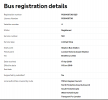
Last edited by a moderator:
Did you book these at short notice? I prefer the flexibility on the 900 if its a frequent service.9 pence cheaper than the competing 900 journey - £0.90 Flixbus, £0.99 900

That's very odd. The route has changed times at least half a dozen times (possibly many more) since that was registered - most notably, it no longer has any trips from Skipton.The Traffic Commissioner begs to differ. It is registered and hence why it can sell tickets.
Vehicle Operator Licensing - GOV.UK
www.vehicle-operator-licensing.service.gov.uk
Today, National Express will not sell me tickets between Leeds and Bradford for later this week (apologies for the screenshot showing this, but National Express links don't work without my cookies).

harrylane333
New Member
Is there any indication of how Flixbus are performing? No new routes have been announced in a while despite a growth/expansion strategy.
Eyersey468
Established Member
- Joined
- 14 Sep 2018
- Messages
- 2,611
Off topic i know but what time were you looking at travelling? The reason for asking is some journeys are pick up only at LeedsThat's very odd. The route has changed times at least half a dozen times (possibly many more) since that was registered - most notably, it no longer has any trips from Skipton.
Today, National Express will not sell me tickets between Leeds and Bradford for later this week (apologies for the screenshot showing this, but National Express links don't work without my cookies).
View attachment 108883
== Doublepost prevention - post automatically merged: ==
Based on what i have seen I dont think they are doing as well as they expected. Some journeys are reasonably busy but a lot only have a few passengers on.Is there any indication of how Flixbus are performing? No new routes have been announced in a while despite a growth/expansion strategy.
markymark2000
On Moderation
Flix are due to start a Glasgow to London daytime service via Birmingham, Manchester, Preston and Lancaster from the end of April. It's removed from the site now but was there. (Source the Flixbus Enthusiasts FB Group)