• Our new ticketing site is now live! Using either this or the original site (both powered by TrainSplit) helps support the running of the forum with every ticket purchase! Find out more and ask any questions/give us feedback in this thread!

Have electric vehicles been "oversold" to the detriment of public transport, walking and cycling?

Status
Not open for further replies.

Bald Rick

Veteran Member
Joined
28 Sep 2010
Messages
35,928
The reason that I can't have a smart meter is because there isn't room on the meter board. Smart meters are much larger than proper meters and, according to the literature need a full square foot of board. That would preclude a "smart-meter" in any of the houses I lived in and I am sure, many other houses.

The smart meter recently installed in my house measures 5” x 6 3/4” (oddly imperial sized) and easily fits within the footprint of its predecessor. I suggest that you need to update your literature, or energy supplier.
 
Sponsor Post - registered members do not see these adverts; click here to register, or click here to log in
R

RailUK Forums

XAM2175

Established Member
Joined
8 Jun 2016
Messages
3,471
Location
Glasgow
Um no, most tenancy agreements I've had have that condition. If you change the meter then they'll charge you the cost of a new one off your deposit. Unless you get the landlords permission to change it.
There is a bit of misunderstanding floating around on this topic. The main change that landlords like to prohibit (unreasonably) is changing the payment type - going from pre-payment to credit, and vice-versa, which before smart meters could only be achieved by changing the meters themselves.

From https://www.citizensadvice.org.uk/c.../switching-energy-supplier-if-youre-a-tenant/

Having prepayment meters removed or installed​

Your landlord can’t stop you replacing a prepayment meter with a normal meter that lets you pay after using energy rather than in advance. You don’t need your landlord’s permission to do this.

If you get behind on your gas or electricity bills, your energy supplier might want to install a prepayment meter. Your landlord can’t stop this, and you don’t need their permission.

Returning the original meters at the end of your tenancy​

If you install or remove prepayment meters, you might have to put the original meters back at the end of your tenancy. This is because the change will count as an alteration to the property. You'll have to pay any fee your energy supplier charges for changing the meters back.

Most people's suppliers don’t charge a fee for installing or removing meters. If yours does, think about switching supplier. Or tell your current supplier you’ll switch to another one - they might remove the fee if you stay with them.

It's worth noting that most suppliers now offer smart meters that can be changed between pre-payment and credit operation remotely, which removes this problem in the future.

Regarding smart meters specifically, from https://www.ofgem.gov.uk/information-consumers/energy-advice-households/getting-smart-meter

If you rent your property​

If you pay for the gas or electricity in your rented property, you can choose to have a smart meter.

We recommend you tell your landlord before you get one. That’s because there may be rules in your tenancy agreement about how energy is supplied to the property, including the type of meter that can be installed.

If your landlord pays the energy bills, the decision to get a smart meter is up to them.

If your tenancy agreement says you need your landlord’s permission to alter metering at your property, they should not unreasonably prevent it.
 

Factotum

Member
Joined
10 Jun 2021
Messages
172
Location
Stockport
The smart meter recently installed in my house measures 5” x 6 3/4” (oddly imperial sized) and easily fits within the footprint of its predecessor. I suggest that you need to update your literature, or energy supplier.
My existing meter is 4_1/2" x 3" so that your 5 * 6_3/4 wouldn't fit in that space. And I have no intention of moving to a more expensive tariff in order to get a smart meter

== Doublepost prevention - post automatically merged: ==

Bad hardware then. Mine is much smaller than the "spinning disc" one it replaced.
My existing meteres are not spinning disk. They are electronic with LCD displays and measure 3" x 4.5"
 

37424

Member
Joined
10 Apr 2020
Messages
1,064
Location
Leeds
I was a Smart Meter installation engineer until the end of 2017. The initial SMETS1 electric meters that we installed although bigger than a typical electronic standard meter but could be installed on most meter boards, there were very few I couldn't install them on, off course different Electricity Suppliers may use different meter suppliers and the size may vary. Not long before I left SMETS2 meters came out and both the electric and gas meters were huge, in fact the gas meters were crazy because they were too big for some outside meter boxes, and yes the electric meter became more difficult to install due to lack of space. That was 4 years ago and would expect the size to have shrunk a bit by now.

Even though I installed them I was never a fan of the great rush to install, the idea that people were going to sit there and watch their energy consumption meter all the time was laughable I expect most end up in a draw after a few days, consequently I don't have a smart meter in my house and have only now requested one in order to get the cheap overnight EV charging rate.
 
Last edited:

The Ham

Veteran Member
Joined
6 Jul 2012
Messages
12,036
An interesting read on supermarket petrol stations


Future of petrol pumps fuels Morrisons bid battle​

Rival consortiums consider tie-ups or sales for UK forecourts controlled by supermarket tie-up.​

Even if it no longer drives footfall in the way it once did, fuel has another important role for supermarkets — it is highly cash flow positive.​

​

While the outcome of the bidding war for Wm Morrison remains uncertain, one aspect is clear: fuel retail features heavily in both bidders’ plans for the supermarket group.​

​

Clayton, Dubilier and Rice, whose £9.7bn offer on Thursday secured a recommendation from the Morrisons board, envisages some form of tie-up between the supermarket’s wholesale arm and the 900 UK filling stations it controls via its ownership of Motor Fuel Group.​

​

The rival consortium led by Fortress, which is considering its response to the CD&R offer, has said it would look at selling the 330 petrol stations attached to Morrisons stores.​

​

​

These would be offloaded into an increasingly competitive UK market as Asda, now owned by TDR Capital and the Issa brothers, is already in the process of selling its 300 forecourts to EG Group, a petrol station operator also controlled by TDR and the Issas.​

​

Analysts said Fortress’s likely plan to sell the fuel stations was driven by a need to raise cash to improve the overall return on its acquisition.​

​

William Woods, an analyst at Bernstein, said that even at the 252p-a-share level of Fortress’s initial bid for Morrisons, he “struggled to see the returns of the current offer without significant asset sales”.​

​

“If the offer price were to be raised, this will put further pressure on potential new owners to sell off additional assets,” he wrote in a note to clients.​

​

The rival bidders’ plans highlight how the role of fuel has changed in recent years and continues to do so as drivers begin to switch to electric vehicles.​

​

When supermarkets first started to open filling stations at large stores in the late 1980s and early 1990s, the main objective was to lure more shoppers into their stores.​

​

“It was part of the hypermarket revolution,” said Simon Laffin, who was finance director at Safeway in the late 1990s. “The petrol station basically paid for itself but it also increased takings at the store by about 2 per cent.”​

​

The pricing of fuel, often in conjunction with in-store promotions, was key to the offering.​

​

“If you believed that petrol was determining your customers’ choice of supermarket then it had to be cheap,” said another former executive with decades of experience in fuel retail.​

​

​

Supermarkets and independent operators alike are starting to ponder the impact of electric vehicles ​

“We used to watch rivals’ pricing like hawks while also watching the Platt’s [wholesale] price of the actual fuel.”​

​

But as discounters Aldi and Lidl grabbed market share in the aftermath of the financial crisis, forcing big supermarket chains to cut food prices, the calculus changed.​

​

“As margins in the grocery business tightened, fuel had to stand in its own right . . . supermarkets could no longer justify subsidising fuel,” he added.​

​

At the same time, groups such as EG emerged, buying up groups of filling stations and running them better. Both trends narrowed the price gap between supermarkets and other operators.​

​

But even if it no longer drives footfall in the way it once did, fuel has another important role for supermarkets.​

​

“Supermarket fuel is highly cash flow positive,” added the former executive. “They buy on very good terms and hardly any fuel is stored under the forecourt for more than a few days.”​

​

Selling fuel for cash while paying suppliers for it on credit terms amounts to significant free working capital, which supermarkets missed when the pandemic hit.​


At Morrisons, the sharp fall in fuel sales during the UK’s first national lockdown drove a cash outflow of more than £200m in its first half compared with a similar-sized inflow the previous year, and a £400m increase in net debt.​

​

Away from their own forecourts, supermarkets have worked with major oil companies and independent operators to introduce convenience stores to filling stations, giving them another route to consumers.​

​

This has the potential to be particularly valuable for Asda and Morrisons, which unlike Tesco and Sainsbury do not have a convenience format of their own.​

​

EG will soon start introducing “Asda on the Move” stores at its UK filling stations. Morrisons already supplies petrol stations operated by Harvest Energy and Rontec with groceries, though both are considerably smaller than Motor Fuel Group.​

​

Supermarkets and independent operators alike are also starting to ponder the impact of electric vehicles; the UK is due to ban the sale of all new petrol and diesel cars by 2030.​

​

For the independents, the transition reinforces the need for forecourts to be about more than just fuel.​

​

“It is still early days, but increased dwell times driven by motorists having to wait for their car to charge reinforces the non-fuel investment undertaken to date,” said Ilyas Munshi, group commercial director at EG.​

​

“We believe demand for great food and drink, along with a strong grocery and merchandise proposition, will only accelerate with the transition to alternative fuels.”​

​

For supermarkets, whose car parks often have a surplus of spaces, electrification presents an interesting opportunity.​

​

The typical 30-40 minute timeframe for a rapid charge is ideal for a shopping trip, and the big four UK grocers along with Aldi, Lidl and Waitrose have installed thousands of charging points at stores over the past few years.​

​

With petrol and diesel volumes likely to shrink gradually over time, the former fuel retail executive predicts supermarkets will spend more time thinking about whether forecourts are becoming a distraction they can live without.​

​

“There’s going to be quite a debate over the next five years or so,” he said.​


Bald Rick

Veteran Member
Joined
28 Sep 2010
Messages
35,928
My existing meter is 4_1/2" x 3" so that your 5 * 6_3/4 wouldn't fit in that space. And I have no intention of moving to a more expensive tariff in order to get a smart meter

But you said that smart meters were a foot square. That’s clearly not the case.
 

AM9

Veteran Member
Joined
13 May 2014
Messages
16,061
Location
St Albans
And I have no intention of moving to a more expensive tariff in order to get a smart meter
Soon the only way to get a lower cost tariff will be to have a smart meter, so refusing to change would mean losing out to those that do.
 

paul1609

Established Member
Joined
28 Jan 2006
Messages
7,992
Location
K
Soon the only way to get a lower cost tariff will be to have a smart meter, so refusing to change would mean losing out to those that do.
I think outside of the major cities "soon" may be relative. EDF aren't currently offering smart meters in large chunks of Kent & East Sussex because of connectivity issues.
 

Factotum

Member
Joined
10 Jun 2021
Messages
172
Location
Stockport
But you said that smart meters were a foot square. That’s clearly not the case.
Do pay attention Rick.
I said that the smart meters need a square foot of space on the board. Not that the meters are a foot square

== Doublepost prevention - post automatically merged: ==

Soon the only way to get a lower cost tariff will be to have a smart meter, so refusing to change would mean losing out to those that do.
If by "soon" you mean "in a few year's time" you are probably correct
 

dgl

Established Member
Joined
5 Oct 2014
Messages
3,069
Aye and there's the rub: "subject to condition". There are lots of reports on consumer programmes about people getting a rather large unexpected additional bill when they hand it back. Minor blemishes which wouldn't bother a private buyer are pounced on and charged at a high rate. One friend of mine was surcharged because he returned the car with new Michelin tires rather than the OEM tires.
Add to that some of the ludicrously small mileage allowances, say 6-8k a year, I hate to think of how many leased cars have been clocked to hide the mileage overrun.
 

Bald Rick

Veteran Member
Joined
28 Sep 2010
Messages
35,928
Do pay attention Rick.
I said that the smart meters need a square foot of space on the board. Not that the meters are a foot square

That’s picking ar hairs - my smart meter needs only the space it occupies on the board.
 

AM9

Veteran Member
Joined
13 May 2014
Messages
16,061
Location
St Albans
Do pay attention Rick.
I said that the smart meters need a square foot of space on the board. Not that the meters are a foot square

== Doublepost prevention - post automatically merged: ==


If by "soon" you mean "in a few year's time" you are probably correct
Soon, in the context of the moans here imagining that EV charging at home will bypass many ( i.e., the few that have the access to a parked car but can't or won't get a compatible tariff because they don't have a smart meter). When thinking that electricity suppliers are being tardy, remember it is in their interest to ensure that they have effective incentives for consumers to 'do the environmentally responsible thing'.
 
Joined
9 Jul 2011
Messages
825
Add to that some of the ludicrously small mileage allowances, say 6-8k a year, I hate to think of how many leased cars have been clocked to hide the mileage overrun.

Mileage limits can be as high as required. You just need a quote.
6-8k a year, although on the low side of average, isn't that ridiculous if daily commuting only amounts to a 10 or 20 mile round trip.

Clocking?
With electronic odometers and mileage records now held in the ECU, which is interrogated and downloaded at each service, that's largely a thing of the past.

z
 
Last edited:

Bald Rick

Veteran Member
Joined
28 Sep 2010
Messages
35,928
How do the wires get into? Through the front face presumably. Which is very unusual for electrical equipment

:rolleyes:

== Doublepost prevention - post automatically merged: ==

6-8k a year, although on the low side of average,

It is bang average for annual car mileage in this country, which depending on the source is between 6,900 and 7,400 miles a year.
 
Joined
9 Jul 2011
Messages
825
It is bang average for annual car mileage in this country, which depending on the source is between 6,900 and 7,400 miles a year.

Indeed, the official MOT records make it around 7,000 miles pre COVID.
However, that average has been brought down over the years by the high number of multi-car households.
Most 2nd cars do considerably lower mileage than a (main) car used for daily commuting.
The average mileage for all diesel cars, whether a main user or secondary vehicle, is just over 10,000 miles per year.

Only about 22% of cars do an average of over 10,000 p.a.
 

The Ham

Veteran Member
Joined
6 Jul 2012
Messages
12,036
Indeed, the official MOT records make it around 7,000 miles pre COVID.
However, that average has been brought down over the years by the high number of multi-car households.
Most 2nd cars do considerably lower mileage than a (main) car used for daily commuting.
The average mileage for all diesel cars, whether a main user or secondary vehicle, is just over 10,000 miles per year.

Only about 22% of cars do an average of over 10,000 p.a.

Even if the lease was an extra 7p/mile to allow 12,000 the total extra payment would be £840, or an extra £24/month (assuming a 3 year lease). However 7p/mile is often the sort of figure for over running your allowance, if it's built into the lease is likely to be a little lower.
 

skyhigh

Established Member
Joined
14 Sep 2014
Messages
6,892
And I have no intention of moving to a more expensive tariff in order to get a smart meter
Why would you have to move to a more expensive tariff to get a smart meter?

At the time I signed up to my tariff, it was the cheapest I could find anywhere- and it required a smart meter to be on the tariff.
 

Factotum

Member
Joined
10 Jun 2021
Messages
172
Location
Stockport
Why would you have to move to a more expensive tariff to get a smart meter?

At the time I signed up to my tariff, it was the cheapest I could find anywhere- and it required a smart meter to be on the tariff.
Watch my lips.

1. The company i am with, Bulb, cannot provide me with a smart meter because my meter cupboard is too small.
2. Some know-it-alls on this thread insist, without seeing it, that the cupboard is large enough and that I ought to change to a company that can squeeze a smart meter into the cupboard.
3. As my current tariff is the cheapest I could find that change would involve a more expensive tariff

QED
 

Bald Rick

Veteran Member
Joined
28 Sep 2010
Messages
35,928
Watch my lips.

1. The company i am with, Bulb, cannot provide me with a smart meter because my meter cupboard is too small.
2. Some know-it-alls on this thread insist, without seeing it, that the cupboard is large enough and that I ought to change to a company that can squeeze a smart meter into the cupboard.
3. As my current tariff is the cheapest I could find that change would involve a more expensive tariff

QED

Bulb need to try harder....
 

skyhigh

Established Member
Joined
14 Sep 2014
Messages
6,892
Watch my lips.

1. The company i am with, Bulb, cannot provide me with a smart meter because my meter cupboard is too small.
2. Some know-it-alls on this thread insist, without seeing it, that the cupboard is large enough and that I ought to change to a company that can squeeze a smart meter into the cupboard.
3. As my current tariff is the cheapest I could find that change would involve a more expensive tariff

QED
Yeah, I get you can't get a smart meter because it won't fit (although it sounds a bit odd - I'm a member of a couple of EV groups and not once have I heard that as a reason before)

What I'm getting at is that you can have your current tariff on a smart meter, so having a smart meter won't make your electricity any more expensive?
 

XAM2175

Established Member
Joined
8 Jun 2016
Messages
3,471
Location
Glasgow
As my current tariff is the cheapest I could find that change would involve a more expensive tariff
So wait until they're mandatory and somebody's made to come up with a solution. I don't think I'm wrong in saying that you don't seem to want one anyway, so that's easy. Next contrived problem, please.
 

ainsworth74

Forum Staff
Staff Member
Global Moderator
Joined
16 Nov 2009
Messages
31,125
Location
Redcar
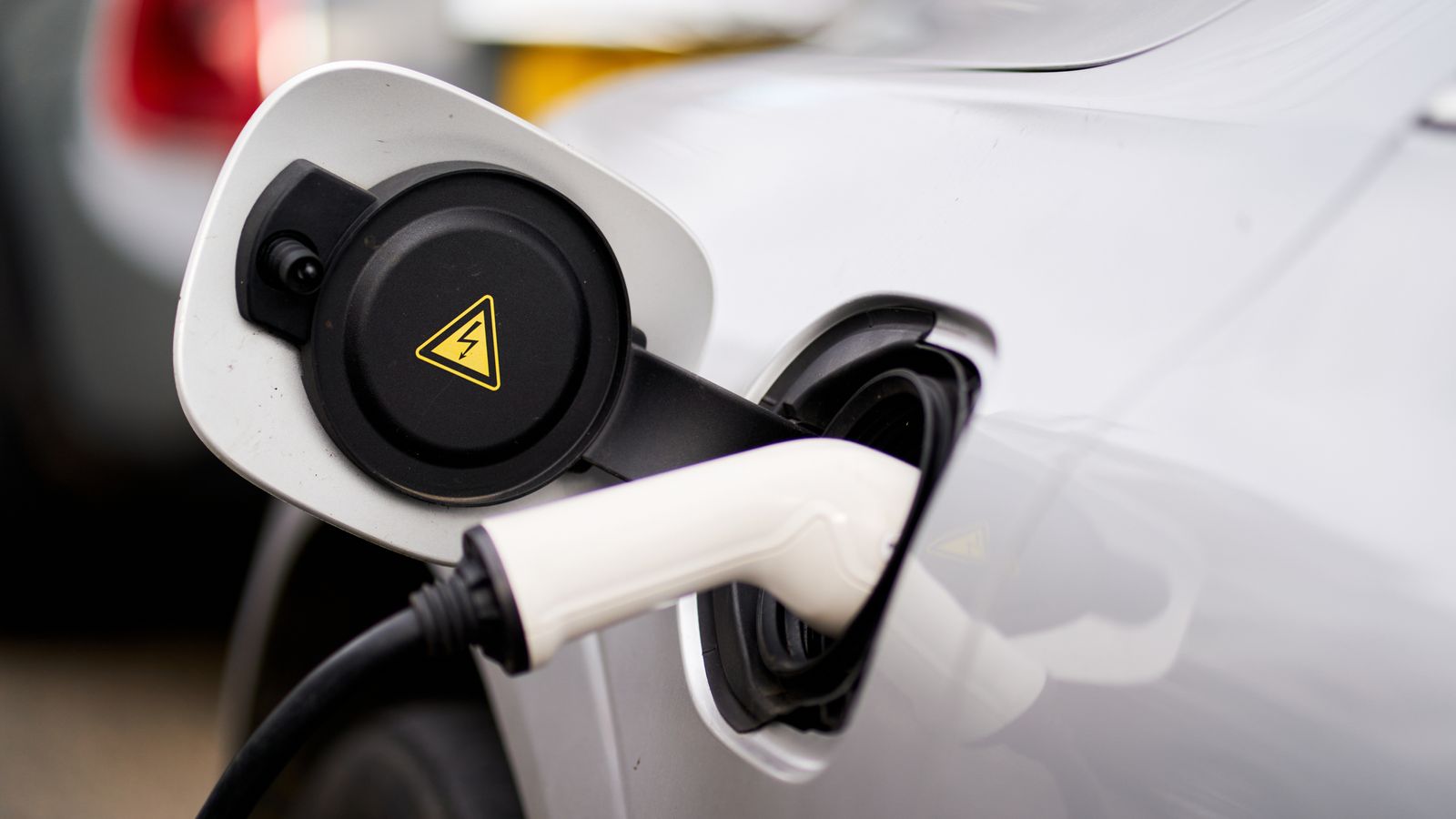
Here comes another 50,000 charging points by 2025:

Energy giant Shell has revealed plans to install 50,000 electric vehicle charging points across the UK by 2025.

It is part of a push to make more charging points available to drivers without private parking as the government targets a reduction in carbon emissions to net zero by 2050.

The UK plans to ban the sale of new petrol and diesel cars from 2030 - and the switch to electric will mean new infrastructure is needed to power the electric cars that replace them.

Shell will roll out its plans through ubitricity, an on-street charging point company it bought earlier this year that currently operates 3,600 such sites in Britain.

The company said it would support local authorities with a financing offer to install the charging points across the UK.

Shell said it would do this by topping up the remaining cost of installing on-street chargers not covered by a 75% central government subsidy.

It did not give details on the cost of the initiative - through which it will make money by selling energy at the charging points.
 

AM9

Veteran Member
Joined
13 May 2014
Messages
16,061
Location
St Albans
Here comes another 50,000 charging points by 2025:


No doubt some anti-EV poster(s) will be along soon to say that 50,000 isn't enough/will be in the wrong places/will be rip-off prices/etc..
 
Status
Not open for further replies.

Top