• Our new ticketing site is now live! Using either this or the original site (both powered by TrainSplit) helps support the running of the forum with every ticket purchase! Find out more and ask any questions/give us feedback in this thread!

Rail decarbonisation: What are the solutions?

Status
Not open for further replies.

coppercapped

Established Member
Joined
13 Sep 2015
Messages
3,328
Location
Reading
SNIP

Your evidence that public transport is favoured over cars is that they closed a useful bus route? That doesn't seem to support your point. Just goes to show that even when great political fanfare is made, the car almost always takes priority.
That was not my point and I rather suspect that you know it.

For public transport to take over some car journeys its mesh has to be smaller and the service offered has to be reliable.

The service was withdrawn, apparently, because for whatever reason its ridership figures had not reached those predicted and the bus company claimed it could not afford to run it. If you want to interpret that as the car taking priority then that is up to you.
Public transport does answer most of the same questions - the big one being "how do you move people around". The car isn't some ancient thing that's gradually accumulated over 500 years - the car as mass transport only dates back to the 50s and 60s, when huge swaths of infrastructure were built to accommodate it. Most households didn't have a car until the 80s. Before these few decades, an essentially modern society functioned mostly on public transport as the means of moving people around, and specifically rail for moving goods. Modal shift isn't just talk, the modal shift to cars was a public policy within living memory, and it can be a public policy to partially reverse it. Plus, public transport doesn't have to entirely replace the car, just largely supplement it - many people on here already say they'd rather take the train than drive for certain journeys, that decision just needs to be expanded.
The point I was making that the sum of millions of incremental changes have got us to where we are today. The car - and transport generally - is only a part of the conundrum. The world's population has increased hugely with all the concomitant pressures on land for living, for farming and food production, for manufacturing, for wild spaces and so on and so forth. I appreciate that this is essentially a transport forum but if we are to be serious about controlling man-made temperature increases then answers have to be found for all of these issues.
I fully agree! That's why I say we kind of have to have this modal shift - the energy savings are dramatic, especially in a world where the vast majority of cars aren't even electric, and form the majority of emissions. At the rate we're going, net zero by 2050 is a joke - we need to utilise every tool we have, as fast as we can. Unless we'd rather drive now and be underwater later.
It's a global problem. The effect of electrifying the UK railways even if the modal shift to public transport reaches, say, a third of passenger-miles will make no difference whatsoever to the measured levels of CO2 in the air as long as other countries use coal or lignite or destroy rain forests.

If we don't reach net zero by 2050 it won't worry me...I'll long be underground pushing up the daisies!

But it does concern me for my son.
 
Sponsor Post - registered members do not see these adverts; click here to register, or click here to log in
R

RailUK Forums

Bald Rick

Veteran Member
Joined
28 Sep 2010
Messages
35,801
Some of the predictions about huge electricity transmission and distribution costs for electrifying vehicles are likely to be over exaggerating the problem. If you look at electric demand it is quite variable and there's considerable spare network and generation capacity available over night and to a lesser extent outside of peak periods. Smart charging of EVs to shift consumption to off peak periods is reasonably simple, cost saving and will be incentivised. As long as smart charging is adopted the impact is manageable.

Importantly any costs are met by the private sector and bill payers rather than tax payers and the treasury.

Agreed - it is a problem, but resolvable, and the Grid and regional network operators are actively working to meet the challenge. It is in their commercial interests to do so.
 

Rhydgaled

Established Member
Joined
25 Nov 2010
Messages
4,859
Roads are also important for public transport. My nearest rail station is 5 miles away, I will be using the road system to get there, whether that's by car, bike or bus. Decent provision for the latter two are going to make a much bigger improvement than electrifying every tiny branch line.
True, but the road projects I see (2nd M4 around Newport and the two sections of the A40 in Pembrokeshire) don't benefit buses and bikes - bypass a village and the bus either has to miss out the village (isolating anyone who lives there who doesn't own a car) or incur a further journey time penalty by diverting off the main road to serve the village.

There's also the question of population growth. The UK's population has grown from 56m to 67m in the last 40 years. Surely there has to be some provision for that? In the same way we don't keep the rail network in aspic but look to provide additional capacity, there has to a recognition that at least some road-building will be required?
No; we need to provide rail and bus capacity not schemes to speed up car travel.

It's not to suggest that roadbuilding is bad
That might not be what you were trying to suggest, but I certainly am suggesting that road building is bad. See pages 11 and 18 of Behaviour change, public engagement and Net Zero, A report for the Committee on Climate Change, in particular this bit: “Government has presented climate change as a potential catastrophe ... Yet its statements about solutions,and its actual policies, do not match up to the story it tells...Mixed messages are highly damaging to public understanding, trust and sense of personal capacity to act”.

As you rightly said later in your post, the car is "an individualist and alienating mode of transport, shame it's just so damn convenient"

What's less efficient?

One man, his dog and his bicycle in a two-tonne electric car, or one man, his dog and his bicycle in a 70-tonne DMU?
That question misses out a vital peice of the puzzle; buses. Yes, the car would be more efficient if you really do need to transport just one man, his dog and his bike but there is a massive space between that extreme and the point where a DMU becomes more efficient. That space needs to be filled by mass availablity of bus services.

People restricted to travel at the convenience of operators who don't really care because they have no meaningful competition in your glorious post car world?

And there is tiny penetration of public transport and any expansion will be colossally expensive?
Colossally expensive up front maybe, but once it's there if you can get people to use it you will have revenue helping keep the service going. As for 'the convenicence of operators' a possible answer is leglislation that all settlements above a certain population get at least an hourly bus service from 6am to midnight.

That DMU (hopefully in future an EMU) would be running regardless of whether one person chooses to drive or not. And it needs to be there to ensure non-drivers can get about. If you look at it from this angle, the man will greatly reduce his environmental impact if he chooses to take the train rather than drive
Good point, but in my view that argument only applies on routes like the Heart Of Wales line where the train is the only public transport and thus is socially necessary. In most cases, it would be a bus, not a train, that is running regardless of whether there are people who want to travel.

From where I'm sitting one would get entirely the opposite impression.

Under cover of the Covid pandemic (Emergency Active Travel Fund) my local council (Reading) has introduced or is consulting on some five significant schemes to re-allocate road space from motor vehicles to bicycles and pedestrians.
Ok, maybe it depends where you are sitting. In Pembrokeshire we don't have any committed public transport upgrades that I'm aware of and we are expecting a faster road to be built in the next two years unless whoever is the transport minister after next week's Senedd election overturns the decision made a few weeks ago. The parallel rail line will carry on unchanged.

'Net zero' carbon by 2030, or 2040? It's a joke - and anyway 'net zero' won't really get us anywhere - we really need to aim for 'negative carbon' if the greenhouse effect is to be reduced.
Got to get to zero first... But yes, if and when we get there the push to decarbonise needs to keep on going.

== Doublepost prevention - post automatically merged: ==

The car - and transport generally - is only a part of the conundrum. The world's population has increased hugely with all the concomitant pressures on land for living, for farming and food production, for manufacturing, for wild spaces and so on and so forth. I appreciate that this is essentially a transport forum but if we are to be serious about controlling man-made temperature increases then answers have to be found for all of these issues.
Yes, it all needs to be solved. The way I look at it though, it is too big an issue for one person to solve all of it - each person must fight their corner. As a lifelong rail (and latterly public transport) enthusiast who now lives in Wales my corner is transport in Wales - and transport just happens to be the biggest source of UK emissions at the moment.
 

ac6000cw

Established Member
Joined
10 May 2014
Messages
3,910
Location
Cambridge, UK
A very significant majority of the freight you see on the roads simply couldn’t transfer to rail.

Electric lorries?
Yes.

While range for battery-electric HGVs is likely to be rather less than existing diesel powered HGVs, I suspect that we'll see both changes in the freight distribution/logistics system to accommodate that and maybe using 'battery swaps' at service stations to extend the range when necessary.

In any event (according to recent UK government transport statistics), HGVs account for 16% of greenhouse gas emissions (and 5% of vehicle miles) - vans account for about 16% of GHG emissions, and they are much easier to electrify (it's already happening). Cars account for about 55% of GHG emissions. So even if you didn't do anything about HGV emisions, electrifying car and van usage would reduce road transport GHG emissions by over 70% - and we already know how to do that.

For comparison of domestic freight transport modes (based on tonne km in 2019), rail had an 8% share, water 13% and road 79%. Intermodal traffic by rail has been steadily increasing - up 31% between 2010 and 2019.

Summary transport stats for 2018 here - https://assets.publishing.service.g...ads/attachment_data/file/870647/tsgb-2019.pdf - and for 2019 here - https://assets.publishing.service.g...ads/attachment_data/file/945829/tsgb-2020.pdf

Over 80% of rail passenger km are on electric trains - anyone got the numbers for freight?
 
Last edited:

Bald Rick

Veteran Member
Joined
28 Sep 2010
Messages
35,801
Over 80% of rail passenger km are on electric trains - anyone got the numbers for freight?

It’s much smaller. The Traction Decarbonisation Network Study quotes that in 2018/19 electric freight used 75m kWh (put another way, 75GWh), Diesel used 153m litres of fuel, which is 1,637GWh. With very rough assumptions about the relative efficiency of diesel engines (40%) vs electric traction systems (90%), and that energy used is proportionate to tonne/km, then there is about 10 times as much diesel hauled freight as electric.
 

paul1609

Established Member
Joined
28 Jan 2006
Messages
7,992
Location
K
It’s much smaller. The Traction Decarbonisation Network Study quotes that in 2018/19 electric freight used 75m kWh (put another way, 75GWh), Diesel used 153m litres of fuel, which is 1,637GWh. With very rough assumptions about the relative efficiency of diesel engines (40%) vs electric traction systems (90%), and that energy used is proportionate to tonne/km, then there is about 10 times as much diesel hauled freight as electric.
What are the average transmission/ conversion losses in the UK from the power station to the overhead line? (I know its around 12% from Power Station to 230v 1 ph)
 

HSTEd

Veteran Member
Joined
14 Jul 2011
Messages
20,315
What are the average transmission/ conversion losses in the UK from the power station to the overhead line? (I know its around 12% from Power Station to 230v 1 ph)

It will be significantly less, although admittedly I don't have figures to hand.
Most of the grid losses in the 230V supply scenario are incurred between the final transformer and the user, in the low voltage feeder.

Given that 25kV draws directly from the 400kV or 132kV system, it will be a few percent. National Grid losses will be about 1%, not sure about the rail side.
 

paul1609

Established Member
Joined
28 Jan 2006
Messages
7,992
Location
K
It will be significantly less, although admittedly I don't have figures to hand.
Most of the grid losses in the 230V supply scenario are incurred between the final transformer and the user, in the low voltage feeder.

Given that 25kV draws directly from the 400kV or 132kV system, it will be a few percent. National Grid losses will be about 1%, not sure about the rail side.
Id be interested to know the efficiency between the power station and the proposed bemus via 750 vdc. Ive been reading an american article that suggests that the cheaper EVs arent actually that green because of the efficiency of charging them from 120v 60hz. The worst example tested was a renault model where only 43% of the power drawn from the socket made it to the vehicle battery.
 

HSTEd

Veteran Member
Joined
14 Jul 2011
Messages
20,315
Ive been reading an american article that suggests that the cheaper EVs arent actually that green because of the efficiency of charging them from 120v 60hz. The worst example tested was a renault model where only 43% of the power drawn from the socket made it to the vehicle battery.

Well luckily we escape this by not using silly 120V charging systems!
750Vdc chargers will be relatively efficient, depending on the position of the substations, the position of the train, and the rate at which charging occurs.
 

Bletchleyite

Veteran Member
Joined
20 Oct 2014
Messages
113,324
Location
"Marston Vale mafia"
Id be interested to know the efficiency between the power station and the proposed bemus via 750 vdc. Ive been reading an american article that suggests that the cheaper EVs arent actually that green because of the efficiency of charging them from 120v 60hz. The worst example tested was a renault model where only 43% of the power drawn from the socket made it to the vehicle battery.

The more green the grid itself, the less that is an issue. And yes, the US 110/120VAC system is madness.
 

AndrewE

Established Member
Joined
9 Nov 2015
Messages
7,338
A very significant majority of the freight you see on the roads simply couldn’t transfer to rail.

Good lord, so we are screwed then?

Electric lorries?
In part, yes. But I disagree with Bald Rick (and others here who will not acknowledge the wastefulness of private motor transport.)
To achieve a step change reduction in energy use - because just changing to electric cars won't achieve what is needed - there has to be a modal shift and that goes for freight too.
I hope that the modal shift for freight will involve reopening lots of local rail yards as distribution centres and electric lorries working in a limited radius from them.
This should be helped by things like a reduction in the amount of "stuff" shifted and the requirement to make consumer goods more easily repaired.
 

AM9

Veteran Member
Joined
13 May 2014
Messages
16,029
Location
St Albans
The more green the grid itself, the less that is an issue. And yes, the US 110/120VAC system is madness.
But don't many US domestic installations include a 240V supply for heavier loads, e.g. cooking appliances, air conditioning etc.? Surely somebody investing in an EV would arrange to charge it from such a supply.
 

GRALISTAIR

Established Member
Joined
11 Apr 2012
Messages
10,494
Location
Preston Lancs
But don't many US domestic installations include a 240V supply for heavier loads, e.g. cooking appliances, air conditioning etc.? Surely somebody investing in an EV would arrange to charge it from such a supply.
110V, 220V and 480V are the usual in the USA. Our dryer and a few other things use 220V.
 

AM9

Veteran Member
Joined
13 May 2014
Messages
16,029
Location
St Albans
110V, 220V and 480V are the usual in the USA. Our dryer and a few other things use 220V.
So, apart from some older unimproved residences, the poor charging efficiency when using a 120V outlet is not a major decarbonisation issue.
 

paul1609

Established Member
Joined
28 Jan 2006
Messages
7,992
Location
K
So, apart from some older unimproved residences, the poor charging efficiency when using a 120V outlet is not a major decarbonisation issue.
As I understand it the 220v in North America is split phase (2 of 3 phase supply) with no neutral. No idea why this wouldnt be used for car charging. Do the appliances have to be hard wired? Drifted way off topic!
 

HSTEd

Veteran Member
Joined
14 Jul 2011
Messages
20,315
So, apart from some older unimproved residences, the poor charging efficiency when using a 120V outlet is not a major decarbonisation issue.

Since the 50s traditional practice in the US has been 120-0-120 (or 110-0-110 depending on where you are)

Such that a 220-240V supply is available by using the two "hot" (US terminology) wires.
 

Bald Rick

Veteran Member
Joined
28 Sep 2010
Messages
35,801
But I disagree with Bald Rick (and others here who will not acknowledge the wastefulness of private motor transport.)

You are of course free to disagree!

But I would argue that in the U.K. we are recognised as world leaders at developing efficient logistics systems and they are far from wasteful. As an example Amazon have used the systems invented here for their distribution network and deployed them back in North America and now into Europe.

The simple fact of the matter is that for the majority of freight moved around in this country it is more efficient to go by road than rail - principally because the majority of freight movements in this country are relatively short. Having a large system of rail terminals for ‘trunk haul’ distribution will make the system less efficient. Considerably so.

Efficiency isn’t all about energy use, although that is of course a part. It is also about efficiency of capital (how much is tied up in terminals, warehouses, infrastructure, and the wagons, boxes, rolling stock etc necessary); and the efficiency of time both in terms of people employed to do this and the time it takes for consignments to progress through the network. All this affects end cost, and ultimately efficiency of the economy.

I wholeheartedly agree that we need to reduce energy usage in freight transport, but switching large amounts of freight to rail isn’t the answer. Switching some freight to rail will help, but it is at the margins. The big opportunities will come from reducing how much we each consume, buying locally made products for consumption (the more local the better), widespread adoption of EVs for commercial vehicles under 3.5t, and the hybridisation of HGVs to much improve their fuel economy.
 

GRALISTAIR

Established Member
Joined
11 Apr 2012
Messages
10,494
Location
Preston Lancs
I do like the Julian Worth suggestions though that there are some quick wins for freight by electrifying some short bits and switch to electric. If costs under control do the big ones and we all know what they are.
 

Bald Rick

Veteran Member
Joined
28 Sep 2010
Messages
35,801
I do like the Julian Worth suggestions though that there are some quick wins for freight by electrifying some short bits and switch to electric. If costs under control do the big ones and we all know what they are.

There are, but not many. London Gateway is the obvious short stretch, but the port should have paid for that when they built it; one assumes they knew they could get away without it. Acton Yard to Acton Wells, and Acton Wells - Willesden Reliefs via Acton Canal Wharf would cause a couple of trains a day to switch. After that I’m struggling for short stretches that aren’t in a terminal.
 

AndrewE

Established Member
Joined
9 Nov 2015
Messages
7,338
You are of course free to disagree!

But I would argue that in the U.K. we are recognised as world leaders at developing efficient logistics systems and they are far from wasteful. As an example Amazon have used the systems invented here for their distribution network and deployed them back in North America and now into Europe.

The simple fact of the matter is that for the majority of freight moved around in this country it is more efficient to go by road than rail - principally because the majority of freight movements in this country are relatively short. Having a large system of rail terminals for ‘trunk haul’ distribution will make the system less efficient. Considerably so.

Efficiency isn’t all about energy use, although that is of course a part. It is also about efficiency of capital (how much is tied up in terminals, warehouses, infrastructure, and the wagons, boxes, rolling stock etc necessary); and the efficiency of time both in terms of people employed to do this and the time it takes for consignments to progress through the network. All this affects end cost, and ultimately efficiency of the economy.

I wholeheartedly agree that we need to reduce energy usage in freight transport, but switching large amounts of freight to rail isn’t the answer. Switching some freight to rail will help, but it is at the margins. The big opportunities will come from reducing how much we each consume, buying locally made products for consumption (the more local the better), widespread adoption of EVs for commercial vehicles under 3.5t, and the hybridisation of HGVs to much improve their fuel economy.
I think we almost agree on lots of things, but the problem is in one's definition or understanding of "efficiency!" Currently it is what makes someone[else] the most money. Hence the gig economy, Uber, etc drivers and parcels couriers all self-employed and almost all outside the PAYE, pension and National Insurance system, providing their own vehicles and with no employer support in case of sickness or work-related injuries. Simply minimising actual employee man-hours and ignoring all the other implications comes at a cost... to the workers and to the rest of us.

When you consider the external costs of pollution (and the consequent widespread ill-health - already acknowledged,) congestion and the social breakdown from the way our currently "world-leading efficient logistics systems" are organised I for one am not so proud of what the UK has achieved. Lots of motorway blockages are at 5 a.m. from crashed lorries, I wonder why? Lots of bridge-strikes are from lorry drivers using their own [car] Satnavs because they are self-employed or the firm won't provide a proper one.

A distribution system which has re-organised itself in response to the market pressures exerted by real pollution and congestion charges, plus the determination that employers will accept their obligations rather than just take advantage of people desperate for income might even bring some changes. However I have never yet seen any example of the free market delivering what is really needed and our so-called "Regulators" are always years behind the exploitation and tricks of the industries they are supposed to hold responsible. I think we could decarbonise a lot more freight than the current Liner trains deal with, but it will take a step-change in the infrastructure (in its widest sense) and that will depend on government driving it, and probably funding the necessary facilities up-front.
 

Bald Rick

Veteran Member
Joined
28 Sep 2010
Messages
35,801
Nuneaton - Birmingham Lawley Street with passenger benefits too?

Hardly a small scheme - 20 miles, 6 of which is 4 track, so 84 single track kilometres, we’re looking at £200m-£300m. Passenger benefit would be limited to a better diversion route to Birmingham if anywhere is closed Rugby - Proof House.

It does make sense as an add on to Birmingham - Derby wiring after the MML is done.
 

Rhydgaled

Established Member
Joined
25 Nov 2010
Messages
4,859
Hardly a small scheme - 20 miles, 6 of which is 4 track, so 84 single track kilometres, we’re looking at £200m-£300m. Passenger benefit would be limited to a better diversion route to Birmingham if anywhere is closed Rugby - Proof House.

It does make sense as an add on to Birmingham - Derby wiring after the MML is done.
Is there much freight on the southern MML? With a major remodelling of Leicester station having been mooted, I'm wondering whether it would make sense to do Market Harborough - Hinckley - Nuneaton - Birmingham Lawley Street (avoiding Leicester station) as the next phase of MML electrification. I assume the 810s will be able to switch modes on the move and this avoids wiring Leicester station before remodelling. Once the remodelling is done, the station would be wired (if it makes sense to do so, OHLE could even be installed during the closure for remodelling) and the Birmingham-Leicester service could become an EMU. You would also have completed a good chunk of the Felixstowe-Nuneaton route, although there would be some way to go still on that front.
 

NoRoute

Member
Joined
25 Nov 2020
Messages
504
Location
Midlands
In part, yes. But I disagree with Bald Rick (and others here who will not acknowledge the wastefulness of private motor transport.)
To achieve a step change reduction in energy use - because just changing to electric cars won't achieve what is needed - there has to be a modal shift and that goes for freight too.
I hope that the modal shift for freight will involve reopening lots of local rail yards as distribution centres and electric lorries working in a limited radius from them.
This should be helped by things like a reduction in the amount of "stuff" shifted and the requirement to make consumer goods more easily repaired.

It all depends on how you define and measure wastefulness. Considering factors like cost and time, the private motor car can be a remarkably efficient means of travel, far better than public transport for many journeys.

Personally, if there's a reasonable fast and reasonably priced public transport option available I tend to use it and for some journeys its the best choice. For others, it's public transport that is incredibly wasteful - the journey would take much longer, involve significant additional inconvenience and cost significantly more than taking the car.

Same issue applies for freight, while moving it all by rail might be more efficient in terms of energy usage, in terms of other efficiency measures like capital costs and labour costs, totaled up often outweigh the energy efficiency benefits. The cost of using the roads is lower overall, which is of course why freight switched from the railways to the roads, the railways were less efficient overall than private motor vehicles.
 

Bald Rick

Veteran Member
Joined
28 Sep 2010
Messages
35,801
Is there much freight on the southern MML?

Some, but not much. And little of it turns left at Wigston - almost all of it is aggregates / stone to/from the Leicestershire and Peak District quarries, or cement.
 

Rhydgaled

Established Member
Joined
25 Nov 2010
Messages
4,859
The cost of using the roads is lower overall, which is of course why freight switched from the railways to the roads, the railways were less efficient overall than private motor vehicles.
Private motor vehicles are more convenient, to be sure, and quite possibly cheaper in financial terms. But in terms of energy efficiency and efficient use of space (parking and road capacity) public transport is better. You were talking about freight though, and 'private motor vehicles' (as I understand the term) is passenger transport so my response relates more to passengers than freight - I'm not sure I'd term vans and lorries as 'private motor vehicles',

Some, but not much. And little of it turns left at Wigston - almost all of it is aggregates / stone to/from the Leicestershire and Peak District quarries, or cement.
Thanks for the answer; my idea's not such a great one then. Freight electrification seems to be a tough one - there doesn't appear to be a clear priority route for freight which is also a key priority route for passenger traffic (the immediate challange there being releasing relatively modern DMUs to replace Sprinters, although the replacing Voyagers with EMUs or ex-MML/GWR bi-modes isn't far behind which might have some synergies with freight).
 

Bald Rick

Veteran Member
Joined
28 Sep 2010
Messages
35,801
But in terms of energy efficiency and efficient use of space (parking and road capacity) public transport is better.

In terms of space I agree with you.

In terms of energy efficiency, it depends on the occupancy of the vehicle over its duty cycle, and whether electric or diesel. For a car, it only ever travels with at least one occupant, often more, and when parked between duties in the day the engine is off if it is a bar powered by fuel. This is sometimes not the case for diesel trains, which can have much lower % occupancy than a car, and have engines idling for a substantial part of the operating day. Plus empty mileage at the start and end of each day. On a fuel consumed per passenger mile, some train routes will be worse than the car over the course of a year, and many specific services will be much worse.
 

option

Member
Joined
1 Aug 2017
Messages
639
On the other thread we touched on biodiesel. This involves planting rather a lot of rapeseed, so is not a viable replacement for all diesel consumption, i.e. cars + buses + lorries + trains. But as cars and at least urban buses are going electric, that only leaves coaches, lorries and rail that might need it, a rather smaller amount. So I think biodiesel could certainly contribute. Engines would need to be modified to run on 100% biodiesel, but that is hardly impossible.

The downside is that even though biodiesel is (in itself) carbon-neutral* it does still kick out NOx, SO2, particulates etc (the "point of use" problem), so it's still not OK to be burning it in cities or getting passengers' noses full of it in places like New St and Manchester Victoria. So I'd say that any such units built new should be bi-modes with a small battery capacity such that the engines can be turned off when in cities and enclosed stations. If there is a need to recharge and the train doesn't run under the wires, you can just run the engines a little faster when outside the cities and charge then.

This concept is not entirely pie in the sky - it is already fitted to the TfW 230s.

* To the extent anything is; even if the electricity grid was 100% renewable/nuclear you've still got the effects of making batteries.
Biodiesel has been tried before, in the voyager fleet in a specific mixture. However, the goal is net zero, which isn't easy here because the crop will need viable land and water, plus energy used in processing and transport. Those emissions will need capturing somehow. Also, is there actually enough agricultural land around, thinking about Great Britain here, to grow ourselves a reliable supply of biofuel? Bearing in mind that we need much this land to grow food, and much of what's left we need to use to use for carbon capture or renewable energy.

You can make biodiesel from waste vegetable oils & other vegetable matter (it's been done with sugar beet waste) So no need for a grow stock.

Would there be enough to replace all current diesel usage? No

But, buses are going electric, small trucks are going electric.

Biodiesel is already being used by most things that run on diesel, as the mix in the UK that is standard is B7 (7% bio, 93% diesel)
You can easily go higher than that;

As more rail routes are electrified, then the total amount of diesel required reduces anyway, which also reduces the amount of bio required.

If all diesel operated on NR was required to use a B50 mix by 2025, then you've halved the (not offset) carbon output within a few years.
They can get there by gradually increasing the mix, & replacing whatever seals & pipes need doing when their in for a big maintenance job.
That gives you years of continuous improvement, & not waiting for a 'big bang' at some unspecified future date.


== Doublepost prevention - post automatically merged: ==

No mention of buildings, just the trains...

Blackfriars roof is covered in solar panels to provide 50% of the station energy, & that was done nearly 10 years ago, with solar getting more efficient & cheaper since then.
ALL station rebuilds & new stations should have solar fitted as standard.

Again, not a 'big bang' that sees you trying to do it all in one go, doing it over time means you can take advantage of technology improvements & cost reductions.


== Doublepost prevention - post automatically merged: ==

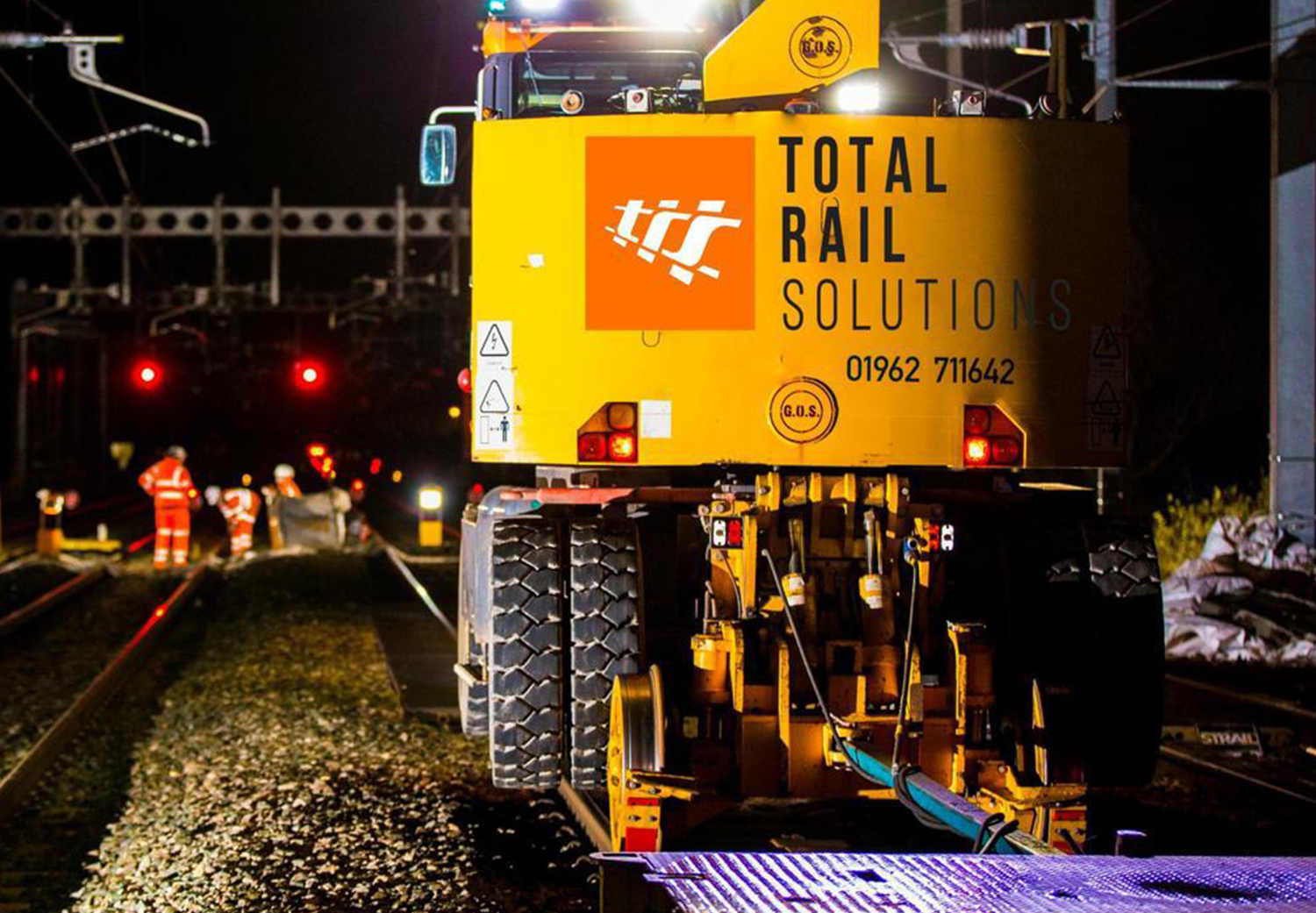
Interesting article here about an equipment hire firm moving away from diesel;
So what is HVO fuel?

HVO (Hydrotreated Vegetable Oil) it is an advanced, second generation renewable diesel alternative, that eliminates up to 90% of net CO2 emissions and significantly reduces nitrogen oxide (NOx), particulate matter (PM) and carbon monoxide (CO) emissions.

Made from 100% renewable raw materials, HVO is manufactured purely from waste materials and is fully certified by the International Sustainability and Carbon Certification (ISEC). No land is used that has been claimed for other use and no animals or key aspects of the eco system are displaced. The fuel is also fully biodegradable and non-toxic.

“At TRS our average annual diesel fuel consumption in plant is 500,000 litres, in launching this initiative we anticipate a reduction in C02 of up to 90%, giving a net reduction in our average annual emissions from 1,310,000 kgs to 130,000 kgs. In addition HVO is sulphur free, so not only is it cleaner for the environment it is kinder and less corrosive in our engines. So as a derived benefit, customers will see further value in all year-round performance, as HVO fuel works equally as well in lower temperatures”.
 
Last edited:

JamesT

Established Member
Joined
25 Feb 2015
Messages
4,857
You can make biodiesel from waste vegetable oils & other vegetable matter (it's been done with sugar beet waste) So no need for a grow stock.

Would there be enough to replace all current diesel usage? No

But, buses are going electric, small trucks are going electric.

Biodiesel is already being used by most things that run on diesel, as the mix in the UK that is standard is B7 (7% bio, 93% diesel)
You can easily go higher than that;

As more rail routes are electrified, then the total amount of diesel required reduces anyway, which also reduces the amount of bio required.

If all diesel operated on NR was required to use a B50 mix by 2025, then you've halved the (not offset) carbon output within a few years.
They can get there by gradually increasing the mix, & replacing whatever seals & pipes need doing when their in for a big maintenance job.
That gives you years of continuous improvement, & not waiting for a 'big bang' at some unspecified future date.


== Doublepost prevention - post automatically merged: ==

No mention of buildings, just the trains...

Blackfriars roof is covered in solar panels to provide 50% of the station energy, & that was done nearly 10 years ago, with solar getting more efficient & cheaper since then.
ALL station rebuilds & new stations should have solar fitted as standard.

Again, not a 'big bang' that sees you trying to do it all in one go, doing it over time means you can take advantage of technology improvements & cost reductions.


== Doublepost prevention - post automatically merged: ==

Interesting article here about an equipment hire firm moving away from diesel;

The problem with promoting biodiesel from waste oil is that there just isn't enough of it. From reports such as Climate change: Growing doubts over chip fat biofuel - BBC News we're having to import oil to cope with demand, and only a tiny fraction of current usage is biodiesel.
There's no way you'd be able to shift the majority of diesel transport over to biodiesel without having to use crops grown for the purpose, which leads us back to the problems with those crops competing with agriculture for food.
 
Status
Not open for further replies.

Top