Our new ticketing site is now live! Using either this or the original site (both powered by TrainSplit) helps support the running of the forum with every ticket purchase! Find out more and ask any questions/give us feedback in this thread!
Quite correct, I'd forgotten about that. Though in my defence m'lud it's been nearly 2 decades since I lived in the area and probably a similar time since I drove through Hertford.
But the "do nothing" approach once the Ringways were cancelled was equally damaging.
The North Circ nowadays is a passably good road, you can get from Hanger Lane to Edmonton or Barnet in a reasonably sensible time whereas a similar journey from Kingston to Bromley is horrific and the South Circ absolutely isn't fit for purpose and arguably the pollution and congestion are much worse because nothing was done there.
I would rather live next to the south circular, than next to the north circular.
And maybe the north circular is less prone to congestion (I don't really know because I don't ever use it) but I'm sure it feeds congestion to lots of other roads, that would see less traffic if the N circular didn't exist in its current form. You have to look at the system as a whole... the worst congestion occurs at the pinch points. If you remove a pinch point, you increase the general capacity of the whole system and the pinch point moves somewhere else. If you carry on doing this, it's inevitable that all roads continue to get wider and wider and busier and busier. And then you end up with something like LA, where despite having multi-lane highways everywhere, they still suffer congestion.
== Doublepost prevention - post automatically merged: ==
I would rather live next to the south circular, than next to the north circular.
And maybe the north circular is less prone to congestion (I don't really know because I don't ever use it) but I'm sure it feeds congestion to lots of other roads, that would see less traffic if the N circular didn't exist in its current form. You have to look at the system as a whole... the worst congestion occurs at the pinch points. If you remove a pinch point, you increase the general capacity of the whole system and the pinch point moves somewhere else. If you carry on doing this, it's inevitable that all roads continue to get wider and wider and busier and busier. And then you end up with something like LA, where despite having multi-lane highways everywhere, they still suffer congestion.
== Doublepost prevention - post automatically merged: ==
I suspect those living in the area of the South Circ would probably disagree with you. And you're forgetting the wider knock on of 'do nothing' - the south circ isn't fit for HGVs in part, you may think that's not a problem, but how do you propose to replenish the supermarkets, DIY sheds, hospitals even with supplies ? The delays on the road network in the south has massive knock on effects on bus journey times, emergency vehicle response times as well as general private journeys.
Using Google Maps to demonstrate the point - to get from Hanger Lane to Tottenham is 12 miles and takes about 40 mins given current traffic.
Mortlake to Catford - same distance, takes over an hour on the South Circular. So a 50% longer journey duration, more time stuck in stop-start traffic, all increasing pollution.
You may not like roads, you may not want roads, but you can't disinvent them and you can't stop people using them. What should be done are things to mitigate the worst effects. Whereas with the South Circ, the GLC did nothing and it's a disaster area now.
Yes you can.
And if you stop those people who actually have alternative ways of travelling from using them, the capacity can be used by those vehicles that actually need them.
== Doublepost prevention - post automatically merged: ==
Mortlake to Catford - same distance, takes over an hour on the South Circular. So a 50% longer journey duration, more time stuck in stop-start traffic, all increasing pollution.
You can see that this is not what actually happens, by looking at the London air quality map. Here are some screenshots of a section of the south circular, and a section of the north circular, both at the same scale.
Yes you can.
And if you stop those people who actually have alternative ways of travelling from using them, the capacity can be used by those vehicles that actually need them.
== Doublepost prevention - post automatically merged: ==
You can see that this is not what actually happens, by looking at the London air quality map. Here are some screenshots of a section of the south circular, and a section of the north circular, both at the same scale.
You can't "stop those people who actually have alternative ways of travelling from using them," -we don't live in Soviet Russia, we live in a democracy. And part of that is people have the freedom to choose how to travel for whatever reason and however they choose. It's not for you or the government to dictate to people how they can travel.
Sorry, but you're another of these people who want to control how people live, how they travel etc - it doesn't work like that. If you don't give people the freedom to choose that's when the problems start.
And what is that map showing ? i.e which pollutant ? Closely followed by those figures are from 2016 looking at the website.
It's a bit simplistic to say that ALL building of roads creates more traffic congestion, as rarely these days are we talking about a brand new route, but rather improvements to existing routes or filling in "missing links" where improvements elsewhere have already created traffic. AND funnelling traffic onto a particular road might be unpleasant for the residents of that road, but can reduce traffic and pollution elsewhere, especially if you bring in restrictions to discourage people driving on the "bypassed" roads
Sometimes it can be just the one bad junction or missing link which causes unnecessary congestion, just like the flat junctions on the Circle Line.
And even if people don't drive, do they use Ubers or minicabs, do they get Deliveroo or Just Eat takeaways, internet supermarket shopping, buy stuff on Amazon/Ebay as all of those are adding to road congestion.
You can't "stop those people who actually have alternative ways of travelling from using them," -we don't live in Soviet Russia, we live in a democracy. And part of that is people have the freedom to choose how to travel for whatever reason and however they choose. It's not for you or the government to dictate to people how they can travel.
Sorry, but you're another of these people who want to control how people live, how they travel etc - it doesn't work like that. If you don't give people the freedom to choose that's when the problems start.
And what is that map showing ? i.e which pollutant ? Closely followed by those figures are from 2016 looking at the website.
No - you're making the wrong assumption that it's a binary choice.
If people want to use public transport they should be free to do so, however the costs of public transport need to be managed.
Equally if people wish to use private transport they should be free to.
There are rather too many people around this forum who think public transport = good, private transport = bad and people should be forced to use one over the other.
Now, I cannot say for certain that upon viewing that I said out loud a phrase which begins with "What the" and ends with "is that!?!" and has a four letter word starting with 'F' in the middle but equally I would struggle to deny such an accusation.
The first time I looked at an American city on a map, specifically to look at a road, I was... stunned into silence! Completely different approach to British road junctions!
The "enormous amount of road-building" isn't over and is still contentious. See https://en.wikipedia.org/wiki/Silvertown_Tunnel and https://silvertowntunnel.co.uk/ You might say they are just NIMBYs, but there is no doubt that better road infrastructure increases traffic. It might be claimed that improved trunk roads take traffic out of towns, but volume always increases and all those journeys start and end in other towns.
I'm totally unfamiliar with traffic in London, so can't comment really on this. However, surely a better location for a new tunnel (or bridge) would be where the Woolwich ferry is, as an extension of the North Circular (as was originally envisaged)?
But the "do nothing" approach once the Ringways were cancelled was equally damaging.
The North Circ nowadays is a passably good road, you can get from Hanger Lane to Edmonton or Barnet in a reasonably sensible time whereas a similar journey from Kingston to Bromley is horrific and the South Circ absolutely isn't fit for purpose and arguably the pollution and congestion are much worse because nothing was done there.
Free flowing traffic produces fewer emissions than stop start traffic. You just need to have measures in place to stop the better roads filling up to the extent that stop start becomes the norm.
Indeed we don't live in Soviet Russia, and neither do people in various other western democracies where they are much more incentivised to use public transport than we are in the UK.
No - you're making the wrong assumption that it's a binary choice.
If people want to use public transport they should be free to do so, however the costs of public transport need to be managed.
Equally if people wish to use private transport they should be free to.
There are rather too many people around this forum who think public transport = good, private transport = bad and people should be forced to use one over the other.
When it comes to the environment private transport is in general bad. Also it's ironic that you say that the costs of public transport should be managed when private transport, unlike public transport, is now in real terms cheaper than it has been for years. That's a de facto subsidy in exactly the wrong direction.
Given the lightning speeds that Highways England work at (although I suppose this is probably a local authority road), anything's possible!
For all you know, they might have installed extra lanes overnight (without telling Network Rail obviously!)...
I would rather live next to the south circular, than next to the north circular.
And maybe the north circular is less prone to congestion (I don't really know because I don't ever use it) but I'm sure it feeds congestion to lots of other roads, that would see less traffic if the N circular didn't exist in its current form. You have to look at the system as a whole... the worst congestion occurs at the pinch points. If you remove a pinch point, you increase the general capacity of the whole system and the pinch point moves somewhere else. If you carry on doing this, it's inevitable that all roads continue to get wider and wider and busier and busier. And then you end up with something like LA, where despite having multi-lane highways everywhere, they still suffer congestion.
I think part of the problem with American roads is that the junctions are so closely spaced, so there's horrendous weaving between junctions. This significantly reduces capacity.
They also have appalling lane discipline...
Indeed we don't live in Soviet Russia, and neither do people in various other western democracies where they are much more incentivised to use public transport than we are in the UK.
Evidence that other countries offer such incentives and that they've been effective ? And more to the point how do you pay for such schemes ?
The reality is if you look at similar countries to the UK, so France, Germany or Italy that really isn't the case and their public transport use isn't significantly different to the UK's.
Smaller countries with higher population densities have a different set of problems.
== Doublepost prevention - post automatically merged: ==
When it comes to the environment private transport is in general bad. Also it's ironic that you say that the costs of public transport should be managed when private transport, unlike public transport, is now in real terms cheaper than it has been for years. That's a de facto subsidy in exactly the wrong direction.
Where's the evidence that private transport is "cheaper in real terms than it has been for years" ? Over what time frame ? Many elements of private transport are more costly than they were 10 years ago, starting with the actual outlay of buying a car. Back in 2001 I took delivery of a nearly top spec Mondeo as a company car, list price about £ 17k - that's apparently £ 28k today yet the equivalents in the range today have a price tag of over £ 30k.
A litre of diesel in 2000 was 78p (source RAC), allowing for inflation that's £ 1.29 today, it's about £ 1.28 today (source AA), so hardly a subsidy and more than accounted for by the drop in demand caused by Covid.
It's a bit simplistic to say that ALL building of roads creates more traffic congestion, as rarely these days are we talking about a brand new route, but rather improvements to existing routes or filling in "missing links" where improvements elsewhere have already created traffic. AND funnelling traffic onto a particular road might be unpleasant for the residents of that road, but can reduce traffic and pollution elsewhere, especially if you bring in restrictions to discourage people driving on the "bypassed" roads
Sometimes it can be just the one bad junction or missing link which causes unnecessary congestion, just like the flat junctions on the Circle Line.
And even if people don't drive, do they use Ubers or minicabs, do they get Deliveroo or Just Eat takeaways, internet supermarket shopping, buy stuff on Amazon/Ebay as all of those are adding to road congestion.
Did you see posts 25 and 34? Some - most - transport professionals (and some users of all modes) recognise that your opinions are almost completely wrong. I recognise that an apparently easier journey might tempt me to consider going somewhere by car when previously we would have gone by public transport or, quite possibly, not gone at all.
I think part of the problem with American roads is that the junctions are so closely spaced, so there's horrendous weaving between junctions. This significantly reduces capacity.
They also have appalling lane discipline...
which applies to the M25 too.
I think they have different rules about "Lane discipline" across the pond, maybe no rules from what friends who have driven there tell me.
I think part of the problem with American roads is that the junctions are so closely spaced, so there's horrendous weaving between junctions. This significantly reduces capacity.
Evidence that other countries offer such incentives and that they've been effective ? And more to the point how do you pay for such schemes ?
The reality is if you look at similar countries to the UK, so France, Germany or Italy that really isn't the case and their public transport use isn't significantly different to the UK's.
We're talking about London here, so let's compare London with other European cities and see how well they do in minimising the number of journeys undertaken by private car.
NB that in London, public transport is not subsidised nearly as much as most other European cities. It is largely funded by farebox revenue.
No - you're making the wrong assumption that it's a binary choice.
If people want to use public transport they should be free to do so, however the costs of public transport need to be managed.
Equally if people wish to use private transport they should be free to.
There are rather too many people around this forum who think public transport = good, private transport = bad and people should be forced to use one over the other.
Well yes - cloverleaves are alright when there's not much turning traffic, but once these volumes increase, all hell breaks loose!
I could probably start a new thread about this...
An argument made largely redundant with the introduction of electric cars (though obviously that's only at point-of-use; I'm fully aware of the fact that electric cars emit pollution in other ways).
An argument made largely redundant with the introduction of electric cars (though obviously that's only at point-of-use; I'm fully aware of the fact that electric cars emit pollution in other ways).
So congestion will magically vanish when all cars are electric? And accidents caused by cars hitting more vulnerable road-users will also cease to be a problem?
Electric cars are a big red herring to keep the motor industry in business and help appease the consciences of the Chelsea-tractor drivers. Most will be used in places where the civilised (i.e. more socially responsible) alternative to the car is public transport. Anyway using electricity is less efficient than fossil fuel, and to offset that disadvantage we should be changing to a much higher proportion of journeys by public transport, which is more energy efficient than private transport with the same power-source.
CO2 emissions are a different issue from air pollution.
And air pollution is improved with electric vehicles but it does not disappear because a significant amount of particulate matter comes from brakes, tyres and the general stirring up of dust caused by constant traffic.
Electric vehicles also don't solve any of the problems of congestion, danger to pedestrians and other road users, or equality of access to transport.
There's a real danger that people think electric vehicles remove all the objections to excessive dependance on private motor transports. They don't at all. The danger is that "we'll have electric cars soon" is used to wave away attempts to sort out transport issues properly. I see it already.
CO2 emissions are a different issue from air pollution.
And air pollution is improved with electric vehicles but it does not disappear because a significant amount of particulate matter comes from brakes, tyres and the general stirring up of dust caused by constant traffic.
Electric vehicles also don't solve any of the problems of congestion, danger to pedestrians and other road users, or equality of access to transport.
There's a real danger that people think electric vehicles remove all the objections to excessive dependance on private motor transports. They don't at all. The danger is that "we'll have electric cars soon" is used to wave away attempts to sort out transport issues properly. I see it already.
I agree - many people think that "pollution" is simply carbon dioxide (and the use of CO2e as a measure for pollutants which aren't actually CO2 doesn't help). So therefore some are surprised when they're told that electric cars a create pollution.
There's also a distinction between pollutants which are bad for the environment, and those which are bad for human health (obviously there is significant overlap with these areas).
We're talking about London here, so let's compare London with other European cities and see how well they do in minimising the number of journeys undertaken by private car.
NB that in London, public transport is not subsidised nearly as much as most other European cities. It is largely funded by farebox revenue.
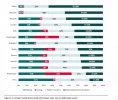
So despite London covering more of its public transport costs via the farebox it has better use than Rome, Brussels, Oslo, Copenhagen, Berlin and Amsterdam and less than 10% difference to Paris, Zurich, Vienna and Madrid.
Moscow 970 sq mi London 607 sq mi
Rome 496 sq mi
Berlin 344 sq mi
Madrid 233 sq mi
Budapest 202 sq mi
Oslo 185 sq mi
Vienna 160 sq mi
Amsterdam 84 sq mi
Copenhagen 69 sq mi
Paris 40 sq mi
Brussels 12.5 sq mi
So despite London covering more of its public transport costs via the farebox it has better use than Rome, Brussels, Oslo, Copenhagen, Berlin and Amsterdam and less than 10% difference to Paris, Zurich, Vienna and Madrid.
Moscow 970 sq mi London 607 sq mi
Rome 496 sq mi
Berlin 344 sq mi
Madrid 233 sq mi
Budapest 202 sq mi
Oslo 185 sq mi
Vienna 160 sq mi
Amsterdam 84 sq mi
Copenhagen 69 sq mi
Paris 40 sq mi
Brussels 12.5 sq mi
There are quite different boundaries being used here. For example, "Brussels" only refers to the very small City of Brussels municipality (comparable to the City of London i.e. "square mile") and not to the whole Capital Region. "Paris" here doesn't include most suburbs in the Ile De France region. Whereas "London" here includes the whole of Greater London.
So despite London covering more of its public transport costs via the farebox it has better use than Rome, Brussels, Oslo, Copenhagen, Berlin and Amsterdam and less than 10% difference to Paris, Zurich, Vienna and Madrid.
I really wish people would stop seeing price as the answer to all of the railway'a woes. As you point out very clearly, our public transport managed to do perfectly well, in terms of loading prior to March 2020, without managing to devalue itself, and covering more of the operational cost from the farebox than other places.
The choice between private and public transport is not just about fares.
Indeed, the decision not to build Ringways is very clear in not encouraging private transport unnecessarily.
There are quite different boundaries being used here. For example, "Brussels" only refers to the very small City of Brussels municipality (comparable to the City of London i.e. "square mile") and not to the whole Capital Region. "Paris" here doesn't include most suburbs in the Ile De France region. Whereas "London" here includes the whole of Greater London.
Quote from the source "The area of the capital city only includes the area occupied by the city and not the wider urban/metropolitan district or administrative division created solely for the city."
== Doublepost prevention - post automatically merged: ==
I really wish people would stop seeing price as the answer to all of the railway'a woes. As you point out very clearly, our public transport managed to do perfectly well, in terms of loading prior to March 2020, without managing to devalue itself, and covering more of the operational cost from the farebox than other places.
The choice between private and public transport is not just about fares.
Indeed, the decision not to build Ringways is very clear in not encouraging private transport unnecessarily.
The problem wasn't scrapping the ringways per se, but that nothing was then done to develop the road network in a more measured way. And that was a political decision by the GLC.
Why that was a problem is it was the typical ostrich mentality - if you bury your head in the sand the problem will go away - well it doesn't. And not adding any capacity is every bit as bad as adding too much. Which is why I keep citing the South Circular as a complete disaster area - a route which is unfit for current traffic levels, unfit for many of the uses it needs, perennially congested, difficult to navigate in large vehicles which are using it for perfectly legitimate reasons, and above all dangerous.
Quote from the source "The area of the capital city only includes the area occupied by the city and not the wider urban/metropolitan district or administrative division created solely for the city."
Exactly. So you ought to be providing more meaningful statistics to support your argument. Most people would look at your table and think London is 15 times as big as Paris. For the purposes of transport comparison you ought to be using comparable areas, so if you include the whole of Greater London than you need to include the suburbs of Paris, not just Paris "proper".
So despite London covering more of its public transport costs via the farebox it has better use than Rome, Brussels, Oslo, Copenhagen, Berlin and Amsterdam and less than 10% difference to Paris, Zurich, Vienna and Madrid.
Moscow 970 sq mi London 607 sq mi
Rome 496 sq mi
Berlin 344 sq mi
Madrid 233 sq mi
Budapest 202 sq mi
Oslo 185 sq mi
Vienna 160 sq mi
Amsterdam 84 sq mi
Copenhagen 69 sq mi
Paris 40 sq mi
Brussels 12.5 sq mi
The point is that lots of other European cities are doing significantly better than London, in terms of discouraging private car use. It demonstrates that London ought to be able to move a lot more journeys out of private cars. Increasing road capacity is not the way to do that.
== Doublepost prevention - post automatically merged: ==
Why that was a problem is it was the typical ostrich mentality - if you bury your head in the sand the problem will go away - well it doesn't. And not adding any capacity is every bit as bad as adding too much. Which is why I keep citing the South Circular as a complete disaster area - a route which is unfit for current traffic levels, unfit for many of the uses it needs, perennially congested, difficult to navigate in large vehicles which are using it for perfectly legitimate reasons, and above all dangerous.
So congestion will magically vanish when all cars are electric? And accidents caused by cars hitting more vulnerable road-users will also cease to be a problem?
Electric cars are a big red herring to keep the motor industry in business and help appease the consciences of the Chelsea-tractor drivers. Most will be used in places where the civilised (i.e. more socially responsible) alternative to the car is public transport. Anyway using electricity is less efficient than fossil fuel, and to offset that disadvantage we should be changing to a much higher proportion of journeys by public transport, which is more energy efficient than private transport with the same power-source.
No, of course congestion won't magically disappear; the point is that many (but not all) of the disbenefits of cars are removed when the car is electric.
As for Chelsea tractor drivers, they really do annoy me: who needs a 5m long, 4L engine monstrosity that does 15mpg to just bimble through totally unsuitable streets to the corner shop? No-one!
The only rational way to improve the South Circular is to discourage people from using it as a smaller radius cut-through of south London, while at the same time improving the ratio of electric to petrol / diesel vehicles in order to benefit the lives of those living close by. Exactly how you discourage it I don't really know.. maybe road pricing making more than x miles of A205 prohibitively expensive, and doing as much to reduce alternative rat-runs as possible. This stuff is complex - there will always be people who are willing to use their cars at any price.
You can't "stop those people who actually have alternative ways of travelling from using them," -we don't live in Soviet Russia, we live in a democracy. And part of that is people have the freedom to choose how to travel for whatever reason and however they choose. It's not for you or the government to dictate to people how they can travel.
Sorry, but you're another of these people who want to control how people live, how they travel etc - it doesn't work like that. If you don't give people the freedom to choose that's when the problems start.
And what is that map showing ? i.e which pollutant ? Closely followed by those figures are from 2016 looking at the website.
We're talking about new roads here. Why should people have their houses destroyed or their lives spoiled by noise and pollution, and pay extra tax to pay for the roads that do so, just because those who want to drive around more can do so without being inconvenienced by the others? Especially as the induced traffic effect means that the drivers actually benefit very little if at all.
It's a bit simplistic to say that ALL building of roads creates more traffic congestion, as rarely these days are we talking about a brand new route, but rather improvements to existing routes or filling in "missing links" where improvements elsewhere have already created traffic.
No - you're making the wrong assumption that it's a binary choice.
If people want to use public transport they should be free to do so, however the costs of public transport need to be managed.
Equally if people wish to use private transport they should be free to.
There are rather too many people around this forum who think public transport = good, private transport = bad and people should be forced to use one over the other.
But people who use private transport need to pay for the externalities they cause. That includes all the extra costs public transport has to bear when it needs to maintain service for those who want to use it or can't drive, but use of cars has reduced its revenue and increased its costs.
We are aware of an issue with emails from the Forum to Microsoft-based email accounts (hotmail/outlook/live.com email addresses). This is being looked into currently, thanks for your patience meanwhile.