Our new ticketing site is now live! Using either this or the original site (both powered by TrainSplit) helps support the running of the forum with every ticket purchase! Find out more and ask any questions/give us feedback in this thread!
You're right about the 12 that LT purchased, but a little later LT operated 4 on their Round London Sightseeing Tour, though these were hired in, I believe, and may have included a couple of the previous rejects.
Yes - they were hired from E.H. Brakell. From the 1981 edition of Capital Transport's "London Transport Buses"...
"Sixteen front-entrance Leyland-engined Routemasters were bought from Northern General and via dealers between December 1977 and July 1978, seven of these passing to London Transport in December 1979. Of the remainder, five were sold and four were numbered RMF2761-2764. During 1980 these were renumbered 2791-2794 so as not to clash with London Transport's RMFs. A fifth vehicle was acquired from Booth's of Rotherham in December 1980 and is expected to be numbered RMF2795. RMFs 2791 and 2792 have been used regularly on the Round London Sightseeing Tour during 1979/80 and RMF2793 has been converted to open top. This and RMFs 2794/5 have yet to be used."
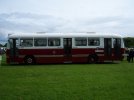
There is the famous three-door Leyland Leopard/Alexander, YSG101. Built for Edinburgh Corporation Transport in 1961 and intended as the forerunner of a fleet of similar buses, it instead remained a one-off and after a 26-year service career which saw it serve as a bus, coach, bus, classroom and bus again, it entered preservation in 1988. As far as buses go this was, and still is, definitely bespoke.
There is the famous three-door Leyland Leopard/Alexander, YSG101. Built for Edinburgh Corporation Transport in 1961 and intended as the forerunner of a fleet of similar buses, it instead remained a one-off and after a 26-year service career which saw it serve as a bus, coach, bus, classroom and bus again, it entered preservation in 1988. As far as buses go this was, and still is, definitely bespoke.
Not exactly bespoke (although their spec was certainly above the rest!) but am I right in saying that the 36 Volvo Olympian/Palatine IIs delivered to MTL (Merseyside) in 1996 are the only Palatines to have double glazed windows?
Tyne and Wear PTE’s odd near-side staircase deckers (Atlanteans and Fleetlines, mostly Alexander bodies, but also Willowbrook and MCW examples). Less significantly, they had that odd batch of 60 or so Alexander-bodied C—reg Olympians just before deregLatino with the massive HELP bumpers on front (which really changed the appearance). There were also a batch of H-reg Northern Counties-bodied Olympians that went to Sunderland Busways that had round headlights rather than the standard Palatine rectangular headlights. No idea why.
There is the famous three-door Leyland Leopard/Alexander, YSG101. Built for Edinburgh Corporation Transport in 1961 and intended as the forerunner of a fleet of similar buses, it instead remained a one-off and after a 26-year service career which saw it serve as a bus, coach, bus, classroom and bus again, it entered preservation in 1988. As far as buses go this was, and still is, definitely bespoke.
By "three-door" do you mean three separate entrances/exits, or a three-leaf door? If the latter I do vaguely remember those vehicles (or at least remember seeing a photo of one) but I don't ever recall Edinburgh having any buses with three separate entrances/exits.
By "three-door" do you mean three separate entrances/exits, or a three-leaf door? If the latter I do vaguely remember those vehicles (or at least remember seeing a photo of one) but I don't ever recall Edinburgh having any buses with three separate entrances/exits.
One of the very first of the legendary Y-Types (this was the bus-bodied prototype on a Leyland Leopard chassis; the other prototype was a AEC Reliance coach for Scottish Omnibuses: YWS 910). Lost it's rear trio of doors later in life as part of a conversion into a airport bus, but would be rebuilt to original condition as above after it's purchase for preservation by Douglas Scoular in June 1988.
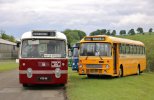
Linked images from the georgeupstairs, southlancs & eb2010 Flickr collections respectively.
The first two Alexander Y-type bodies were not typical of the type. The first was Edinburgh Corporation's three-door, standee Leopard 101. The second into service was this vehicle, an AEC Reliance. Uniquely among the SOL Y-types it had no roof destination box and had destination screens below...
Edinburgh 101 - Leyland Leopard with the prototype Alexander Y type bus body, seen here after conversion to single door for use on the Airport service.
Lothian's famous Leyland Leopard 101 that was new in 1961 with 3 doors is seen here on Leith Street in Edinburgh during August 1982 by this time it was back as a service bus with one door and remained like this until withdrawal from service in 1988. 101 was also one the of prototype Alexander...
www.flickr.com
Contrast and compare it with this late Alexander (Northern) Y-Type Leopard from 1980, roughly 18 years 101's junior (attached image is my own).
I think we are deviating from the topic of the thread here; I would say that minor detail differences such as round vs. square headlights in an otherwise standard body don't really qualify as being "bespoke".
The example of Edinburgh's YSG101 is anything but a minor detail difference!
One of the very first of the legendary Y-Types (this was the bus-bodied prototype on a Leyland Leopard chassis; the other prototype was a AEC Reliance coach for Scottish Omnibuses: YWS 910). Lost it's rear trio of doors later in life as part of a conversion into a airport bus, but would be rebuilt to original condition as above after it's purchase for preservation by Douglas Scoular in June 1988.
Linked images from the georgeupstairs, southlancs & eb2010 Flickr collections respectively.
The first two Alexander Y-type bodies were not typical of the type. The first was Edinburgh Corporation's three-door, standee Leopard 101. The second into service was this vehicle, an AEC Reliance. Uniquely among the SOL Y-types it had no roof destination box and had destination screens below...
Edinburgh 101 - Leyland Leopard with the prototype Alexander Y type bus body, seen here after conversion to single door for use on the Airport service.
Lothian's famous Leyland Leopard 101 that was new in 1961 with 3 doors is seen here on Leith Street in Edinburgh during August 1982 by this time it was back as a service bus with one door and remained like this until withdrawal from service in 1988. 101 was also one the of prototype Alexander...
www.flickr.com
Contrast and compare it with this late Alexander (Northern) Y-Type Leopard from 1980, roughly 18 years 101's junior (attached image is my own).
Sad to have to relate that Douglas passed away over the Easter weekend, having been ill for some time. He will be a massive loss to the preservation world.
== Doublepost prevention - post automatically merged: ==
I think we are deviating from the topic of the thread here; I would say that minor detail differences such as round vs. square headlights in an otherwise standard body don't really qualify as being "bespoke".
The example of Edinburgh's YSG101 is anything but a minor detail difference!
It was Moris Little, Edinburgh's general manager back in the early sixties, who ordered 101. He had visions of a large fleet of similar buses but he got one vital thing wrong: passengers prefer to sit, not to stand!
Sad to have to relate that Douglas passed away over the Easter weekend, having been ill for some time. He will be a massive loss to the preservation world.
== Doublepost prevention - post automatically merged: ==
It was Moris Little, Edinburgh's general manager back then, who ordered 101. He had visions of a large fleet of similar buses but he got one vital thing wrong: passengers prefer to sit, not to stand!
Your post is the first I've heard of Mr. Scoular's passing. A massive shock to say the least, as I didn't even know he was ill. And indeed, his loss to the preservation world will be deeply felt. 101's continued preservation will undoubtedly be the best way to honour his memory. My heartfelt condolences to his family, friends and colleagues.
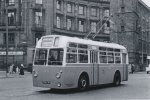
Heading west and jumping back about a decade or so from 101 entering service in Edinburgh, a similar line of thought to that of Mr. Little's was what led to the existence of Glasgow's 11 Standee single-deck trolleybuses (classified as TBS). The progenitor for the Standees was Glasgow's Transport Manager of the period, E. R. L. Fitzpayne, attending the International Union of Public Transport conference in Stockholm in 1949 (Glasgow's trolleybuses had started running that April) & taking a liking to the 'sardine' or 'crush loading' concept he had observed while there. He saw it as a way of carrying roughly the same amount of passengers as a double-deck 'trolly' crammed in sardine-tin style on a single-decker, thereby maximizing profits while simultaneously reducing operating costs.
Built largely to Fitzpayne's design (66 passengers with 26 seated and 40 standing, four less overall than the TB/TD classes and with a conductor's desk much like 101), passengers would board at the rear, pay the conductor at their desk and alight at their desired stop via a exit door situated behind the front wheels (TBS2-11 only; TBS1 had it's second set of doors in the standard position in front of the leading axle), the idea with the seperate sets of doors presumbly being to enhance passenger flow and shorten dwell times at the busiest stops. All 11 vehicles were built on a BUT RETB1 (BUT shortform for British United Traction) chassis and were bodied by both Weymann (TBS1) & East Lancs (TBS2-11; these were rated for 27 seated passengers, one up from TBS1). The first - FYS 765 - entered service in March 1951 (initally carrying the TB35 fleetnumber before gaining the TBS1 fleetnumber), the rest following in February (TBS2) and July 1953 (TBS3-11) respectively.
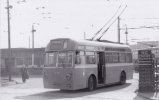
While the planners thought the Standee concept was god's gift from heaven, the travelling public took precisely the opposite view as time went on. Confusion over which set of doors was the entrance and exit was common, thus cancelling out the supposed benefits of a speedier passenger flow and increasing the dwell time at the busiest stops. Plus, as @DunsBus notes above, passengers by and large prefer sitting to standing! In the end, the rear set of doors and conductor's desk were subsequently removed from all 11 vehicles. Being relegated to supplementry/supporting duties, all 11 Standees would be withdrawn by the end of November 1964, over 3 years before Glasgow's trollybuses were withdrawn completely with none of the 11 vehicles surviving to the present day.
Attached images below show two of the East Lancs Standees in as-built and modified conditions. From the GEC Collection (courtsey of David Beilby) and copyright of A.J. Douglas respectively.
Yes - they were hired from E.H. Brakell. From the 1981 edition of Capital Transport's "London Transport Buses"...
"Sixteen front-entrance Leyland-engined Routemasters were bought from Northern General and via dealers between December 1977 and July 1978, seven of these passing to London Transport in December 1979. Of the remainder, five were sold and four were numbered RMF2761-2764. During 1980 these were renumbered 2791-2794 so as not to clash with London Transport's RMFs. A fifth vehicle was acquired from Booth's of Rotherham in December 1980 and is expected to be numbered RMF2795. RMFs 2791 and 2792 have been used regularly on the Round London Sightseeing Tour during 1979/80 and RMF2793 has been converted to open top. This and RMFs 2794/5 have yet to be used."
The origonal intention was to use them on the 45's which was a crew operated DM route. However it was quickly discovered that they were to Non standard and the idea was dropped. Standard RM's were used in the end for the 45.
The origonal intention was to use them on the 45's which was a crew operated DM route. However it was quickly discovered that they were to Non standard and the idea was dropped. Standard RM's were used in the end for the 45.
I think it was a lot to do with the poor state of industrial relations at the time. It was thought that using non-standard vehicles with a few unsuitable features would provoke a hostile reaction from staff.
Still plenty of bespoke vehicles running in Northern Ireland:
Volvo B7R/Wrightbus Schoolrun - specifically designed for Translink for schools services, with TL the only customer.
Scania K230/Wrightbus Solar rural - specifically designed for Translink for rural / schools routes, with TL the only customer. Based on the standard Wrights product but with narrow entrance, greater arrival/departure angles, extra door for wheelchair loading and 3+2 seating
Volvo B7RLE/Alexander-Dennis Enviro - specifically designed for Translink for rural / schools routes, with TL the only customer. Based on the standard AD Enviro product with narrow entrance, greater arrival/departure angles, extra door for wheelchair loading and 3+2 seating. I don't believe AD built on B7RLE's for anyone else.
Scania/Caetano Invictus - designed specifically for Ulsterbus, with UB the only customer, although the Boa Vista product is very similar.
Volvo B11R/Sunsundegui SC5 - unique right hand drive chassis/body combination in the British Isles (other B11Rs are SC7s), although it is available in Europe. The tri-axle variants were also built to a specific length requested by Translink.
Still plenty of bespoke vehicles running in Northern Ireland:
Volvo B7R/Wrightbus Schoolrun - specifically designed for Translink for schools services, with TL the only customer.
Scania K230/Wrightbus Solar rural - specifically designed for Translink for rural / schools routes, with TL the only customer. Based on the standard Wrights product but with narrow entrance, greater arrival/departure angles, extra door for wheelchair loading and 3+2 seating
Volvo B7RLE/Alexander-Dennis Enviro - specifically designed for Translink for rural / schools routes, with TL the only customer. Based on the standard AD Enviro product with narrow entrance, greater arrival/departure angles, extra door for wheelchair loading and 3+2 seating. I don't believe AD built on B7RLE's for anyone else.
Scania/Caetano Invictus - designed specifically for Ulsterbus, with UB the only customer, although the Boa Vista product is very similar.
Volvo B11R/Sunsundegui SC5 - unique right hand drive chassis/body combination in the British Isles (other B11Rs are SC7s), although it is available in Europe. The tri-axle variants were also built to a specific length requested by Translink.
Bespoke = "specially made for a particularperson, organization, or purpose". Certainly the Schoolruns and Rurals were built specifically at Translink's request and to their requirements, and it's unlikely either model would have seen the light of day otherwise.
I think the ground clearance of RELL's was too low even with cut away panels. There were a number of LH's with cut away front and rear panels for use on the Sandbanks ferry, including a few ex Bristol Omnibus Co.
I dunno, it has a certain charm to it. The CIE Bombardiers are the same: looking for all the world like a shed on wheels, but with a charm all their own.
Either I have a wide & varied taste, or I'm just plain mad lol
I dunno, it has a certain charm to it. The CIE Bombardiers are the same: looking for all the world like a shed on wheels, but with a charm all their own.
Either I have a wide & varied taste, or I'm just plain mad lol
Already mentioned further up thread. Mostly bodied by Alexander but Willowbrook also had a stab at it with 30 Atlanteans for Sunderland in 1977-78. Willowbrook had never built bodies to this spec before and the nearside staircase caused problems with the tilt test; when the buses were eventually delivered, they were promptly christened "Wallybrooks".
Technically lots of Lothian is bespoke/specified for them because they seem to be one of a very few operators keen to keep using Volvo chassis:
- New Enviro 400 bodied 2 axle Diesel Volvo double deck chassis (yes there are some in London/Stagecoach but they are Hybrids) To further clarify, these are the only MMC bodied versions, Dublin bus and London both have Volvo chassis Enviro 400s but these are the previous model not the MMC.
- 3 axle double deck Enviro 400 xlb (although Stagecoach subsequently bought some for Cambridge)
- The new MCV/Volvo single deckers, yes there are other Volvo MCVs single deckers but not at the longer length Lothian have specified..
It is surprising to see them purchasing so many pure diesels as I think over the next 10 years we will see a tightening of the use of pure diesels in inner cities so will be interesting to see if the above live out their full design life in Edinburgh.
The vehicles BMMO/Midland Red built in their own workshops from 1923 at the earilest all the way up to 1970 (the D7s/D9s, S15s/S23s etc) would perhaps be the best candidates for this thread...?
...Not forgetting the CM5 & CM6/CM6T coaches designed and built for motorway express services - capable of 80+ mph in 1959 (the M1 had no speed limit when it opened back then). The CM6 series had disc brakes all round in 1965 too.
As someone who grew up in 'Midland Red' land in the 1960s/early 70s, when we went on holiday buses elsewhere often seemed old-fashioned in comparison.
We are aware of an issue with emails from the Forum to Microsoft-based email accounts (hotmail/outlook/live.com email addresses). This is being looked into currently, thanks for your patience meanwhile.