
-
Our new ticketing site is now live! Using either this or the original site (both powered by TrainSplit) helps support the running of the forum with every ticket purchase! Find out more and ask any questions/give us feedback in this thread!
You are using an out of date browser. It may not display this or other websites correctly.
You should upgrade or use an alternative browser.
You should upgrade or use an alternative browser.
Future public health policy when the COVID is over
- Thread starter johnnychips
- Start date
- Status
- Not open for further replies.

Sponsor Post - registered members do not see these adverts; click here to register, or click here to log in
R
RailUK Forums

brad465
Veteran Member
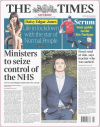
The front page of the Times tomorrow seems to be talking about future public health policy, where they claim Ministers will be given more control over the NHS, in particular the ability to override management within and try and reform it, among suggestions to try and improve the service. There are some arguing though this isn't really the time to try and do it given the midst of the pandemic:
It would run smoother all the time if it wasn't for the endless series of idiot ministers trying to privatise/reform itThe front page of the Times tomorrow seems to be talking about future public health policy, where they claim Ministers will be given more control over the NHS, in particular the ability to override management within and try and reform it, among suggestions to try and improve the service. There are some arguing though this isn't really the time to try and do it given the midst of the pandemic:
View attachment 90068
It would run smoother all the time if it wasn't for the endless series of idiot ministers trying to privatise/reform it
Just like the rail industry!
I doubt many will be defending the Lansley reforms, while the inability of ministers to give directions when they were being held accountable for results was an issue with Public Health England early on.The front page of the Times tomorrow seems to be talking about future public health policy, where they claim Ministers will be given more control over the NHS, in particular the ability to override management within and try and reform it, among suggestions to try and improve the service. There are some arguing though this isn't really the time to try and do it given the midst of the pandemic:
View attachment 90068
Completely agree. Though the temptation to tinker would be less if it weren’t for Nye Bevan’s legacy of a government body where ministers are expected somehow to be responsible for every little detail of care.It would run smoother all the time if it wasn't for the endless series of idiot ministers trying to privatise/reform it
The core value of health policy is "free at the point of delivery". The NHS as we know it is just the mechanism for delivering it.
Perhaps if Nye Bevan was around to see other countries delivering that policy in a way that was more effective and had better outcomes, he might agree that we should consider using one of those other mechanisms.
Perhaps if Nye Bevan was around to see other countries delivering that policy in a way that was more effective and had better outcomes, he might agree that we should consider using one of those other mechanisms.
I agree. But any time that the single provider model is questioned, the reaction is as though slaughter of the first born was being proposed. And that sits with the statist approach he put forward and defended.The core value of health policy is "free at the point of delivery". The NHS as we know it is just the mechanism for delivering it.
Perhaps if Nye Bevan was around to see other countries delivering that policy in a way that was more effective and had better outcomes, he might agree that we should consider using one of those other mechanisms.
However, we drift off topic.

bramling
Veteran Member
I agree. But any time that the single provider model is questioned, the reaction is as though slaughter of the first born was being proposed. And that sits with the statist approach he put forward and defended.
However, we drift off topic.
It’s a difficult one. For sure the NHS needs looking at, and to be brutally honest there’s questions to be answered about how Covid has gone - in particular the number of vulnerable people who have caught Covid in hospitals and care homes, and likewise going forward it seems inevitable there’s going to be even bigger questions about the way other conditions and treatments have been sidelined.
But the problem is, do I trust this government, or politicians in general, to make changes? That’s a resounding no.
The population needs to stop romanticising the NHS. Pretty much everyone I know who has actually had to use the NHS over the last year, or who has a friend or relative who has used it, has told of having a pretty negative experience. In particular a colleague who has just lost someone to Covid was pretty shocked when he went to visit - the patient was more or less dumped in a room, given an oxygen mask and some painkiller, and essentially left to die with little care. I wouldn’t necessarily blame the NHS for this as it’s clear they’re under enormous pressure, however that being the case indicates something is wrong at a governance level.
Last edited:
brad465
Veteran Member
I certainly agree about the the "romanticising of the NHS" and believe this is what has allowed compliance to be so high so far against our expectations. What we need to see of course is the full details of Exercise Cygnus, which in 2016 looked at the UK's preparedness for a pandemic, and many of the details have been suppressed, which implies some serious under-preparedness details the Government obviously don't want made public.It’s a difficult one. For sure the NHS needs looking at, and to be brutally honest there’s questions to be answered about how Covid has gone - in particular the number of vulnerable people who have caught Covid in hospitals and care homes, and likewise going forward it seems inevitable there’s going to be even bigger questions about the way other conditions and treatments have been sidelined.
But the problem is, do I trust this government, or politicians in general, to make changes? That’s a resounding no.
The population needs to stop romanticising the NHS. Pretty much everyone I know who has actually had to use the NHS over the last year, or who has a friend or relative who has used it, has told of having a pretty negative experience. In particular a colleague who has just lost someone to Covid was pretty shocked when he went to visit - the patient was more or less dumped in a room, given an oxygen mask and some painkiller, and essentially left to die with little care. I wouldn’t necessarily blame the NHS for this as it’s clear they’re under enormous pressure, however that being the case indicates something is wrong at a governance level.
DustyBin
Established Member
It’s a difficult one. For sure the NHS needs looking at, and to be brutally honest there’s questions to be answered about how Covid has gone - in particular the number of vulnerable people who have caught Covid in hospitals and care homes, and likewise going forward it seems inevitable there’s going to be even bigger questions about the way other conditions and treatments have been sidelined.
But the problem is, do I trust this government, or politicians in general, to make changes? That’s a resounding no.
The population needs to stop romanticising the NHS. Pretty much everyone I know who has actually had to use the NHS over the last year, or who has a friend or relative who has used it, has told of having a pretty negative experience. In particular a colleague who has just lost someone to Covid was pretty shocked when he went to visit - the patient was more or less dumped in a room, given an oxygen mask and some painkiller, and essentially left to die with little care. I wouldn’t necessarily blame the NHS for this as it’s clear they’re under enormous pressure, however that being the case indicates something is wrong at a governance level.
Im always grateful that we have free at point of use health care in the UK but I agree there are a lot of people who wrongly believe the NHS is beyond reproach. A few years ago my aunt had a truly horrific experience when my uncle was admitted to hospital and died (and she works for the NHS!), last year my friend’s dad caught covid in hospital and died (he was very very ill but that’s not the point) and in 2019 they nearly finished me off when they sent me home with pneumonia, having in effect accused me of being a hypochondriac (I laugh about it now but it was terrifying not being able to breathe!). Anecdotes I know but I’m not sure we have the truly world class healthcare system some would have us believe.
== Doublepost prevention - post automatically merged: ==
I certainly agree about the the "romanticising of the NHS" and believe this is what has allowed compliance to be so high so far against our expectations. What we need to see of course is the full details of Exercise Cygnus, which in 2016 looked at the UK's preparedness for a pandemic, and many of the details have been suppressed, which implies some serious under-preparedness details the Government obviously don't want made public.
Either that or it will highlight how we abandoned the plan?
I certainly agree about the the "romanticising of the NHS" and believe this is what has allowed compliance to be so high so far against our expectations. What we need to see of course is the full details of Exercise Cygnus, which in 2016 looked at the UK's preparedness for a pandemic, and many of the details have been suppressed, which implies some serious under-preparedness details the Government obviously don't want made public.
It's highly unlikely to contain any mention of lockdowns, which would make it highly embarassing for politicians...
brad465
Veteran Member
Either that or it will highlight how we abandoned the plan?
Yes the Government would find itself in hot water from two fronts along similar partisan lines to now if these points are true: the opposition would attack the lack of preparedness of the NHS and other linked services, while the anti-lockdown groups, including in the Tory party itself, might partially agree with that but in particular the complete change in strategy to this failed experiment would be their main grievance. We might though see the opposition agreeing that were the NHS more prepared, lockdowns wouldn't have been necessary.It's highly unlikely to contain any mention of lockdowns, which would make it highly embarrassing for politicians...
I do not see though how the full details of that exercise will ever be released under this Government, unless it's a demand of a public inquiry and Johnson is out of office by that time, as a new party leader could distance themselves from any involvement in that exercise (not Jeremy Hunt though) and claim to want to start afresh.

It seems there are two things here:
Public health policy - How we improve public health, without causing undue intrusions that have been seeping in over the last few years; I'm not really a smoker, but I feel that the 'hiding cigarettes in cupboards' is a bit much.
Public Health Delivery - How our hospitals are structured and run, do we have one big organisation, do we have smaller sectors, do we do something else.
Public health policy - How we improve public health, without causing undue intrusions that have been seeping in over the last few years; I'm not really a smoker, but I feel that the 'hiding cigarettes in cupboards' is a bit much.
Public Health Delivery - How our hospitals are structured and run, do we have one big organisation, do we have smaller sectors, do we do something else.
brad465
Veteran Member
This is where the inquiry could get interesting, as the two main factions of pro vs anti-lockdown hope to get their way in an inquiry. I'm expecting this inquiry to be one of the most hotly watched and hard to predict inquiries ever held, even more than Chilcot. I think the foregone conclusion will be the Government messed up in many areas, but what is unclear is in what perspective they did.I don't think they will be able to avoid a public inquiry. Hopefully the efficacy and effect of lockdown will be fully assessed.
This is where the inquiry could get interesting, as the two main factions of pro vs anti-lockdown hope to get their way in an inquiry. I'm expecting this inquiry to be one of the most hotly watched and hard to predict inquiries ever held, even more than Chilcot. I think the foregone conclusion will be the Government messed up in many areas, but what is unclear is in what perspective they did.
I think it will be key to ensuring that lockdown isn't allowed to become a "go-to" policy during epidemics.
that is my worry. Who would invest in hospitality if they will shut them down whenever there is a health scare. they have done it now, so nothing to stop them in future. How many businesses have had to bin perishable food and drink in the last year?I think it will be key to ensuring that lockdown isn't allowed to become a "go-to" policy during epidemics.
We have to remember we have had worse years for deaths/million in the last 25 years than 2020. How often will they deem it necessary to impose restrictions. Restrictions they didnt do in 208/9, which was a bad flu season.
- Status
- Not open for further replies.