I’ve noticed recently that whenever I’ve travelled on Scotrail recently, there is normally a staff member sitting near each cab. On a 6 coach train, this can mean 4 staff members sitting at different cabs. It seems a bit odd that this is happening but it is happening consistently (particularly I’ve noticed on the Helensburgh Central - Edinburgh services). Is there a specific reason for this??

-
Our new ticketing site is now live! Using either this or the original site (both powered by TrainSplit) helps support the running of the forum with every ticket purchase! Find out more and ask any questions/give us feedback in this thread!
You are using an out of date browser. It may not display this or other websites correctly.
You should upgrade or use an alternative browser.
You should upgrade or use an alternative browser.
Scotrail staff sitting near cabs
- Thread starter Huntergreed
- Start date
- Status
- Not open for further replies.
Sponsor Post - registered members do not see these adverts; click here to register, or click here to log in
R
RailUK Forums

Anything to do with this I wonder?
If it's something else then I'm clueless I'm afraid, just so happened to think of this when I saw the post.
-Peter
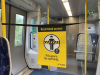
https://twitter.com/ScotRail/status/1307265678861189125 said:So that our staff can work safely, they may have to close off a small section of one carriage. Please help stop the spread, and don't try to travel in this designated area.
If it's something else then I'm clueless I'm afraid, just so happened to think of this when I saw the post.
-Peter
It’s not this, as other people are allowed to sit in this area too (indeed I’m on a 334 and I’m just across from the staff member right now) it just seems very odd and I can’t think of a plausible reason for why it might be happening.Anything to do with this I wonder?
If it's something else then I'm clueless I'm afraid, just so happened to think of this when I saw the post.
-Peter
Ah OK - can't help then I'm afraid!It’s not this, as other people are allowed to sit in this area too (indeed I’m on a 334 and I’m just across from the staff member right now) it just seems very odd and I can’t think of a plausible reason for why it might be happening.
-Peter

Scotrail314209
Established Member
I have noticed this on all the DOO routes. The Ticket Examiners tend to take up a bay of seats closest to the cab. Shouldn’t they be in the cab or is it just so they can maintain a visible presence
Sleepy
Established Member
Are TE grade allowed cab access on Scotrail ?I have noticed this on all the DOO routes. The Ticket Examiners tend to take up a bay of seats closest to the cab. Shouldn’t they be in the cab or is it just so they can maintain a visible presence
Shaw S Hunter
Established Member
Could it be so that in the event that the driver needs to leave the cab via the saloon door there is someone available to ensure that the driver's personal social distance is not infringed on by a passenger? Or perhaps to provide a low-grade form of bio-defense WRT to the cab door handle?!

Newshound Mutt
Member
Northern have just started to put revenue staff on trains again checking tickets in 4 and 6 car trains with the guard checking them in the rear 2.

I'm going to ask this, on Monday I was on a Dundee bound train to Glasgow (train was mostly empty say about 4 including myself), We were told to move to the next carriage as that carriage was needed at Invergowrie and a shorter platform, under the same breath it was said after the Invergowrie stop we could move back into that carriage (seemed rather pointless).
I understand social distancing and things like that but it felt a bit unnecessary to move us? Any ideas and has this occurred elsewhere?
If asking on a technical whim: I was onboard a Class 170 train
I understand social distancing and things like that but it felt a bit unnecessary to move us? Any ideas and has this occurred elsewhere?
If asking on a technical whim: I was onboard a Class 170 train
Are TE grade allowed cab access on Scotrail ?
I assume they have to put their belongings somewhere and I believe they have some degree of traction training. I was under the impression (maybe false) that they work in much the same way as guards without the operational duties albeit in normal circumstances expected to be in the train (as as ScotRail guards in general to be fair).
Scotrail314209
Established Member
Are TE grade allowed cab access on Scotrail ?
I think they are as they go into the cab on the busier trains, particularly late at night

OT - I presume 'some degree of traction training' means being told what not to touch and how to bring the train to a stop and make it secure in an emergency? Or would they be given driving training as well? I could see that being useful if they need to bring the train forward (at a slow speed) to a safe location for detraining if the driver took sick for example.I assume they have to put their belongings somewhere and I believe they have some degree of traction training
Shaw S Hunter
Established Member
OT - I presume 'some degree of traction training' means being told what not to touch and how to bring the train to a stop and make it secure in an emergency? Or would they be given driving training as well? I could see that being useful if they need to bring the train forward (at a slow speed) to a safe location for detraining if the driver took sick for example.
Option 1. Might also include GSMR training. Not even full blown guards get option 2!
bluesfromagun
Member
- Joined
- 12 Jul 2010
- Messages
- 95
I tried to go into the declassified 1st Class section of a Class 170 a couple of weeks ago and there was a Scotrail staff member in there. He said it was out of bounds to the general public and I wasn’t allowed to sit in there.
Yeah, most of the guards now place 170 first class out of use in order to give themselves a safe space and also provide room for other train crew travelling pass etc. Most of the time the trains are so quiet that there's no real reason for any passengers to be in there anyway. Wait till you get an HST - some of them place the whole first class coach out of use!!
I'm going to ask this, on Monday I was on a Dundee bound train to Glasgow (train was mostly empty say about 4 including myself), We were told to move to the next carriage as that carriage was needed at Invergowrie and a shorter platform, under the same breath it was said after the Invergowrie stop we could move back into that carriage (seemed rather pointless).
I understand social distancing and things like that but it felt a bit unnecessary to move us? Any ideas and has this occurred elsewhere?
If asking on a technical whim: I was onboard a Class 170 train
The reason you were asked to move at Invergowrie is a strange one, but I'll answer as best I can. 170s only JUST fit on the platform there, the cabs are on the ramps but the passenger doors are on the platform. So the guard in this case didn't want to despatch from the cab because of the large step presumably, and wanted to use the saloon door. To maintain social distancing, they have asked you to move so that they can do that. Seems ridiculous to me, but there is absolutely no operational reason to do that, it must have been their own choice for social distancing.
In answer to the other points, TE's are allowed to be in cabs as its the only secure area. However, unlike guards, they are expected to have a valid reason to be in there - i.e. the train was too busy to be in the saloon, or they felt threatened type thing. They get a small degree of traction training regarding where the ramps are stored and how to access the train if its locked up, that type of thing. They can't operate doors, they don't have a PTS certificate, they know nothing about signalling, they are effectively just the same as a passenger in an emergency and they have no minimum knowledge whatsoever of the routes they are on. They are not safety critical and don't need to meet the medical standards for that - that is to say they can be colour blind, hearing impaired, epileptic etc. I'm not belittling them, its a valid job, but they have one single duty and its revenue collection.
== Doublepost prevention - post automatically merged: ==
OT - I presume 'some degree of traction training' means being told what not to touch and how to bring the train to a stop and make it secure in an emergency? Or would they be given driving training as well? I could see that being useful if they need to bring the train forward (at a slow speed) to a safe location for detraining if the driver took sick for example.
Oooft, only mainline drivers can drive a train on the mainline in ANY circumstances, even moving it a millimetre. To give you an example of how touchy a subject that is - the Driver Team Managers at most depots will not even start a train up from cold without a driver being present with them. In theory DTMs are allowed to drive a train in dire circumstances, to clear the line following an incident etc, but they can't go out and drive trains in place of a driver...even though they assess drivers all day and most of them have a lot of experience as drivers themselves. The reason for this, which sounds bizarre I know, is because they don't drive frequently enough to maintain the level of route knowledge that a normal driver has. Also because...ASLEF

Last edited:
To give you an example of how touchy a subject that is - the Driver Team Managers at most depots will not even start a train up from cold without a driver being present with them. In theory DTMs are allowed to drive a train in dire circumstances, to clear the line following an incident etc, but they can't go out and drive trains in place of a driver...even though they assess drivers all day and most of them have a lot of experience as drivers themselves. The reason for this, which sounds bizarre I know, is because they don't drive frequently enough to maintain the level of route knowledge that a normal driver has. Also because...ASLEF
Is this just a Scotrail thing? I know a few DTMs at other TOCs and they all drive regularly.
I thought that was the case, but it was an interesting idea. I could see it being useful if a train came to a stop in a tunnel for example.Oooft, only mainline drivers can drive a train on the mainline in ANY circumstances, even moving it a millimetre.
The reason you were asked to move at Invergowrie is a strange one, but I'll answer as best I can. 170s only JUST fit on the platform there, the cabs are on the ramps but the passenger doors are on the platform. So the guard in this case didn't want to despatch from the cab because of the large step presumably, and wanted to use the saloon door. To maintain social distancing, they have asked you to move so that they can do that. Seems ridiculous to me, but there is absolutely no operational reason to do that, it must have been their own choice for social distancing
I did wonder, just seemed off to me but thank you for reply
I've been on a train where the guard dispatched from the saloon door even pre-Covid so that makes sense.The reason you were asked to move at Invergowrie is a strange one, but I'll answer as best I can. 170s only JUST fit on the platform there, the cabs are on the ramps but the passenger doors are on the platform. So the guard in this case didn't want to despatch from the cab because of the large step presumably, and wanted to use the saloon door.
I was in the first carriage and wanted to alight there, he actually told me to use the second door as it was icy and he was concerned that the rails might be a little slippery and he wasn't 100% that the first door would be completely on the platform.

Is this just a Scotrail thing? I know a few DTMs at other TOCs and they all drive regularly.
Likewise at the 2 TOCS I’ve worked at, DM’s regularly relieve drivers on their way to/from work or just randomly in order to keep their competencies up

43096
On Moderation
- Joined
- 23 Nov 2015
- Messages
- 18,867
I know of at least one TOC where the Ops Director had driving turns to maintain his competence.Is this just a Scotrail thing? I know a few DTMs at other TOCs and they all drive regularly.
snookertam
Member
- Joined
- 22 Sep 2018
- Messages
- 927
Yeah, most of the guards now place 170 first class out of use in order to give themselves a safe space and also provide room for other train crew travelling pass etc. Most of the time the trains are so quiet that there's no real reason for any passengers to be in there anyway. Wait till you get an HST - some of them place the whole first class coach out of use!!
The reason you were asked to move at Invergowrie is a strange one, but I'll answer as best I can. 170s only JUST fit on the platform there, the cabs are on the ramps but the passenger doors are on the platform. So the guard in this case didn't want to despatch from the cab because of the large step presumably, and wanted to use the saloon door. To maintain social distancing, they have asked you to move so that they can do that. Seems ridiculous to me, but there is absolutely no operational reason to do that, it must have been their own choice for social distancing.
In answer to the other points, TE's are allowed to be in cabs as its the only secure area. However, unlike guards, they are expected to have a valid reason to be in there - i.e. the train was too busy to be in the saloon, or they felt threatened type thing. They get a small degree of traction training regarding where the ramps are stored and how to access the train if its locked up, that type of thing. They can't operate doors, they don't have a PTS certificate, they know nothing about signalling, they are effectively just the same as a passenger in an emergency and they have no minimum knowledge whatsoever of the routes they are on. They are not safety critical and don't need to meet the medical standards for that - that is to say they can be colour blind, hearing impaired, epileptic etc. I'm not belittling them, its a valid job, but they have one single duty and its revenue collection.
== Doublepost prevention - post automatically merged: ==
Oooft, only mainline drivers can drive a train on the mainline in ANY circumstances, even moving it a millimetre. To give you an example of how touchy a subject that is - the Driver Team Managers at most depots will not even start a train up from cold without a driver being present with them. In theory DTMs are allowed to drive a train in dire circumstances, to clear the line following an incident etc, but they can't go out and drive trains in place of a driver...even though they assess drivers all day and most of them have a lot of experience as drivers themselves. The reason for this, which sounds bizarre I know, is because they don't drive frequently enough to maintain the level of route knowledge that a normal driver has. Also because...ASLEF
Mainly it’s a union argument that if there’s ever a situation where a Driver Team Manager needs to step in to drive a train, it means that there’s been a shortage of drivers. Using a DTM in anything other than an emergency takes away any incentive to create a larger pool of drivers to cover the diagrams or sit spare. This is why they oppose them covering any driver work tooth and nail.
However, they can still retain their competency, they need to drive a certain traction or cover a certain route every 6 months, which makes them just as qualified to drive as any main line driver is. but when doing so, the driver is present, as outlined above.
A DTM in Aberdeen was demoted some years back for carrying out a shunt move Clayhills which would have saved the booked driver some time. The drivers there (not necessarily the one he relieved) reported it to management.
philthetube
Established Member
- Joined
- 5 Jan 2016
- Messages
- 4,192
Guards not being able to drive in emergencies has always surprised me.
On the underground guards were emergency drivers, emphasis on emergency, able to move a train , out of service , if needed, also able to take the controls in cases where defect handling required two drivers. (one at each end). The proper driver always stayed with the brake, be it at the front or the back of the train.
Sure some will find this interesting, even though it is very off topic.
Sorry Mods.
On the underground guards were emergency drivers, emphasis on emergency, able to move a train , out of service , if needed, also able to take the controls in cases where defect handling required two drivers. (one at each end). The proper driver always stayed with the brake, be it at the front or the back of the train.
Sure some will find this interesting, even though it is very off topic.
Sorry Mods.
43096
On Moderation
- Joined
- 23 Nov 2015
- Messages
- 18,867
And you wonder why unionised workplaces have such a bad name.A DTM in Aberdeen was demoted some years back for carrying out a shunt move Clayhills which would have saved the booked driver some time. The drivers there (not necessarily the one he relieved) reported it to management.
Guards not being able to drive in emergencies has always surprised me.
On the underground guards were emergency drivers, emphasis on emergency, able to move a train , out of service , if needed, also able to take the controls in cases where defect handling required two drivers. (one at each end). The proper driver always stayed with the brake, be it at the front or the back of the train.
Sure some will find this interesting, even though it is very off topic.
Sorry Mods.
And the Guard/EMs had periodic refreshers where they drove a whole round trip with a Motorman under his supervision. Used to get issued a chit for it which had to be countersigned by the MM so you didn't just slope off early...
snookertam
Member
- Joined
- 22 Sep 2018
- Messages
- 927
And you wonder why unionised workplaces have such a bad name.
But for the drivers, the act of the DTM undermined the point that shunt movements were expected to be carried out with not enough resource.

the sniper
Established Member
- Joined
- 4 Sep 2007
- Messages
- 3,498
And you wonder why unionised workplaces have such a bad name.
Far better reputation than places where anything goes... Oh wait, people like you don't give a damn about those, as they don't theoretically offend your sensibilities or get in your way.
43096
On Moderation
- Joined
- 23 Nov 2015
- Messages
- 18,867
In your opinion.Far better reputation than places where anything goes... Oh wait, people like you don't give a damn about those, as they don't theoretically offend your sensibilities or get in your way.
snookertam
Member
- Joined
- 22 Sep 2018
- Messages
- 927
Next time you or a loved one has their weekend off work, thank unions.
- Status
- Not open for further replies.