• Our new ticketing site is now live! Using either this or the original site (both powered by TrainSplit) helps support the running of the forum with every ticket purchase! Find out more and ask any questions/give us feedback in this thread!

Is it still Labour policy to renationalise the railways?

Status
Not open for further replies.

thenorthern

Established Member
Joined
27 May 2013
Messages
4,714
With Keir Starmer being in the job for 5 months now I was wondering if there has been any mention of Labour' railway policy particularly if it's still Labour policy to nationalise the railways?

With the Coronavirus outbreak there of course hasn't been much debate on other things. Some on the left of the Labour Party have mentioned a Green New Deal as part of the recovery which includes some railway things but is more focused on Energy. I think however the Labour leadership may drop the Green New Deal name as it's seen by some as having negative and unrealistic connotations and a new name might work better.

At the last election Labour many times said their policies were popular particularly their pledge to nationalise the railways. This is slightly misleading as if you asked 100 people on the street if they would like to renationalise the railways the majority would say yes. However very few voters see it as a top priority so it's not something that will win a lot of voters.
 
Sponsor Post - registered members do not see these adverts; click here to register, or click here to log in
R

RailUK Forums

DB

Guest
Joined
18 Nov 2009
Messages
5,036
They are probably waiting to see what happens over the next year. If passenger numbers remain low it's not inconceivable that it could happen anyway.

Northern and LNER are already effectively nationalised, although in theory this isn't permanent.
 

Howardh

Established Member
Joined
17 May 2011
Messages
9,801
They are probably waiting to see what happens over the next year. If passenger numbers remain low it's not inconceivable that it could happen anyway.

Northern and LNER are already effectively nationalised, although in theory this isn't permanent.
If passenger numbers don't increase and the railways aren't renationalised, I can only see timetables and routes being slashed, TOC's won't run 3/4 empty trains without financial support, and if they get more support from the treasury then wouldn't that be re-nationalisation by the back door?
Buses, airlines and such also have this problem, I can see the buses going back under council control and I would applaud that.
 

brad465

Veteran Member
Joined
11 Aug 2010
Messages
11,598
Location
Taunton or Kent
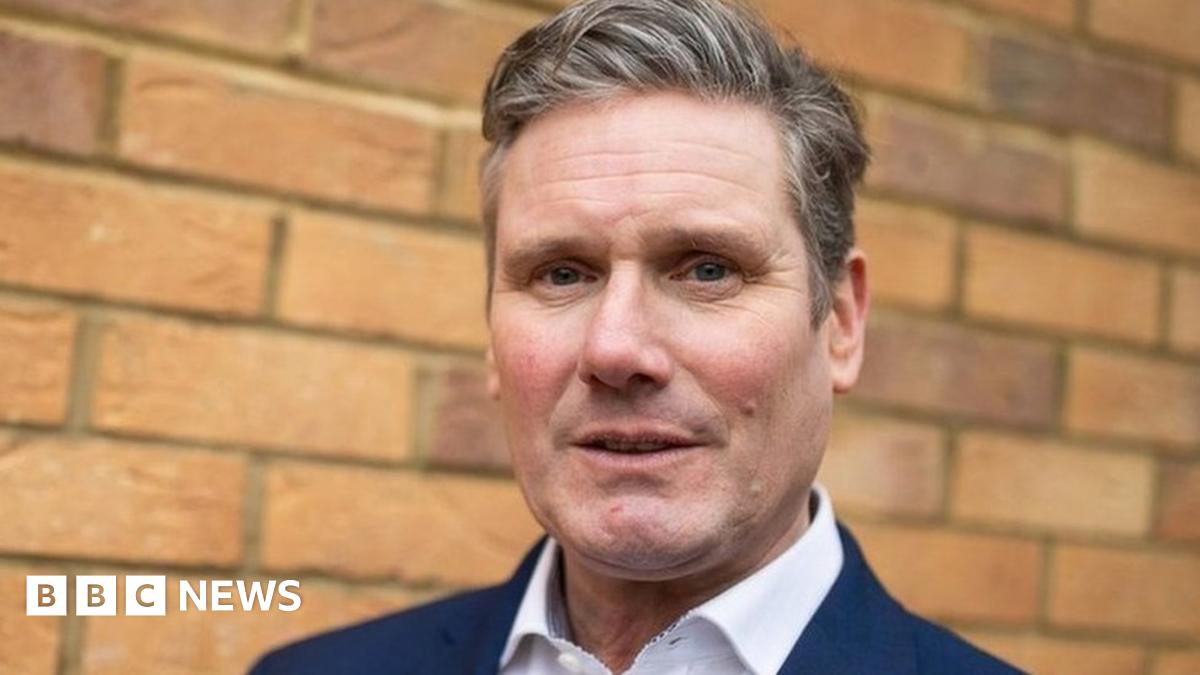
This BBC announcing Starmer's election as leader suggests at least back in April it's his intention to keep rail and other nationalisation plans party policy:


Sir Keir has described himself as a socialist but not a Corbynite, and vowed to keep key policies from the Corbyn era, such as nationalising rail, mail and water and repealing anti-union laws, in a 10-point plan.
 

LNW-GW Joint

Veteran Member
Joined
22 Feb 2011
Messages
21,951
Location
Mold, Clwyd
There are many different models for a nationalised railway.
Labour will be happy to wait until the Tories decide what to do, and then make their mind up before the next election.
The present government seems paralysed about what to do now it effectively has complete control.
Devolution will prevent a common system across the UK (as it has with Covid).
 

Philip Phlopp

Established Member
Joined
31 May 2015
Messages
3,003
Northern and LNER are already effectively nationalised, although in theory this isn't permanent.

Everything is technically nationalised at the moment, thanks to the Emergency Measures Agreements, and is likely to remain nationalised in some form indefinitely now.

The bigger question should be whether the railways will ever go back to a model where the private sector assumes the same level of risk that it did up until 2020 (and the answer is virtually certain to be no). I would suggest most within the industry and many outside it expect concession agreements to be the way forward, with the railway remaining technically nationalised but with some level of private sector involvement, primarily through operators being paid a fee plus a percentage (possibly on a sliding scale) of additional profits by way of performance incentives.
 

thenorthern

Established Member
Joined
27 May 2013
Messages
4,714
Between 2010 and 2015 under Ed Milliband Labour called for the railways to be nationalised several times however at the 2015 election the policy was toned down to say that a state owned operator would be able to bid on the same basis of how private operators currently do when a franchise comes up for tender.

This policy was in some ways sensible as there is no doubt that many services have benefited from privatisation such as the West Coast Main Line while others such as Connex Services were very poorly run. Realistically though the "Best of both worlds" policy was too confusing and complex for many voters so I doubt Labour would do it again.

I suppose with a lot of things Keir Starmer is testing the waters. There is a lot of the Momentum faction still within the Labour Party which will get angry if he moves the party too much to the right too quickly.
 

LNW-GW Joint

Veteran Member
Joined
22 Feb 2011
Messages
21,951
Location
Mold, Clwyd
With Covid and Brexit, Labour has a lot more to think about than the railways.
The fog might begin to clear next year as we emerge from both of these.
They will have to address a 10-20% fall in GDP first, and a newly work-from-home economy.
John McDonnell won't be around to offer bottomless funding either.
 

6Gman

Established Member
Joined
1 May 2012
Messages
9,240
If passenger numbers don't increase and the railways aren't renationalised, I can only see timetables and routes being slashed, TOC's won't run 3/4 empty trains without financial support, and if they get more support from the treasury then wouldn't that be re-nationalisation by the back door?
Buses, airlines and such also have this problem, I can see the buses going back under council control and I would applaud that.

You say that as though they were largely under council control in the past which they weren't in many areas.

And, given the financial pressures faced by councils, how would that be a good thing?
 

ChiefPlanner

Established Member
Joined
6 Sep 2011
Messages
8,348
Location
Herts
With Covid and Brexit, Labour has a lot more to think about than the railways.
The fog might begin to clear next year as we emerge from both of these.
They will have to address a 10-20% fall in GDP first, and a newly work-from-home economy.
John McDonnell won't be around to offer bottomless funding either.

Well said - not sure where the railways sits in the national "must deal with" hierarchy. Not very high I suspect.
 

Scottychoo

Member
Joined
10 Dec 2018
Messages
129
Who cares what Labours policy is, they will forever be the party in Opposition, even with the clowns who are trying to run this country at present
 

Howardh

Established Member
Joined
17 May 2011
Messages
9,801
You say that as though they were largely under council control in the past which they weren't in many areas.

And, given the financial pressures faced by councils, how would that be a good thing?
Bolton's certainly was, before SELNEC. But low-use routes are subsidised by someone - council, local government - who knows? so if councils ran them, then the good routes should still make a profit but the positives would be then end of different companies trying to run the same routes and confusing everyone (ie different fares) and just the one body would be answerable to customer complaints, demands and so on. Not that they'd listen (until voting tiime)!!

FirstBus removed a vital service from an outlying estate here (Johnson Fold) preventing locals from having a direct bus to the shops, doctors and so-on; try telling them privatisation works! They eventually got a much reduced service back, a circular 502/3 which partially covered the gap, run by Vision Bus.
 

DorkingMain

Member
Joined
25 Aug 2020
Messages
692
Location
London, UK
Council control has, on the whole, been an absolute disaster for buses. Public transport on the whole is expensive to run, and so it's provided an easy block to whittle from when it comes to try to save funds. It's also made bus services into a political football - on a larger scale look at how the Tories are punishing Labour-voting London at the moment by stripping out all their subsidies.

Who cares what Labours policy is, they will forever be the party in Opposition, even with the clowns who are trying to run this country at present

I disagree, but that's a discussion for another thread.

I agree the railways are not a particularly hot button issue. People want cheaper fares and a better service but those factors are already largely dictated by the DfT even pre-COVID.

Railway pricing structures have always (essentially) been defined by the fact that the network was loaded to absolute capacity and they wanted to discourage people travelling. Once the post-COVID dust settles there will probably be a reshape of the thinking about railways whoever holds the keys to power. As others have said I suspect Labour are all too happy to let the Tories try that and work it out before they decide how to go forward themselves.
 

Deepgreen

Established Member
Joined
12 Jun 2013
Messages
7,491
Location
Gomshall, Surrey
Who cares what Labours policy is, they will forever be the party in Opposition, even with the clowns who are trying to run this country at present
A very odd statement - do you see no other government options for the rest of time than the Tories, despite the shambles they have presented for a long time now, or do you imagine the rise of another option? If you don't see Labour as a governing party, why do you suppose they will always be the Opposition, rather than yet another choice emerging? Anyhow, the OP's question was about Labour's current policy, which has been addressed. However, the huge traffic reduction on the network does not sit well with the current government's (well, Johnson's) repeated assertion that the recovery will be 'green' - that appears to be very distant indeed.
 

miami

Established Member
Joined
3 Oct 2015
Messages
3,305
My understanding is the place where the profits are made is in the train leasing companies. Operators have always made a fairly small profit (2% of revenue?), but the leasing companies are the ones making massive profits.

I assume there's been no need to bail them out, as the government is guarenteeing to continue to pay the bills, and there appears very little risk as a leasing company.
 

AlbertBeale

Established Member
Joined
16 Jun 2019
Messages
3,188
Location
London
A very odd statement - do you see no other government options for the rest of time than the Tories, despite the shambles they have presented for a long time now, or do you imagine the rise of another option? If you don't see Labour as a governing party, why do you suppose they will always be the Opposition, rather than yet another choice emerging? Anyhow, the OP's question was about Labour's current policy, which has been addressed. However, the huge traffic reduction on the network does not sit well with the current government's (well, Johnson's) repeated assertion that the recovery will be 'green' - that appears to be very distant indeed.

If the Tories really were committed to a "green" recovery, they'd concentrate on transport policies which reduced carbon emissions, not projects which increase them!
 

JonathanH

Veteran Member
Joined
29 May 2011
Messages
23,408
but the leasing companies are the ones making massive profits.
If that was really true, economic theory would suggest that other players would come into the market (which has happened) and surpress the profits. There is no regulatory reason why new entrants to the leasing market can't enter it. Now, it is true that some train companies were initially paying large sums to lease stock for which the value had been entirely run down but that stock is now gone. Moreover, there have been examples of leases ending where they are deemed expensive and a void period resulting for the leasing company.

It does seem unlikely that rolling stock leasing would be part of a Labour nationalisation. It also seems unlikely that a lot of fleet maintenance would be nationalised because it is all too far gone and recent policy appears to be to move to 'build and maintain' contracts. Moreover, the costs of financing rolling stock would become government debt and we would be back into the 1990s situation where new train fleets had to go for government approval.
 

thenorthern

Established Member
Joined
27 May 2013
Messages
4,714
Labour will win power again sometime although it's unlikely to happen before 2029 although that is a discussion for another thread.
 

DorkingMain

Member
Joined
25 Aug 2020
Messages
692
Location
London, UK
If that was really true, economic theory would suggest that other players would come into the market (which has happened) and surpress the profits. There is no regulatory reason why new entrants to the leasing market can't enter it. Now, it is true that some train companies were initially paying large sums to lease stock for which the value had been entirely run down but that stock is now gone. Moreover, there have been examples of leases ending where they are deemed expensive and a void period resulting for the leasing company.

It does seem unlikely that rolling stock leasing would be part of a Labour nationalisation. It also seems unlikely that a lot of fleet maintenance would be nationalised because it is all too far gone and recent policy appears to be to move to 'build and maintain' contracts. Moreover, the costs of financing rolling stock would become government debt and we would be back into the 1990s situation where new train fleets had to go for government approval.

It's an absolutely huge speculation to build units for lease and hope they are compliant for procurement. The reason there aren't more players is simply that it's too much of a high-risk starting point - you could end up with your fleet sat in a yard not earning you a penny if you get it wrong.

A sensible route would be for the DfT to purchase new vehicles and lease them to operators at a fair rate. Gradually the number of trains in the hands of private leasing companies would decrease, and any cost savings could be passed directly to the passengers.
 

DB

Guest
Joined
18 Nov 2009
Messages
5,036
Labour will win power again sometime although it's unlikely to happen before 2029 although that is a discussion for another thread.

I doubt it will be that long. Neither party can normally cling to power for that sort of timeframe. The current lot, with their botched handling of the coronavirus situation and trade deal agreements are unlikely to remain popular, and Labour now has a more generally acceptable leader.
 

JonathanH

Veteran Member
Joined
29 May 2011
Messages
23,408
It's an absolutely huge speculation to build units for lease and hope they are compliant for procurement. The reason there aren't more players is simply that it's too much of a high-risk starting point - you could end up with your fleet sat in a yard not earning you a penny if you get it wrong.

A sensible route would be for the DfT to purchase new vehicles and lease them to operators at a fair rate.
There were only three leasing companies at privatisation. There are now eight according to this https://www.orr.gov.uk/about/who-we-work-with/industry/rolling-stock-companies
Rolling stock leasing companies (ROSCOs) own most of the coaches, locomotives and freight wagons on the rails, which they hire out to train and freight operating companies.

ROSCOs have replaced many of the older trains that were being used before privatisation with modern vehicles. They are often responsible for the maintenance and rebuilding of the vehicles they hire out.

Leasing companies
  • Angel Trains Ltd
  • Beacon Rail
  • Caledonian Rail Leasing
  • Eversholt Rail Group
  • GE
  • Halifax Asset Finance
  • Macquarie European Rail
  • Lombard North Central
  • Porterbrook Leasing Company Ltd
It is obvious that a leasing company can't build trains on a truly speculative basis. However, a train company can form a deal with the leasing companies to get the trains it wants and will seek the best terms from multiple potential leasing companies.

Does the Treasury want the cost of rolling stock on its balance sheet? Was it actually Labour policy for the DfT to start procuring trains? I'm guessing its nationalisation proposals didn't go that far.
 

DB

Guest
Joined
18 Nov 2009
Messages
5,036
Even under BR they did lease in some cases. 50s were initially leased from EE I believe, and bought outright later.
 

radamfi

Established Member
Joined
29 Oct 2009
Messages
9,267
A large number of local bus services in the UK are subsidised and tendered to private operators. Usually on the less profitable routes.

That's hardly "controlling" buses though. If buses are no longer profitable after Covid, presumably the choice will be a subsidised bus or no bus.

== Doublepost prevention - post automatically merged: ==

I doubt it will be that long. Neither party can normally cling to power for that sort of timeframe. The current lot, with their botched handling of the coronavirus situation and trade deal agreements are unlikely to remain popular, and Labour now has a more generally acceptable leader.

However the Tories are changing the boundaries to make it very difficult for them to lose unless they do catastrophically badly.
 

DorkingMain

Member
Joined
25 Aug 2020
Messages
692
Location
London, UK
They've cut subsidised buses massively, reducing some areas to a service only one or two days a week, or completely isolating some areas. If you want to be pedantic about my choice of words then fine, but the point is council budget issues have been taken out on buses at every turn.
 

Puppetfinger

Member
Joined
18 May 2018
Messages
103
If Labour (or indeed any other Government) were to renationalise, I feel there are two important questions and matters they would have to deal with:

1 - how much money, above that being committed now, will need to come from the public purse to pay for a nationalised railway? What public spending would have to be diverted or how much would taxes have to go up to make it sustainable?

2 - what will the public perception be? This is especially so with regard staff salaries (and I wish to put on record I have absolutely no issues with the salaries Railway staff receive) but how will it be received if and when the popular press run stories about now state employed rail staff being paid salaries, very good pensions etc, from the public purse when an awful lot of our NHS heroes and other public sector workers earn and receive an awful lot less? It must be argued that private sector employment has bought some benefits to rail staff that public sector employment would not have. Would this be acceptable to the public at large?

Again, I stress I have no issues whatsoever with rail staff pay etc, but I use that as an example I am sure the press would pick up on if nationalisation ever happened. Would a Political party be willing to risk that?
 

radamfi

Established Member
Joined
29 Oct 2009
Messages
9,267
They've cut subsidised buses massively, reducing some areas to a service only one or two days a week, or completely isolating some areas. If you want to be pedantic about my choice of words then fine, but the point is council budget issues have been taken out on buses at every turn.

So the problem is that council funding has been cut. There's no reason why a well funded bus service can't be half decent. It is normal in other countries. In fact, in which other country are buses profitable enough to be run without some kind of subsidy?
 

thenorthern

Established Member
Joined
27 May 2013
Messages
4,714
I doubt it will be that long. Neither party can normally cling to power for that sort of timeframe. The current lot, with their botched handling of the coronavirus situation and trade deal agreements are unlikely to remain popular, and Labour now has a more generally acceptable leader.

Problem is Labour need to gain 124 seats to get a majority and that is just to get a majority let alone a decent one. While it's not impossible the only time in recent history when a party has gain that many seats at an election was when Tony Blair gained 148 seats in 1997.
 

DB

Guest
Joined
18 Nov 2009
Messages
5,036
Problem is Labour need to gain 124 seats to get a majority and that is just to get a majority let alone a decent one. While it's not impossible the only time in recent history when a party has gain that many seats at an election was when Tony Blair gained 148 seats in 1997.

True. Scotland is the big issue here. If that does become independent then something will have to be done or we will have a non-functional democracy in what remains of the UK.
 
Status
Not open for further replies.

Top