onlinespotting
Member
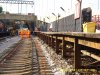
I often wonder how much WYPTE paid for the likes of Burley Park or Cottingley. Literally wooden platforms with a bus shelter on it. How can these stations stay open if we are unable to build for that standard and price any more


I often wonder how much WYPTE paid for the likes of Burley Park or Cottingley. Literally wooden platforms with a bus shelter on it. How can these stations stay open if we are unable to build for that standard and price any more

Most of WYPTE stations are the same type- I bet they only cost a few thousand to build! Didn’t think of grandfather rights - of course
Slaithwaite 13.12.82 £120k (205k footfall)I often wonder how much WYPTE paid for the likes of Burley Park or Cottingley. Literally wooden platforms with a bus shelter on it. How can these stations stay open if we are unable to build for that standard and price any more
Slaithwaite 13.12.82 £120k (205k footfall)
Bramley 12.9.83 £125k (346k)
Walsden 10.9.90 £240k (106k)
Humphrey Park 15.10.84 £86k (36k)
Fitzwilliam 1.3.82 £76k (302k)
Deighton 26.4.82 £65k (95k)
Goldthorpe 16.5.88 £180k (62k)
Hag Fold 11.5.87 £157k (50k)
These are all of wooden construction. The platforms at Walsden were renewed a few years ago and I noticed when I was there last that those at Fitzwilliam were
heavily patched. A common feature of these stations is that they were built adjacent to a road over or under bridge so no footbridge was required (Walsden had an existing one). Not all meet current accessibility standards, hence the new lift at Mills Hill (I couldn't find a cost for this station built in 1985). No car parking was provided for many of the stations built during this period. Some were opened experimentally under the so-called Speller Act, so could presumably be closed without going through the statutory procedure (is that still correct?)
Even Milton Keynes Central, an Inter-City station with five platforms on a high-speed main line, is said to have cost only £3m when opened in 1982. Not sure exactly what these figures include and whether there were any land acquisition costs not included, but the Fitzwilliam figure is said to include the cost of the small car park.
The large number of stations built in PTE areas in the 1980s and early 90s would certainly not have been achieved at current prices. Now we have £13.6m for the much-delayed single-platform Kenilworth station. This has a brick building with ticket office and waiting room, access road, car park, bus stop etc. A new footbridge with lifts has been built even though there is an existing footbridge which perhaps could have been adapted. I think also the track had to be slewed to meet the platform as redoubling the line is planned sometime in the future. For all these reasons it's not really comparable with the small stations listed above.

whatever it would be it would be a lot less than the difference between the original build costs and the sort of prices that seem to get incurred on a new station these days (which I know seem to get justified, but always strike me as being ridiculously high - I mean you could buy quite a few houses for the sort of money that provides a simple platform and bus shelter style fabrication...)I wonder how much these 1980s wooden stations have cost in upkeep over the years...
Lostock, for example, has been completely resurfaced and most of the wood on the back fence replaced at least once, the platform and ramps is regularly full of puddles, and the Up side shelter was rebuilt only a few years after opening.
Plus the Down side ramp probably wouldn't meet today's accessibility standards.
An interesting table. I believe Saltaire cost £100k (but I can't remember the source any more).Slaithwaite 13.12.82 £120k (205k footfall)
Bramley 12.9.83 £125k (346k)
Walsden 10.9.90 £240k (106k)
Humphrey Park 15.10.84 £86k (36k)
Fitzwilliam 1.3.82 £76k (302k)
Deighton 26.4.82 £65k (95k)
Goldthorpe 16.5.88 £180k (62k)
Hag Fold 11.5.87 £157k (50k)
These are all of wooden construction. The platforms at Walsden were renewed a few years ago and I noticed when I was there last that those at Fitzwilliam were
heavily patched. A common feature of these stations is that they were built adjacent to a road over or under bridge so no footbridge was required (Walsden had an existing one). Not all meet current accessibility standards, hence the new lift at Mills Hill (I couldn't find a cost for this station built in 1985). No car parking was provided for many of the stations built during this period. Some were opened experimentally under the so-called Speller Act, so could presumably be closed without going through the statutory procedure (is that still correct?)
Even Milton Keynes Central, an Inter-City station with five platforms on a high-speed main line, is said to have cost only £3m when opened in 1982. Not sure exactly what these figures include and whether there were any land acquisition costs not included, but the Fitzwilliam figure is said to include the cost of the small car park.
The large number of stations built in PTE areas in the 1980s and early 90s would certainly not have been achieved at current prices. Now we have £13.6m for the much-delayed single-platform Kenilworth station. This has a brick building with ticket office and waiting room, access road, car park, bus stop etc. A new footbridge with lifts has been built even though there is an existing footbridge which perhaps could have been adapted. I think also the track had to be slewed to meet the platform as redoubling the line is planned sometime in the future. For all these reasons it's not really comparable with the small stations listed above.
whatever it would be it would be a lot less than the difference between the original build costs and the sort of prices that seem to get incurred on a new station these days (which I know seem to get justified, but always strike me as being ridiculously high - I mean you could buy quite a few houses for the sort of money that provides a simple platform and bus shelter style fabrication...)
agreed and good points - but of course if you asked people who want a station what they would prefer it won't be the endless years waiting for various parties to put funding packages together to meet these massive budgets. I can't recall how long it was between the new Ilkeston Station being seriously mooted and the actual opening date for example.I assume BR didn't need to factor in Schedule 4 payments to operators for disruption, etc, that sort of thing into the cost.
Taking Lostock as a station I know well, no way would platforms that narrow be newly built today on a 75mph+ line. And the puddle you need to step over to go through the Down platform exit gate has been a permanent feature after every rain shower since 1988.
New stations built today (e.g. Horden, Ilkeston) are of much higher quality than the wooden BR stations of the 80s.

Assuming you mean 'could they still be closed... (etc)' then no, the 'Speller' conditions expire after, usually, five years. If you mean 'could new stations be open experimentally' then yes, some are. The last I know of is Southend Airport (see http://www.railwaycodes.org.uk/misc/experimental.shtm).Some were opened experimentally under the so-called Speller Act, so could presumably be closed without going through the statutory procedure (is that still correct?)
Sounds about right for its period - that included two stone waiting shelters because of the location though.An interesting table. I believe Saltaire cost £100k (but I can't remember the source any more).
Wasnt Saltaire a 'special' because it was in a heritage area?Sounds about right for its period - that included two stone waiting shelters because of the location though.


Sounds about right for its period - that included two stone waiting shelters because of the location though.
Deighton and Slaithwaite originally had stone shelters of a similar design to those at Saltaire. Whilst Saltaire is now a UNESCO World Heritage site, it wasn't one at the time the station reopened (designation was in 2001). Those shelters may have been used in order to be sympathetic to the character of the area, but the suggestion I've heard previously that they were specially designed for that purpose and location is an urban myth I'm afraid.Wasnt Saltaire a 'special' because it was in a heritage area?
Slaithwaite is on the site of the one closed in the 1960s, and as mentioned above Saltaire was also a reopening. As for the others I know, Berry Brow is about 100m from the site of the original. The original Deighton station was on the Kirkburton branch rather than the main line. Outwood is on the site of the old Lofthouse & Outwood. Streethouse was a completely new station when opened in 1992 rather than a reopening. Cottingley likewise was the first station on that site.One question. How many WYPTE wooden stations were on sites of old stations. I ask because the reason many stations have a car park is that old goods yards have been reused.
Correction noted! I didn't know about D and S, being familiar with Crossflatts (was it the first?) Cononley (not WYPTE I know) and Frizinghall (or Frizinghall as the automated announcement at Leeds had it at first.Deighton and Slaithwaite originally had stone shelters of a similar design to those at Saltaire. ....Those shelters may have been used in order to be sympathetic to the character of the area, but the suggestion I've heard previously that they were specially designed for that purpose and location is an urban myth I'm afraid.
Slaithwaite is on the site of the one closed in the 1960s, and as mentioned above Saltaire was also a reopening. As for the others I know, Berry Brow is about 100m from the site of the original. The original Deighton station was on the Kirkburton branch rather than the main line. Outwood is on the site of the old Lofthouse & Outwood. Streethouse was a completely new station when opened in 1992 rather than a reopening. Cottingley likewise was the first station on that site.

Thanks for the correctionBeing picky, the down platform is sort of on the site of the station closed in 1968, allowing for the track slewing which has taken place. The up platform is nearer Marsden than the original platforms were. I used to use it occasionally back in the day, and more frequently Golcar, handy for going to watch HTAFC!


Slaithwaite is on the site of the one closed in the 1960s, and as mentioned above Saltaire was also a reopening. As for the others I know, Berry Brow is about 100m from the site of the original. The original Deighton station was on the Kirkburton branch rather than the main line. Outwood is on the site of the old Lofthouse & Outwood. Streethouse was a completely new station when opened in 1992 rather than a reopening. Cottingley likewise was the first station on that site.
From a track renewals point of view, they are a nightmare to work through.
You dig down to achieve the specified depth of dig and widen out so you can fit the sleepers to design line.
However you then undermine the paving slabs that the platform legs sit on, they are not fixed in place.
You then have the problem of jacking and packing to return the platform to where it should be.
In the past the stations was built by B.R. staff in a lot of cases so the cost of building them would be a lot less, a lot of cost ,s would be a paper exercise between departments. The actual proper money going out of the organization would be to pay the staff and for the materials. Now every contractor wants a make a profit and pay for his overheads and inflate staff cost as against in B.R. days.
Whatever the cost was it all came out of the pot of money that the British Railways Board received to run the railways for that year. So it was not like it is today where a lot of things and staff are contract aligned so that a true cost, s are revealed for running Network Rail. Also who decides the standards of construction then as against now as a lot of these wooden station platforms have stood the test of time.So a classic case of cheaper to construct, but cost more money/time for maintainence activities in the long run?
So I wonder what the 'real' costs of the wooden stations were under BR, or whether say, costs of staff employed by BR working on the station but accounted for somewhere else on the balance sheet, being included would push the actual prices much higher than the 'official' one?
Another station with wooden platforms I've frequented in the past is Berrylands, which has had them far longer than any of the West Yorkshire examples.
Also, UTT
Wooden stations seem to have fallen out of favour by the early 1990s for whatever reason. Obviously 'major' stations like Manchester Aiport and Stansted Airport were exceptions during his period.
Euxton Balshaw Lane (1997) and Horwich Parkway (1999) seemed to mark the start of the trend of the more 'solid' variety of local station.