The trouble is that she got scared into saying that people "ought" to wear masks in shops a few weeks ago as a bit of throwaway tokenism, and nobody has been doing. She absolutely hates it when people don't do what she says. I'm in England at the minute, and I'm seriously considering what my options are for not going back

-
Our new ticketing site is now live! Using either this or the original site (both powered by TrainSplit) helps support the running of the forum with every ticket purchase! Find out more and ask any questions/give us feedback in this thread!
You are using an out of date browser. It may not display this or other websites correctly.
You should upgrade or use an alternative browser.
You should upgrade or use an alternative browser.
Face coverings mandatory in shops in Scotland
- Thread starter Silver Cobra
- Start date
- Status
- Not open for further replies.
Sponsor Post - registered members do not see these adverts; click here to register, or click here to log in
R
RailUK Forums
I knew if I came into this forum I’d find people absolutely raging about this. I think they didn’t make it mandatory before as they were relying on guidance and hoping the population would play their part by complying. Sadly that doesn’t seem to be happening so they’ve made it mandatory.
If they’d made it mandatory from the start, we’d have had the complaint if heavy handedness.
As for the ‘trying to get one up in Boris’ malarky, do you really think the Scottish government would have to resort to anything like this to look better than the UK government? It’s really not much of a challenge given the way they’ve responded to this.
Presumably you aren't aware that the evidence for any actual benefit is very weak?
All this about 'playing their part' is nonsense. People should not be compelled to do something which has no proven benefit just so that a politician can claim to be taking action.
snookertam
Member
- Joined
- 22 Sep 2018
- Messages
- 927
Presumably you aren't aware that the evidence for any actual benefit is very weak?
All this about 'playing their part' is nonsense. People should not be compelled to do something which has no proven benefit just so that a politician can claim to be taking action.
Unmasked! The effect of face masks on the spread of COVID-19
Confronted with a novel, aggressive coronavirus, Germany implemented measures to reduce its spread since March 2020. Requiring people to wear face masks in public places has, however, been a subject of controversy and isolating the effect of mask-wearing on the spread of COVID-19 is not simple...
 voxeu.org
Confronted with a novel, aggressive coronavirus, Germany implemented measures to reduce its spread since March 2020. Requiring people to wear face masks in public places has, however, been a subject of controversy and isolating the effect of mask-wearing on the spread of COVID-19 is not simple. This column looks at the town of Jena and other German regions that introduced face masks before the rest of the country to see whether the requirement makes a difference in the number of new COVID-19 cases. Requiring face masks to be worn decreases the growth rate of COVID-19 cases by about 40% in Germany.
On a global scale, the extent of COVID-related lockdowns is massive, and their socio-economic impact is expected to be far-reaching (Barba Navaretti et al. 2020, McKibbin and Fernando 2020). When it comes to the estimated effects of containment measures, timing seems to matter (Deb et al. 2020).
In Germany, significant actions to reduce the spread of the virus have been taken from mid-March onwards (Hartl et al. 2020). However, the obligation to wear face masks in public has been the subject of controversy and was introduced only relatively late throughout Germany (around 27 April 2020).
At present, virologists are collecting more and more clinical evidence that face masks catch infectious particles produced from speaking, coughing, or sneezing, which may reduce the risk of infecting another person (Prather et al. 2020). Proper wearing of a face mask could thus help to reduce the spread of COVID-19 and protect risk groups from infections in a cheap and simple way.
Finding out whether face masks indeed reduce the spread of COVID-19 is thus important. Against the available evidence from clinical studies or previous pandemics, we ask: Can we identify a significant effect of face masks on the spread of COVID-19 by looking at the development of registered COVID-19 cases? Yes, we can. We zoom in on the case of Jena, a town of 110,000 inhabitants in the federal state of Thuringia, Germany.
Jena presents a unique case in Germany (see also Mitze et al. 2020), as the obligation to wear face masks in public transport, shops, and workplaces was introduced much earlier there (on 6 April) than in all other regions in Germany (around 27 April). The introduction of obligatory face masks was accompanied by a public campaign “Jena zeigt Maske” (“Jena shows mask”), which started one week earlier to make the local population aware of this novel measure.
We can observe differences in the timing of introducing face masks across German regions due to the institutional setup of the German federal system: according to the German Infection Protection Act, federal states are in charge of formulating and prescribing public health measures to fight the spread of infections. Local municipalities and health authorities then decide on the implementation of specific measures, e.g. the timing of their introduction. And Jena was the first to act.
If we look at the number of COVID-19 cases in Jena, masks seem to have a positive effect. The number of registered new infections fell to almost zero in the days after masks were introduced. But was this really due to the introduction of masks and a publicly visible campaign? Unfortunately, there is no second Jena in Germany, which would allow us to measure the spread of COVID-19 if face masks had not been introduced under otherwise identical conditions.
Our solution is to apply the synthetic control method (Abadie and Gardeazabal 2003, Abadie et al. 2010, Abadie 2020) to construct a counterfactual that closely follows the COVID-19 trend in Jena before masks were introduced. The idea is to construct a weighted average of similar regions in Germany (with no mask obligations) at the time when mask-wearing became compulsory in Jena.
Regions and their respective sample weights are chosen based on the cumulative number and changes in newly registered COVID-19 cases before 6 April, together with structural regional characteristics such as regional population density, average age of the population, proportion of senior citizens, and average number of doctors and pharmacies per inhabitants. In the baseline, both West and East German cities such as Rostock, Darmstadt, and Trier constitute this synthetic Jena (see Mitze et al. 2020 for the full list).
We then use this counterfactual to estimate the hypothetical change in cases in Jena after 6 April. This tells us approximately what would have happened if no masks had been introduced in the city.
Table 1 shows a significant difference in the number of cases in Jena and the comparison group without masks after 6 April. Twenty days after the introduction of mandatory masks in Jena, the cumulative number of COVID-19 cases increased from ‘only’ 142 to 158. In the synthetic Jena, the number rose from 143 to 205. This corresponds to a reduction in the number of cases by around 23%.
We find that the difference is most striking for the over-60 age group. For this group, the increase in cumulative cases in Jena decreased by more than 50% compared to its synthetic control group (see Mitze et al. 2020 for details).
Panel A in Figure 1 shows that the effect gradually appears over time. However, its gradual emergence after about 3-4 days is too fast from an epidemiological point of view. With COVID-19’S average incubation period of approximately 5 days and a potential reporting delay of 2 or 3 days for laboratory results (Donsimoni et al. 2020), effects on reported new cases should only be seen after 7 or 8 days. An announcement effect may have played a role in Jena.
In panel B, we therefore start our analysis on 30 March, the day the mask campaign was announced. In this case, we observe a widening gap between Jena and the comparison group after about 10 days. Taken together, this effect appears to be plausible and is found to be robust when confronted with different sensitivity tests (see Mitze et al. 2020 for details).
Still, can we draw conclusions for other regions or even other countries from a single case when we cannot completely rule out that Jena is special because of unobserved factors? We therefore go beyond a single case study and examine all those regions that had introduced masks before or by 22 April. Besides Jena, these include regions that required masks before the state-wide requirement was introduced (Nordhausen in Thuringia, Rottweil in Baden-Württemberg, the Main-Kinzig district in Hesse, and Wolfsburg in Lower Saxony), as well as all regions in Saxony and Saxony-Anhalt. We compare these regions with the majority of German regions that only introduced masks on 27 April or later. The main advantage is that we can calculate an average effect over different regions, although this comes at the expense of differences in the timing of introduction, which are smaller.
We find smaller effects than in the Jena case study (Table 1). However, the average reduction in case numbers compared to their synthetic counterparts remains significant and sizable. Depending on the chosen sample, 10 days after the introduction of masks, the decrease in the cumulative cases is between 2.3 and 4.2%. Generally, the effect is larger for the subsample of larger cities (kreisfreie Städte).
Based on our findings, we calculate a rule-of-thumb measure for the relative decrease in the daily growth rate of COVID-19 cases of about 40% (Table 1). Consider a region in which the number of COVID-19 cases increased by 10% from one day to another. This increase would have been only 6% if there had been an obligation to wear face masks. With a 10% daily increase in COVID-19, cases double within 7 days; in contrast, a 6% daily increase means cases double only within 12 days.
In summary, the introduction of mandatory face masks has slowed down the spread of COVID-19 in Germany. This result agrees with the findings of epidemiologists and virologists who explain that face coverings limit airflow when speaking, thereby reducing the transmission of infectious particles.
The observed effect in Jena is larger than the average effect for other regions with face-mask requirements. Two mechanisms may explain this difference: first, with Jena being a pioneer city in Germany when it comes to the introduction of face masks, the local population may have taken the crisis more seriously than in other regions, causing a sort of Hawthorne effect. In other words, the population may have taken the introduction of masks as a strong signal to follow contact restrictions closely. Another likely reason is that anticipation effects have increased over time in Germany: people in other regions may have chosen to wear masks even before wearing them became mandatory.
In sum, our results suggest that requiring masks is a cost-effective, less economically harmful, and democracy-compatible containment measure for COVID-19.
NB: Tables and references were not included and can be viewed at the link above
snookertam
Member
- Joined
- 22 Sep 2018
- Messages
- 927
The trouble is that she got scared into saying that people "ought" to wear masks in shops a few weeks ago as a bit of throwaway tokenism, and nobody has been doing. She absolutely hates it when people don't do what she says. I'm in England at the minute, and I'm seriously considering what my options are for not going back
Are you at the wind up? You're not wanting to come back to Scotland because you'd need to wear a face covering in a shop for the next while? Go and get some perspective.
Are you at the wind up? You're not wanting to come back to Scotland because you'd need to wear a face covering in a shop for the next while? Go and get some perspective.
A lot of people can't wear masks without extreme discomfort. And while most of these are covered by exemptions (including myself), these can't always be easily proven, and can lead to a lot of conflict.
Also, with public transport, many people have some sort of alternative (walking, cycling, driving, or not making the journey). But there's no alternative to shopping - unless you want to starve. Masks in shops is therefore a far more invasive restriction.
I'm specifically extremely uncomfortable about mask wearing, and having it extended into my everyday life is a step too far. If you don't get it or think I'm being obtuse then you aren't appreciating the levels of anxiety it causes me. To force that on people requires a level of evidence and urgency which is simply not present on any reading of the stats or science.Are you at the wind up? You're not wanting to come back to Scotland because you'd need to wear a face covering in a shop for the next while? Go and get some perspective.
I'm also generally uncomfortable about a country being run without any decent evidence, cause or scrutiny by an egomaniac on a power-trip. England isn't a great deal better in that respect, but they don't seem to have entirely lost sight of what is involved in running a liberal democracy.

birchesgreen
Established Member
There should be a pro quo, wear a mask yes but no longer have to queue outside. This will become important as the weather worsens.
Unmasked! The effect of face masks on the spread of COVID-19
Confronted with a novel, aggressive coronavirus, Germany implemented measures to reduce its spread since March 2020. Requiring people to wear face masks in public places has, however, been a subject of controversy and isolating the effect of mask-wearing on the spread of COVID-19 is not simple...
And there is plenty of evidence against it too, e.g:
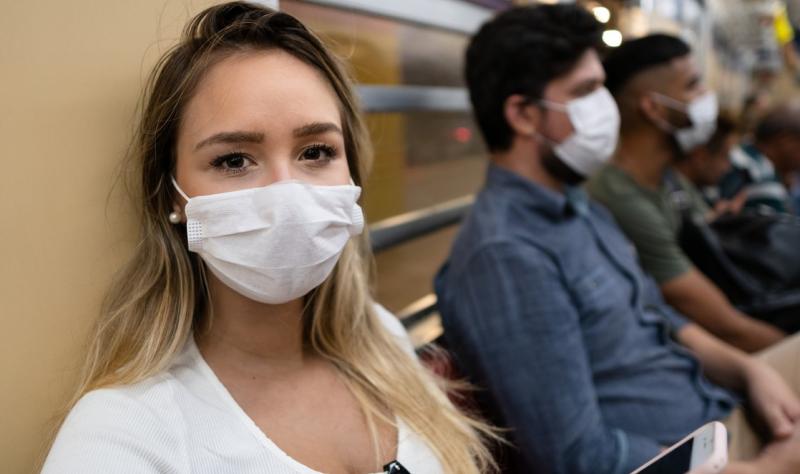
COMMENTARY: Masks-for-all for COVID-19 not based on sound data
Or this meta-anaysis of published studies, which concludes that " The evidence is not sufficiently strong to support widespread use of facemasks as a protective measure against COVID-19. However, there is enough evidence to support the use of facemasks for short periods of time by particularly vulnerable individuals when in transient higher risk situations." (https://www.medrxiv.org/content/10.1101/2020.04.01.20049528v1)
The WHO is very lukewarm on the idea - they started out with a flat out advice not to bother, but in the light of countries doing it anyway have now changed to a message which pretty much says that 'well, you might want to but there's still no evidence that it helps', e.g.:
"At the present time, the widespread use of masks everywhere is not supported by high-quality scientific evidence, and there are potential benefits and harms to consider." (from https://www.who.int/emergencies/dis...wers-hub/q-a-detail/q-a-on-covid-19-and-masks). Elsewhere in the guidance, they hedge their bets, but nowhere do they say that there is clear evidence that masks actually help.
With scientific obervations such as the use of masks, if something works and there's sufficient experience for valid sampling (and there is for this now), there tends be unanimity on it, or close to, among scientists and advisory bodies. The fact that there isn't, and even those who claim it does work generally can't produce any hard evidence, or such evidence is anecdotal, indicates that the evidence is, at best, very weak.
And I don't think that very weak evidence is adequate to justify imposing this sort of intrusive and dystopian restriction on everybody.
- Joined
- 13 Dec 2018
- Messages
- 4,577
Possibly 'straw that broke the camel's back'?Are you at the wind up? You're not wanting to come back to Scotland because you'd need to wear a face covering in a shop for the next while? Go and get some perspective.
Possibly 'straw that broke the camel's back'?
Exactly. Especially with Ms Sturgeon in charge. She is doing something often just for the sake of publicity.
I'm specifically extremely uncomfortable about mask wearing, and having it extended into my everyday life is a step too far. If you don't get it or think I'm being obtuse then you aren't appreciating the levels of anxiety it causes me. To force that on people requires a level of evidence and urgency which is simply not present on any reading of the stats or science.
I'm also generally uncomfortable about a country being run without any decent evidence, cause or scrutiny by an egomaniac on a power-trip. England isn't a great deal better in that respect, but they don't seem to have entirely lost sight of what is involved in running a liberal democracy.
If you have anxiety , you dont have to wear one.
Someone i know yesterday said to me hes not going out now for the rest of year because of mask etc.
Bletchleyite
Veteran Member
If you have anxiety , you dont have to wear one.
Someone i know yesterday said to me hes not going out now for the rest of year because of mask etc.
There's a difference between an anxiety disorder and preferring not to wear one so electing not to go out. I would prefer not to wear one, so I will use the car for more journeys than I otherwise would. However that's not an anxiety disorder, that's because I would prefer not to wear one but recognise the need for them.
I think it's really important that you only make use of an exemption if the relevant condition (with which you have been diagnosed, not just you think you have it or think you can get away with saying you do) actually causes you a problem due to that condition, not just because you can. I could validly say "I'm asthmatic, I don't have to", but as wearing one doesn't cause me breathing issues that would be downright wrong of me.
If you find them uncomfortable there are lots of options, try some different ones e.g. a Buff/snood (but double it over), masks shaped for your face, the traditional blue type, painter/decorator type (but NOT the one way valved type, they don't protect others) etc.
If you have anxiety , you dont have to wear one.
Problem is that those with anxiety will probably also be anxious about being confronted for not wearing one.
And we've probably all seen by now the people plastering photos of people on buses/trains on Twitter, trying to shame them for not wearing, without any apparent attempt to first work out why.
People are also, quite rightly, going to object to continually having to explain their medical history in order to operate any sort of public life.
Bletchleyite
Veteran Member
People are also, quite rightly, going to object to continually having to explain their medical history in order to operate any sort of public life.
This is getting like the silly situation where people say "I have a disability" then stubbornly refuse to state what it is, making it really difficult for people to make reasonable adjustments for them because it becomes a silly guessing game. If you want the exemption and are justified in it, you only have to say three words "I have asthma" etc. It's not hard and it's not infringing on your privacy. If you really didn't want to say what condition you had from the list you could get away with picking another one.
Problem is that those with anxiety will probably also be anxious about being confronted for not wearing one.
And we've probably all seen by now the people plastering photos of people on buses/trains on Twitter, trying to shame them for not wearing, without any apparent attempt to first work out why.
People are also, quite rightly, going to object to continually having to explain their medical history in order to operate any sort of public life.
I know at NR stations they are providing laynards for people exempt .
This is getting like the silly situation where people say "I have a disability" then stubbornly refuse to state what it is, making it really difficult for people to make reasonable adjustments for them because it becomes a silly guessing game. If you want the exemption and are justified in it, you only have to say three words "I have asthma" etc. It's not hard and it's not infringing on your privacy. If you really didn't want to say what condition you had from the list you could get away with picking another one.
It's not unreasonable that people wouldn't want to state in a public place such as a train that they are autistic, or suffer from anxiety, or anything else along those lines. And yes, peope who suffer from anxiety could well be put off using trains because they don't want to be put in this position.
Bletchleyite
Veteran Member
It's not unreasonable that people wouldn't want to state in a public place such as a train that they are autistic, or suffer from anxiety, or anything else along those lines. And yes, peope who suffer from anxiety could well be put off using trains because they don't want to be put in this position.
It would perhaps help if the NHS would require GPs to issue exemption letters on demand to those with a relevant diagnosis.
snookertam
Member
- Joined
- 22 Sep 2018
- Messages
- 927
Just to point out something else - it doesn’t have to be a medical style mask. A face covering will do, such as a scarf or a snood. I’ve got one that goes round my neck. If you’re concerned about the discomfort of a mask you can consider that.
The whole point is that your mouth is covered to stop droplets spreading from speech, as well as covering your nose/mouth from coughs or sneezes. So if the thought of a mask is a problem, consider those options as alternatives.
The whole point is that your mouth is covered to stop droplets spreading from speech, as well as covering your nose/mouth from coughs or sneezes. So if the thought of a mask is a problem, consider those options as alternatives.
It's not hard and it's not infringing on your privacy.
I disagree, it is tough and some would say demeaning having to continually plead a medical exemption - and give details of that - in order to operate a normal life. You may say the current times justify that - I don't believe they do.
Plus you're assuming people know, understand and follow the rules and exceptions, and we all know that not everyone will. There was already an example in another thread yesterday of someone pestered by someone in authority who did *not* accept 'I have asthma' as an answer and demanded proof.
snookertam
Member
- Joined
- 22 Sep 2018
- Messages
- 927
No. Many disabilities are hidden. That some unscrupulous individuals might attempt to take advantage shouldn’t undermine the rights of others.This is getting like the silly situation where people say "I have a disability" then stubbornly refuse to state what it is, making it really difficult for people to make reasonable adjustments for them because it becomes a silly guessing game. If you want the exemption and are justified in it, you only have to say three words "I have asthma" etc. It's not hard and it's not infringing on your privacy. If you really didn't want to say what condition you had from the list you could get away with picking another one.
As it happens I doubt there will be much in the way of enforcement anyway. The point of making it mandatory is the message that it sends. The aim is that people are likely to comply than have been so far when it was merely guidance.
It would perhaps help if the NHS would require GPs to issue exemption letters on demand to those with a relevant diagnosis.
Yeah, maybe - but contacting GPs at the moment is apparently very difficult in many cases.

Scrotnig
Member
- Joined
- 5 Sep 2017
- Messages
- 593
How do you get a medical diagnosis for "it causes me great distress"?It would perhaps help if the NHS would require GPs to issue exemption letters on demand to those with a relevant diagnosis.
Bletchleyite
Veteran Member
How do you get a medical diagnosis for "it causes me great distress"?
That isn't an exemption, I'm afraid.
Scrotnig
Member
- Joined
- 5 Sep 2017
- Messages
- 593
That's tantamount to having "unlean" painted on your back. Totally unacceptable.I know at NR stations they are providing laynards for people exempt .

kylemore
Member
- Joined
- 28 Aug 2010
- Messages
- 1,047
One result of this new policy which I'm sure Ms Sturgeon did not intend, is that as of yesterday afternoon the SNP is one member short and I have a whole £2 per month more to spend - online, not in shops!
Scrotnig
Member
- Joined
- 5 Sep 2017
- Messages
- 593
Haven't seen the legistaltion for Scotland but the England public transport one certainly does have that as an exemption.That isn't an exemption, I'm afraid.
Journeyman
Established Member
- Joined
- 16 Apr 2014
- Messages
- 6,295
The thing that really annoys me about this is that shop workers throughout the peak of the virus weren't wearing masks, and they're all fine. Virtually no staff have been wearing them, and now they have to - and the manager of my local ScotMid is furious about it. She's also not looking forward to the inevitable conflict it's going to cause when people refuse.
Apparently it's going to be reviewed on July 23rd, so I hope it's short-lived. As far as I can tell, reaction has been extremely negative, so I hope there's a U-turn coming. I was just looking forward to some sort of normality returning.
Apparently it's going to be reviewed on July 23rd, so I hope it's short-lived. As far as I can tell, reaction has been extremely negative, so I hope there's a U-turn coming. I was just looking forward to some sort of normality returning.
The thing that really annoys me about this is that shop workers throughout the peak of the virus weren't wearing masks, and they're all fine. Virtually no staff have been wearing them, and now they have to - and the manager of my local ScotMid is furious about it. She's also not looking forward to the inevitable conflict it's going to cause when people refuse.
Apparently it's going to be reviewed on July 23rd, so I hope it's short-lived. As far as I can tell, reaction has been extremely negative, so I hope there's a U-turn coming. I was just looking forward to some sort of normality returning.
I wonder if the review includes masks on public transport? A mask in a shop is more bearable than on a bus or train perhaps
Bletchleyite
Veteran Member
That's tantamount to having "unlean" painted on your back. Totally unacceptable.
Do you also object to Blue Badges?
But what's the justification? As you point out hardly anyone has bothered to wear a daft mask whilst shopping. The virus hasn't been raging through the population, indeed Scotland is seeing some days with zero new recorded cases now.I knew if I came into this forum I’d find people absolutely raging about this. I think they didn’t make it mandatory before as they were relying on guidance and hoping the population would play their part by complying. Sadly that doesn’t seem to be happening so they’ve made it mandatory.
If they’d made it mandatory from the start, we’d have had the complaint if heavy handedness.
The time to do this would have been when the incidence was much higher. Now it's almost certain that the person next you in the shop isn't infectious and they make you wear a silly mask.
It's pointlessness heaped on pointlessness.
- Status
- Not open for further replies.