
-
Our new ticketing site is now live! Using either this or the original site (both powered by TrainSplit) helps support the running of the forum with every ticket purchase! Find out more and ask any questions/give us feedback in this thread!
You are using an out of date browser. It may not display this or other websites correctly.
You should upgrade or use an alternative browser.
You should upgrade or use an alternative browser.
Compulsory purchase order may be made to extend RVR
- Thread starter Steptoe
- Start date
- Status
- Not open for further replies.
Sponsor Post - registered members do not see these adverts; click here to register, or click here to log in
R
RailUK Forums
There's an online survey to find out whether or not people are in favour of the Level Crossing. Apparently an attempt by Amber Rudd to get it rejected. Link takes you to the one question survey,
surveymonkey.co.uk/r/MFF2MD5
surveymonkey.co.uk/r/MFF2MD5

eastdyke
Established Member
There's an online survey to find out whether or not people are in favour of the Level Crossing. Apparently an attempt by Amber Rudd to get it rejected. Link takes you to the one question survey,
surveymonkey.co.uk/r/MFF2MD5
That survey is somewhat fatuous in that it purports to reflect local opinion when in fact anyone can submit a response.
Was Amber Rudd proposing to object to the making of the order? In which case the date for objections passed on 31st May. Perhaps the survey too should have passed its date?
markindurham
Member
- Joined
- 1 Nov 2011
- Messages
- 390
Regardless of dates etc, I've registered my support

The Compulsory Purchase Order is not a magic trick to deprive someone of their land. It is a way of subjecting that possibility to public scrutiny - and CPOs will only ever succeed with at least some support from elected councillors or their officials (and let's not forget - money in the pockets of the previous owners). Like all elements of our democracy it is not perfect - but it's better than everything being decided by money. To describe this application as a "misuse" of CPOs is to miss the point completely. The "public interest" is something that is rightly very widely drawn in this country.

DJ_K666
Member
I for one would use it. I live in Eastbourne so can easily catch a train to Hastings and then to Robertsbridge. I would make a point of alighting at Salehurst and buying a pint and even a meal at the pub there before continuing my journey to Tenterden.
swt class 450
Guest
- Joined
- 9 Apr 2016
- Messages
- 1,909
Why are so many people in the area opposed to the three new level crossings? What don't they like about it? It is only a heritage railway so trains will run infrequently (only a few a day) and only on certain days (mainly the weekends) and not even all year round (mainly not in the winter) so i don't see the issue! It is not like it will be one of those busy level crossings where the barriers are down every couple of minutes!
eastdyke
Established Member
It seems that the Secretary of State called for a local Public Inquiry 28th June last year. The Inquiry is expected to take place June 2019.
The (final) statement of case dated September 2018 can be found here:
http://bailey.persona-pi.com/Public...docs/Statement of Case FINAL 17 sep 2018.docx
Selected quote:
The (final) statement of case dated September 2018 can be found here:
http://bailey.persona-pi.com/Public...docs/Statement of Case FINAL 17 sep 2018.docx
Selected quote:
1.3 The statutory objection period ended on 31 May 2018. The total number of responses to the Order was 1240, comprising 1003 objections (of which 572 were identical signed templates), 18 representations and 219 letters of support.
swt class 450
Guest
- Joined
- 9 Apr 2016
- Messages
- 1,909
I have been reading that there seems to be a lot of opposition from farmers and land owners in the area as well.

61653 HTAFC
Veteran Member
Quite... but then this is a local pub, for local people. We'll have no trouble here!I think it's fairly obvious that if you have a hospitality business next to a reasonably sized tourist attraction, you have more potential passing trade than one that isn't.


Quite... but then this is a local pub, for local people. We'll have no trouble here!
The visitors might take the precious things !
61653 HTAFC
Veteran Member
We didn't burn him!The visitors might take the precious things !
Etc. Etc.

bramling
Veteran Member
Quite... but then this is a local pub, for local people. We'll have no trouble here!
Surely if the pub is in Salehurst, which is a mile or two from Robertsbridge, it’s not going to be over-run by outsiders (if that is the concern) unless a station is opened at Salehurst. Even if the railway want to put a halt there for completeness, they don’t necessarily have to stop trains there if it would cause problems.
One wonders if the pub owner is merely supporting other locals?
I can sort of sympathise with their fields being divided up, however at the end of the day it’s not the end of the world. Farming can take place elsewhere, whereas the railway can’t rebuilt itself elsewhere. The objections do strike me as being more pathological rather than practical.
DJ_K666
Member
Don't forget to run fast as there may be crossbows involved.
chorleyjeff
Member
- Joined
- 3 May 2013
- Messages
- 677
I disagree. This is an appalling misuse of a compulsory purchase order. It is not a public railway with a public benefit, or a genuine preservation of a meaningful historic site, it's a private operation with a commercial objective to expand their business. The "missing link" argument doesn't wash to me, it doesn't say to me there's any genuine historic significance.
If they want to extend they should have to make the landowners an offer they can't refuse and buy the land, and pay for the carriageway work; this is how the world works.
What CPO powers are they using ? Parliamentary authority is needed so what statute is being used ?
Is the DfT involved ?

robvulpes
Member
- Joined
- 11 Jan 2007
- Messages
- 172
Transport and Works Act - so DfT has to be involved (and is). http://www.rvr.org.uk/twao.htmlWhat CPO powers are they using ? Parliamentary authority is needed so what statute is being used ?
Is the DfT involved ?

The Public Enquiry is being re-scheduled for "early 2020":
http://rvrailway.blogspot.com
http://rvrailway.blogspot.com
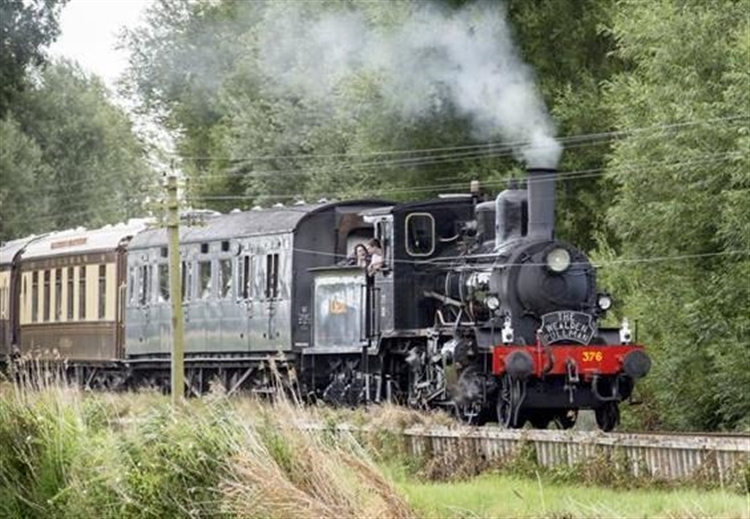
Plans for a heritage railway extension that would see Tenterden connected to the mainline have come to a temporary halt.
Transport Secretary Chris Grayling has made the decision to delay the public inquiry into reinstating a two-mile section of line that would join the heritage Kent & East Sussex Railway to the mainline at Robertsbridge junction in East Sussex.
The decision follows requests from Highways England and the Office of Road and Rail for additional traffic impact studies to be carried out into the effects of installing a crossing on the A21, at Northbridge Street, East Sussex, which would be needed to build the extension.

Rother Valley Railway chairman Gardner Crawley said the railway had requested that the hearing be delayed so it could gather more information on its impact on traffic.
He said: "Although we have managed to satisfy many of the statutory consultees with regards any concerns they may have had about our proposals, Highways England and the Office of Rail and Road have requested additional studies be carried out.
"These are to better understand what effect a level crossing, which would only operate during off-peak hours, would have on the A21."
The public inquiry due to take place in June will now be scheduled for early 2020.

Courtesy Trevor Streeter
Mr Crawley added: "We are happy to carry out these additional studies and look forward to reassuring these consultees that it will be possible to reinstate the full length of the railway between Tenterden and Robertsbridge, with all the benefits that would bring, without any unduly adverse effects."
Controversially the railway extension requires the compulsory purchase of land at two East Sussex farms – Parsonage Farm at Robertsbridge owned by the Hoads and Moat Farm near Salehurst owned by the Ainslies, who have set up a Facebook page The Great Robertsbridge Train Robbery to oppose the expansion.
But the project has found support among Tenterden residents because of its potential to bring in visitors from London and boost tourism.
Supporters include Tom Lewis, the owner of Morghew Park Estate in Smallhythe Road, who described the heritage K&ESR line that already crosses his land as "a responsible and co-operative neighbour".
/QUOTE]
Perhaps a little explanation of the TWA Order process will help.
An application for an Order under the TWA can be made by any party, public, private, company or even an individual. (It would have to be a very well funded individual!). The purpose of the procedure is to allow the Secretary if State (in England) to come to an informed view on whether it is in the public interest to make the TWA Order.
The Order, if made, confers powers to construct the railway, and can confer powers of compulsory purchase, powers to close or alter public roads and other rights of way, and many other powers. If requested, the process can also be used to request the Secretary of State to confer planning consent and listed building consent if that is necessary and deemed the appropriate route for obtaining the consent.
What appears to have happened here is that the promoter has not provided sufficient information in the application for the order to permit other organisations affected (Highways England, and the ORR) to make a considered judgment on how the scheme will affect them and their statutory responsibilities. Hence the need for more information to be provided, which will delay the ability of Hesse organisations to respond, and thus delay the public inquiry.
This doesn’t mean that the CPOs are not an issue, they clearly will be to those affected. What it does mean is that the promoter has provided sufficient information in the application to permit those affected by the CPOs to respond.
When all the required information is provided, and everyone affected has had sufficient opport7nity to assess it and respond, then the public inquiry process will proceed. The inquiry will hear from the promoter, and from any parties who have objections to the scheme that the promoter has not been able to resolve amicably. After hearing all the evidence from all objectors, supporters, and of course the promoter, the inquiry chair will issue a report to the Secretary of State recommending that the order is made (usually with conditions), or that it is not made.
But, as highlighted above, that decision is made on the basis of whether it is in the public interest. Put simply, does the benefit of this proposal to the public at large outweight the inconvenience and potential loss to the affected parties.
I don’t know about this case specifically. But from looking at the thread I guess the key issues will be:
1) the value of the compensation to be paid to the farmers affected. If the farmers can demonstrate that the new line would affect the operation of the farms sufficiently enough to make their business unviable, then the promoter may have to compensate them for the loss of the whole farm, and not just the cost of the land they want. Essentially this comes down to money.
2) the level crossing of the A21. The promoter will need to demonstrate that the increased safety risk imported by the level crossing is mitigated as far as is reasonably practical. Perhaps more difficult, the promoter will need to demonstrate that the inconvenience and delay to road users when the crossing is operated is more than outweighed by the public benefit of the railway. It is this latter point that I think they will struggle with.
An application for an Order under the TWA can be made by any party, public, private, company or even an individual. (It would have to be a very well funded individual!). The purpose of the procedure is to allow the Secretary if State (in England) to come to an informed view on whether it is in the public interest to make the TWA Order.
The Order, if made, confers powers to construct the railway, and can confer powers of compulsory purchase, powers to close or alter public roads and other rights of way, and many other powers. If requested, the process can also be used to request the Secretary of State to confer planning consent and listed building consent if that is necessary and deemed the appropriate route for obtaining the consent.
What appears to have happened here is that the promoter has not provided sufficient information in the application for the order to permit other organisations affected (Highways England, and the ORR) to make a considered judgment on how the scheme will affect them and their statutory responsibilities. Hence the need for more information to be provided, which will delay the ability of Hesse organisations to respond, and thus delay the public inquiry.
This doesn’t mean that the CPOs are not an issue, they clearly will be to those affected. What it does mean is that the promoter has provided sufficient information in the application to permit those affected by the CPOs to respond.
When all the required information is provided, and everyone affected has had sufficient opport7nity to assess it and respond, then the public inquiry process will proceed. The inquiry will hear from the promoter, and from any parties who have objections to the scheme that the promoter has not been able to resolve amicably. After hearing all the evidence from all objectors, supporters, and of course the promoter, the inquiry chair will issue a report to the Secretary of State recommending that the order is made (usually with conditions), or that it is not made.
But, as highlighted above, that decision is made on the basis of whether it is in the public interest. Put simply, does the benefit of this proposal to the public at large outweight the inconvenience and potential loss to the affected parties.
I don’t know about this case specifically. But from looking at the thread I guess the key issues will be:
1) the value of the compensation to be paid to the farmers affected. If the farmers can demonstrate that the new line would affect the operation of the farms sufficiently enough to make their business unviable, then the promoter may have to compensate them for the loss of the whole farm, and not just the cost of the land they want. Essentially this comes down to money.
2) the level crossing of the A21. The promoter will need to demonstrate that the increased safety risk imported by the level crossing is mitigated as far as is reasonably practical. Perhaps more difficult, the promoter will need to demonstrate that the inconvenience and delay to road users when the crossing is operated is more than outweighed by the public benefit of the railway. It is this latter point that I think they will struggle with.
Belperpete
Established Member
- Joined
- 17 Aug 2018
- Messages
- 3,655
There do seem to be a lot of parallels here with the Welsh Highland TWA Order. A few vociferous objectors, compulsory purchase, level crossings over public roads, etc.
As with any project, there will be objectors, however as reinstatement of the line is in the local development plan, the project is highly likely to be construed as meeting the public interest test. The objectors had their chance to object to the local development plan, making the same objections all over again is unlikely to carry much weight. They will need fairly compelling arguments as to why the local development plan is wrong. The value of any compensation will be dealt with by standard CPO mechanisms, and is unlikely to be much of a consideration in the enquiry unless there is something particularly unusual. So I do not see the CPO powers being very significant to the enquiry.
The major issue here does seem to be the level crossings, and in particular the crossing of the A21. The Welsh Highland also needed to cross several major public roads over level crossings, and the fact that it was a reinstatement rather than a new-build helped mitigate against the ORR's "no new level crossings" policy. The Britannia Bridge crossing in particular required a lot of discussion between the WHR/FR, local authority, highways authority, and ORR to get agreement, and was probably helped by the fact that a bypass was about to be built that would divert much of the traffic away. Whereas most of the WHR signalling was built "in house", the automatic level crossings over the public roads (and the Network Rail flat crossing) were provided by professional signalling contractors. I think this was done to forestall any possible concerns about the equipment not meeting all the necessary standards. However, this did incur significant cost. The crossing of the A21 is likely to be equally tricky to negotiate, and probably as expensive.
As with any project, there will be objectors, however as reinstatement of the line is in the local development plan, the project is highly likely to be construed as meeting the public interest test. The objectors had their chance to object to the local development plan, making the same objections all over again is unlikely to carry much weight. They will need fairly compelling arguments as to why the local development plan is wrong. The value of any compensation will be dealt with by standard CPO mechanisms, and is unlikely to be much of a consideration in the enquiry unless there is something particularly unusual. So I do not see the CPO powers being very significant to the enquiry.
The major issue here does seem to be the level crossings, and in particular the crossing of the A21. The Welsh Highland also needed to cross several major public roads over level crossings, and the fact that it was a reinstatement rather than a new-build helped mitigate against the ORR's "no new level crossings" policy. The Britannia Bridge crossing in particular required a lot of discussion between the WHR/FR, local authority, highways authority, and ORR to get agreement, and was probably helped by the fact that a bypass was about to be built that would divert much of the traffic away. Whereas most of the WHR signalling was built "in house", the automatic level crossings over the public roads (and the Network Rail flat crossing) were provided by professional signalling contractors. I think this was done to forestall any possible concerns about the equipment not meeting all the necessary standards. However, this did incur significant cost. The crossing of the A21 is likely to be equally tricky to negotiate, and probably as expensive.
Found the same issue of the A21 crossing being discussed in November 1967: https://api.parliament.uk/historic-hansard/commons/1967/nov/07/kent-and-sussex-light-railway
KENT AND SUSSEX LIGHT RAILWAY
HC Deb 07 November 1967 vol 753 cc983-96983
§Motion made, and Question proposed, That this House do now adjourn.—[Mr. Fitch.]
§10.15 p.m.
§Mr. W. F. Deedes (Ashford)
In raising the subject of the Kent and East Sussex Railway I would begin with an apology to the Parliamentary Secretary. He was good enough to agree to a meeting tomorrow to discuss this subject with myself and other colleagues, many of whom have shown a close interest in the subject. Meanwhile, this Adjournment debate, which, in view of the volume of Parliamentary interest in the matter, I sought as a matter of urgency, has arisen. On balance, I think it probably best that the Parliamentary Secretary and I should talk this out publicly, but I tender my apologies to him for any discourtesy of which he may feel I am guilty.
This railway has a long and fascinating history and to tell the whole of recent events would take a long time. I must confine myself to the essentials in order to remain within the compass of this short debate. The railway is that running between Robertsbridge and Tenterden, a distance of 12½ miles. As part of the British Railways system its passenger service ended in 1954 and its freight service in 1961. Since then the Kent and East Sussex Railway Association, which boasts 1,200 members has been working to reopen it. In 1965, the purchase price for this railway was agreed at £36,000 and a deposit was paid in 1966, and the application made to the Ministry of Transport for a Light Railway Order.
All the objections to this were heard, or so it was thought, at the public inquiry in March, 1967. The Ministry's inspector who conducted the inquiry recommended, with certain reservations, that the line might be reopened, and in April the Association was able to report that the full price for the enterprise had been raised. Locomotives and rolling stock had been assembled, track maintenance had been advanced, all due, I would like to stress, entirely to the efforts of members of the Association. It was to operate the line partly as a public service, partly as a freight service and partly as a joy ride for enthusiasts.
984In September, the Minister clobbered these expectations by announcing her refusal to grant the Light Railway Order. She did so on three main grounds. The first was doubt as to whether sufficient financial reserves existed to meet possible emergencies, secondly, fear lest railway level crossings, particularly the A.21 crossing at Robertsbridge, would then or subsequently hinder traffic, and, thirdly, fear lest, 10 or 20 years ahead, the weight of traffic might require dual carriageways, thus involving over-bridges and a cost of some thousands of pounds to taxpayers.
In a nutshell, and I hope that the Parliamentary Secretary agrees, I have given the objections fairly. The Minister felt that the inconvenience would outweight the advantages. At this stage, I and a great number of other hon. Members found ourselves involved, due to the interest and enthusiasm of members of the Association. In passing, I am bound to record that the reactions of leading members of the Association to this decision and the way that they swung into action persuaded me that they were surprisingly well-equipped, and I think that the Parliamentary Secretary will not deny this, to meet any emergencies or contingencies which might arise on the railway.
I have practically had to open a separate office to deal with the correspondence arising out of this, and I believe the Parliamentary Secretary has had to do something of the same kind. At least, I am persuaded that these people mean business. There is a disposition by the Ministry, or a section of the Ministry, to think that this railway will serve mainly the tourist trade, and not a very serious purpose. I could contest this if I had time, but this at least might be said. Here, we are exercising ourselves about recreation for people in the countryside and elsewhere, yet we are about to consider a very large Government Bill on this subject, upon which it would be out of order for me to comment upon now. What possible sense does it make to destroy an amenity like this and then to pass through Parliament a Bill designed to recreate for people the sort of amenity that this railway provides?
I come now to two separate and distinct issues which are the nub of the 985affair. The first, and, perhaps, the least important in principle, is the response of the Association to the Ministry's objections. Taking the difficulties on the roads which might arise 10 or 20 years hence and accepting this point, as it does, the Association suggested that there might be a light railway order for a limited period of, say, ten years. Secondly, as regards current difficulties at level crossings, the Association conducted surveys, and its figures are greatly at variance with those of the Minister. The Association has even timed the delays incurred at the different crossings and it is fair to say that they are measured in seconds rather than in minutes.
On finance, about which the Minister was worried, a member of the Association has indicated willingness to stand surety against contingencies of the sort feared by the Minister. The name in question is known, I believe, to the Minister but not to me. The assets of the Association are hardly negligible. It has acquired quite a lot of land and has track and rolling stock. If the worst were to happen, I think that the penury which the Ministry seems to fear would be obviated.
I will not argue the exchanges in detail. Suffice it to say that these people have replies which carry considerable weight. They are respectable arguments. They are not the bleatings of a disappointed body of the kind with which all hon. Members become familiar. They are a substantial reply to the Minister's objections and misgivings.
I am sorry to have to go on to say that the Association's replies fell on deaf ears, not because they were inadequate, but because in reality the Ministry had passed the point of no return. It had assumed that familiar posture which, when it suits them, Ministries adopt when they are judges in their own cause: "The case is closed. No further discussion will be entertained."
I acknowledge that the Parliamentary Secretary, with his unfailing courtesy, replied at great length and in great detail to myself and many other hon. Members who wrote to him with the counter-argument. None the less, the fact remains that the Minister refused to do business with the railway. It is fair to 986ask, as I now ask the Joint Parliamentary Secretary: why was this?
I pay tribute to the hon. Gentleman's courtesy, but not so much tribute, perhaps, to his logic. On a critical point—the long-term future of the railway—the Ministry came up with this gem of Whitehall evasion: The idea of an Order for an experimental period of years, although at first sight attractive, is, in the view of our legal advisers, doubtfully acceptable. That wins an honoured place in any Whitehall museum.
Later, the ground was shifted a little and it was said that the Railways Board did not find the proposal acceptable. I must add that the part played by the Board in this buck-passing process has been something less than distinguished. I accept that the Board has other anxieties and preoccupations. The fact remains, however, that it sold the track, or proceeded to do so, to a contractor. On this point I must say no more, because the matter is the subject of proceedings elsewhere and I must not pursue it.
I return, however, to the second and, in my view, much the most important issue which all this raises. The principal objections raised by the Minister to which I have just referred were raised after, and not at, the inquiry. On this point, a group of young people who have produced a rather good report on the affair have commented that It seems that there has been some serious irregularity in procedure on the part of the Ministry. It is accepted that Ministers can always seek information after an inquiry on which to base their decision, but if that information is of substance they should at least inform the interested parties and give them an opportunity to make representations on it before announcing the decision.
The weighty arguments, as they seemed to the Ministry at least, about dual carriageways, and bridges, and the financial liability of the company, were not matters raised at the inquiry. Nor has the Ministry been willing to discuss these matters with the company since the inquiry. The Ministry could have made an order subject to conditions. That 987would have been one way round. The Ministry could have persuaded British Railways to accept a lease, and although I am told that they do not want to, we know perfectly well that if the Ministry were to tell British Railways they ought to they would.
Therefore, it comes to this, that on the evidence offered the inspector thought that, broadly, a case had been made out; of the three main objections raised by the Ministry, subsequently advanced, in order to justify a contrary decision, two were irregular and one was not even discussed.
This really will not do. What is at stake here is not only a railway which will gladden the hearts of many people and which may be a public service. What is at stake here, to an extent, is the behaviour of the Ministry. It has done what Ministries will always do unless they are checked in this place, and they do it over and over again, and that is, to attempt on an even issue to swing the balance with bland arguments they calculate none will challenge, and by methods which, to say the last of it, are dubious, and this is really where the House of Commons has suddenly to say "Stop", because that is really what we are here to do.
I myself think it possible that the Ministry may have better reasons—I think it is possible—than it has advanced for this decision. Talks—the Parliamentary Secretary knows this—have been going on with the French about the structure which will be needed on this side of the Channel for the Channel Tunnel and other developments. I am not going to say that any motorway is planned in this region, but it could very well be it is, or that there will be a road structure to which this railway would be embarrassing, but if it is so it does not excuse the irregularities of the Ministry.
If there are major policy decisions for goodness' sake let the Ministry say so, and not come to a decision for what, to anyone who has studied the case, appears to be the wrong reason.
I hope that the Parliamentary Secretary will be frank about this. In some ways, I think, the Ministry had bad luck. Nine times out of ten it could have got away with all this, irregularities and all, 988without too much fuss. but it has been surprised, as, indeed, I have been, by running into a set of really determined and really rather competent people who have set about the matter and decided to raise hell and have aroused the interest of about 40 Members, at least, of this House, and on both sides of it; and that is really what democracy is about.
It is because I think that their case deserves a wider hearing that I have raised this matter in this way. Whatever the Ministry has done at least the manner in which it was done has been exposed. The Ministry has behaved shabbily, and I hope that it will have the sense to think again.
§10.28 p.m.
§Mr. John Wells (Maidstone)
Very briefly, I should like to support everything my right hon. Friend the Member for Ashford (Mr. Deedes) has said. I have many constituents who are interested in this matter, and they have pestered me in the very finest sense of the word; and I welcome being pestered in the way they have done it. At this time, when the Government are suggesting very large sums of money should be spent on a transport amenity, namely, inland waterways, which I wholeheartedly support, I think it deplorable that they should not support this venture which is not only an amenity but also an economic passenger and freight line.
I would also support very strongly the final question mark in my right hon. Friend's speech, when he wondered if there was a policy reason, such as infrastructure for the Channel Tunnel. If there is some such reason not yet given, let us have it plainly now.
§10.30 p.m.
§The Joint Parliamentary Secretary to the Ministry of Transport (Mr. John Morris)
The right hon. Member for Ashford (Mr. Deedes) has made a gracious speech, in the course of which he offered his apologies. May I assure him that none is needed. I should be the first to appreciate that, whenever a Parliamentary opportunity of this kind comes along, no one should look a gift horse in the mouth.
The right hon. Gentleman has been a doughty fighter on this issue, and I am quite aware of the need which he has 989seen to set up a special office to deal with the correspondence which he has received. I can assure him that I think that he is right, and it is a matter which is engaging the attention of a great many people in the Ministry of Transport as well.
Tonight's debate is the climax of a campaign waged for two months with energy and resources by a group of railway enthusiasts seeking to reverse the decision by my right hon. Friend the Minister not to grant a light railway Order to permit the reopening of this line. Every possible avenue of approach has been tried. There have been letters and telephone calls to officials. There have been letters to me from the right hon. Gentleman and from a very large number of other hon. Members. I wish that there were more of them present tonight.
There was even one letter to my right hon. Friend purporting to come from one of her constituents, although it was disowned by that constituent later. There have been standard circular letters to Members of Parliament. There has been an adroit use made of the Press, radio and television, and even resort to the High Court for an injunction to prevent British Railways from carrying out their intention of selling the track.
No doubt all this is wholly admirable in terms of democracy, and I congratulate the enthusiasts. As the right hon. Gentleman said, this is what democracy is all about. The case might usefully be studied by those who take the view that the people of this country are helpless pawns in the hands of the bureauracy. However, in our admiration for the pluck and determination of the right hon. Gentleman's constituents, we must be careful not to get the basic issues out of perspective.
The main objections—the road delays, and the prospect of bridges—were all discussed at the inquiry. At all events, I want to try to remove some of the emotional irrelevance which has become thickly encrusted round this affair, and to set out clearly and simply what the Minister"s position is in relation to light railways, why she decided not to grant this light railway order, and, finally, why, in spite of all that has been said during the last two months, she does not propose to reverse or modify her decision.
990The Light Railways Act of 1896, as amended by later legislation, lays upon the Minister of Transport the duty of deciding whether a light railway should be allowed to operate. She does that after finding out all the facts, both by local inquiry and such other means as she thinks necessary", as the Act puts it, and after taking the best advice available to her about the operational, financial and safety aspects of the proposals.
There are three important general points which I should like to make before turning to the details of this case.
I hope that I need hardly say that my right hon. Friend is in no way opposed to the operation of light railways as such. On the contrary, hon. Members will know that there are several light railways operating in different parts of the country, some run by private railway associations and preservation societies, and some by industrial firms, and many of them have been given considerable technical and legal help by the Ministry. I take issue with the right hon. Gentleman about the strictures which he made against the Railways Board, because it gave substantial help in this case.
Nevertheless, running a light railway is not a basic constitutional right. The case for being allowed to do so has to be established in the light of all the circumstances.
The second general point which I make is that the Minister's function is not simply to arbitrate between the railway promoters and anyone making a formal statutory objection. Still less is it to rubber-stamp the recommendations of the inspector whom she may, if she chooses, appoint to hold a fact finding inquiry. The Minister's function is to weigh up all the pros and cons, whether expressed as statutory objections or not, and to decide whether the public interest is best served by allowing the railway to operate.
Third, there is no specific provision in the light railway legislation for the making of temporary Orders permitting the operation of a railway for a limited number of years. One of the basic purposes of a light railway transfer Order is to transfer in perpetuity the obligations in respect of bridges, level crossings, and so 991on, which are associated with nearly all railways. That is why authorising a light railway is a serious step which cannot be taken in a spirit of hoping for the best but only in the light of all the factors and interests. Once made, the Order cannot be revoked or amended except on request.
Now, in considering the Kent and East Sussex Railway, it was clear from the outset that there were appreciable problems. The line, as the right hon. Gentleman knows far better than I do, crosses no fewer than seven roads by means of level crossings—one on the A.21, one on the A.229 and two on the A.28—and numerous bridges over waterways, drainage being of great importance in this low-lying agricultural area.
As early as May, 1966, the light railway company, which had approached the Ministry for preliminary guidance, was warned in writing that any proposal to reopen level crossings over these busy main roads would be bound to raise grave objections. Many other lines of light railways can be run safely and without inconvenience to road users if the aim is simply entertainment or historical interest.
But reopening a line with problems like the Kent and East Sussex Railway could be justified only if there were a clearly established public transport need, sufficient in scale to outweigh the disadvantages to road users, and the risks to the landowners and drainage authorities if the company were to prove unable to meet its heavy financial obligations.
The company chose to ignore the warning that the proposals to reopen these level crossings would cause difficulties. Indeed, I doubt whether the ordinary members of the Association, who went on contributing their voluntary labour and their cash, were told of the risk that their efforts might be abortive. There was this clear warning.
However that may be, the application for a light railway Order was made in November, 1966 and, as the right hon. Gentleman told us, the inquiry was held in March, 1967. The evidence presented at the inquiry was exhaustively assessed by the Ministry's technical experts, including railway inspectors, highway 992engineers and legal advisers, and the case was then carefully considered, in turn, by myself—because I was fascinated by this application—by my hon. Friend the Minister of State, and by my right hon. Friend, whose decision not to grant an Order was announced on 4th September.
We had expected an immediately indignant reaction, but some of the comments made by the railway supporters, although successful in confusing those unaware of all the factors in the case, did not bear close scrutiny.
§Mr. David Webster (Weston-supermare)
Will the Minister give way?
§Mr. Morris
No. My time is limited, and I must say what I have to say. I have already allowed two hon. Members to speak.
For instance, the "Press release" circulated to Members of Parliament stated that no mention had been made at the public inquiry of the possibility that bridges might have to be built at great public expense to eliminate the level crossings. In fact, this was mentioned by the spokesman of Kent County Council in paragraph 125, and again by the inspector in his final comments in paragraph 160.
Similarly, great indignation was expressed because the Minister did not at once agree to reverse or modify her decision in the light of so-called "new evidence" produced by the railway promoters. But what does this "new evidence" in fact amount to? On the financial side, it was suggested that the chairman of the company, a man of private means, would be prepared to act as financial guarantor to an unspecified extent.
But this highly personal arrangement, however generous, does not offer any really satisfactory permanent answer to the doubts about the company's finances, about its estimates of revenue and costs, and about its resources of management and manpower, which were repeatedly expressed during the inquiry by the spokesmen of both Kent and East Sussex County Councils, by the spokesmen of the Kent River Authority, by two of the important landowners, and by the inspector himself in his report.
§Mr. Webster
Were we not told yesterday that we ought to listen to the 993debate on railway finance, and that if an area wanted to keep a railway going it must be prepared to pay for it? This is a complete contradiction of what the hon. Gentleman says.
§Mr. Morris
There is no contradiction at all. In fairness to the right hon. Member who raised this subject, if the hon. Member will allow me to proceed with the argument he will find that there is no inconsistency at all. On other occasions, perhaps we may discuss other issues.
On the road traffic side the railway company made much of the fact that only on the A21 was delay to road traffic likely to be immediately material, and it produced details of a census carried out on the road during last summer. This census showed peak traffic flows of 12,000 vehicles a day—admittedly rather less than the figures quoted by the county council and the Ministry. I leave to hon. Members to say whether this piece of new evidence weakens the case.
The railway promoters have rather disingenuously used the fact that neither of tile two county councils, as highways authorities for the roads in question, formally objected to the railway being reopened. But the spokesman for East Sussex County Council made it clear that, having objected to the closure of the passenger service in 1954, the council would find it, as he put it, "embarrassing" to oppose it reopening. Nevertheless, he expressed considerable doubt as to whether the promoters had all the abilities and assistance they would need to run the railway satisfactorily and the assistant county surveyor referred to the "pile up" which would be produced by the estimated level crossing delays of two or three minutes on the largely un-directional road traffic to and from the coast on the A21. That is in paragraph 117.
§Mr. Deedes
These were doubts by the county council, not objections.
§Mr. Morris
Similarly, the spokesman for Kent, the other county council, said to interruption to traffic at the three level crossings in Kent was "undesirable", but that the council would not object994if there was public need for the railway. He asked that the Minister should be thoroughly satisfied on this point. [HON. MEMBERS: "Hear, hear"] I am anxious to put the case as fairly as I can. In other words, the county council was, quite properly, relying on the Minister to do her statutory job in deciding whether the public need for the railway was really enough to justify the doubts and difficulties which ran right through the evidence at the public inquiry. It was not the job of the county councils to come to a firm view. Nor was it for the inspector to make the final decision. His view was that more financial information should be obtained from the company in the hope of resolving some of the doubts which had been expressed and so enabling a form of order to be discussed with the promoters. This further information was obtained, but it did not, in our view, remove any of the doubts about the company's financial prospects.
On the all-important point of public need, the inspector's considered view was that there is a public demand, slenderly amounting to evidence of a public need, but of a strength which could not prevail against serious objections on wider public grounds to the railway being reopened.That is in paragraph 157. In my right hon. Friend's view there were and are such objections. The interests of road users, taxpayers, landowners and drainage authorities must be allowed to prevail over the desire of the promoters to operate a railway which would not in the main perform a serious public transport function. The Ministry has been criticised for not holding discussions with the promoters to find some sort of compromise solution, but what would have been the point of it? We should simply have been deluding these people into thinking that all that was needed was some form of words.
The right hon. Member has advocated a leasing arrangement and the company has mentioned 10 years as a suitable period. There are three simple reasons why this superficially attractive solution in fact was not practicable. First, I have sought legal advice and I am told that if a light railway Order were made, to sanction the transfer of statutory responsibilities for the duration of a lease there would be difficulties about dealing 995with these responsibilities when the lease expired.
Secondly, the Railways Board is not prepared to lease the line and has, in fact, entered into a contract to sell it. Thirdly and most important, the problems of delay to road traffic are not remote and distant. They would not begin in 10 years. Anyone who knows these roads in summer will agree that the problems are here and now. In fact, no application is before the Minister, although the promoters have repeatedly announced their intention of making one. But in fairness to them and to the Railways Board, I make absolutely clear that my right hon. Friend does not pro- 996pose to exercise a lady's prerogative of changing her mind. She does not on the facts before her intend to make a light railway Order, whether temporary or permanent, conditional or unconditional, for the reopening of this stretch of railway.
I am sorry that I must disappoint—
§The Question having been proposed after Ten o'clock and the debate having continued for half an hour, MR. DEPUTY SPEAKER adjourned the House without Question put, pursuant to the Standing Order.
§Adjourned at a quarter to Eleven o'clock.
/QUOTE]
I hope for the best outcome here; this is one of my favourite lines.
Fascinating. As per 1967, I wouldn’t be surprised if Highways England request a condition be attached that if the A21 is to be dual level din future that the railway is on the hook for paying for a bridge (which surely the railway won’t be able to commit to), or simply closing the railway.
- Status
- Not open for further replies.