
• Our new ticketing site is now live! Using either this or the original site (both powered by TrainSplit) helps support the running of the forum with every ticket purchase! Find out more and ask any questions/give us feedback in this thread!

Idea for junction change on St Ives Branch

Good Idea?


  • Total voters
    49
Status
Not open for further replies.

DenmarkRail

Member
Joined
13 Jun 2016
Messages
666
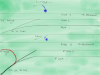
See attached image for my diagram for the junction.

The St Ives branch was built with a junction, only facing Penzance, meaning trains cannot run directly from Exeter/Plymouth, or even London to St Ives (although, a 15x train from Paddington to St Ives... No thanks!). The reason for the junction being built like this, and remaining like this, has always puzzled me, so please enlighten me, on why it was never built facing London...

While I am aware, that new projects in the land, where this junction could be built, would prevent this from being built in a real world, I would like to share some work I did, which shows how the junction could be implemented, if land access allowed it... This would allow through trains from Devon, and upper Cornwall to terminate at St Ives...

Another barrier would be the clearance for the branch, but given the potential cash pot this route would have in the summer, I am certain it would be worth the cash for expanding St Ives station, to have 2 platforms. as well as building a passing loop near Leland Saltings...

Either way, this couldn't happen in a real world scenario, given the costs, and current barriers... Enjoy the diagram I made on an HST last week though - Excuse the bad writing, I'm not good with the Apple Pencil ;)

Any questions? Just ask, or email gmoore5@outlook.com.
 

Attachments

  • Screen Shot 2018-06-05 at 20.19.17.png
    Screen Shot 2018-06-05 at 20.19.17.png
    916.9 KB · Views: 327
Sponsor Post - registered members do not see these adverts; click here to register, or click here to log in
R

RailUK Forums

Ianno87

Veteran Member
Joined
3 May 2015
Messages
15,214
The main purpose of the branch is to shuttle as many people as possible to/from St Ives - a town with an inadequate road/street network to deal with the visitors it receives if they all came by car.

Keeping the branch self-contained keeps it reliable and naximises the frequency it can run at.
 

DenmarkRail

Member
Joined
13 Jun 2016
Messages
666
The main purpose of the branch is to shuttle as many people as possible to/from St Ives - a town with an inadequate road/street network to deal with the visitors it receives if they all came by car.

Keeping the branch self-contained keeps it reliable and naximises the frequency it can run at.

It isn't really self contained now, given it is mainline connected (just the wrong way round)...?
 

Busaholic

Veteran Member
Joined
7 Jun 2014
Messages
14,671
A huge car park is currently under construction next to St Erth station, to be renamed St Erth Interchange, under the aegis of Cornwall Council. When first proposed a few years ago the interchange was announced as being a park and ride site for visitors to Penzance, which I found a mighty strange concept, and had a satirical letter published in the local newspaper to that effect, which produced no response whatever, or further explanation of the scheme. Since then the project appears to have morphed into a park and ride for St Ives, though no additional 'rides' have been announced to get people to St Ives beyond the existing crowded branch line trains and the half hourly A17 bus originating in Penzance (plus hourly summer open top service). It strikes me as being ill thought-out unless extra resources are going to be directed into the public transport side of it.
 

DenmarkRail

Member
Joined
13 Jun 2016
Messages
666
A huge car park is currently under construction next to St Erth station, to be renamed St Erth Interchange, under the aegis of Cornwall Council. When first proposed a few years ago the interchange was announced as being a park and ride site for visitors to Penzance, which I found a mighty strange concept, and had a satirical letter published in the local newspaper to that effect, which produced no response whatever, or further explanation of the scheme. Since then the project appears to have morphed into a park and ride for St Ives, though no additional 'rides' have been announced to get people to St Ives beyond the existing crowded branch line trains and the half hourly A17 bus originating in Penzance (plus hourly summer open top service). It strikes me as being ill thought-out unless extra resources are going to be directed into the public transport side of it.

It's being renamed to St Erth Interchange??!! Argh!!! -> I hate the idea of St Erth station... It is in the middle of no where, and if the junction was reversed from building, the branch could have started in Hayle, and stopped at St Erth station (built in a different position!)... Oh well... There isn't even anything useful in St Erth compared to Hayle
 

Ianno87

Veteran Member
Joined
3 May 2015
Messages
15,214
It isn't really self contained now, given it is mainline connected (just the wrong way round)...?

It is self contained in the sense that the unit can shuttle back and forth all day using the bay at St Erth and never have to run onto/interact with/get delayed by anything on the main line.
 

DenmarkRail

Member
Joined
13 Jun 2016
Messages
666
It is self contained in the sense that the unit can shuttle back and forth all day using the bay at St Erth and never have to run onto/interact with/get delayed by anything on the main line.

I haven't suggested moving the branch... I suggested building a junction to allow longer distance trains to access the branch, without needing to reverse in SER, or PNZ.
 

DarloRich

Veteran Member
Joined
12 Oct 2010
Messages
32,916
Location
Fenny Stratford
I haven't suggested moving the branch... I suggested building a junction to allow longer distance trains to access the branch, without needing to reverse in SER, or PNZ.

Why? What is the point? What is the return for the taxpayer on the investment? What benefit does this deliver?
 

Cowley

Forum Staff
Staff Member
Global Moderator
Joined
15 Apr 2016
Messages
18,919
Location
Devon
Also it actually seems to work quite well as things are. It’s a reasonably frequent shuttle that does a good job on a fairly short branch which means that if you miss a train then you don’t have to wait too long for another...
Sorry DenmarkRail but I don’t think it’d be worth it really as it’s mainly supporting a service to get tourists into the town on busy days and not high flying executives trying to get to the metropolis of Truro etc.
 

Warwick

Member
Joined
10 Apr 2018
Messages
353
Location
On the naughty step again.
The platform at St. Ives can only hold about five coaches nowadays since the entire station was shunted towards St. Erth to enlarge the car park so there's little point in reversing the junction layout at St. Erth. What could be done is to provide a facing crossover from the down line to the up line on the approach to St. Erth to enable a down train to give a cross platform change into the branch train - providing of course there's not an up train on the way. The up platform is already signalled for trains starting away in the down direction. No doubt mention of that to Network Rail would produce a sucking of air through the teeth and a figure of at least £5 million.
"Denmark Rail" suggests that the station is in the middle of nowhere. For many many stations it was ever thus. The (now closed) station at Marazion wasn't really convenient for Marazion - hence it's closure. I wouldn't recommend the walk from Yeovil Junction station to Yeovil or Tring station to Tring in the rain either. Leighton Buzzard and Hemel Hempstead aren't even in the towns that they purport to serve.
 

Llanigraham

On Moderation
Joined
23 Mar 2013
Messages
6,488
Location
Powys
It isn't really self contained now, given it is mainline connected (just the wrong way round)...?

I suggest that you know little about this branch.
In railway terms it is self contained, in that movement along the branch does not affect the main line in any way.
 

DenmarkRail

Member
Joined
13 Jun 2016
Messages
666
Just out of curiosity, does anyone know why it wasn’t built with a junction towards London in the first place?
 

Llanigraham

On Moderation
Joined
23 Mar 2013
Messages
6,488
Location
Powys
It's being renamed to St Erth Interchange??!! Argh!!! -> I hate the idea of St Erth station... It is in the middle of no where, and if the junction was reversed from building, the branch could have started in Hayle, and stopped at St Erth station (built in a different position!)... Oh well... There isn't even anything useful in St Erth compared to Hayle

And do you know why the name is being changed?
It is NOT in the middle of nowhere. It is in St Erth, near a major road junction, near many villages whose transport uses the station as an interchange, (my daughter being one of tose users), and is a surprisingly usy station.
I also suggest that you have a good look at a map of the area to see exactly how you could possibly engineer this (preposterous) proposal. Your "drawing" shows an impossibly sharp bend for a start!
 

takno

Verified Rep - Traksy
Joined
9 Jul 2016
Messages
6,590
Just out of curiosity, does anyone know why it wasn’t built with a junction towards London in the first place?
Depends on what traffic it was built to serve. It's quite probable in 1877 that the overwhelming majority of the traffic was locals trying to get to the regional centre in Penzance rather than the rather exotic tourist trade from further north.
 

D6975

Established Member
Joined
26 Nov 2009
Messages
3,050
Location
Bristol
Just out of curiosity, does anyone know why it wasn’t built with a junction towards London in the first place?

Apart from reasons already mentioned, it's also the best layout to handle a train from the east splitting with portions for PNZ and St Ives
 

jj1314

Member
Joined
15 Feb 2011
Messages
91
I actually used to 'commute' (if I dare call it that!) between Penzance and St Ives most summers for a few years.

I think the interchange may actually be a useful asset once the upgrade to 2tph commences between Penzance and Plymouth. The A30 heading west between St Erth and Penzance often snarls up between Easter and October, causing horrible tailbacks through Crowlas.

It'd be even more useful if the powers-that-be could build a station somewhere between Long Rock and Marazion, though... ;)
 

HSTEd

Veteran Member
Joined
14 Jul 2011
Messages
20,321
A passing loop to enable a more intense service would be a far more useful addition to the branch if I'm honest.

Short of a south west England HSL, there is little demand for direct trains to St Ives from the East.
 

jj1314

Member
Joined
15 Feb 2011
Messages
91
A passing loop to enable a more intense service would be a far more useful addition to the branch if I'm honest.

Short of a south west England HSL, there is little demand for direct trains to St Ives from the East.

I agree. I think the line could lend itself well to tram-trains with a short loop installed on the ascent heading northwest along the edge of Lelant golf course.
 

Sleeper

Member
Joined
6 Jan 2016
Messages
65
Location
London
Why was it built this way round? Well it may be down to local topography.

But in the days of loco haulage, train formations were sometimes split along the route, with the “main” portion going through to the main terminus (e.g. Penzance) and “through carriages” being taken off to serve the branch (e.g. St Ives). In the Up direction, the main and branch portions would be combined.

ISTR that the Atlantic Coast Express had no fewer than eight portions!

I’m not old enough to have studied such operations at first hand. But it occurs to me, having noted that many branch junctions were arranged like St. Erth, that it could have been more convenient for the operation of through carriages to/from the branch, because it can make it easier and/or quicker to remove/attach the branch coaches.

On a Down train, if the branch coaches are marshalled at the rear of the main train, then all that needs be done is for the branch engine to follow the main train into the Down platform, couple up, uncouple the branch coaches from the main train, and both parts of the train can proceed straight away to their destinations. Very quick and easy.

If the junction were the other way around, the main train would have to depart before the branch engine could even approach the branch coaches, thus introducing delay.

In the Up direction, an engine (with its through carriages) from the branch is at the right end of its train simply to reverse and push the coaches onto the back of the through train.

If the junction were the other way round, it would be much more awkward to attach the branch coaches. Options would include (a) remove branch engine and have the main loco push back its train onto the branch coaches, (b) run the branch engine round its coaches and push them onto the main train, (c) remove branch engine and use another engine to push the branch carriages onto the main train. All are more complicated and time-consuming.

Can anyone confirm this theory?
 

mp01

Member
Joined
20 Jun 2010
Messages
136
I've only used the line once, but the idea of a passing loop to increase frequency seems to be very sensible.

Out of interest, why is there not an entirely consistent clockfacea timetable on the route, ie do some trains only go as far as Lelant Saltings?
 

Ianno87

Veteran Member
Joined
3 May 2015
Messages
15,214
I've only used the line once, but the idea of a passing loop to increase frequency seems to be very sensible.

Out of interest, why is there not an entirely consistent clockfacea timetable on the route, ie do some trains only go as far as Lelant Saltings?

It's because the timetable is so tight to get an half-hourly service. To meet demand, the morning trains do things like call Lelant Saltings on the way to St Ives, then non-stop on the way back. In the afternoon the entire pattern reverses to get everyone home again. Stopping both ways takes too long and breaks the half hourly service.

Just out of curiosity, does anyone know why it wasn’t built with a junction towards London in the first place?

Depends on what traffic it was built to serve. It's quite probable in 1877 that the overwhelming majority of the traffic was locals trying to get to the regional centre in Penzance rather than the rather exotic tourist trade from further north.

Remembering that it was (probably) the railway that created the tourist traffic from the east in thr first place! So when built, there was no tourist demand to cater for, as the railway hadn't stimulated it yet!
 

30907

Veteran Member
Joined
30 Sep 2012
Messages
21,958
Location
Airedale
Depends on what traffic it was built to serve. It's quite probable in 1877 that the overwhelming majority of the traffic was locals trying to get to the regional centre in Penzance rather than the rather exotic tourist trade from further north.

The more prosaic answer will be that the route of the branch was the most economical possible, and there was no economic justification for spending extra on a branch line. It's nothing unusual - going Eastwards, Helston, Kingsbridge, Sidmouth, Yeovil Town, Bridport...
 

53703

Member
Joined
17 Jul 2017
Messages
130
Could all of the platforms on the branch be extended to accommodate longer trains?
 

53703

Member
Joined
17 Jul 2017
Messages
130
Think they all could apart from St Erth

Unless St Ives trains used platform 2 but that would be subject to available paths, etc. Think trying to accommodate longer trains (3 x 150s and other combinations of units) would be more economical than trying to put in passing loops.
 

DenmarkRail

Member
Joined
13 Jun 2016
Messages
666
Unless St Ives trains used platform 2 but that would be subject to available paths, etc. Think trying to accommodate longer trains (3 x 150s and other combinations of units) would be more economical than trying to put in passing loops.

Also the expense of doing this at St Ives would be high... They'd have to dig into the car park
 
Status
Not open for further replies.

Top