• Our new ticketing site is now live! Using either this or the original site (both powered by TrainSplit) helps support the running of the forum with every ticket purchase! Find out more and ask any questions/give us feedback in this thread!

South Wales 'Metro' updates

Del1977

Member
Joined
16 Jan 2018
Messages
224
Location
Canada Water
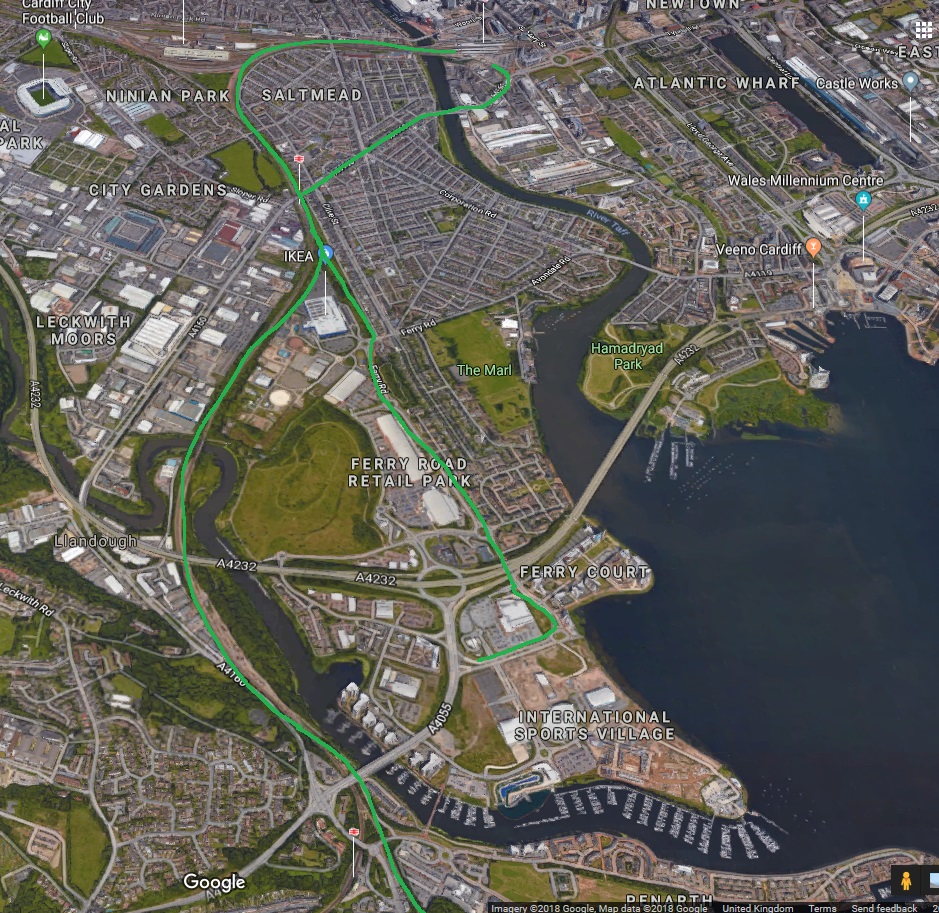
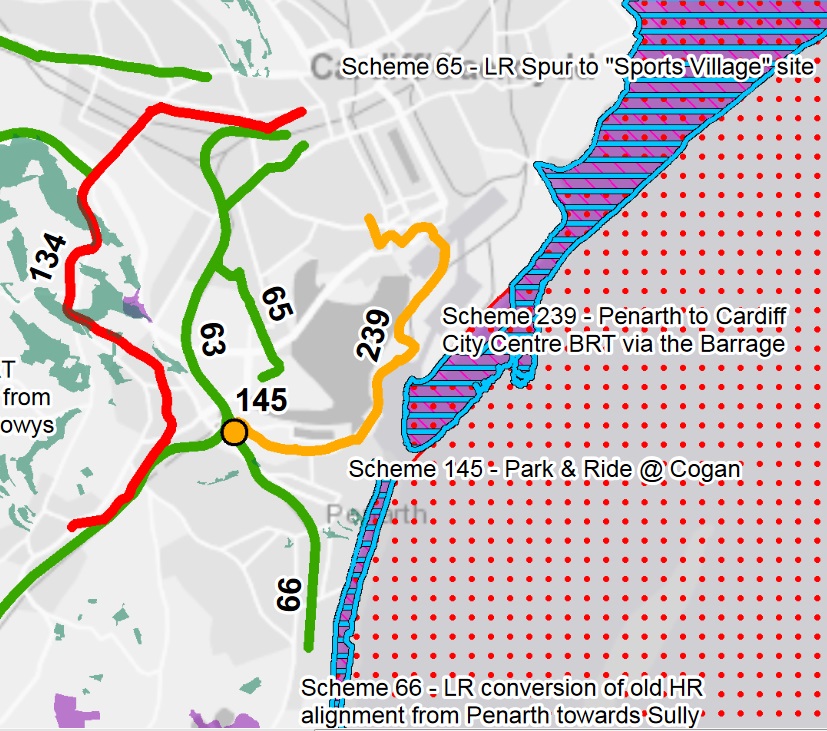
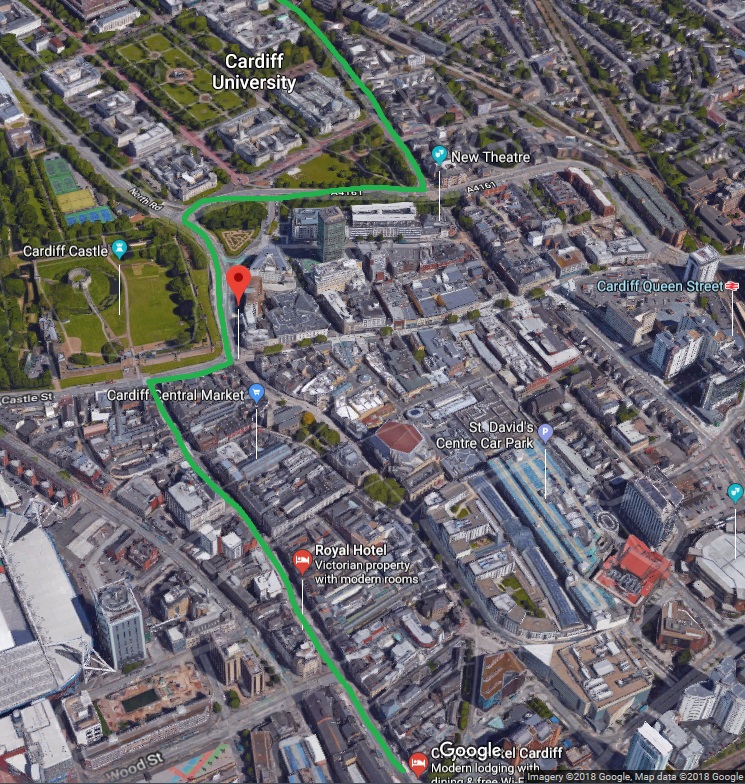
Here's Routes 217 and 218 which appeared in TfWs report for potential light rail running.


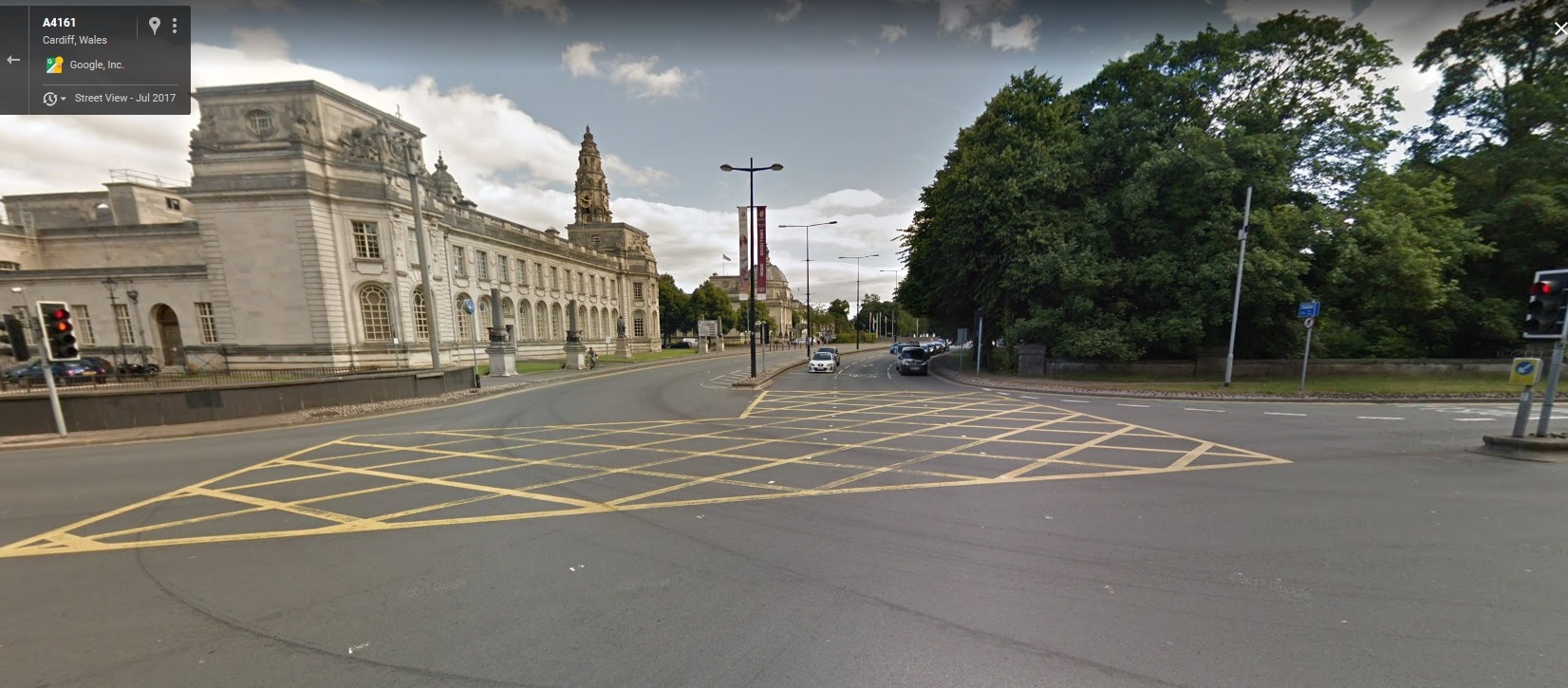
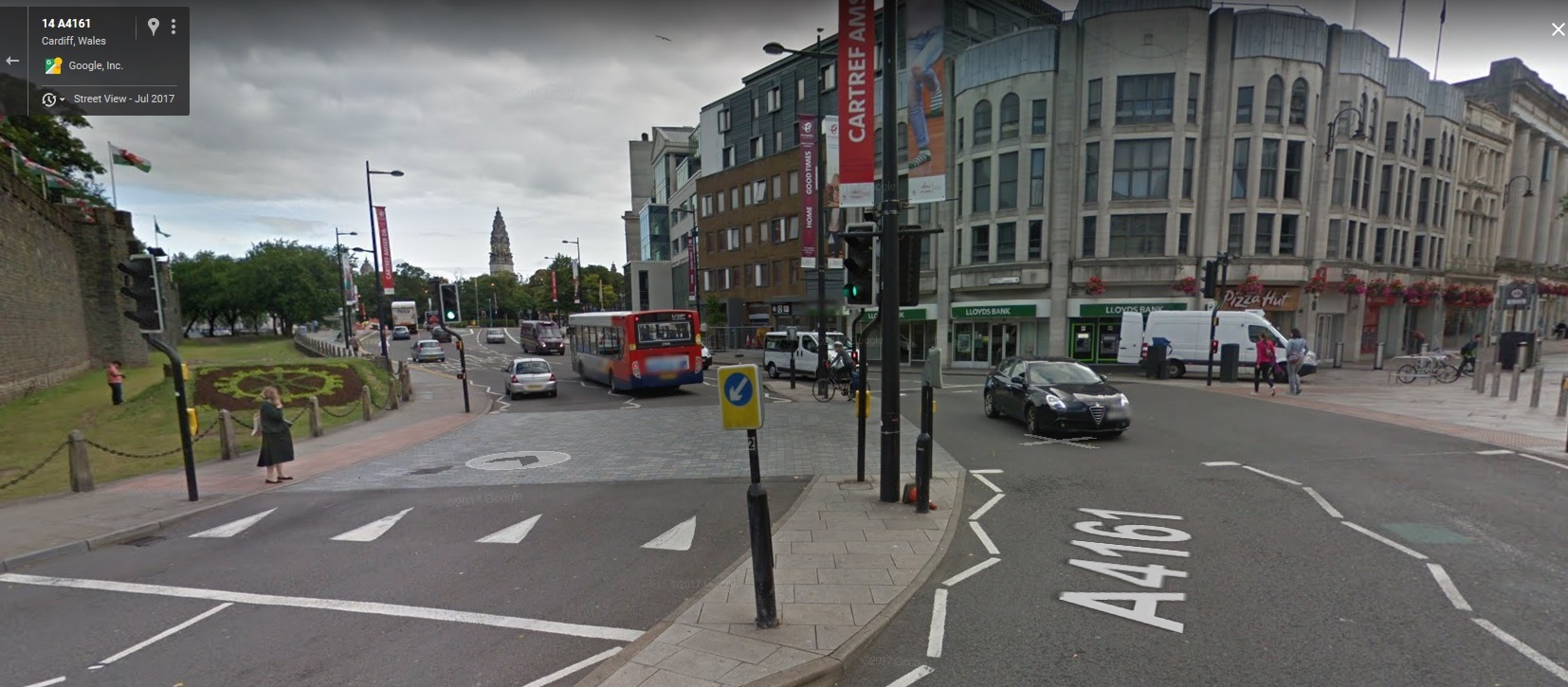
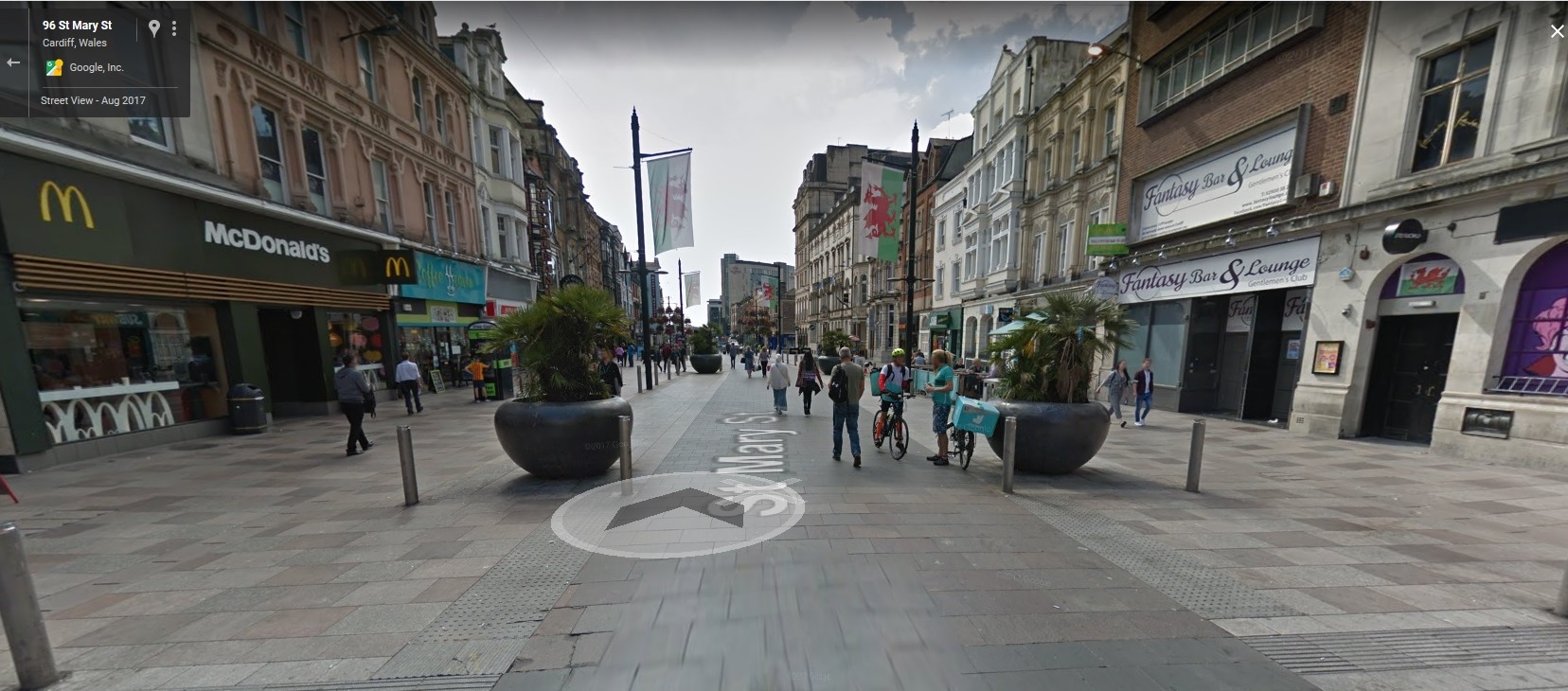
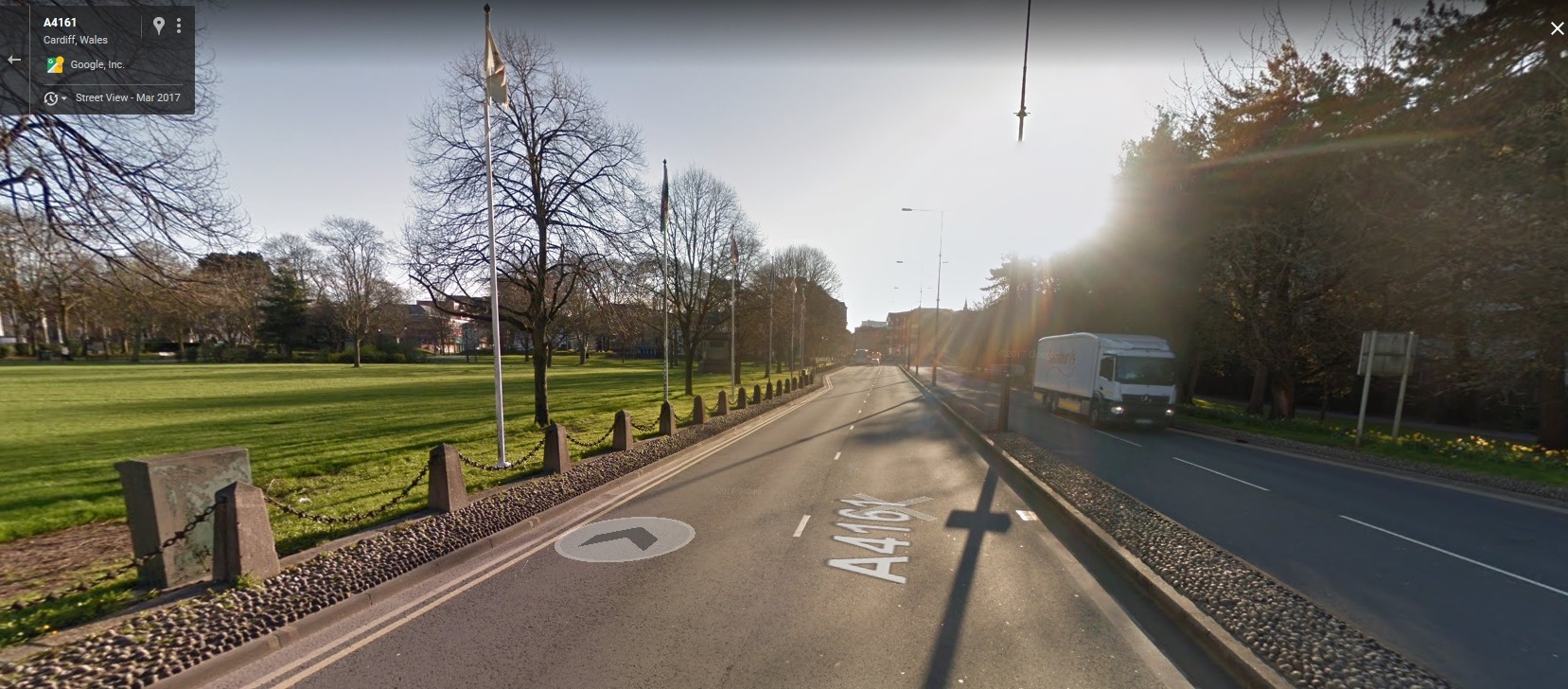
And here's some screenshots of the current roads so you can see the layouts. Note that St Mary's Street is now mainly pedestrianised so this would presumably have to be amended and the entry to St Mary's Street by the castle - High Street - is narrower.


I'll let you consider whether these roads are appropriate for trams or not.
 
Sponsor Post - registered members do not see these adverts; click here to register, or click here to log in
R

RailUK Forums

gareth950

Member
Joined
3 Nov 2013
Messages
1,009
Any street looks suitable for trams with pictures taken at 9am on a Sunday morning with no traffic around.
 

Gareth Marston

Established Member
Joined
26 Jun 2010
Messages
6,231
Location
Newtown Montgomeryshire
Here's Routes 217 and 218 which appeared in TfWs report for potential light rail running.


And here's some screenshots of the current roads so you can see the layouts. Note that St Mary's Street is now mainly pedestrianised so this would presumably have to be amended and the entry to St Mary's Street by the castle - High Street - is narrower.


I'll let you consider whether these roads are appropriate for trams or not.


These roads do not look like this when their full of traffic - Google Street View take no account of peak traffic its bumper to bumper down that route until you get on to pedestrianized St Marys.......
Of course St Marys is the main entertainment/ party street full of restaurants,Cafes, bars, pubs night clubs etc. The main reason it got pedestrianized was to cut down on accidents with revelers and traffic......
These schemes are of course not funded just lines on a map.
Presumably the tram comes on street somewhere to the north of the screen shot out of view at or near Cathays station. Cathays to Cardiff Central takes 6 minutes by Heavy Rail that looks like 10-12 minutes at best assuming you don't get stuck in traffic and Becky's Hen party are not sat drunk on the tracks down St Marys.
 

Del1977

Member
Joined
16 Jan 2018
Messages
224
Location
Canada Water
Agree on time pictures taken - clearly not a busy time of the day.

But I thought it would be helpful for those people who are not familiar with the city, but are browsing the thread, to see an example of one of the schemes along with a few Street View images of the road width / current layout (pedestrianisation etc). That way they can reach their own conclusions rather than relying on those vehemently for or against trams.
 

Llanigraham

On Moderation
Joined
23 Mar 2013
Messages
6,488
Location
Powys
They don't look any less appropriate than roads used in e.g. Manchester.

And photos lie!
Please accept that some of us know Cardiff a lot better than some on here!

From my own experience you can walk the route from the Corbett Rd/Colum Rd/Park Pl junction to Cardiff Central quicker than the traffic on most days.
And frankly trying to put a tram route down Colum Rd and Park Pl is in crowd cuckoo land!
https://www.google.co.uk/maps/place...99e7122ca!8m2!3d51.4866271!4d-3.1788641?hl=en

Colum Rd looking out of City. Most of the housing is multi-occupancy student housing
https://www.google.co.uk/maps/@51.4...Cp0Vl7gaR6E8nyFUKk6A!2e0!7i13312!8i6656?hl=en

Park Pl looking into the City, University buildings both sides of the road
https://www.google.co.uk/maps/@51.4...74aXRWexHqi1gogcfiEg!2e0!7i13312!8i6656?hl=en
https://www.google.co.uk/maps/@51.4...ExFXzIVTyhDIRs6AWp0A!2e0!7i13312!8i6656?hl=en
https://www.google.co.uk/maps/@51.4...5VN3oU59Gs8XzbzzPcXQ!2e0!7i13312!8i6656?hl=en
 

Gareth Marston

Established Member
Joined
26 Jun 2010
Messages
6,231
Location
Newtown Montgomeryshire
The link is to road closures that happened in Cardiff last June when the Champions League final was played at the Principality Stadium.

http://contentfaw.aws-skybrid.co.uk...owhow/travel-transport-changes/road-closures/
Map006_Road_Closure_Map_A3_8.jpg


Question - will Light Rail be allowed along pedestrian only areas? and before the Light Rail enthusiasts answer yes is your answer based on actually asking South Wales Police?
 

Envoy

Established Member
Joined
29 Aug 2014
Messages
3,142
Click this link for a map of central Cardiff showing live traffic flows - at the time you click it. (The cold weather, at present, is probably reducing the amount of traffic). I note that buses are constantly overtaking each other as they have various loadings. Any tracked transport, will of course have to stack up - one behind the other. Also note that streets in central Cardiff are closed to all traffic when major events take place at the Principality stadium. (Buses offer greater flexibility but have the downside of producing fumes).
https://www.google.co.uk/maps/@51.4779351,-3.1779038,15.02z/data=!5m1!1e1
 

Bletchleyite

Veteran Member
Joined
20 Oct 2014
Messages
113,534
Location
"Marston Vale mafia"
Question - will Light Rail be allowed along pedestrian only areas? and before the Light Rail enthusiasts answer yes is your answer based on actually asking South Wales Police?

The Police enforce the law, they do not make it. The decision on whether to effectively depedestrianise[1] is one for the legislators, they would be changing the legal status of those areas. The Police in this case can hold an opinion but that opinion need not be respected by those making the decisions.

But if you want examples, Metrolink's city centre sections run very extensively in pedestrianised areas. The movement of trams is slow and predictable, and the kinetic envelope (the bit to avoid being in) is easy to mark out on the floor so they cause very little in the way of problems.

[1] Not to let the cars back in, but to create what is effectively a tram only road in a legal sense.
 

Bletchleyite

Veteran Member
Joined
20 Oct 2014
Messages
113,534
Location
"Marston Vale mafia"
Click this link for a map of central Cardiff showing live traffic flows - at the time you click it. (The cold weather, at present, is probably reducing the amount of traffic). I note that buses are constantly overtaking each other as they have various loadings. Any tracked transport, will of course have to stack up - one behind the other. Also note that streets in central Cardiff are closed to all traffic when major events take place at the Principality stadium. (Buses offer greater flexibility but have the downside of producing fumes).
https://www.google.co.uk/maps/@51.4779351,-3.1779038,15.02z/data=!5m1!1e1

Trams do not "bunch" in the way buses do because boarding and alighting is much quicker (multiple doors and all revenue protection done once onboard rather than on boarding) and stops are less frequent.

Buses can also bunch much less if you use articulated buses with three sets of doors and open boarding (as what that gives you is effectively a tram on rubber tyres with a diesel engine), but that seems to be unpopular in the UK, with concerns over revenue loss outweighing operational efficiency in the eyes of the bus companies.
 

WelshBluebird

Established Member
Joined
14 Jan 2010
Messages
5,602
The Police enforce the law, they do not make it. The decision on whether to effectively depedestrianise[1] is one for the legislators, they would be changing the legal status of those areas. The Police in this case can hold an opinion but that opinion need not be respected by those making the decisions.

We are not just talking about changing legal status of areas. We are also talking about the operations that are in place on event days in Cardiff where, I believe, the police and the council jointly decide which streets are closed to traffic. The situation in Cardiff on event days is hugely different to the general idea of pedestrianised areas or even to event days elsewhere in the country.

Trams do not "bunch" in the way buses do because boarding and alighting is much quicker (multiple doors and all revenue protection done once onboard rather than on boarding) and stops are less frequent.

But of course they would either get stuck in heavy rush hour traffic or cause existing rush hour traffic to become worse (as to avoid getting stuck, trams would have to be given right of way).
 
Last edited:

B&I

Established Member
Joined
1 Dec 2017
Messages
2,484
The Police enforce the law, they do not make it. The decision on whether to effectively depedestrianise[1] is one for the legislators, they would be changing the legal status of those areas. The Police in this case can hold an opinion but that opinion need not be respected by those making the decisions.

But if you want examples, Metrolink's city centre sections run very extensively in pedestrianised areas. The movement of trams is slow and predictable, and the kinetic envelope (the bit to avoid being in) is easy to mark out on the floor so they cause very little in the way of problems.

[1] Not to let the cars back in, but to create what is effectively a tram only road in a legal sense.


Is this the best example? The pedestrianised sections (in central Manchester at least) are limited to about 100 yds on Market St, and slightly more around the edge of Piccadilly Gardens. A shorter distance, and through broader spaces, than would be needed in Cardiff.
 

Llanigraham

On Moderation
Joined
23 Mar 2013
Messages
6,488
Location
Powys
The Police enforce the law, they do not make it. The decision on whether to effectively depedestrianise[1] is one for the legislators, they would be changing the legal status of those areas. The Police in this case can hold an opinion but that opinion need not be respected by those making the decisions.

But if you want examples, Metrolink's city centre sections run very extensively in pedestrianised areas. The movement of trams is slow and predictable, and the kinetic envelope (the bit to avoid being in) is easy to mark out on the floor so they cause very little in the way of problems.

[1] Not to let the cars back in, but to create what is effectively a tram only road in a legal sense.

And you have totally ignored Gareth's question.
Do you think that the Police would allow trams to use the streets that are closed for Match days and other events?

Have you ever been to Cardiff on a Match Day?
https://www.google.co.uk/maps/@51.4...5VN3oU59Gs8XzbzzPcXQ!2e0!7i13312!8i6656?hl=en
https://goo.gl/images/q8r6hu
 

Gareth Marston

Established Member
Joined
26 Jun 2010
Messages
6,231
Location
Newtown Montgomeryshire
The Police enforce the law, they do not make it. The decision on whether to effectively depedestrianise[1] is one for the legislators, they would be changing the legal status of those areas. The Police in this case can hold an opinion but that opinion need not be respected by those making the decisions.

But if you want examples, Metrolink's city centre sections run very extensively in pedestrianised areas. The movement of trams is slow and predictable, and the kinetic envelope (the bit to avoid being in) is easy to mark out on the floor so they cause very little in the way of problems.

[1] Not to let the cars back in, but to create what is effectively a tram only road in a legal sense.
"The movement of trams is slow and predicable" - exactly my point 6 minutes by heVy rail Cathays to Central via Queen St all within 10 minutes walk of anywhere in Central Cardiff. On street trams from Cathays to Central? Double or triple the hR time for no real benefit.
 

Gareth Marston

Established Member
Joined
26 Jun 2010
Messages
6,231
Location
Newtown Montgomeryshire
The Police enforce the law, they do not make it. The decision on whether to effectively depedestrianise[1] is one for the legislators, they would be changing the legal status of those areas. The Police in this case can hold an opinion but that opinion need not be respected by those making the decisions.

But if you want examples, Metrolink's city centre sections run very extensively in pedestrianised areas. The movement of trams is slow and predictable, and the kinetic envelope (the bit to avoid being in) is easy to mark out on the floor so they cause very little in the way of problems.

[1] Not to let the cars back in, but to create what is effectively a tram only road in a legal sense.
Your failing to appreciate Cardiffs almost unique world status in having a major sporting stadium right in its fairly compact centre. Road closures are part and parcel of city life associated with the many sporting events that take place their. Trams will present huge problems as they will mix with the folk who think they are in a traffic free zone.
You've obviously never been down St Mary's on a Saturday night, running a tram down it is a receive for disaster.
 

Llanigraham

On Moderation
Joined
23 Mar 2013
Messages
6,488
Location
Powys
We are not just talking about changing legal status of areas. We are also talking about the operations that are in place on event days in Cardiff where, I believe, the police and the council jointly decide which streets are closed to traffic. The situation in Cardiff on event days is hugely different to the general idea of pedestrianised areas or even to event days elsewhere in the country.

Even more than that. Last one I was involved on included:
City Council
Police
Fire
Ambulance
St John
National security services
Network Rail
ATW
Event orgnisers
HSE
 

Del1977

Member
Joined
16 Jan 2018
Messages
224
Location
Canada Water
I assume you created that? Are you able to do the same for the Penarth branch through Grangetown as I can't quite work out what TfW are proposing.

Yup that is my artwork. But it's pretty clear from their published plans as to which route they were intending as they are all existing roads - and many of them pretty wide thoroughfares.


For Grangetown, it's much less obvious what they plan, as the published map with their routes is the whole of South Glamorgan, but I'll see if I can deduce.
 

Del1977

Member
Joined
16 Jan 2018
Messages
224
Location
Canada Water

It's much less clear what their future plans are for Penarth / Grangetown. They seem to show two spurs from Cardiff Central. One from the back of Central, where we know from other published plans that they'll want some sort of tram interchange.

But then there's a route on their plan which seems to fly over Canton depot and ends up back on the existing Vale line. I don't know if that's supposed to just be the existing line, and has nothing to do with the light rail conversion, but if it is, it doesn't seem to follow the existing alignment.

Then there looks to be two branches. One goes to Cogan / Penarth via the existing alignment. The second goes to the "Sports Village."


Maybe someone else can make better sense of the published plan, as I don't quite see what they are aiming for with this.


NotATrainspott

Established Member
Joined
2 Feb 2013
Messages
3,304
Are you going to come and personally pay for all of this magic money tree investment outside of the 'Core Valley lines' NotATrainspott'? Because no-one else is. Look at the procurement documents released today. There is nothing specified outside of the 'Core Valley lines'. Zero.

I did look at these procurement documents. All I see is the most generic details about 'capital works to implement the South Wales Metro'. That could mean pretty much anything.

Quite. But by your own admission, Manchester is now lumbered with a transport system designed when public transport use in the city (and arguably, the city as a whole) was at its nadir, not one which reflects current demands. This wouldn't be a problem if TfGM had the honesty to accept that something different is needed now, and the money to do something about it. But so reluctant are they to admit that they have been lumbered with a second rate transport system, their only solution is to ruin yet more of the heavy rail network by pointless conversion, rather than provide what would actually work best. The parallels with South Wales are obvious.

No. Metrolink was designed to handle low passenger numbers more efficiently than the HR system it replaced. It was also designed to handle passenger growth for the next few decades. It has done that job very well. As demand has increased on the Bury and Altrincham lines, it has been met with increased capacity. The system has more capacity to give, but it will naturally reach its limit. That is when they can start to think about ways to build on and improve it. A heavier metro takeover would be little more than a 3CC built in a tunnel and some platform extensions. You've ignored my point about 2CC - was this an admission of defeat? Following your logic, it must have been, because they were changing the nature of the network.

As for your other points, are you saying that every tunneled metro system in the world except London's is stagnating? If so, why are so many other countries building them? Do we in Britain know something they don't, in our infinite light rail-based wisdom?

No. British cities had some of the worst de-urbanisation problems in Europe after WW2. Other cities which kept their urban high density had every reason to invest in metro systems. We only started Metrolink after medium-sized cities in Europe found out that subways weren't a good use of money. After WW2, many cities spent huge amounts of money ripping out trams in their city centres and replacing them with pre-metros because they thought they wouldn't mix with cars. They found out that street-running systems could be just as efficient at getting people into the city centre, at a fraction of the cost.

The only other lines vaguely comparable to tunneled metro in Britain are Merseyrail, T&W Metro and the Glasgow suburban networks. I don't know about the other two, but Merseyrail doesn't seem to me to be stagnating, and new trains are being procured on the assumption of 40% more passengers by 2028. If Merseyrail is stagnating, might that be something to do with there having been no system expansion in 23 years, and Liverpool's anaemic economic performance since 2008?

Merseyrail stagnated because the city did, and the city did because of a variety of factors. In its stagnation, the transport system couldn't efficiently handle lower demand, so it stagnated further. Merseyrail was built for the time when urban Liverpool was full of people working and living in close proximity. When the car and slum clearance came around, that was no longer the case. Passenger numbers went down, revenues went down, but costs could not. The network started losing more and more money, making it economically necessary to cut services further.

Whatever the position, I'm just glad that no-one was around in the early 70s to suggest that Liverpool's heavy rail lines should have been ruined with trams. O often wonder whether the disdain some people express towards Merseyrail stems from the fact that it's completion, at the time the Picc-Vic link was cancelled, was probably the last time a major public spending decision was made in favour of Liverpool rather than Manchester.

I don't have any disdain for Liverpool. Why do so many arguments on this site boil down to anti-Liverpudlian sentiment?

As for the notion that Metrolink has played any serious role in Manchester's growth in recent years, I think that might be a bit more down to colossal public and private sector investment, in particular concentration of public sector jobs (Manchester being the only place outside London to have increased public sector employment since 2010). Still, 10 out of 10 for chutzpah.

MediaCity created a need for transport, but MediaCity happened partly because that transport could be provided. Could MediaCity have happened in Liverpool? Almost certainly not. Changes which are trivial for Metrolink would be a massive undertaking when you're forced to use only heavy rail technology. How much did it cost to add on the MediaCity branch? A few dozen million. How much would a similarly simple Merseyrail branch have cost? Hundreds of millions, and for no additional benefit.

Your talk of misplaced pride is amusing. Which is worse, taking pride in an expensive system which transports a large number of people quickly and comfortably, or taking pride in a system whose chief attraction is, by your own admission, cheapness, just because It's the only system the short-sighted penny-pinchers who run Britain would pay for?

If cheapness means a network can be modified to suit the needs of a city more easily, then it is no bad thing. If Metrolink were as bad as you say, why don't normal people think it? If they think Metrolink is a waste of space and that we should bring back HR everywhere, why are they not demanding it? Why did the public not revolt when the initial conversion was proposed and then performed?

And again!
Have you actually looked at a map of Cardiff? If so can you please tell me exactly what roads in the City Centre you think are suitable for joint use and how there will NOT be an increase in congestion? How do you intend to cross the river?
And why are you still mentioning Manchester? It has no relevance!

You know, I was actually referring to the idea that the tram would take forever to get around these new western suburb developments. Out in the suburbs street running normally means less street running than in city centres, because it's easier to separate trams from other road users. However, the use of street running means you don't have to build expensive tunnels or viaducts. Look at what the Toton extension of the NET looks like. It serves those western suburbs of Nottingham very well without being as slow as traditional road traffic.

Your failing to appreciate Cardiffs almost unique world status in having a major sporting stadium right in its fairly compact centre. Road closures are part and parcel of city life associated with the many sporting events that take place their. Trams will present huge problems as they will mix with the folk who think they are in a traffic free zone.
You've obviously never been down St Mary's on a Saturday night, running a tram down it is a receive for disaster.

Ah, I see. The tram would appear overnight without warning. Innocent matchgoers would have no way of knowing they're travelling along a tram route so will be knocked down en masse. The Police would have no input on street running designs or protocols and would be helpless to stop it all.

Trams have a much smaller and more predictable kinematic envelope than normal road vehicles, due to the peculiar consequences of being restricted to tracks. They can also shift huge volumes of people, on a per-vehicle level but also on a system level. It would be far, far more efficient for trams to carry matchgoers into the city centre than buses. If street running near the stadium happens, it would be designed with reference to match days. If pedestrian numbers would be too high for it to be safe for the trams to run, then the system would have to be designed to cope. Edinburgh's system is designed for the few times a year when Princes Street is shut because it becomes a static event venue. Otherwise, it provides an invaluable service moving huge volumes of people to and from Murrayfield.

 

Llanigraham

On Moderation
Joined
23 Mar 2013
Messages
6,488
Location
Powys
You know, I was actually referring to the idea that the tram would take forever to get around these new western suburb developments. Out in the suburbs street running normally means less street running than in city centres, because it's easier to separate trams from other road users. However, the use of street running means you don't have to build expensive tunnels or viaducts. Look at what the Toton extension of the NET looks like. It serves those western suburbs of Nottingham very well without being as slow as traditional road traffic.
Have you actually looked at a map of Cardiff?
Where on earth are you going to put trams in Cardiff City Centre?
And again, what has another city got to do with Cardiff? Why are you comparing chalk with cheese?

Ah, I see. The tram would appear overnight without warning. Innocent matchgoers would have no way of knowing they're travelling along a tram route so will be knocked down en masse. The Police would have no input on street running designs or protocols and would be helpless to stop it all.
Comments as above are frankly quite unhelpful and do your "arguement" no good.
 

Bletchleyite

Veteran Member
Joined
20 Oct 2014
Messages
113,534
Location
"Marston Vale mafia"
I'm genuinely not convinced anyone would be that bothered if Merseyrail had been a tram system rather than a heavy rail metro. Indeed, some people may well have preferred it running straight down Lord St in front of the shops they wanted, and some people think the slightly dank (until the latest refurb, but still a bit so) underground stations feel a bit unsafe, particularly at night, and might feel better being able to wait on a possibly busier street or even inside the pub until they see the tram approach, say.

Metrolink and Merseyrail are two solutions to the same problem. I think I'd be happy with either in either city, to be honest. It's not out of the question that both cities could end up with both, of course.

Yes, early Metrolink was done on the cheap and was very poor compared with Merseyrail, but it's now unrecognisable from what it was when it first opened.
 

gareth950

Member
Joined
3 Nov 2013
Messages
1,009
And photos lie!
Please accept that some of us know Cardiff a lot better than some on here!

From my own experience you can walk the route from the Corbett Rd/Colum Rd/Park Pl junction to Cardiff Central quicker than the traffic on most days.
And frankly trying to put a tram route down Colum Rd and Park Pl is in crowd cuckoo land!
https://www.google.co.uk/maps/place...99e7122ca!8m2!3d51.4866271!4d-3.1788641?hl=en

Colum Rd looking out of City. Most of the housing is multi-occupancy student housing
https://www.google.co.uk/maps/@51.4...Cp0Vl7gaR6E8nyFUKk6A!2e0!7i13312!8i6656?hl=en

Park Pl looking into the City, University buildings both sides of the road
https://www.google.co.uk/maps/@51.4...74aXRWexHqi1gogcfiEg!2e0!7i13312!8i6656?hl=en
https://www.google.co.uk/maps/@51.4...ExFXzIVTyhDIRs6AWp0A!2e0!7i13312!8i6656?hl=en
https://www.google.co.uk/maps/@51.4...5VN3oU59Gs8XzbzzPcXQ!2e0!7i13312!8i6656?hl=en

Park Place is about to get narrower, as work has started on building the University's centre for student life, which is pushing the pavement further into the road, as it is being built in front of the students union.

I did look at these procurement documents. All I see is the most generic details about 'capital works to implement the South Wales Metro'. That could mean pretty much anything.

The procurement documents are for the Core Valley lines phase 2 work. The South Wales Metro is currently the Core Valley lines and nothing else. Anything outside of phase 2 is unfunded has been deferred to some undefined future stage. The multitude of private contractors TfW are trying to get to do this work are not going anywhere near NR infrastructure outside of the Core VL.
 
Last edited:

B&I

Established Member
Joined
1 Dec 2017
Messages
2,484
No. Metrolink was designed to handle low passenger numbers more efficiently than the HR system it replaced. It was also designed to handle passenger growth for the next few decades. It has done that job very well. As demand has increased on the Bury and Altrincham lines, it has been met with increased capacity. The system has more capacity to give, but it will naturally reach its limit. That is when they can start to think about ways to build on and improve it. A heavier metro takeover would be little more than a 3CC built in a tunnel and some platform extensions. You've ignored my point about 2CC - was this an admission of defeat? Following your logic, it must have been, because they were changing the nature of the network.

Yes, I rather think that 2CC - running almost parallel with the original line - was a tacit admission that the system as originally designed was inadequate.


No. British cities had some of the worst de-urbanisation problems in Europe after WW2. Other cities which kept their urban high density had every reason to invest in metro systems. We only started Metrolink after medium-sized cities in Europe found out that subways weren't a good use of money. After WW2, many cities spent huge amounts of money ripping out trams in their city centres and replacing them with pre-metros because they thought they wouldn't mix with cars. They found out that street-running systems could be just as efficient at getting people into the city centre, at a fraction of the cost.

You're comparing apples with pomegranates. Manchester didn't replace its street tramways (though oddly there were numerous schemes for tram tunnels before the war), but instead replaced heavy rail lines with light rail. Plenty of cities outside Britain at least managed to retain viable heavy rail systems, by investing in them and making them attractive to travel on, whereas in Britain we ran out railways down, like everything else. It needn't have been like that.


Merseyrail stagnated because the city did, and the city did because of a variety of factors. In its stagnation, the transport system couldn't efficiently handle lower demand, so it stagnated further. Merseyrail was built for the time when urban Liverpool was full of people working and living in close proximity. When the car and slum clearance came around, that was no longer the case. Passenger numbers went down, revenues went down, but costs could not. The network started losing more and more money, making it economically necessary to cut services further.

You do know that Merseyrail was planned and built in the 70s, when Liverpool had already lost about a third of its population, and lots of people had cars?

Thankfully, the decline of the city did not lead to someone closing Merseyrail down and replacing it with a low capacity tramway, meaning it has been able to cope with more recent growth, and that it is still possible to get around greater Liverpool speedily and in comfort.


MediaCity created a need for transport, but MediaCity happened partly because that transport could be provided. Could MediaCity have happened in Liverpool? Almost certainly not. Changes which are trivial for Metrolink would be a massive undertaking when you're forced to use only heavy rail technology. How much did it cost to add on the MediaCity branch? A few dozen million. How much would a similarly simple Merseyrail branch have cost? Hundreds of millions, and for no additional benefit.

Words fail me.

MediaCity could have been built on any suitable site alongside a heavy rail line in Liverpool, Manchester or anything else. For example, on the opposite side of the Ship Canal to where it is, alongside the CLC line. Perhaps if the planning system prioritised development around existing transport corridors, public transport would be better-used and we wouldn't need makeshift solutions like the Eccles Metrolink branch.


If cheapness means a network can be modified to suit the needs of a city more easily, then it is no bad thing. If Metrolink were as bad as you say, why don't normal people think it? If they think Metrolink is a waste of space and that we should bring back HR everywhere, why are they not demanding it? Why did the public not revolt when the initial conversion was proposed and then performed?

Were the public given the choice of a refurbished, reliable heavy rail service, or where they told it was Metrolink or nowt? If Picc-Vic and the broader electric suburban network had gone ahead, no-one would today be demanding lightrailification.
 
Last edited by a moderator:

daodao

Established Member
Joined
6 Feb 2016
Messages
3,601
Location
Dunham/Bowdon
Metrolink is far more useful to the travelling public than most of the remaining HR suburban services in M/c, because it is a turn up and go service, with service frequencies at least every 12 minutes on every line (15 minutes early and late on Sundays). HR suburban rail stations in M/c generally have a half-hourly service at best, but it is often just hourly and in some cases 2-hourly, which is of minimal utility.

The key issue in Cardiff is to retain the existing HR alignments and network, with through running from the Valley lines to Barry/Penarth, even if used by LR trains. The HR alignment serves the city centre well already and there is no point in changing it. Street running in central Cardiff needs to be ruled out of the question, as there are no practicable bypasses to separate trams from other traffic or pedestrians. For example, the roads adjacent to the castle (Castle Street and Kingsway) are extremely busy with ordinary traffic and there is no alternative route.
 

Envoy

Established Member
Joined
29 Aug 2014
Messages
3,142
Trams have a much smaller and more predictable kinematic envelope than normal road vehicles, due to the peculiar consequences of being restricted to tracks. They can also shift huge volumes of people, on a per-vehicle level but also on a system level. It would be far, far more efficient for trams to carry matchgoers into the city centre than buses. If street running near the stadium happens, it would be designed with reference to match days. If pedestrian numbers would be too high for it to be safe for the trams to run, then the system would have to be designed to cope. Edinburgh's system is designed for the few times a year when Princes Street is shut because it becomes a static event venue. Otherwise, it provides an invaluable service moving huge volumes of people to and from Murrayfield.

Here are photos of Cardiff city centre:> 1 = St.Mary Street with normal pedestrian volume. 2 = Westgate Street & 3 St.Mary Street - on match days.
18b PIER HEAD CLOCK  w.jpg 26a WESTGATE STREET ON MATCH DAY.jpg 26b FANS IN ST. MARY STREET (HOWELLS). MARY STREET (HOWELLS).jpg
 

Gareth Marston

Established Member
Joined
26 Jun 2010
Messages
6,231
Location
Newtown Montgomeryshire
Metrolink is far more useful to the travelling public than most of the remaining HR suburban services in M/c, because it is a turn up and go service, with service frequencies at least every 12 minutes on every line (15 minutes early and late on Sundays). HR suburban rail stations in M/c generally have a half-hourly service at best, but it is often just hourly and in some cases 2-hourly, which is of minimal utility.
.

However in Cardiff the HR frequency is already 4 tph from Penarth, 4 tph from Barry(CASR has signaled this for 6 tph), 4 tph from Caerphilly (CASR has signaled this for 6 tph), 6 tph from Pontypridd (CASR has signaled this for 8 tph). So Light Rail wont solve the problem of low frequency as it doesn't really exist..


The key issue in Cardiff is to retain the existing HR alignments and network, with through running from the Valley lines to Barry/Penarth, even if used by LR trains. The HR alignment serves the city centre well already and there is no point in changing it. Street running in central Cardiff needs to be ruled out of the question, as there are no practicable bypasses to separate trams from other traffic or pedestrians. For example, the roads adjacent to the castle (Castle Street and Kingsway) are extremely busy with ordinary traffic and there is no alternative route.

Exactly street running is pointless in Cardiff as the HR alignment is already serving the city well in terms of access to it and you don't need street running to create cross city links as they already exist on HR. Just what wouldl all that cost and disruption actually achieve? Answer = bugger all.
 

Gareth Marston

Established Member
Joined
26 Jun 2010
Messages
6,231
Location
Newtown Montgomeryshire
Ah, I see. The tram would appear overnight without warning. Innocent matchgoers would have no way of knowing they're travelling along a tram route so will be knocked down en masse. The Police would have no input on street running designs or protocols and would be helpless to stop it all.

Trams have a much smaller and more predictable kinematic envelope than normal road vehicles, due to the peculiar consequences of being restricted to tracks. They can also shift huge volumes of people, on a per-vehicle level but also on a system level. It would be far, far more efficient for trams to carry matchgoers into the city centre than buses. If street running near the stadium happens, it would be designed with reference to match days. If pedestrian numbers would be too high for it to be safe for the trams to run, then the system would have to be designed to cope. Edinburgh's system is designed for the few times a year when Princes Street is shut because it becomes a static event venue. Otherwise, it provides an invaluable service moving huge volumes of people to and from Murrayfield.
So apart from an ability to gently knock over people what possibly genuine reason is there for street running in Cardiff?
 

B&I

Established Member
Joined
1 Dec 2017
Messages
2,484
However in Cardiff the HR frequency is already 4 tph from Penarth, 4 tph from Barry(CASR has signaled this for 6 tph), 4 tph from Caerphilly (CASR has signaled this for 6 tph), 6 tph from Pontypridd (CASR has signaled this for 8 tph). So Light Rail wont solve the problem of low frequency as it doesn't really exist.

Quite. This morning at 8.30, I boarded a 6 car Merseyrail EMU at a Northern Line station on the fringes of Liverpool's contiguous built-up area. This was roughly 3/4 full. Trains now run 6 per hour at that time of day.

There's no magic to running an efficient and popular HR suburban service - it's just a question of putting on enough trains, with enough capacity.
 

Top