• Our new ticketing site is now live! Using either this or the original site (both powered by TrainSplit) helps support the running of the forum with every ticket purchase! Find out more and ask any questions/give us feedback in this thread!

ASLEF and RMT agree: no more DOO or DCO

Status
Not open for further replies.

A-driver

Established Member
Joined
9 May 2011
Messages
4,482
Just noticed this in the LM franchise consultation:


Pretty much all new franchise consultations will include this. It's no coincidence the timing of the unions joint announcement. The DfT are pressing for more DOO to save costs. Hence the unions have voiced their strong objection.
 
Sponsor Post - registered members do not see these adverts; click here to register, or click here to log in
R

RailUK Forums

455driver

Veteran Member
Joined
10 May 2010
Messages
11,329
Pretty much all new franchise consultations will include this. It's no coincidence the timing of the unions joint announcement. The DfT are pressing for more DOO to save costs. Hence the unions have voiced their strong objection.

But they are not stating clearly where these savings are coming from!
 

Solent&Wessex

Established Member
Joined
9 Jul 2009
Messages
2,748
But they are not stating clearly where these savings are coming from!

anyone who thinks that dco/ddo/dodo would in anyway make their fare cheaper is misguided. Extremely misguided

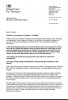
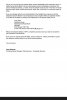
The DfT, when questioned recently, stated that there would be time savings of 10 seconds per stop by having the driver do the doors, which over the course of a journey would provide greater performance resilience. See attached images.

We can also conclude based on the information that came out at the start of the ongoing FGW / GWR debate on the matter, that they think money can be saved and performance enhanced during disruption by only having to wait for one member of staff to be present for the train to run, rather than 2.

In terms of direct wage savings these would be minimal, if any were made at all. It is clear from the Northern and TPE ITT's that the DfT wanted an on-board staff presence to remain for revenue protection, customer service and passenger assistance and re-assurance. They had to say that as all passenger surveys nationally and feedback during the TPE / NT consultations locally gave feedback that passengers valued an on board staff presence.

Thus each new TOC would still need to factor in keeping a quantity of staff to do these new customer service roles. So lets look at wages. A safety critical Guard on Northern / TPE is paid between £26,000 - £27,200 depending on which TOC and area you work in. An On train Ticket Examiner on Scotrail's Strathclyde area (which is often quoted on these forums as an ideal model to work to - DOO trains but with an almost guaranteed staff presence) appears to be paid approx £23,000. So that is a saving of around £3,000 - £4,000 per staff member. First of all, this will immediately be swallowed up by increased wages demanded by the drivers for taking on extra duties. I wouldn't be surprised if the drivers demanded more, to be honest. And even if you saved on physical staff numbers by having less of the new lower paid customer service staff than you had traditional Guards before, you have considerably more drivers than you do Guards, so any savings there would be wiped out by the sheer number of drivers you have in relation to guards.

So any saving is likely to be minimal and related to savings during disruption by only having to wait for one staff member, savings during staff shortages or short term sickness by running a train unstaffed on board rather than paying overtime to a guard to keep the train running, and minimal savings in terms of potentially reduced headcount or training costs. In the grand scheme of things these are minimal and almost unquantifiable as levels of disruption / sickness / overtime vary considerably.

So having established that quantifiable monetary savings by keeping non-safety critical staff on board still will likely be minimal, then we have to think of the real reason - and that is one which many people have quoted on here - and that is DCO is the first step to real DOO and unstaffed trains. That is where the real savings will come by seriously getting rid of staff numbers and not having anyone on board at all. Those people on here who think that wouldn't happen later are deluded. The guff in the ITTs and elsewhere about keeping somebody on board for customer service is a way of placating both staff and passengers in the short term, because in a few years time once it is introduced and more savings are needed the on board customer service staff can quietly be dropped. The trains will still run as by now the driver has assumed full duties for door control. And then the North and elsewhere really will have a railway just like the South (which they always seem to clamour for) - unstaffed trains and open stations - with all the resultant problems that brings with it.
 

Attachments

  • FOI1.jpg
    FOI1.jpg
    113.5 KB · Views: 49
  • FOI2.jpg
    FOI2.jpg
    58.8 KB · Views: 41

A-driver

Established Member
Joined
9 May 2011
Messages
4,482
The DfT, when questioned recently, stated that there would be time savings of 10 seconds per stop by having the driver do the doors, which over the course of a journey would provide greater performance resilience. See attached images.


We can also conclude based on the information that came out at the start of the ongoing FGW / GWR debate on the matter, that they think money can be saved and performance enhanced during disruption by only having to wait for one member of staff to be present for the train to run, rather than 2.


In terms of direct wage savings these would be minimal, if any were made at all. It is clear from the Northern and TPE ITT's that the DfT wanted an on-board staff presence to remain for revenue protection, customer service and passenger assistance and re-assurance. They had to say that as all passenger surveys nationally and feedback during the TPE / NT consultations locally gave feedback that passengers valued an on board staff presence.


Thus each new TOC would still need to factor in keeping a quantity of staff to do these new customer service roles. So lets look at wages. A safety critical Guard on Northern / TPE is paid between £26,000 - £27,200 depending on which TOC and area you work in. An On train Ticket Examiner on Scotrail's Strathclyde area (which is often quoted on these forums as an ideal model to work to - DOO trains but with an almost guaranteed staff presence) appears to be paid approx £23,000. So that is a saving of around £3,000 - £4,000 per staff member. First of all, this will immediately be swallowed up by increased wages demanded by the drivers for taking on extra duties. I wouldn't be surprised if the drivers demanded more, to be honest. And even if you saved on physical staff numbers by having less of the new lower paid customer service staff than you had traditional Guards before, you have considerably more drivers than you do Guards, so any savings there would be wiped out by the sheer number of drivers you have in relation to guards.


So any saving is likely to be minimal and related to savings during disruption by only having to wait for one staff member, savings during staff shortages or short term sickness by running a train unstaffed on board rather than paying overtime to a guard to keep the train running, and minimal savings in terms of potentially reduced headcount or training costs. In the grand scheme of things these are minimal and almost unquantifiable as levels of disruption / sickness / overtime vary considerably.


So having established that quantifiable monetary savings by keeping non-safety critical staff on board still will likely be minimal, then we have to think of the real reason - and that is one which many people have quoted on here - and that is DCO is the first step to real DOO and unstaffed trains. That is where the real savings will come by seriously getting rid of staff numbers and not having anyone on board at all. Those people on here who think that wouldn't happen later are deluded. The guff in the ITTs and elsewhere about keeping somebody on board for customer service is a way of placating both staff and passengers in the short term, because in a few years time once it is introduced and more savings are needed the on board customer service staff can quietly be dropped. The trains will still run as by now the driver has assumed full duties for door control. And then the North and elsewhere really will have a railway just like the South (which they always seem to clamour for) - unstaffed trains and open stations - with all the resultant problems that brings with it.


Irrelevant. The DfT are arguing for more DOO so it's hardly a surprise that they shave managed to get a set of figures showing cost savings. I'm sure if the unions looked into it they could equally come up with a set of figures proving it won't save a penny.

It dosnt address the issue that it's still removing safe guards from train dispatch (which is not arguable. DOO isn't dangerous but it's certainly not as safe as a guard) and, from the unions POV and mine as a driver, it's putting drivers in even more danger of prosecution/job loss etc by piling even more safety critical workload onto them.

I spend my days driving 300tonne trains at 100mph. The only thing that I do at work which I feel is dangerous and could realistically kill someone is dispatch trains. I never fear spads, speeding, derailment etc but every time I take a busy rush hour train into a platform I feel great concern over how easy it would be to miss someone in the mirror/monitor/look back and kill or injure them. That is why the union object-they are doing their job by protecting that of their members.
 

Tetchytyke

Veteran Member
Joined
12 Sep 2013
Messages
17,616
Location
Isle of Man
But they are not stating clearly where these savings are coming from!

Halve the train crew on a train and you halve the chance of a strike ;)

And anyone who thinks DCO is different to DOO is living in cloud cuckoo land. If DCO comes in the ticket examiners will be gone within five years. I can read the press release now: "use of smart ticketing means that examiners are no longer required, and station staff can assist with disabled passengers as they currently do".
 

superkev

Established Member
Joined
1 Mar 2015
Messages
2,864
Location
west yorkshire
Apologies if this has been mentioned before.
Watching the new Apperley Bridge station on tv the other day a passenger in a wheelchair was assisted onto the 333 by the guardian using the on train ramp.
What arrangements if any are there for wheelchairs on existing doo lines and lul lines.
Thanks
K
 

BestWestern

Established Member
Joined
6 Feb 2011
Messages
6,736
Apologies if this has been mentioned before.
Watching the new Apperley Bridge station on tv the other day a passenger in a wheelchair was assisted onto the 333 by the guardian using the on train ramp.
What arrangements if any are there for wheelchairs on existing doo lines and lul lines.
Thanks
K

What do we mean here by 'the guardian'? The only people who would use any form of ramp should be railway staff, under no circumstances should they be used by or within reach of passengers or their companions (lots of potential liability issues there!).

One of the issues with DOO, conveniently skirted around by those in power, is who exactly will do this on services provided only with a Driver (it certainly won't be the Driver).
 
Last edited:

the sniper

Established Member
Joined
4 Sep 2007
Messages
3,498
What do we mean here by 'the guardian'? The only people who would use any form of ramp should be railway staff, under no circumstances should they be used by or within reach of passengers or their companions (lots of potential liability issues there!).

I think it's safe to assume from the question he asked that by 'guardian' he meant the Guard.
 

gtr driver

Member
Joined
24 Apr 2015
Messages
144
Apologies if this has been mentioned before.
Watching the new Apperley Bridge station on tv the other day a passenger in a wheelchair was assisted onto the 333 by the guardian using the on train ramp.
What arrangements if any are there for wheelchairs on existing doo lines and lul lines.
Thanks
K

At my own TOC, people needing assistance are advised to book assisted travel as few platforms are staffed all the time and then staff are arranged at the start and end destinations. This is far from watertight and passengers can find themselves stuck on platforms or trains. I've had passcomms pulled because no one was there to help and I have little power to do so other than summon help, causing huge delays. Or passengers just turn up and again, with no guard or platform staff, there's a delay whilst options are considered. Sometimes passengers help out but if they injury themselves or the person involved they'd be on their own as far as the TOC is concerned. In other words it's a mess.
 

superkev

Established Member
Joined
1 Mar 2015
Messages
2,864
Location
west yorkshire
What do we mean here by 'the guardian'? The only people who would use any form of ramp should be railway staff, under no circumstances should they be used by or within reach of passengers or their companions (lots of potential liability issues there!).

One of the issues with DOO, conveniently skirted around by those in power, is who exactly will do this on services provided only with a Driver (it certainly won't be the Driver).

Sorry I meant guard. Predictive text again.
Kev
 

coppercapped

Established Member
Joined
13 Sep 2015
Messages
3,334
Location
Reading
What do we mean here by 'the guardian'? The only people who would use any form of ramp should be railway staff, under no circumstances should they be used by or within reach of passengers or their companions (lots of potential liability issues there!).

One of the issues with DOO, conveniently skirted around by those in power, is who exactly will do this on services provided only with a Driver (it certainly won't be the Driver).

As a data point in this discussion I would like to mention the situation in Germany where S-Bahn trains mostly (I think) only have the driver on board. Certainly the Munich S-Bahn with the ET423 trains uses a system of automatic dispatch in that the doors close automatically, but do not lock, 5 secs after the door sensors have last detected a person passing through the opening. The sensors are a series of infra-red beams arranged as a fine mesh just inside the doors and are sensitive to small objects, bags, sleeves or children, in their path.

Until the doors are de-activated the lights in the buttons remain illuminated and the doors can be re-opened. When the train is ready to depart the driver can de-activate the buttons, the lights go out and when all the doors are proven closed the driver can take power. There are no mirrors or CCTV.

A wheelchair ramp is kept within the draught screen of the passenger doors right behind the driver's cab. Wheelchair users always use the front door of the train and the driver leaves the cab, places the ramp, assists the wheelchair user onto or off the train, replaces the ramp in its housing and returns to his cab. The whole process takes less than a minute, but there are (or at least were when I lived in Munich) some limitations on the assistance given in the rush hours.
 
Last edited:

superkev

Established Member
Joined
1 Mar 2015
Messages
2,864
Location
west yorkshire
As a data point in this discussion I would like to mention the situation in Germany where S-Bahn trains mostly (I think) only have the driver on board. Certainly the Munich S-Bahn with the ET423 trains uses a system of automatic dispatch in that the doors close automatically, but do not lock, 5 secs after the door sensors have last detected a person passing through the opening. The sensors are a series of infra-red beams arranged as a fine mesh just inside the doors and are sensitive to small objects, bags, sleeves or children, in their path.

Until the doors are de-activated the lights in the buttons remain illuminated and the doors can be re-opened. When the train is ready to depart the driver can de-activate the buttons, the lights go out and when all the doors are proven closed the driver can take power. There are no mirrors or CCTV.

A wheelchair ramp is kept within the draught screen of the passenger doors right behind the driver's cab. Wheelchair users always use the front door of the train and the driver leaves the cab, places the ramp, assists the wheelchair user onto or off the train, replaces the ramp in its housing and returns to his cab. The whole process takes less than a minute, but there are (or at least were when I lived in Munich) some limitations on the assistance given in the rush hours.

Thanks most interesting. In our litigation obsessed country can't see anything similar being introduced.
Kev
 

andrewkeith5

Member
Joined
2 Jun 2013
Messages
681
Location
West Sussex
Thanks most interesting. In our litigation obsessed country can't see anything similar being introduced.

Kev


It would be absolutely hilarious watching the unions come up with reasons as to why it's an utterly stupid idea though....

For what it's worth it sounds like quite a clever system of working things efficiently. Platforms would have to be stripped from departure boards a minute or three before departure though to stop the mindless fools from running into the doors as they close
 

ComUtoR

Established Member
Joined
13 Dec 2013
Messages
9,562
Location
UK
Platforms would have to be stripped from departure boards a minute or three before departure though to stop the mindless fools from running into the doors as they close

Happens already. CIS will blank on some platforms about 2 minutes before departure and mindless fools run, jump, throw things, jam prams, arms, bags, pry the doors apart etc. as doors close even with the hustle alarm warning the doors are about to close.

@coppercapped. The system does have some merit but I am always concerned when comparisons are made. The UK rail network is a very different jungle and its wild denizens are a different breed altogether. Some of the things you mentioned are worthy of debate.

ASLEF are pro technology. I have no idea why systems like this are not pushed when it comes to new units. Seimens are a German company. Who makes those units you mentioned ?
 

gtr driver

Member
Joined
24 Apr 2015
Messages
144
It would be absolutely hilarious watching the unions come up with reasons as to why it's an utterly stupid idea though....

For what it's worth it sounds like quite a clever system of working things efficiently. Platforms would have to be stripped from departure boards a minute or three before departure though to stop the mindless fools from running into the doors as they close

Well here's a couple of hilarious reasons for you. Are we still holding the driver responsible for the doors closing on someone who misuses the door, train or platform and gets injured or killed? Fine if we trust the technology absolutely, far from if we don't. No CCTV or mirror implies every platform is similar, has no big gaps, that there are no curved platforms, that the passengers can be trusted and the railway company can be trusted not to blame its staff if something goes wrong.

You may not have noticed this, but hundreds of card carrying union members are already working DOO trains in this country, trusting thousands of people to do the right thing when they use the train, not to mention their employers. The reasons for not using DOO have not really been listened to by anyone else. I don't find it hilarious that I now feel that I'm putting my job and liberty on the line every time there might be an issue.

As for the driver assisting, fine. If we are trained to use the ramp so it doesn't fold up under a wheelchair mid use. If we are allowed to leave the cab. At the moment we are not expected to leave the cab and if we have to, inform the signaller first, then shut it down. I imagine all of that makes more difference on our underfunded low capacity networks than on a bespoke well organised S-Bahn system.
--- old post above --- --- new post below ---
Happens already. CIS will blank on some platforms about 2 minutes before departure and mindless fools run, jump, throw things, jam prams, arms, bags, pry the doors apart etc. as doors close even with the hustle alarm warning the doors are about to close.

@coppercapped. The system does have some merit but I am always concerned when comparisons are made. The UK rail network is a very different jungle and its wild denizens are a different breed altogether. Some of the things you mentioned are worthy of debate.

ASLEF are pro technology. I have no idea why systems like this are not pushed when it comes to new units. Seimens are a German company. Who makes those units you mentioned ?

An immediate comparison I'd like to make aside from every platform in Britain seeming to be different in sometimes subtle ways ie curves, gaps, footbridges or subway entrances in different places, over bridge abutments on the platform, narrow platforms on viaducts, is that I drive trains that are anything from 3 to 12 coaches, so where the drivers cab is relative to the platform varies enormously. This requires a wheelchair user to be sure of where it will be, possibly 12 coaches away from the platform entrance, and potentially requiring a lot of inconvenience for them. In order to allow the accessible coaches on the class 700s to be in the same place regardless of length, the stop car marks are having to be reshuffled almost everywhere on the Thameslink network, and this still doesn't solve who helps, because the coach in question may be nowhere near the driver. This works on a consistently standard design of station but not in most of Britain.
 

A-driver

Established Member
Joined
9 May 2011
Messages
4,482
It would be absolutely hilarious watching the unions come up with reasons as to why it's an utterly stupid idea though....

For what it's worth it sounds like quite a clever system of working things efficiently. Platforms would have to be stripped from departure boards a minute or three before departure though to stop the mindless fools from running into the doors as they close


Oh dear, another troll alert then. What's funny about a union doing its job and doing everything it can to protect its members safety and jobs and protect them from possible prosecution when something goes wrong?

Just because another country does something it dosnt mean it's easily transferable. Personally I'm struggling to think of any hilarious reasons at all that the union could come up with. Perhaps you could start us off with some being that you are the one who suggested it would be so funny.
 

cjmillsnun

Established Member
Joined
13 Feb 2011
Messages
3,275
Oh dear, another troll alert then. What's funny about a union doing its job and doing everything it can to protect its members (and the publics) safety and jobs and protect them from possible prosecution when something goes wrong?

Just because another country does something it dosnt mean it's easily transferable. Personally I'm struggling to think of any hilarious reasons at all that the union could come up with. Perhaps you could start us off with some being that you are the one who suggested it would be so funny.

A very good post. Hope you don't mind my addition. I think it's important and is overlooked by many ;)
 

A-driver

Established Member
Joined
9 May 2011
Messages
4,482
A very good post. Hope you don't mind my addition. I think it's important and is overlooked by many ;)


I don't disagree, although a union is there to serve its members and not the public. Although I can't think of anything a rail union have ever done which has reduced public safety. Generally what they do for their paying members also improves the safety of the public.
 

coppercapped

Established Member
Joined
13 Sep 2015
Messages
3,334
Location
Reading
Happens already. CIS will blank on some platforms about 2 minutes before departure and mindless fools run, jump, throw things, jam prams, arms, bags, pry the doors apart etc. as doors close even with the hustle alarm warning the doors are about to close.

@coppercapped. The system does have some merit but I am always concerned when comparisons are made. The UK rail network is a very different jungle and its wild denizens are a different breed altogether. Some of the things you mentioned are worthy of debate.

ASLEF are pro technology. I have no idea why systems like this are not pushed when it comes to new units. Seimens are a German company. Who makes those units you mentioned ?

There are external loudspeakers at each door and passengers are warned to stand clear as the door buttons are being de-activated. But, being an S-Bahn, most passengers are regulars and know that the doors shut automatically - in fact in winter it's necessary as it can get really cold and snowy. The point is that the passengers can re-open them by pressing the door button - it's not that the driver or guard are closing the doors in front of you - so the pressures aren't so great. As I said, when the driver de-activates the door buttons only then is it not possible to re-open the doors - but the driver does not actively control the door closure.

The service through the 'Stammstrecke' through Munich city centre in the peak periods is 30 trains per hour in each direction - so the system works not only in intensive traffic but also out at the ends of the branches with a train every 20 minutes. And I am not sure that the people are that different - they all just want to get home at the end of the day!

The platform CIS does, or at least used to, blank as the train was about to leave, but as the destination is permanently displayed on the side of the train I don't think it was blanked to discourage people trying to get on in the last seconds.

The Baureihe 423 was built between 1998 and 2007, initially for the S-Bahn in Munich, but is now also used on the S-Bahnen in Frankfurt, Stuttgart und Köln. 462 units were built by a consortium of Adtranz/Bombardier, Alstom/Linke Hoffmann Busch and ABB.
--- old post above --- --- new post below ---
Well here's a couple of hilarious reasons for you. Are we still holding the driver responsible for the doors closing on someone who misuses the door, train or platform and gets injured or killed? Fine if we trust the technology absolutely, far from if we don't. No CCTV or mirror implies every platform is similar, has no big gaps, that there are no curved platforms, that the passengers can be trusted and the railway company can be trusted not to blame its staff if something goes wrong.

The system I described is for use on S-Bahnen so, yes, the stations are similar, but by no means are all the platforms straight, my old local station of Westkreuz was an island platform on a curve. Trains can be one, two or three units long, the stopping places are indicated on the platforms and the CIS shows how long the approaching train will be.

Apart from the largest stations in the city centre they are not manned - and only recently has there been any CCTV coverage anywhere - because of their history Germans are very, very sensitive about being watched or spied on. CCTV is, in general, socially unacceptable.

 
Last edited:

G136GREYHOUND

Member
Joined
29 Mar 2014
Messages
239
It would be absolutely hilarious watching the unions come up with reasons as to why it's an utterly stupid idea though....

For what it's worth it sounds like quite a clever system of working things efficiently. Platforms would have to be stripped from departure boards a minute or three before departure though to stop the mindless fools from running into the doors as they close


Not however as hilarious as watching people with no railways experience of these things coming up with reasons as to why ITS NOT A STUPID idea on internet forums though !

I spent years in the Army in Germany, The Brits and the Germans are two very, very different sorts of animal, so I bet I know more about Germans as well as knowing more about DOO train driving than you do.
 
Last edited:

gtr driver

Member
Joined
24 Apr 2015
Messages
144
There are external loudspeakers at each door and passengers are warned to stand clear as the door buttons are being de-activated. But, being an S-Bahn, most passengers are regulars and know that the doors shut automatically - in fact in winter it's necessary as it can get really cold and snowy. The point is that the passengers can re-open them by pressing the door button - it's not that the driver or guard are closing the doors in front of you - so the pressures aren't so great. As I said, when the driver de-activates the door buttons only then is it not possible to re-open the doors - but the driver does not actively control the door closure.

The service through the 'Stammstrecke' through Munich city centre in the peak periods is 30 trains per hour in each direction - so the system works not only in intensive traffic but also out at the ends of the branches with a train every 20 minutes. And I am not sure that the people are that different - they all just want to get home at the end of the day!

The platform CIS does, or at least used to, blank as the train was about to leave, but as the destination is permanently displayed on the side of the train I don't think it was blanked to discourage people trying to get on in the last seconds.

The Baureihe 423 was built between 1998 and 2007, initially for the S-Bahn in Munich, but is now also used on the S-Bahnen in Frankfurt, Stuttgart und Köln. 462 units were built by a consortium of Adtranz/Bombardier, Alstom/Linke Hoffmann Busch and ABB.

But people in Britain routinely ignore the door closing alarm, in fact many of them regard it as their cue to get on or off. Frequently causing near misses or actual falls or getting trapped. And once the doors are finally locked, they often stand there pressing the button hard repeatedly as if that will magically override the locks. Or hold on the side of the train. Thus preventing us from leaving. Or even run for a MOVING train and press the button. Maybe people using the S Bahn are much more sensible, it certainly seems so.

Our point, again and again, is that the means of despatch in this country frequently leaves us as front line workers (AND the public) being vulnerable to the consequences of other people's stupidity or thoughtlessness, or even just less than perfect visibility or platform/train features that we have no control over. Therefore our contention is that the safest form of despatch (in lieu of improved visibility/gaps/platforms and an acceptance that if the public break the rules, and we follow procedure, that we cannot be held responsible) is a second person on the platform. And that's even before you talk about staff presence on the train to deter fare dodging and other anti social behaviour, passenger aid during breakdowns or emergencies or attending to passcomms, assistance and so on.
--- old post above --- --- new post below ---
The system I described is for use on S-Bahnen so, yes, the stations are similar, but by no means are all the platforms straight, my old local station of Westkreuz was an island platform on a curve. Trains can be one, two or three hits long, the stopping places are indicated on the platforms and the CIS shows how long the approaching train will be.

Apart from the largest stations in the city centre they are not manned - and only recently has there been any CCTV coverage anywhere - because of their history Germans are very, very sensitive about being watched or spied on. CCTV is, in general, socially unacceptable.

This sounds like the sort of utopia I'd love to see in Britain but if anything we are getting further and further away from it. It's rare for people to take notice of our stop car marks or announcements/CIS regarding train length. Every driver on here will tell you of numerous occasions of bringing a 4 car in and waiting for people to make their way from the 10 car mark despite visual and audio indications that the train will be 4 cars.
 

muz379

Established Member
Joined
23 Jan 2014
Messages
2,514
As a data point in this discussion I would like to mention the situation in Germany where S-Bahn trains mostly (I think) only have the driver on board. Certainly the Munich S-Bahn with the ET423 trains uses a system of automatic dispatch in that the doors close automatically, but do not lock, 5 secs after the door sensors have last detected a person passing through the opening. The sensors are a series of infra-red beams arranged as a fine mesh just inside the doors and are sensitive to small objects, bags, sleeves or children, in their path.
So this means on a friday night when drunk dave and his mates want to play hop off the train hop on the train for 5 minutes nobody will be going anywhere because the doors cannot close

Or whilst drunk dave holds the door for his mate who is having a pee against a wall on the platform again nobody will be going anywhere

Or whilst its rush hour and the train is overcrowded and passengers just stand in the doorway blocking it looking at other passengers expecting them to magically make space like some kind of Mexican stand off again nobody will be going anywhere


All of these are situations I see often on the railway which require the intervention of a guard or a member of platform staff . If we had the kind of automatic door closing system you suggest with unmanned stations who is going to intervene to stop people playing silly ? . Even with a driver in a cab watching on cctv or a mirror there is very little that can be done , maybe use the PA to tell people off .

This sounds like the sort of utopia I'd love to see in Britain but if anything we are getting further and further away from it. It's rare for people to take notice of our stop car marks or announcements/CIS regarding train length. Every driver on here will tell you of numerous occasions of bringing a 4 car in and waiting for people to make their way from the 10 car mark despite visual and audio indications that the train will be 4 cars.

I often see peoples inability to listen and appropriately position themselves at Wigan NW and Preston , both stations at which Virgin trains have gone to the lengths of painting markers on the platforms showing people where to stand for the correct coaches , and prior the trains arrival an announcement goes out telling people exactly what "zone" of the platform they should be in . Still people do not listen and inevitably delay the train running to get on the correct coach
 
Last edited:

455driver

Veteran Member
Joined
10 May 2010
Messages
11,329
In our latest trap and drag incident the woman got her hand stuck in the doors, what I would like to know is how her hand got stuck in the doors in the first place!
 

coppercapped

Established Member
Joined
13 Sep 2015
Messages
3,334
Location
Reading
But people in Britain routinely ignore the door closing alarm, in fact many of them regard it as their cue to get on or off. Frequently causing near misses or actual falls or getting trapped. And once the doors are finally locked, they often stand there pressing the button hard repeatedly as if that will magically override the locks. Or hold on the side of the train. Thus preventing us from leaving. Or even run for a MOVING train and press the button. Maybe people using the S Bahn are much more sensible, it certainly seems so.

I am not suggesting that the system used on the S-Bahn can be directly transferred to UK conditions - I mention it as it is another approach to train operation which does work.

One significant difference is that the process of the doors closing and the doors locking/buttons being disabled happens in two stages. After 5 seconds the doors close - but they can still be reopened. So if someone is running for the train they can still press the door button and, if it is alight, then the door will reopen. This gives a few seconds grace. Only after the buttons have been disabled - and the light in the button goes out - do the doors stay shut. The driver does not actively close the doors.

If someone is blocking a door for any reason then the driver will make an announcement to the effect that the name of the game is progress and the person blocking the door shouldn't hold everybody up. Social pressures sometimes work...! :)

Our point, again and again, is that the means of despatch in this country frequently leaves us as front line workers (AND the public) being vulnerable to the consequences of other people's stupidity or thoughtlessness, or even just less than perfect visibility or platform/train features that we have no control over. Therefore our contention is that the safest form of despatch (in lieu of improved visibility/gaps/platforms and an acceptance that if the public break the rules, and we follow procedure, that we cannot be held responsible) is a second person on the platform. And that's even before you talk about staff presence on the train to deter fare dodging and other anti social behaviour, passenger aid during breakdowns or emergencies or attending to passcomms, assistance and so on.
--- old post above --- --- new post below ---


This sounds like the sort of utopia I'd love to see in Britain but if anything we are getting further and further away from it. It's rare for people to take notice of our stop car marks or announcements/CIS regarding train length. Every driver on here will tell you of numerous occasions of bringing a 4 car in and waiting for people to make their way from the 10 car mark despite visual and audio indications that the train will be 4 cars.

The point about the S-Bahn system is that the driver cannot be held responsible as he can't see the side of the train. It is the passenger's responsibility to look after his or her own safety.

This is a difference between here and Germany - there you are held to be responsible for your own safety much more than is the case here - apart from high speed routes and in towns German railways are not fenced. Roads aren't fenced off - why should railways be? There are many other examples of this attitude - road traffic collisions are not accidents. The incident has occurred because one party at least has broken the law.
 

A-driver

Established Member
Joined
9 May 2011
Messages
4,482
I am not suggesting that the system used on the S-Bahn can be directly transferred to UK conditions - I mention it as it is another approach to train operation which does work.


One significant difference is that the process of the doors closing and the doors locking/buttons being disabled happens in two stages. After 5 seconds the doors close - but they can still be reopened. So if someone is running for the train they can still press the door button and, if it is alight, then the door will reopen. This gives a few seconds grace. Only after the buttons have been disabled - and the light in the button goes out - do the doors stay shut. The driver does not actively close the doors.


If someone is blocking a door for any reason then the driver will make an announcement to the effect that the name of the game is progress and the person blocking the door shouldn't hold everybody up. Social pressures sometimes work...! :)


The point about the S-Bahn system is that the driver cannot be held responsible as he can't see the side of the train. It is the passenger's responsibility to look after his or her own safety.


This is a difference between here and Germany - there you are held to be responsible for your own safety much more than is the case here - apart from high speed routes and in towns German railways are not fenced. Roads aren't fenced off - why should railways be? There are many other examples of this attitude - road traffic collisions are not accidents. The incident has occurred because one party at least has broken the law.


So are you saying that on the s-Hahn the doors automatically close without any visual check by a human being? What happens to the mother trying to get her 3 kids off the train just as they start to close etc?
 

coppercapped

Established Member
Joined
13 Sep 2015
Messages
3,334
Location
Reading
So this means on a friday night when drunk dave and his mates want to play hop off the train hop on the train for 5 minutes nobody will be going anywhere because the doors cannot close

Or whilst drunk dave holds the door for his mate who is having a pee against a wall on the platform again nobody will be going anywhere

Or whilst its rush hour and the train is overcrowded and passengers just stand in the doorway blocking it looking at other passengers expecting them to magically make space like some kind of Mexican stand off again nobody will be going anywhere


All of these are situations I see often on the railway which require the intervention of a guard or a member of platform staff . If we had the kind of automatic door closing system you suggest with unmanned stations who is going to intervene to stop people playing silly ? . Even with a driver in a cab watching on cctv or a mirror there is very little that can be done , maybe use the PA to tell people off .

The system I described is used for the S-Bahn in Munich, a city of some 1.5 million, with the surrounding metropolitan area the population is a bit shy of 6 million.

Of course there are drunks and people playing the fool - Munich is home to about seven large breweries (Augustiner, Hacker-Pschorr, Spaten, Isar Bräu, Löwenbräu, Hofbräu and Unions-Bräu) and some further ones in nearby towns are Aying, Klosterbrauerei Andechs, Erding, Schlossbrauerei Kaltenberg, Schneider and Weihenstephan. However in the evenings the trains and the stations are frequently patrolled by security squads, each consisting of a minimum of 4 ladies and gentlemen who look as if they will brook no nonsense!

It seems to work.
 

gtr driver

Member
Joined
24 Apr 2015
Messages
144
You have hit the nail on the head Coppercapped. I believe mainland Europe DOES expect passengers to take responsibility for their actions whereas here it is the reverse. Even with the fencing I have heard people blaming the railway for "allowing" their children to trespass. At present we have a guard being prosecuted for a door related incident which his employer is satisfied is not his fault which we are all awaiting the outcome of with baited breath I suspect. Though as it's sub judice can't say more. I think there is a general increase in risk adversity amongst guards and DOO drivers because of such events which ultimately does none of us any favours as it will lead to more delays. I would be much happier if we took a German view of things here!
--- old post above --- --- new post below ---
I am not suggesting that the system used on the S-Bahn can be directly transferred to UK conditions - I mention it as it is another approach to train operation which does work.

One significant difference is that the process of the doors closing and the doors locking/buttons being disabled happens in two stages. After 5 seconds the doors close - but they can still be reopened. So if someone is running for the train they can still press the door button and, if it is alight, then the door will reopen. This gives a few seconds grace. Only after the buttons have been disabled - and the light in the button goes out - do the doors stay shut. The driver does not actively close the doors.

If someone is blocking a door for any reason then the driver will make an announcement to the effect that the name of the game is progress and the person blocking the door shouldn't hold everybody up. Social pressures sometimes work

Would you say people are generally co operative under such circumstances? In my early days I used to make announcements asking passengers not to hold doors but not ONE person has ever taken any notice, so I've long given up.
 

TheEscapist_

Member
Joined
18 Nov 2011
Messages
150
That what I noticed the first time I went to Berlin, people take responsibility for their own actions. Not like here. So much better over there.
 
Status
Not open for further replies.

Top