• Our new ticketing site is now live! Using either this or the original site (both powered by TrainSplit) helps support the running of the forum with every ticket purchase! Find out more and ask any questions/give us feedback in this thread!

My idea - re-opening lines in Central England ?

Status
Not open for further replies.

billio

Member
Joined
9 Feb 2012
Messages
576
Reading the Northamptonshire CC site they are intending to go ahead with the North - West Northampton ring road which will cross the trackbed and make opening even more difficult. In general it looks to me that there is very little interest in developing railway services in the county. It calls into question whether transport planning at the county council level is appropriate and that it is better placed at a regional level taking into account movement at a national level.

One sees Scotland taking decisions on railway development that appear impossible to contemplate in many parts of England.
 
Sponsor Post - registered members do not see these adverts; click here to register, or click here to log in
R

RailUK Forums

richieb1971

Established Member
Joined
28 Jan 2013
Messages
2,047
Having a cross country route in this area is a good thing. It means you can have a circular service between Bedford, (Leicester, Market harborough, Wellingborough), MKC and then back down to Bedford. I've always said this and its not an idea that is pie in the sky madness.

People call this country Great Britain. Yet it imports trains and exports none. Other countries have taken the railway (a great idea from the UK) and made it better in their country. Whats so great about the UK when everything mentioned is about cost, lack of will, no desire. Sounds like a weak country to me.
 

yorksrob

Veteran Member
Joined
6 Aug 2009
Messages
44,400
Location
Yorks
Having a cross country route in this area is a good thing. It means you can have a circular service between Bedford, (Leicester, Market harborough, Wellingborough), MKC and then back down to Bedford. I've always said this and its not an idea that is pie in the sky madness.

People call this country Great Britain. Yet it imports trains and exports none. Other countries have taken the railway (a great idea from the UK) and made it better in their country. Whats so great about the UK when everything mentioned is about cost, lack of will, no desire. Sounds like a weak country to me.

Given that all of our assets and companies get flogged off at the first opportunity, it's hardly surprising we're a weak country.
 

The Planner

Veteran Member
Joined
15 Apr 2008
Messages
19,718
Having a cross country route in this area is a good thing. It means you can have a circular service between Bedford, (Leicester, Market harborough, Wellingborough), MKC and then back down to Bedford. I've always said this and its not an idea that is pie in the sky madness. .

I take it then you have started to lobby the councils and MPs to get backing? get some funding to do a feasibility report via a consultant, as like Bald Rick says elsehwere, unless the government or DfT or a route study says its needed or it wants to buy it its going to sit on a forum like this and thats it.
 

HowardGWR

Established Member
Joined
30 Jan 2013
Messages
4,981
Having a cross country route in this area is a good thing. It means you can have a circular service between Bedford, (Leicester, Market harborough, Wellingborough), MKC and then back down to Bedford. I've always said this and its not an idea that is pie in the sky madness.

A good thing? That statement and you last sentence are opinions. To convert these into a successful campaign, you need to start work. I suggest that if you google the history of the campaigning for restitution of Honeybourne to Stratford, as an example, you could get some very good tips. That campaign has gone three steps forward and then two back over the years, but is gradually getting there and the evidence for that is that there is now a local NIMBY house owner group in south Stratford that is campaigning against it. If the pro campaign were getting nowhere, this latest development would not have taken off, so it's a compliment to the pro restitution campaigners.

Other campaigns that are more in embryo stage are Beverly to York and Haverhill to Cambridge. There will be others.

All worthwhile looking up to see the pitfalls that are endured. I was a campaigner and it will almost take over your life at the expense of family and anything else one might have done instead. I wish I didn't have the T shirt, but I did actually have some success, so I have to be content with that.

All the best for your campaign.
 

richieb1971

Established Member
Joined
28 Jan 2013
Messages
2,047
If I was in the business of making railways (like network rail is). Then I would let it be them that chooses what gets made and what does not get made.

When was the last time network rail with all their wisdom lobbied for a railway?

Forget politicians. They are fighting for things that are important to them. For Britain to get back on its feet it needs the RIGHT people making the decisions. I'm not saying that is me, far from it. But I'm not seeing a logical path here. I'm seeing hellish nightmare of red tape that is designed to trip up the enthusiastic every step of the way.
 

yorksrob

Veteran Member
Joined
6 Aug 2009
Messages
44,400
Location
Yorks
I wonder whether there's a bit of a feeling from Network Rail of "oh my goodness - another however many miles of network to look after".

I'm not convinced in this day and age that the infrastructure provider is the right organisation to be expected to drive forward the opening of new markets using new routes. It would be good if they did, but I think they'll always be pre-occupied trying to serve the existing market.

I think what's needed is strong support from local government and business, together with a willingness of central government to meet them part way on resources.
 

Bald Rick

Veteran Member
Joined
28 Sep 2010
Messages
35,910
People call this country Great Britain. Yet it imports trains and exports none. Other countries have taken the railway (a great idea from the UK) and made it better in their country. Whats so great about the UK when everything mentioned is about cost, lack of will, no desire. Sounds like a weak country to me.

Firstly, check your facts. This country has been exporting trains for almost as long as they have been in existence, most recently from Bombardier in Derby. The Hitachi factory is specifically intended to export trains, and Hitachi relocated their worldwide rail business to the UK specifically to target the European export market.

Secondly, there aren't that many countries with a better rail system than ours. Japan, Switzerland, yes; Austria, Germany, Holland, arguably. That's it. And define 'better'.

Finally, if this country is so weak, and you have a problem with that, then emigrate to somewhere better!
--- old post above --- --- new post below ---
I wonder whether there's a bit of a feeling from Network Rail of "oh my goodness - another however many miles of network to look after".

I'm not convinced in this day and age that the infrastructure provider is the right organisation to be expected to drive forward the opening of new markets using new routes. It would be good if they did, but I think they'll always be pre-occupied trying to serve the existing market.

I think what's needed is strong support from local government and business, together with a willingness of central government to meet them part way on resources.

As an agent of Governement, it is pretty difficult for NR to openly lobby for investment etc. Similarly you don't see the Navy lobbying for new ships, or the NHS lobbying for new hospitals. That's not to say it doesn't happen. But you are absolutely correct that strong local support for investment is required and helps the case. Birmingham New Street would not have been rebuilt without the strong support of Birmingham City Council, for example.
 
Last edited:

yorksrob

Veteran Member
Joined
6 Aug 2009
Messages
44,400
Location
Yorks
Finally, if this country is so weak, and you have a problem with that, then emigrate to somewhere better!

If a patriotic citizen feels that the country has been badly mismanaged by the free market 'flog everything that's not screwed down' brigade, surely it's their duty to stay behind and argue for a change in policy?
 

Bald Rick

Veteran Member
Joined
28 Sep 2010
Messages
35,910
If a patriotic citizen feels that the country has been badly mismanaged by the free market 'flog everything that's not screwed down' brigade, surely it's their duty to stay behind and argue for a change in policy?

I agree, but that wasn't the argument put forward, at least not how I read it.
 

yorksrob

Veteran Member
Joined
6 Aug 2009
Messages
44,400
Location
Yorks
As an agent of Governement, it is pretty difficult for NR to openly lobby for investment etc. Similarly you don't see the Navy lobbying for new ships, or the NHS lobbying for new hospitals. That's not to say it doesn't happen. But you are absolutely correct that strong local support for investment is required and helps the case. Birmingham New Street would not have been rebuilt without the strong support of Birmingham City Council, for example.

Fair point, but given the current situation, I'd still expect the infrastructure provider to be pre-occupied lobbying for investment in the existing network.
--- old post above --- --- new post below ---
I agree, bureopeningn't the argument put forward, at least not how I read it.

He's probably unfair to drag in the rest of the UK, but there's certainly been a lack of ambition in England with regards to reopenings.

With train building, we used to design and build them, but we were so concerned with flogging off the railway we let that part of the industry wither and now the next generation of InterCity trains will be a "flat pack" built and designed overseas. Might be 'efficient' in some way, but it doesn't instill a sense of pride.
 

The Planner

Veteran Member
Joined
15 Apr 2008
Messages
19,718
But do we not do that via Route Studies/RUS process? They basically provide options for funders to buy over future control periods?
 

yorksrob

Veteran Member
Joined
6 Aug 2009
Messages
44,400
Location
Yorks
But do we not do that via Route Studies/RUS process? They basically provide options for funders to buy over future control periods?

Are reopenings really in the scope of those though?

Thinking about Lewes - Uckfield I can't recall the Sussex one saying much (although it's been a long time since I looked through it so I stand to be corrected)

I suppose about the nearest example we have of that happening is the SW England study, but even that can only consider reopening Tavistock - Okehampton in terms of the current rail market with further study required for local benefits.
 

richieb1971

Established Member
Joined
28 Jan 2013
Messages
2,047
thanks Yorksrob. I do have my way with words :lol:

There is a worry in my mind that Britain is happy to let other countries design, lead and prosper. If your GREAT, then the last thing you want is for other countries to flourish at your expense. The tables have been turned. Our government is always so preoccupied doing what is needed, rather than doing something nice to have. If we would just work on that a little bit, to get to that way of thinking where you've done the hard work and you can say "Well, we can do some nicety stuff now".

I do admit though, that its nice to have the Japanese piggy back us to greatness again.. Perhaps we can learn from their history of railway building how to reach much greatness once again. I have much respect for the Japanese and the Germans.. They got their butts kicked in WW2 and prospered greater than us. But I think its time for Britain to show the world that even if we cannot export, that we can build and use our own.
 

mr_jrt

Established Member
Joined
30 May 2011
Messages
1,578
Location
Brighton
I have much respect for the Japanese and the Germans.. They got their butts kicked in WW2 and prospered greater than us. But I think its time for Britain to show the world that even if we cannot export, that we can build and use our own.

Without wanting to sully things by making them political, one has to wonder how much of that is due to not having to spend a huge proportion of your GDP maintaining a military several times the needed size to defend yourself (by virtue of being occupied by the victors). Plowing a chunk of that that into infrastructure has some impact...
 

MarkRedon

Member
Joined
16 Sep 2015
Messages
292
But do we not do that via Route Studies/RUS process? They basically provide options for funders to buy over future control periods?

I wonder whether there's a bit of a feeling from Network Rail of "oh my goodness - another however many miles of network to look after".

I'm not convinced in this day and age that the infrastructure provider is the right organisation to be expected to drive forward the opening of new markets using new routes. It would be good if they did, but I think they'll always be pre-occupied trying to serve the existing market.

I think what's needed is strong support from local government and business, together with a willingness of central government to meet them part way on resources.

I think the key phrase here is "infrastructure provider". Rail in Britain is overall subsidised, as it has been for at least the last 50 years. Therefore the job of the infrastructure provider has basically been to provide the necessary minimum infrastructure at the lowest cost possible to "UK plc".

It is increasingly clear that there will be yet another industry reorganisation. I would speculate that Network Rail will lose responsibility for planning network enhancement, although it may still retain a role in actually implementing it. I do wonder whether some return to something like the old Strategic Rail Authority, perhaps as an arm of the National Infrastructure Commission, might emerge as a part of the overall mix.

My own view of the existing route planning process is that it has tended to be very conservative in the proposals it puts forward and has sometimes sought to dismiss as "aspirations" the more forward-thinking approaches of, to give an example, the BML2 campaign. Additionally, there have been occasions when draft plans have been cut back in the final version. Now history (for example, WCML PUG2) suggests that trying to fix what already exists can be notably more expensive and less beneficial than seeking more radical solutions. The reason I support BML2 is that the most evidently full route in the country, and the one for which there is no serious alternative as yet under development, is that between the south coast and London. Expensive tinkering with junctions cannot make a step change. Only the provision of an alternative route can make a real difference to the capacity and resilience of the network. BML2 provides two alternative routes, one from Kent towards London and the south coast, and the other from Brighton towards and around London. It may not be perfect, but it does represent the kind of new thinking that is required.

It is surprising how very rarely Network Rail proposes network enhancement. Local government can also sometimes be rather conservative (small c!). That said, East-West Rail is basically an emergence from forward-thinking local authorities which has been taken on board by the Department of Transport - bravo! I worry that the new National Infrastructure Commission will be "too heavenly minded to be any earthly use", thinking only in terms of 40-year-hence grand schemes. But it is perhaps the best hope that we have for radical – that is, new route – thinking. Unless Network Rail can rise to the challenge and start thinking more strategically by suggesting to the funders more radical alternatives?
 

yorksrob

Veteran Member
Joined
6 Aug 2009
Messages
44,400
Location
Yorks
I think the key phrase here is "infrastructure provider". Rail in Britain is overall subsidised, as it has been for at least the last 50 years. Therefore the job of the infrastructure provider has basically been to provide the necessary minimum infrastructure at the lowest cost possible to "UK plc".

It is increasingly clear that there will be yet another industry reorganisation. I would speculate that Network Rail will lose responsibility for planning network enhancement, although it may still retain a role in actually implementing it. I do wonder whether some return to something like the old Strategic Rail Authority, perhaps as an arm of the National Infrastructure Commission, might emerge as a part of the overall mix.

My own view of the existing route planning process is that it has tended to be very conservative in the proposals it puts forward and has sometimes sought to dismiss as "aspirations" the more forward-thinking approaches of, to give an example, the BML2 campaign. Additionally, there have been occasions when draft plans have been cut back in the final version. Now history (for example, WCML PUG2) suggests that trying to fix what already exists can be notably more expensive and less beneficial than seeking more radical solutions. The reason I support BML2 is that the most evidently full route in the country, and the one for which there is no serious alternative as yet under development, is that between the south coast and London. Expensive tinkering with junctions cannot make a step change. Only the provision of an alternative route can make a real difference to the capacity and resilience of the network. BML2 provides two alternative routes, one from Kent towards London and the south coast, and the other from Brighton towards and around London. It may not be perfect, but it does represent the kind of new thinking that is required.

It is surprising how very rarely Network Rail proposes network enhancement. Local government can also sometimes be rather conservative (small c!). That said, East-West Rail is basically an emergence from forward-thinking local authorities which has been taken on board by the Department of Transport - bravo! I worry that the new National Infrastructure Commission will be "too heavenly minded to be any earthly use", thinking only in terms of 40-year-hence grand schemes. But it is perhaps the best hope that we have for radical – that is, new route – thinking. Unless Network Rail can rise to the challenge and start thinking more strategically by suggesting to the funders more radical alternatives?

Well, absolutely.

I think NR (like BR before it) can think strategically. It just needs the political lot to shove it in the right direction.

The difference now I think is that the political shove needs to be local and regional, rather than national (but national still needs to come part way on the bill!).
 

DynamicSpirit

Established Member
Joined
12 Apr 2012
Messages
9,213
Location
SE London
steamybrian said:
Whilst others closed in the 1960s were subsequently reopened..
Coventry- Leamington Spa
Coventry to Nuneaton.
Nottingham-Mansfield-Worksop
Kettering-Corby, etc.
...all of which just seen one train an hour (with the exception of Nottingham to Mansfield, which sees a second service per hour).

To me, there doesn’t seem much point in opening/ re-opening a line if it won’t be able to sustain at least a couple of full sized trains an hour after say five/ten years.

That seems to me a little misleading. If I understand correctly from other threads, the reason that Coventry-Nuneaton only sees one train per hour is not lack of demand but lack of available trains, while Coventry-Leamington may well be in a similar situation once Kenilworth opens.
 

edwin_m

Veteran Member
Joined
21 Apr 2013
Messages
28,707
Location
Nottingham
I believe Northamtonshire LEP have commissioned a small study into potential for enhancing the rail network, but I don't know if the report is available or even completed.

To my mind Northampton to Wellingborough would be the best route to look at for reopening, as it would create links from Northampton to the three major settlements of Wellingborough, Kettering and Corby as well as longer-distance journeys like Leicester. While this corridor might have merit also for longer-distance trains between the East Midlands and the Thames Valley, East West Rail provides similar benefits (but via Bedford instead of Northampton) and is better operationally because it doesn't need to use the WCML.
 

Rational Plan

Member
Joined
3 Aug 2011
Messages
235
I see Milton Keynes eventually becoming a 'Reading' an important destination in itself.

The town is very successful and generates strong jobs growth and new business formation. It is destined to gain at least another 100,000 residents. East West Rail may become more about providing regional connections to Milton Keynes than connecting Cambridge to Oxford (though that's a nice slogan).

The problem that Central Milton Keynes suffers from at the moment is that the town centre was designed as nice formalised business park with easy parking, the whole town is very easy to drive around, yet difficult for buses. The local authority wanted to change the centre towards a real town centre and restrict car parking, you can guess what happened next? The decline of new build of offices in the Town Centre and the rapid growth of it's business parks.

The centre has only seen big growth in retail and leisure and now some residential. Think of that massive VW finance building built out of town. If it had not been for the new Network rail site in town there would have been no significant new employer to the centre for a long time.

There are several options to consider.
1. Relax the car parking rules and allow office developers to build new multi storey car parks for a limited time to bulk up town centre employment.

A bigger town centre attracts more occupiers especially those who prefer a 'city centre' environment.

2 Improved transport connections will increase Milton Keynes attractiveness to long distance commuters and as a base for regional offices. With better rail connections demand will rise for offices in the town centre, creating a virtuous circle, which drives demand for more rail services etc.

Post HS2 their should be scope for either reopening old routes or short stretches of new lines so all the M1 towns are linked together. Fast direct services between a series of towns all above 200,000 should be able to generate serious traffic flows.
 

billio

Member
Joined
9 Feb 2012
Messages
576
Post HS2 their should be scope for either reopening old routes or short stretches of new lines so all the M1 towns are linked together. Fast direct services between a series of towns all above 200,000 should be able to generate serious traffic flows.

This is my point about opening Market Harborough to Northampton, though I don't agree this should be post-HS2, as that could mean never. The route has the advantage that much of it has been preserved due to its status as a linear park.
 

Rational Plan

Member
Joined
3 Aug 2011
Messages
235
Already is. There are, and have been for years, far more commuters in than commuters out, though mostly by car.

Yes well I meant by rail.
--- old post above --- --- new post below ---
This is my point about opening Market Harborough to Northampton, though I don't agree this should be post-HS2, as that could mean never. The route has the advantage that much of it has been preserved due to its status as a linear park.

I think HS2 is a done deal, phase one will begin construction this parliament and phase two contracts before the 2020 election. Even if everyone said lets do this it'd be ten years at least before anything opened. Best will in the world your looking at the mid 2020's here if not longer.
 

A0

On Moderation
Joined
19 Jan 2008
Messages
7,751
It does tail back from Northampton to Wilby - on a regular basis.

Not disputing it does from time to time, but it's usually a consequence of problems - either an accident or breakdown than volume of traffic. So perhaps the authorities should be targetted on keeping a key route like that clear at all times.

There's no justification for grade separating Chowns Mill on 3 grounds - 1) the exhorbitant cost 2) the resulting environmental nightmare (witness the montrosity being erected at the A14/M1 junction). Stanwick to Raunds is scheduled being doubled at a ridiculous cost and will solve nothing except create more traffic and shift the problem somewhere else.

You've only cited two reasons. Notwithstanding that - you've no idea what the cost of grade-separation at Chowns Mill would be - particularly when set against the potential benefits in terms of congestion and journey times.

The "monstrosity" you refer to at Cathorpe Interchange is dealing with something which should have been done when the A14 was built. The current junction there was originally a minor intersection between a couple of secondary A roads - it was never designed for the volume of traffic there and it's safety nightmare, causing queues back onto the M6 - what is now being done should have been done about 15 years ago, except that idiot Prescott vetoed sensible schemes like that.

As for the "environmental impact" at Chowns Mill, anyone would think it's a bucolic area of the Nene Valley - whereas it's actually the most industrialised bit by a long way. It's hardly an area of outstanding natural beauty.

Dualling the A45/605 is long overdue. I used the A605 from Peterboro' this afternoon and was stuck doing 40mph because it is used by lorries and there are no safe overtaking areas - which is madness. Mile upon mile at 40mph - which is exactly what causes people to take unnecessary risks with tragic consequences.

Were the rail line from Northampton - Peterborough in existence would I have used it for my journey? No - because it was me, 3 others and a dog travelling to and from Lincolnshire to visit friends - so using the train would have been totally impractical and limiting once we were there. That's before the inconvenience of having our journey times dictated to is factored in.

Wrong again. Your policy is the failed road building policy of the past 40 years. The "solutions" 40 years ago was to close railway lines -which has resulted in the chaos we have today. Railways have been reopened all over the country (except in England of course) in recent times and all have been overwhelming successes - in areas much less densely populated than Northants too.

You're right the world has changed - and it doesn't involve road building.

No, very few long railway lines have reopened which connect secondary place with secondary place. The valley line re-openings linked them with Cardiff and Newport. The Borders line re-links the area with Edinburgh. Whereas a line linking Northampton with Wellingborough, Irchester, Thrapston and eventually Peterborough only ever had marginal demand and is unlikely to have much demand now.

What you're forgetting is the A45 / 605 are used as routes to the A1, A14 or A47 - for onward journeys to a myriad of destinations - not a simple 'everyone's travelling to Peterborough or Northampton'.

You've little idea of what the travel patterns are on that road or the kind of journeys people are undertaking.

The future does involve road building whether you like it or not - because the demand for the roads are there. And you can let grid lock occur, but it still won't make certain railway lines viable, however much you might believe it will. Perhaps you should stop believing that it will - and stop believing in Father Christmas whilst you're at it.

 

richieb1971

Established Member
Joined
28 Jan 2013
Messages
2,047
For rail to be viable in most of these cities they need a monorail that completes the journeys for the rail passengers. No point in reaching the station if you have another 35 min bus ride elsewhere.
 

mr_jrt

Established Member
Joined
30 May 2011
Messages
1,578
Location
Brighton
For rail to be viable in most of these cities they need a monorail that completes the journeys for the rail passengers. No point in reaching the station if you have another 35 min bus ride elsewhere.

Really?!?!?

Towns that size don't need much in the way of fixed infrastructure - bus priority schemes and bus lanes at best are more than sufficient. A decent bus network is essential in all towns, cities just need to manage the traffic so they don't get bogged down.

Only once you get to the top few (let's pluck a figure out of the air and say 20) cities do you even need to start thinking about fixed infrastructure, be it trolleybuses, trams, or in the largest few (again, let's pluck a figure out of the air and say 5), metros. I'd argue that paints a telling picture of what we should have:
1) London *
2) Manchester *
3) West Midlands *
4) West Yorkshire
5) Glasgow *
...they should have metros, and two of them do. That the other 3 had to make do with two of them getting trams and West Yorkshire getting nothing is quite the indictment.

The other 15 that should have trams or other such infrastructure:
6) Liverpool *
7) South Hampshire
8) Tyneside *
9) Nottingham *
10) Sheffield *
11) Bristol
12) Belfast
13) Leicester
14) Edinburgh *
15) Brighton & Hove
16) Bournemouth/Poole
17) Cardiff
18) Teesside
19) Stoke
20) Coventry
...of which 2 have metros (Liverpool and Tyneside), 3 do actually have trams (Nottingham, Sheffield, and Edinburgh), leaving 10 without anything.

Notice how none of them are anywhere near the areas we're talking about here though ;)

Figures from: https://en.wikipedia.org/wiki/List_of_urban_areas_in_the_United_Kingdom

...as a Brighton resident it gets quite interesting if you flip the argument on its head and sort by density... ;)
 

route:oxford

Established Member
Joined
1 Nov 2008
Messages
4,949
For rail to be viable in most of these cities they need a monorail that completes the journeys for the rail passengers. No point in reaching the station if you have another 35 min bus ride elsewhere.

Of all the potential modes of onward transport...

Why did you choose monorail?

Trams, underground, DLR style overhead railway - all fine and tried and trusted technology.

But a monorail? Do they work anywhere in the world outside theme parks and airports?
 

richieb1971

Established Member
Joined
28 Jan 2013
Messages
2,047
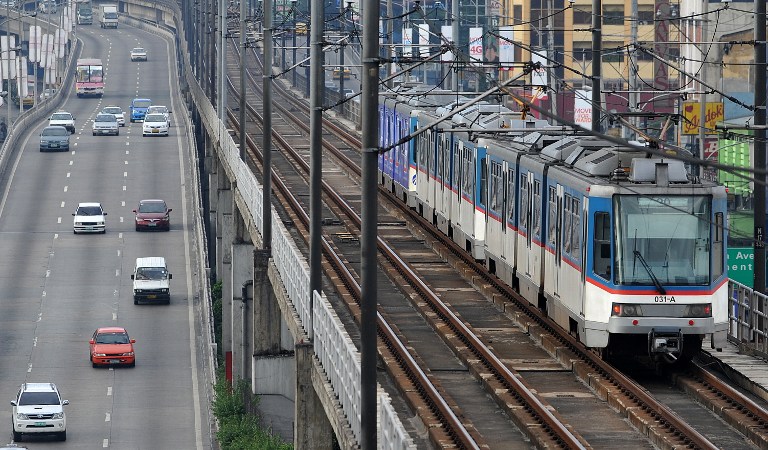
I dunno.. Perhaps monorail specifies a certain kind train. I mean anything that runs above ground. Was thinking more like

MRT3_000_Hkg4213716.jpeg
 

mr_jrt

Established Member
Joined
30 May 2011
Messages
1,578
Location
Brighton
I dunno.. Perhaps monorail specifies a certain kind train. I mean anything that runs above ground. Was thinking more like

MRT3_000_Hkg4213716.jpeg

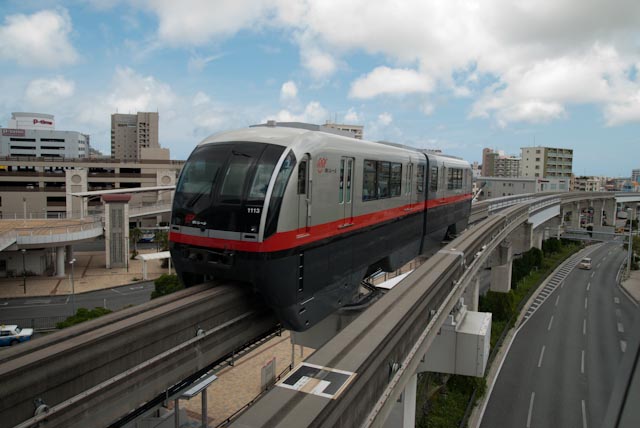
A monorail is, as the name suggests, a very-light rail system with a single (aka. mono) rail.

They're very, very light, so easy to have elevated above traffic, meaning you only need a very small footprint on the ground for the support pylons. Being so light and small, they can also have quite sharp curvature, making them good at weaving around obstacles. Capacity-wise though, because they small and light, they don't carry many passengers. There are also capacity issues as elevated stations have the same problem as subterranean metro stations - you have to get passengers up to their level unless you have large ramps down to ground level at stations.

What you have a picture of there is more like the DLR - basically a tram on a segregated right of way. So slightly heavier than a monorail, but lighter than a metro. :)

This is a monorail:
Okinawa_monorail_Yui_Rail_%E3%82%86%E3%81%84%E3%83%AC%E3%83%BC%E3%83%AB.jpg
 
Last edited:
Status
Not open for further replies.

Top