• Our new ticketing site is now live! Using either this or the original site (both powered by TrainSplit) helps support the running of the forum with every ticket purchase! Find out more and ask any questions/give us feedback in this thread!

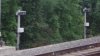
What is this trackside equipment? (Not Datum Plates)

Status
Not open for further replies.

tj.stevenson

Member
Joined
16 Aug 2015
Messages
7
Apologies for the poor picture, but I wonder if someone could satisfy my curiosity regarding these very common trackside installations.

As they occur in large regularly spaced groups and seem to have some optical components, I have wondered for a long time what it is they do.
 

Attachments

  • - - 1.jpg
    - - 1.jpg
    88.3 KB · Views: 360
Sponsor Post - registered members do not see these adverts; click here to register, or click here to log in
R

RailUK Forums

LowLevel

Established Member
Joined
26 Oct 2013
Messages
8,919
They're site lights for maintenance work etc. Hence generally being found adjacent to point work.
 

WatcherZero

Established Member
Joined
25 Feb 2010
Messages
10,272
They seem to have appeared at a huge number of locations in the north west recently, usually on points. I wondered if they were some new form of Spad beacons.
 

edwin_m

Veteran Member
Joined
21 Apr 2013
Messages
28,675
Location
Nottingham
Actually I think that's a datum plate on a pole, just poking its way into the left of the picture...
 

tj.stevenson

Member
Joined
16 Aug 2015
Messages
7
Not site lights - they are at a metre or less above track level. Near Euston there are some less than half a metre above the track.

They are permanently accommodated, with concrete footings and conduited wiring. There can be 20 or thirty in a row.

What's a Spad beacon? Do you need a large number in a row?
 

tj.stevenson

Member
Joined
16 Aug 2015
Messages
7
Here are some more - the heads are all at the same height, here less than 500mm.
 

Attachments

  • - - 1 (1).jpg
    - - 1 (1).jpg
    82 KB · Views: 174

Tomnick

Established Member
Joined
10 Jun 2005
Messages
5,933
As others have said, they certainly appear to be no more than lights, provided for routine inspections and maintenance at several junctions and other key locations.
 

tj.stevenson

Member
Joined
16 Aug 2015
Messages
7
Thankyou - I am amazed that they are mounted at such a low level - staff and equipment must throw long shadows over a worksite. You get less complaints from the 'neighbours', that way?

I guess the concentration at junctions is because maintenance activity is more or less continuous there?
 

Elecman

Established Member
Joined
31 Dec 2013
Messages
3,577
Location
Lancashire
Upto now they are only fitted at junctions on LNW at least for night time mice, the original plan was 5 or 8 metre columns but they are a maintenance nightmare in themselves
 

swt_passenger

Veteran Member
Joined
7 Apr 2010
Messages
34,278
Thankyou - I am amazed that they are mounted at such a low level - staff and equipment must throw long shadows over a worksite. You get less complaints from the 'neighbours', that way?

I guess the concentration at junctions is because maintenance activity is more or less continuous there?

The low level of the illumination possibly helps to illuminate the side of, and the web of the rail?
 

louis97

Established Member
Joined
14 May 2008
Messages
2,151
Location
Derby
Upto now they are only fitted at junctions on LNW at least for night time mice, the original plan was 5 or 8 metre columns but they are a maintenance nightmare in themselves

Not just LNW, they also appear in the East Midlands - Trent Junction springs to mind.
 

WatcherZero

Established Member
Joined
25 Feb 2010
Messages
10,272
Those in Preston are 1.5m off the ground, there are some in Liverpool that are barely above rail height, they also each have their own UPS rather than a common supply.

£250k to illuminate a 20 by 20m area, the mind boggles at the cost, how long would it take to become better value than a couple of mobile floodlights that have the flexibility of being mobile able to move with the work gang.
 
Last edited:

edwin_m

Veteran Member
Joined
21 Apr 2013
Messages
28,675
Location
Nottingham
Those in Preston are 1.5m off the ground, there are some in Liverpool that are barely above rail height, they also each have their own UPS rather than a common supply.

£250k to illuminate a 20 by 20m area, the mind boggles at the cost, how long would it take to become better value than a couple of mobile floodlights that have the flexibility of being mobile able to move with the work gang.

I think the issue is that possessions are needed to examine the pointwork, only short periods are available on busy routes and (except perhaps around midsummer) these won't be in daylight. So having permanent lighting available shortens the possession time compared with having to set up some portable lighting.

Still sounds petty expensive though.
 

infobleep

On Moderation
Joined
27 Feb 2011
Messages
13,452
Interesting. What did they use before these light installations? What about 50+ years ago?
 

Clip

Established Member
Joined
28 Jun 2010
Messages
10,821
Interesting. What did they use before these light installations? ?

Portable lighting which would've had to have been taken to and from site adding an extra day or twos work to the schedule and costs I would imagine

What about 50+ years ago

Lanterns on a stick?
 

edwin_m

Veteran Member
Joined
21 Apr 2013
Messages
28,675
Location
Nottingham
Or the safety regulations were less strict and the junctions were examined during daylight but between passing trains.
 

tj.stevenson

Member
Joined
16 Aug 2015
Messages
7
Does this mean that junctions/points/crossover inspections focus on failures/wear best seen with side illumination? Are the most likely permanent way failure modes those that result in vertical displacements/ cracks in vertical faces?

I can believe it, but is this a major reason why the lighting is at such a dramatically low angle (apart from not destroying staff night vision)?

You would not be able to see cracks or abnormal wear in the head of the rail at all.
 

najaB

Veteran Member
Joined
28 Aug 2011
Messages
33,689
Location
Scotland
I can believe it, but is this a major reason why the lighting is at such a dramatically low angle (apart from not destroying staff night vision)?
I think it is more because longer poles would be more likely to be damaged. The way I see it, the fixed lights are intended to provide general illumination so that staff can move around and not trip up over things. They would still have small portable task lights for detailed work.
 

edwin_m

Veteran Member
Joined
21 Apr 2013
Messages
28,675
Location
Nottingham
I think it is more because longer poles would be more likely to be damaged. The way I see it, the fixed lights are intended to provide general illumination so that staff can move around and not trip up over things. They would still have small portable task lights for detailed work.

With lighting that low much of the track would probably be in shadow from other rails nearby. So I'm inclined (:D) to agree with you.
 
Status
Not open for further replies.

Top