• Our new ticketing site is now live! Using either this or the original site (both powered by TrainSplit) helps support the running of the forum with every ticket purchase! Find out more and ask any questions/give us feedback in this thread!

Great Western Electrification Progress

Status
Not open for further replies.

Philip Phlopp

Established Member
Joined
31 May 2015
Messages
3,003
The RAIB report referred to relates to the King's Lynn line. In this case MENTOR recorded the problem, but nobody looked at the results.

Roger Ford wrote an article in Modern Railways based on the findings of the RAIB report.

Although highlighting a maintenance issue which was on single line with cantilevered OHL support, this has little bearing on the headspan or portal discussion. However good the maintenance, as pointed out above, the consequences of a failure in a headspan section are always likely to be far more disruptive.

There's also movement on the headspan masts which shortens the life expectancy of the lateral insulators and lateral tensioners, it's not a problem that's limited to the single track cantilever masts.
--- old post above --- --- new post below ---
Could another coach be modified like is shown in post http://www.railforums.co.uk/showpost.php?p=1862355&postcount=112 to film the state of the masts and wire, having an onboard computer analyse the images and flag any that need further inspection?

The data exists, the problem was (and still is) it's not being properly processed, it's being processed too slowly, or some of the people reviewing the data after it's processed don't really understand what they're looking at.

Network Rail focused on track recording after the Grayrigg derailment, where it transpired the NMT had recorded the defective set of points but there was no way to flag up the issue quickly.

There's been a lot of work of pattern recognition software in the intervening period, it's something that could be of use in monitoring masts for vertical alignment, but any mast movement should be showing somewhere in relation to contact wire and registration, and that's already recorded by the NMT and MENTOR.
 
Sponsor Post - registered members do not see these adverts; click here to register, or click here to log in
R

RailUK Forums

steverailer

Member
Joined
15 Feb 2013
Messages
169
I'm a recent member of this forum, but have been interested in railways since I was a kid, and was interested to read a lot of the detail in this thread.

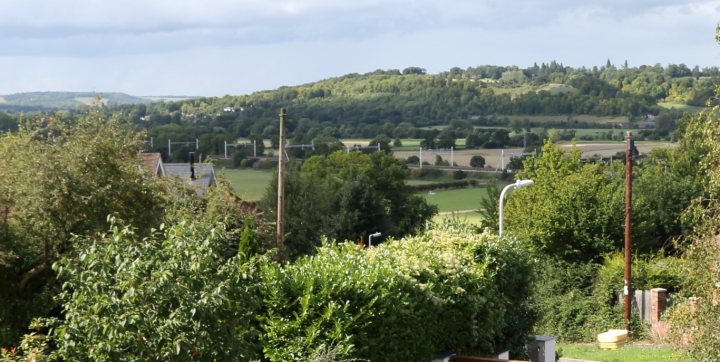
I thought I'd chip in since we live 400m away from the GWML between Purley and Pangbourne, and have a good view of it from the front of the house. We actually moved here last year, just before the electrification work started in earnest.

We had quite a few nights of piling earlier in the year, and as many others have observed, the masts and portals have been slowly going up ever since, in a somewhat piecemeal fashion.

The bit we look out over has a long stretch of full portals (including a couple of the A-braced ones), and only a couple of cantilevers. I guess there's a good technical reason for this, but from a selfish point of view it's a bit of a shame as I think the cantilevers are slightly less obtrusive.

In the last few weeks, some of the "wire hangers" (sorry, don't know the correct term!) have been installed, but not in any consistent pattern that I can make out. It's been faintly interesting to see if you can spot what's changed overnight when opening the curtains in the morning, anyway.

As a local resident, I'll enjoy benefiting from the improved train service. On the plus side in terms of impact on where I live, I imagine the new trains will be somewhat quieter. On the other hand, I suppose there may be some visible arcing at night, and I'm not sure how obtrusive that might be.


The 'A' frames in the picutre are actually stays for the Mono boom that will hold the 4 sets of Tensorex for tensioning the wire. These are 3 spans apart to allow for the overlap to get the in and out running wire aligned properly for the change over.

Part of the problem for the piecemeal installation is down to the way the materials are ordered and delivered. They are ordering on a location basis rather than a requirement for the job basis i.e if 100 x brackets are required they are ordered as and when required and arrive with a location number on them and thats where they must go. A better way would be for them to order what is required for a certain length of track but without the locations on them, the trucks/train could then be loaded for a consecutive run of instalation rather than the current do one miss 5 or so do another. This is the same with all the elements of the steel work and sps.

Installation of the booms is slow due to only having a Saturday night 5 hrs window of full closure to install the booms.

Add into this it being a completly new system, alot of the instalation is very different and new to what the linesmen are used to elsewhere, they are adapting but it is taking time. Plus the technical side is provided by a Spanish firm so alot can be lost in translation. Add in the added H&S, paperwork and rules that come from adjacent line open working, minimal access points for machines meaning longer travel time to work location than normal.

The on track teams are working as best they can, its the supply and back up from above that seems to be causing the issues.
 

LNW-GW Joint

Veteran Member
Joined
22 Feb 2011
Messages
21,901
Location
Mold, Clwyd
Plus the technical side is provided by a Spanish firm so alot can be lost in translation.

Presumably that is Amey's partner Inabensa, part of Abengoa, a power/energy company in Spain.
Of course Amey itself is ultimately a Spanish company, being owned (like BAA) by Ferrovial.
I'm not entirely clear why there is such a large Spanish involvement in NR's Series 1 rollout.
Does the design have any commonality with the Spanish AVE system?
http://www.mynewsdesk.com/uk/amey/p...l-s-national-electrification-programme-990860
 

Philip Phlopp

Established Member
Joined
31 May 2015
Messages
3,003
Presumably that is Amey's partner Inabensa, part of Abengoa, a power/energy company in Spain.
Of course Amey itself is ultimately a Spanish company, being owned (like BAA) by Ferrovial.
I'm not entirely clear why there is such a large Spanish involvement in NR's Series 1 rollout.
Does the design have any commonality with the Spanish AVE system?
http://www.mynewsdesk.com/uk/amey/p...l-s-national-electrification-programme-990860

It is indeed Inabensa. This Rail Engineer articles explains a lot about who is involved and why.

http://www.railengineer.uk/2014/03/07/national-electrification-programme/
 

edwin_m

Veteran Member
Joined
21 Apr 2013
Messages
28,602
Location
Nottingham
Due to the amount of rail upgrading the Spanish were doing previously, and the state of their economy in recent years, there are a lot of Spanish railway engineering staff now working on projects for other countries or indeed working in other countries themselves.
 

LNW-GW Joint

Veteran Member
Joined
22 Feb 2011
Messages
21,901
Location
Mold, Clwyd
It is indeed Inabensa. This Rail Engineer articles explains a lot about who is involved and why.
http://www.railengineer.uk/2014/03/07/national-electrification-programme/

That's a very interesting article. However events in the last 18 months seem to show the contracts are not working well, at the top level at least.
One thing I find baffling is the degree of design/supply chain work that these contractors take on.
I was under the impression that NR (with consultants) did the design (Series 1 and 2 etc) and organised the component manufacture, leaving the contractors to roll it out.
But the article reads as though there might be 4 different electrification systems from the 4 contractor teams, all with different supply chains.
How will that work when Carillion takes over the North West project from Balfour Beatty?
NR also owns the GW HOPS train (and other electrification gear), but some contractors have their own systems.
It doesn't seem to be a unified programme to me.
 

Philip Phlopp

Established Member
Joined
31 May 2015
Messages
3,003
That's a very interesting article. However events in the last 18 months seem to show the contracts are not working well, at the top level at least.
One thing I find baffling is the degree of design/supply chain work that these contractors take on.
I was under the impression that NR (with consultants) did the design (Series 1 and 2 etc) and organised the component manufacture, leaving the contractors to roll it out.
But the article reads as though there might be 4 different electrification systems from the 4 contractor teams, all with different supply chains.
How will that work when Carillion takes over the North West project from Balfour Beatty?
NR also owns the GW HOPS train (and other electrification gear), but some contractors have their own systems.
It doesn't seem to be a unified programme to me.

Network Rail and Furrer+Frey have designed the catenary - that's basically everything from the circular steel pile or concrete foundation through to the contact wire, including tensioners, anchor booms, sectioning equipment and so on. EDIT - when I say sectioning equipment, I'm referring to the equipment on the masts/gantries, not the switchgear in cabinets at ground level.

That forms what is essentially a catalogue of components made available to the individual electrification teams at the point of installation and then to Network Rail or their maintenance contractors onwards after completion and sign-off.

The intention is that the small part steelwork is as standardised as possible with special design elements being carried by the mounting brackets and not the catenary components. You can see this approach at places like Thatto Heath Canyon, where we've mounted the top ten feet of a mast directly onto the cutting wall, and then mounted cantilever arms onto the section of mast, so the cantilever arm is a standard component no different to those on normal masts.

The route design work is undertaken by a third party, such as Atkins and/or Parsons Brinckerhoff. They'll have geology reports, groundwater analysis, gauge data and radio survey data from Network Rail, signalling runs, cabinet locations and other structure data, where each mast will be sited, what components are needed for each mast, if special locations such as listed buildings require different catenary (such as Rainhill) and so on. Mast location relative to the track will dictate the reach of the cantilever arms, S&Cs will dictate mast type and additional cantilever arms and additional tensioning to be installed, availability or not of an anchor point for the tensioner will dictate additional masts or additional cantilever arms to feed the wire to the point where it can be tensioned and so it goes on.

There's electrical design work, which is co-dependent on the route design work. It takes into account the power draw/demand/load requirements and using data on the National Grid's HT capability, and surprisingly, things like Environment Agency data on flooding, data on SSSIs etc, will determine the most appropriate points for feeders, how many are needed, what, if any existing power supplies can be utilised, where ATF is needed, where sectioning and neutral sections will be installed and so on. The electrical design has to work with the route design - clearly you can't have a feeder or sectioning cabinet at Sydney Gardens in Bath and it also has to take into account engineering access points and typical possession lengths, route options for diversions, where to site neutral sections to have the lowest risk of trains coming to a stand in a neutral section, that sort of thing.

There will also be EM interference modelling of the electrical design and if necessary, additional filters will be specified, though transformers produce a much cleaner and more stable supply these days. The ECML electrification final report is a bit of an eye opener on how bad things were just 25 years ago, when we could only complete the ECML electrification through stand-by feeding arrangements around Edinburgh and Berwick area.

The new electrification schemes also have SCADA monitoring to take into account and that needs to be thought about too.

When a viable design has been completed, the route design people will generally do a 3D visualisation of the route and assess signal sighting issues, getting feedback from TOC drivers/driver managers and union representatives when needed, and if issues are flagged up, plan either the relocation of signals or the use of alternative structures - could be a twin track cantilever instead of a pair of masts, that sort of thing.

There's all the usual safety checks, height at level crossings, what crossings might be better closed/replaced by footbridge, platform safety, designated earthing points and so on to take into account too.

There's also some areas where Furrer+Frey will do some or all of the design work themselves, as part of the project. That's frequently the case where things like the rigid overhead conductor system is used, and they tend to be involved when non standard components are used - different masts, mounting brackets and the like.

When the design is signed off, the contractors and design team can begin the process of ordering components, but until the design is signed off, it's not known exactly what components will be required and in what quantity, whether there will be custom fabrications required. Small changes, like moving the tensioning equipment or adding an extra crossover will dictate different components, a crossover will require additional cantilever arms and will have different (non standard) registration arms, so it's not something that can be an afterthought.

The changing of contractors shouldn't present an issue - it's construction industry stuff, staff will jump ship if they don't want to move with BB and everybody has their own equipment, I wouldn't expect any significant delay with the swap from BB to Carillion/VolkerRail. They're all professionals, toss them a set of drawings and they'll do what the drawings say, doesn't matter if they use slightly different equipment, as long as the end result is in specification, that's really all that matters. The chances are they'll be using very similar or identical equipment anyway - there's not many piling rigs and other rail mounted equipment which fits the UK loading gauge in any case. RRVs generally come from an 'rental' supplier and I'd expect the sales manager to be trying to get the new contractors to rent the exact same equipment.

 
Last edited:

LNW-GW Joint

Veteran Member
Joined
22 Feb 2011
Messages
21,901
Location
Mold, Clwyd
The changing of contractors shouldn't present an issue - it's construction industry stuff, staff will jump ship if they don't want to move with BB and everybody has their own equipment, I wouldn't expect any significant delay with the swap from BB to Carillion/VolkerRail. They're all professionals, toss them a set of drawings and they'll do what the drawings say, doesn't matter if they use slightly different equipment, as long as the end result is in specification, that's really all that matters. The chances are they'll be using very similar or identical equipment anyway - there's not many piling rigs and other rail mounted equipment which fits the UK loading gauge in any case. RRVs generally come from an 'rental' supplier and I'd expect the sales manager to be trying to get the new contractors to rent the exact same equipment.

Thanks for taking the time to explain all that.
As ever things are not as straightforward as you might think.
I just hope the new NW team picks up and runs as fast as possible from now on (and then moves on to TP).
 

dviner

Member
Joined
7 Oct 2010
Messages
246
Thanks for taking the time to explain all that.
As ever things are not as straightforward as you might think.
I just hope the new NW team picks up and runs as fast as possible from now on (and then moves on to TP).

Seconded. Excellent post by Philip Phlopp.
 

edwin_m

Veteran Member
Joined
21 Apr 2013
Messages
28,602
Location
Nottingham
Drove past Bathampton on the A4 over the last few days. Any work at the junction wasn't visible but there was a pylon line with a protective cradle over the road and signs saying "National Grid working for Network Rail". So I presume there will be a feeder here.

Apologies if already mentioned, but I haven't noticed it in recent pages and I'm not going back through all 97!
 
Joined
25 Apr 2013
Messages
125
Location
Home Counties
Drove past Bathampton on the A4 over the last few days. Any work at the junction wasn't visible but there was a pylon line with a protective cradle over the road and signs saying "National Grid working for Network Rail". So I presume there will be a feeder here.

Apologies if already mentioned, but I haven't noticed it in recent pages and I'm not going back through all 97!

I think they are in fact moving/increasing the height of the national grid wires, as they were slung quite low across both the road and railway, so presumably there needs to be some clearance between Grid wires and OHL ?
 

snowball

Established Member
Joined
4 Mar 2013
Messages
8,144
Location
Leeds
I think they are in fact moving/increasing the height of the national grid wires, as they were slung quite low across both the road and railway, so presumably there needs to be some clearance between Grid wires and OHL ?

I don't know but I would have guessed that any high voltage power lines passing over a railway would be made high enough from the start to allow for the railway to be electrified.
 

455driver

Veteran Member
Joined
10 May 2010
Messages
11,329
I don't know but I would have guessed that any high voltage power lines passing over a railway would be made high enough from the start to allow for the railway to be electrified.

If this is what is happening then I am sure they were built to the relevant standard.
I am also sure that the standards have changed in the meantime so they are having to be changed at great expense for no real benefit.
 

Philip Phlopp

Established Member
Joined
31 May 2015
Messages
3,003
I don't know but I would have guessed that any high voltage power lines passing over a railway would be made high enough from the start to allow for the railway to be electrified.

There were lots of people told during the last days of British Rail, through Railtrack and into the early days of Network Rail that they need not worry about electrification clearances as no further electrification was expected.

There are minimum clearances for HT transmission - dependant on the voltage used, and all are lower than the tallest structures used on the GWML electrification. The minimums are 7.3 metres for 400kV, 7.0 metres for 275kV down to 5.2 metres for 33kV/11kV and 415V/240V transformer to property feeds, though that would be subject to risk assessments by National Grid or transmission company to confirm that's suitable, if not, they will move the cables or use higher pylons.

I don't know what voltage the line at Bathampton Jn runs at or how much additional clearance, they'll be providing, if any. There's work in the area for undergrounding cables in the area too, which might be connected. Google Maps (which I know distorts perspective) does suggest additional clearance will be needed across the railway and A4 between a pair of pylons if the cables aren't diverted underground.

It may also be routine maintenance prior to electrification when access is less complicated, or possibly emergency maintenance work for a defective insulator - they go wrong just as often as the railway's 25kV/50kV insulators.
 

snowball

Established Member
Joined
4 Mar 2013
Messages
8,144
Location
Leeds
Press release on the completion of the work in and around Bath:

http://www.networkrailmediacentre.c...lectrification-work-in-bath-completes-on-time

Network Rail and First Great Western thanked passengers today for their patience following the completion, on time, of work to prepare Bath’s railway line for electrification.

Over the last six weeks, Network Rail’s ‘orange army’ has lowered and replaced 10km of track in Bath and its surrounding area in preparation for the arrival of a new fleet of faster, quieter and greener electric trains. As part of the £50m project, the team also installed 11 new switches and crossings, enabling trains to move from one track to another.

...

The next major stage of the Great Western Electrification Programme in Bath will take place next year and will involve the installation of the overhead line equipment that will power the new electric trains to run underneath.

...

Time-lapse footage of the track lowering work through Dundas Aqueduct is available here.

Time-lapse footage of the electrification preparation work at Box Tunnel, Sydney Gardens and Bathampton Junction will be available shortly.

...
 

alb1

Member
Joined
13 Apr 2015
Messages
51
Reading about information evening on the Stratton Green bridge reconstruction in east Swindon, I assume they mean the single track old Roman road Ermin Street, now replaced by the A419 Stratton bypass bridge. I see there are four bridges including another yet another one to the east (Thornhill Rd) and one to the west called Swindon Road B4006, although this latter may be the one to which they are referring.

Does anyone know if the result of these works will be that there is space left for possible four tracking in the future? The A419 one definitely looks future proofed.

Apologies if I missed it, but does anyone know what went wrong with this plan? I know that local residents were warned to expect a significant closure (and it's a VERY well used bridge) and for works to take months, with the pdf posted by jimm mentioning a total 52 hour line closure over Christmas 2014. In reality the bridge was closed, a hole was dug in the middle of the road and then it reopened a few weeks later with none of the planned works being carried out. As far as I'm aware there's still no announced date for them to try again.

On an entirely separate note, does anyone know how things stand with the new Swansea Malefant depot? It looks pretty much finished save for the overhead lines themselves, which seems very ahead of schedule given that it's going to be another few years before electrification reaches that far into S Wales.
 

Tio Terry

Member
Joined
2 May 2014
Messages
1,197
Location
Spain
If this is what is happening then I am sure they were built to the relevant standard.
I am also sure that the standards have changed in the meantime so they are having to be changed at great expense for no real benefit.

You are right to say standards have changed. We now need to meet the requirements of the Energy Technical Standard for Interoperability, which raises the height of the OHEL. There's also the ORR insistence that there is a 3.5M minimum clearance from an average height person standing just behind the yellow line on a platform and the closest part of the live electrification system. This is normally the end of the pantograph as the train passes through the station.
 

jimm

Established Member
Joined
6 Apr 2012
Messages
5,276
Apologies if I missed it, but does anyone know what went wrong with this plan? I know that local residents were warned to expect a significant closure (and it's a VERY well used bridge) and for works to take months, with the pdf posted by jimm mentioning a total 52 hour line closure over Christmas 2014. In reality the bridge was closed, a hole was dug in the middle of the road and then it reopened a few weeks later with none of the planned works being carried out. As far as I'm aware there's still no announced date for them to try again.

On an entirely separate note, does anyone know how things stand with the new Swansea Malefant depot? It looks pretty much finished save for the overhead lines themselves, which seems very ahead of schedule given that it's going to be another few years before electrification reaches that far into S Wales.

In Swindon they started poking around and found that there were various utility cables and pipes buried deeper than they had thought, so they decided to stop the work and re-plan it. They are now going to try again between this November and next February.

http://www.swindonadvertiser.co.uk/...month_after_closing_for_rail_electrification/

http://www.swindonadvertiser.co.uk/..._for_disruption_due_to_winter_bridge_closure/

Although the wires may take a while to reach Swansea, I guess the depot needs to be available to service the trains anyway, even if they are on diesel power west of Bristol and/or Cardiff for an interim period.
 
Last edited:

swt_passenger

Veteran Member
Joined
7 Apr 2010
Messages
34,230
Although the wires may take a while to reach Swansea, I guess the depot needs to be available to service the trains anyway, even if they are on diesel power west of Bristol and/or Cardiff for an interim period.

This is basically what they did at Reading. The entire stabling area between the station and the new depot is currently used by DMUS only, but the wiring was completed whilst it was still a green zone before the trains ever arrived. This must be a more efficient way of doing it than under possession of an in-use depot.
 

59CosG95

Established Member
Joined
18 Aug 2013
Messages
6,853
Location
Beeston (Notts)
It's all coming along - lots of TTCs, long reach TTCs and monobooms now up, but it's mainly CrossRail rather than GWEp work.

That is true. I'm travelling along the Billiard Table today, going back to Brum via BPW, such that I can see the progress being made along the route.
 

swtandgw

Member
Joined
24 Nov 2011
Messages
102
Location
Between Berks and Hants
You are right to say standards have changed. We now need to meet the requirements of the Energy Technical Standard for Interoperability, which raises the height of the OHEL. There's also the ORR insistence that there is a 3.5M minimum clearance from an average height person standing just behind the yellow line on a platform and the closest part of the live electrification system. This is normally the end of the pantograph as the train passes through the station.
Would that mean compatibility with Continental pantographs?
 

Tw99

Member
Joined
25 Aug 2015
Messages
227
Location
Reading
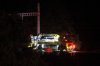
There was some work going on between Pangbourne and Tilehurst last night on the relief lines, with some piling happening that we could hear at about 11.30. There was a cherry-picker on the line as well, maybe putting up more parts ?

(apologies for the rather unimpressive photo, that's handheld 1/5th of a second on a 400mm lens, so pretty hard to get anything like sharp !)
 

Attachments

  • DPP_4729 (Medium).JPG
    DPP_4729 (Medium).JPG
    164 KB · Views: 131

Philip Phlopp

Established Member
Joined
31 May 2015
Messages
3,003
There was a cherry-picker on the line as well, maybe putting up more parts ?

Yes, small part steelwork. Booms and portal structures need a crane to lift into position, so if it's just a cherry picker, it will only be SPS.
 

hassaanhc

Established Member
Joined
5 Jan 2014
Messages
2,225
Location
Southall
On Sunday at West Ealing there was digging on the down platform, which I assume is for new masts. All the stations along there have had markings for where new masts will go for a few months now. There was also a cherry picker in use near Old Oak Common on the Down Relief with someone doing something on the existing OHLE.
 
Status
Not open for further replies.

Top