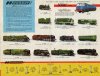
The Hornby stuff from the late 1980s and early 1990s was rubbish. Heavy and not looking at all like the real thing.
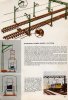
Almost all model OLE that I have seen is vastly overscale and/or oversimplified. While modelling does allow for a certain amount of licence, the increase in detail standards generally has not been reflected in OLE.
Part of the problem is that there is no standard design of OLE, while the other issue is the general lack of understanding of the system by most modellers. A good basic off-the-shelf OLE system in a variety of scales is made by Sommerfeldt, but it is mostly to Continental European design. But even this is vastly overscale, especially in relation to the wires themselves. Frankly, unless you're a wizard scratchbuilder with spare time measured in eons, I wouldn't bother with OLE at all because it is expensive, complicated and takes ages to get right.
The best model OLE I have seen is a scratchbuilt system for a
P4 scale model of Birmingham New Street. However, a quick look around the website should illustrate just how much work is involved in just a single structure, and if you want a layout of any appreciable size you are going to need a LOT of structures.
As for wear, you shouldn't get appreciable wear on model systems. However, if you want any component to wear it would be better if it was the pantographs rather than the contact wires. They are not as hard to acquire or replace as others suggest, and replacing a pan or components of the pan would be cheaper and far easier than having to renew all your OLE.
O L Leigh